<?xml version="1.0" encoding="UTF-8"?>
<feed xmlns="http://www.w3.org/2005/Atom">
  <title type="text">Cleveland Historical</title>
  <updated>2026-05-02T02:08:46+00:00</updated>
  <generator uri="http://framework.zend.com" version="1.12.20">Zend_Feed_Writer</generator>
  <link rel="alternate" type="text/html" href="https://clevelandhistorical.org/"/>
  <link rel="self" type="application/atom+xml" href="https://clevelandhistorical.org/items/browse?output=rss2"/>
  <id>https://clevelandhistorical.org/</id>
  <author>
    <name>Cleveland Historical</name>
    <uri>https://clevelandhistorical.org</uri>
  </author>
  <link rel="hub" href="http://pubsubhubbub.appspot.com/"/>
  <entry>
    <title type="html"><![CDATA[Applied Industrial Technologies<br />
: A Futuristic Campus with a Memorial to Millionaires’ Row]]></title>
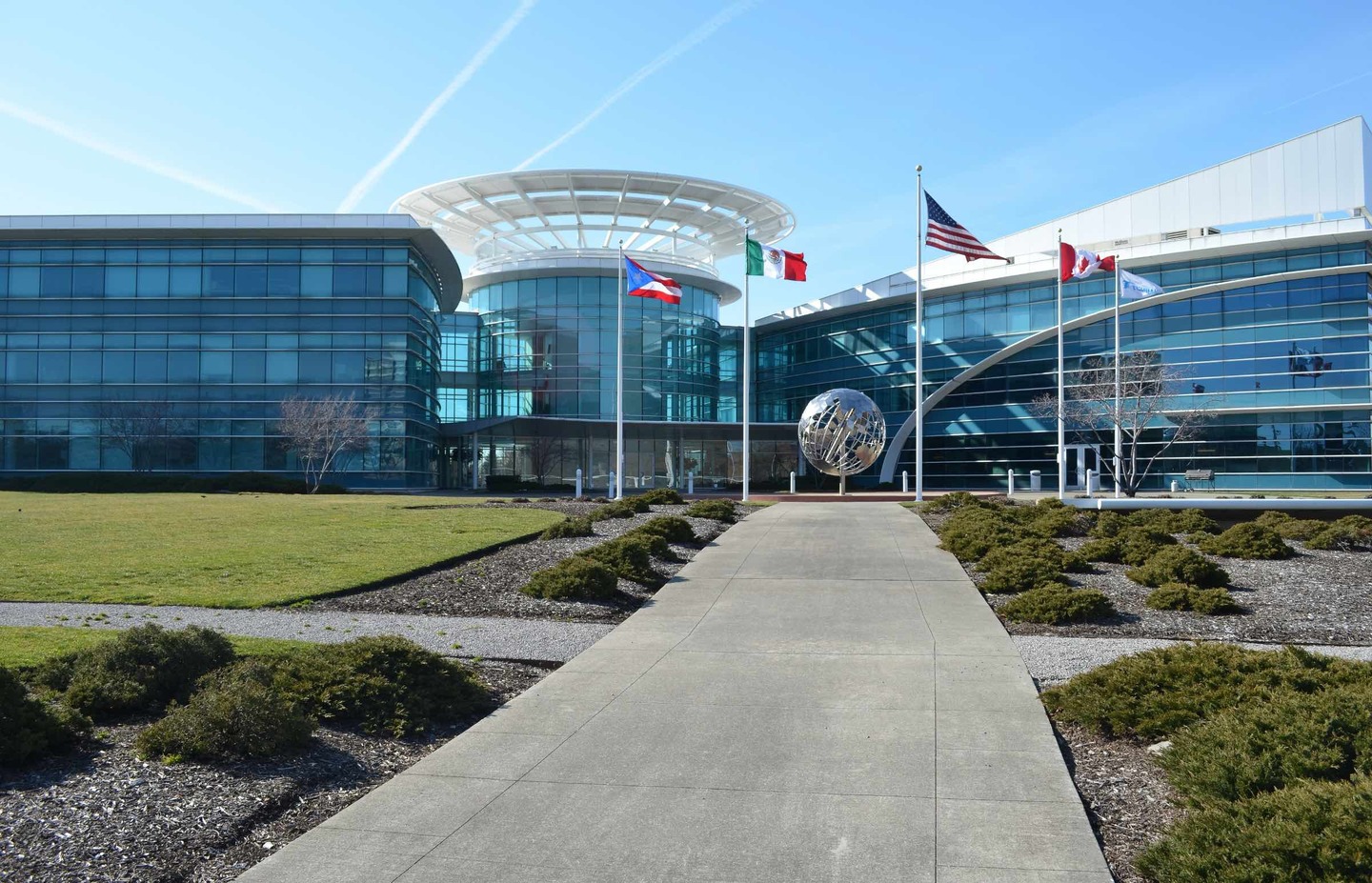
    <summary type="html"><![CDATA[<p><strong><em>The campus of Applied Industrial Technologies, founded as the Ohio Ball Bearing Company in 1923, sits at Euclid Avenue and East 36th Street in the heart of the city's old Millionaires' Row. The company headquarters with its strikingly futuristic design—likened by some to Spacely Space Sprockets Inc. in the 1960s animated sitcom <i>The Jetsons</i>—provides a stark architectural contrast to the area's historic identity.</em></strong></p><img src="https://clevelandhistorical.org/files/fullsize/41bff9d5fdc5b4996c4e05d27464d9ef.jpg" alt="Applied Industrial Technologies Headquarters" /><br/><p>The campus of Applied Industrial Technologies, a global industrial distributor, sprawls along Euclid Avenue on the northwest corner of East 36th Street. Founded in 1923 as the Ohio Ball Bearing Company and later renamed Bearings Inc., the firm consolidated its operations into this 146,000-square-foot headquarters located at 1 Applied Plaza in Midtown in 1996. A year later, it became Applied Industrial Technologies.</p><p>The Ohio Ball Bearing Company began in a building at 6715 Carnegie Avenue before moving in 1927 to 6531 Euclid Avenue. That same year, the company established branches in Youngstown, Cincinnati, Akron, and Columbus. In 1947 the firm moved to 3646 Euclid Avenue. After merging with Pennsylvania Bearings, Indiana Bearings, and West Virginia Bearings, the firm assumed a new name—Bearings Inc.—in 1953. In 1960, Bearings Inc.'s operations totaled 54 locations across the United States. Eight years later, it expanded distribution throughout the Pacific Northwest, doubling its number of locations. Bearings Inc. began the 1990s by acquiring King Bearing Inc., adding 94 service centers, three distribution centers and five specialty shops. In 1995, a year before erecting its new headquarters, Bearings Inc. earned a billion dollars for the first time. In 1997, as a result of its expansion into fluid power, power transmissions, and conveyor belting products, the company held an internal naming contest, which yielded the name Applied Industrial Technologies. </p><p>To passersby, the Applied campus's reflective blue glass curtain wall and white disk above its entrance offer no indication that the land now occupied by the corporate campus was once lined with five of the mansions that lent Euclid Avenue its nickname, Millionaires' Row. By 1996, only one of them—the Carlin House—still stood, the others having been demolished in the 1950s and 1960s to make way for newer buildings.</p><p>The Carlin House, located at 3233 Euclid Avenue, was the home of Anthony and Mary Carlin. Completed in 1911 on the site where the Hinman Hurlbut House had previously stood, it was the one of the last homes to be built on Millionaires' Row. Anthony Carlin was the founder of the Standard Foundry Manufacturing Co. and operated the Euclid Hotel. Built of cream-colored pressed brick, the Colonial Revival–style mansion featured two-story semi-circular columned portico. Inside, it included a central hall, a drawing room, four bedrooms, a chapel, a ballroom, and servants’ quarters. The mansion also contained carved staircases and a large Louis Comfort Tiffany stained-glass window. Carlin preserved the Hurlburt House’s landscaping legacy in its grounds. In 1950, the Carlin family moved to Cleveland Heights, and the house became the headquarters of the International Ladies' Garment Workers Union. </p><p>Among the other mansions that had stood on the future Applied campus's footprint was the <a href="https://clevelandhistorical.org/items/show/817">Eells House</a> at 3201 Euclid Avenue, immediately west of the Carlin House. Built in 1876 for banker and financier Daniel P. Eells, the Victorian house was later home to Warren H. Corning and Price McKinney. In 1922, it was converted into Spencerian Business College. Cleveland Bible College used the house from 1942 to 1957. Two years later, it was demolished to build the Sahara Motor Hotel, which operated from 1960 to 1969. </p><p>To the east of the Carlin House was the McNairy House at 3333 Euclid Avenue. The McNairy House was a large addition connected to the adjacent Weddell House (built in 1833) that lumberman and Michigan native George W. Pack commissioned architect Charles F. Schweinfurth to remodel and expand in 1887. The expansion enabled his daughter Mary and her husband Amos B. McNairy to live next door. McNairy, a native of Scotland, was among the founders of the Cleveland Trust Company, as well as the owner of a paint company. He left Cleveland in 1919 and spent the last 23 years of his life in Vermont, returning only for treatment at Cleveland Clinic in the final week of his life. Pack's residence was torn down sometime in the 1930s and thereafter became a used car lot. The wrecking ball arrived again in 1952 to claim the McNairy House. Watson's Motor Hotel replaced the mansion in 1955, and the lot at 3307 Euclid saw the construction of the Colonial House Motel five years later. </p><p>Moving east, the Cox House at 3411 Euclid Avenue was the home of Cleveland Twist Drill Company president Jacob Dolson Cox Jr. The home, also a Charles Schweinfurth design, was residential property until 1940. From 1941 to 1961, the Cleveland Institute of Music operated in the house before moving to University Circle. The Cox House was demolished in 1966 to build the Al Koran Mosque (the Shriners' local headquarters), which also replaced the adjacent house at 3443 Euclid. </p><p>That mansion, the Squire House, was built in 1896 for Andrew Squire of the law firm Squire, Sanders & Dempsey. The Schweinfurth-designed house remained home to the Squire family until 1946. It became the Sweden Manor restaurant from 1946 to 1950, then was purchased by the Knights of Columbus, which used the house as its headquarters in Northeast Ohio from 1950 to 1957. The Salvation Army next owned and operated out of the Squir House until 1966, when it was razed to build the Shriners' headquarters. </p><p>When Bearings Inc. arrived in the 1990s, then, the Carlin House stood in the midst of architecturally undescript 1950s and '60s buildings. The City of Cleveland worked with Bearings Inc. to build the $34 million headquarters, the project financed through the port authority, which issued bonds for construction and held title to the property. The <i>Plain Dealer</i> architectural critic Steven Litt expressed disappointment that the Bearings Inc. headquarters made no visual reference to Euclid Avenue as Millionaires' Row and appeared as though it had been plucked out of a suburban landscape. </p><p>While the headquarters marks a decisive break with the past, the campus incorporates a nod to the mostly lost Millionaires' Row mansions. To commemorate the legacy of Euclid Avenue, Bearings Inc. commissioned Gilberti Spitter International to design the Mansions Sundial, which is symbolically located on the site of the Carlin House. The sundial represents ten mansions on each of the markers. The ten mansions recognized in the sundial are: </p><p><ul>
<li>3920 Euclid Ave. (1867–1938), home of John D. Rockefeller</li>
<li>3033 Euclid Ave. (1882–1923), home of Samuel Andrews</li>
<li>3233 Euclid Ave. (1911–1996), home of Anthony & Mary Carlin</li>
<li>1255 Euclid Ave. (1858–1910), home of Amasa & Julia Stone</li>
<li>3813 Euclid Ave. (1866–present), home of Anson Stager & T. Sterling Beckwith </li>
<li>3725 Euclid Ave. (1884–1927), home of Charles F. Brush </li>
<li>3515 Euclid Ave. (1890–1914), home of Henry C. Wick</li>
<li>2717 Euclid Ave. (1904–1958), home of Leonard C. Hanna</li>
<li>2605 Euclid Ave. (1912–present), home of Samuel & Flora Stone Mather</li>
<li>3903 Euclid Ave. (1866–1934), home of Jeptha H. Wade </li>
</ul>
</p><p>The sundial is thought to be one of the largest in the world. The base is 120 feet in diameter and the gnomon, or pointer, is 20 feet tall. Each mansion is represented on the dial by a separate concrete marker indicating standard time and bearing etched impressions of the homes. </p><p>Applied Industrial Technologies has a long history in Cleveland, and the sundial honoring the mansions that once lined Euclid Avenue stands a thoughtful reminder of the street's storied history.</p><p><em><strong><a href="https://clevelandhistorical.org/items/show/1083">For more (including 12 images) view the original article</a></strong></em></p>]]></summary>
    <published>2026-04-01T13:40:23+00:00</published>
    <updated>2026-05-01T00:23:36+00:00</updated>
    <link rel="alternate" type="text/html" href="https://clevelandhistorical.org/items/show/1083"/>
    <id>https://clevelandhistorical.org/items/show/1083</id>
    <author>
      <name>Jordan Gallegos</name>
    </author>
  </entry>
  <entry>
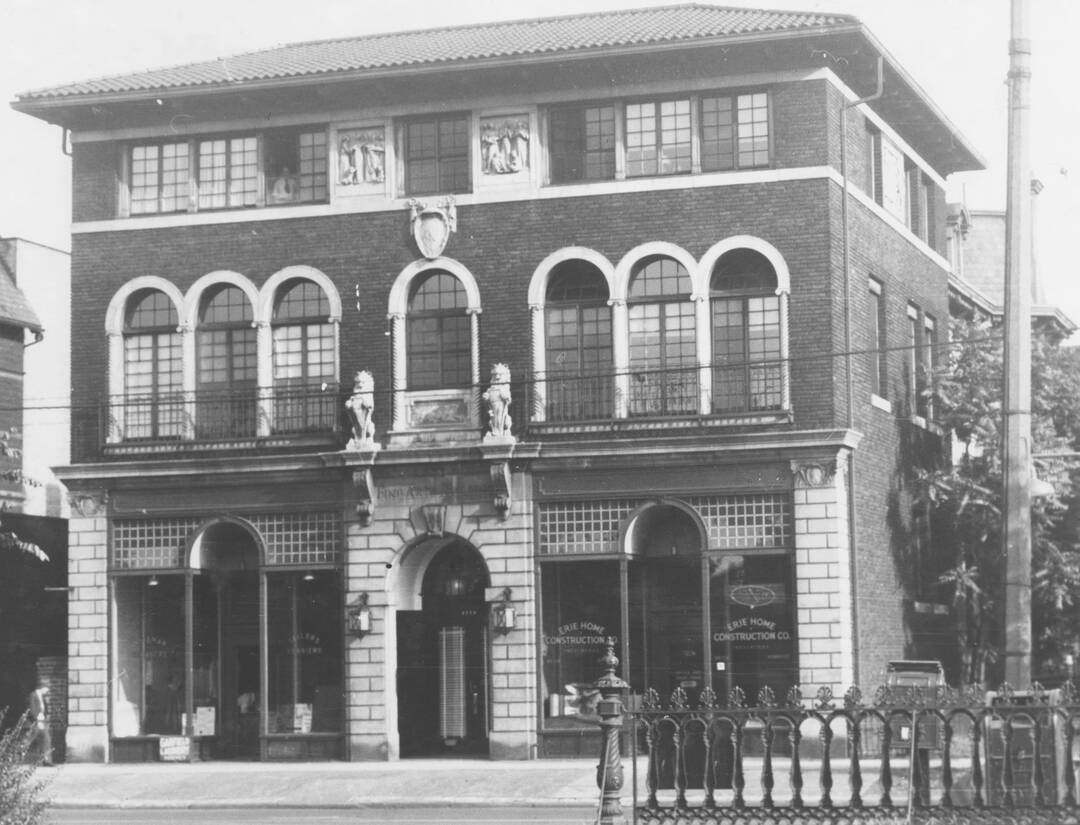
    <title type="html"><![CDATA[Fine Arts Building : Cleveland Attempts to Create New Greenwich Village]]></title>
    <summary type="html"><![CDATA[<p><strong><em>The Fine Arts Building was Cleveland's answer to similar artist-oriented developments in New York and Chicago. Reflecting the vision of two brothers who emigrated from the Russian Empire, this Millionaires' Row mansion–turned–miniature artists' colony mimicked the bohemian spirit of New York's Greenwich Village.</em></strong></p><img src="https://clevelandhistorical.org/files/fullsize/b329f71271c960e9825209c2ba3dfd00.jpg" alt="The Fine Arts Building in 1940" /><br/><p>The Fine Arts Building opened in 1921 to great fanfare. Located on Euclid Avenue between East 30th and East 36th Streets in the historical stretch of Millionaires’ Row, the Fine Arts Building was built in an era of great change in Cleveland. By the 1920s, Millionaires’ Row was starting to lose the eponymous millionaires who developed the area, as Euclid Avenue became more focused on commerce.</p><p>The Fine Arts Building started as the mansion of John Henry Devereux. Originally built in 1873 for Devereux, a U.S. Army general in the Civil War, the mansion remained home to the Devereux family until his widow Antoinette passed away in 1915. As the city changed and Euclid Avenue lost its luster in the eyes of local elites, its old mansions were usually torn down, but the Devereux mansion did not meet that same fate. Instead, six years after Antoinette Devereux's death, it was repurposed as a self-contained arts colony.</p><p>The Fine Arts Building was the brainchild of two Cleveland brothers, A. A. and Max Kalish. A. A. Kalish was a real estate dealer and his brother Max was a renowned artist. The Kalish brothers were born in Minsk in the Russian Empire (present-day Belarus) into an Orthodox Jewish family. Their father immigrated to the U.S. in 1894, and the rest of the family followed four years later. Max, having shown artistic talent early on, later won a scholarship to the Cleveland Institute of Art. After a stint in the Army in World War I, he split his time between Europe and the U.S. until World War II, when he had to return to the U.S. permanently.</p><p>The melding of the business and art worlds had its roots in New York City, and the Cleveland Fine Arts Building reflected this. The primary models for the Cleveland Fine Arts Building were the Tenth Street Studio Building in New York City and Chicago’s Fine Arts Building. Both places, as would happen in Cleveland, combined the creation of art and use of a building to showcase and sell the art produced there.</p><p>The concept of fine arts buildings began in the mid-19th century in New York City. In the 1850s a building was constructed on 10th Street that ended up housing a wide range of artists, such as Winslow Homer and Frederic Church. It was the first such building in the world. It was from this building that Greenwich Village gained its reputation as a center for artistic and bohemian lifestyles. As in Cleveland 60 years later, the Tenth Street Studio Building was developed by two brothers, in this case, businessman Richard Morris Hunt and artist William Morris Hunt.</p><p>The reason that places such as the Fine Arts Building were built was to bring together the world of art and commerce. They provided artists space to work, as well as a place to sell their works. This was especially important in the era before a lot of artists had agents to sell their work for them. </p><p>The Cleveland Fine Arts Building lasted for less than fifteen years as an artists' building. After the mid 1930s, it continued as an apartment building. The front of the building hosted various businesses over the years, as well. In the late 1950s there was a family-owned deli, and various other businesses occupied its street-level spaces into the 21st century.</p><p><em><strong><a href="https://clevelandhistorical.org/items/show/1067">For more (including 6 images) view the original article</a></strong></em></p>]]></summary>
    <published>2025-11-18T19:17:44+00:00</published>
    <updated>2026-04-17T19:17:43+00:00</updated>
    <link rel="alternate" type="text/html" href="https://clevelandhistorical.org/items/show/1067"/>
    <id>https://clevelandhistorical.org/items/show/1067</id>
    <author>
      <name>Josh Forquer</name>
    </author>
  </entry>
  <entry>
    <title type="html"><![CDATA[Miss Mittleberger&#039;s School : The Mental, Physical, and Moral Development of the Girls of Ten-Twenty]]></title>
    <summary type="html"><![CDATA[<p><strong><em>"It is hardly too much to say that we have accepted Miss Mittleberger's school as a part of the constituted order of things, much as we accept the shining sun, valuing its prominence and its generous benefits most when the brighter seasons end." </p><p>— <em>The Interlude</em></em></strong></p><img src="https://clevelandhistorical.org/files/fullsize/2ed54c9b5294dd1b01dd5bb7c9be79cc.jpg" alt="The Old Rockefeller Property" /><br/><p>From 1877 to 1908, Miss Mittleberger’s School for Girls educated middle- to upper-class daughters from the Cleveland area, as well as those from out of state. The girls who attended Miss Mittleberger’s School received an extensive education while also creating lifelong bonds with their classmates. Many of the young women educated at Miss Mittleberger’s School went on to attend prestigious women’s colleges such as Bryn Mawr, Smith, Vassar, and Wellesley. </p><p>Headmistress Augusta Mittleberger was born on September 13, 1845, to Canadian immigrant and prosperous coal and produce merchant William Mittleberger and Augusta Margaret Beebe of Oneida County, New York. Mittleberger had two younger brothers, William Jr. and Alexander. Mittleberger’s status allowed her to receive an education, and in 1863, she graduated from the Cleveland Female Seminary, located on Kinsman Avenue between Wallingford Court. (E. 45th Place) and Sawtell (E. 51st Street). Mittleberger was passionate about education and began tutoring students shortly after she graduated. From 1868 to 1869, she taught both History and Latin at the Cleveland Female Seminary. By 1874, Mittleberger joined the faculty of the Cleveland Academy, located on the north side of St. Clair Avenue, where she remained until her father died in 1875 after a battle with Bright’s disease, when Augusta was 30 years old. </p><p><span>Shortly after, Mittleberger decided to independently teach young girls in her private residence on Superior Avenue, where the Cleveland Public Library is located today. In 1877, Mittleberger's School moved to a house on Prospect Avenue just west of Willson Avenue (now E. 55th Street) and then, soon after, to another location on Prospect just west of Case Street (now E. 40th Street).</span><span class="c-message__edited_label"> </span> In 1880, Mittleberger’s ability as an educator had captured the attention of many prominent families. To accommodate the growing number of students, she needed a larger location to support the expanding school. One notable family interested in her work was the Rockefellers. John D. Rockefeller and his wife, Laura, had two houses facing the southwest corner of Euclid Avenue and Case Street (E. 40th). One of these remained on the land and served as their home, and the second was relocated to the southeast corner of Prospect and E. 40th. This move was one of the first attempts in Cleveland to be successful, and it had cost the Rockefellers approximately $10,000 to $17,000. </p><p>The Rockefellers, who valued education, rented this space to Miss Mittleberger. By 1881, the building had become the home of Miss Mittleberger’s School for Girls, located at 1020 Prospect Avenue (now the 4100 block of Prospect Avenue), until its closure several years later. Fifty students attended Miss Mittleberger’s School that year, and the number of pupils enrolled continued to increase with the larger building in use. </p><p>One common misconception was that Miss Mittleberger’s School operated as a “finishing school” for upper-class women to learn the social and domestic etiquette to prepare them for high society and marriage. While courses on deportment and home skills were offered to the “girls of ten-twenty,” there was a rigorous course schedule in Miss Mittleberger’s Academic Department for girls between the ages of 14 and 19. Some of the many courses available included Algebra I-III, Astronomy, Art History, Basic Arithmetic, Bible, Botany, Clay Molding, Chemistry, Drawing, Elocution, English I-IV, French, Geometry, German, Greek Language, Greek History, Gymnastics, Latin, Spelling, Virgil Prose, and Wood Carving.</p><p><span style="font-weight:400;">Mittleberger’s school also accommodated students of all ages. The school also had kindergarten, primary, and intermediate departments. The kindergarten and primary departments were co-ed, and the intermediate department, along with the academic department, was strictly for girls. Students in the academic and intermediate departments documented their daily lives in the school's monthly newspaper, </span><i><span style="font-weight:400;">The Interlude. </span></i><span style="font-weight:400;">This student paper included poems, fictional pieces, jokes, jingles, updates on staff, and descriptions of day-to-day activities in or around the area. </span>
<span style="font-weight:400;">Miss Mittleberger’s School had many notable alumnae throughout its years of operation. For example, Belle Sherwin </span><span style="font-weight:400;">was the senior class president in 1886. Fanny Hayes, </span><span style="font-weight:400;">the daughter of Rutherford B. Hayes, attended before leaving for school in Connecticut, and Mollie Garfield, </span><span style="font-weight:400;">the daughter of President James A. Garfield, also attended between 1880 and 1883 before leaving for the same school in Connecticut. </p><span style="font-weight:400;">In March of 1908, Miss Mittleberger announced that she was retiring and that the school would be closing. That June was the last commencement for Miss Mittleberger’s School, which was held at the First Baptist Church on the corner of Prospect and East 46th. Festivities and a celebration were held for the graduating class and Miss Mittleberger herself. Additionally, an Alumnae Association was established, and many of the women involved attended the final commencement to pay their respects and share fond memories of their classmates and their beloved headmistress. The Alumnae Association raised approximately $25,000 to endow the Mittleberger Memorial Kindergarten and gifted Miss Mittleberger with a purse of money that they wanted her to use for a vacation to Europe for some much-needed rest. Many of the remaining students who did not graduate that June transferred to the Laurel School to finish their education while still honoring their roots as the girls of Ten-Twenty. </p><span style="font-weight:400;">Augusta Mittleberger dedicated her life to educating young women in Cleveland, Ohio. Her passion for teaching and serving as a role model for her students is evident in the many reminiscences of the women who attended and received a well-rounded education. Even after her retirement, Mittleberger dedicated her time to furthering the Mittleberger Memorial Kindergarten and her memorial scholarship, which supported two Cleveland-area senior students for many years. Augusta Mittleberger passed away on August 3, 1915, and was laid to rest at Lake View Cemetery in Cleveland, Ohio. </span></p><p><em><strong><a href="https://clevelandhistorical.org/items/show/1059">For more (including 5 images) view the original article</a></strong></em></p>]]></summary>
    <published>2025-07-18T16:59:00+00:00</published>
    <updated>2026-04-17T19:17:43+00:00</updated>
    <link rel="alternate" type="text/html" href="https://clevelandhistorical.org/items/show/1059"/>
    <id>https://clevelandhistorical.org/items/show/1059</id>
    <author>
      <name>Bali White</name>
    </author>
  </entry>
  <entry>
    <title type="html"><![CDATA[Euclid Avenue Station: Cleveland&#039;s Midtown Entryway ]]></title>
    <summary type="html"><![CDATA[<p><strong><em>In the early 1910s, at the same time that some public officials were proposing that the future Playhouse Square be named Euclid Square in conscious mimicry of New York's Times Square, the Euclid-East 55th node saw nearby enterprises adopt the name Penn Square. Although the name never quite stuck, it reflected a truth—that the intersection's Pennsylvania Railroad passenger station was an important point of arrival in the city—and has since animated some suggestions to revive the name as part of revitalization efforts.</em></strong></p><img src="https://clevelandhistorical.org/files/fullsize/4c59fda124c40209767a8695fcf27f6a.jpg" alt="Euclid Avenue Station" /><br/><p>The Euclid Avenue railway station had its roots in 1856 when the Cleveland & Pittsburgh Railroad Company received a donation of land at the intersection of Euclid and Willson Avenue (East 55th Street from 1906) from Jared V. Willson. The donation of land was also accompanied by $500 given by residents of Euclid Avenue for the purpose of building a new passenger station along the rail tracks. The initial station was designed to have several waiting rooms for passengers as well as offices for railroad agents and station workers. By 1873, the station, by then part of the Pennsylvania Railroad, had been fully furnished with the modern amenities of the time such as gas, water, and bathrooms.</p><p>As the new station at Euclid and 55th was built, the street railway was extended to connect with the new station. Due to protest from the wealthy residents of Euclid Avenue who did not want to see their street defaced with tracks, the streetcars ran along Prospect Avenue instead, and at East 40th turned back onto Euclid. The new station became an important hub for passengers from both the streetcar line and the railroad, and quickly became one of the main entry points into the city for visitors and new residents. It was the point of entry for President Lincoln during his stop in Cleveland on his way to Washington in 1860. It was also the starting point for Lincoln’s funeral service in Cleveland in 1865. On September 24, 1881, the body of President James A. Garfield arrived there to be brought to Lake View Cemetery and, in January 1916, President Woodrow Wilson would also visit Cleveland, entering the city through the Euclid Avenue Station. </p><p>The Euclid Avenue Station was replaced in 1902 and a new station, located next to the old one, opened that June. The new station had a large waiting area with large glass windows along one side. The other walls were made of white glazed brick, and the floors were laid with mosaic marble. Among the most significant new installations in this new passenger station were electric lights. The new station boasted several electric chandeliers and other electric wall-mounted lights. A new park and driveway took the place of the old station and grounds immediately around it. </p><p>By the 1910s the intersection of Euclid Avenue and East 55th had become a disorganized and dangerous mess. Not only was this area the intersection of two major roads, but also two major streetcar lines as well as the crossing for the railroad. With so much traffic from streetcars, automobiles, horse-drawn carts, pedestrians, and trains, Euclid Avenue and East 55th had become one of Cleveland’s busiest and most dangerous intersections. To alleviate some of the traffic, in 1910 the city decided to raise the railroad tracks above the streets. The city had wanted to do this for some time but had been unable to raise the money. But now that the money had been allocated and an agreement with the Pennsylvania Railroad Company had been reached, the project could proceed. </p><p>Work on elevating the rails above the streets began in the late summer of 1910. Representatives of the Pennsylvania Railroad assured Cleveland Mayor Herman Baehr that they could have the temporary work done on the new crossings in just eight months' time. In order to get rid of the multiple dangerous intersections as soon as possible, it was planned that the tracks would be raised and then kept in place with temporary rail bridges, thereby allowing the city to proceed with replacing the streets at the same time. </p><p>The work on constructing permanent bridges over the roads continued for several more years and was completed in 1915. In order to accommodate passengers with the new elevated tracks at the Euclid Avenue and East 55th Street intersection the passenger station there would have to be renovated. The station was closed on June 13, 1913, and construction on the new station was completed the following March. Contracted to design and build the new station expansion was Chicago-based architectural firm Burnham & Co. (the firm founded by Daniel Burnham who was responsible for the 1893 Chicago World's Fair), and the project was led by an S. Williams. The work to renovate the existing station was extensive as the whole building had to be moved about thirty-nine feet so that it could be incorporated into the supporting concrete walls of the elevated tracks. </p><p>The new construction added an additional 9,800 square feet onto the existing structure. The grounds were doubled in size with larger driveways to accommodate more automobiles, more tracks for passenger and baggage railcars, as well as three new parks. The interior had two waiting rooms. The first, the main waiting room, was 5,600 square feet with terrazzo floors, walls which had five feet of white wainscotting with brick above, and a high ceiling with skylights. The other waiting room was desginated the ladies' waiting room and was 693 square feet. The room had the same flooring but with the addition of large rugs, and the walls were a yellow cream color. For furnishing, both rooms had ample seating and individual writing desks. The whole station was equipped with a new announcement system where an announcer could speak into a phone in their office and have their voice heard throughout the station.</p><p>In 1953 the Euclid station became the Pennsylvania Railroad Company’s main passenger station to and from Cleveland with the closing of the historic Union Depot on September 27, 1953. The Euclid station remained in use for another decade, eventually closing in 1965. The station’s last day of operation was January 29, 1965. On the final day, crowds of passengers began lining up at 5 p.m. to purchase tickets for the last train. Two faded red signs with CLEVELAND painted in gold on them had been taken from the platform and given away. John E. Eles, a seventeen-year-old Cleveland Heights High School senior, had received one of the signs and was among the final passengers. He had even brought his own engineer’s cap. The last station conductor, W. M. Maholm, age 61, finally signaled to the engineer to leave the station while the train's passengers passed around a bottle of scotch to toast the last run. The train arrived on time at 7:20 p.m. in Youngstown, where a Greyhound bus was waiting to take them back to Cleveland. </p><p>In June 1973, the station collapsed as a freight train passed by, and afterwards the rest of the building was demolished. The only section of the station still remaining is the concrete vault that was underneath the tracks. Also still surviving are nine terra-cotta wall statutes that were moved to the Rockefeller Greenhouse for display. There have been several attempts over the years to revitalize the area around the intersection by creating more vibrant parks and pedestrian areas, and turning the area into a new destination, possibly using the name "Penn Square," which evokes earlier places' references to the rail station.</p><p><em><strong><a href="https://clevelandhistorical.org/items/show/1020">For more (including 9 images) view the original article</a></strong></em></p>]]></summary>
    <published>2024-03-27T01:08:39+00:00</published>
    <updated>2026-04-17T19:17:43+00:00</updated>
    <link rel="alternate" type="text/html" href="https://clevelandhistorical.org/items/show/1020"/>
    <id>https://clevelandhistorical.org/items/show/1020</id>
    <author>
      <name>Matthew Steenbergh</name>
    </author>
  </entry>
  <entry>
    <title type="html"><![CDATA[Allen-Sullivan House: A Forgotten and now Vanished Euclid Avenue Mansion]]></title>
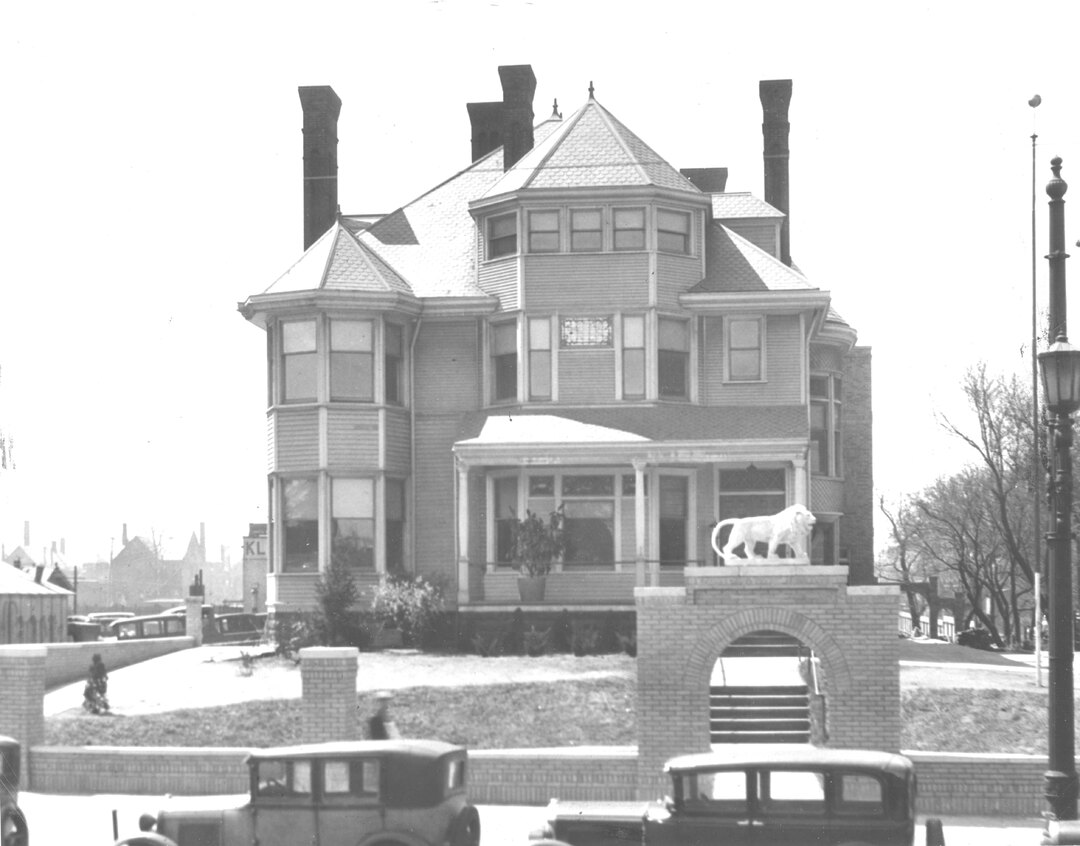
    <summary type="html"><![CDATA[<p><strong><em>It was one of the last grand houses from the nineteenth century left standing on Euclid Avenue, once described as the most beautiful residential street in the world.  And yet, inexplicably, the house was never designated an historic landmark; it was not put to any productive use in the last two decades of its existence; and little effort was made by anyone to save it from the wrecking ball.</em></strong></p><img src="https://clevelandhistorical.org/files/fullsize/34f19b8ae7f5a112075e74bbca5c62aa.jpg" alt="The Allen-Sullivan House" /><br/><p>In the late nineteenth century, Cleveland's Euclid Avenue was considered by travel writers to be one of the most beautiful residential streets in the world, compared favorably to the grandest avenues in Europe.  At the height of its grandeur, nearly 300 majestic homes graced its north and south sides from East 9th Street to East 90th Street.  Only a handful--six or seven depending on your count--of those nearly 300 houses are still standing today.  The Allen-Sullivan House was one of them.  And now it is gone!.</p><p>Richard N. Allen (1827-1890) was a railroad engineer who invented the paper car wheel, which dampened wheel noise and vibrations, revolutionizing railroad passenger travel in the nineteenth century.  The Massachusetts native, who had lived in Cleveland for a short period in the 1860s, returned to the city in 1881 after opening a factory near the Pullman Company's factory complex in Chicago.  He did not move back because Cleveland was close to that factory.  It was not.  However, he may very well have decided to return because Euclid Avenue was here.  It was then home to most of the richest men in America, and, as a result of his business successes, Allen, the former railroad engineer, was now a very rich man.  </p><p>Allen and his wife Susan purchased a house on Euclid Avenue that had been owned by Ephraim J. Estep, a prominent Cleveland attorney.  The house, likely built in the 1850s by one of the founders of the Joseph & Feiss Company, was located on the south side of the Avenue, just a few houses from Giddings Avenue (East 71st Street).  While Euclid Avenue from Giddings to East Madison (East 79th Street) was not as grand and desirable a neighborhood as the more famous section between East 22nd and East 40th Streets, which in the early twentieth century became known as "Millionaires' Row," it was still a very grand and desirable place to locate indeed.  Among the Allens' new neighbors were Morris A. Bradley (7217), heir to a shipping fortune and the father of future Cleveland Indians owner Alva Bradley; William J. Rainey (7418), said to be the largest coal and coke operator in the United States; Hiram Haydn (7119), pastor of the Old Stone Church and future President of Western Reserve University; Dr. Hiram Little (7615), a physician who became one of Cleveland's largest real estate developers; Edward Lewis (7706), a co-founder of Otis Steel Company and later a principal of Lake Erie Iron Company; and J. H. Thorp (7801), vice-president of Forest City Varnish Company.  </p><p>In 1881, when the Allens arrived on the Avenue, there were nineteen grand houses on Euclid between East 71st and East 79th Streets.  Less than two decades later that number had increased to thirty-six as several large lots were subdivided and sold to make more land available on the Avenue for Cleveland elites.  Many of those new houses going up in those ensuing decades were of Queen Anne design, the most popular architectural style of the period.  Queen Anne design is characterized, according to "A Field Guide to American Houses," by a "steeply pitched roof of irregular shape, usually with a dominant front-facing gable; patterned shingles, cutaway bay windows, and other devices used to avoid a smooth-walled appearance; and an asymmetrical facade with partial or full-width porch which is usually one story high and extended along one or both side walls."  </p><p>Perhaps simply to keep up with the Joneses, Richard and Susan Allen tore down the old Estep House in 1887 and built in its place a new three-story Queen Anne house.  According to local architectural historian Craig Bobby, this house, with approximately 9,000 square feet of living area, might have been viewed as "subdued" compared to other Queen Anne Houses that were built on Euclid Avenue in this period, but its massing was nevertheless "robust."  The house's boldest architectural feature was "an atypically wide, off-center bay . . . that [rose]  up onto the roof, nearly becoming a turret."  The house also featured a true turret on the east end of its front facade, which was deemphasized by a front porch which embraced the off-center bay, and bay windows on its east and west sides.</p><p>Richard Allen did not live very long after his mansion was completed.  He died suddenly in 1890 at the age of 63.  His widow Susan lived in the house until 1898, when she decided to move back to their native Massachusetts.  The house was then sold to Jeremiah J. Sullivan, a prominent Cleveland banker.  Sullivan, an Irish immigrant who moved to Cleveland in the early 1890s, was the founder of Central National Bank, which was one of  Cleveland's largest banks in the twentieth century.  In 1968, it erected the Central National Bank Building on the southwest corner of East Ninth and Superior.  The 23-story building--today known as  the AmTrust Financial Building--was at the time the fifth tallest building in downtown Cleveland. </p><p>When the Sullivan family moved onto Euclid Avenue in 1898, the Avenue was at its peak of wealth and elegance. Joining the Sullivan family as new residents of the East 71st-East 79th section of the grand Avenue in this decade were other prominent Clevelanders, including Dan Hanna (7404), the son of iron magnate and presidential kingmaker Marcus Hanna, and the future owner and publisher of the Cleveland Leader and the Cleveland News; David Z. Norton (7301), a Cleveland banker and principal of Oglebay Norton & Co., a large iron ore mining and shipping company; and Worchester Warner (7720) and Ambrose Swaney (7808), founders of machine and tool industrial giant, Warner and Swasey, and also life-long friends who built their Euclid Avenue houses next door to each other, just west of East 79th Street. These families were all witnesses not only to the zenith of the Avenue, but also to the beginning of its decline as a grand residential street.  By the time the Sullivan family moved out of their house in 1923 shortly after Jeremiah's death, Cleveland's elite were already fleeing the Avenue, as a result, according to Euclid Avenue historian Jan Cigliano, of encroaching commercial businesses,  the running of streetcars up and down Euclid Avenue, and a growing nearby African-American ghetto.  By 1930, only two elite families still resided on the section of Euclid Avenue between East 71st and East 79th--octogenarian Ambrose Swasey, who lived in his house until his death in 1937, and the son of David Z. Norton, who left the family's Avenue mansion for Cleveland Heights in 1939.</p><p>As Euclid Avenue declined as a residential street in the twentieth century, many of its grand houses were torn down, but others were put to different uses, sometimes commercial, sometimes multi-family, and sometimes institutional.  The Allen-Sullivan House was one of those put to other uses.  After the departure of the Sullivan family, it first served, from 1923 to 1931, as an upscale furniture store known as The Josephine Shop.  Then, in 1934, during the Great Depression, the house was purchased by the The Grand Lodge of Ohio, Order Sons of Italy (SOI) in America, an Italian-American fraternal organization.  The SOI made it their Ohio Grand Lodge, adding an auditorium onto the rear of the house.  On June 2, 1935, the organization held a dedication ceremony on the site, attended by many local, state and foreign dignitaries, including the Italian ambassador.  It was the first time that an ambassador from Italy had visited the State of Ohio.  </p><p>The SOI occupied the Allen-Sullivan House until 1946 when it sold it to the American Society of Heating and Ventilating Engineers (today known as ASHRAE--the American Society of Heating, Refrigerating and Air-Conditioning Engineers).  ASHRAE opened a national research laboratory on the site, operating it there from 1946 until 1961, when the laboratory closed.  The property was then sold in 1964 to Mary Fisco, spouse of Benjamin Fisco, an Italian immigrant who restored the house to its condition existing during the period when it was owned by the Sons of Italy. Fisco operated a party center there known for years as the Coliseum (or Colosseum) Party Center.  The party center closed in the late 1990s, several years after the death of Benjamin Fisco.   </p><p>Since the year 2000, according to City of Cleveland officials and others, the house had been vacant except for an onsite caretaker.  In that same period, a new owner purchased and assembled five sublots on and off Euclid Avenue near East 71st Street, including that upon which the Allen-Sullivan House stood.  According to officials at MidTown Cleveland, Inc., the owner of those properties had listed them for sale with an asking price of $3 million.  Given this owner's desire to sell, and the City of Cleveland's desire to continue redevelopment of its Midtown Corridor along Euclid Avenue, the future of the Allen-Sullivan House was precarious and it likely could not have avoided demolition without an effort on the part of the City and/or the future developer to save it. </p><p>While this was going on and the house still was standing, ASHRAE waged a campaign to have an Ohio historical marker placed in front of the Allen-Sullivan House to commemorate the national research laboratory that its organization operated there from 1946 to 1961.  When you consider all the history that was made at this, the last-standing Queen Anne-style house on the once grand residential Euclid Avenue, an historical marker alone should not have been enough.  The grand house itself should have been saved.</p><p>On June 21, 2021, time ran out for the Allen-Sullivan House.  No savior was found.  The house was torn down to make room for a city-approved apartment complex.  And so ends the story of one of the last grand houses standing for over a century on Euclid Avenue.</p><p><em><strong><a href="https://clevelandhistorical.org/items/show/864">For more (including 15 images) view the original article</a></strong></em></p>]]></summary>
    <published>2019-02-04T19:50:55+00:00</published>
    <updated>2026-04-17T19:17:42+00:00</updated>
    <link rel="alternate" type="text/html" href="https://clevelandhistorical.org/items/show/864"/>
    <id>https://clevelandhistorical.org/items/show/864</id>
    <author>
      <name>Jim Dubelko</name>
    </author>
  </entry>
  <entry>
    <title type="html"><![CDATA[Masjid Bilal: Cleveland&#039;s First Purpose-Built Mosque]]></title>
    <summary type="html"><![CDATA[<img src="https://clevelandhistorical.org/files/fullsize/94a841d6cb91e947f5e6878e346d6fd5.jpg" alt="Masjid Bilal&#039;s main doors" /><br/><p>A brick building stands askew from the right-angled corner of Euclid Avenue and East 75th Street. This building is the Cleveland mosque Masjid Bilal, which was built to face Mecca in Saudi Arabia. Masjid Bilal takes its name from the Arabic word for mosque–masjid–and Bilal, who was the first African believed to follow the prophet Muhammad more than a thousand years ago. This mosque was the first in Cleveland to be built “from the ground up.” Masjid Bilal was also the first Muslim place of worship to be built in the United States by a predominantly African American congregation. </p><p>Originally called Muhammad’s Temple of Islam #18, the congregation worshiped in the old Ambassador Theater at 12416 Superior Avenue. The Cleveland congregation then relocated to a former Roman Catholic Church on East 92nd Street and Holton Avenue. It was at this location that the congregation changed their name to Masjid Willie Muhammad. Construction on a new mosque on Euclid Avenue began in 1982, so the the congregation sold its converted church building to a Baptist group. The only other U.S. mosque built around that time was the Islamic Community Center of Tempe in Arizona. Much of the $500,000 construction of Masjid Bilal was completed by the 1,000 members of the congregation. The 82 x 82-foot building was constructed of a light brown brick and is topped with a golden dome made out of aluminum. This dome is called the prayer tower where the congregation prays five times during each day. </p><p>Masjid Bilal was the vision of Imam Warith Deen Mohammed, the son of the Nation of Islam leader Elijah Muhammad. Elijah Muhammad founded the Nation of Islam in Detroit, Michigan, in 1931 to improve conditions for African Americans and people in the United States. Elijah Muhammad did not condone Black Muslims meeting or praying with white people. The Cleveland group was established in the 1950s and adhered to this policy.</p><p>When Elijah passed away in 1975, Imam Warith Deen Mohammed succeeded his father. Masjid Bilal was built on land that was purchased and donated by Jabir Muhammad, the director and founder of the nonprofit Muhammad Islamic Foundation. Jabir Muhammad was not only the brother of Imam Warith Deen Mohammed and the son of Elijah Muhammad, but also the manager for Muhammad Ali's boxing career from 1966 to 1981.</p><p>Imam Warith Deen Mohammed's vision for Masjid Bilal was completed by Imam Clyde Rahman, the congregation's spiritual leader. After serving and surviving being shot in the head during the Korean War in the 1950s, Rahman became a Detroit policeman and a Nation of Islam minister. Rahman was the Imam for temples in Dayton, St. Louis, Kansas City, Baltimore, and Springfield, Ohio, before settling in Cleveland in 1976. Imam Clyde Rahman spoke to the congregation about unifying across religions to promote peace. When Imam Warith Deen Mohammed removed the racial strictures, Black Muslims changed their name to the American Muslim Mission and began accepting white members. </p><p>Masjid Bilal opened "debt-free" and without a mortgage on Friday, June 3, 1983, the Muslim holy day. The first service in Masjid Bilal was the Sabbath prayers, followed by an open house for the public. This began the first of three days of Muslim ceremonies. The mosque had an all-day meeting of national imams, or clergymen, and a dedication banquet at Swingos in the Statler on Saturday. Sunday concluded the festivities with a service. Imam Warith Deen Mohammed attended and led the dedication ceremonies. Masjid Bilal was the first mosque to host annual Ramadan sessions under Imam W. Deen Mohammed.</p><p>As a proponent of peace, Masjid Bilal was the location for the second service during the Interfaith Peacekeeping Service on June 9, 1991. Masjid Bilal sponsored a banquet between the three faiths to honor then Cleveland Mayor Michael R. White in 1993. The banquet was held at Swingo's at the Statler, exactly where the dedication ceremony was held for Masjid Bilal ten years prior. This was the first time in Cleveland that all three faiths met together at the behest of a religious congregation. 1993 saw another first when Imam Clyde Rahman said prayers of peace at Temple Ner Tamid on Yom Kippur, the Jewish Day of Atonement. Then in 1994 the spiritual leader of Temple Ner Tamid, Rabbi Bruce Abrams, visited Masjid Bilal to pray during the end of Ramadan, the holy month of fasting. In 2009, Masjid Bilal's original spiritual leader, Imam Clyde Rahman, died at the age of 79. Thanks to his vision, Masjid Bilal welcomes Christians, Jews, and Muslims to pray with them and learn about the Muslim religion and its people. Masjid Bilal has been an essential force in dismantling the barriers between Islam, Judaism, and Christianity.</p><p><em><strong><a href="https://clevelandhistorical.org/items/show/831">For more (including 9 images) view the original article</a></strong></em></p>]]></summary>
    <published>2018-03-27T16:09:54+00:00</published>
    <updated>2026-04-17T19:17:41+00:00</updated>
    <link rel="alternate" type="text/html" href="https://clevelandhistorical.org/items/show/831"/>
    <id>https://clevelandhistorical.org/items/show/831</id>
    <author>
      <name>Natalie Neale</name>
    </author>
  </entry>
  <entry>
    <title type="html"><![CDATA[Baker Electric Building: An Auto Showroom for the &quot;Showplace of America&quot;]]></title>
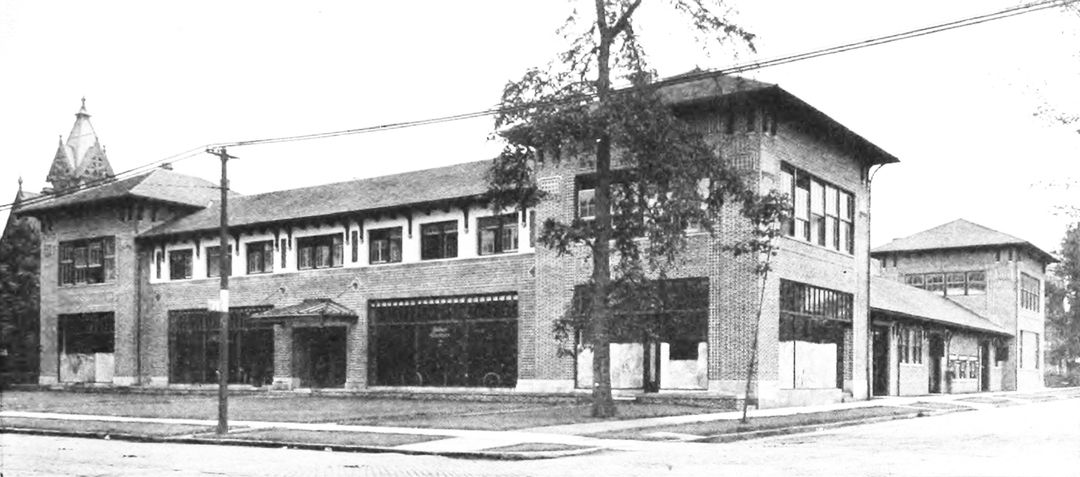
    <summary type="html"><![CDATA[<p><strong><em>In the Great Depression, used-car lots began to replace the sweeping front lawns of some of the deteriorating mansions that were once the pride of Cleveland's famed Millionaires' Row. By the 1950s, Euclid Avenue was a veritable "Motorists' Row" with as many car lots, filling stations, garages, and motels as mansions. Yet, long before this turn, the "Showplace of America," as <em>Baedeker's Travel Guide</em> had recently dubbed Euclid Avenue, was a fitting place for a showroom for innovative—and expensive—new cars made in Cleveland.</em></strong></p><img src="https://clevelandhistorical.org/files/fullsize/7071c4ab7e003ce4b8bab9e8c0df038e.jpg" alt="The Baker Electric Showroom in 1911" /><br/><p>More than a century before Elon Musk's Tesla Roadster was launched into space, the first crude electric carriage was produced by the Scottish inventor Robert Anderson in 1832. In 1891, William Morrison built the first successful electric automobile in the United States. Tesla's electric cars are a luxury item by today's standards, but electric cars have always been items of wealth. The Baker Motor Vehicle Company was founded in 1898 by the engineer Walter Baker to produce electric automobiles. Prior to this, Walter Baker helped found the American Ball Bearing Co. in 1895, which began to develop and produce automobile parts.</p><p>The vehicles at this time were extremely heavy and operated on large batteries that were very expensive. Baker built an electric automobile for his private use but wished to create a lighter machine with a smaller battery for mass consumption. The battery Baker invented used twelve cells, whereas other batteries during that time contained forty to forty-eight cells. By 1905, the success of Baker's lighter, simpler, and lower-maintenance electric automobile had created a demand for other styles including runabouts, stanhopes, four-passenger surreys, depot carriages, and broughams.</p><p>The Baker Motor Vehicle Company continued to adopt advanced technology for its vehicles. In 1909 the company implemented the bevel gear shaft drive as a more efficient transmission over the chain drive. The bevel gear shaft was both light and strong, suitable for small vehicles. The batteries used by the Baker Motor Vehicle Company were praised by their creator Thomas Edison. On July 29th, 1907 a Baker Electric car was driven for 106.8 miles on one charge on a standard lead battery. The record-setting car was shown in the sales room of the Baker Electric Motor Car Building.</p><p>The Baker Electric Motor Car Building was built in 1910. The Arts & Crafts-styled brick building served as Baker's first car showroom. It was designed by the prominent Cleveland architect Frank B. Meade and decorated by Rohrheimer-Brooks. Because only the wealthy could afford automobiles at the time, the showroom was built on Millionaires' Row at Euclid Avenue and East 71st Street (7100 Euclid Avenue). The Baker garages were well-regarded for their electric car services, and the building became a national model for automobile dealerships.</p><p>In 1912, Baker invented a new transmission, which proved to be the greatest revolution in the auto industry since the automobile itself. The new electric transmission was powered by a gasoline motor and eliminated many of the complicated processes in running automobiles such as the gear-driven transmission, clutch, flywheel, heavy self-starter, and the generator to charge the battery. Baker drove a car with this new transmission daily.</p><p>Of the three different models displayed in the Baker Electric Motor Car Building showroom in 1913, the most affordable model was the two-passenger Victoria model, which cost $2,000. The four-passenger coupe cost $2,800. The five-passenger brougham's cost came to $3,100. Adjusted for inflation, these vehicles would cost between $100,00 to $200,000 today.</p><p>In 1915 another Cleveland automaker, Rauch & Lange Carriage Company, merged with the Baker Motor Vehicle Company to form Baker Rauch & Lange Co. By 1915, the light Baker electric coupe launched into increased production. In doing so, they were able to lower the price of the both the couple, the double drive brougham, and the roadster. By the 1920s, Baker R. & L. Co. sold its electric car division to focus on industrial vehicles and equipment. The Otis Elevator Company bought Baker in 1954, and Otis merged with United Technologies in 1975. The latter company sold the Baker Division to German multinational company Linde-Akiengesellschaft in 1977. Baker Materials Handling, the Baker division under Linde-AG, became Linde Lift Truck Corporation in 1999.</p><p>Though the company itself has long ceased to exist, the Baker Electric Motor Car Building still stands on Euclid Avenue today. The building has been occupied over the years by a grinding and finishing shop and various printing companies, and the large picture windows were filled in by bricks to better accommodate the changing needs of the occupants. Ivy covered the building, concealing the aesthetic details of the architecture, when Cumberland Development LLC and Aril Ventures partnered together the buy the building in 2006. The Baker Electric Motor Car Building underwent a $7.1 million restoration project to convert the building into bio-tech labs and medical business offices to take advantage of its location on the newly christened "Health-Tech Corridor" near the Cleveland Clinic. Meade's Early Commercial/Mission Revival mixed-style Baker building was added to the National Register of Historic Places in 2007, which enabled historic tax credits for the restoration project.</p><p>Dick Pace, the real estate developer from Shaker Heights, led the project. Interestingly, Pace is an architect and former partner of Van Dijk Pace Westlake Architects of Cleveland, which was founded by Abram Garfield in 1905. Garfield had often partnered with Baker Electric Building designer Frank Meade on other projects.</p><p>The 50,000-square-foot Baker Electric Building's restoration revealed much of the original showroom. The large windows were recovered. Oak panel walls and showroom lamps were uncovered from drywall and drop ceilings. The showroom's original ceramic tile floor lay underneath asphalt floor tiles and concrete. The original, century-old ceramic tiles were laid out in a checked pattern with an intricate border design.</p><p>The building had room for a dozen tenants, and Pace was getting interest from international companies. In the hopes of being granted a Leadership in Energy and Environmental Design Silver Certificate, or LEED, the renovation implemented green and sustainable practices. There is an electric charging station on the outside of the building and energy companies occupy the building in search of new environmentally safe ways to harness energy. The Baker Electric building is a site of sustainable innovation which has promoted neighborhood growth along Euclid Avenue. </p><p><em><strong><a href="https://clevelandhistorical.org/items/show/826">For more (including 10 images) view the original article</a></strong></em></p>]]></summary>
    <published>2017-12-06T09:56:45+00:00</published>
    <updated>2026-04-17T19:17:41+00:00</updated>
    <link rel="alternate" type="text/html" href="https://clevelandhistorical.org/items/show/826"/>
    <id>https://clevelandhistorical.org/items/show/826</id>
    <author>
      <name>Natalie Neale</name>
    </author>
  </entry>
  <entry>
    <title type="html"><![CDATA[Eells Mansion and the Sahara Motor Hotel: From Millionaires&#039; Row to Resort Motel]]></title>
    <summary type="html"><![CDATA[<p><strong><em>The structures at 3201 Euclid Avenue were an evolving site of entertainment and hospitality for nearly a century.</em></strong></p><img src="https://clevelandhistorical.org/files/fullsize/27823f2b250397018675bf36b2995852.jpg" alt="Scenic View of Eells Mansion at 3201 Euclid Avenue" /><br/><p>Extending four miles along Euclid Avenue between Public Square and East 105th Street, Millionaires’ Row stood as an unbroken row of stone, brick, and shingle-sided extravagance of more than 300 mansions. One of these grand homes belonged to the banker, financier, and philanthropist Daniel Parmelee Eells. Born in 1825, Eells became the president of the Commercial National Bank and was worth $3 million by 1885. Over the course of his life, Eells served as a director of thirty-two companies. Eells’ commercial interests included railways, iron mining, manufactures, oil, steel, cement, coke, and gas.</p><p>The Eells mansion was built in 1876 at 3201 Euclid Avenue. The Eells mansion’s High Victorian style was influenced by the 1876 Centennial Exposition in Philadelphia. The Victorian villa was designed by architect Joseph Ireland, a New York émigré who opened his Cleveland office in 1865. Eells mansion featured a central tower, tile roof, and carved window ornaments. There were pointed towers, decorative eaves, spacious porches, and arched windows and doors that set the mansion apart from other Millionaires’ Row residences. The interior was fireproof and included notable rooms such as a library paneled in black ebony with white ivory insets, and a center hall lit by gas jets and a colorful skylight.</p><p>Eells was an influential man and used his home to entertain powerful politicians. Daniel and his wife Mary threw a supper party for the 100 craftsmen who worked on the mansion during its construction. Attendees at Eells’ daughter’s wedding reception included both President-elect James A. Garfield and Ohio governor Charles Foster. President Benjamin Harrison also visited Eells Mansion. Eells and Mark Hanna, a Republican politician, convinced William McKinley to run for president in the mansion’s library. Around a decade after completing the mansion, the Eells built their Beach Cliff country estate in Rocky River. They spent most of the year living ten miles away from their downtown residence. Eells died in 1903 and is buried in Lake View Cemetery in Cleveland. </p><p>The 1920s marked the decline of Millionaires’ Row as homes gave way to commercial structures. The rise of the automobile allowed the wealthy to relocate and still access Public Square from their new residences. Many of the mansions were sold and subdivided during the 1920s. Eells mansion remained a private residence until 1922. The Eells family sold the mansion to Warren Corning, who then sold it to Price McKinney. Schultz Bros. & Co. purchased a 90-year lease on the “Corning Homestead” at 3201 Euclid Avenue, transforming it into the Spencerian Business College. The Cleveland Bible College occupied the Eells mansion site between 1942 and 1957. The mansion was repurposed into the administration building. The Cleveland Bible College, renamed Malone College, moved to a Canton in 1957. The mansion stood empty for two years until it was torn down in 1959 to begin construction of the Sahara Motor Hotel.</p><p>With the rise of automobiles, the motel had evolved by the end of the twentieth century, going beyond just a simple place to sleep between stops. In some cases, it became the destination. The $4 million Sahara Motor Hotel was built by Mintz Construction Co. Mintz Construction Co. Vice President and hotel developer Marvin M. Mintz joked that Euclid Avenue seemed “miles away” from the Sahara Motor Hotel. The Sahara Motor Hotel, which opened on July 28, 1960, was styled after resorts in Las Vegas and the Edgewater Beach Hotel in Chicago. </p><p>Mintz hired Borge Neilson as the general manager of the Sahara. Prior to coming to Cleveland, Neilson managed the Nordland Hotel in Copenhagen, where he served many of Europe’s royalty, and the Park Hotel in Niagara Falls. Heading a staff of 120 people, Neilson aimed to combine the efficient qualities of American hotels with the esteemed cuisine and service of European traditions. Carl Thiss, manager and host of the dining room, and Chef Joseph Bartoff, serving international cuisine, also worked at the Sahara Motor Hotel. Before working at the Sahara Motor Hotel, both Thiss and Bartoff had gained their fame working at Gruber’s Restaurant in Shaker Heights.</p><p>The four-story hotel had 150 rooms, all of which featured a television, air conditioning, piped-in hi-fi music, and automatic dial phones, the first of their kind in northern Ohio. Room rates ranged from $10 to $32 a night for the executive suites. There were three presidential suites and three bridal suites available in the hotel as well. The rectangular building of the Sahara Motor Hotel had an inner court three-quarters of an acre in size. The second-floor court contained a patio and play area complete with a heated swimming pool, a round terrazzo dance floor, and outdoor furniture.</p><p>The Sahara Motor Hotel was designed to symbolize an oasis in the "desert" of a big city. It offered a continental dining room, nightclub, gift shop, coffee shop, six banquet or meeting rooms, and an arcade with a barber shop and drugstore. Palm trees from Florida were planted in the Sahara Motor Hotel’s lobby, along with red geraniums, mountain laurel, and rhododendrons. Fifty-eight panels of mosaic glass were fitted in Egyptian murals. This exotic theme was carried further by four cocktail lounges along the arcade that Mintz nicknamed “the Four Oases.” The individual lounges were called the Flame Room, the Garden Room, the Date Bar, and the Music Room. The waitresses wore Egyptian costumes and the waiters wore fezzes as they served patrons. Additionally, the Cleopatra Lounge was decorated with back-lit Egyptian murals and the dining room boasted a starlight ceiling. The hotel included luxuries such as real mother-of-pearl tabletops, a waterfall in one of the bars, velvet armchairs in the dining room, and stained glass lighting fixtures. The lobby was adorned with three eight-foot paintings of Cleopatra, King Tut, and Queen Nefertiti on white marble. The Sahara Motor Hotel was an exotic sight to see on the edge of downtown Cleveland.</p><p>As the first new hotel built in thirty years, it catered to business meetings, luncheons, conventions, weddings and parties. As a vacation resort, the hotel hoped to attract local families, but the hotel attracted more than that. Forty actors and production technicians of CBS’s American television drama “Route 66” stayed in the Sahara Motor Hotel for three weeks in 1962. A few episodes of the TV show were set in Cleveland and was named after the iconic Route 66 that extends from Illinois to California. The executive in charge of production, Sam Manners, and his wife Joyce were both former Clevelanders. Besides Manners’ family ties, Cleveland was chosen because the area offered scenic background possibilities for “Route 66.” The Sahara Motor Hotel can be seen in three “Route 66” episodes: “Only By Cunning Glimpses,” “Every Father’s Daughter,” and “Incident On A Bridge.”</p><p>In 1966 the Sahara Motor Hotel obtained a substantial cut in tax valuation. The occupancy rate of the hotel dropped from 80 percent to 60 percent when the Versailles and Holiday Inn motels opened nearby. The Sahara Motor Hotel also suffered a yearly income loss in addition to a loss in food and beverage sales. The economic hardships led its owners to sell the motel to the Sheraton Corporation of America for $3 million. Sheraton planned to make $1 million in improvements to the Sahara Motor Hotel, but after less than a decade, the Sheraton Sahara Motor Hotel closed its doors. Sheraton sold the building to the Cleveland YWCA for $2 million in 1969. The YWCA abandoned plans to construct a new building downtown, closed its old building on East 18th, and moved into the former hotel.</p><p>What began as the home of millionaire Eells was repurposed as a place of learning for those that went to both the Spencerian Business College and the Cleveland Bible College. Then, with the rise of tourism in Cleveland, that building was torn down to offer a commercial form of private entertainment: the motor hotel. The Sahara Motor Hotel advertised to both travelers and locals, offering entertainment and relaxation to its visitors. Apart from its interlude as a college campus, 3201 Euclid Avenue served as an evolving site of entertainment and hospitality for nearly a century.</p><p><em><strong><a href="https://clevelandhistorical.org/items/show/817">For more (including 9 images) view the original article</a></strong></em></p>]]></summary>
    <published>2017-11-25T19:33:18+00:00</published>
    <updated>2026-04-29T19:32:46+00:00</updated>
    <link rel="alternate" type="text/html" href="https://clevelandhistorical.org/items/show/817"/>
    <id>https://clevelandhistorical.org/items/show/817</id>
    <author>
      <name>Natalie Neale</name>
    </author>
  </entry>
  <entry>
    <title type="html"><![CDATA[Charles F. Schweinfurth Residence: The Unostentatious Home of the Man that Molded Beauty  ]]></title>
    <summary type="html"><![CDATA[<p><strong><em>"So you may know my life has been a happy and busy one, if at times, architecturally lonesome." – Charles F. Schweinfurth</em></strong></p><img src="https://clevelandhistorical.org/files/fullsize/3c1c1eb54472a74b8b786aba07c8bbc1.jpg" alt="Front of Schweinfurth Residence" /><br/><p>As you look around Cleveland – attuned to the city's built landscape – you may not know it, but you are looking at many structures designed by the renowned architect Charles Frederick Schweinfurth. He envisioned the most expensive private residence, Mather Mansion, built on the acclaimed Millionaires' Row and erected his masterpiece Trinity Episcopal Cathedral. Schweinfurth's "sound mentality and intellectual discipline of a high order, supplemented by a thorough mastery of technical knowledge" sounded through in the design of the Union Club, and the stone bridges that accent the Cultural Gardens. Not only did Schweinfurth design these beautiful architectural works of art, he lived and thrived in the urban landscape that he was charged with making so aesthetically pleasing. During his successful tenure as one of Cleveland's master architects, Schweinfurth also conceived his own private residence on East 75th Street, formerly known as Ingleside Avenue. </p><p>What became the Schweinfurth residence was originally proposed for one of his clients W.K. Vanderbilt. In his book <em>Cleveland Architecture 1876-1976</em>, Eric Johannesen notes that "Vanderbilt was chairman of the Lake Shore & Michigan Southern Railroad" and a member of the famed robber baron family. Nevertheless, these plans fell through for unknown reasons and Schweinfurth took control of the property and set forth to design a home that truly expressed his own stylistic flare. In 1894, Schweinfurth's Romanesque Revival unostentatious home was completed. Schweinfurth occupied the home from 1894 until his death in 1919. In 1915 he "enlarged the original house … to provide [for an] additional dining area and space for servants and guests, as well as [a]…small conservatory." Over time, the lots down E. 75th Street were procured and the wealth of Euclid Avenue flowed off of the main artery onto the side streets. But then the area took an unimagined turn. </p><p>White flight to the suburbs changed the character of the neighborhood. The mansions and other grand homes were either boarded up, torn down, or chopped up by slum landlords eager to make a quick buck at the expense of the new predominantly African American clientele. The Schweinfurth home, no longer a private residence, continued after 1930 as the William L. Wagner & Son Funeral Home. The City of Cleveland turned away from the Midtown Corridor, leaving the people and structures to splinter into vermin riddled streets. A resident of E. 75th recalled looking out his "'window at the neighbor's house and watch[ing] the ground under the garbage cans writhe with rats.'" The Hough Riots of 1966, which were in no small way a response to the lack of investment in the area, did not propel the City of Cleveland or private investors to revive the area that "when Cleveland was a boom town… was the neighborhood in which to live." Banks only perpetuated the problem. Local banks redlined the neighborhood because it was overwhelmingly "occupied by persons at the bottom of the economic heap." It was not until 1970—when R. Van Petten and his partner Dale H. Smith purchased the former Schweinfurth property after convincing an African American bank to sign a loan agreement—that a twinkling of resurgence gleamed on the horizon. </p><p>Van Petten and Smith labored away, restoring the residence to its original simple elegance, while the rest of the street continued to suffer from urban decay. The new owners hoped that their personal investment in the area would encourage others to follow, but the home for decades remained an "oasis-in-the-desert." In the 1970s, Van Petten and Smith started a preservation movement in the Midtown Corridor that never quite caught. Once investment and economic recovery acts were implemented in the Midtown Corridor, new construction became the answer. Today the winding roads of infrastructure and the expanding Cleveland Clinic campus has architecturally sterilized much of the neighborhood. The former Schweinfurth residence remains an "architecturally lonesome" part of the Ingleside Historic District.</p><p><em><strong><a href="https://clevelandhistorical.org/items/show/810">For more (including 8 images) view the original article</a></strong></em></p>]]></summary>
    <published>2017-08-23T18:02:06+00:00</published>
    <updated>2026-04-17T19:17:41+00:00</updated>
    <link rel="alternate" type="text/html" href="https://clevelandhistorical.org/items/show/810"/>
    <id>https://clevelandhistorical.org/items/show/810</id>
    <author>
      <name>Sarah Nemeth</name>
    </author>
  </entry>
  <entry>
    <title type="html"><![CDATA[Calvary Presbyterian Church: The Successful Integration of an Inner-city Congregation]]></title>
    <summary type="html"><![CDATA[<img src="https://clevelandhistorical.org/files/fullsize/9c4243b73966b09110c9a66acb00a934.jpg" alt="On the Corner of East 79th and Euclid Avenue" /><br/><p>On April 6, 1953, Dr. John Bruere, pastor of Calvary Presbyterian Church, mentioned that a "certain colored woman has been attending our services frequently of late." The appearance of an African American woman in the church's congregation "raised in his mind the question of segregation." Further discussion concerning the vices of racial segregation ensued during the Session meeting of Calvary's Elders. After some discussion the Elders agreed Calvary would stand opposed to racial segregation.  </p><p>Dedicated in 1890 on the corner of East 79th and Euclid Avenue, Calvary first catered to Cleveland's white elite. Women in fur coats and men dressed glamorously with top hats and overcoats, strolled down Euclid Avenue on Sunday mornings. They entered the church eager to socialize with their neighborhood acquaintances and spread their fortunate circumstances, in the name of religion, to less fortunate members of society. From the church's inception, Calvary's congregation prided itself on being a neighborhood church. </p><p>Since the church's founding, the surrounding community had made up the majority of the membership. As the elite left Euclid Avenue after the 1900s during the "flight to the Heights" phenomenon, Calvary chose to remain at its original location. When World War I created need for an alternative labor force, Cleveland factories turned to southern African Americans. In the ensuing Great Migration, southern blacks flooded into the central city, setting up residence predominantly in the Central neighborhood. By the 1950s, displacement due to urban renewal in Central caused African Americans to spread eastward into the neighborhoods surrounding Calvary. </p><p>Even before the influx of African American population, the neighborhoods surrounding Calvary had succumbed to neglect and visibly exuded a slum-like character. As African Americans moved in, they arrived in neighborhoods already tainted with poverty and despair. In the 1950s, with landlords' inattention to their properties and a lack of city housing inspections, slum-like conditions worsened. In addition, now racial tension accented the impoverished neighborhoods. </p><p>After Dr. Bruere had drawn attention to the question of racial segregation, Calvary's congregation emerged from behind the church's stone walls and filtered into the community. The congregation engaged with community members to clean up the neighborhood's houses and streets, close down bars, and rid the community of pesky vermin. In addition to polishing the surface of the neighborhoods, Calvary penetrated deep into the community to heal the wounds of racially spurred neglect. The programs aimed to instill pride, construct a new community image, and propagate the power of spirituality and morality to combat the negativity rampant in the neighborhoods. As a result of the cleanup programs, many area residents joined the church. Calvary's award-winning youth programs also attracted community residents. The Saturday Program aimed to keep the youth off the streets, providing a safe haven for children that came from broken homes. The church's free youth programs provided meals and educated the youth on practical skills. Calvary even had recreational sport teams. In the youth programs' heyday of 1966, WKYC-TV reported that, despite the Hough Riots, "nearly five thousand children" participated in Calvary's Saturday Youth Program.   </p><p>The betterment of the neighborhoods surrounding Calvary, as well as the promotion of social justice, remained the church's mission. Upholding the charter members' credo, Calvary remained a neighborhood church. During the 1950s and 1960s the nation struggled with racial segregation and discriminatory rhetoric. Calvary succeeded in achieving a racially integrated congregation through community outreach programs. By 1967, many saw Calvary as a beacon of social justice and activism in the inner city. </p><p>Calvary today continues to promote the same mission of social justice the church followed in previous decades. Through hot meal and childcare programs and cultivation of a welcoming atmosphere, Calvary still engages the community. A gradual decline of church attendance, however, forced Calvary pastors following Dr. Bruere to focus on membership retention and scouting. The racial congregational balance, once highlighted as one of the church's defining features, has since dissipated. Today Calvary Presbyterian Church, under the new name New Life at Calvary, has been described as one of "the largest predominantly African-American churches in Ohio." Regardless of the church's demographics, New Life at Calvary remains at the corner of East 79th and Euclid Avenue and continues to fight for social justice. New Life at Calvary remains a relevant fixture on Cleveland's east side. </p><p><em><strong><a href="https://clevelandhistorical.org/items/show/775">For more (including 8 images) view the original article</a></strong></em></p>]]></summary>
    <published>2016-12-06T23:07:36+00:00</published>
    <updated>2026-04-17T19:17:41+00:00</updated>
    <link rel="alternate" type="text/html" href="https://clevelandhistorical.org/items/show/775"/>
    <id>https://clevelandhistorical.org/items/show/775</id>
    <author>
      <name>Sarah Nemeth</name>
    </author>
  </entry>
  <entry>
    <title type="html"><![CDATA[The Conversion of Saint Paul Shrine: &quot;A Church Without Boundaries&quot;]]></title>
    <summary type="html"><![CDATA[<p><strong><em>In 1876, St. Paul Episcopal was a preferred place of worship for Cleveland's political and economic elite. In 1932, as Millionaire's Row was fading away, the campus became a home to cloistered Catholic nuns. From 1949 to 2008, it served as a Catholic parish, under the care of  Capuchin Franciscan friars beginning in 1978. Through its many conversions, the Shrine has continued to respond to its environment and reinvent its service to the larger community.</em></strong></p><img src="https://clevelandhistorical.org/files/fullsize/5806ae27cd68559dacd6f893086eaf40.jpg" alt="St. Paul&#039;s Episcopal Church, ca. 1915" /><br/><p>The Episcopal congregation of St. Paul's in Cleveland made its third stop on its eastbound journey at the southeast corner of Case Avenue (East 40th Street) and Euclid Avenue in 1876. Founded in 1846 at the American House Hotel at Superior Avenue and West 6th Street, St. Paul's held services  in rented rooms until it completed a frame church at Sheriff (East 4th Street) and Euclid Avenue. In 1851 St. Paul's built a brick Gothic church on the same site that served the congregation until 1876, when prominent members convinced church officials to build on the site further east on Euclid Avenue in the middle of Millionaires' Row. </p><p>The new Victorian Gothic structure was designed by architect Gordon Lloyd of Detroit and built by Andrew Dall of Cleveland. Berea sandstone was used to complete the cruciform plan with a 120-foot bell tower complete with exaggerated turrets and pinnacles. The interior features decorative wood trusses in an inverted ship's keel style and Tiffany stained-glass windows. Neighbors' homes at the intersection included John D. Rockefeller on the southwest corner and Jeptha H. Wade and Sylvester T. Everett on the north side of Euclid. </p><p>The first service in the new St. Paul's was held on Christmas Eve, 1876, where the city's aristocracy would come to worship. Notable socially prominent patron services were routine at St. Paul's including weddings and the funeral of Marcus Hanna attended by President Theodore Roosevelt. St. Paul's tower bell tolled to summon Cleveland's nabobs to services but the sound proved too much for some neighbors. "Some arrangement was made," wrote reporter S. J. Kelly of the Plain Dealer, in which an annual $100 contribution to the church would silence the bell for more than 15 years. In 1902, an enthusiastic bridegroom handed the janitor five dollars and the bell pealed thereafter! </p><p>The church served the congregation for 52 years until it moved again eastward to Cleveland Heights. St. Paul's sold its magnificent building to the Cleveland Catholic Diocese which re-dedicated it as the Shrine of the Conversion of St. Paul on October 2, 1931. In 1932 a convent was built on the grounds and Cleveland Bishop Joseph Schrembs invited the Franciscan Order of the Poor Clare nuns, a group that had come to Cleveland about a decade before from Austria, to establish the devotion of Perpetual Adoration and to "pray for the needs of the city" at St. Paul, a devotion which continues today. The millionaire neighborhood dissolved in the 1930s and St. Paul Shrine assumed various ministries during its ensuing 85 years as a Catholic institution. </p><p>The neighborhood surrounding the former Millionaires' Row was heavily populated during and after World War II, and the Shrine drew many worshipers to its services. In 1949, the Diocese declared St. Paul a parish to serve the community north and south of Euclid Avenue. In the early 1950s, many Puerto Rican migrants arriving in Cleveland were drawn to St. Paul's by Fr. Thomas Sebian, a Spanish-speaking priest in residence there. Along with Our Lady of Fatima Parish in Hough, St. Paul Shrine contributed to the expansion of the Puerto Rican community on the East Side before many Puerto Ricans re-centered on the Near West Side in the 1960s. The St. Paul Shrine congregation peaked in 1978 with more than 700 members, who represented a diversity of people. Continued change in the neighborhood brought varied worshipers while St Paul's maintained its vibrancy as a "way station for shorter term parishioners" and a place for those struggling with addictions or homelessness. St. Paul's welcomed the gay community and other marginalized communities to its services, leading one close observer to liken it to the "Island of Misfit Toys." </p><p>The Shrine of the Conversion of St. Paul was decommissioned as a parish in 2008 yet remains a Shrine for Perpetual Adoration of the Blessed Sacrament and a destination for faithful from around the city and the world. In fact, some of its nuns, trained through St. Paul's missions to India, are now cloistered at St. Paul's. The Shrine of the Conversion of St. Paul remains an anchor on Euclid Avenue drawing worshipers from millionaires to the homeless.</p><p><em><strong><a href="https://clevelandhistorical.org/items/show/758">For more (including 9 images&#32;&amp;&#32;4 audio files) view the original article</a></strong></em></p>]]></summary>
    <published>2016-02-16T11:36:02+00:00</published>
    <updated>2026-04-17T19:17:41+00:00</updated>
    <link rel="alternate" type="text/html" href="https://clevelandhistorical.org/items/show/758"/>
    <id>https://clevelandhistorical.org/items/show/758</id>
    <author>
      <name>Jim Lanese</name>
    </author>
  </entry>
  <entry>
    <title type="html"><![CDATA[Warner and Swasey Building: A Decades-Long Search for Repurpose]]></title>
    <summary type="html"><![CDATA[<img src="https://clevelandhistorical.org/files/fullsize/d88f4f911a19abbebdacd82968fc2cf5.jpg" alt="Warner and Swasey Building" /><br/><p>According to one website, it was for years one of Cleveland's most popular places for urban exploring. In a building where world wars were once won, young people crept through dark hallways, clambered up rusted metal stairways, and walked carefully through debris-filled rooms.  </p><p>Well, perhaps it is a bit of a stretch to say that wars were won in this building. But it is a fact that, in the long-vacant Warner & Swasey building at 5701 Carnegie Avenue, critical armament parts were once manufactured that helped the United States and its allies win two world wars during the twentieth century.  </p><p>The five-story building made of reddish-brown stone was constructed over a six-year period from 1904 to 1910.  It replaced the original Warner & Swasey building that had been erected on the site in the early 1880s. That was just shortly after Worcester Warner and Ambrose Swasey, two young New England machinists, had come to Cleveland to build a machine shop — to Cleveland, because they thought Chicago was just too far west.  </p><p>Warner & Swasey built telescopes and machine lathes in the new, as well as the old, building on Carnegie Avenue. And in wartime, when the company built those armament parts that helped America win two world wars, thousands of Clevelanders worked there. They built parts for tommy guns in World War I. And in World War II, when 7,000 Clevelanders worked for Warner & Swasey, they built parts for planes, ships, and tanks.</p><p>From World War I, through World War II, and into the 1950s and the 1960s, the building on Carnegie Avenue was one of Cleveland's most important workplaces. People talked about Warner & Swasey in the same breath and in the same way that they talked about the city's other big employers, like Republic Steel, TRW, and Ford Motor. But then the building on Carnegie Avenue began its downward slide, much like the city of Cleveland did in the same period. In the end it was a victim of high technology, and when it closed its doors for good in 1985, only a few hundred employees were still left to be sent elsewhere.</p><p>Decades passed after Warner & Swasey left Cleveland. Its iconic early twentieth-century industrial building was owned for much of that period of time by the City of Cleveland, which looked to put the building to a new use. In 1988, Cuyahoga County had considered the building as a possible site for its Department of Human Services and Child Support Enforcement Agency. That fell through. In 1992, Cleveland officials talked about making it the Charles V. Carr Municipal Center. That never happened either.  </p><p>In 2010, yet another proposal was put on the table. Fred and Greg Geis, sons of German immigrants who came to Cleveland in the 1960s, proposed to convert the Warner & Swasey building into a high-tech office, lab and manufacturing facility. However, after several years of planning, the Geis Brothers ultimately decided that the Warner & Swasey Building would not suit their purpose, and they developed their Tech Park instead on a large piece of land located between Euclid and Carnegie Avenues, several blocks east of the Warner & Swasey Building.</p><p>And so the historic building stood vacant and deteriorating on Carnegie Avenue for several more years. And then, in 2018, a new redevelopment proposal was put forward by Pennrose, a housing developer from Philadelphia. Its proposal was to convert the Warner & Swasey Building into an apartment building with some affordable housing units, some units for seniors, and some market-rate units. The proposal included a possible roof deck which, according to the developer, would offer tenants amazing views of downtown Cleveland. </p><p>In 2025, Pennrose completed its acquisition of the Warner & Swasey Building and, in early 2026,  it began its redevelopment and restoration of the historic building. It is likely  hoped by all who know the historic nature of the Warner & Swasey Building that soon it will be filled with residents who will not only enjoy the benefits of living in an historic building, but will, as well, enjoy the benefits of living in Cleveland's fast-developing Midtown neighborhood.</p><p><em><strong><a href="https://clevelandhistorical.org/items/show/623">For more (including 10 images) view the original article</a></strong></em></p>]]></summary>
    <published>2013-11-01T08:47:21+00:00</published>
    <updated>2026-04-29T19:12:22+00:00</updated>
    <link rel="alternate" type="text/html" href="https://clevelandhistorical.org/items/show/623"/>
    <id>https://clevelandhistorical.org/items/show/623</id>
    <author>
      <name>Jim Dubelko</name>
    </author>
  </entry>
  <entry>
    <title type="html"><![CDATA[Barrow&#039;s Hole In One Golf]]></title>
    <summary type="html"><![CDATA[<img src="https://clevelandhistorical.org/files/fullsize/barrowgolf1_6f8a8a4cad.jpg" alt="Barrow&#039;s Hole in One Golf, ca. 1930s" /><br/><p>In the early 1990s, William Barrow, director of Cleveland State University's Cleveland Memory Project, discovered something interesting about his great uncle Thomas Cooper Barrow. Not only had Tom owned a driving range during the Great Depression, but it was located along Euclid Avenue's once-ritzy Millionaires' Row, then in decline.  Little is known of Thomas Cooper Barrow's "Hole in One Golf," except that it was situated on what was once the sprawling and elegant estate of oil tycoon Samuel Andrews.  As the Andrews Estate and other mansions along Euclid Avenue were shuttered or demolished, the former "Showplace of America" made way for many new—and often fleeting—businesses.  Barrow's golf range illustrates just one of many such businesses to spring up along the Avenue during its post-mansion period.</p><p><em><strong><a href="https://clevelandhistorical.org/items/show/86">For more (including 7 images&#32;&amp;&#32;2 audio files) view the original article</a></strong></em></p>]]></summary>
    <published>2010-11-16T10:25:20+00:00</published>
    <updated>2026-04-17T19:17:37+00:00</updated>
    <link rel="alternate" type="text/html" href="https://clevelandhistorical.org/items/show/86"/>
    <id>https://clevelandhistorical.org/items/show/86</id>
    <author>
      <name>William C. Barrow</name>
    </author>
  </entry>
  <entry>
    <title type="html"><![CDATA[The Arena]]></title>
    <summary type="html"><![CDATA[<img src="https://clevelandhistorical.org/files/fullsize/arena1_4f05b2ce98.jpg" alt="High School Championship Game, 1959" /><br/><p>The Arena at 3717 Euclid Avenue was built in 1937 by sports promoter Albert C. Stuphin. Originally designed to be the home ice for Stuphin's Cleveland Barons hockey team (which until that point had played as the Indians and then the Falcons further up Euclid Avenue at the Elysium), the Arena also hosted many other sporting events throughout its history, including boxing, basketball, wrestling, and racing. The Arena served as the original home of the NBA's Cleveland Cavaliers in the early 1970s before the team moved to the Richfield Coliseum in Summit County. </p><p>The Cleveland Arena was also the site of one of the first rock and roll concerts ever held: the <a href="https://clevelandhistorical.org/items/show/1021">Moondog Coronation Bal</a>l of 1952. Cleveland DJ Alan Freed organized the concert, which drew crowds of teenagers so large and unruly that the fire department canceled the show before most of the acts could play.</p><p>By the 1960s, the arena's facilities were becoming outdated, and in 1974, after the Cavaliers moved to the Coliseum and the Barons to Jacksonville, the Arena stopped holding large events. The building was demolished in 1977.</p><p><em><strong><a href="https://clevelandhistorical.org/items/show/85">For more (including 8 images&#32;&amp;&#32;3 audio files) view the original article</a></strong></em></p>]]></summary>
    <published>2010-11-16T09:47:41+00:00</published>
    <updated>2026-04-17T19:17:37+00:00</updated>
    <link rel="alternate" type="text/html" href="https://clevelandhistorical.org/items/show/85"/>
    <id>https://clevelandhistorical.org/items/show/85</id>
    <author>
      <name>Arthur Kinney</name>
    </author>
  </entry>
  <entry>
    <title type="html"><![CDATA[Pierre&#039;s Ice Cream]]></title>
    <summary type="html"><![CDATA[<img src="https://clevelandhistorical.org/files/fullsize/pierres1_67b2cf661b.jpg" alt="New Headquarters" /><br/><p>Founded by Alexander "Pierre" Basset, Pierre's Ice Cream opened in 1932 on East 82nd Street and Euclid Avenue. At first, Pierre's sold just three flavors of ice cream: French Vanilla, Swiss Chocolate, and Strawberry. The growing company moved to East 60th Street and Hough Avenue in 1960 and shared its ice cream manufacturing facility with the Royal Ice Cream Company, owned by Sol Roth. </p><p>Shortly after the move, Royal Ice Cream bought Pierre's Ice Cream, keeping the Pierre's name and its original recipes. In 1967, Pierre's/Royal acquired Harwill's Ice Cream Company on East 65th Street between Euclid and Carnegie Avenues, where Pierre's remains today, making ice cream and other frozen treats in a state-of-the-art facility that opened in 1995.</p><p><em><strong><a href="https://clevelandhistorical.org/items/show/17">For more (including 5 images&#32;&amp;&#32;4 audio files) view the original article</a></strong></em></p>]]></summary>
    <published>2010-09-14T21:08:23+00:00</published>
    <updated>2026-04-17T19:17:36+00:00</updated>
    <link rel="alternate" type="text/html" href="https://clevelandhistorical.org/items/show/17"/>
    <id>https://clevelandhistorical.org/items/show/17</id>
    <author>
      <name>Gail Greenberg&amp;#32;&amp;amp;&amp;#32;Diane Rolfe</name>
    </author>
  </entry>
  <entry>
    <title type="html"><![CDATA[Dunham Tavern: Cleveland&#039;s Oldest Surviving Structure]]></title>
    <summary type="html"><![CDATA[<img src="https://clevelandhistorical.org/files/fullsize/lg_dunham-pc-60-90_50d7a11df9.jpg" alt="Postcard, ca. 1960" /><br/><p>Established in 1824, Dunham Tavern was originally the home of the Massachusetts-born couple Rufus and Jane Pratt Dunham. The Dunhams came to the Cleveland area in 1819 after acquiring farmland. They lived in a log cabin until the main home was built in 1824. The house was solid and well built, but not ostentatious. It consisted of two rooms downstairs and upstairs around a central hall with a one-story wing at the rear. The exterior of the house was clad with clapboard and decorated with delicate details. Simple moldings highlighted the clean lines. It was designed in a modest, American style, but built well enough to last nearly 200 years.  A separate structure housed the tenants. Since its completion the house has undergone many updates and renovations. According to the Plain Dealer "by the 1840s when the Dunhams added a tap room and sleeping quarters for stagecoach drivers along the Buffalo-Cleveland Road, bold columns, large dentils and heavier Greek Revival moldings were preferred to the more refined federal detailing of the original house." </p><p>In these early days the tavern became a political center and place where young people would go to enjoy themselves. Whig-party political meetings were often held in the tavern as well as turkey shoots and other leisure-time activities. As the city grew up around the small country house in the latter half of the nineteenth century, the Dunhams struggled to keep up with the rapid changes occurring. In 1857 the tavern ceased accepting travelers and was sold. It became a single-family home. A string of owners took care of the property during this half of the century. </p><p>After the Great Depression hit the city in 1929 the city's priorities changed. Most of the beautiful homes on Euclid Avenue were torn down. The modest Dunham Tavern remained. This was mostly likely because of one man, the Cleveland landscape architect Donald Gray who purchased the home in 1932. Gray was very well known as a designer as well as a Cleveland activist. He restored much of the original architecture from the nineteenth century and replanted the Tavern's orchard. For a time in the 1930s the tavern served as a studio for WPA artists and printmakers. When Gray felt he could no longer maintain the century-old home he established a non-profit that could, the Society of Collectors. Dunham Tavern escaped the wrecking ball that was mid-century Cleveland because of their effort and mission that was to maintain the building and collect period furniture and home items to complement the house.</p><p>The organization opened Dunham Tavern to the public as a museum in 1941. They held a semi-annual "Trinkets and Treasures" antique fair that supported the mounting bills for the historic home.  At this time there was a rise of popularity in restoring older American buildings. Looking to national examples like Colonial Williamsburg, older homes (the closer to Revolutionary era the better) became treasures and valuable structures. Today Dunham Tavern remains amidst factories and warehouses on one of the busiest streets in Cleveland. In recent years the museum tore down a 1920s textile factory which stood next to the tavern as part of an effort to return green space to the area, much like it was when the tavern was first built. </p><p><em><strong><a href="https://clevelandhistorical.org/items/show/14">For more (including 8 images&#32;&amp;&#32;1 audio file) view the original article</a></strong></em></p>]]></summary>
    <published>2010-09-14T15:28:21+00:00</published>
    <updated>2026-04-17T19:17:36+00:00</updated>
    <link rel="alternate" type="text/html" href="https://clevelandhistorical.org/items/show/14"/>
    <id>https://clevelandhistorical.org/items/show/14</id>
    <author>
      <name>CSU Center for Public History and Digital Humanities</name>
    </author>
  </entry>
  <entry>
    <title type="html"><![CDATA[Millionaires&#039; Row: Cleveland&#039;s Famous Euclid Avenue]]></title>
    <summary type="html"><![CDATA[<img src="https://clevelandhistorical.org/files/fullsize/61c8a95456b063e749010ae7b72f4f97.jpg" alt="Sylvester T. Everett House" /><br/><p>Euclid Avenue's "Millionaires' Row" was home to some of the nation's most powerful and influential industrialists, including John D. Rockefeller. Around the turn of the twentieth century, Baedeker's Travel Guide dubbed Euclid Avenue the "Showplace of America" for its beautiful elm-lined sidewalks and ornate mansions situated amid lavish gardens. The concentration of wealth was unparalleled, with accounts at the time comparing it to the Avenue des Champs-Élysées in Paris.</p><p>Rufus Dunham was the first to invest in the stretch of Euclid Avenue, purchasing 140 acres of land to open a farm and tavern to service stagecoaches passing through Cleveland. Dunham faced problems, however, as the city did little maintenance and the road would often flood. As other wealthy elites began moving into the area, the city developed a drainage system to prevent flooding and made the area more desirable.</p><p>The residents of Millionaires’ Row did not just build homes in Cleveland, but often donated money to charitable organizations and funded the construction of other establishments. Some of these investments went toward the construction of churches, universities, medical schools, the art museum, orchestra, and the historical society. The best-known Euclid Avenue resident was John D. Rockefeller, who started Standard Oil Company. Other notable businessmen who called Euclid Avenue home were Amasa Stone, Marcus Hanna, and Samuel Mather. </p><p>In 1910, Cleveland was the sixth largest city in the country. With the increase in population and new developments encroaching, Euclid Avenue experienced a drastic rise in taxes and land costs. These rises were just the first step in the downfall of Millionaires’ Row.</p><p>Millionaires' Row gradually shifted eastward as commercialization claimed some of the older homes near downtown. By the 1920s, a suburban exodus to "the Heights" east of the city illustrated that the very prosperity created by the denizens of Euclid Avenue ultimately displaced their grand homes. A number of the luxurious homes were demolished in the 1920s and 1930s to make way for commercial buildings and parking lots. In the 1950s, more homes were destroyed to make way for the <a href="https://clevelandhistorical.org/items/show/939">Innerbelt Freeway</a>. Today, only a handful of homes still exist, giving us just a glimpse of the splendor that once was considered the wealthiest address in the nation.</p><p><em><strong><a href="https://clevelandhistorical.org/items/show/10">For more (including 9 images&#32;&amp;&#32;2 audio files) view the original article</a></strong></em></p>]]></summary>
    <published>2010-09-13T22:44:21+00:00</published>
    <updated>2026-04-17T19:17:36+00:00</updated>
    <link rel="alternate" type="text/html" href="https://clevelandhistorical.org/items/show/10"/>
    <id>https://clevelandhistorical.org/items/show/10</id>
    <author>
      <name>Danielle Rose</name>
    </author>
  </entry>
  <entry>
    <title type="html"><![CDATA[Masonic Temple]]></title>
    <summary type="html"><![CDATA[<img src="https://clevelandhistorical.org/files/fullsize/3effdac1a637390133850fbe8eb1084a.jpg" alt="Masonic Temple Asylum" /><br/><p>The Masonic Temple and Performing Arts Center, built by the Scottish Rite Masons in 1919, was a testament to Cleveland's rich architectural and cultural heritage. Located at 3615 Euclid Avenue, the temple's opulent design featured marble staircases, elaborate meeting rooms, and a 2,000-seat auditorium. Though initially envisioned as part of a larger high-rise office building, the additional plans were never realized. Despite this, the temple became a cornerstone of Cleveland's arts and culture scene. For twelve years, it served as the home of the Cleveland Orchestra before Severance Hall's opening in 1931, and its fine acoustics ensured its continued use for many of the orchestra's recordings. Over the decades, the building also housed the Cleveland Masonic Library and Museum and renowned arts organizations such as Dancing Wheels, <a href="https://clevelandhistorical.org/items/show/1038">The Singing Angels</a>, and Red (an Orchestra). </p><p>Among these, the Dancing Wheels Company distinguished itself as a groundbreaking professional dance organization that celebrated inclusivity and artistic innovation. Founded in 1980 by Mary Verdi-Fletcher, one of the first professional wheelchair dancers, the company became an international leader in inclusive arts. Dancing Wheels blended artistry and advocacy, challenging societal perceptions of disability while showcasing the richness of diversity through performance. With a repertoire ranging from classical ballet to contemporary works, the company collaborated with esteemed choreographers to create dynamic, thought-provoking productions. Beyond performances, Dancing Wheels also prioritized education and outreach, offering workshops and programs that inspired people of all abilities to engage with the arts. Their residency at the Masonic Temple until 2018 underscored Cleveland's commitment to fostering a vibrant, progressive cultural landscape. </p><p>The Singing Angels, founded in 1964 by William C. Boehm, further exemplified the Masonic Temple's role as a hub for artistic excellence. This internationally acclaimed youth chorus inspired audiences through a diverse musical repertoire and an unwavering dedication to creative growth. The Masonic Temple served as an essential rehearsal space for the ensemble, providing a setting steeped in architectural grandeur and cultural significance. This inspiring environment nurtured the young performers' musical talents and fostered a sense of community within the group. The years spent rehearsing at the temple greatly influenced the ensemble's artistic development, solidifying their reputation as ambassadors of music and peace while strengthening their role in Cleveland's cultural legacy. </p><p>Similarly, Red (an Orchestra), founded in 2001, left an indelible mark on Cleveland's arts scene through its innovative approach to classical music. Renowned for reimagining traditional works and championing contemporary compositions, the orchestra delivered immersive, transformative performances that captivated audiences. Central to Red's mission was the use of unconventional venues that enriched the listening experience, and the Masonic Temple Auditorium stood out as a prime location. Its striking architecture, historical resonance, and exceptional acoustics provided the perfect backdrop for the orchestra's groundbreaking concerts. Unfortunately, financial challenges led to Red's sudden disbandment in 2008, but the ensemble's legacy continued to inspire. </p><p>In 2017, a new chapter began for the Masonic Temple when TempleLive, also known as Temple CLE, acquired the property. Facing declining membership and high maintenance costs, the Masonic organization sold the building, allowing for its transformation into a multipurpose venue. TempleLive embraced the challenge of preserving the historic charm of the structure while adapting it for modern use, hosting concerts, weddings, and other significant events. This revitalization successfully breathed new life into the storied building, continuing its legacy as a cultural and architectural landmark.</p><p><em><strong><a href="https://clevelandhistorical.org/items/show/9">For more (including 9 images&#32;&amp;&#32;3 audio files) view the original article</a></strong></em></p>]]></summary>
    <published>2010-09-13T22:10:09+00:00</published>
    <updated>2026-04-17T19:17:36+00:00</updated>
    <link rel="alternate" type="text/html" href="https://clevelandhistorical.org/items/show/9"/>
    <id>https://clevelandhistorical.org/items/show/9</id>
    <author>
      <name>Dawn Culp</name>
    </author>
  </entry>
  <entry>
    <title type="html"><![CDATA[The Cleveland Agora: From College Dance Hall to Rock &amp; Roll Proving Ground]]></title>
    <summary type="html"><![CDATA[<p><strong><em>In 1967, an article in the Case student newspaper decried that Cleveland area college students had “no place to go” to socialize off-campus. One local music fan and entrepreneur stepped in and changed everything, putting Cleveland on the map as an international rock and roll destination.</em></strong></p><img src="https://clevelandhistorical.org/files/fullsize/adced2e64e0976ef952d9b6d55c12ef5.jpg" alt="Devo onstage at the Agora, ca. 1978" /><br/><p>After a stint distributing records for jukeboxes, Hank LoConti opened the original Agora club on February 27, 1966, at 2175 Cornell Road, in the former Ripa Hall, which had been home to an Italian hometown society for immigrants from Ripalimosani, Italy. With its location in Little Italy just across the railroad tracks from Case Institute of Technology and Western Reserve University, the original Agora was a simple venue intended primarily for students. The Agora grew steadily from the start, opening the nation's first in-house recording studio in 1968 and producing many live albums. As LoConti later reflected, from there the Agora “grew to the magnitudes no one had ever dreamed.” </p><p>As word spread and crowds began to swell, some residents in famously-protective Little Italy decided the Agora – with its raucous fans and loud music – didn’t fit with their vision for the neighborhood. A large group of locals formed one night to publicly voice their disdain for the college students’ unwelcome invasion. Moved by the group’s grievances but also pleased with the Agora’s rising success, LoConti arranged for a second lease at 1724 East 24th Street near Payne Avenue, opening a new club in July 1967, likely intending to reduce crowds on Cornell Road. For the next 18 months, LoConti operated two Agoras, nicknaming the original "Agora Alpha" and the new club "Agora Beta." Agora Beta would become the stuff of legend.</p><p>Throughout the 1970s, the Agora’s reputation grew as it began to host increasingly prominent acts and even expanded for a time into a chain with clubs in a dozen other cities. Deanna R. Adams’s book *Rock 'n' Roll and the Cleveland Connection* compares the Agora to other famous venues of the era, describing it as Cleveland’s counterpart to San Francisco’s Avalon Ballroom and New York’s Bottom Line. The Agora’s floor plan allowed fans to experience live performances up close, fostering an electric atmosphere that artists and audiences loved. Artists like Bruce Springsteen, Meat Loaf, Alice Cooper, Roxy Music, Southside Johnny, and more came back to Cleveland time and again to play the Agora.</p><p><a href="https://clevelandhistorical.org/items/show/978">WMMS</a>, Cleveland's leading rock radio station – and a national cultural force in its own right – also played a crucial role in the Agora's success. Disk jockeys like Kid Leo championed emerging rock acts and used their platforms to create buzz around upcoming shows at the Agora. WMMS’s Buzzard brand became synonymous with Cleveland’s rock identity, frequently broadcasting live performances from the Agora, and giving the club a regional and even national audience. Meanwhile, "Onstage at the Agora" became an internationally syndicated television show years before MTV brought rock music to the living room. At the Agora, attendees experienced a sense of community that went beyond entertainment, reinforcing Cleveland’s image as a “music town.”</p><p>As Cleveland underwent economic challenges and transformations in the 1980s, so too did the Agora. A fire broke out at the Agora in 1984 and forced the location to close. Due to a dispute with the property’s landlord, Cleveland State University, LoConti eventually opened the Agora in its present – omega? – form at East 55th and Euclid Avenue, formerly WHK Auditorium. Despite the apparent setback, the Agora, along with WMMS, continued to build its reputation as a proving ground for up and coming acts and bring a sense of cultural relevance to the city. Where once young Clevelanders had bemoaned having “no place to go,” the city now had rock and roll bragging rights.</p><p>The Agora’s legacy was ultimately recognized in the early 2000s, as Cleveland began to understand the importance of preserving its musical heritage. By this time, the Agora had solidified its reputation as a historical landmark, a status that attracted both financial support and media attention. The Agora was claimed to be “one of the hottest places to catch rock shows of every style and persuasion.” Seating an impressive 2,700 people in its theater and ballroom, the Agora was as welcoming as it was entertaining. The City of Cleveland acknowledged the Agora’s role in shaping Cleveland’s identity through renewal projects and official landmark status, recognizing it as more than just a concert hall but as a space where generations of Clevelanders have gathered to celebrate music and community. This support from the City of Cleveland, coupled with Cleveland’s broader efforts to promote its cultural assets, has allowed the Agora to continue evolving while honoring its roots.</p><p><em><strong><a href="https://clevelandhistorical.org/items/show/1">For more (including 6 images, 1 audio file,&#32;&amp;&#32;3 videos) view the original article</a></strong></em></p>]]></summary>
    <published>2010-05-26T16:03:12+00:00</published>
    <updated>2026-04-17T19:17:36+00:00</updated>
    <link rel="alternate" type="text/html" href="https://clevelandhistorical.org/items/show/1"/>
    <id>https://clevelandhistorical.org/items/show/1</id>
    <author>
      <name>Alex Wicker</name>
    </author>
  </entry>
</feed>