<?xml version="1.0" encoding="UTF-8"?>
<feed xmlns="http://www.w3.org/2005/Atom">
  <title type="text">Cleveland Historical</title>
  <updated>2026-04-17T14:09:15+00:00</updated>
  <generator uri="http://framework.zend.com" version="1.12.20">Zend_Feed_Writer</generator>
  <link rel="alternate" type="text/html" href="https://clevelandhistorical.org/"/>
  <link rel="self" type="application/atom+xml" href="https://clevelandhistorical.org/items/browse?output=rss2"/>
  <id>https://clevelandhistorical.org/</id>
  <author>
    <name>Cleveland Historical</name>
    <uri>https://clevelandhistorical.org</uri>
  </author>
  <link rel="hub" href="http://pubsubhubbub.appspot.com/"/>
  <entry>
    <title type="html"><![CDATA[Hermit Club : The Evolution of Cleveland&#039;s Oldest Private Club Dedicated to the Performing Arts]]></title>
    <summary type="html"><![CDATA[<img src="https://clevelandhistorical.org/files/fullsize/ca4a7f164a9b812e223d53fcf1c3bdfc.jpg" alt="Second Hermit Club" /><br/><p>The Hermit Club was founded in 1904 by Cleveland architect Frank B. Meade, who was inspired by a visit to New York City's Lambs Club, a private social club devoted to the performing arts. After returning to Cleveland, Meade envisioned a similar space to serve the city's musicians and actors. He designed a clubhouse in a British pub style modeled after the Lambs Club.</p><p>Meade and his associates recruited members from all over Cleveland, notably from the Gatling Gun Company, which employed many musicians and performers. A budget of $10,000 was set for constructing a clubhouse on <a href="https://clevelandhistorical.org/items/show/806">Hickox Alley</a> (now East 3rd Street), near the Euclid Avenue Opera House, then the center of Cleveland's theater district. The building's brickwork, leaded windows, and floral wood engravings evoked its English inspiration. </p><p>From its beginning, the Hermit Club was both ambitious and exclusive. By 1909 it had grown large enough to need a bookkeeper, and its annual dues increased from $20 to $60, a substantial sum at the time. This high membership fee ensured that members were affluent and dedicated to musicianship and performance. The Club formed house and finance committees by 1910 to organize events and collaborations. </p><p>The Hermit Club quickly became a center for musical performance. Under the leadership of Meade, himself a trained musician, the Club featured musical concerts by the Original Fadette Jazz Orchestra, which included five violinists, a cellist, a bass violist, a clarinetist, a cornetist, and two pianists. The Club's first production, Hermits in Holland, set the tone for other musical "pilgrimages," including performances set in Spain, Austria, Mexico, Africa, California, the American South, and so forth. These location-specific shows involved elaborate costumes, makeup, and acting as the Hermits tried to embody the cultures they portrayed on stage. By the mid-1920s, the Hermit Club hired an orchestra conductor and began composing original music. </p><p>The Hermit Club also played a notable role in Cleveland's civic and charitable life. Proceeds from early productions supported causes such as the Cleveland Day-Nurse Premature-Babies Dispensary and the Hospital of Cleveland. The Club shared costumes and resources with other organizations, hosted “ladies' nights,” fielded its own baseball team, and even branded tobacco and cigarette boxes. In 1911, the Club began accepting junior members between the ages of 21 and 23, offering them reduced dues and training from senior members, all in an effort to connect with colleges and engage younger performers. </p><p>The Club also adapted to legal and social change. When Ohio adopted prohibition in 1912, the Club halted its alcohol sales, resuming only after repeal in 1933. Membership held steady at around 100 members, but it then dropped during World War II when 40 members left for military service. After the war, membership rebounded. In 1971, the Hermits voted to permit women to attend meetings and participate formally, though women had long been present at some social events and galas. </p><p>A major physical change came in 1928, when the Hermit Club sold its original clubhouse as demand for office and retail space intensified on lower Euclid Avenue. The Club followed the eastward drift of Cleveland's entertainment district to Playhouse Square, building its new clubhouse at 1628 Dodge Court in a similar Tudor style to that of the original. Although Meade stepped down as the Club's president in 1938, the organization he founded continued to thrive. </p><p>In more recent decades, the Hermit Club maintained its status as a private institution with roughly 100 dues-paying members. Its biggest modern transformation came in 2016, when a 50-seat public restaurant serving German cuisine opened inside the building. While most of the clubhouse remains private, the restaurant allows non-members to experience the space and learn about Cleveland's cultural legacy. The Club has also maintained its musical tradition, contributing performances honoring figures such as Judy Garland and Frank Sinatra. </p><p>More than a century after its founding, the Hermit Club remains a living testament to Cleveland's artistic heritage. Like Playhouse Square, it nurtures a performance culture interwoven with civic engagement while providing a place for people to enjoy food and music.</p><p><em><strong><a href="https://clevelandhistorical.org/items/show/1070">For more (including 10 images) view the original article</a></strong></em></p>]]></summary>
    <published>2025-11-18T19:35:38+00:00</published>
    <updated>2026-03-28T21:23:14+00:00</updated>
    <link rel="alternate" type="text/html" href="https://clevelandhistorical.org/items/show/1070"/>
    <id>https://clevelandhistorical.org/items/show/1070</id>
    <author>
      <name>Jordan Gallegos </name>
    </author>
  </entry>
  <entry>
    <title type="html"><![CDATA[The Singing Angels: &quot;Make Music, Make Friends, Make a Difference&quot;]]></title>
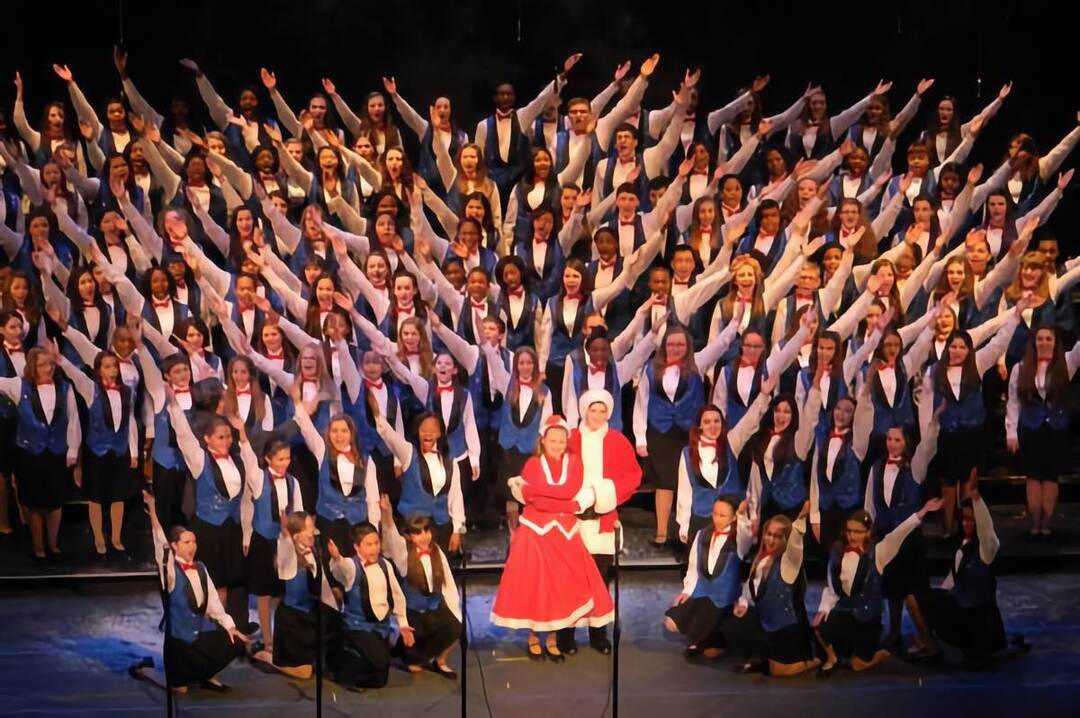
    <summary type="html"><![CDATA[<p><strong><em><span style="font-weight:400;">In the hot Italian sun in Rome in summer 2006, a small group of The Singing Angels from Cleveland were packed into the crowd of pilgrims at the Vatican during a Wednesday mass. The Angels were told they would hear their name called over the intercom while all the groups at the Vatican that day were acknowledged in their own languages. When the English announcements were finished, the Angels were disappointed not to hear their choir called out, but they chose to appreciate their opportunity to be in the Vatican. Fifteen minutes passed, and another announcement rang out: “Will the interfaith youth chorus, The Singing Angels, please make their way to the front of the assembly?” To their surprise, Pope Benedict XVI personally had chosen the Singing Angels to perform at the mass. The Singing Angels were able to perform their entire repertoire of religious music for Pope Benedict that day, one of many highlights in the choral group’s more than six-decade history. </span></em></strong></p><img src="https://clevelandhistorical.org/files/fullsize/0ca77c3f8fbdf608c4a58fb8c3a6f70a.jpg" alt="Annual Holiday Spectacular at Playhouse Square" /><br/><p><span style="font-weight:400;">William C. (Bill) Boehm,  was the founder and original conductor of The Angels, a youth choir that became known as The Singing Angels. Born in 1920 in Cleveland, Boehm earned his BA from Western Reserve University (now Case Western Reserve University). He later pursued a master's degree in Theater. From 1942 to 1948, Boehm served in the U.S. Army as a Captain in the 29th Infantry, stationed in Iceland and England before being honorably discharged.</span>
<span style="font-weight:400;">During his time in the Army, Boehm began to develop a passion for music. In postwar America, youth choruses were becoming increasingly popular. This period saw the rise of show choirs, which were described as “one of our nation’s most precious legacies.” After his military service, Boehm returned to Cleveland and focused on the arts, performing in various leading roles at <a href="https://clevelandhistorical.org/items/show/193">Cain Park</a>, a popular local theater venue. Despite his success, he began to feel a desire for change in his life.</span>
<span style="font-weight:400;">At the time, Boehm held very traditional views on music, believing that rock and roll had a negative influence on young people. He saw it as harmful, linking it to issues such as drug use and social decay. Boehm once remarked, "If Rock n' Roll could be controlled, it could be compelling, but it's not. It's devastating and crippling. It's related to drugs and killing and depravity." Concerned about the growing popularity of rock music and its potential harm to children, Boehm sought to create a positive alternative.</span>
<span style="font-weight:400;">Boehm’s idea was to form a youth choir that would focus on providing young people with a wholesome musical experience. He believed that good music could have a profound impact on children, encouraging them to express themselves creatively while avoiding the negative influences of rock and roll. With this vision in mind, Boehm reached out to an acquaintance who suggested he contact the Cleveland Friends of Music to sponsor his idea. They agreed to support the initiative, if he could sell tickets for the concerts. Boehm, confident in his concept, moved forward with the project, and thus The Singing Angels was born.</span>
<span style="font-weight:400;">The choir was designed to offer children an opportunity to engage with classical and choral music. Boehm envisioned a group where young people could develop their musical talents, learn discipline, and experience the joy of performing. He worked tirelessly to ensure that The Singing Angels would be a success, not only as a musical ensemble but as a positive community force for the youth involved.</span>
<span style="font-weight:400;">Over the years, The Singing Angels grew in popularity and gained recognition for their high-quality performances. Boehm's selection of music for the group covered several genres, including beautiful religious pieces, classical choices, Broadway hits, and some music from popular culture, but The Singing Angels excel at barbershop harmony. "Barbershop music is one of the few genuine American art forms [and] The Singing Angels are the only youth choir in America to do barbershop harmony." Under Boehm’s leadership, the choir performed for a variety of audiences and events, further solidifying its reputation as an important cultural institution. Boehm’s commitment to the children and his belief in the power of music as a force for good were central to the choir’s mission.</p><p>From the beginning, the Angels have rehearsed on Saturdays, first at Cleveland's YWCA. When the choir rapidly outgrew the space provided, they found a home at the <a href="https://clevelandhistorical.org/items/show/9">Masonic Temple</a> in downtown Cleveland until 2017, when the building was sold, and again, they needed to find a new location. Now, their rehearsal space resides in Cleveland's Old Brooklyn neighborhood.</p><p>The two most significant concerts of each performing season were performed at <a href="https://clevelandhistorical.org/items/show/6">Playhouse Square</a> in either the Allen, State, or Palace Theaters, depending on the year. The Angels also performed on local television and special programs with big stars such as Wayne Newton, Audrey Hepburn, Celine Dion, Bob Hope, and The Barenaked Ladies. They have performed for several presidents at the White House, including being invited to be in President Nixon’s inaugural parade and being the youth chorus chosen for the 2006 National Tree Lighting Ceremony with Ertha Kitt, Cathy Rigby, Bj Thomas, and John Connerly. The Angels often performed on local news programs, like channels 5 and 8, during the early morning shows, and when broadcasts ended every day before twenty-four-hour television, The Singing Angels sang the sign-on in the morning and the sign-off at night.</p>
<span style="font-weight:400;">Boehm’s dedication to music and his passion for guiding young people were evident in his work with The Singing Angels. Through the choir, he hoped to instill in young people not only musical skills but also important values such as teamwork, responsibility, and the importance of pursuing excellence. His vision was not just about creating talented musicians; it was about shaping well-rounded individuals who could make a positive impact on society.</p>
<span style="font-weight:400;">Though Boehm’s traditional views on music often set him apart from others in the industry, his work with The Singing Angels proved to be both innovative and impactful. The choir became an enduring legacy, demonstrating the power of music to inspire and uplift the next generation. Boehm’s unwavering belief in the potential of young people and his commitment to providing them with the tools to succeed made him a respected figure in the music community.</span>
<span style="font-weight:400;">William C. Boehm’s creation of The Singing Angels was born from his desire to offer children an alternative to the negative influences he associated with rock music. His vision was to provide young people with an opportunity to learn and perform high-quality music while promoting values of discipline, teamwork, and personal growth. Under Boehm’s leadership, The Singing Angels became a beloved and respected institution, leaving a lasting impact on the Cleveland community and beyond.</span></p><p><em><strong><a href="https://clevelandhistorical.org/items/show/1038">For more (including 12 images) view the original article</a></strong></em></p>]]></summary>
    <published>2024-11-21T19:25:04+00:00</published>
    <updated>2026-03-04T21:32:05+00:00</updated>
    <link rel="alternate" type="text/html" href="https://clevelandhistorical.org/items/show/1038"/>
    <id>https://clevelandhistorical.org/items/show/1038</id>
    <author>
      <name>Dawn Culp</name>
    </author>
  </entry>
  <entry>
    <title type="html"><![CDATA[Betty Felsen: A Ballet and Vaudeville Star&#039;s Cleveland Dancing School]]></title>
    <summary type="html"><![CDATA[<p><strong><em>For several years during the Great Depression, renowned Chicago-born ballerina and vaudeville performer Betty Felsen brought her talent to Cleveland, where she operated a dance school that was part of a vibrant performing arts scene that flourished in Playhouse Square. </em></strong></p><img src="https://clevelandhistorical.org/files/fullsize/a5760486badccfc9ccbaff511c1a27a8.jpg" alt="Betty Felsen Solo " /><br/><p>Born Bertha Felsenthal on June 9, 1905, in Chicago, Betty Felsen took her first dance lesson at age 8. Three years later, in 1916, she enrolled in the Pavley-Oukrainsky Ballet School, named after Andreus Pavley and Serge Oukrainsky, who had been partners of the famed Russian ballerina Anna Pavlova. The Pavley-Oukrainsky Ballet became the official ballet of the Chicago Opera Association in 1919, and from 1920 to 1922 Felsen performed nationwide as a ballerina soloist with the Chicago Opera, notably in the Verdi opera <em>Aida</em>. </p><p>By the latter year, Felsen, now 17 years old, wanted to assert creative control over her dancing and expand her repertoire, so she left the Chicago Opera to take up vaudeville. Her first major performance, co-starring with singer Ruth Etting in the musical <em>Rainbo Trail</em>, ran over four months in Chicago’s Million Dollar Rainbo Room in 1922 and 1923. In 1923 she began performing with Jack Broderick on the B. F. Keith and Pantages vaudeville circuits throughout the U.S. and Canada. Over the next four years, their act evolved from a simple dance act to one with more than twenty dancers, an orchestra, and elaborate costumes and sets, garnering critical acclaim.</p><p>When Broderick quit the act at its pinnacle in late 1927, Felsen continued to perform with her own troupe, Betty Felen & Company, for several more months. Failing to find a new partner with whom she had the same rapport or possessing the brilliance of Jack Broderick, she left the vaudeville stage in late summer 1928, moving first to Worcester, Massachusetts, where she co-owned and operated a dance school with a local vaudeville dancer in addition to performing locally and on summer tours around New England with her students. </p><p>In 1932, Betty Felsen left Worcester for Cleveland, where she opened the Betty Felsen School of the Dance, first located in the Carnegie Hall Building on Huron Road and then moving east to 1706 Euclid Avenue. Offering affordable tuition for ballet, tap, and vocal lessons, Felsen’s school thrived with around 100 students. The school went through three name changes, first to Betty Felsen Studios, then Felsen & Burke Studios of Stage and Radio Arts (reflecting a brief partnership with David Burke), and finally the Betty Felsen Studios of Stage and Radio Arts. </p><p>Felsen and her advanced students performed an annual program called the Betty Felsen Revue at the Masonic Auditorium. Some of her students were active professionally, particularly in various Cleveland productions. These young professionals included Elaine Dion and the Lorenz sisters, Lois Jane, Virginia, and Lorna. Billy Shipman and Patricia McCormack auditioned for Eddie Cantor, a major figure in vaudeville, on Broadway, and in motion pictures.</p><p>Felsen garnered appreciation for her selfless service to her profession. She judged singing and dancing performances for multiple amateur talent competitions, including one in 1936 sponsored by <em>Cleveland News</em>, and often gave free lessons at her school to the winners. The December 1936 issue of <em>The American Dancer</em> magazine also commended her for offering professionals appearing in Cleveland with free use of a studio in her school for rehearsal and practice. </p><p>Betty Felsen’s time as a dance instructor in Worcester and Cleveland proved but a short interlude between her days of ballet and vaudeville stardom and retirement. She closed her school soon after marrying Samuel Tonkin in 1937. Despite her short time shaping Cleveland’s performing arts community, the story of Betty Felsen’s dance school reveals a richness of talent that surrounded and transcended the grand stages and screens of Playhouse Square.</p><p><em><strong><a href="https://clevelandhistorical.org/items/show/1016">For more (including 15 images) view the original article</a></strong></em></p>]]></summary>
    <published>2024-02-25T20:27:26+00:00</published>
    <updated>2026-03-04T21:32:05+00:00</updated>
    <link rel="alternate" type="text/html" href="https://clevelandhistorical.org/items/show/1016"/>
    <id>https://clevelandhistorical.org/items/show/1016</id>
    <author>
      <name>David Tonkin</name>
    </author>
  </entry>
  <entry>
    <title type="html"><![CDATA[Mall Theaters: Cleveland&#039;s First Double-Decker Movie Theater ]]></title>
    <summary type="html"><![CDATA[<img src="https://clevelandhistorical.org/files/fullsize/361ad9ae4073f111f2469c1a89e0849f.jpg" alt="The Mall Theaters&#039; Marquee from Euclid Avenue" /><br/><p>In the years following World War I, a real estate broker named Joseph Laronge set out to transform a section of downtown Cleveland into a rich entertainment district, complete with fine shops, restaurants, and many theaters. Today, he is credited as the father of Playhouse Square. Among these theaters were the Upper and Lower Mall, an innovative two-story duplex theater located between Euclid and Superior Avenues and named for the <a href="https://clevelandhistorical.org/items/show/312">Mall</a>, the civic plaza and grouped public buildings across Superior. Owned and operated by the Loew’s theater chain for most of its existence, the Mall Theaters played an integral role in establishing the multiplex theater concept, which the film industry relies on today.</p><p>According to a 1932 article in <em>The Plain Dealer</em>, the idea for the Upper and Lower Mall was developed in 1914 after a lawyer, Fred Desberg, became involved in the entertainment business through one of his clients, Mark Greenbaum, who owned a theater on the East Side. Greenbaum was presented with the opportunity to take over the Alhambra Theater, also located on Euclid Avenue, and invited Fred Desburg, along with one Ed P. Strong, to be partners in this decision. A few years later, the Mall Theaters were built, and Joseph Laronge was brought on as a financial connection. Laronge’s vision for Euclid Avenue could only be realized with the help of his partner, Marcus Loew. Loew, after overcoming serious financial struggles in the 1880s, had begun to make a name for himself in the theater scene, opening several nickelodeons in New York and Cincinnati by 1903. The success of these first theaters led to the founding of Loew’s Ohio Theaters Inc. in 1904, spearheaded by Loew and Joseph Laronge. </p><p>In 1916, the Upper and Lower Mall Theaters were built at 310 Superior Avenue but later used the address 303 Euclid Avenue, presumably for its greater cachet. Designed by Edward Richardson and Arthur Yost, the layout of these auditoriums was quite clever, with one situated directly above the other. They occupied what had previously been a large section of empty space between Euclid and Superior Avenues. Due to a change in elevation between the two streets (approximately eleven feet), entering on the Euclid side would take patrons to the Upper Mall, and the Superior side to the Lower. The lower auditorium seated 600, and included a small passageway to function as the theaters’ lobby. A stairway could be taken to the upper auditorium, which seated 750 and included a balcony. </p><p>Though the unique design of the theaters was new to Cleveland, whether or not the Mall was the nation’s first multiplex theater has been a point of some contention. In 1921, <em>The Plain Dealer</em> published an article boldly referring to the Mall as the only duplex theater in the world. However, Detroit boasted its own Duplex Theater as the first ever built in the US, which is recorded to have opened in 1915, a year before the Mall Theaters' completion. The Detroit theater featured two side-by-side auditoriums, but despite its novelty closed in 1922 after a seven-year run. Even closer to home, though, was the Oxford Theater on Ontario Street, which opened in either 1912 or 1913. The Oxford was essentially one large auditorium split in half by a fireproof curtain, with a screen on each side. It is possible that the Oxford Theater was responsible for introducing the duplex theater concept not only to Cleveland, but to the entire country. However, neither the Detroit Duplex Theater nor the Oxford utilized the double-decker architectural design of the Upper and Lower Mall. </p><p>Following impressive changes to the theater district in downtown Cleveland during the 1910s and ’20s, The Mall Theaters were within walking distance of several shops and restaurants, meaning that one could enjoy a meal or shopping trip before seeing a film. According to a map included in Eric Johanessen’s <em>From Town to Tower</em>, the Upper Mall shared a block with <a href="https://clevelandhistorical.org/items/show/1000">Rosenblum’s</a> clothing store in the 1920s, next door on Euclid Avenue. The store was opened in 1910 by Cleveland native Max Rosenblum, and was associated with a luxury atmosphere and easy credit for its customers. On the Superior side of the theaters stood <a href="https://clevelandhistorical.org/items/show/937">Weber’s Restaurant</a>, a popular eatery known especially for its decor at the time. The three-story establishment is recorded as having oak-paneled interior and charming stained-glass windows. </p><p>Both of the Mall Theaters were closed on August 31, 1960. The last movies to be shown in the Lower Mall were <em>The Naked Road</em> and <em>The Prime Time</em>, and the Upper Mall concluded its life of film with <em>Man on a String</em> and <em>The Young Land</em>. The Upper Mall would be replaced by nearly ten thousand square feet of office space, to be used for the Women’s Federal Savings and Loan Office, and the Lower Mall would be converted into a parking garage for the Sohio headquarters building. As for Marcus Loew, his chain of theaters proved to be one of the most successful in the country (and perhaps the world) at the time, owning movie houses across 23 states, as well as in Canada, England, and Chile. However, his theaters amounted to only a fraction of his success. In April 1924, Loew founded Metro-Goldwyn-Mayer (MGM) Studios, which dominated the film industry from 1924 to 1954. Until 1948, film studios had complete ownership over the distribution of their films, meaning that MGM’s films ran almost exclusively in Loew’s own theaters. This period marked incredible wealth for Marcus Loew. He was associated with MGM until 1959, when he left the company due to the long lasting effects of United States v. Paramount Studios, Inc., a Supreme Court ruling that affected studios’ rights to own their own theaters and methods of distribution.</p><p><em><strong><a href="https://clevelandhistorical.org/items/show/982">For more (including 8 images) view the original article</a></strong></em></p>]]></summary>
    <published>2022-11-23T21:46:54+00:00</published>
    <updated>2026-03-04T21:32:05+00:00</updated>
    <link rel="alternate" type="text/html" href="https://clevelandhistorical.org/items/show/982"/>
    <id>https://clevelandhistorical.org/items/show/982</id>
    <author>
      <name>Sara Brown </name>
    </author>
  </entry>
  <entry>
    <title type="html"><![CDATA[Halle Building: Alfred Pope&#039;s Terra-Cotta Showcase for Downtown Shopping]]></title>
    <summary type="html"><![CDATA[<p><strong><em>In 1907 a New York industrialist acquired a rooming house on the south side of Euclid Avenue with rear frontage on Huron Road. At the time, downtown scarcely reached east of East Ninth Street, and this section of Millionaires' Row remained largely residential. Undeterred, the man imagined a tall building that might entice downtown development eastward. Appropriately enough, he selected an architect who was no stranger to big plans.</em></strong></p><img src="https://clevelandhistorical.org/files/fullsize/0d988b9998d31b9ae3413f9581728ae0.jpg" alt="The Halle Building, Euclid Avenue Facade" /><br/><p>Alfred Atmore Pope had left his Millionaires' Row mansion in Cleveland in 1901 and moved to New York, but he remained keenly interested in the Forest City. After all, his parents had moved there from Maine on the eve of the Civil War, and it was there that he had struck out on his own as a young man, leaving his father's wool business to invest in the burgeoning iron industry. In only a decade he had risen to the helm of Cleveland Malleable Castings Company. Now he wanted to build a monument to his success. Even the Panic of 1907 did not deter Pope, who doubled down on his commitment, which he now also billed as a show of faith in Cleveland's future during an uncertain time.</p><p>Pope's "monument" would take the form of a skyscraper that he undertook on speculation. He turned to Henry Bacon to design this tribute to himself. The New York architect had prepared initial drawings for the Lincoln Memorial about a decade earlier, but the project's implementation still awaited congressional approval. Unlike in Washington, in Cleveland, backed by a "millionaire rolling mill master" on a mission, Bacon knew he wouldn't have to wait long to see the fruits of his labor.</p><p>Pope's monument began with a 42-foot-deep hole in the ground because he believed Euclid Avenue would eventually have a subway, and he wanted to have an underground entrance when that day came. To hold back the "quicksand" that reflected the site's nearness to Lake Erie, Pope's construction crews had to build a cofferdam and then pour thick reinforced concrete walls to keep the basement and subbasement dry. Above, they quickly assembled the building's steel superstructure and clad it with elaborately ornamented, white-glazed terra-cotta tile and enamel brick that would enable periodically washing off Cleveland's industrial soot.</p><p>Originally intending his monument to have two floors of retail space with eight floors of office space above, Pope instead found a single tenant to lease the entire $1 million Pope Building, a lessee that had a grand vision of its own that even a financial depression couldn't subdue. Who would make such a bold move during an economic depression and in a space so far east of Cleveland's business core? Samuel and <a href="https://clevelandhistorical.org/items/show/424">Salmon Halle</a>. The Halle Bros. Co. had started when its namesakes bought out a small furrier on Superior Avenue just west of Public Square in 1891. The Halles joined the shift of retailers eastward across Public Square to a Euclid Avenue storefront near the Arcade the next year, but with a growing mail-order and home-delivery business in addition to expanding into a full department store, they soon outgrew this space too. </p><p>With the lease of the 140,000-square-foot Pope Building in 1908, the Halles now had three times the space of their former location. Their move also influenced two other large stores to move eastward to upper Euclid Avenue. Within a year of Halle Bros.'s announcement, the Higbee Co. and Sterling & Welch Co. announced their own new stores on the sites of former Millionaires' Row homes across from the Pope Building. The Halle store's continued expansion led to the purchase of the building and plans to expand onto the adjacent lot following Pope's death in 1913. The Halles commissioned Bacon again, and he designed a mirror-image addition that was completed the following year. Close observers will note the vertical seam that marks where the newer building rose alongside the original one.</p><p>Halle's continued to grow in the 1920s, adding an identically styled terra-cotta clad Huron-Prospect Building (designed by Walker & Weeks) to the south of the main store that housed the Men's Store for the next three decades. Near the end of the '20s it also opened branches in Erie and New Castle, Pennsylvania, and Canton, Ohio. After weathering the Depression and War years, Halle's continued to grow, investing in its first suburban branch (at Shaker Square) and undertaking a modernization program that included the addition of escalators. </p><p>Downtown's fortunes began to turn in the second half of the 1950s, forcing Halle's to continue its aggressive planning to maintain its enormous downtown store's profitability. Walter M. Halle, Samuel Halle's son and by then the store's president, grew concerned about the impact of the CTS rapid transit line, which opened in 1954-55 and served downtown with a single station beneath the Terminal Tower (which incidentally benefitted Higbee's after its move to Public Square in 1930). Halle Bros. added its own free bus service from the Terminal on Public Square in 1956 and converted its Huron-Prospect annex into a parking garage in 1957, all while actively lobbying for a downtown subway to carry suburban shoppers closer to its store.  This hope — an echo of Mr. Pope's vision of a subway six decades earlier — collapsed once and for all after county commissioners twice rejected the plan in the late '50s. </p><p>Nevertheless, through ongoing effort, Halle's continued to hold its own into the late 1960s. In fact, for many Clevelanders born after midcentury, the 1950s and 1960s shaped their relationship with Halle's. The store introduced <a href="https://clevelandhistorical.org/items/show/828">Mr. Jingeling</a>, said to be Santa's keeper of the keys, as a popular Christmastime character who joined other child-friendly features such as the toy department, playground, and miniature golf course. Still, by the latter half of the 1960s, the convenience of suburban malls and inconvenience or even trepidation about trekking downtown led Halle's to press for new downtown apartments to create a captive market. </p><p>Although the Chesterfield Apartments opened in 1967 and Park Centre (Reserve Square) in 1969, the future of Halle's seemed shaky. Sterling Lindner, the successor to Sterling & Welch, closed in 1968 and the Allen, Ohio, State, and Palace Theaters fell dark the next year. In the decade after Chicago-based Marshall Field's scooped up Halle's in 1970, it made changes that irked some longtime tradition-minded customers—dropping the signature Halle Bros. logo in Old English font with a script font Halle's matching that of the Chicago store; ending the Mr. Jingeling tradition; and introducing cheaper lines of merchandise. </p><p>Ultimately, Field's dumped Halle's in 1981, and the store closed permanently the following year. Just as suddenly as Samuel and Salmon Halle had justified Alfred Pope's big gamble at a time when downtown had not yet "arrived," the building emptied. In the decades that followed, the Halle Building became what Pope had originally envisioned—an office building with a few small retailers (a food court and sundry services for office workers). It lived on as a department store only in public memory and, for a decade in the 1990s-2000s, as the fictional Winfred-Louder on ABC's <em>The Drew Carey Show</em>. Today it is an apartment building.</p><p><em><strong><a href="https://clevelandhistorical.org/items/show/960">For more (including 17 images) view the original article</a></strong></em></p>]]></summary>
    <published>2022-07-07T01:24:38+00:00</published>
    <updated>2026-03-04T21:32:05+00:00</updated>
    <link rel="alternate" type="text/html" href="https://clevelandhistorical.org/items/show/960"/>
    <id>https://clevelandhistorical.org/items/show/960</id>
    <author>
      <name>J. Mark Souther</name>
    </author>
  </entry>
  <entry>
    <title type="html"><![CDATA[Kinney &amp; Levan: The Nation&#039;s Largest Housewares Emporium]]></title>
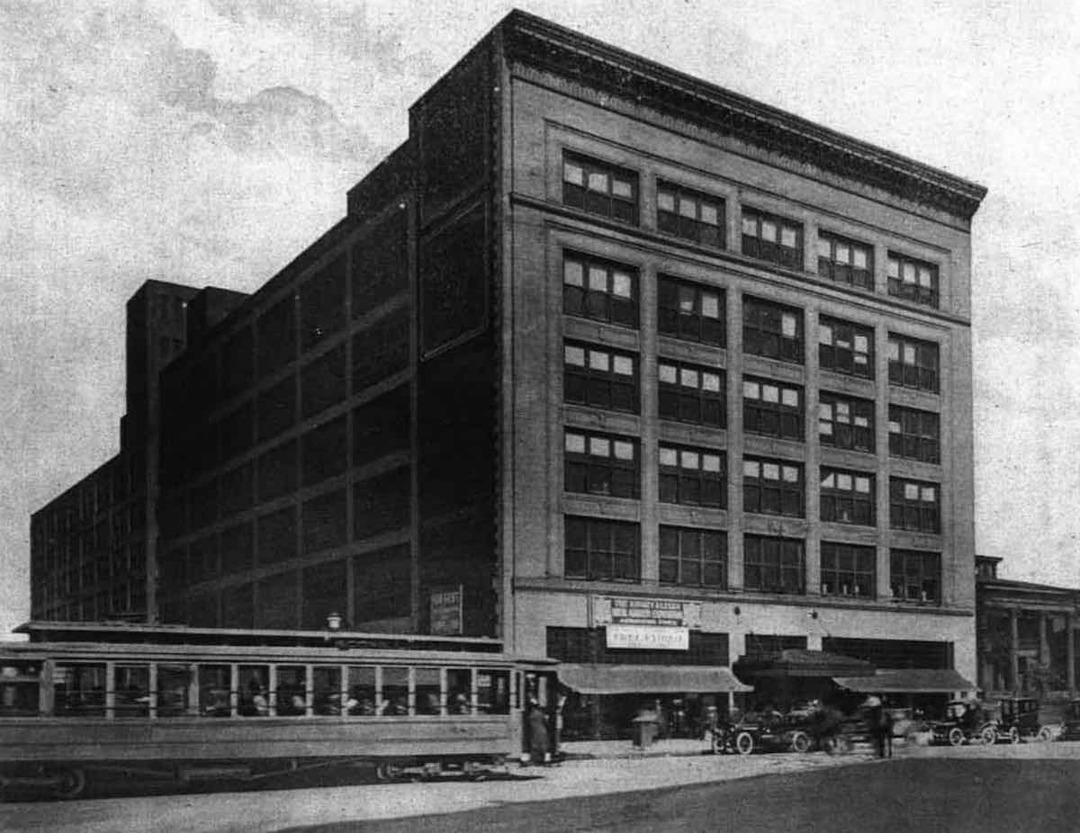
    <summary type="html"><![CDATA[<p><strong><em>At 79 years old, George W. Kinney had no time to stop to smell the roses—79 of them—that his employees had ordered for his birthday. He was too busy preparing for his store's biggest expansion in three decades.</em></strong></p><img src="https://clevelandhistorical.org/files/fullsize/480768340f73d9aafed4925d15bfdb8d.jpg" alt="Early View of the Kinney &amp; Levan Building " /><br/><p>In the depths of the Great Depression, downtown merchant George W. Kinney pressed forward with an air of confidence. He expanded the Kinney & Levan store at 1365-85 Euclid Avenue from a housewares store to a full-fledged department store for the home in 1932. Kinney's radical reorganization enabled him to display wares in individual rooms to suggest how they might appear in a shopper's own home. Between the store's support columns on the street level, he arranged tall backlit cabinets and mirror-topped tables displaying various table settings. But it was the third floor that generated the most excitement. There Kinney created an experience akin to touring European and American history museum period rooms. Twenty-eight furnished rooms were filled with furniture manufactured by the Robert Irwin Furniture Co. of Grand Rapids, Michigan, and decorated in period and contemporary styles. At the expanded store's preview for reporters, Kinney recalled how skeptics had scoffed at his decision in 1913 to move "so far out," noting with satisfaction that Playhouse Square had followed him uptown.</p><p>In 1873, twenty-year-old George W. Kinney, the son of a longtime trustee of Oberlin College, had traveled from Oberlin to Cleveland to sell several empty oil barrels to William H. Doan, who co-owned several Cleveland refineries that produced carbon oil, naphtha, and gasoline. On Doan's advice, Kinney decided to try his luck selling kerosene lamps, first from a building on the north side of Public Square, and quickly expanded to china, glassware, and lamps. In 1883, he partnered with merchant Aaron B. Levan to buy out the Bowman Bros. & Levan housewares store at 120 West Superior Street across from where the Perry-Payne Building was built five years later. Then, in 1885, they moved to a much larger building at 219-221 Bank Street (later 1427-37 West 6th Street). The business soon served a four-state area with four traveling salesmen and fifteen store employees. </p><p>Outgrowing its store on West 6th, Kinney & Levan moved in 1913 to a new six-story building leased from Samuel, William G., and Katherine Mather on upper Euclid Avenue, becoming the easternmost of downtown's major retailers. The building replaced the home where Samuel Mather had lived before moving farther east on Euclid Avenue. In the new terra-cotta faced building designed by Walker & Weeks, the store staked its claim as the nation's largest housewares store—"The housewife's paradise," averred George Kinney. The space was immense, so large, Kinney liked to point out, that he had no need of golf because he got plenty of exercise pacing the 450 feet between Euclid Avenue to Dodge Court multiple times each day. The store occupied the first four floors and basement, as well as the rear half of the fifth floor. The Cleveland Public Library occupied the front half of the fifth and all of the sixth floor until its new Beaux-Arts edifice was completed on Superior in 1925. The store featured five model kitchens and literally acres of floor space with a "bewildering" assortment of china, glassware, silverware, crockery, cutlery, lamps, appliances, and more.</p><p>Following A. B. Levan's death soon after the move to Euclid Avenue, Kinney continued to update his store. He opened a portion of the space to the Likly & Rockett Trunk Co. in 1916, and two years after that he added the Oriental Studio, where costumed Chinese women served tea to customers. In 1928, Kinney bought the property he had originally leased. In addition to recasting his store's "interior frontier," which historian Alison Isenberg has identified as an approach to helping "Main Street" survive the Depression, four years later, Kinney took up interior decorator services for other businesses and even decorated the "<a href="https://clevelandhistorical.org/items/show/1028">Home in the Sky</a>" and "House of Tomorrow," two model "houses" in the Builders' Exchange Building, part of the Union Terminal Group. </p><p>The weight of economic conditions may explain why, in spite of having a payroll of 330 employees and a national reputation for its vast selection of merchandise, the Kinney & Levan Company leased out considerable space in its building starting in 1934. The lessees included the Intown Club, Foster Frocks, Guenther Art Galleries, and Poyner's Beauty Shop. The following year, Stouffer's restaurant moved into the former Likly & Rockett space. Finally, in 1936, months after George Kinney died, Kinney & Levan descended into bankruptcy and was sold at auction the following year. At the time of Kinney's passing, he and W. B. Davis of Lindner & Davis were the city's oldest downtown merchants. </p><p>After the Kinney & Levan Building's sale, its rear half was leased to Bailey Co. department store for its warehouse starting in 1937. The street-facing front half included a succession of various businesses. WJW radio station arrived in 1944, and in its studio five years later deejay Alan Freed coined the name "rock 'n' roll" for the music he played. While WJW departed to a location east of the Hanna Building in 1957, Stouffer's held on until 1972, when the reduction of foot traffic after the closing of the Playhouse Square theaters finally forced it to close. </p><p>Despite the gradual restoration of the theaters over the next two decades, the old Kinney & Levan building languished before being donated to the Playhouse Square Foundation in 1998. A decade later it found new life as the home of Cleveland's National Public Radio affiliate. Though he surely would have lamented the disappearance of retail, Kinney might also have appreciated the building's new name—Idea Center. After all, it had been his "idea center" too.</p><p><em><strong><a href="https://clevelandhistorical.org/items/show/958">For more (including 18 images) view the original article</a></strong></em></p>]]></summary>
    <published>2022-04-23T20:03:43+00:00</published>
    <updated>2026-03-04T21:32:05+00:00</updated>
    <link rel="alternate" type="text/html" href="https://clevelandhistorical.org/items/show/958"/>
    <id>https://clevelandhistorical.org/items/show/958</id>
    <author>
      <name>J. Mark Souther</name>
    </author>
  </entry>
  <entry>
    <title type="html"><![CDATA[Otto Moser&#039;s: Service with a Thousand Smiles]]></title>
    <summary type="html"><![CDATA[<img src="https://clevelandhistorical.org/files/fullsize/ef2331ebbaa5e0727e6799dd0590ffee.jpg" alt="Otto Moser at His Bar" /><br/><p>Beginning in 1893, and for nearly 100 years hence, Otto Moser’s was East 4th Street’s hippest hole in the wall—a cramped see-and-be-seen hangout featuring heavy food, boundless booze, and walls dripping with celebrity photos and theatrical playbills.</p><p>Otto Moser was a crusty Canton, Ohio, native born in 1865. He came to Cleveland as a boy, lived most of his life on East 73rd Street (known as Otis Avenue until 1906) and launched his famous restaurant before the age of 30. His timing was perfect and his restaurant’s location was ideal: Until the 1920s, the area around East 4th Street (called Sheriff Street until 1906) was the heart of Cleveland's theatrical district, featuring a dozen or more theaters. For nearly 50 years Otto’s restaurant, located in the still extant Krause Building, fed and watered untold thousands of actors, comedians, musicians, acrobats, mimes and impersonators, in addition to show patrons and other downtown denizens. The Krause Building, incidentally, was built by William Krause, who sold and rented theatrical costumes—another example of “right place, right time.” </p><p>Otto’s celebrity customers (writers, newspapermen and politicians, as well as performers) achieved photographic immortality by signing and gifting publicity stills that Otto displayed in glass cases and on the restaurant’s walls. Currently under the stewardship of Cleveland State University, Otto’s collection is a theatrical Who’s Who of entertainers that includes Fanny Brice, Helen Hayes, Al Jolson, Sarah Bernhardt, Eddie Cantor, Maurice Evans, Edward Everett Horton, Cornelia Otis Skinner and Paul Muni. Will Rogers once stated that he would “shoot the place full of holes” if he did not see his picture mounted on the wall during his next visit. Plain Dealer writer Marianne Evett visited Otto Moser’s in 1991 and recalled in a subsequent article that “All three Barrymores are there: dashing John surrounded by women; a sleek and gray-haired Lionel; and a very young and vulnerable-looking Ethel staring soulfully from a portrait that might date from her 1902 tour. A youngish W.C. Fields in a scruffy beard wears a tramp costume. George M. Cohan has his autograph scrawled across his forehead. Edwin Booth glowers as Shylock in "The Merchant of Venice." John Philip Sousa gives an austere look from a frame behind the bar.</p><p>“And,” Evett continued, “there are others whose fame didn't last. Who was H. Lawson Butt, star of The Garden of Allah in 1913? Young Harry Pilcer, with his carefully parted waves of hair? The Elmore Sisters? Lulu Glaser, who signed her name on December 3, 1901, or Jessie Merrill, who wrote "To the 'boys' with best wishes from the Telephone Girl?” </p><p>Although plenty close to (among others) the Hippodrome (1907), Park (1883) and Cleveland (1885) theaters, Otto Moser’s was especially proximate to the esteemed Euclid Avenue Opera House. Built in 1875 on Sheriff Street (a secondary entrance faced Euclid Avenue) the Opera House quickly became Cleveland’s premier showcase for all manner of “legitimate” entertainment—quickly marginalizing the aging Academy of Music on Bank (now West 6th) Street. Owned for a time by Marcus Hanna, the Opera House was largely destroyed in an 1892 fire. However, Hanna rebuilt and the theater reopened on November 11, 1893, quite possibly the same night that Otto Moser’s restaurant came into being directly across Sheriff Street. The Opera House closed and was demolished in 1922 to make way for an S.S. Kresge store. By this time, Cleveland's theatrical epicenter was moving east and “moving pictures” had become entertainment’s biggest draw. </p><p>Despite his bistro’s welcoming ambiance, Otto Moser was nonetheless obligated to observe the era’s social and legal canons, and that meant “men only.” But ever the egalitarian opportunist, Otto got around the ban by creating a private “Cheese Club” in the restaurant’s basement. The gathering spot featured a giant wheel of cheese in the middle of the room and served beer to both sexes. The Cheese Club quickly become a destination unto itself, catering to entertainers, politicians, journalists and members of notable families. Theater folk like Lillian Russell, George M. Cohan, Helen Hayes and Eddie Foy put on private shows, told stories, sang songs and recited poetry. A tunnel under Sheriff Street allowed patrons as well as performers to move freely and discretely between the Opera House and the Cheese Club.</p><p>By the late 1920s the Opera House was gone and Cleveland’s theater district had moved up Euclid. Yet Otto Moser’s remained unaltered, save for a dry spell during Prohibition. Even after Moser's death in 1942 the restaurant’s character changed little. The establishment was acquired by the Langham family who sold it to Helen Gilman and Moser bartenders Jack and Max Joseph in 1952. The heavy oak furniture stayed. Menu items were still named after celebrities. Food such as house-specialty corned beef and cabbage was still cooked in a downstairs kitchen. Festivities continued to be supervised by a giant plaster eagle with a cigar in its beak and a dusty moose head named Bullwinkle, whose antlers were festooned with customer-donated hats. One big change, however, was (ding!) the establishment’s first cash register: Moser had always thrown paper money into a drawer and piled coins on a marble slab behind the bar. </p><p>Dan Bir and Steve Dimotsis were the restaurant’s last owners, purchasing the establishment in 1977 from Nils Osbeck and David Butler, who had purchased it from John Pitt who had purchased it from Max Joseph. Dimotsis moved the restaurant to Playhouse Square in 1994, believing that the area’s renaissance would be better for business. Otto Moser’s continued to entertain performers appearing at Playhouse Square theaters, the Great Lakes Theater Festival and the Cleveland Play House. And naturally, he added more pictures to the walls. The restaurant carried on for another 24 years until it closed for good in 2018. By that time Playhouse Square was rife with after-show dining spots. But not a one displays photos of Dick Thompson “the Burglar” . . . or Haverley’s United Mastodon Minstrels (a 40-man blackface minstrel troupe) . . . or actor Jock McKay sporting kilts and a bagpipe.  </p><p><em><strong><a href="https://clevelandhistorical.org/items/show/902">For more (including 9 images) view the original article</a></strong></em></p>]]></summary>
    <published>2020-01-21T15:24:55+00:00</published>
    <updated>2026-03-04T21:32:04+00:00</updated>
    <link rel="alternate" type="text/html" href="https://clevelandhistorical.org/items/show/902"/>
    <id>https://clevelandhistorical.org/items/show/902</id>
    <author>
      <name>Chris Roy</name>
    </author>
  </entry>
  <entry>
    <title type="html"><![CDATA[Cinema / Lake / Esquire Theater : How a Lost Theater Contributed to Playhouse Square ]]></title>
    <summary type="html"><![CDATA[<img src="https://clevelandhistorical.org/files/fullsize/ffc74dcdba1717386a2e31169cb1f880.jpg" alt="1630 Euclid after being renovated by WXEL/WJW. " /><br/><p>The Cinema Theater opened its doors to Euclid Avenue at East 17th Street on October 14, 1928. The movie house offered the “best of second-run pictures,” and audiences on that first night were shown “The Patent Leather Kid” starring Richard Barthelmess.  The theater featured a Wurlitzer organ with seating for 1,000, and was “decorated in a blue and gold color scheme, with an indirect system of ceiling and wall lights.”  Only two years later, the theater experienced its first of many reinventions when it was purchased by Warner Brothers and closed for renovations on November 18, 1930.  </p><p>Warner’s Lake Theater reopened on Christmas Day 1930, but the commitment of Warner Brothers to the Lake Theater would only last a few years. In 1933, the production company took over the much larger Hippodrome Theater on Euclid Avenue, reopening that venue on November 21st with a glamorous “Hollywood Premiere” of “The World Changes” starring Paul Muni.  Warner’s presence at the Hippodrome meant the programming at the Lake Theater would return to “a collection of B movies, move-overs and reissues.”  </p><p>The building changed hands again in 1948, reopening as the 701-seat Esquire Theater under the local ownership of Community Circuit Theaters.  The premiere featured Frank Borzage’s “Moonrise.” The 1948 renovation added a neon-lighted marquee, upholstered seats, updated sound and video equipment, and a beige, turquoise, and rose color scheme.  Operating for only three years, the cash-strapped Esquire closed without ceremony on May 28, 1951, after showing “I Can Get It For You Wholesale.” </p><p>Ironically, the building’s next use was as a television studio, as the introduction of the television medium led to mass closings of movie palaces around the country. WXEL converted the old theater into a television studio with an audience capacity of 300, and on September 13, 1952, the station dedicated Studio D as part of a million dollar downtown expansion project. WXEL would later become WJW-TV, which broadcast from the former theater until 1975 when it moved to a new location at 5800 South Marginal Road.  </p><p>The WJW building was almost lost in April 1972, when a man entered a fabric store next door at 1706 Euclid and poured gasoline on the floor, yelling “I’m going to burn this place down and there’s another guy on the roof.” The man then entered WJW, and again doused the carpeting and furniture with gasoline. Two WJW security guards subdued the would-be arsonist as he attempted to set a match to his spill.  </p><p>The old Cinema/Lake/Esquire Theater was not the only Euclid Avenue movie house to be threatened in the spring of 1972. The State and Ohio theaters were scheduled for demolition in May of that year, during a time when the Playhouse Square Association was working to preserve them along with the nearby Allen and Palace theaters. The former would be saved by a grant from the Junior League of Cleveland one week later, and the Playhouse Square Association led by Ray Shepardson would begin to steward the theaters through decades of preservation and redevelopment. The Playhouse Square Association had to make careful choices about where to invest resources and capital, and the building at 1630 on the south side of Euclid was never a restoration priority, perhaps because the original theater had been so thoroughly reconstructed into a television studio, or because it quickly fell into disrepair after WJW vacated in 1975. </p><p>In 1976 the Gund Foundation donated the building to the Downtown Cleveland Corp., which planned to tear it down and extend East 17th Street as a one-way southbound artery, according to the plans for a Euclid Avenue pedestrian mall proposed by the architect Lawrence Halprin of San Francisco. In 1978, the Playhouse Square Association opposed the proposal to demolish the old building and extend East 17th Street south to Prospect Avenue, but not because they wished to save and restore the theater. The Association preferred extending East 18th Street into a loop road that would partially encircle the proposed Euclid Avenue pedestrian mall. The Downtown Cleveland Corp. quickly went out of business, and the building was returned to the Gund Foundation. The building was finally demolished in 1985, and East 17th was extended to Prospect decades later as part of the reconstruction of Euclid Avenue.</p><p>Playhouse Square did briefly own the building. In 1981, the Gund Foundation awarded the association a $500,000 grant plus the deed to the old theater to support an effort to raise $3.5 million in private matching funds and qualify for a federal historic preservation grant. In 1982, Playhouse Square resold the building to T.W. Grogan Co. for $270,000, with proceeds from the sale used to pay down debt that remained from the theater restoration efforts in the 1970s. The sale of the building to Grogan Co. was an ironic sacrifice of a 1920s movie house, done in order to support the theaters on the north side of the block. Through these property transfers, the old Cinema/Lake/Esquire Theater provides an early example of how Playhouse Square has financed its continuing development over the past forty years. </p><p>Today the Playhouse Square Foundation is a major landowner throughout Northeast Ohio, with a diverse portfolio of investments totaling over 1 million square feet of space, including most of the properties along Euclid Avenue between East 13th and East 17th.  The Foundation reinvests profits from real estate into the restoration and preservation of the district’s theaters. The block on the south side of Euclid that once lost the theater has become a significant source of income for the continuing operation of the north side of the street, with the Hanna Building being a major anchor of the Foundation’s real estate holdings. In 1999, the Playhouse Square Foundation purchased the 16-story limestone building along with the Hanna Theater, adjacent parking lots, and the rest of the block bound by Euclid and Prospect Avenues, East 14th Street and what would become the East 17th Street extension. The Foundation considered the existing apartment and commercial buildings, as well as the vacant lot where the Cinema/Lake/Warner Theater once stood, as an opportunity to further develop real estate and underwrite as a “working endowment” the financial security of the theaters on the north side of the Euclid.   </p><p>In 2020 the site that once housed the old theater will return to use when the Lumen Building opens. The 34 story apartment tower will be the Playhouse Square Foundation’s most ambitious use of real estate to support the greater performing arts district. When construction began on the tower in 2018, remnants of the old theater were unearthed. Excavators discovered underground heating oil tanks, spread footers, and the foundations of a building that is believed to have been the demolished theater.  While the old Cinema/Lake/Esquire Theater was not able to be saved during the preservation of Playhouse Square, the site of this once forgotten theater will be making an important contribution to the ongoing restoration, reconstruction, and financial stability of Cleveland’s historic theater district.  </p><p><em><strong><a href="https://clevelandhistorical.org/items/show/895">For more (including 15 images) view the original article</a></strong></em></p>]]></summary>
    <published>2019-12-05T21:03:34+00:00</published>
    <updated>2026-03-04T21:32:01+00:00</updated>
    <link rel="alternate" type="text/html" href="https://clevelandhistorical.org/items/show/895"/>
    <id>https://clevelandhistorical.org/items/show/895</id>
    <author>
      <name>Nathanael Meranda</name>
    </author>
  </entry>
  <entry>
    <title type="html"><![CDATA[The Last Moving Picture Company: Dinner and a Movie]]></title>
    <summary type="html"><![CDATA[<img src="https://clevelandhistorical.org/files/fullsize/d6515d6f324dfc82016c3c43511e1e16.jpg" alt="New Life on Playhouse Square" /><br/><p>It didn’t live long. Its street presence was minimal and its food unremarkable. Nonetheless, The Last Moving Picture Company deserves a place in the pantheon of Cleveland restaurants. </p><p>Located at 1365 Euclid Avenue in Playhouse Square, “LMPC” was founded by Hamilton F. Biggar and several chums from Hawken School. Biggar (1947-2014) had launched the <a href="https://clevelandhistorical.org/items/show/477">Mad Hatter</a> dance club on East 18th Street, two years earlier, in 1971. He was the nephew of Jim Biggar, CEO of Nestle USA and Stouffer’s, so perhaps food was in Ham’s blood. In any event, the first-time restaurateur opened his bistro in a former Stouffer’s restaurant in the spring of 1973—four years after the State, Ohio, and Palace Theaters closed and five years after the Allen Theater went dark. Although the theaters had escaped demolition and <em>Jacques Brel</em> would soon open in the State Theater lobby, the district was largely comatose. But amidst all the emptiness, several interesting eateries opened at around the same time. The Elegant Hog was a pubby, wood-paneled hotspot. The Rusty Scupper, with its two-story atrium, was so festooned with ficus, philodendron and ferns that one might assume houseplants were on the menu. And Boukair's, a staple at 1520 Euclid, became the New York Steak House months before LMPC opened and was replaced within a year by the Parthenon. Thus, The Last Moving Picture Company was part of an admirable yet doomed movement to breathe new life into an area that was more “Playhouse Bare” than Playhouse Square. And people responded: Through the early and mid 1970s, suburbanites and business travelers flooded in.</p><p>In addition to its pioneer spirit, The Last Moving Picture Company should be recognized for a generous and maybe illegal “pour your own” policy. In effect, a restaurant patron ordering a mixed drink (say a Bloody Mary) would have a large ice-filled glass, a small carafe of Bloody Mary mix, and (yes folks) a bottle of vodka delivered to his table. Armed with these ingredients, the happy recipient was free to be his own mixologist. This, of course, was a recipe for economic and dipsomaniacal disaster since customers quickly discovered that they could forego the Bloody Mary mix entirely and pour themselves an eight-ounce, ultra-dry vodka martini for the price of a single drink. Neither the policy nor the customers’ livers lasted long.</p><p>But moving pictures are what made The Last Moving Picture Company truly unique. Cut into every wall of the restaurant was a movie screen, behind which were small closets containing an 8-millimeter projector and stacks of old films. Rushing frantically from closet to closet to change reels, a full-time projectionist would treat patrons to endless (and soundless) streams of Buster Keaton, Charlie Chaplin, Mae West and Harold Lloyd . . . sort of a sports bar for movies. Accordingly, the restaurant’s menu was a Hollywood smorgasbord: Fatty Arbuckle was a hamburger. Boris Karlov was a Polish sausage. Joan Crawford was a sirloin. Marilyn Monroe was (what else?) a cheesecake. Complementing the films and filets, the restaurant and upstairs bar featured countless kitschy accoutrements: a nickelodeon, a ticket booth cashier’s station, an old film projector repurposed to dispense beer. Music was piped through old floor radios. Placemats were laminated movie cards.</p><p>The Last Moving Picture Company did a door-busting business until, well, it didn’t. By the late 1970s most of the district’s restaurants had closed, including The Last Moving Picture Company. And while the eateries didn’t survive, Playhouse Square certainly did. In 1977 the Playhouse Square Foundation obtained long-term leases for the Palace, State, and Ohio Theaters. By 1991 each venue had reopened and, in the aggregate, were entertaining some 750,000 patrons a year. Ham Biggar—a champion squash player—went on to launch the 13th Street Racquet Club in a warehouse at Dodge Court and East 13th Street. He must have cringed when, just around the corner, his cinema-centric eatery became a McDonald’s. But 40 years hence, Biggar would surely be gratified to see that the golden arches are gone and that the curtain has risen on new generation of Playhouse Square theaters and bistros.</p><p><em><strong><a href="https://clevelandhistorical.org/items/show/891">For more (including 6 images) view the original article</a></strong></em></p>]]></summary>
    <published>2019-11-29T14:51:15+00:00</published>
    <updated>2026-03-04T21:32:04+00:00</updated>
    <link rel="alternate" type="text/html" href="https://clevelandhistorical.org/items/show/891"/>
    <id>https://clevelandhistorical.org/items/show/891</id>
    <author>
      <name>Chris Roy</name>
    </author>
  </entry>
  <entry>
    <title type="html"><![CDATA[Cleveland Recording Company: From Polka to Rock and Roll ]]></title>
    <summary type="html"><![CDATA[<img src="https://clevelandhistorical.org/files/fullsize/e36f871bdfbaaca1a25e00b36b0e0d79.jpg" alt="Carnegie Hall" /><br/><p>"Everybody’s doing a brand new dance now; come on baby, do the locomotion!" Sound familiar? It’s the cover hit, "The Locomotion," by Grand Funk Railroad. The band recorded many hit records, as did many other bands during the 1960s and 1970s, including The James Gang and Wild Cherry. These three bands had one thing in common; their hits were recorded and produced at one location - the Cleveland Recording Company. The Cleveland Recording Company operated during a time of technological advances in music recording. The CRC produced local and national hit records, helping shape Cleveland's growing reputation as a musical capital.</p><p>In 1934, Frederick C. Wolf founded the Cleveland Recording Company, first located in the Carnegie Hall Building at 1220 Huron Road, which had been built as a multistory auto garage before being turned into an office building, marketed primarily to performing arts organizations. A native of Prague, Czechoslovakia, Wolf accompanied his younger brother James to the United States; while James went to Chicago, Wolf stayed in Cleveland. Wolf developed a dream of ethnic radio broadcasting, so in the mid-1930s he purchased transcription equipment from Crystal Recording. Once set up, Wolf and his friends moved into the space at 1220 Huron, broadcasting classical music and polkas. Since Cleveland was known as the "Polka Town," every Sunday Wolf and company broadcast their respective half-hour shows of eastern and central European polkas.</p><p>Of the many polka groups that recorded in Cleveland, the most well-known was Frankie Yankovic, the future "King of Polka." Yankovic started working with Wolf in 1938, recording some of his first polkas at Cleveland Recording. Yankovic joined the Army in 1943, leaving little time to continue his recording sessions. Yankovic recalled that "there wasn’t any time to fool around; if we got a note wrong, we just had to keep going. But I insisted we leave the clinkers in, because people like it better that way." When Yankovic left, Wolf held on to some of Yankovic’s money until he returned.</p><p>In 1947, a Chicago real estate operator purchased the Carnegie Hall Building, including its common stocks and open spaces. This purchase also meant a name change—from Carnegie to the Huron Building. The transition prompted Cleveland Recording to move into the fourth floor of Loew's State Theater, at 1515 Euclid Avenue. Wolf was no engineer, so he needed additional help working on Cleveland Recording’s technology. So, in 1950 Wolf hired Ken Hamann. After he left the Navy, Hamann received an FCC operators' license and accepted an open position at WDOK, another radio station Wolf founded the same year. Once there, Hamann used his skills in aviation electronics, inventing and building his own recording equipment.</p><p>By the late 1950s, Hamann worked to improve the recording process at Cleveland Recording. Like other hi-fi hobbyists, Hamann experimented on what was called the "ping-pong stereo" method, recording environmental sounds on an Ampex 2-channel recorder the studio had. The process involves combining multiple tracks into one, mixing together and overdubbing on track recorders. This included recording sounds at Euclid Beach Park and its roller coaster. Hamann played with other types of recording equipment. He experimented with recording sounds using a 3-channel recording system. Clients for Cleveland Recording varied from high school students to professional musicians, and every time a recording session took place, Hamann tried to improve the recordings and upgrade the technology. Hamann worked so much Wolf promoted him to chief engineer by 1956.</p><p>In the late 1960s, Wolf's health began to decline, but he continued to help with Cleveland Recording. Due to his struggling health, Wolf sold Cleveland Recording to Hamann and fellow engineer John Hansen in 1970. Hamann had known Hansen since high school and worked with him in his early years at WDOK. However, local talks about a new parking garage to replace Loew's State Theater made Hamann and Hansen move the Company to a new place; this time to 1935 Euclid Avenue, previously known as the Corlett Building. Although Ray Shepardson and allies ended up saving the State Theater, Hamann and Hansen took no chances. They received help from a Cleveland bank to occupy the old Chevrolet auto space, home to what was more recently the Cleveland Cadillac Company (1925-1965), and Hamann and Hansen’s families with local construction works helped renovate the space into a studio. It was there that Cleveland Recording produced some of the most well-known hit records of the 1960s and 1970s.</p><p>Thanks in part to Hamann’s innovation in recording technology, the music to come out of Cleveland Recording was known locally and nationally. Hamann and Hansen were quick to see the potential of local artists, where Hamann stated in the <em>Plain Dealer</em>, "The area of Ohio, Michigan, and West Virginia has been rich in talent." The artists that came to Cleveland Recording not only brought talent, but new ideas to bring into the recording process. Bands ranged from local (The Human Beinz, The Lemon Pipers) to national (Grand Funk Railroad, The James Gang). </p><p>In 1977, Cleveland State University bought the property at 1935 Euclid, which meant another expensive move for Cleveland Recording. Hamann and Hansen disputed over money issues. Musicians were notorious for being poor-paying customers, compared to the more "straight-laced" commercial clients. Hamann described the "divorce" of Cleveland Recording between himself and Hansen. The studio was separated into two main sections; one for music, run by Hamann, and the other commercials, run by Hansen. Hamann allowed most musicians and bands to stack up their bills, driving Hansen antsy. The two split up the equipment; Hansen took whatever he thought was needed, and Hamann took the rest.</p><p>Hansen took the name of Cleveland Recording Company and continued producing radio and commercial jobs until his passing in 1990, which led Cleveland Recording to go out of business. However, it gained a successor when Hamann created Suma Recording, located in Painesville. When Hamann died in 2003, his son Paul Hamann took over until he passed away in 2017. Suma Recording is still open, with recording equipment available for use via appointments.</p><p>The Cleveland Recording Company contributed significantly to the national music scene of the 1960s-1970s. Once Frederick Wolf opened CRC in 1934, polka and classical music played on the radio, yielding to rock and roll in the 1960s and funk in the 1970s. Ken Hamann's technical prowess and innovation created sounds unheard of at the time, sending bands of the Midwest into national stardom. This spreading of popular music shaped the city of Cleveland into a hub of entertainment, continuing to this day through Suma Recording and other recording studios. The Cleveland Recording Company really did "play that funky music."</p><p><em><strong><a href="https://clevelandhistorical.org/items/show/884">For more (including 7 images) view the original article</a></strong></em></p>]]></summary>
    <published>2019-11-20T20:08:54+00:00</published>
    <updated>2026-03-04T21:32:03+00:00</updated>
    <link rel="alternate" type="text/html" href="https://clevelandhistorical.org/items/show/884"/>
    <id>https://clevelandhistorical.org/items/show/884</id>
    <author>
      <name>Katherine Gerchak</name>
    </author>
  </entry>
  <entry>
    <title type="html"><![CDATA[Stillman Theater: The Playhouse Square Theater That Wasn&#039;t Saved]]></title>
    <summary type="html"><![CDATA[<img src="https://clevelandhistorical.org/files/fullsize/c386fc7974ccf6303eeda12871278d44.jpg" alt="The Stillman Theater" /><br/><p>The beginning of Cleveland's Playhouse Square is almost universally acknowledged to be February 5, 1921, when Loew's State Theater opened, showing the photo play (silent film) <em>Polly with a Past</em>. According to an article which appeared in the <em>Plain Dealer</em>, it was a gala event, attended by Ohio governor Harry L. Davis, Cleveland mayor William S. Fitzgerald, a host of other city and state officials and businessmen, and a contingent of silent film stars led by Marcus Loew, the owner of the new theater and the man who, in the early twentieth century, revolutionized the film entertainment industry in the United States. The day's agenda also included a parade in the afternoon, which stopped at City Hall, where Mayor Fitzgerald presented Loew with a key to the city, and then proceeded to the luxurious Statler Hotel. There, the Rotary Club feted its guests with a luncheon in the hotel's grand ballroom. Conspicuously omitted, however, from the <em>Plain Dealer</em>'s reporting that day was any mention of Loew's Stillman Theater located in the Statler, right next to the ballroom where the luncheon was held. Whatever the reason for this omission, looking back today, almost a century later, you can make a good argument that, without the Stillman Theater--Loew's first downtown theater, there would never have been a gala opening of the State Theater on February 5, 1921, and perhaps no Playhouse Square at all, or at least not on Cleveland's upper Euclid Avenue. </p><p>The Stillman Theater, which was built in 1915-1916, more than five years before the 1921 gala Playhouse Square event, did not start out as a Loew theater. It was the brainchild of Emanuel Mandelbaum, the visionary owner of the Knickerbocker Theater at East 83rd Street and Euclid Avenue, who wanted to open a theater downtown which would be designed and built primarily to show silent films rather than vaudeville performances. In 1915, he obtained a lease on property just to the west of the Statler Hotel and entered into a partnership with the hotel's owners, which enabled the Statler to build an addition onto the west side of their hotel and for Mandelbaum to build his theater behind the hotel, with access to it from a lobby in the hotel. </p><p>Mandelbaum decided to call his new theater the Stillman Theater. "Stillman" was the first name of Stillman Witt, a Civil War era Cleveland railroad baron, known for his business integrity and charitable giving. In 1884, nine years after his death in 1875, Witt's family built a luxury hotel on the westernmost grounds of his former estate. They called it the Stillman in his honor. It was the first hotel built in downtown east of Public Square. While a favorite hotel for Cleveland's elite in the late nineteenth century, it, as well as the nearby Stillman Witt mansion, were razed in or about 1902, as upper Euclid Avenue began to intensely commercialize under the vision of Cleveland businessmen like John Hartness Brown, Charles Pack, and others. By so naming his theater, which would sit on the former site of the Stillman Hotel, as well as that of the estate of Stillman Witt, Emanuel Mandelbaum clearly wanted Clevelanders to identify the new theater with a luxurious place of the past as well as with one of the city's early admired elites. </p><p>While the new addition to the Statler Hotel was designed by George B. Post & Sons, the same architects who designed the beautiful Cleveland Trust bank building on the corner of East 9th Street and Euclid Avenue, the Stillman Theater itself was designed primarily by Thomas W. Lamb, an architect noted for the beautiful theaters he built in American cities in the early twentieth century. As designed, the new theater could comfortably seat 1,800 patrons, with 1,200 in the main auditorium and 600 more in the balcony above. It was so elegant that one architectural critic compared it favorably to the remodeled Theatre Royal in Drury Lane, London, the Scala Regia of the Vatican, and the Strand Theater in New York City. In addition to its elegance, the new theater had an innovative type of satin movie screen, which was set at the rear of the theater's stage, and an orchestra pit directly in front of the stage, all designed to improve the visual and auditory experiences of the audience. The Stillman Theater, which local author Alan Dutka called Cleveland's "first true movie palace," opened in September 1916 with a showing of <em>Snow White</em>, a silent film produced in Cleveland and filmed at the estate of H. A. Tremaine on Fairmount Boulevard in Cleveland Heights, and at other area locations, using local actors. </p><p>Despite its beauty and elegance, and its innovative theater improvements, the Stillman Theater did not get off to a good start financially. After struggling with low attendance figures for two years, Mandelbaum, in 1918, sold the theater to Marcus Loew who reduced prices, advertised better, and brought higher quality films to the theater. Under his ownership, the Stillman Theater soon became one of Cleveland's most popular entertainment places, and was especially noted over the years for premiering almost all of the greatest movies of the first half of the twentieth century that came to Cleveland, including the first "talking" movie, <em>The Jazz Singer</em>, in 1928, and the blockbuster <em>Gone with the Wind</em> in 1940. On August 10, 1936, it featured the first newsreel showing here of the historic track performances of Clevelander Jesse Owens at the 1936 Olympics in Munich, Germany, just one day after the hometown hero won his fourth gold medal there. </p><p>Shortly after purchasing the Stillman Theater, Marcus Loew began undertaking efforts to consolidate movie houses across the United States, including in Cleveland, his Midwest headquarters. In 1919, he entered into an arrangement here with the owners of four other theaters, and formed a corporation called Loew's Ohio Theaters, Inc. Among the theaters that became part of the new corporation were the Upper and Lower Mall Theaters near Public Square and the Alhambra Theater on Euclid Avenue, near East 105th Street, which were owned, in part, by Joseph Laronge, also the owner of a real estate company in Cleveland. Laronge became Loew's vice-president in the new corporation. At this time, some of Cleveland's grandest entertainment places, including the Alhambra Theater and the Elysium, a popular ice skating rink owned by the Humphrey family, were located in the East 105th Street-Euclid Avenue neighborhood, an area which was then often referred to as <a href="https://clevelandhistorical.org/items/show/49">Cleveland's second downtown</a>. Loew had his eye on that neighborhood in 1919, when the press reported his intention to build Cleveland's largest movie theater there. However, and very possibly at the urging of Joseph Laronge, Loew the following year announced his intention to instead build his large theater on upper Euclid Avenue near East 14th Street, just several blocks from his Stillman Theater. Loew's revised plan led to the founding of Playhouse Square a year later when the 3,446-seat State Theater opened. And the rest, as people are apt to say, is history. </p><p>While most Clevelanders today do not even remember the Stillman Theater, much less engage in debate over whether its opening in 1916 led inexorably to the establishment of Playhouse Square on upper Euclid Avenue, it was clearly a Playhouse Square theater from the early 1920s on, was advertised as such, and remained so until it closed in 1963. Had it been located just a block or so to the east, away from the Statler Hotel and closer to where the other Playhouse Square theaters were located, perhaps it could have been, like those others, saved by Ray Shepardson in the 1970s. However, its location next to a hotel with expansion plans doomed it. Even before the last showing of the last movie at the Stillman Theater--the epic historical drama, <em>Lawrence of Arabia</em>, rumors were circulating in Cleveland that it was going to be razed so that the Statler could build a parking garage on the site. This came as a shock to many Clevelanders including <em>Plain Dealer</em> movie critic W. Ward Marsh, who reported the rumor in his June 9, 1963 column. After sharing his personal memories of the theater, Marsh encouraged people who, like himself, did not want to see the theater torn down to "keep their fingers crossed" and just maybe the parking garage wouldn't come "for a long time." Unfortunately for Marsh and other lovers of the Stillman Theater, his suggested finger-crossing didn't work, and the theater was torn down the following year.</p><p><em><strong><a href="https://clevelandhistorical.org/items/show/848">For more (including 12 images) view the original article</a></strong></em></p>]]></summary>
    <published>2018-08-10T10:39:42+00:00</published>
    <updated>2026-03-04T21:32:01+00:00</updated>
    <link rel="alternate" type="text/html" href="https://clevelandhistorical.org/items/show/848"/>
    <id>https://clevelandhistorical.org/items/show/848</id>
    <author>
      <name>Jim Dubelko</name>
    </author>
  </entry>
  <entry>
    <title type="html"><![CDATA[Hanna Building : Business Hub in a Theater District]]></title>
    <summary type="html"><![CDATA[<img src="https://clevelandhistorical.org/files/fullsize/d3d16c37928e1a115681261ebd45fc8a.jpg" alt="Hanna Building" /><br/><p>The Hanna Building was named after the famous U.S. senator from Ohio and oil and coal baron Marcus Alonzo Hanna and built by his son Daniel Rhodes Hanna. Hanna is perhaps best known for having endorsed William McKinley for president in 1896, spending $100,000 of his personal funds to support McKinley's campaign. McKinley won the election, and as a token of gratitude, McKinley aided Hanna in becoming a senator. Hanna's bronze bust is a prominent feature in the building's lobby.</p><p>The building, whose architect was Charles A. Platt, was built from 1919 to 1922, cost $5 million, and occupied land that previously held the Euclid Avenue Presbyterian Church at the corner of East 14th Street and Euclid Avenue. The building's unique interior featured a semicircular lobby with entrances on both streets and stylized silver-and-gold decorative elements. The building's restaurant on the first floor was fashioned in a beautiful Pompeian style, and the rest of the building was used for offices. It is said that the building contained all the variety of businesses required to build a city and maintain it. </p><p>The Hanna Building of the 1920s demonstrated that Cleveland had its own version of Broadway. The building opened around the same time that the Playhouse Square movie palaces started operating, and its restaurant catered to Jazz-Age theater goers and nightlife seekers. As much as it served the emerging entertainment scene, the Hanna Building was an anchor of business. Soon after opening, it ranked second in Cleveland in elevator use with 8,223 people using its lifts on a single day when a citywide count was taken.  </p><p>The 1930s were a difficult time with the building losing half of its value and much of its occupancy. The average vacancy rates for office buildings nationally before and during the Great Depression were 8% in 1926, 12% in 1929, 20% in 1932, and 28% by 1934. The situation at the Hanna was so bad at one point that the owners contemplated turning the building into a warehouse before reconsidering. The Hanna Building Corporation also reduced the Cleveland Railway Company's rent from $123,000 to $108,000 in 1930 as an incentive to keep the company as a tenant. However, in the second half of the 1930s, vacancy began to decrease to 11.4% by the end of 1938 and the situation began to stabilize.  So while the Hanna saw an increase in vacancy during the early 1930s, by the end of the 1930s vacancy rates declined to just above the national average of 10%. T.W. Grogan became the building's manager by 1939 and would later become its owner. </p><p>In contrast to the holding pattern of the 1930s, the 1940s saw new improvements, with the Hanna Building receiving ten brand-new elevators costing $600,000 and taking slightly more than eighteen months to install. The new elevators symbolized a renewed faith in economic development and growth. By 1951, the Hanna reached peak occupancy at 98%, making that the most prosperous year for the building since it opened. Furthermore, T.W. Grogan became the building's owner after purchasing it for $5 million in 1958. </p><p>The 1960s saw the Hanna Building become the unofficial travel capital of the area.  This is due to the rise of commercial jets, which were much faster than commercial aircraft driven by props and thus became popular very quickly. In the early 1960s, the T.W. Grogan Company adopted the slogan  "Come to the Hanna building and go any place in the world." By 1967, travel related companies had a combined 25,000 square feet of office space out of a total 247,000 square feet, which meant that these firms had the largest amount of office space rented by any group of related businesses. By the end of the decade, the building was home to 16 airline offices, 5 travel agencies, 2 car rental agencies, a steamship line office, and even a Vermont tourist information center.</p><p>Although Cleveland's downtown was beginning to decline as a business hub, the Hanna continued to enjoy attentive ownership. In 1980, the building was modified with the original light fixtures that it was supposed to have but was never outfitted with due to Daniel R. Hanna's divorce. In 1985, Cuisines took over the Hanna Pub restaurant on the first floor and decided to return the restaurant to its original Pompeian style as a result of a newfound appreciation for 1920s-style architecture. The first floor of the Hanna Building always had a restaurant with the Hanna Restaurant being there in the 1920s, followed by Monaco's in the 1930s. The Continental Room and Child's in the 1940s, Clark's in the 1950s, The Hanna Pub in the 1960s, and finally Cuisines. With each switch, the restaurant's style was changed to reflect the decade but now it was back to what it was when it was first built. </p><p>The Hanna Building was built almost a century ago, with the intention that it would be an office building, which it remains to this day. Many office buildings built around the same time as the Hanna have been transformed into hotels or apartments in recent years, but apart from the transformation of the Hanna Building Annex to apartments, the Hanna is used for the same purpose that it was built to serve. Such continuation is a testament to the building's maintenance, as it was never left to deteriorate and lose its attractiveness for offices. With so many downtown properties having been converted to other uses, it seems that the Hanna, now owned by Playhouse Square Real Estate Services, appears well-positioned to retain its longtime focus as demand for downtown offices begins to rebound. </p><p><em><strong><a href="https://clevelandhistorical.org/items/show/827">For more (including 9 images) view the original article</a></strong></em></p>]]></summary>
    <published>2017-12-07T08:15:00+00:00</published>
    <updated>2026-03-04T21:32:03+00:00</updated>
    <link rel="alternate" type="text/html" href="https://clevelandhistorical.org/items/show/827"/>
    <id>https://clevelandhistorical.org/items/show/827</id>
    <author>
      <name>Christian Smith</name>
    </author>
  </entry>
  <entry>
    <title type="html"><![CDATA[The Downtown Subway Plan: Sinking a Six-Decade Dream]]></title>
    <summary type="html"><![CDATA[<img src="https://clevelandhistorical.org/files/fullsize/90bc689ba6530158f389df576ce1243e.jpg" alt="Platform Level Rendering, 1955" /><br/><p>Imagine descending an escalator from USBank Plaza and boarding a subway bound for Tower City Center. Mayor Tom Johnson first proposed a Cleveland subway in 1905, and the idea surfaced repeatedly thereafter.  After several failed attempts between the world wars, the city came closest to realizing this dream in 1953, when Cuyahoga County voters approved a $35 million bond issue for a downtown circulator subway by a two-to-one margin. The most discussed route would have traversed a loop from the Cleveland Union Terminal to Superior Avenue and East 9th Street, then to Euclid Avenue and East 13th Street, and back along Huron Road to its origin. Although popular with the public, freeway advocate and county engineer Albert S. Porter persuaded county commissioners to nix the plan in 1957.</p><p>Two years later, Playhouse Square area merchants had grown alarmed by the drop in business that afflicted many American downtown retailers by the late 1950s. With the bond issue set to expire in a matter of months, a group led by officers of the Halle Bros. Co. department store and the owner of the Hanna Building worked behind the scenes to reopen the debate. They got a big boost when the City Planning Commission wrote a subway into Downtown Cleveland-1975, a master plan to guide future development in the city's heart. The plan, which now featured a simpler hook-shaped route under East 14th and Euclid, prompted a bitter feud between downtown interests in Playhouse Square and those near Public Square. The former had long clamored for easier access for transit riders. The latter, especially the Higbee Co. with its advantageous basement entrance adjacent to the Union Terminal rail platforms, frowned upon the subway idea.</p><p>It may never be known exactly why the county commissioners voted down the subway again in 1959. Some alleged that a sizable bribe bought the decisive vote against the tube. True or not, it is clear that Porter succeeded in creating a situation ripe for defeat. Although Toronto had recently completed a similar subway that reinforced its downtown as a vigorous hub, Porter warned darkly of buildings collapsing into the "quicksand" beneath Euclid Avenue and stores with their utilities cut off for weeks on end. He insisted that no one who could drive on a new freeway would think of being packed in "sardine" fashion into a railcar.</p><p>In the 1980s the idea of a subway reemerged in the form of the Dual Hub Corridor, a combination downtown subway and at-grade rail link with University Circle along Euclid Avenue. As cost estimates soared, the idea was scaled back, and the RTA Healthline ultimately opened as a bus rapid transit system in 2008. Meanwhile, the issue of how to distribute transit riders all over downtown found resolution when downtown interests banded together with RTA to fund a system of free trolley buses whose digital overhead destination signs exclaim, "Smile and Ride Free!"  </p><p><em><strong><a href="https://clevelandhistorical.org/items/show/361">For more (including 12 images, 2 audio files,&#32;&amp;&#32;1 video) view the original article</a></strong></em></p>]]></summary>
    <published>2011-12-12T11:21:03+00:00</published>
    <updated>2026-03-04T21:31:59+00:00</updated>
    <link rel="alternate" type="text/html" href="https://clevelandhistorical.org/items/show/361"/>
    <id>https://clevelandhistorical.org/items/show/361</id>
    <author>
      <name>J. Mark Souther</name>
    </author>
  </entry>
  <entry>
    <title type="html"><![CDATA[Palace Theater: Edward Albee&#039;s Showplace on Playhouse Square]]></title>
    <summary type="html"><![CDATA[<img src="https://clevelandhistorical.org/files/fullsize/9fc664b4a2d49716c24df04ef10c7f40.jpg" alt="New Palace Marquee" /><br/><p>The Palace Theater at the B.F. Keith Building opened in 1922. Owner Edward Albee II (the grandfather of American playwright Edward Albee) named it for his late business partner B.F. Keith who had died in 1914.</p><p>Originally named Keith's Palace Theater, the building was designed to be the flagship of the Keith chain of Vaudeville theaters. At the time of completion the Keith Building was the tallest building in downtown Cleveland and represented the high point of development in Playhouse Square. The 3100-seat theater cost $3.5 million to open and was described as one of the most lavish in the land. The sign on top of the building was the largest electrical sign in the world, while the lobby housed a million-dollar art collection and the world's largest woven-in-one-piece carpet.</p><p>B.F. Keith was an American theater owner who helped evolve variety theater into vaudeville.  The Palace Theater emulated this model. The theater held two vaudeville shows a day during its first four years. During its first year, the Palace Theater sold 1.7 million tickets.  However, this trend did not last, as the motion picture era was beginning. By 1926, the twice daily performances were halted in favor of a combination of continuous live entertainment and motion pictures.  In 1932, daily live shows were dropped entirely, with films becoming the main attraction. Throughout this time, however, the Palace Theater never forgot its roots. Despite the theater indulging in film, it still held periodic vaudeville performances well into the 1950s.</p><p>Many famous performers of the age were associated with the Palace Theater. Bob Hope began his career on the Palace stage. It also showcased Bing Crosby, Harry Houdini, Frank Sinatra and the Three Stooges. George Burns and Gracie Allen were married on the Palace Theater stage in 1926.  </p><p>Through a combination of intensifying competition with suburban cinemas and television, the Palace's ticket sales dropped steadily throughout the 1950s and 1960s. Declining revenues and high real estate taxes increased the theater's financial burden, so when an air conditioning unit broke on July 20, 1969, rather than fix it, the theater closed. By the early 1970s, the Playhouse Square area had experienced considerable regression, and the attempts of civic and business groups to increase retail business and attract new commercial uses for the buildings failed.  However, the Playhouse Square Foundation soon began a massive theater restoration effort that eventually included the Palace Theater.</p><p>In April 1982, the Palace dressing rooms were restored in a joint project by a series of local businesses.  In total, the renovation project cost $36.4 million and took six years to complete.  In 1988, the Palace Theater reopened completely restored but with approximately 400 seats less than it originally had. Today, the Palace Theater serves as a venue for every sort of performance from comedy shows to Broadway plays.</p><p><em><strong><a href="https://clevelandhistorical.org/items/show/246">For more (including 8 images&#32;&amp;&#32;1 audio file) view the original article</a></strong></em></p>]]></summary>
    <published>2011-07-11T18:26:10+00:00</published>
    <updated>2026-03-04T21:31:59+00:00</updated>
    <link rel="alternate" type="text/html" href="https://clevelandhistorical.org/items/show/246"/>
    <id>https://clevelandhistorical.org/items/show/246</id>
    <author>
      <name>Joe Petit</name>
    </author>
  </entry>
  <entry>
    <title type="html"><![CDATA[Hanna Theatre]]></title>
    <summary type="html"><![CDATA[<img src="https://clevelandhistorical.org/files/fullsize/2745baf4c9f274a9fff6fd3dc46965f1.jpg" alt="Hanna Theatre Marquee, 1971" /><br/><p>The Hanna complex, located in Playhouse Square, consists of the main building and the Annex, which connects the two buildings across Brownell Court.  The structure was completed in 1921 and contains a total of 400,000 square feet. It was originally owned by Carl Hanna, grandson of industrialist and politician Marcus Alonzo Hanna, and the M.A. Hanna estate.  In November 1958 the property was bought by T.W. Grogan, Vice-President and secretary of the Hanna Building.</p><p>Starting in 1945, the building went through its first three-phased modernization.  The first phase was a complete renovation of the Continental Restaurant on the ground floor. The second phase was the modernization of the Hanna Theatre, located in the Annex. The final phase, in 1948, involved installing elevator units for the building. This took approximately 18 months to complete. The Hanna Building incorporated a top-of-the-line system by the Otis Elevator Company which used an electric brain to dispatch the elevators. This brain, the first in Cleveland and one of the first anywhere in the world, was state of the art and designed to pick up stray passengers left behind during the elevator rush hour.</p><p>By 1968, 85,000 square feet of office space had become a travel-related hub. The offices of twelve international airlines were located in the building, making it the largest airline conglomeration between Chicago and New York City.  With the additional steamship and other various travel offices, there were a total of 24 travel companies in the Hanna Building.</p><p>Throughout its history the Hanna Theatre has been a major theater in the United States, attracting notable stars such as Katharine Hepburn. On April 26, 1971 a bomb was thrown outside the theater to protest the production of the play "Hair."  The bomb bounced off the marquee and shattered windows in the Hanna Building and nearby storefronts.</p><p>The Hanna Building and Annex were added to the National Register of Historic Places in 1976 as a part of the Playhouse Square Group, the second largest theater complex in the United States after New York City's.  In January 2008 the Hanna Theatre underwent a thorough renovation, bringing the theater into the 21st century.</p><p><em><strong><a href="https://clevelandhistorical.org/items/show/243">For more (including 9 images) view the original article</a></strong></em></p>]]></summary>
    <published>2011-07-07T10:44:59+00:00</published>
    <updated>2026-03-04T21:31:58+00:00</updated>
    <link rel="alternate" type="text/html" href="https://clevelandhistorical.org/items/show/243"/>
    <id>https://clevelandhistorical.org/items/show/243</id>
    <author>
      <name>Joe Petit</name>
    </author>
  </entry>
  <entry>
    <title type="html"><![CDATA[Herman Pirchner&#039;s Alpine Village: A Taste of Tyrol in Downtown Cleveland]]></title>
    <summary type="html"><![CDATA[<img src="https://clevelandhistorical.org/files/fullsize/7ec0d47314897be4ca78337a5605d80a.jpg" alt="Menu Cover" /><br/><p>Looking for a place to grab a stein of beer and show off your new lederhosen? Herman Pirchner’s Alpine Village Theatrical Bar and Restaurant, located at 1614 Euclid Avenue (directly across the street from the Palace Theater) was the place to do it. Inspired by Pirchner’s childhood home in the Austrian Alps, the restaurant featured Tyrolean décor, mountain scenes and murals of Bavarian peasant life. Pirchner’s “lusty yodelers,” om-pa-pa entertainment, ski-lodge-like bar, and waitstaff dressed in traditional leather breeches brought the Alps to downtown Cleveland.</p><p>Herman Pirchner immigrated to the United States from Tyrol in western Austria in the mid-1920s. He soon was working two jobs, one in a pretzel factory and one as a bus boy. Then, in defiance of Prohibition, he began to brew beer with his brothers Otto and Karl. “How,” he once noted, “could a beverage as wholesome and innocent as beer be outlawed?” Pirchner’s brewing career came to an abrupt close when the Mafia tried to horn in on his operation. He then opened the <a href="https://clevelandhistorical.org/items/show/965">Alpine Shore Club</a> (formerly Marigold Gardens) on East 185th Street and Lakeshore Boulevard in 1931. On the establishment’s second floor, Pirchner ran a speakeasy. Once again, the Mafia pushed for a piece of the alcohol pie. They harassed Pirchner and set off stink bombs in the restaurant. He fought back with the help of Cleveland Public Safety Director Eliot Ness. After that Pirchner never again was bothered by organized crime. </p><p>On November 28, 1935, Pirchner moved downtown, opening Alpine Village in Playhouse Square. Sporting a Tyrolean cap and leather shorts, he served everything from goose liver to pig’s knuckles. He gave rolling pins to new brides, led German singalongs and yodeled encouragement to folk dancers on a stage that would mechanically rise and fall. Employing skills developed during his earlier career as a carnival strongman, Pirchner dazzled guests by delivering 50 or more steins of beer sliding across the floor on his hindquarters, a feat called "beer hefting" that Ripley’s “Believe It or Not” recognized. Patrons loved it. So did the celebrities who performed there: Cab Calloway, Pearl Bailey, Henny Youngman, Jimmy Durante and many others. Notables such as Fred Astaire, Bob Hope and Frank Sinatra also gathered upstairs at Pirchner’s private Eldorado Club.</p><p>In 1961, exactly thirty years after his “grosse eröffnung (grand opening),” Pirchner declared bankruptcy and the Internal Revenue Service padlocked the restaurant. A year later, Alpine Village reopened under a series of new owners, but the magic could not be replicated. Pirchner, however, forged on—opening a travel center in the Hanna Building and co-owning the Plain & Fancy Gourmet Shoppe at Severance Towne Center. </p><p>The building on Euclid Avenue was razed in 1996 for a parking lot. Herman Pirchner passed away in February 2009 at the age of 101. A decade later, like a silvery Alpen memorial, the 34-story Lumen apartment complex rose on the site.</p><p><em><strong><a href="https://clevelandhistorical.org/items/show/79">For more (including 14 images, 3 audio files,&#32;&amp;&#32;1 video) view the original article</a></strong></em></p>]]></summary>
    <published>2010-11-11T10:33:40+00:00</published>
    <updated>2026-03-04T21:31:58+00:00</updated>
    <link rel="alternate" type="text/html" href="https://clevelandhistorical.org/items/show/79"/>
    <id>https://clevelandhistorical.org/items/show/79</id>
    <author>
      <name>Marilyn Miller</name>
    </author>
  </entry>
  <entry>
    <title type="html"><![CDATA[Playhouse Square]]></title>
    <summary type="html"><![CDATA[<img src="https://clevelandhistorical.org/files/fullsize/e820b13c5ad7dceb90a64163b4b8b56d.jpg" alt="Billboard Sign, 2014" /><br/><p>Playhouse Square emerged in 1921-22 with the opening of the State, Ohio, Allen, Palace, and Hanna theaters near the intersection of Euclid Avenue and East Fourteenth Street. The brainchild of Joseph Laronge, four of the five theaters were interconnected. The largest theater, the Palace, was built to host B. F. Keith's vaudeville performances. In addition to vaudeville, the theater district featured plays, motion pictures, and eventually Cinerama films. By the end of 1969, however, all of the theaters but the Hanna had closed due to declining attendance.</p><p>The Junior League of Cleveland was instrumental in saving the theaters from demolition in the 1970s, forming the Playhouse Square Foundation and working with Cuyahoga County commissioners to restore and reopen the theaters. By the turn of the twenty-first century, all of the original theaters were again hosting performances, constituting the nation's second largest performing arts complex after New York's Lincoln Center. In addition to ticket sales, the Playhouse Square Foundation developed an extensive real estate portfolio stretching from the theater district to the suburbs, which supported ongoing preservation of the historic properties themselves while contributing to broader economic development.</p><p>In recent years Playhouse Square Foundation added dramatic arches at three major approaches to the district, along with LED sign boards and the centerpiece GE Chandelier at Euclid and East 14th. The Foundation also funded a 34-story apartment tower, the Lumen, just east of the Hanna Building.</p><p><em><strong><a href="https://clevelandhistorical.org/items/show/61">For more (including 10 images, 4 audio files,&#32;&amp;&#32;3 videos) view the original article</a></strong></em></p>]]></summary>
    <published>2010-09-22T11:46:09+00:00</published>
    <updated>2026-03-04T21:31:58+00:00</updated>
    <link rel="alternate" type="text/html" href="https://clevelandhistorical.org/items/show/61"/>
    <id>https://clevelandhistorical.org/items/show/61</id>
    <author>
      <name>CSU Center for Public History and Digital Humanities</name>
    </author>
  </entry>
  <entry>
    <title type="html"><![CDATA[Cleveland Play House: From East Side Farmhouse to Playhouse Square Fixture]]></title>
    <summary type="html"><![CDATA[<img src="https://clevelandhistorical.org/files/fullsize/b70a8cf58c3341e6b706f8fcc508e316.jpg" alt="CPH and CSU Join in the Allen Theatre" /><br/><p>The story of the Cleveland Play House begins in 1915 with a series of meetings held at the home of essayist Charles Brooks. Charles and his wife Minerva Brooks met each week with eight of their friends to discuss theatre and the arts. Eventually, the well-to-do couple decided to form the Cleveland Play House, a professional theatre company that would offer performances of a more substantive nature than the vaudeville and burlesque acts popular at the time. With Brooks as president, the company held its first show in May 1916 in an old farmhouse on land owned by industrialist Francis Drury, who lived across the street in <a href="https://clevelandhistorical.org/items/show/822">his mansion</a> at 8615 Euclid Avenue. </p><p>As attendance grew, the farmhouse became inadequate. In 1917 the Play House spent nearly $9,000 to purchase and renovate a Lutheran Church at East 73rd Street and Cedar Avenue that could seat 160 people. Audiences soon became too big for this space, too, and in 1926 the company moved back to the Drury estate. This time, Drury donated his land to the Play House and in place of the old farmhouse were two new interconnected theaters: the 522-seat Drury Theatre and the 160-seat Brooks Theatre. In 1949 the Play House also added a third theater in a converted Christian Science church on Euclid Avenue and East 77th Street. The Play House's continued success led to the 1983 opening of a new complex on East 86th Street at Carnegie Avenue. The complex, which comprised a former Sears store and a new building designed by renowned architect Philip Johnson, included the 550-seat Bolton Theater. </p><p>In 2009, after selling its East 86th Street complex to the Cleveland Clinic, Cleveland Play House announced it planned to move downtown. The move came just one year after the Great Lakes Theater Festival left its Lakewood home to take up residence in the Hanna Theatre. Cleveland Play House partnered with Cleveland State University to create a state-of-the-art complex for shared use in the revamped historic Allen Theatre.</p><p><em><strong><a href="https://clevelandhistorical.org/items/show/6">For more (including 11 images&#32;&amp;&#32;6 audio files) view the original article</a></strong></em></p>]]></summary>
    <published>2010-09-12T20:56:42+00:00</published>
    <updated>2026-03-04T21:31:57+00:00</updated>
    <link rel="alternate" type="text/html" href="https://clevelandhistorical.org/items/show/6"/>
    <id>https://clevelandhistorical.org/items/show/6</id>
    <author>
      <name>CSU Center for Public History and Digital Humanities</name>
    </author>
  </entry>
</feed>