Filed Under Education

The Cleveland Health Museum

America's First Health Museum

In the early twentieth century, medical doctors and social organizations devoted much time and effort to developing new ways to show people how modern science could improve their health. These doctors and organizations firmly believed that showing people was better than lecturing them, and they accordingly promoted new methodologies that would visually demonstrate the health benefits of modern science. One of the most interesting concepts that they promoted during this period was the health museum.

In 1911, from May 6 to October 31, an International Hygiene Exhibition was held in Dresden, Germany. Situated in the city's famous GroBer Garten, it occupied approximately 62 acres of the park grounds. There, representatives mostly from Germany and other European countries presented exhibits of some 20,000 objects in 70 rooms that showed how advancements in modern science could improve health and hygiene, with emphasis in the fields of history, industry and populism. One year after the International Exhibition closed, a health and hygiene museum—the first of its kind in the modern world—was built in Dresden on the Exhibition grounds.

While the United States did not officially participate in this International Exhibition, a number of American medical doctors and other Americans traveled to Dresden to see it. There is no newspaper account of anyone from Cleveland attending; however, word of the Exhibition and the new health museum in Dresden certainly reached at least one person in Cleveland, Mildred Chadsey.

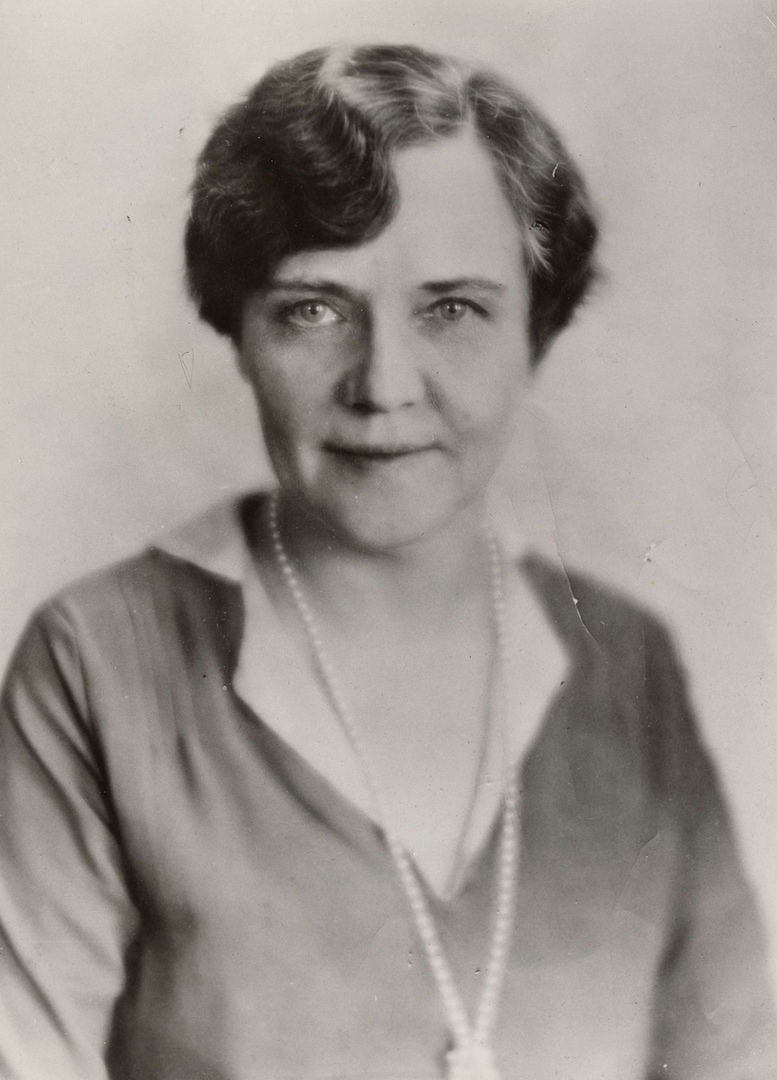
Mildred Chadsey was a graduate of the University of Chicago where she earned a degree in social work. In 1910 she moved to Cleveland and two years later accepted a position in new mayor Newton D. Baker's administration as the city's first housing official. The duties of that position included serving as the city's chief sanitary inspector. Not only was Chadsey the city's first housing official; she was also one of the first women to serve in any position in Cleveland city government.

On November 27,1912, according to the Cleveland Press, Chadsey announced a plan to create a health museum in the "old East Ohio Building" then standing on Superior Avenue next to where Cleveland City Hall then stood. Over the next several years Chadsey recruited volunteers from Western Reserve University to gather information and statistics on Cleveland housing in furtherance of her museum project. However, before she could complete the project which was supported by Mayor Baker, but opposed by Cleveland City Council, Baker's term of office came to an end ,and with it, Chadsey's tenure as the city's housing official.

While Mildred Chadsey's 1912 proposal to build a health museum in Cleveland died, the idea did not. Two decades later, during the Great Depression, a number of Cleveland medical doctors and social organizations gathered together, determined to create and fund a health museum largely with private sector donations. This time, the project succeeded.

Inspired by health exhibits in the Hall of Science at Chicago's 1933-1934 Century of Progress International Exposition, and led by Dr. Lester Taylor, President of the Cleveland Academy of Medicine, 33 members of Cleveland medical community and various social organizations gathered on March 25, 1936, at the Dudley Allen Medical Library on Western Reserve University's campus to discuss how such a project might move forward in Cleveland.

Over the next four years, meetings were held, work was assigned, area dentists were invited to participate, funds were solicited, the project was incorporated under the name of the Cleveland Museum of Health and Hygiene, and displays and exhibits were prepared. Elisabeth Severance Prentiss, widow of Dr. Dudley P. Allen, a prominent late 19th and early 20th century surgeon, had promised to donate their former mansion at 8811 Euclid Avenue to the museum when the project was nearing completion. In January, 1940, she did so. That May, the last essential addition to the project was made when Dr. Bruno Gebhard, the Director of the Health Museum in Dresden, who had fled Hitler's Germany and come to the United States, agreed to become the first Director of the Cleveland Health Museum. Six months later, on November 14, the Cleveland Museum of Health and Hygiene opened its doors to the public.

In the museum's first years, the 15-room former mansion of Dr. Allen and his wife was sufficiently large for the early exhibits and displays of the museum, which included, according to an article appearing in the Plain Dealer on January 19, 1941: a model of a woman's head showing the size and location of various organs; a display revealing the number of babies born and the number of people who died each day in Cleveland, a display using a photograph of Public Square and the Soldiers' and Sailors' Monument to illustrate the number of blood cells in the human body; X-rays and skeletons of the human body; height and weight measuring devices; eye tests; and a display which taught practical tips for ensuring safety while lifting heaving objects.

One of the most interesting acquisitions by the Health Museum in its early years was that of the two alabaster statues of a nude woman and man, named respectively Norma and Normman. They were the work of obstetrician Robert Dickinson and sculptor Abram Belskie. Purchased by the Museum for $15,000, the female statue drew the most attention from patrons, especially after the Museum and the Plain Dealer co-sponsored a contest to find an area woman whose measurements were most like hers.

Within five years after the Museum opened, the Allen mansion became too small for its displays and exhibits, which became larger, more numerous, and more complex. In 1946, as the result of a large donation from James Bohannon, then president of the Brewing Corporation of America (producer of Carling's Black Label beer), the Museum purchased the former Lyman Treadway mansion at 8917 (later renumbered 8911) Euclid Avenue, which was larger, located on more land, had more outbuildings, and was just several houses up the street from the Allen mansion.

By 1947, in its new location and guided by Director Gebhard, the Cleveland Health Museum had exceeded all expectations and had become a museum which drew tens of thousands of visitors, while also providing training to hundreds of area medical personnel. By this date, the museum had more than 50,000 exhibits aimed at showing Clevelanders how to be and stay healthy.

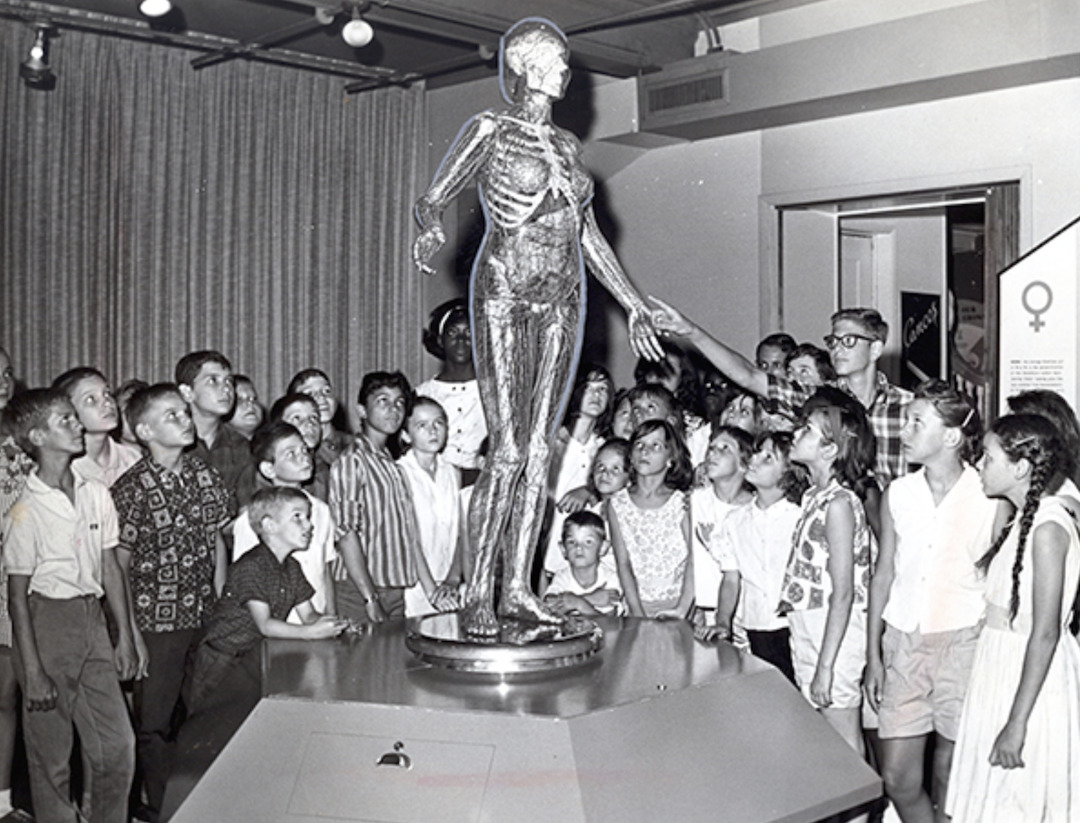
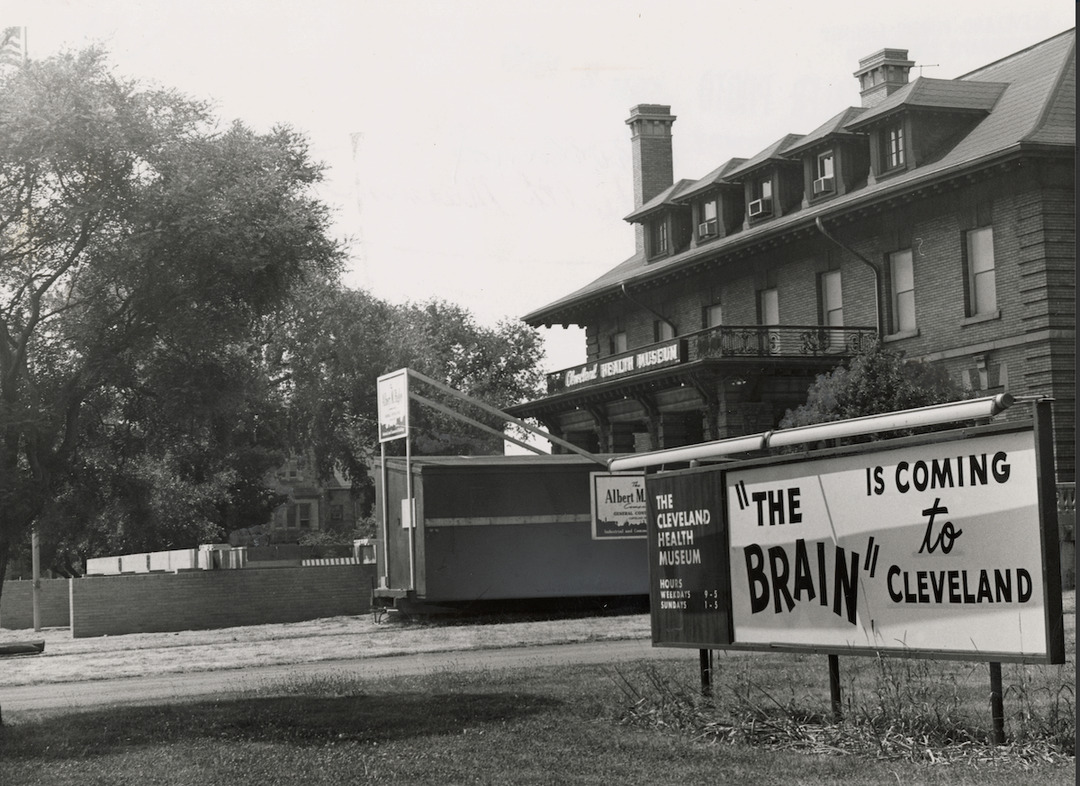
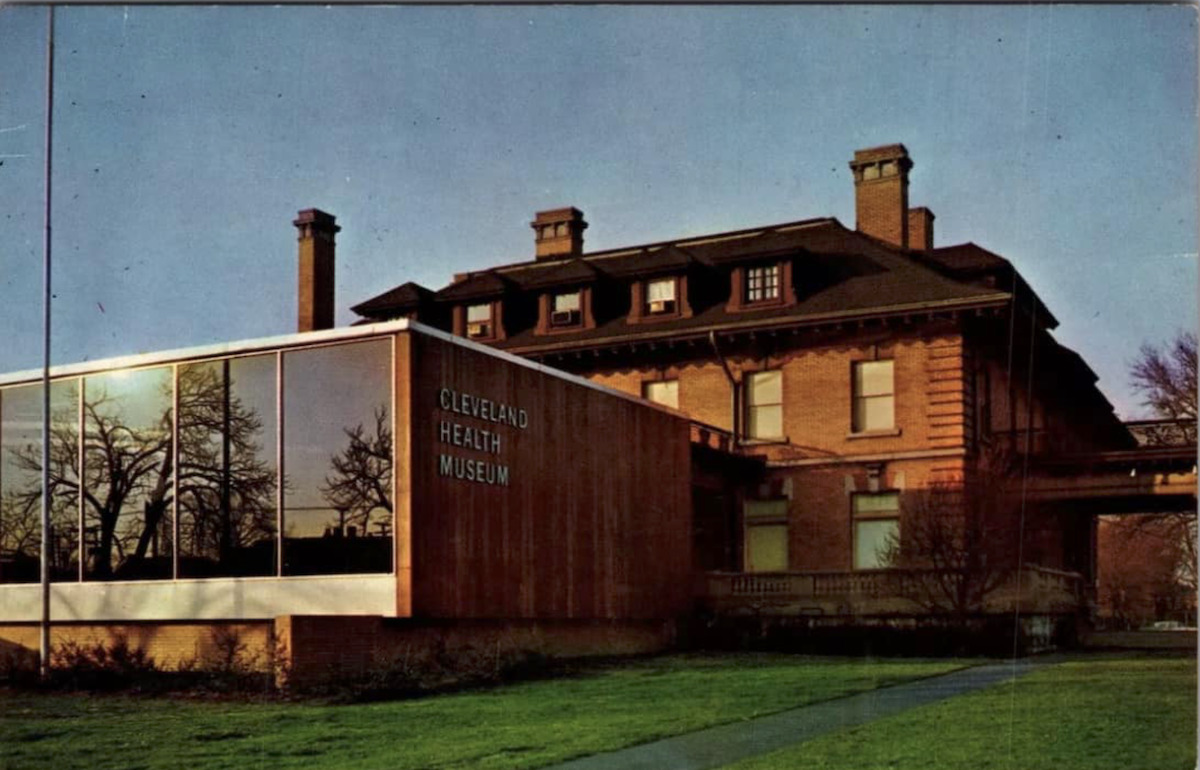
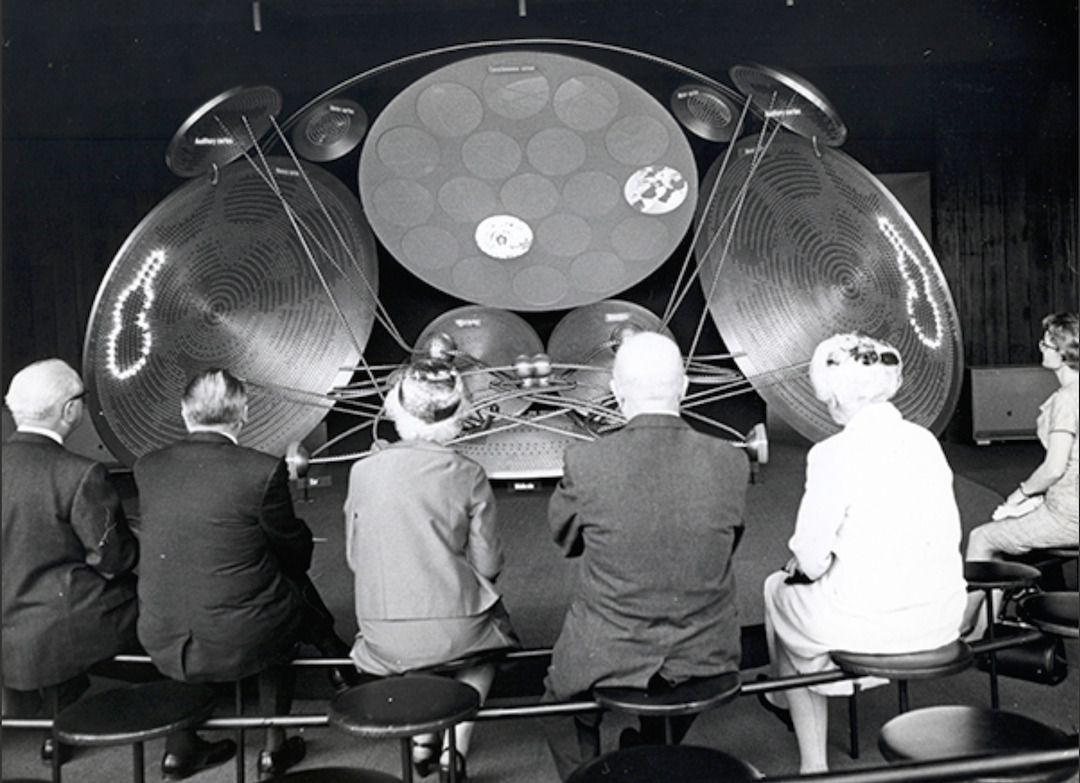
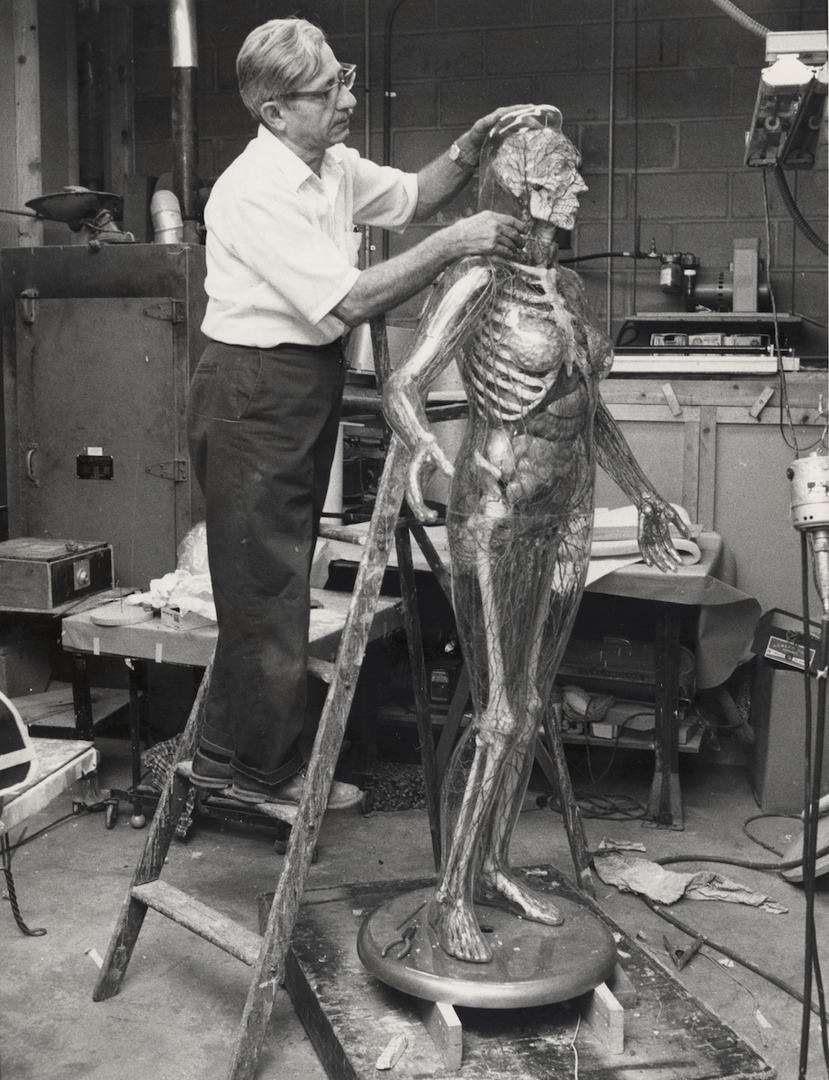
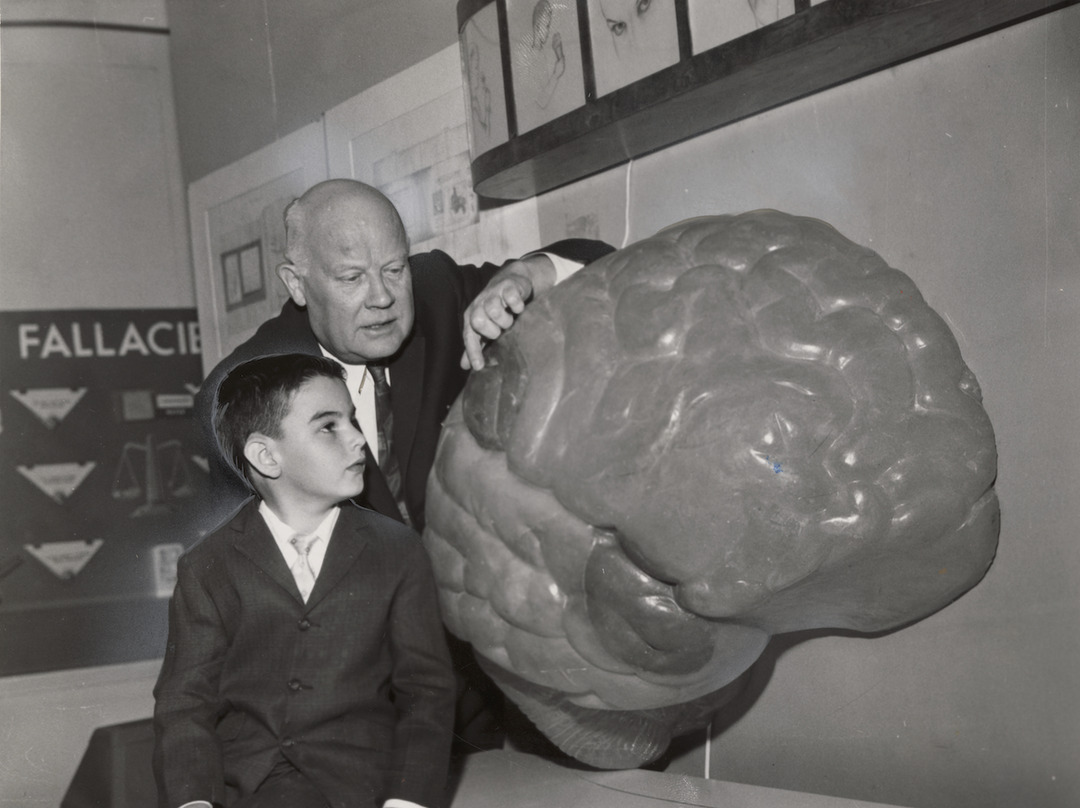
In the early years of the museum's stay at the Treadway mansion, several of the exhibits stood out more than others. One was the Transparent Women who arrived at the Museum in 1950, and who, after another contest, this time sponsored by the Cleveland Press and the Museum, became known as Juno. Another was a mechanical human brain that was so large that it was necessary to build a separate pavilion onto the front of the Treadway mansion in 1966 to house it.

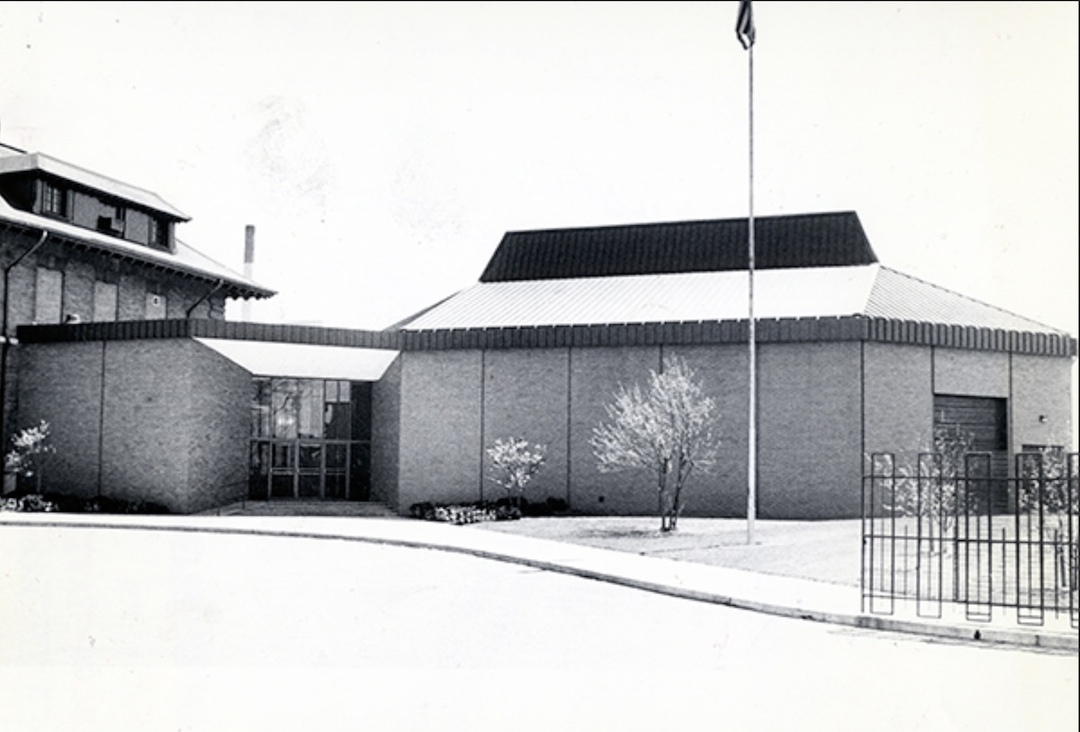
As the museum continued to grow, its board of directors planned another addition to the Treadway mansion much larger than the glass pavilion built in 1966. In 1970, the Museum board proposed to construct a one-story Mediterranean sand color brick building to the front of the current museum that would add 55,000 square feet to the Museum. The new addition included octagonal exhibition halls and a theater that would seat 155 people, as wells as "20,000 square feet . . . devoted to creating 13 experimental audio-visual teaching laboratories, a reference center, and 16 offices," according to an article in the Cleveland Press on June 22 of that year. Construction of the new addition, as well as of an expanded parking lot on the north end of the property was completed and the new wing opened to the public on May 14, 1972.

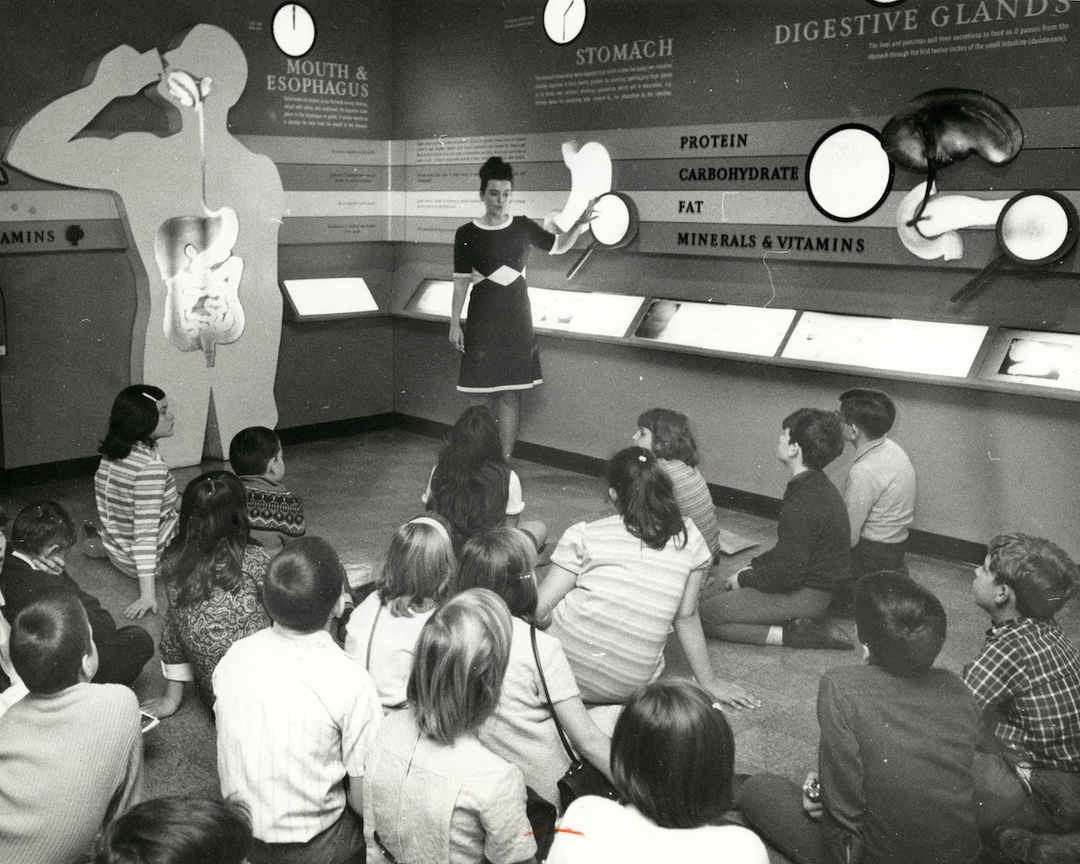
For the next two decades, the Health Museum operated both as a museum and as an educational facility for school children. According to an article in the Cleveland Plain Dealer on July 9, 1978, each year 50,000 students coming from as far as 4000 miles from Cleveland visited the museum to attend a two-hour class with one of the museum's 15 special health instructors.

By the 1990s—a decade which saw extraordinary changes in downtown Cleveland, including the building of new playing facilities for all three of Cleveland's major sports teams, the Rock and Roll Hall of Fame Museum, and the Great Lakes Science Center—the Health Museum was becoming old and outdated, with a number of its exhibits not even working. Visitor attendance dropped nearly ten percent between the years 1992 and 1995, falling from 102,148 to 92,262.

In 1998, the Museum Board of Directors, which was chaired by well-known Cleveland physician and television personality Dr. Theodore Castele, decided that, in order to successfully compete with other public institutions in Cleveland, a new health museum should be built to replace the aging yellow brick, windowless building on Euclid Avenue. In addition to the construction a new museum building, the plans called for replacement of all of the museum's health exhibits—except for Juno, the transparent woman, and the 18-foot tooth display—and the restoration and renovation of the Henry W. White mansion just east of the museum, to serve as an administrative office building for the museum. Also, sadly, the plans called for the demolition of the Treadway mansion which had housed the museum for more than 50 years. The total cost of the project was expected to be between $18 and $28 million.

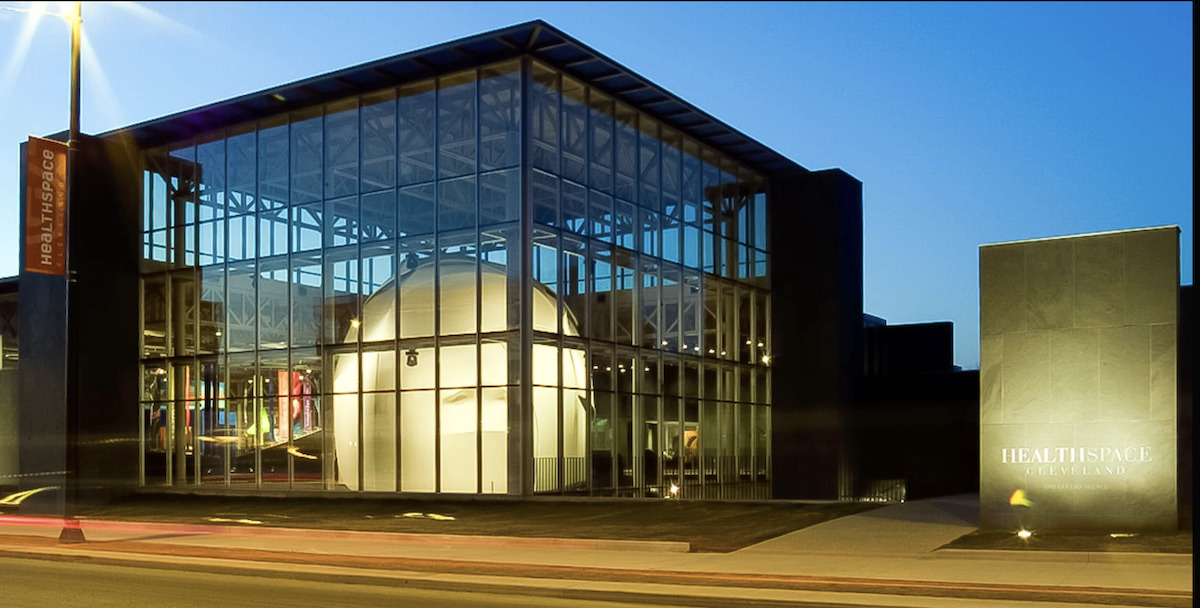
By 2000, the White mansion was restored, and three years later, on February 15, 2003, the new museum, renamed HealthSpace, opened to the public. Unfortunately, the new construction placed the museum more than $17 million in debt. Moreover, visitors did not respond to the new museum in the large numbers anticipated, possibly preferring to visit the new Great Lakes Science Center downtown on the newly developed Cleveland lakefront. In fact, the number of visitors to HealthSpace actually declined after the new facility was built. In 2005, only fifty-eight thousand people visited HealthSpace, almost fifty percent less than the number who visited the museum in the 1990s before the new museum building was built.

Struggling with debt, the Board of Directors of Health Space announced in January 2006 that they would be selling the new museum building to the Cleveland Clinic and moving to a new location. The price that the Clinic paid for the building was exactly the same amount as the construction debt owed by the museum. Months later, the museum announced that it would be merging with the Cleveland Museum of Natural History. The two museums had been supportive of each other ever since the Health Museum first opened in 1940. The merger was completed effected January 1, 2007, one day after the Health Museum closed its doors on Euclid Avenue for good.

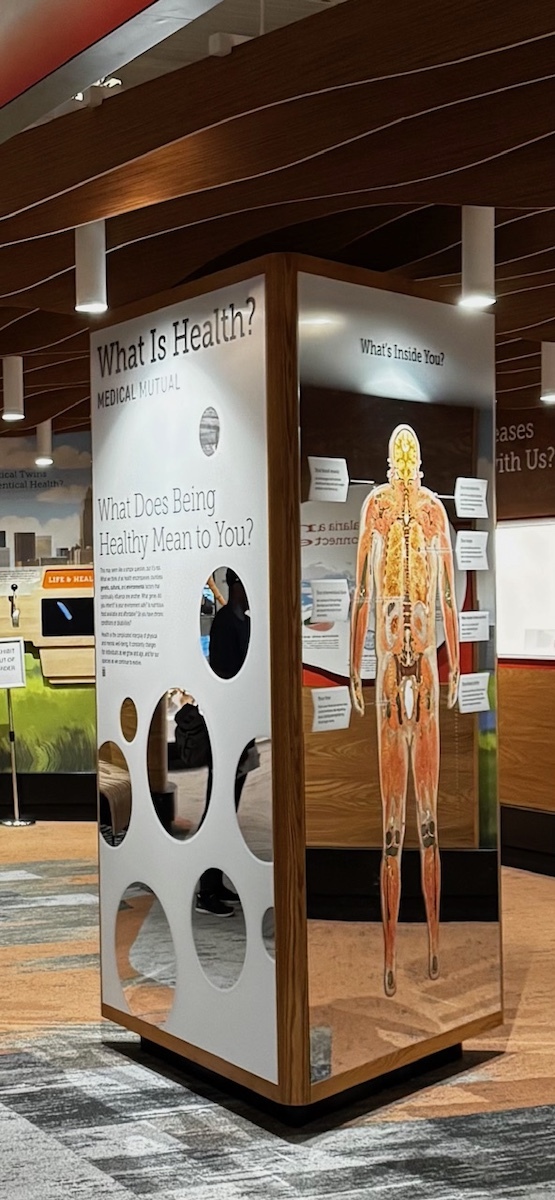
Today (2026), a recently rebuilt Cleveland Museum of Natural History contains a number of exhibits directly related to human health. In addition, and perhaps even more importantly, the Natural History Museum, in its new facility, presents many interactive exhibits just as early twentieth century medical doctors and other health professionals first proposed to teach health and hygiene: Do not lecture your patients; show them. Applied at the Cleveland Museum of Natural History, this method may just also be the best way to show visitors how the natural world works.

Images
A Lesson in the Human Brain by Dr. Gebhard
A Lesson in the Human Brain by Dr. Gebhard Cleveland Health Museum's first Director, German immigrant Bruno Gebhard, shows seven year old Laine Wright of Cleveland Heights a model of the human brain. Source: Cleveland Public Library, Photograph Collection Date: 1962
Mildred Chadsey (1884-1940)
Mildred Chadsey (1884-1940) The City of Cleveland's first woman housing inspector and sanitary inspector, she proposed a health museum for Cleveland in 1912, but was never able to complete and open it during Mayor Newton Baker's term in office. She proposed a a number of other progressive government actions to address the health and housing of Cleveland's poor, but all were opposed by Cleveland's all male City Council, who attempted to eliminate her salary. When Mayor Newton left office, she left too, championing a variety of proposals to better the lives of women everywhere. She taught at Western Reserve University, and died in Cleveland in 1940. Source: Cleveland Public Library, Photograph Collection Date: 1928
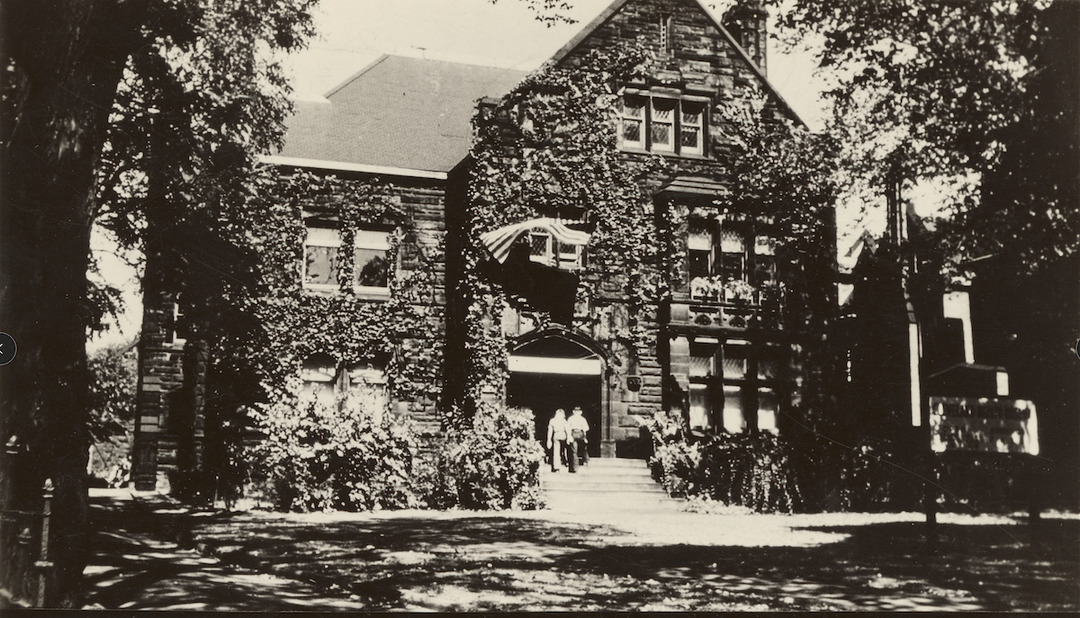
Cleveland Health Museum's First Home
Cleveland Health Museum's First Home The Cleveland Health Museum opened in 1940 in the former home of Dr. Dudley P. Allen at 8811 Euclid Avenue. The house was designed by prominent Cleveland architect Charles Schweinfurth and built in 1900. Dr. Allen was one of Cleveland's most prominent surgeons in the late nineteenth and early twentieth centuries. He died suddenly and unexpectedly in 1915. Dr. Allen's widow, Elisabeth Severance Allen Prentiss, donated the mansion—which had also served as home to Huron Road Hospital from 1924 to 1935— to the Health Museum. It was the home of the museum until 1946, when it moved several doors east on Euclid Avenue to the Treadway mansion. Source: Cleveland Public Library, Photograph Collection Date: 1946
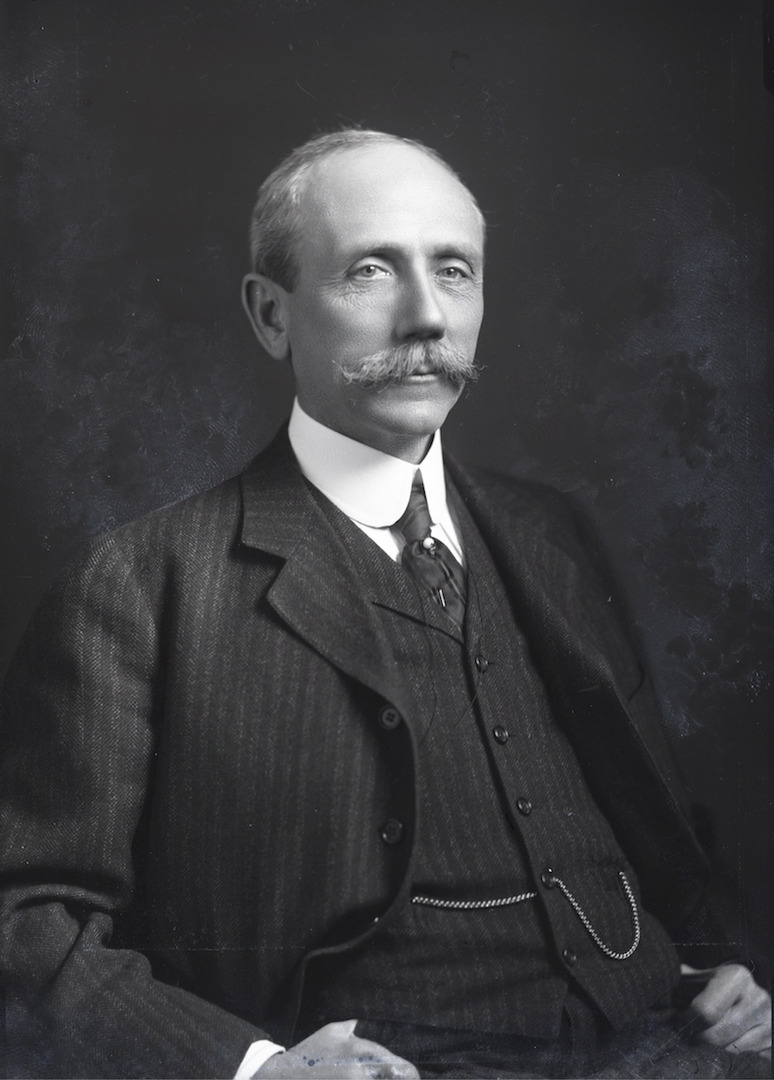
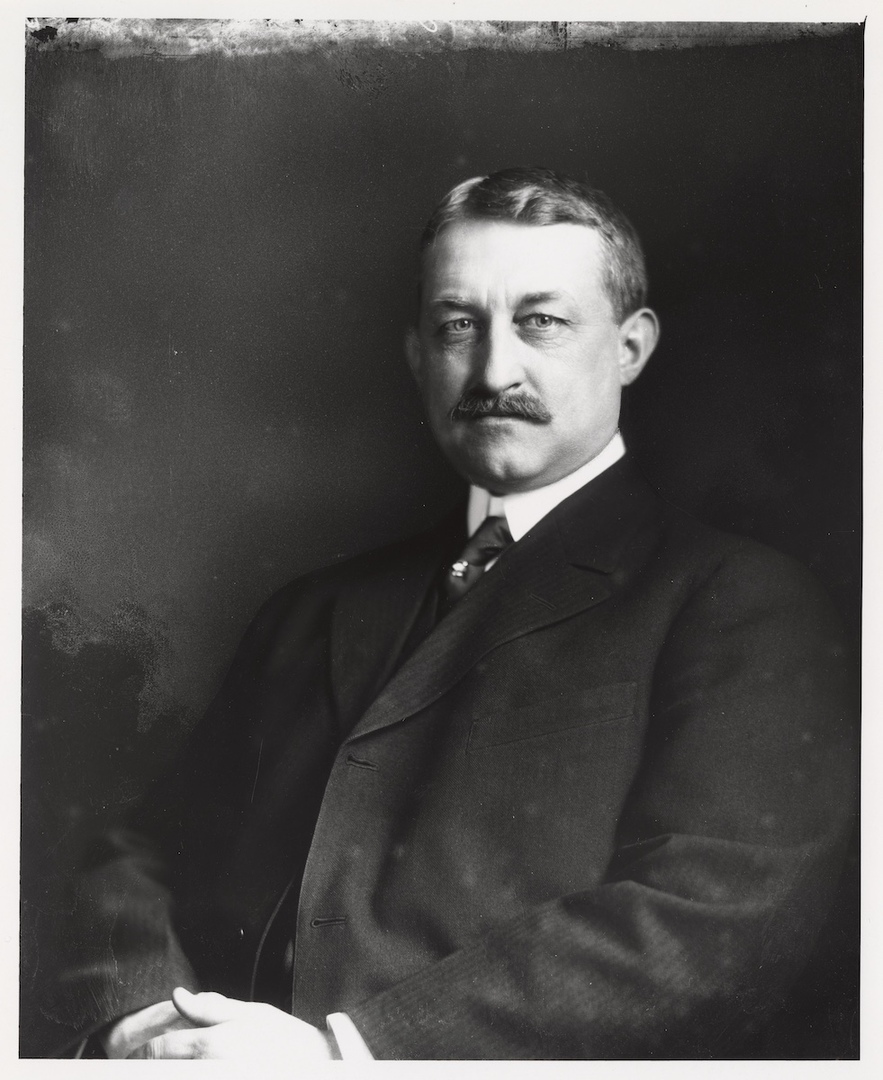
Dr. Dudley Peter Allen (1852-1915)
Dr. Dudley Peter Allen (1852-1915) Born in Kinsman, Ohio, he was the son and grandson of medical doctors. He attended Oberlin College as well as Harvard Medical School. In 1883, he moved to Cleveland where he soon became the first Cleveland doctor to limit his practice to surgery. He taught surgery at Western Reserve Medical College from 1884-1890, and was surgeon at Lakeside Hospital. In 1893, he married Elisabeth Severance, a philanthropist and member of the wealthy Cleveland Severance family. In 1894, he founded the Cleveland Medical Library Association serving as its first President. He was very interested in the arts also, and one of the first trustees of the Cleveland Museum of Art. He retired from practice in 1910, and thereafter traveled with his wife until he developed pneumonia and died in New York City in 1915. Source: Cleveland Public Library, Photograph Collection Date: 1908
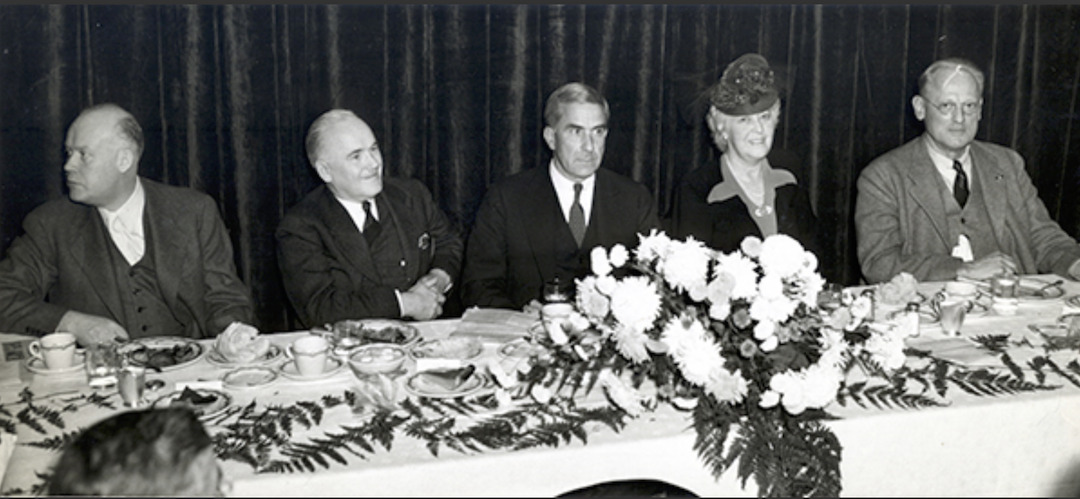
Cleveland's Health Museum "Pioneers" Praised
Cleveland's Health Museum "Pioneers" Praised On November 21, 1942, the second annual meeting of the Cleveland Health Museum was held at the Mid-Day Club on the 21st floor of the Union Commerce Building (known in 2026 as the Centennial Building.) The guest speaker was Dr. W. W. Peter, Professor of Health at Yale University, who praised Cleveland's Health Museum pioneers. Left to right, sitting at the main table were: Dr. Bruno Gebhard, the Museum's first Director; Dr. James A. Doull, Professor of Health at Western Reserve University; Dr. Lester Taylor, President of the Board of the Cleveland Health Museum; Mrs. F. F. Prentiss (formerly Elisabeth Severance Allen), who donated to the museum the home she and her late husband Dr. Dudley P. Allen had owned at 8811 Euclid Avenue; and guest speaker Dr. W.W. Peter. Source: Cleveland State University, Michael Schwartz Library, Special Collections Date: 1942
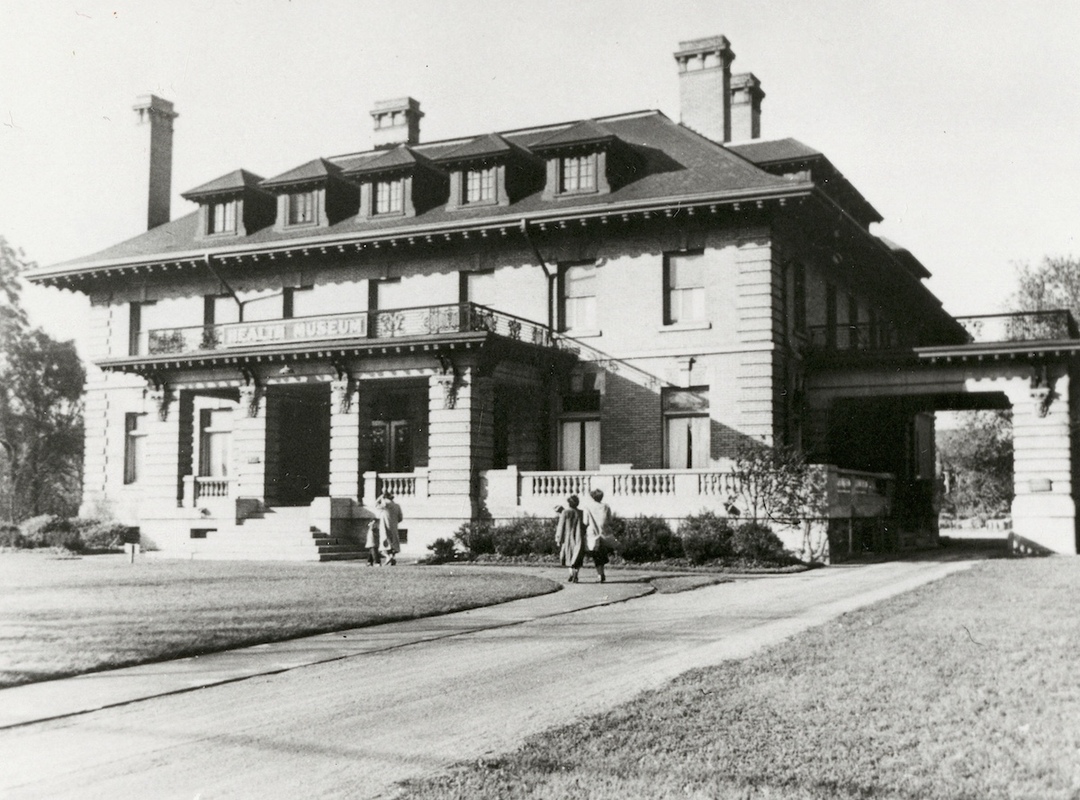
The second site of the Health Museum
The second site of the Health Museum In 1946, the Health Museum sold the Allen Mansion that had served as the first site of the museum and acquired the larger Treadway Mansion just down the street at 8917 Euclid Avenue to serve as the new home of the museum. It appears that the funds to purchase the new location came from James Bohannon, then president of the American Brewing company, who made the donation to honor his mother Sallie Carolyn Mundy Bohannon who died at a young age. A plaque honoring his mother appears to have been placed in the new Health Museum building. Source: Cleveland Public Library, Photograph Collection Date: 1961
Lyman Treadway (1862-1919)
Lyman Treadway (1862-1919) Lyman Treadway was a Cleveland hardware manufacture who also served as a Vice President of the Federal Reserve Bank, District 4. His mansion at 8917 Euclid Avenue was designed by Architect J. Milton Dyer. He died at a young age from heart disease. His widow lived in the mansion until 1923 when she moved to a house in Cleveland Heights, and rented the mansion to the family of Cyrus Easton. The Easton family occupied the house at 8917 Euclid for a decade, before they moved to their summer house in Northfield. Mrs. Treadway then sold the house to the Cleveland Association for the Hard of Hearing who occupied it for 12 years, selling it back to Mrs. Treadway in 1945. Mrs. Treadway then sold the mansion to the Cleveland Health Museum, which occupied it until 1968 when the mansion was razed to make room for a parking lot on the Museum site. Source: Cleveland Public Library, Photo Collection Date: 1908
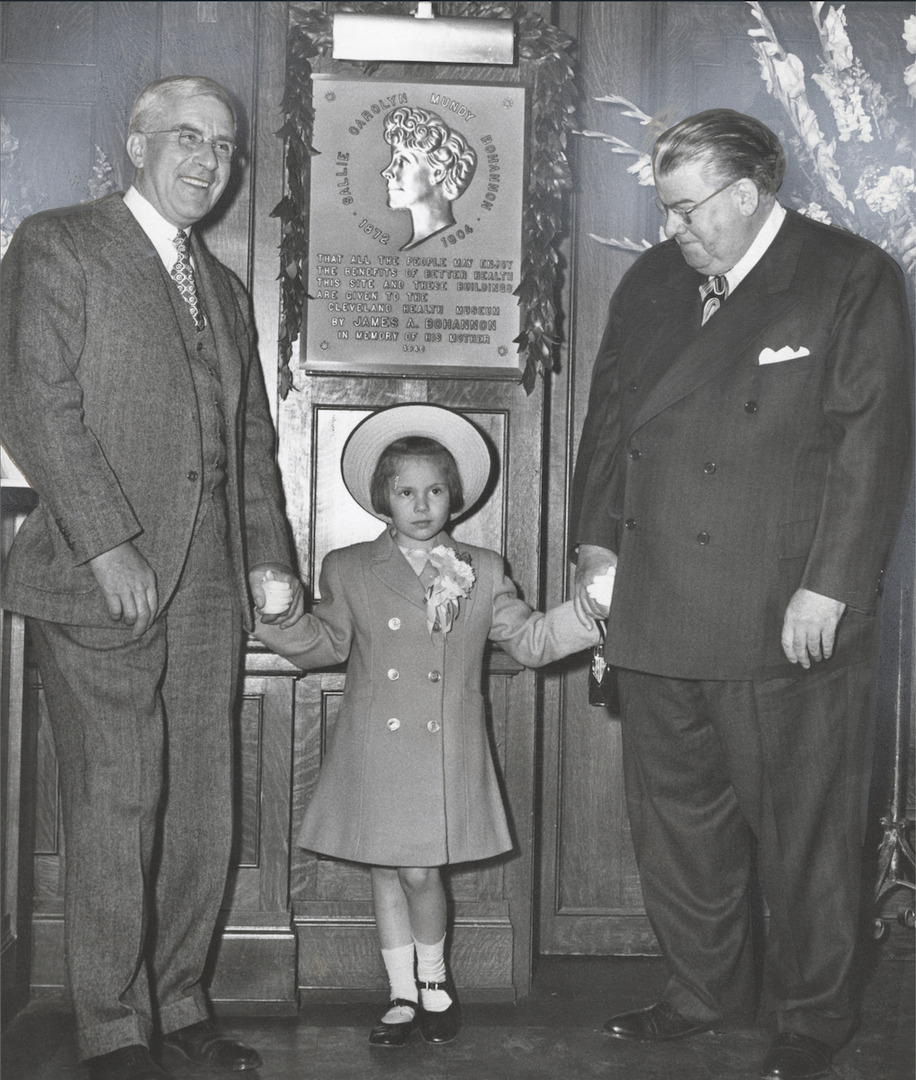
Honoring a Donor's Mother
Honoring a Donor's Mother This photo appeared with an article in the Plain Dealer on April 18, 1947. The article described a plaque placed in the Cleveland Health Museum honoring Sallie Carolyn Mundy Bohannon, the late mother of James A. Bohannon,. A Cleveland industrialist and financier, Bohannon appears to have donated the funds to the Health Museum which enabled it to purchase the Treadway Mansion at 8917 Euclid Avenue. Standing from left to right in the photo are Dr. Lester Taylor, President of the Museum. Board of Directors, Charlotte Draper Bohannon, granddaughter of Sallie Bohannon, and James A. Bohannon. Source: Cleveland Public Library, Photograph Collection Date: 1947
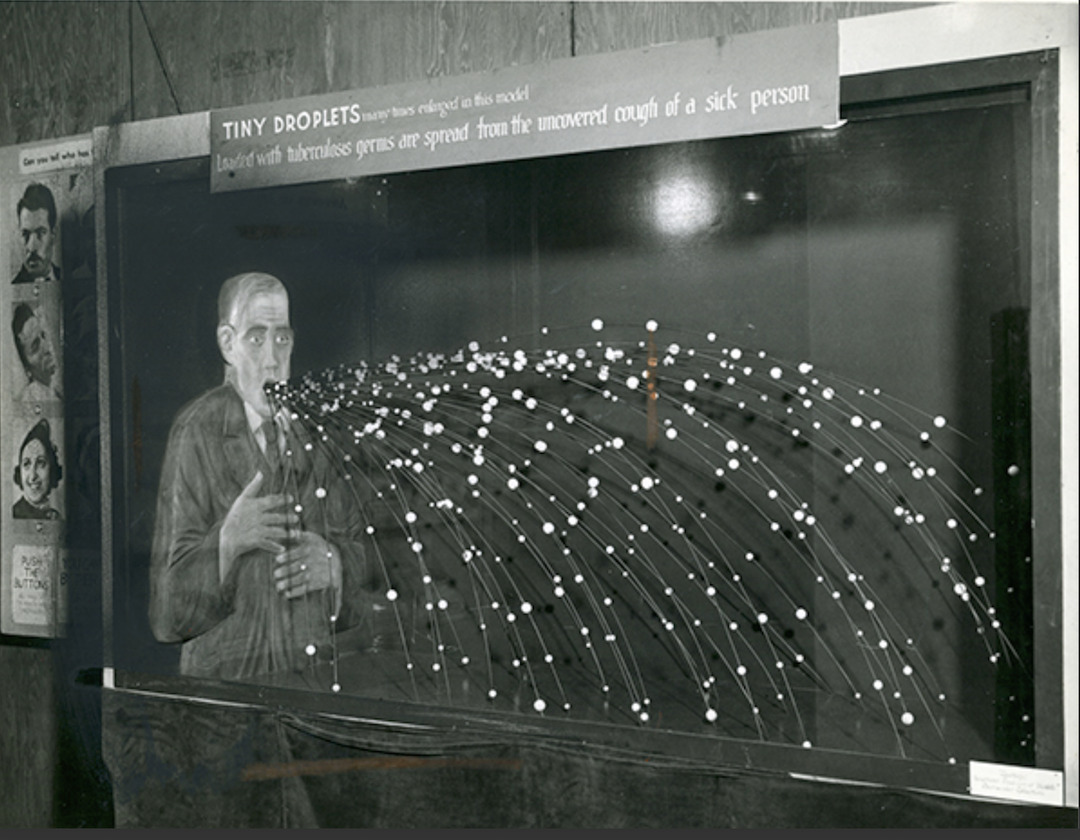
How Germs are Spread Exhibit - 1948
How Germs are Spread Exhibit - 1948 This exhibit presented at the Cleveland Health Museum in 1948 graphically showed visitors to the museum how one person can easily infect another by coughing without covering his mouth. Source: Cleveland State University, Michael Schwartz Library, Special Collections Date: August 2, 1948
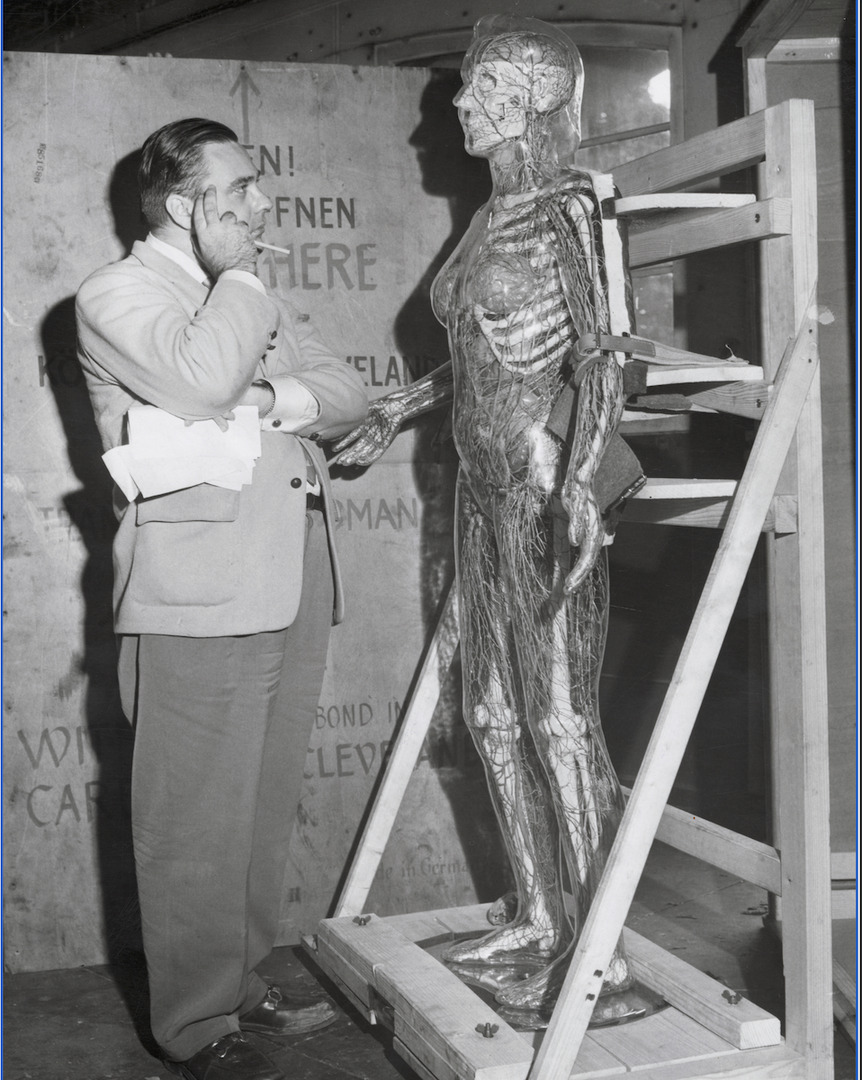
Examine the Transparent Woman
Examine the Transparent Woman In 1950, the Cleveland Health Museum purchased the Transparent Woman from a workshop in Cologne, Germany for $15,000. With an exterior made of clear plastic, all of her bones, veins and arteries, and internal organs were presented in an anatomically correct size and body location. While originally named "Eve," after arriving in Cleveland , a contest was held to rename her and she was renamed "Juno," after the Queen of Roman gods. In this photo taken in October of 1950, Cleveland News reporter Harry Christiansen examines the Transparent Woman shortly after her arrival in Cleveland. Source: Cleveland State University, Michael Schwartz Library, Special Collections Date: 1950
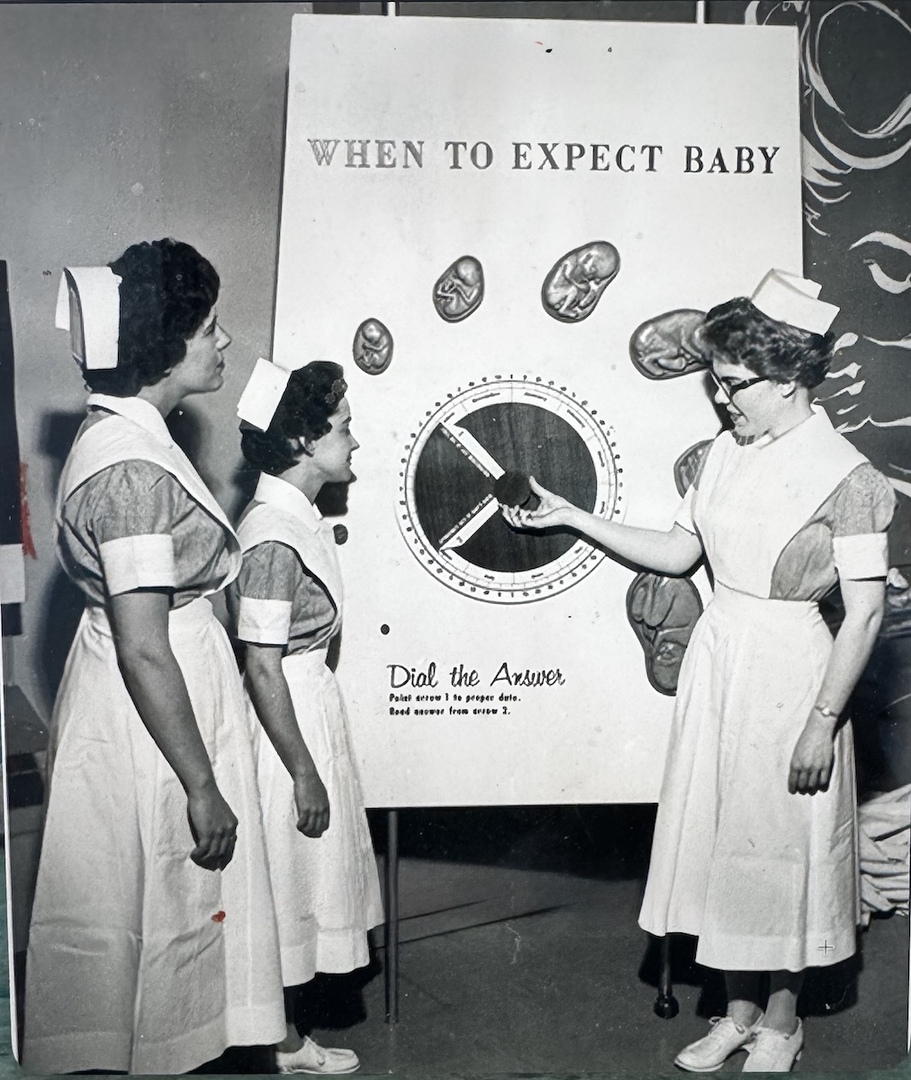
Human Gestation Exhibit - 1960
Human Gestation Exhibit - 1960 Nurses Carolyn Thomas, Margaret Holtz, and Sonja Rankem of the Frances Payne Bolton School of Nursing examine an exhibit at the Cleveland Health Museum created to graphically show the stages of human gestation. Source: Cleveland State University, Michael Schwartz Library, Special Collections Date: 1960
Juno on Display
Juno on Display Steve Helper, a junior volunteer at the Cleveland Health Museum, uses Juno, the Transparent Woman, to educate a group of children from the University Settlement House about the human body. This photo was taken at the Museum in the summer of 1964. Source: Cleveland State University, Michael Schwartz Library, Special Collections Date: 1964
A Special Brain Comes to Cleveland
A Special Brain Comes to Cleveland In the summer of 1966, construction began on a glass-enclosed pavilion to be added to the front of the Cleveland Health Museum. The new pavilion which opened in October of that year, housed a giant mechanical brain that had been a feature of the 1964-1965 New York World Fair. The brain, which was 25 feet wide, 20 feet deep, and 12 feet high, was purchased by the museum as the result of donations made by several key benefactors. Source: Cleveland Public Library, Photograph Collection Date: 1966
Pavilion at Cleveland Health Museum
Pavilion at Cleveland Health Museum The pavilion built in 1966 as an addition to the front of the Treadway Mansion, which for many years housed the Cleveland Health Museum, contained the Museum's Giant Mechanical Brain exhibit. Source: Cleveland Memory Project, Postcard Collection Date: circa 1966
The Brain Arrives!
The Brain Arrives! Visitors to the new Brain Pavilion sit and observe the recently-arrived Giant Brain built by the Upjohn Company Source: Cleveland State University, Michael Schwartz Library, Special Collections Date: 1967
Exhibit on the Human Body Processes  - 1968
Exhibit on the Human Body Processes - 1968 Staff educator Patricia Rambasek shows a group of children from a visiting school an Exhibit at the Cleveland Health Museum on human body processes. Source: Cleveland Public Library, Photograph Collection Date: 1968
New Addition to Health Museum
New Addition to Health Museum In 1970, Cleveland Health Museum officials announced plan to more than double the size of the existing museum by adding a large single story, yellow brick, windowless addition to the front of the museum. Construction was completed in 1972 and the new enlarged Health Museum was opened to the public in May of that year. This photo, which shows part of the west side of the addition as well as part of the Treadway mansion to the rear of it, was taken in the year the construction was. completed Source: Cleveland State University, Michael Schwartz Library, Special Collections Date: 1972
Juno gets a restoration
Juno gets a restoration This 1973 photo shows Juno the Transparent Woman being restored at the Cleveland Health Museum by museum artist, Louis A. Regalbuto. She had arrived at the Museum in 1950 and remained there until the Museum closed in 2006. Today, Juno may be seen at the Dittrick Medical History Center on the Case Western Reserve University campus. Source: Cleveland Public Library, Photograph Collection Date: 1973
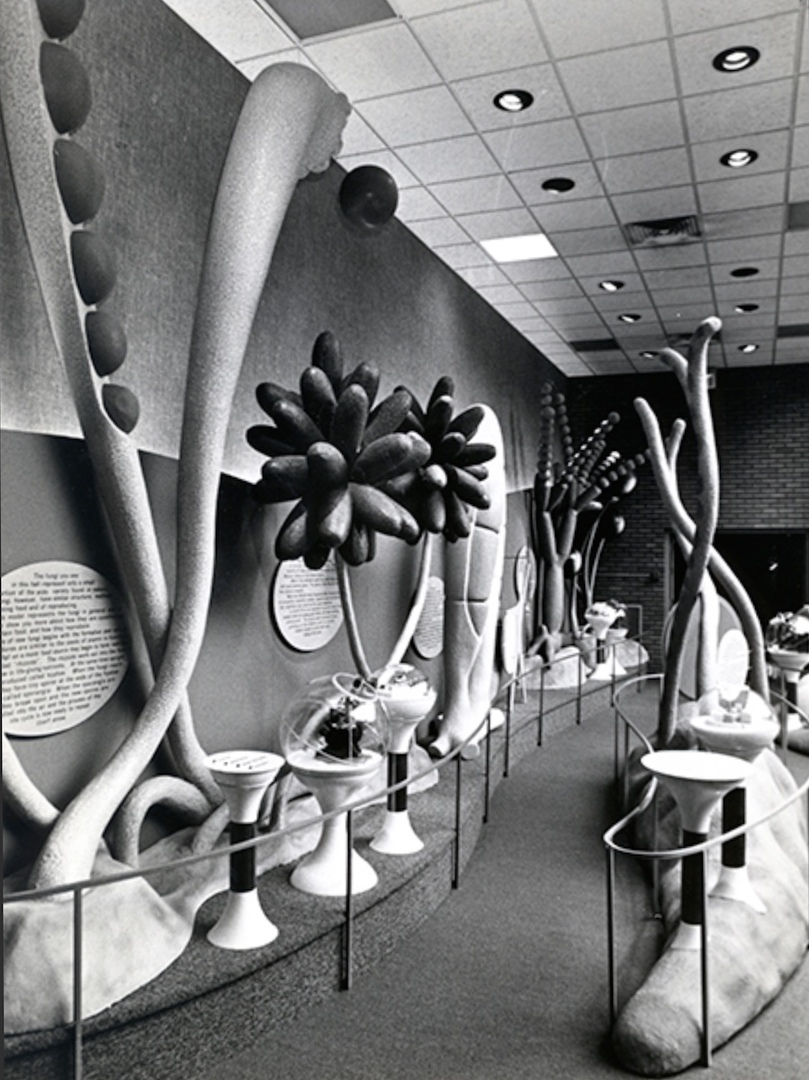
Fungi Exhibit Opens - 1974
Fungi Exhibit Opens - 1974 In May 1974, the Cleveland Health Museum opened three new exhibits: (1) How the Body defends itself from Infection; (2) A new Juno Exhibit focusing on Heart Health; and (3) an Exhibit showing huge models of Fungi. The above photo was taken on the day the new exhibits opened to the public Source: Cleveland State University, Michael Schwartz Library, Special Collections Date: 1974
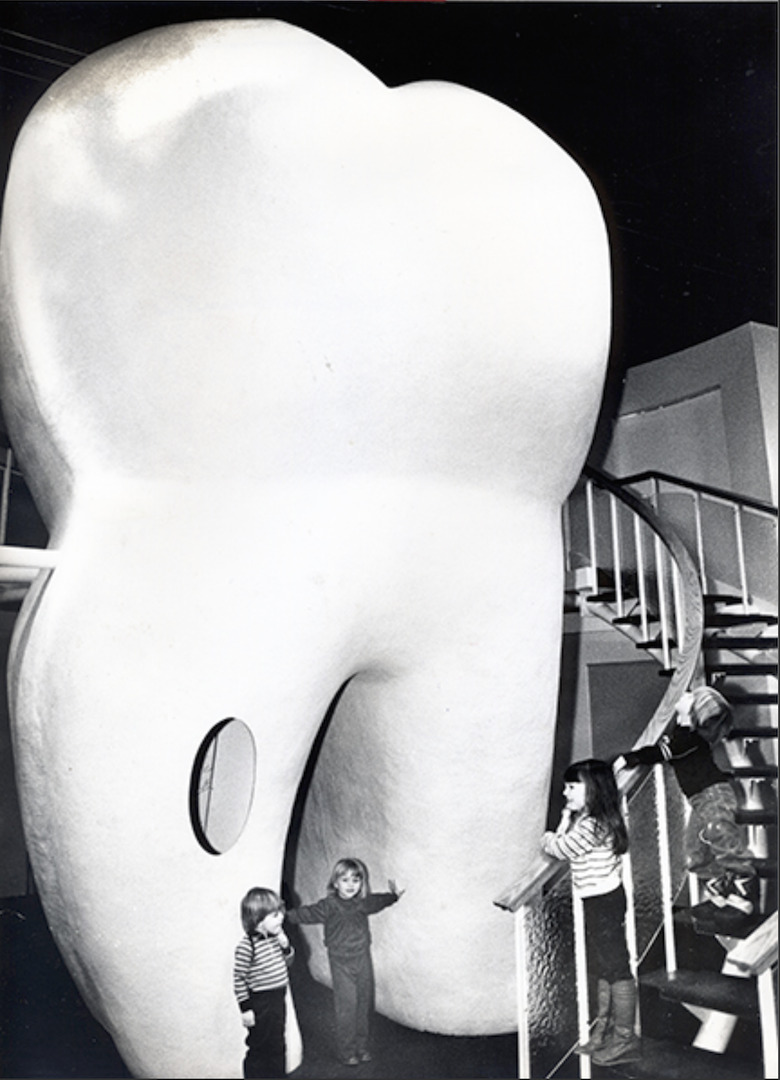
Learning about Dental Health
Learning about Dental Health In this 1981 photo, several children visiting the Cleveland Health Museum are learning from an 18 foot tall, two story, fiberglas tooth how to take care of their teeth. The children, left to right, are Steven Tokish, Jennifer Eagan, Kelly Tokish, and Sean Tokish. Source: Cleveland State University, Michael Schwartz Library, Special Collections Date: 1981
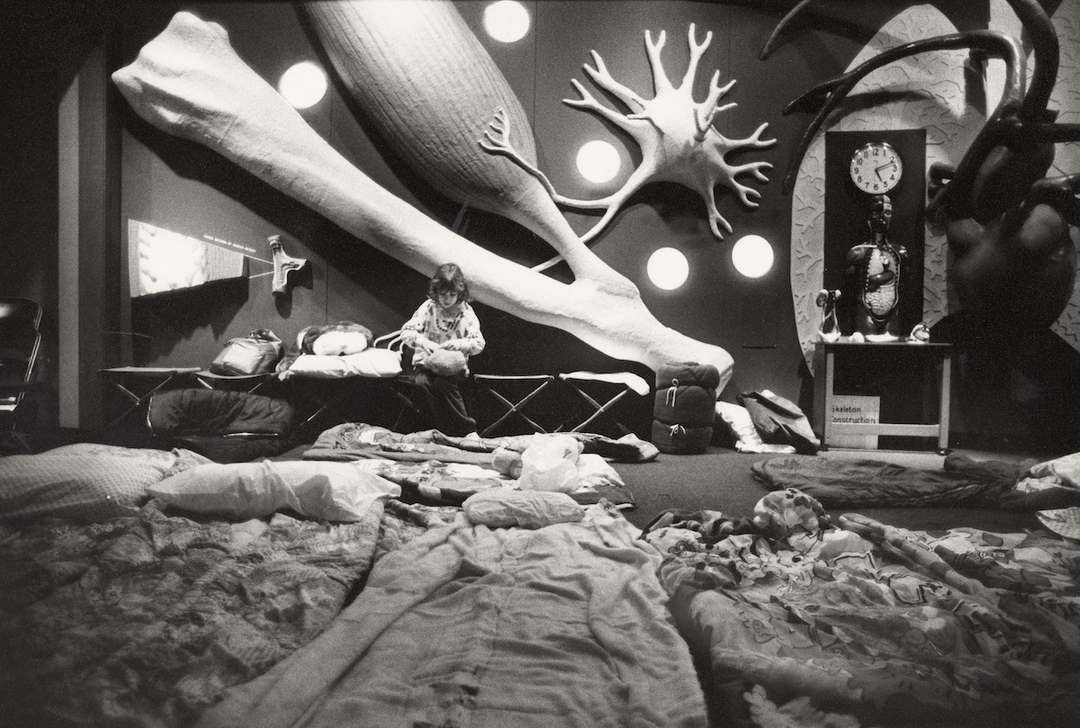
Camping out at the Health Museum
Camping out at the Health Museum Angelo Buidos of North Olmsted prepares her bedding for a night stay in the Heart Room at the Cleveland Health Museum with the Campfire Youths. Source: Cleveland Public Library, Photograph Collection Date: 1987
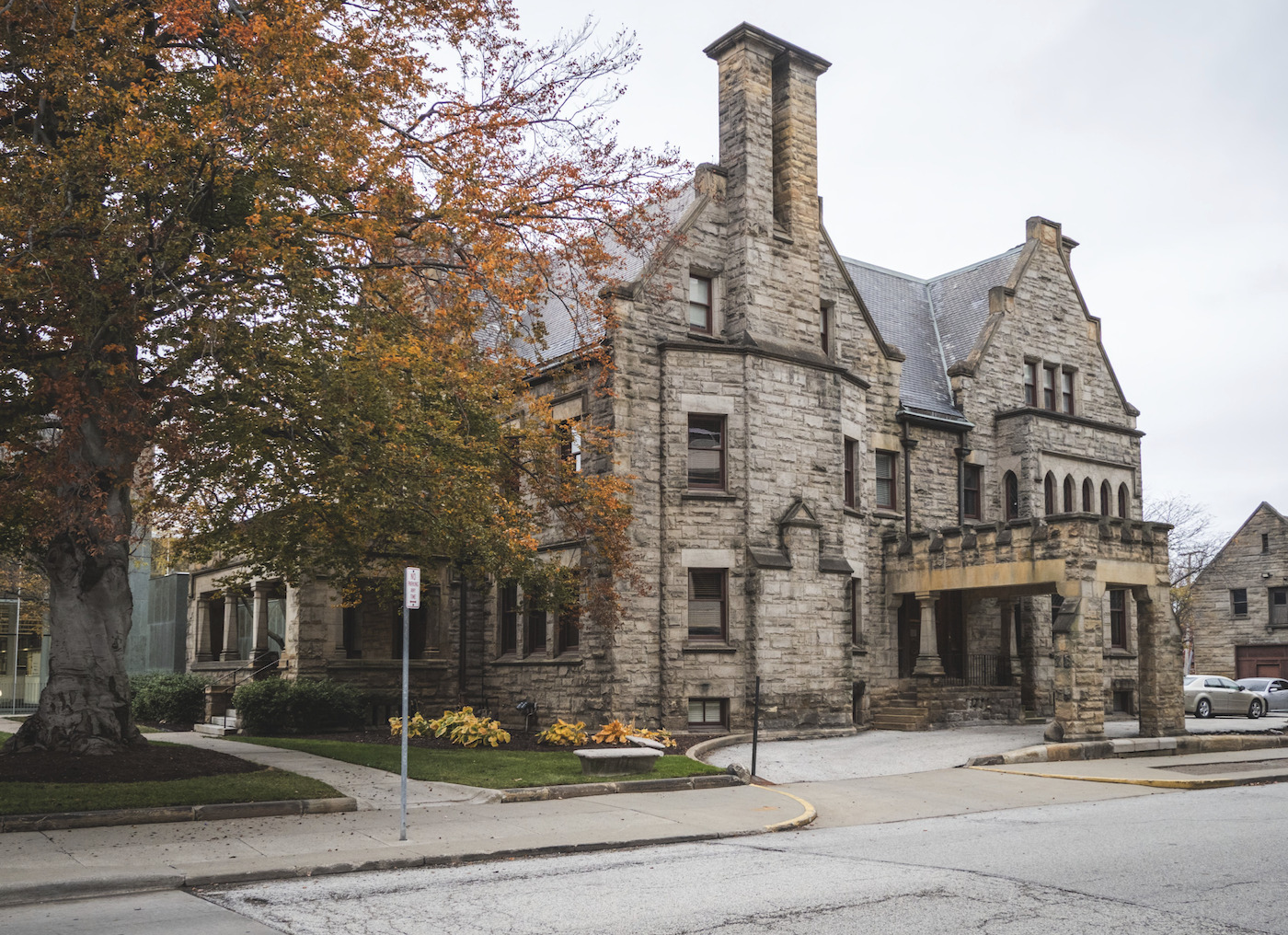
White Mansion Saved and Restored.
White Mansion Saved and Restored. The mansion of Henry Windsor White (1848-1915), treasurer of the White Sewing Machine Company, and son. of the company's founder, Thomas H. White, is located at 8937 Euclid Avenue. The mansion was designed by Architect Frank B. Meade and was constructed between 1898 and 1901. In 2000, the mansion was restored by the Cleveland Museum of Health and used by the museum as an administrative office building. When the Health Museum closed in 2003, the mansion was sold to the Cleveland Clinic, which (as of 2026) has maintained the mansion on its campus. Source: Cleveland Public Library, Digital Gallery Creator: Adam Jaenke Date: 2025
A New Name for a New Museum
A New Name for a New Museum In 2003, the new Cleveland Health Museum, renamed HealthSpace, opened at 8917 Euclid Avenue. This photo graph shows the southeast corner of the new building which housed HeadFirst Theater. Creator: Cynthia Thompson Date: 2003
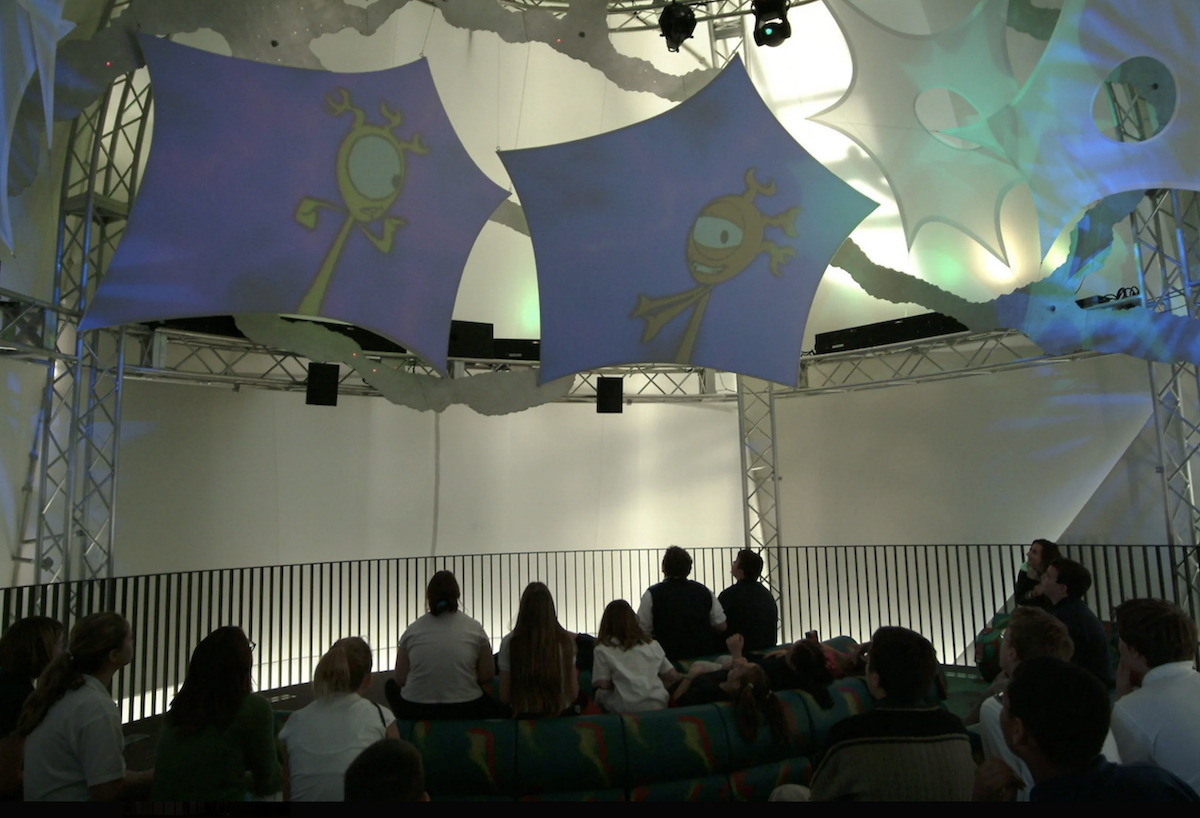
Children at HeadFirst Theater
Children at HeadFirst Theater Children are seen watching a movie at HeadFirst Theater in the new Health Space Museum in Cleveland. Creator: Cynthia Thompson Date: 2003
Health Exhibits at the Cleveland Museum of Natural History
Health Exhibits at the Cleveland Museum of Natural History After the Cleveland Health Museum sold to Cleveland Clinic its facility at 8917 Euclid Avenue in 2006, it merged with the Cleveland Museum of Natural History. Today, there are a number of Health exhibits at the Natural History Museum, including the one shown in this photograph taken in 2026. Creator: Jim Dubelko Date: April 12, 2026

Location

8917 Euclid Ave, Cleveland, OH | The Cleveland Health Museum closed permanently on December 31, 2006. For more information regarding the museum and its exhibits, contact the Cleveland Museum of Natural History.

Metadata

Jim Dubelko, “The Cleveland Health Museum: America's First Health Museum,” Cleveland Historical, accessed May 2, 2026, https://clevelandhistorical.org/items/show/1082.