<?xml version="1.0" encoding="UTF-8"?>
<feed xmlns="http://www.w3.org/2005/Atom">
  <title type="text">Cleveland Historical</title>
  <updated>2026-05-02T01:59:07+00:00</updated>
  <generator uri="http://framework.zend.com" version="1.12.20">Zend_Feed_Writer</generator>
  <link rel="alternate" type="text/html" href="https://clevelandhistorical.org/"/>
  <link rel="self" type="application/atom+xml" href="https://clevelandhistorical.org/items/browse?output=rss2"/>
  <id>https://clevelandhistorical.org/</id>
  <author>
    <name>Cleveland Historical</name>
    <uri>https://clevelandhistorical.org</uri>
  </author>
  <link rel="hub" href="http://pubsubhubbub.appspot.com/"/>
  <entry>
    <title type="html"><![CDATA[The Jones Home and School for Friendless Children: A Story of Transformation ]]></title>
    <summary type="html"><![CDATA[<p><strong><em>On the opening day of the Jones Home and School for Friendless Children, the weather was “dark and stormy,” but even so, “a large number of interested visitors found the house at 1633 Pearl St.,” which was a “half day’s drive by carriage or wagon” from Cleveland. Since that day in 1887, the Home has endeavored to improve the lives of children and families while adapting to more than a century of change. </em></strong></p><img src="https://clevelandhistorical.org/files/fullsize/1757ef1c1c3a34dde1248a7bd97f30f2.jpg" alt="The Jones Home" /><br/><p>The Jones Home was founded on December 15, 1887, by Carlos and Mary B. Jones, who intended for it to provide mainly short-term housing for children who still had one or two parents, but who were currently unable to care for them. The Joneses began a policy of accepting only white, Protestant children for foster care that lasted for several decades. The farmhouse was situated on six acres and, in November 1889, housed about twenty children between four and ten years old. In 1890 the Home was reportedly “in a prosperous condition,” with extensions made to the main house and a new $1,300 building that enabled the Home to take in an additional thirty children.</p><p>Whenever possible, the Jones Home’s administrators wanted families to be reunited. Orphanages understood that they could never hope to replicate traditional home life but did their best. The First Annual Report noted: “One little fellow was readmitted after an absence of several weeks, and ran about wild with delight, poking his curly head into all his beloved play-places. 'Oh, is my little bed here yet?' was the first thing he said when the door opened to readmit him.”</p><p>If after staying at the Home for a time the children were unable to return to their parents, they would be apprenticed to a family when “age and acquirements justify” and given a Bible. The families were required to be “regular attendants of some Protestant church.” This preoccupation with religion was not unusual for the time. </p><p>During the annual harvest day festival in October 1895, Mr. Jones shared his vision to build a new three-story brick building near the original farmhouse, “at the corner of Pearl street and Daisy avenue.” The cornerstone of the new building, designed by Sidney R. Badgley, was laid in late November 1902. Dedicated in October 1903, the building was a “buff brick, with red stone trimmings” and cost $33,703.24. The first  floor included an entrance hall, reception room, dining room, kitchen, girl’s cloakroom, reading room, library, and the matron’s private rooms. The second floor contained four dormitories, bedrooms for attendants, and bathrooms. The third floor held a meeting hall, sewing room, and five sleeping rooms with bathrooms that the executive director later lived in with his family. The basement had a receiving room and bathroom for newly admitted children, boy’s coat room, coal room, and storage space. </p><p>At the turn of the century, the Jones Home had a bright future ahead of it. In 1908, a two-story playhouse was built for $5,500, allowing the children to play in bad weather. In 1910, the third floor of the main building was converted into sick rooms and additional dormitories, creating space for twenty more children. In 1921, a vegetable garden was being “maintained bountifully.” Unfortunately, this prosperity would only continue for a few more years.</p><p>The Jones Home struggled during the Great Depression; while in the past it had usually received “hundreds of dollars a month” from donations, in 1933 “less than $50 a month comes in” because of extremely high unemployment in Cleveland. The closure of banks caused its endowment to become inaccessible. Despite these troubles, fifty-eight children were living at the Home – with space for ten more but but no means to support them – and was described as “old-fashioned but comfortable.” The Home scraped by, however, with what limited funding the community could provide, and in 1937 year it partnered with Community Chest – later renamed United Way Services – which brought in additional funding.</p><p>When the Home celebrated its seventy-fifth anniversary in 1962, the “long-ago stipulation” that the children be Protestant had been “abandoned.” In late 1966, the Jones Home merged with Children’s Services, allowing it to provide psychologists and case workers for the children for the first time. A $400,000 renovation in 1971 was largely funded by selling land to the state to build I-71. Despite the encroaching city, it was a “quiet oasis” for “neglected children of any race or religion,” surrounded by eighty-year-old sycamore trees planted by Mr. Jones. The goal of the Home was to house children for “a few months to a year or two” while they and their parents received counseling.</p><p>The Jones Home continued to adapt to the community’s needs by expanding its ability to help children with mental health–related issues. In 1990, the Home was kept running with a 10 percent allocation from United Way, an endowment and trust fund, government funds, and donations. By this time the Home had three programs for children according to their needs: “a residential treatment program for children who are victims of sexual, physical and psychological abuse” and who were wards of Cuyahoga County’s Department of Human Services; “two classrooms funded by the Cleveland Board of Education for severely, behaviorally handicapped children”; and “court-designated programs providing temporary shelter and short-term, intensive residential treatment.”  In 1997, the Jones Home merged with Guidance Centers, a psychiatric clinic founded seventy years before, to form Applewood Centers.</p><p>The Cleveland City Planning Commission named the Home a Cleveland landmark in 1984, and it was listed in the National Register of Historic Places in 2012 as part of the Jones Home Historic District. Flats Construction completed a three-year long restoration in 2021, ensuring the Home will continue to serve the needs of Greater Cleveland's youth for many years to come.</p><p><em><strong><a href="https://clevelandhistorical.org/items/show/1044">For more (including 4 images) view the original article</a></strong></em></p>]]></summary>
    <published>2024-11-27T00:40:52+00:00</published>
    <updated>2026-04-17T19:17:43+00:00</updated>
    <link rel="alternate" type="text/html" href="https://clevelandhistorical.org/items/show/1044"/>
    <id>https://clevelandhistorical.org/items/show/1044</id>
    <author>
      <name>Aidan Sellman</name>
    </author>
  </entry>
  <entry>
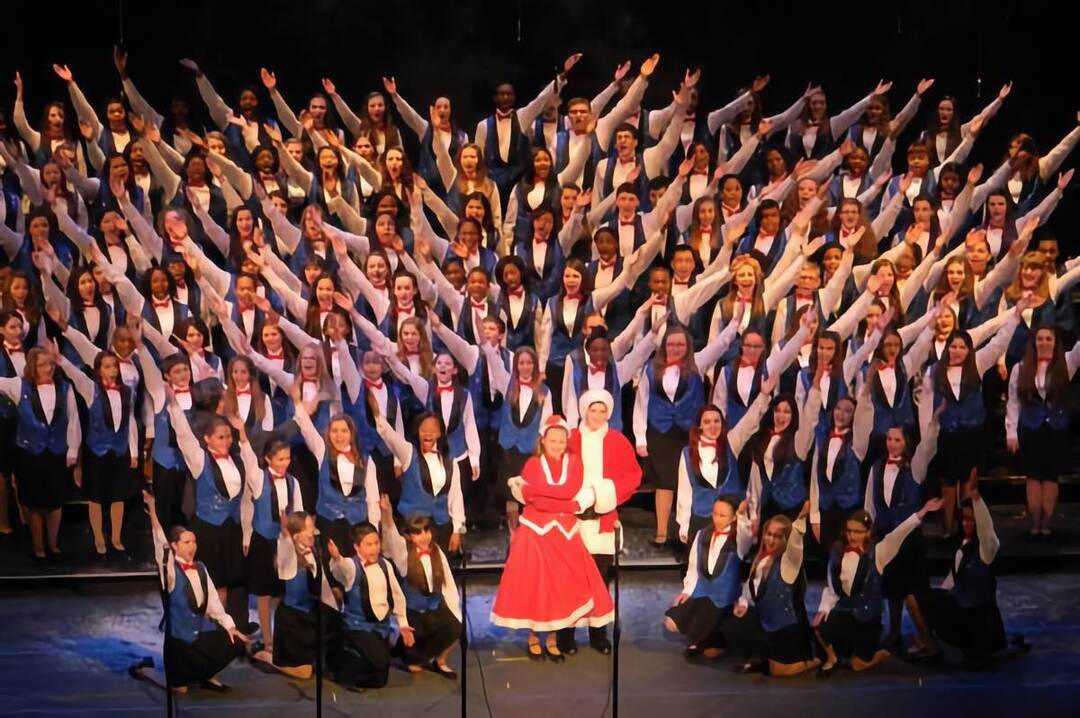
    <title type="html"><![CDATA[The Singing Angels: &quot;Make Music, Make Friends, Make a Difference&quot;]]></title>
    <summary type="html"><![CDATA[<p><strong><em><span style="font-weight:400;">In the hot Italian sun in Rome in summer 2006, a small group of The Singing Angels from Cleveland were packed into the crowd of pilgrims at the Vatican during a Wednesday mass. The Angels were told they would hear their name called over the intercom while all the groups at the Vatican that day were acknowledged in their own languages. When the English announcements were finished, the Angels were disappointed not to hear their choir called out, but they chose to appreciate their opportunity to be in the Vatican. Fifteen minutes passed, and another announcement rang out: “Will the interfaith youth chorus, The Singing Angels, please make their way to the front of the assembly?” To their surprise, Pope Benedict XVI personally had chosen the Singing Angels to perform at the mass. The Singing Angels were able to perform their entire repertoire of religious music for Pope Benedict that day, one of many highlights in the choral group’s more than six-decade history. </span></em></strong></p><img src="https://clevelandhistorical.org/files/fullsize/0ca77c3f8fbdf608c4a58fb8c3a6f70a.jpg" alt="Annual Holiday Spectacular at Playhouse Square" /><br/><p><span style="font-weight:400;">William C. (Bill) Boehm,  was the founder and original conductor of The Angels, a youth choir that became known as The Singing Angels. Born in 1920 in Cleveland, Boehm earned his BA from Western Reserve University (now Case Western Reserve University). He later pursued a master's degree in Theater. From 1942 to 1948, Boehm served in the U.S. Army as a Captain in the 29th Infantry, stationed in Iceland and England before being honorably discharged.</span>
<span style="font-weight:400;">During his time in the Army, Boehm began to develop a passion for music. In postwar America, youth choruses were becoming increasingly popular. This period saw the rise of show choirs, which were described as “one of our nation’s most precious legacies.” After his military service, Boehm returned to Cleveland and focused on the arts, performing in various leading roles at <a href="https://clevelandhistorical.org/items/show/193">Cain Park</a>, a popular local theater venue. Despite his success, he began to feel a desire for change in his life.</span>
<span style="font-weight:400;">At the time, Boehm held very traditional views on music, believing that rock and roll had a negative influence on young people. He saw it as harmful, linking it to issues such as drug use and social decay. Boehm once remarked, "If Rock n' Roll could be controlled, it could be compelling, but it's not. It's devastating and crippling. It's related to drugs and killing and depravity." Concerned about the growing popularity of rock music and its potential harm to children, Boehm sought to create a positive alternative.</span>
<span style="font-weight:400;">Boehm’s idea was to form a youth choir that would focus on providing young people with a wholesome musical experience. He believed that good music could have a profound impact on children, encouraging them to express themselves creatively while avoiding the negative influences of rock and roll. With this vision in mind, Boehm reached out to an acquaintance who suggested he contact the Cleveland Friends of Music to sponsor his idea. They agreed to support the initiative, if he could sell tickets for the concerts. Boehm, confident in his concept, moved forward with the project, and thus The Singing Angels was born.</span>
<span style="font-weight:400;">The choir was designed to offer children an opportunity to engage with classical and choral music. Boehm envisioned a group where young people could develop their musical talents, learn discipline, and experience the joy of performing. He worked tirelessly to ensure that The Singing Angels would be a success, not only as a musical ensemble but as a positive community force for the youth involved.</span>
<span style="font-weight:400;">Over the years, The Singing Angels grew in popularity and gained recognition for their high-quality performances. Boehm's selection of music for the group covered several genres, including beautiful religious pieces, classical choices, Broadway hits, and some music from popular culture, but The Singing Angels excel at barbershop harmony. "Barbershop music is one of the few genuine American art forms [and] The Singing Angels are the only youth choir in America to do barbershop harmony." Under Boehm’s leadership, the choir performed for a variety of audiences and events, further solidifying its reputation as an important cultural institution. Boehm’s commitment to the children and his belief in the power of music as a force for good were central to the choir’s mission.</p><p>From the beginning, the Angels have rehearsed on Saturdays, first at Cleveland's YWCA. When the choir rapidly outgrew the space provided, they found a home at the <a href="https://clevelandhistorical.org/items/show/9">Masonic Temple</a> in downtown Cleveland until 2017, when the building was sold, and again, they needed to find a new location. Now, their rehearsal space resides in Cleveland's Old Brooklyn neighborhood.</p><p>The two most significant concerts of each performing season were performed at <a href="https://clevelandhistorical.org/items/show/6">Playhouse Square</a> in either the Allen, State, or Palace Theaters, depending on the year. The Angels also performed on local television and special programs with big stars such as Wayne Newton, Audrey Hepburn, Celine Dion, Bob Hope, and The Barenaked Ladies. They have performed for several presidents at the White House, including being invited to be in President Nixon’s inaugural parade and being the youth chorus chosen for the 2006 National Tree Lighting Ceremony with Ertha Kitt, Cathy Rigby, Bj Thomas, and John Connerly. The Angels often performed on local news programs, like channels 5 and 8, during the early morning shows, and when broadcasts ended every day before twenty-four-hour television, The Singing Angels sang the sign-on in the morning and the sign-off at night.</p>
<span style="font-weight:400;">Boehm’s dedication to music and his passion for guiding young people were evident in his work with The Singing Angels. Through the choir, he hoped to instill in young people not only musical skills but also important values such as teamwork, responsibility, and the importance of pursuing excellence. His vision was not just about creating talented musicians; it was about shaping well-rounded individuals who could make a positive impact on society.</p>
<span style="font-weight:400;">Though Boehm’s traditional views on music often set him apart from others in the industry, his work with The Singing Angels proved to be both innovative and impactful. The choir became an enduring legacy, demonstrating the power of music to inspire and uplift the next generation. Boehm’s unwavering belief in the potential of young people and his commitment to providing them with the tools to succeed made him a respected figure in the music community.</span>
<span style="font-weight:400;">William C. Boehm’s creation of The Singing Angels was born from his desire to offer children an alternative to the negative influences he associated with rock music. His vision was to provide young people with an opportunity to learn and perform high-quality music while promoting values of discipline, teamwork, and personal growth. Under Boehm’s leadership, The Singing Angels became a beloved and respected institution, leaving a lasting impact on the Cleveland community and beyond.</span></p><p><em><strong><a href="https://clevelandhistorical.org/items/show/1038">For more (including 12 images) view the original article</a></strong></em></p>]]></summary>
    <published>2024-11-21T19:25:04+00:00</published>
    <updated>2026-04-17T19:17:43+00:00</updated>
    <link rel="alternate" type="text/html" href="https://clevelandhistorical.org/items/show/1038"/>
    <id>https://clevelandhistorical.org/items/show/1038</id>
    <author>
      <name>Dawn Culp</name>
    </author>
  </entry>
  <entry>
    <title type="html"><![CDATA[Dr. Spock&#039;s Last Babies: The Rosenberg Twins Grew Up in Shaker&#039;s Moreland Neighborhood]]></title>
    <summary type="html"><![CDATA[<p><strong><em>The Moreland neighborhood of Shaker Heights, like many neighborhoods, is rich in history, tradition, and legend.  One of its most persistent legends involves the late Dr. Benjamin Spock, the world-famous twentieth century pediatrician, author and social activist, and a twins study he is said to have conducted decades ago in the neighborhood.  There is historical basis for the legend but, as is often the case with legends, some of the details have been distorted by the passage of time.</em></strong></p><img src="https://clevelandhistorical.org/files/fullsize/36e63ded1ec4cff953220c0eb6935b28.jpg" alt="Dr. Spock at nursery school" /><br/><p>Benjamin McClane Spock (1903-1998) was born to an upper-class Connecticut family.  He attended private schools and Ivy League colleges, along the way capturing a gold medal in rowing for his Yale team in the 1924 Olympics.  He graduated first in his class at medical school, and after a series of internships and residencies in both pediatrics and psychiatry, he settled into a pediatrics practice in New York City.  In his practice, he discarded the lecturing style that traditional pediatricians at the time used with new mothers, instead listening to what mothers had to say and then applying Freudian psychoanalytic concepts to help them to raise their babies and children in what he believed would be a healthier way.  At the urging of a publishing company, he organized his progressive child rearing advice into a book entitled "The Common Sense Book of Baby and Child Care," which was published in 1946.  Consistent with his desire to empower new mothers, he began the book with the now famous words:  "Trust yourself.  You know more than you think you do."  Almost overnight the book became a huge success, selling millions of copies.  Soon it was known as the "bible" for raising children in post-World War II America.</p><p>In 1955, after teaching stints at the Mayo Clinic and University of Pittsburgh, Dr. Spock moved to Cleveland, where he became an assistant professor at the Western Reserve University medical school, heading a newly established child development program there.   In addition to teaching medical students and being a popular figure on the lecture circuit, he sought funding to conduct a study on some of the era's more controversial questions regarding child-rearing.  In 1958, he received a grant to do so from the W. T. Grant Foundation.  The study was conducted by a group of twelve pediatricians, psychologists and psychiatrists at the medical school who followed and counselled twenty-four young families in the Cleveland area. The families were selected by obstetricians on the staff of the MacDonald House (now known as University Hospitals MacDonald Women's Hospital).  For his part in the study, Dr. Spock became pediatrician to two families with ties to Shaker Heights.  The first was the Diener family--James and Nathalie and their children Kenneth (b. 1959) and Linda (b. 1960).  The Dieners lived in South Euclid at the time the study began, but in 1963 they moved  into the Boulevard neighborhood of Shaker Heights, purchasing a house on Weymouth Avenue that had been previously owned by Mrs. Diener's parents.  Later, the family moved to Larchmere Boulevard buying the house of legendary Cleveland Orchestra conductor George Szell.</p><p>The other family that Dr. Spock studied was the Rosenberg family--Marvin and Janet, and their twin girls, Miriam and Ruth (b. 1960).  Janet was at the time a social worker at the Jewish Family Services Association.  When she and her husband became participants in the study in 1959, she was pregnant and they were living on South Woodland Road in Shaker's Onaway neighborhood.  After their daughters were born the following year, they moved into the Moreland neighborhood, a largely Jewish area that was then beginning to undergo racial transition.  The Rosenbergs first rented at 3286 Milverton Road, but several years later purchased a house up the street at 3452 Milverton where they lived for nearly the next three decades. And thus the legend of a twins study by Dr. Spock in the Moreland neighborhood was born.</p><p>Growing up in Moreland, the Rosenberg twins attended Moreland Elementary School, then Woodbury Junior High, and finally Shaker Heights High School from which they graduated in 1978.  Their first friends in the neighborhood were African Americans, a fact likely not lost on Dr. Benjamin Spock, who was a staunch advocate for integrated neighborhoods and schools.  On May 14, 1964, a year before Miriam and Ruth Rosenberg were scheduled to begin kindergarten at Moreland Elementary School, Dr. Spock, at the invitation of the Moreland Community Association, an association formed to stabilize the neighborhood during racial transition, came to the school and gave a talk, urging parents to teach their young children not to grow up to be bigots.  </p><p>When Miriam and Ruth Rosenberg were very little, they had weekly visits with Dr. Spock, with the visits becoming less frequent as they grew older.  Dr. Spock typically saw the twins at his office on the campus of Western Reserve University, but he also interacted with them over the years at their home and at their schools.  When the Rosenberg twins were seven years old, Dr. Spock retired from Western Reserve University, moving back to the east coast and becoming more active in the peace movement and in other social justice causes.  According to his biographer Thomas Maier, the child rearing study begun in 1959 floundered after Spock left Cleveland, and no comprehensive study results were ever published.  </p><p>Though he departed the area and his child rearing study suffered as a result, Dr. Spock continued to keep in touch with the Rosenberg family, making annual visits, when possible, to Cleveland to check up on them.  During these years, according to one of the twins, Dr. Spock became like a grandfather to them, a sentiment that was echoed by Ken Diener, a child from the other Shaker Heights family that Spock studied.  Spock's last visit with the Rosenberg twins, whom he referred to as "his last babies," was in 1996 when they were 36 years old.  He told them that it would be his last visit, as he was becoming too frail for travel.  Dr. Benjamin Spock died two years later in 1998, less than two months before his 95th birthday.  For the Moreland neighborhood of Shaker Heights, Dr. Spock will always be remembered as more than just a famous pediatrician, author and social activist.  He was the personal pediatrician to one of their families and a guiding light in the neighborhood's struggle in the 1960s to maintain stability while undergoing racial transition. </p><p><em><strong><a href="https://clevelandhistorical.org/items/show/830">For more (including 11 images) view the original article</a></strong></em></p>]]></summary>
    <published>2018-01-14T17:08:13+00:00</published>
    <updated>2026-04-17T19:17:41+00:00</updated>
    <link rel="alternate" type="text/html" href="https://clevelandhistorical.org/items/show/830"/>
    <id>https://clevelandhistorical.org/items/show/830</id>
    <author>
      <name>Jim Dubelko</name>
    </author>
  </entry>
  <entry>
    <title type="html"><![CDATA[The Playhouse Settlement Summer Camp: Camp Karamu]]></title>
    <summary type="html"><![CDATA[<p><strong><em>Karamu House, originally the Playhouse Settlement, is the nation's oldest African American theater. Its development reflected  its members' experiences not only in the segregated city from which it grew but also at a rustic retreat hidden away in Brecksville Reservation.</em></strong></p><img src="https://clevelandhistorical.org/files/fullsize/71a6ececa217bdcd5fb11e04e6e2df8b.jpg" alt="Camp Recreation" /><br/><p>Since the establishment of the Cleveland Metroparks in 1917, many a sojourn in the wilderness has been highlighted by the warmth, flickering light, and crackles of a campfire. As recounted by founding co-director of Karamu House, Rowena Woodham Jelliffe, the impromptu exhibition was credited as the inspiration for the institution's acclaimed modern dance program:    </p><p><blockquote>I… remember one night when youngsters who had been toasting marshmallows moved back in the meadow behind the circle where people were sitting, and did this very interesting, exciting dance in the dark – with their glowing sticks outlining what their hands and bodies were doing… After this one night… the thing that was said was "Tomorrow, let's meet on the plateau and do these same things and see what they look like in daylight."</blockquote>
</p><p>The evenings spent around the fire at the annual Karamu House summer camp in Cleveland Metropolitan Park District's Brecksville Reservation provided camp-goers more than burnt treats and a chance to wield flaming swords.  As an extension of the settlement house, campers could partake in variety of educational classes including nature study, First Aid, sex education, music, crafts, and dramatic arts.  Days were spent building boats, swimming, hiking, learning camp songs, and identifying plants, animals and rocks. The camper's activities were supplemented with ample portions of food, exercise and rest. These excursions into nature embodied the missions of the Cleveland's settlement houses and Park Board. The natural world was believed to offer an environment that could stimulate minds and promote good health in urban dwellers, as well as inspire morality, hope, imagination and calmness.    </p><p>Health, calmness and hope were often in short supply for Clevelanders crowded into the confines of the city's ethnically and racially segregated neighborhoods.  The settlement house movement took hold in Cleveland at the turn of the century to address problems that accompanied  the rise of industry and urbanization. Progressive reformers worked within neighborhoods to provide educational and charitable resources to the community, and battled against substandard living and working conditions, poverty, and disease. By 1910, private philanthropic organizations financed ten settlement houses in Cleveland.   </p><p>Social reformers were especially keen on transplanting city children into rural-esque environments as a means to promote physical and spiritual renewal. Romanticized ideals of nature were pitted as an antithesis to the city and its corruptive influence.  Goodrich Social Settlement, Hiram House, and the Salvation Army were among the many benevolent institutions with camps scattered around the outskirts of Cleveland in the early 1900s.    </p><p>The origins of the Karamu House and its summer camp reach back to this Progressive era social settlement movement. The Men's Club of the prosperous Second Presbyterian Church conceived the relief project in 1915. Located at E. 30th Street and Prospect Avenue, the church group wished to provide services to an adjacent neighborhood devoid of recreational and welfare organizations. Drawn to the socially progressive reputation of Oberlin College, the Men's Club presented alumnus Russell and Rowena Woodham Jelliffe the opportunity to develop and lead their relief effort.  The young couple had recently finished graduate school at the University of Chicago, where they performed field work at the Chicago Commons and Hull House social settlements.  Two homes were acquired near Central Avenue on East 38th Street; one served as the residence of the Jelliffes, and the other as a base for settlement operations. </p><p>This east-side community was undergoing a dramatic change at the time. German, Austrian and Jewish residents were moving away en-mass, succeeded by working class Slavic, Italian and African American settlers enticed by the temporary availability of war-time factory work. The demographic shift escalated just as the settlement house took root in the community. Following 1917, African Americans emigrants from the South flooded into the neighborhood. As one of the few refuges available to these settlers within an increasingly segregated city, overcrowding and poverty quickly followed. Multiple families commonly shared cramped living spaces, while unemployment, crime, discrimination, racial tension, and inadequate sanitation presented challenges to the area's newest residents. </p><p>Fashioned after similar Progressive era welfare agencies, the church-sponsored agency provided a variety of educational classes, social services and recreational actives to the surrounding community.  As the only integrated settlement house in Cleveland, it quickly became a bustling center of the neighborhood. The home hosted popular lawn fetes, a milk station, basketball and football games, and Friday night dances. Reading and game rooms were opened to residents, and instruction was provided in topics such as citizenship, cooking, shopping, and using street car services. As time passed, the Jelliffes veered from traditional settlement-style charitable actives and directed their efforts on providing educational and cultural opportunities to the community. Sponsorial ties to the Second Presbyterian Church were cut, and the Playhouse Settlement of the Neighborhood Association was incorporated in 1919. </p><p>This transition from a settlement house to a neighborhood association, and the creation of its summer camp, was facilitated by a change in the way relief was subsidized in Cleveland. Previously, most charitable institutions relied on the direct philanthropy of Cleveland's prominent citizenry. During the second decade of the 1900s, community fund drives garnered popular favor. These relief organizations aggregated donations, and disbursed funding to vetted charitable groups. The newly established Playhouse Settlement fell under the umbrella of relief efforts sponsored by the Welfare Federation of Cleveland, and was financially backed by contributions to its Community Fund. The organized model for charity both simplified and promoted relationships between Federation committees and civic agencies. </p><p>A long-standing collaboration between the Cleveland Welfare Federation and Cleveland Metropolitan Park Board began in 1923. Brought together by a shared belief that nature provided a necessary counter weight to urban ills, sections of newly acquired park grounds were opened to social organizations for camping, education and recreation. The Welfare Federation handled applications for permits, coordinated resources, evaluated staff, and monitored the safety of camp facilities. </p><p>The Jelliffes wasted no time in taking advantage of the new partnership. On June 25, Playhouse Settlement opened Chippewa Valley Camp in Brecksville Reservation along River Road and Chippewa Creek. Brecksville Reservation remained the vacation grounds of Playhouse Settlement — later renamed Karamu House — until the camp closed in 1947. </p><p>The rustic retreat presented thousands of children a chance to explore and study nature in the Cleveland Metroparks, and was one of only a few summer camps in the Cleveland area available to the city's growing African American population. Just as a moonlit campfire dance helped guide the trajectory of cultural programming at Karamu House, the collaboration between the Park Board and community agencies to open summer camps during the early 1920s blazed a path for promoting educational and recreational programming in the Cleveland Metropolitan Park District during the next half century.</p><p><em><strong><a href="https://clevelandhistorical.org/items/show/701">For more (including 11 images) view the original article</a></strong></em></p>]]></summary>
    <published>2015-04-08T09:42:19+00:00</published>
    <updated>2026-04-17T19:17:40+00:00</updated>
    <link rel="alternate" type="text/html" href="https://clevelandhistorical.org/items/show/701"/>
    <id>https://clevelandhistorical.org/items/show/701</id>
    <author>
      <name>Richard Raponi</name>
    </author>
  </entry>
  <entry>
    <title type="html"><![CDATA[River Road Camp: The YMCA in the Cleveland Metroparks]]></title>
    <summary type="html"><![CDATA[<p><strong><em>Cleveland Metroparks North Chagrin Reservation was once home to a rustic resort for Cleveland's youth.  A massive camp built during the 1930s hosted countless children and adults for nearly half a century.</em></strong></p><img src="https://clevelandhistorical.org/files/fullsize/5a59d3b9bd9004793176a849e75e0d9c.jpg" alt="The YMCA Mission" /><br/><p>The lazy days of summer took an industrious turn for attendees of the Young Men’s Christian Association River Road Camp at the Cleveland Metropolitan Park District's North Chagrin Reservation in 1943.  The camp’s forty-four temporary residents had joined in the war effort by enlisting with the United States Crop Corps service. The boys awoke at six o' clock each morning from Monday to Saturday, washed up, made their beds, and straightened the sleeping quarters for inspection.  Upon devouring a large breakfast, they were piled into school buses and shipped off to local farms and orchards. The recruits spent their summer weeding, cultivating plants and harvesting crops. In return for an eight hour day of of sweat and manual labor, the youngsters received forty cents an hour and a chance to enjoy life at the YMCA’s newest camp in the Cleveland Metropolitan Parks. This wasn’t merely a chance for the boys to rough it in the wilderness under the cover of battered tents. The River Road Camp was a tiny, rustic village situated in the forested outskirts of Cleveland.  The rural resort was comprised of thirty-five buildings, including a recreation center, craft shop, nature museum, dining hall, and sleeping cabins.  The impressive complex housed both the mission of the YMCA and its campers — young and old alike — for nearly forty years.  </p><p>Camping had been a cornerstone of the YMCA’s programming since the undertaking of its first American summer overnight expedition in 1885.  Similar to any longstanding institution created for children, the design and purpose of YMCA camps changed over time in response to the values and concerns of adult society. At their core, though, these camps were built upon promoting the tenants of Christian faith,  instilling confidence and self reliance in campers, and fostering positive social development in children.  As early as 1921, the YMCA secured sites within the Cleveland Metropolitan Park District for use as daytime and overnight retreats.  Small camps and structures were erected or borrowed by local chapters of the service organization in Rocky River, Brecksville, and Euclid Creek Reservations.  Boys generally brought their own food and supplies, and camping was free or offered at a nominal charge to cover the cost of ice and kerosene. </p><p>The funding, labor, and impetus to build what would become the YMCA’s River Road Camp materialized with the birth of federal relief agencies during the Great Depression. The land in North Chagrin Reservation had been operated as a camp since the 1920s by the Cleveland Heights Kiwanis Club and the Cleveland Heights Board of Education.  In 1934, the Euclid Post of the American Legion took over existing camp equipment as an experiment in community service. Forty-nine additional American Legion posts agreed to support the funding and operation of the camp within a year. Even in the depths of an economic recession, their venture in the woods took root and grew.  The camp brought together the varied Americanization, youth activity, child welfare, relief, community service, and juvenile delinquency programs of the American Legion.   The American Legion supplied $12,000 in materials, and worked in consort with the Park Board to obtain state and Works Progress Administration support for the construction of the $100,000 camp.  The immense project was meant to provide other social and civic organizations a model in offering the public both recreational and educational facilities.</p><p>By incorporating National Park Service design standards, the cabins and campground of the American Legion Boys and Girls Camp embraced contemporary trends in camp planning.  Partly a response to the theories of child psychologists of the day, professionally designed landscapes were commonly employed that envisioned encampments as planned communities.  Attractive permanent structures and picturesque landscapes gained favor over tented or makeshift sites that typified campgrounds of service organizations prior to the 1930s.  Dedicated in August of 1939, the ornate American Legion camp was envisioned as vacation grounds for the city’s youth.  Children were to be whisked away from the stresses of daily life for a brief stint of leisure, recreation and education; the lucky campers even received a reprieve from daily chores  – including the scourge of kitchen duty.</p><p>Amnesty from the drudgery of daily errands soon came to an end for campers in North Chagrin Reservation.   The American Legion camp was leased to the YMCA in 1942 for use in expanding the latter organization’s service-oriented facilities.  The camp was repurposed as a front line defense against the rise of wartime juvenile delinquency.  Constructive activities and daily tasks bestowed upon camp attendees aimed to not only occupy their time during the summer months, but aid in building character.  Without doubt, the boys participating in the United States Crop Corps remained busy while earning their keep at the YMCA camp. </p><p>The YMCA continued operation of its River Road Camp following the conclusion of World War II.  As an extension of the service organization’s longstanding mission to nurture the spiritual, physical and intellectual development of young men, the summer camp housed a variety of programs that promoted fitness, nature study, and the fashioning of slightly disfigured handicrafts. The success of the camp, and of the national YMCA organization, lay in its openness and affordability to middle class families.  Dependent on attracting paying customers, YMCA branches proved flexible in adapting programming to the needs of their surrounding communities. The River Road Camp became coed in 1957, mirroring a trend in Cuyahoga County of sharing facilities with the Young Women’s Christian Association to meet public demand and lower operating costs.  </p><p>Also critical to the YMCA’s continued success was a transformation of American thought concerning the importance of fitness during the 1950s.  With the advent of the Cold War, the national media quickly pointed out how terribly unfit American children were in comparison to their European counterparts.  Popular rhetoric increasingly equated fitness with morality, and emphasized the importance of health, religion and sports – a position that paralleled the YMCA’s mission.  This emphasis on fitness was further bolstered during the early 1960s as scientific research identified the importance of exercise in preventing disease.  The subsequent health craze invaded mainstream society, as evidenced by the existence of a rather pricey fitness industry at the decade’s end. </p><p>The River Road Camp was revamped in 1966 as an answer to the public’s growing interest in health and fitness. During two ten-day intervals, squads of boys majoring in a sport of their choosing were submitted to intensive training under the direction of branch YMCA instructors.  A half-mile obstacle course highlighted the new fitness camp.  Battalions of youth raced through its 27 activity stations, balancing on beams over tiny pits, dragging themselves across horizontal ladders, climbing and swinging from ropes, and scaling a 40 foot high wall.  Soon after, adults were let in on the fun.  An annual Physical Fitness Camp for Women was established in 1969 that catered to middle class housewives seeking exercise, healthy meals, and massages. </p><p>The fitness and sports-themed camping experience proved popular, and continued to be a mainstay at the River Road Camp until its closing in 1979.  While varied YMCA branches continued to use cabins and grounds in the Cleveland Metroparks for their extensive programming, the lease between the Park Board and the YMCA for the operation of the North Chagrin campgrounds expired in 1980.   As part of the Cleveland Metroparks’ million dollar redevelopment of the North Chagrin Reservation during the early 1980s, the aged buildings of the American Legion summer camp were demolished to make way for a picnic shelter and area for winter sporting activities. </p><p><em><strong><a href="https://clevelandhistorical.org/items/show/699">For more (including 15 images&#32;&amp;&#32;3 audio files) view the original article</a></strong></em></p>]]></summary>
    <published>2015-04-08T09:41:28+00:00</published>
    <updated>2026-04-17T19:17:40+00:00</updated>
    <link rel="alternate" type="text/html" href="https://clevelandhistorical.org/items/show/699"/>
    <id>https://clevelandhistorical.org/items/show/699</id>
    <author>
      <name>Richard Raponi</name>
    </author>
  </entry>
  <entry>
    <title type="html"><![CDATA[Halloween in Cleveland: The Cremation on Scranton Avenue]]></title>
    <summary type="html"><![CDATA[<img src="https://clevelandhistorical.org/files/fullsize/62ad2f31fca0a054aae4a71f979bc633.jpg" alt="Hallowe&#039;en in Cleveland, 1900" /><br/><p>As the clock neared midnight on Halloween in 1897, a band of boys armed with hatchets and axes descended on the intersection of Scranton and Clark Avenue. In the spirit of the holiday, the weapon-toting youths began their vicious attack on the neighborhood's most peculiar structure--a 23 foot-high fence. The eyesore had been constructed three weeks prior as part of a dispute between neighbors D. Z. Herr and M. Moon. Following Moon's raising of a barn, Herr stacked boards to build the absurdly tall wall in an effort to block the view. Herr, convinced that his neighbor was attempting to strong-arm him into purchasing his property, refused to remove the barrier until the barn was removed.  Moon declared that the fence did not bother him. As the vandals chopped away at the "spite fence," Herr emerged from his home and tried to intervene. Quickly restrained by the hoodlums, Herr watched as the structure was torn down and transported to a nearby vacant lot. The noise generated by the disturbance had attracted a crowd of hundreds from surrounding blocks, who idly looked on as the boards were doused with coal oil and set on fire. By the time the police arrived, the neighborhood had joined the boys in singing and dancing wildly around the flames. The police sat by and watched, but strangely were unable to identify any of the boys despite their best efforts. No arrests were made. When the fire finally died down, a sign was erected on the site: "Here lies the remains of the fence that Herr built."</p><p>At the turn of the 20th century, Halloween in Cleveland offered a night of excess and structured chaos for the city's children and young adults. Similar throughout the United States, this ancient holiday that symbolically transgressed the boundary between life and death provided communities a moment of release from social norms. Mischievous acts that would generally be deemed as impermissible by community standards were overlooked, and even encouraged. Adults openly reminisced on their past exploits, and children were expected to aid fairies, witches and imps in a night of delinquency. Reflective of the festivities that occurred at the intersection of Scranton and Clark avenues, a perceived shift in communal roles underpinned the holiday tradition. Most often, though, Halloween night offered an outlet of revenge and sense of retribution for the city's powerless youth. It would have been no surprise to any adult that had crossed local children to experience the wrath of vengeful spirits come Halloween night. </p><p>Every November 1st, Cleveland newspapers provided a familiar list of pranks and acts of vandalism that had occurred during the prior evening. A description of a "quiet" Halloween by the Cleveland Police in 1905 recounts what was fairly standard fare for the night of celebration.  Iron and wood gates were torn from their hinges, doors were tied to verandah posts, windows in grocery stores were broken for some light looting, a wagon was rolled down an embankment and set ablaze, an occupied chicken coop was relocated to the roof of a home, a six-foot tall barricade was placed in a major intersection, bonfires were set in residential streets, and Wade Park pond became a receptacle for stolen items of all sorts. Other Halloween traditions included chalking doors, ringing house-bells, pelting homes and policemen with produce, leading livestock into church steeples, and throwing dummies in front of automobiles and streetcars. Arrests were uncommon, and generally reserved for the most disruptive offenders.</p><p>While hooliganism would remain a public expectation through the mid century, a tradition of "handouts" became commonplace in Cleveland by the late 1930s. Masked children began to show up on doorsteps, chiming "we want a handout."  While this tradition of blackmail can be traced to Old-World roots of the holiday, it first found favor in some Cleveland neighborhoods at about the time of the first World War. The costumed beggars were treated with cookies, popcorn balls, candy, doughnuts and cider. This precursor to "trick-or-treat," however, was just one aspect of a much larger change in how the holiday was celebrated. Largely due to the effects of Halloween's commercialization following the turn of the century, the holiday was gradually co-opted by adults; the popularity of costume parties and festive public events grew, and traditional festivities were increasingly sanitized. By the end of the 1950s, Halloween had ceased to be a night for hell-raising throughout the city. The holiday tradition of flipping social roles did not completely disappear, however, as the pranks and vandalism of yesteryear provided credence to the empty threats of masked marauders extorting payment from their community.</p><p><em><strong><a href="https://clevelandhistorical.org/items/show/622">For more (including 10 images) view the original article</a></strong></em></p>]]></summary>
    <published>2013-10-29T21:24:56+00:00</published>
    <updated>2026-04-17T19:17:40+00:00</updated>
    <link rel="alternate" type="text/html" href="https://clevelandhistorical.org/items/show/622"/>
    <id>https://clevelandhistorical.org/items/show/622</id>
    <author>
      <name>Richard Raponi</name>
    </author>
  </entry>
  <entry>
    <title type="html"><![CDATA[Parmadale: An Experimental Suburban Community for Orphaned Children]]></title>
    <summary type="html"><![CDATA[<img src="https://clevelandhistorical.org/files/fullsize/286995bb62e61b03711f169e5cdad4b7.jpg" alt="The Parmadale Band " /><br/><p>Parmadale Children's Village of St. Vincent de Paul opened its doors in 1925 on State Road in Parma, Ohio. With funding and organizational support from the Catholic Charities Corporation, Parmadale opened with the mission of caring for orphaned boys aged six to sixteen. Parmadale was among the first orphanages to move away from institutional care, implementing a cottage residential plan meant to foster a sense of family. </p><p>The campus was designed by architect George S. Rider and built by John Gill & Sons, a construction company notable for their work on the Terminal Tower and Allen Theatre.  Initially, the campus consisted of only twelve cottages, but as nearby orphanages consolidated or closed, Parmadale expanded to meet demand. In addition to the cottages, the grounds consisted of a school, gymnasium, pool, dining hall, administrative building, and convent, making it almost unnecessary for the children to leave the grounds unless they were going on a special outing. </p><p>The first occupants at Parmadale arrived from the St. Vincent's de Paul and St. Louisville orphanages, which were both closing their doors as Parmadale was being built. St. Vincent's de Paul Orphanage had been established in 1853 by the Sisters of Charity of St. Augustine. The sisters continued their work at Parmadale before its shift to a residential treatment facility, serving as teachers and housemothers.</p><p>As local conditions changed, Parmadale's mission evolved and its campus grew. In 1947, Bishop Hoban blessed the opening of additional cottages as Parmadale saw the arrival of the first girls from the closing St. Joseph's Orphanage. Parmadale also took on the care of children from Home of the Holy Family when that institution closed in 1952. </p><p>When Parmadale merged with St. Anthony's Home for Boys and Young Men in 1975, the organization was rechristened Parmadale Family Services. With the orphan population in decline by the 1980s, Parmadale began to focus on serving special needs children. To facilitate these changes, new buildings were constructed, including two Intensive Treatment Facilities (built in 1989 and 1994) and the Multi-Purpose Center.  In 2009, Parmadale changed yet again, bringing an end to the cottage residential plan and opening the Parmadale Institute, a residential treatment facility intended to treat up to eighty adolescents with behavioral health needs, such as chemical dependency, trauma, severe depression, and other psychological disorders.</p><p><em><strong><a href="https://clevelandhistorical.org/items/show/567">For more (including 6 images) view the original article</a></strong></em></p>]]></summary>
    <published>2012-12-15T16:21:24+00:00</published>
    <updated>2026-04-17T19:17:39+00:00</updated>
    <link rel="alternate" type="text/html" href="https://clevelandhistorical.org/items/show/567"/>
    <id>https://clevelandhistorical.org/items/show/567</id>
    <author>
      <name>Brenna Reilly</name>
    </author>
  </entry>
  <entry>
    <title type="html"><![CDATA[Memphis Kiddie Park: An Enduring Children&#039;s Fun Spot]]></title>
    <summary type="html"><![CDATA[<img src="https://clevelandhistorical.org/files/fullsize/736455f132668a32f9b959e1ce7d7f52.jpg" alt="Memphis Kiddie Park Sign" /><br/><p>After reading an article on the amusement park industry in <em>Billboard</em> magazine, native Clevelander Stuart Wintner opened the Memphis Kiddie Park on Memphis Avenue in Brooklyn on May 28, 1952. The park was one of several designed and operated by Wintner, including parks in Philadelphia and Columbus. Although this small, family-run attraction seems unique today, the Memphis Kiddie Park once competed with similar child-oriented parks such as the Kiddieland parks in Warrensville Heights and at the Cleveland Zoo as well as with much bigger regional amusement parks such as Geauga Lake and Cedar Point. It has outlasted most of them and provides a nostalgic feeling for the families that bring their children there. </p><p>With its location amid postwar suburban tract housing, factories, and shopping plazas, Memphis Kiddie Park, like Wintner’s drive-in theater across the road, was aimed squarely at the children of working- and middle-class families. Easily accessible by car, the small roadside park was a natural draw, but it sweetened the deal by offering free parking. In this way, the park was both different from earlier amusement parks that touted their separation from urban life, including places like Puritas Springs, Euclid Beach, Geauga Lake, and Cedar Point, which shared with resorts a tendency to near springs or shorelines. </p><p>However, Memphis Kiddie Park was typical in its appeal to mass society. Just as older parks often lay at the end of trolley lines or along interurban lines and thus provided a different but comparably inexpensive form of access, it took advantage of suburban highways, anticipating many other suburban amusement and theme parks, most famously Disneyland. Like the earliest amusement parks on famous Coney Island, Memphis Kiddie Park and similar children’s amusement parks nationwide also charged no entrance gate fee. Guests could buy a roll of tickets to use for rides, paying only for each individual ride. Another way that Memphis Kiddie Park was typical in its early years was that it featured rides that were mass-produced and present at many other kiddie parks. In fact, the Allan Herschell Company, a ride maker based in Buffalo, New York, since the 1910s, not only made Memphis Kiddie Park’s rides but also similar or identical ones that once excited children in hundreds of locations nationally. Memphis Kiddie Park originally opened with nine Herschel-produced rides, which included the Train, Merry-Go-Round, Airplanes, Hand Cars, Boats, Kiddie Ferris Wheel, Jeeps, Skyfighters, and the Little Dipper. All were staples of kiddie parks across the country. </p><p>The Little Dipper is the most popular ride in Memphis Kiddie Park and serves a significant role in roller coaster history. It is significant because it is the oldest operating steel roller coaster in the country and helped usher in a new era of steel roller coasters that continues today. The roller coaster has one three-car train and seats two across with two rows per car, giving the coaster a capacity of twelve riders. The Little Dipper was one of the first roller coasters to operate on the chain lift system, which is now the most common system used for roller coasters today. The Little Dipper only became unique because most of the dozens of parks that also featured the ride closed decades ago, with the Little Dipper at western Pennsylvania’s Conneaut Lake Park standing as a rare exception. </p><p>Like drive-in theaters, kiddie parks recaptured a lost novelty only when they outlasted the demise of the heyday of their popularity as national phenomena. This happened as a result of the increasing competition for families’ leisure time brought by shopping malls, theme parks, television, and video game systems. Across the region and the nation, kiddie parks began to close and many owners lost interest in saving their parks and began selling their land. Memphis Kiddie Park now seems unique because its serves as a historic relic of the peak of amusement parks. The park has been able to sustain success because it still provides convenient, affordable fun in a location that is convenient for Clevelanders – and perhaps most importantly, it has achieved uniqueness through its persistence, establishing itself as a local landmark. Several generations of Clevelanders have gone to the Memphis Kiddie Park, and new families continue to plan on bringing their kids to the park one day for some good old-fashioned summer fun.</p><p><em><strong><a href="https://clevelandhistorical.org/items/show/260">For more (including 6 images) view the original article</a></strong></em></p>]]></summary>
    <published>2011-07-17T15:17:31+00:00</published>
    <updated>2026-04-17T19:17:38+00:00</updated>
    <link rel="alternate" type="text/html" href="https://clevelandhistorical.org/items/show/260"/>
    <id>https://clevelandhistorical.org/items/show/260</id>
    <author>
      <name>Nabil Habib</name>
    </author>
  </entry>
  <entry>
    <title type="html"><![CDATA[Ben Franklin Elementary Gardening Program: &quot;Children Grow in Gardens&quot;]]></title>
    <summary type="html"><![CDATA[<p><strong><em>The Cleveland public school garden program was the most successful—and most emulated—garden program in the United States. Horticultural educators came from all over the country, and sometimes from other countries, to learn how to adapt the program into their cities. </em></strong></p><img src="https://clevelandhistorical.org/files/fullsize/cmp-benfrankelem-veggiesjuly33_2c1dbe6d5a.jpg" alt="Vegetable Garden" /><br/><p>In 1904, the Cleveland Public Schools began a small school gardening program as a way to beautify vacant lots. The idea quickly spread throughout the city, expanding to become a multimillion dollar education program that served 20,000 students at its peak. Generations of schoolchildren, beginning in kindergarten and continuing through the 12th grade, participated by growing food, beautifying vacant lots, and learning about the science of gardening. School gardens could be as small as a plot of land on a vacant lot or as large as a small farm with acres of land. </p><p>The larger gardens were called tract gardens and were the gems of the program, being considered as visual proof of the program's success. Garden science and horticulture became a part of the schools’ curriculum, generally with the science teacher becoming the garden teacher as well. In the second half of the 20th century, Cleveland set up a vocational horticulture program for older students, which prepared them for work and college in the fields of horticulture and earth science. If the students met the necessary prerequisites the possible programs they could enroll in were Environmental Management, Agriculture Mechanics, Ornamental Horticulture, or Small Animal Care.    </p><p>Because most teachers had a limited background in horticulture, the classes were often coordinated with a radio program that was set up by the Board of Education. The materials used in the broadcast—items like guidebooks, seeds, and tools—were sent to the teacher before the broadcast. The classes often took place at the same time as the broadcast so the students could follow along. These were likely the first radio-driven horticultural lessons in the nation.</p><p>Of all of the Cleveland school gardens, the one at Benjamin Franklin Elementary School is notable today for being the oldest and largest surviving community garden in Greater Cleveland. Located in the Old Brooklyn neighborhood, the 5.5-acre Benjamin Elementary School garden was once the second in size after the 7-acre Harvey Rice School Garden in the old Slovak-Hungarian neighborhood of Woodhill and Buckeye Roads.</p><p>In 1922 the Board of Education bought eleven acres of land from the owner of Boyert Farm, which was one of a number of large greenhouse operators in the vicinity of Brooklyn in the early 20th century. The land was then divided in half, one half for the school and the other for the garden. At first the garden was used as a nursery to grow plants to help beautify the area. After the school was completed in 1923 the students and others in the area were encouraged to rent individual plots. Plots were rented to children from grades 3 through 12, but there were plots for kindergarten through 2nd grade classes as well. The rental fee for plots not only covered the cost for the land, but also paid for the seeds, plants, fertilizer, and tools. The plots were typically 6 feet by 10 feet for third graders, and could get up to 10 feet by 30 feet for high school students.  </p><p>Karl J. Koop, the first superintendent of Benjamin Franklin, contributed much to the development and expansion of the tract garden program, not only in Cleveland, but in other cities looking to copy the program as well. Many of the techniques and programs that he implemented, such as the design and layout of a tract garden as well as the recycling of vegetation and composting, continued to be used through the 1970s.     </p><p>The Cleveland garden program, whose mantra was “Children Grow in Gardens,” came to an end in the fall of 1977. Unfortunately the small rental fee the children paid to rent the plots was never enough to cover the costs of the program. The main reason for ending the program was a growing budget deficit in the schools, and with less money one of the first programs to be cut was the school garden program. </p><p>The Benjamin Franklin Garden still exists today. However, it is a community garden rather than a school garden, and its size has been reduced somewhat to 5 acres from the original 5.5 acres. Despite its reduced size, it remains one of the largest, if not the largest, community gardens in the state. The current garden was established through an agreement between the Old Brooklyn CDC (Community Development Corporation) and the Cleveland Board of Education. There are currently over 200 plots and an average of 180 gardeners per year. The garden is run with help from staff from the Ohio State University Extension program who assist the gardeners with their plots. The OSU Extension and the City of Cleveland’s Summer Sprout program also provide seeds and plants for gardeners. In a survey of the area, the three things that Old Brooklyners love about their neighborhood are the Zoo, the monthly paper, and the Ben Franklin Garden. If the community were to have their way, the land will continue to be a gardening space for decades to come.</p><p><em><strong><a href="https://clevelandhistorical.org/items/show/142">For more (including 7 images) view the original article</a></strong></em></p>]]></summary>
    <published>2011-02-06T11:14:24+00:00</published>
    <updated>2026-04-17T19:17:37+00:00</updated>
    <link rel="alternate" type="text/html" href="https://clevelandhistorical.org/items/show/142"/>
    <id>https://clevelandhistorical.org/items/show/142</id>
    <author>
      <name>Matthew Steenbergh</name>
    </author>
  </entry>
  <entry>
    <title type="html"><![CDATA[Phillis Wheatley Association: Social Services in Action]]></title>
    <summary type="html"><![CDATA[<img src="https://clevelandhistorical.org/files/fullsize/philliswheatleyassociation2_8d4549595f.jpg" alt="Children at Phillis Wheatley" /><br/><p>Cleveland’s Phillis Wheatley Association is known for providing a plethora of social services throughout Cleveland. When Jane Edna Hunter opened the Phillis Wheatley in 1911, it was known as a “home for working girls” regardless of their race or nationality. The seed for a home for young African American women was planted long before 1911. When Jane Edna Hunter was a child in South Carolina, she realized the obstacles facing many young African American women. After college, she determined that she could provide more opportunities in the North for African American women than she could in the South. Hunter eventually was able to make her dream come true when she purchased a home at 2265 East 40th Street. She decided to name the home Phillis Wheatley after an enslaved woman who became the first African American poetess.</p><p>The Phillis Wheatley started out with accommodations for fifteen temporary boarders, a kitchen, laundry facilities, and a place to entertain visitors. Hunter quickly learned that there was more community interest for lodging, which led the organization to take over the 72 rooms that comprised the Winona Apartments, thus doubling its ability to accommodate long-term residents and tripling its space for transient residents in light of the Great Migration of 1917. The Phillis Wheatley then took control of the nearby Annex building following a fundraising venture to have more meeting spaces for residents and community members. In 1925, Miss Hunter raised $550,000 to fund the current nine-story Phillis Wheatley building located at 4450 Cedar Avenue. Completed two years later, the new building provided safe and affordable housing in 135 dormitories on its top six floors for young African American women living and working in Cleveland.</p><p>Gradually, the Phillis Wheatley Association shifted its role, aiming its uplift efforts at not just young women, but rather the broader African American community. Its range of accommodations and services explains why it became a perennial listing in the Negro Motorists' Green Book. The Phillis Wheatley opened the Josephine Kohler Nursery School in the 1930s, which cared for preschoolers aged three to five, as well as school aged children aged six through ten. The association also opened the Sutphen School of Music, which taught children how to sing and play musical instruments. In addition, Camp Mueller gave urban children the opportunity to enjoy nature, to gain a greater sense of self-worth, to learn to work with others, and most importantly to have fun during two weeklong camp sessions. </p><p>In addition to children’s programs, the Phillis Wheatley Association also served adults. The Ford House provided a variety of afternoon and evening classes for men and women when it opened in the 1950s: tailoring, dressmaking, upholstering, catering, and millinery. The Ford House also provided adult education courses that were customized to an individual’s unique educational needs and provided social activities, such as bridge games. The Phillis Wheatley wanted to give its community skills that could help people gain employment and, in many cases, helped people find employment. </p><p>By the late 1960s, demand for housing in Cleveland for young African American women was decreasing and more women were leaving the Phillis Wheatley. On October 31, 1970, the top six residence floors of the headquarters building closed, while community activities and services of the first three floors continued. The Phillis Wheatley did not stay closed to housing for long. Instead of accommodating young African American women who moved to Cleveland, the Phillis Wheatley saw that there was an increased demand in housing for the elderly. As a result, the Phillis Wheatley reopened its doors as a subsidized housing facility for the elderly in 1972 with the assistance of a HUD 221-D3 grant. Staying true to the organization’s aim of providing social programs, the elderly residents were provided recreational activities and hot meals. The Phillis Wheatley hosts the Swinging Seniors program, which give seniors a nutritious meal while they play games, such as bingo, cards, or dominos on Mondays, Wednesdays, and Fridays. As of 2022, the Phillis Wheatley continues to house those 62 years of age and older who need affordable housing and provides social programs to the Greater Cleveland area. </p><p><em><strong><a href="https://clevelandhistorical.org/items/show/19">For more (including 6 images, 6 audio files,&#32;&amp;&#32;1 video) view the original article</a></strong></em></p>]]></summary>
    <published>2010-09-14T21:41:59+00:00</published>
    <updated>2026-04-17T19:17:36+00:00</updated>
    <link rel="alternate" type="text/html" href="https://clevelandhistorical.org/items/show/19"/>
    <id>https://clevelandhistorical.org/items/show/19</id>
    <author>
      <name>Sarah White</name>
    </author>
  </entry>
</feed>