<?xml version="1.0" encoding="UTF-8"?>
<feed xmlns="http://www.w3.org/2005/Atom">
  <title type="text">Cleveland Historical</title>
  <updated>2026-05-02T00:34:27+00:00</updated>
  <generator uri="http://framework.zend.com" version="1.12.20">Zend_Feed_Writer</generator>
  <link rel="alternate" type="text/html" href="https://clevelandhistorical.org/"/>
  <link rel="self" type="application/atom+xml" href="https://clevelandhistorical.org/items/browse?output=rss2"/>
  <id>https://clevelandhistorical.org/</id>
  <author>
    <name>Cleveland Historical</name>
    <uri>https://clevelandhistorical.org</uri>
  </author>
  <link rel="hub" href="http://pubsubhubbub.appspot.com/"/>
  <entry>
    <title type="html"><![CDATA[Miss Mittleberger&#039;s School : The Mental, Physical, and Moral Development of the Girls of Ten-Twenty]]></title>
    <summary type="html"><![CDATA[<p><strong><em>"It is hardly too much to say that we have accepted Miss Mittleberger's school as a part of the constituted order of things, much as we accept the shining sun, valuing its prominence and its generous benefits most when the brighter seasons end." </p><p>— <em>The Interlude</em></em></strong></p><img src="https://clevelandhistorical.org/files/fullsize/2ed54c9b5294dd1b01dd5bb7c9be79cc.jpg" alt="The Old Rockefeller Property" /><br/><p>From 1877 to 1908, Miss Mittleberger’s School for Girls educated middle- to upper-class daughters from the Cleveland area, as well as those from out of state. The girls who attended Miss Mittleberger’s School received an extensive education while also creating lifelong bonds with their classmates. Many of the young women educated at Miss Mittleberger’s School went on to attend prestigious women’s colleges such as Bryn Mawr, Smith, Vassar, and Wellesley. </p><p>Headmistress Augusta Mittleberger was born on September 13, 1845, to Canadian immigrant and prosperous coal and produce merchant William Mittleberger and Augusta Margaret Beebe of Oneida County, New York. Mittleberger had two younger brothers, William Jr. and Alexander. Mittleberger’s status allowed her to receive an education, and in 1863, she graduated from the Cleveland Female Seminary, located on Kinsman Avenue between Wallingford Court. (E. 45th Place) and Sawtell (E. 51st Street). Mittleberger was passionate about education and began tutoring students shortly after she graduated. From 1868 to 1869, she taught both History and Latin at the Cleveland Female Seminary. By 1874, Mittleberger joined the faculty of the Cleveland Academy, located on the north side of St. Clair Avenue, where she remained until her father died in 1875 after a battle with Bright’s disease, when Augusta was 30 years old. </p><p><span>Shortly after, Mittleberger decided to independently teach young girls in her private residence on Superior Avenue, where the Cleveland Public Library is located today. In 1877, Mittleberger's School moved to a house on Prospect Avenue just west of Willson Avenue (now E. 55th Street) and then, soon after, to another location on Prospect just west of Case Street (now E. 40th Street).</span><span class="c-message__edited_label"> </span> In 1880, Mittleberger’s ability as an educator had captured the attention of many prominent families. To accommodate the growing number of students, she needed a larger location to support the expanding school. One notable family interested in her work was the Rockefellers. John D. Rockefeller and his wife, Laura, had two houses facing the southwest corner of Euclid Avenue and Case Street (E. 40th). One of these remained on the land and served as their home, and the second was relocated to the southeast corner of Prospect and E. 40th. This move was one of the first attempts in Cleveland to be successful, and it had cost the Rockefellers approximately $10,000 to $17,000. </p><p>The Rockefellers, who valued education, rented this space to Miss Mittleberger. By 1881, the building had become the home of Miss Mittleberger’s School for Girls, located at 1020 Prospect Avenue (now the 4100 block of Prospect Avenue), until its closure several years later. Fifty students attended Miss Mittleberger’s School that year, and the number of pupils enrolled continued to increase with the larger building in use. </p><p>One common misconception was that Miss Mittleberger’s School operated as a “finishing school” for upper-class women to learn the social and domestic etiquette to prepare them for high society and marriage. While courses on deportment and home skills were offered to the “girls of ten-twenty,” there was a rigorous course schedule in Miss Mittleberger’s Academic Department for girls between the ages of 14 and 19. Some of the many courses available included Algebra I-III, Astronomy, Art History, Basic Arithmetic, Bible, Botany, Clay Molding, Chemistry, Drawing, Elocution, English I-IV, French, Geometry, German, Greek Language, Greek History, Gymnastics, Latin, Spelling, Virgil Prose, and Wood Carving.</p><p><span style="font-weight:400;">Mittleberger’s school also accommodated students of all ages. The school also had kindergarten, primary, and intermediate departments. The kindergarten and primary departments were co-ed, and the intermediate department, along with the academic department, was strictly for girls. Students in the academic and intermediate departments documented their daily lives in the school's monthly newspaper, </span><i><span style="font-weight:400;">The Interlude. </span></i><span style="font-weight:400;">This student paper included poems, fictional pieces, jokes, jingles, updates on staff, and descriptions of day-to-day activities in or around the area. </span>
<span style="font-weight:400;">Miss Mittleberger’s School had many notable alumnae throughout its years of operation. For example, Belle Sherwin </span><span style="font-weight:400;">was the senior class president in 1886. Fanny Hayes, </span><span style="font-weight:400;">the daughter of Rutherford B. Hayes, attended before leaving for school in Connecticut, and Mollie Garfield, </span><span style="font-weight:400;">the daughter of President James A. Garfield, also attended between 1880 and 1883 before leaving for the same school in Connecticut. </p><span style="font-weight:400;">In March of 1908, Miss Mittleberger announced that she was retiring and that the school would be closing. That June was the last commencement for Miss Mittleberger’s School, which was held at the First Baptist Church on the corner of Prospect and East 46th. Festivities and a celebration were held for the graduating class and Miss Mittleberger herself. Additionally, an Alumnae Association was established, and many of the women involved attended the final commencement to pay their respects and share fond memories of their classmates and their beloved headmistress. The Alumnae Association raised approximately $25,000 to endow the Mittleberger Memorial Kindergarten and gifted Miss Mittleberger with a purse of money that they wanted her to use for a vacation to Europe for some much-needed rest. Many of the remaining students who did not graduate that June transferred to the Laurel School to finish their education while still honoring their roots as the girls of Ten-Twenty. </p><span style="font-weight:400;">Augusta Mittleberger dedicated her life to educating young women in Cleveland, Ohio. Her passion for teaching and serving as a role model for her students is evident in the many reminiscences of the women who attended and received a well-rounded education. Even after her retirement, Mittleberger dedicated her time to furthering the Mittleberger Memorial Kindergarten and her memorial scholarship, which supported two Cleveland-area senior students for many years. Augusta Mittleberger passed away on August 3, 1915, and was laid to rest at Lake View Cemetery in Cleveland, Ohio. </span></p><p><em><strong><a href="https://clevelandhistorical.org/items/show/1059">For more (including 5 images) view the original article</a></strong></em></p>]]></summary>
    <published>2025-07-18T16:59:00+00:00</published>
    <updated>2026-04-17T19:17:43+00:00</updated>
    <link rel="alternate" type="text/html" href="https://clevelandhistorical.org/items/show/1059"/>
    <id>https://clevelandhistorical.org/items/show/1059</id>
    <author>
      <name>Bali White</name>
    </author>
  </entry>
  <entry>
    <title type="html"><![CDATA[Betty Felsen: A Ballet and Vaudeville Star&#039;s Cleveland Dancing School]]></title>
    <summary type="html"><![CDATA[<p><strong><em>For several years during the Great Depression, renowned Chicago-born ballerina and vaudeville performer Betty Felsen brought her talent to Cleveland, where she operated a dance school that was part of a vibrant performing arts scene that flourished in Playhouse Square. </em></strong></p><img src="https://clevelandhistorical.org/files/fullsize/a5760486badccfc9ccbaff511c1a27a8.jpg" alt="Betty Felsen Solo " /><br/><p>Born Bertha Felsenthal on June 9, 1905, in Chicago, Betty Felsen took her first dance lesson at age 8. Three years later, in 1916, she enrolled in the Pavley-Oukrainsky Ballet School, named after Andreus Pavley and Serge Oukrainsky, who had been partners of the famed Russian ballerina Anna Pavlova. The Pavley-Oukrainsky Ballet became the official ballet of the Chicago Opera Association in 1919, and from 1920 to 1922 Felsen performed nationwide as a ballerina soloist with the Chicago Opera, notably in the Verdi opera <em>Aida</em>. </p><p>By the latter year, Felsen, now 17 years old, wanted to assert creative control over her dancing and expand her repertoire, so she left the Chicago Opera to take up vaudeville. Her first major performance, co-starring with singer Ruth Etting in the musical <em>Rainbo Trail</em>, ran over four months in Chicago’s Million Dollar Rainbo Room in 1922 and 1923. In 1923 she began performing with Jack Broderick on the B. F. Keith and Pantages vaudeville circuits throughout the U.S. and Canada. Over the next four years, their act evolved from a simple dance act to one with more than twenty dancers, an orchestra, and elaborate costumes and sets, garnering critical acclaim.</p><p>When Broderick quit the act at its pinnacle in late 1927, Felsen continued to perform with her own troupe, Betty Felen & Company, for several more months. Failing to find a new partner with whom she had the same rapport or possessing the brilliance of Jack Broderick, she left the vaudeville stage in late summer 1928, moving first to Worcester, Massachusetts, where she co-owned and operated a dance school with a local vaudeville dancer in addition to performing locally and on summer tours around New England with her students. </p><p>In 1932, Betty Felsen left Worcester for Cleveland, where she opened the Betty Felsen School of the Dance, first located in the Carnegie Hall Building on Huron Road and then moving east to 1706 Euclid Avenue. Offering affordable tuition for ballet, tap, and vocal lessons, Felsen’s school thrived with around 100 students. The school went through three name changes, first to Betty Felsen Studios, then Felsen & Burke Studios of Stage and Radio Arts (reflecting a brief partnership with David Burke), and finally the Betty Felsen Studios of Stage and Radio Arts. </p><p>Felsen and her advanced students performed an annual program called the Betty Felsen Revue at the Masonic Auditorium. Some of her students were active professionally, particularly in various Cleveland productions. These young professionals included Elaine Dion and the Lorenz sisters, Lois Jane, Virginia, and Lorna. Billy Shipman and Patricia McCormack auditioned for Eddie Cantor, a major figure in vaudeville, on Broadway, and in motion pictures.</p><p>Felsen garnered appreciation for her selfless service to her profession. She judged singing and dancing performances for multiple amateur talent competitions, including one in 1936 sponsored by <em>Cleveland News</em>, and often gave free lessons at her school to the winners. The December 1936 issue of <em>The American Dancer</em> magazine also commended her for offering professionals appearing in Cleveland with free use of a studio in her school for rehearsal and practice. </p><p>Betty Felsen’s time as a dance instructor in Worcester and Cleveland proved but a short interlude between her days of ballet and vaudeville stardom and retirement. She closed her school soon after marrying Samuel Tonkin in 1937. Despite her short time shaping Cleveland’s performing arts community, the story of Betty Felsen’s dance school reveals a richness of talent that surrounded and transcended the grand stages and screens of Playhouse Square.</p><p><em><strong><a href="https://clevelandhistorical.org/items/show/1016">For more (including 15 images) view the original article</a></strong></em></p>]]></summary>
    <published>2024-02-25T20:27:26+00:00</published>
    <updated>2026-04-17T19:17:43+00:00</updated>
    <link rel="alternate" type="text/html" href="https://clevelandhistorical.org/items/show/1016"/>
    <id>https://clevelandhistorical.org/items/show/1016</id>
    <author>
      <name>David Tonkin</name>
    </author>
  </entry>
  <entry>
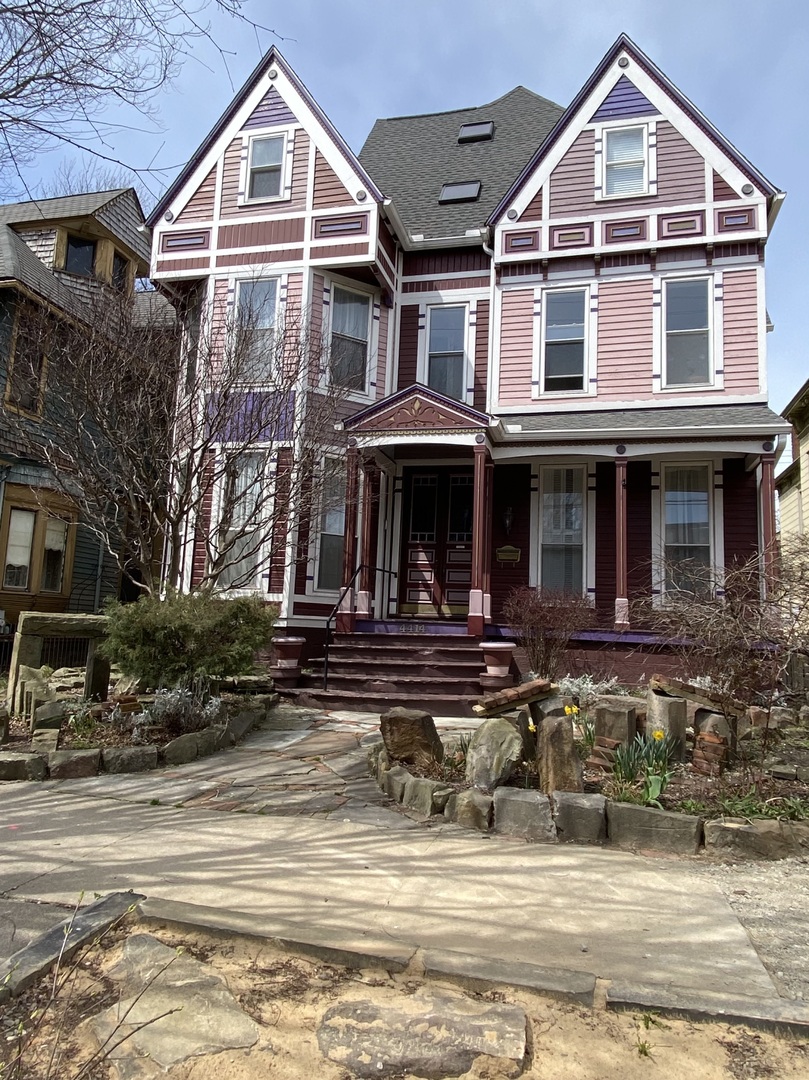
    <title type="html"><![CDATA[M. J. Lawrence House: When Is It Time to Rename a Historic House?]]></title>
    <summary type="html"><![CDATA[<p><strong><em>In February 1886, a reporter from the Cleveland Leader tracked down the estranged wife of wealthy newspaper editor and publisher Mortimer J. Lawrence. He found her staying at the Forest City House on the west side of Public Square, where the Renaissance Cleveland Hotel stands today. She was pale, he noted, except for discoloration beneath her eyes which she confirmed was from injuries suffered at the hands of her husband.</em></strong></p><img src="https://clevelandhistorical.org/files/fullsize/f0f7a629cf9c69eb752b541235ba99b4.jpg" alt="M. J. Lawrence House Today" /><br/><p>Historic houses are often named after the person for whom they were built, especially when that person happens to have been a prominent member of the community.  While  this practice may give historic  houses  a certain cachet, it is not without risk.  With the passage of time and changing societal mores, information about that prominent citizen may come to light which tarnishes their image and that cachet.  Such is the case with naming the house at 4414 Franklin Boulevard after Mortimer J. Lawrence,  a man who in the late nineteenth century built a newspaper empire that was headquartered in Cleveland.   </p><p>Most, if not all,  contemporary biographers of Mortimer J. Lawrence lauded him as they related his rags-to-riches life story.  It is a format that was often used  by Cleveland biographers of the late nineteenth and early twentieth centuries when telling the stories of the men who they believed were responsible for building the city into an industrial powerhouse.  For M. J. Lawrence, the story  went something like this.  He grew up in Wakeman, Ohio, just south of Vermillion.  His father abandoned him when he was a little boy.  He went to work at a young age to help support the family.  When the War between the States broke out in 1861, he lied about his age in order to enlist on the side of the North.  He served  gallantly and, when the war ended, he moved to Cleveland.  He married a local girl, Helen Madison, and together they started a family,  living at first on Cleveland's east side where their three sons were born.  Mortimer worked as a reporter at the  Herald for a time and then at the Leader.  In 1872, when he was just 29 years old, he decided to take a big risk.  He borrowed money to purchase the Ohio Farmer, a struggling agricultural newspaper.  Working tirelessly, he saved the paper from bankruptcy.   It soon became  a successful and profitable paper.  He then proceeded to build around it a chain of agricultural newspapers in neighboring states which created a readership for his papers that eventually stretched from the Midwest all the way to the East Coast.  Within a decade, the long hours, the hard work, and the risk taken made Lawrence  a very wealthy man.  That was the rags-to-riches narrative for Mortimer J. Lawrence.  But there was more to his life and much of it was far from being praiseworthy.</p><p>In March 1882, M. J., as he was known after he became wealthy, purchased a parcel of land on the north side of Franklin Boulevard, just a few lots east of Taylor (West 45th) Street, and arranged for the construction of the house which stands  today at 4414 Franklin.  Designed in the Queen Anne style by up-and-coming young architect Nevins Charlot, it is two and one-half stories tall and today has more than 5,000 square feet of living area.  Once construction was completed in late 1882, M.J.,  Helen and their three sons, who ranged in age from four to fourteen years, moved into the house.  With such a young family, you might expect that the Lawrences would have lived happily in the house for many years to come.  However, less than four years later, M.J.  sold the house and  moved to Denver, Colorado.  Before he departed, he told his employees, according to an article that appeared in the Leader on October 17, 1886, that he was leaving Cleveland  "on account of his health."  This was hardly the true reason for his hasty departure.</p><p>Eight months earlier, in February 1886, a series of articles began to appear in Cleveland and other area newspapers regarding the state of the marriage of  M. J. Lawrence and his wife Helen.  The first reported that, on February 16, Helen Lawrence had filed a petition in the Cuyahoga County Court of Common Pleas  against M. J., seeking a divorce, alleging that the well-known editor and publisher had committed acts of extreme cruelty against her as well as adultery.  Reporters following up on the filing learned from Helen Lawrence's sister that on Saturday evening, February 13, Helen had come to her house on Liberty (West 48th) Street seeking shelter, claiming that M. J. had beaten her.  The sister observed that Helen's face was badly bruised.  She said that it was common knowledge in the family that M. J. had  physically and mentally abused Helen for years, including striking her, spitting on her and throwing hot water in her face.  Finally, Helen could take no more of it and had fled from her home.  Days after speaking with Helen's sister, a reporter from the Leader learned that Helen Lawrence was staying at the Forest City House on Public Square.  He went there and observed for himself the bruises on Helen's face.  The Leader also interviewed M. J. Lawrence who told them he would prove his innocence in court.</p><p>Helen Lawrence wasn't the only woman in Cleveland in the post-Civil War era who was filing for divorce against an abusive husband.  Prompted and pressured by leading feminist activists like Susan B. Anthony , Elizabeth Cady Stanton and others, legislatures and courts across the United States had liberalized the grounds which women could assert in order to obtain a divorce from such husbands.  Moreover, the laws regarding alimony had also been liberalized to better enable women to support themselves after they were divorced.   As a result, the number of divorces sought by and granted to women in the post-Civil War era skyrocketed, causing legislators and others more interested in preserving the family unit than protecting the rights of battered women to push back against further progressive changes.  This then would be the last era to see significant changes in divorce laws that benefited women until the dawn of a new civil rights era for women  in the 1960s.  </p><p>Helen Lawrence was awarded a divorce from M. J. Lawrence in late March 1886, just six weeks after she filed her petition.   It turned out that M. J. Lawrence did not prove his innocence in court as he had told newspaper reporters that he would.   Instead, he did not contest his wife's entitlement to a divorce  and agreed to the court awarding her what in that era would have been considered a substantial alimony settlement.   Helen used a portion of that alimony to buy a house on Franklin, just west of Waverly (West 58th) Street, where she raised her  youngest son and cared for her aged mother.  After he sold the house at 4414 Franklin and moved to Denver, M. J. married the woman--more than 20 years younger than he-- with whom he had been carrying on his extramarital affair.  Nearly a decade would pass  before he and his new wife would return to and once again live in Cleveland.</p><p>After the Lawrence family moved from 4414 Franklin, it became home to several other prominent Clevelanders.  One was Herman Baehr, the owner of a prominent local brewery.  Best known as the man who defeated Cleveland's legendary mayor Tom Johnson, Baehr resided in the house at 4414 Franklin for a decade, including the period of 1910-1911 when he served as Cleveland's mayor.   Another prominent owner was Jacob Laub, who founded  Laub Bakery in Cleveland in 1889.  Laub Bakery was well known to Clevelanders for nearly a century before it went out of business in 1974.  In the 1920s, the house was owned and occupied by a less prominent Clevelander, Gustav Lebozsa, a Hungarian immigrant tailor. After initially occupying it as a single family house, in 1928 he converted it into a rooming house, which it remained, according to Cleveland directory records until at least 1951.  In the 1940 census, nine families were listed as residing in the M. J. Lawrence House.</p><p>By the mid-twentieth century, the M. J. Lawrence House was in deplorable condition.  A photo taken in 1954 for the Cleveland Board of Zoning Appeals revealed that house's third story front dormer was gone; the windows and decorative woodwork on the two front gables had been covered with asphalt shingles; the eaves of the front gables had been removed; several of the house's original five chimneys were missing; and  the house's covered front porch was gone.   Much, if not all, of this damage was caused by the historic 1953 tornado, which damaged this house and many others on Franklin.  In the year following the historic tornado, repairs were completed and the M. J. Lawrence House was converted from a rooming house into a four-suite apartment with two suites on the first floor, and two on the second.  The house continued to be so used during the decades of the 1960s and 1970s.  In the early 1980s,  a new owner was in the process of adding a fifth suite to the third floor of the house, when he abandoned the work and left the house vacant.  As the end of 1980s approached, the City of Cleveland was threatening to condemn  the M. J. Lawrence House when it was saved by Duane and Michaella Drotar.</p><p>According to Duane Drotar, he and his wife were social workers living on West 28th Street in 1989 when they became involved in the controversy surrounding St. Herman's House of Hospitality's application to the City of Cleveland for a zoning variance to add a dining hall onto the house at 4410 Franklin.  St. Herman's, which has provided shelter for homeless men at that location on Cleveland's west side since 1977,  is located next door to the M. J. Lawrence House.  While some in the neighborhood opposed the variance, the Drotars did not.  They learned that, if they were to purchase the vacant M. J. Lawrence House and indicate their non-opposition to St. Herman's variance request, the City of Cleveland would likely approve it.  So, the Drotars sold their house on West 28th and, with the sales proceeds, purchased the M. J. Lawrence House.  They then began what turned out to be a long process to renovate and restore it.  (Meanwhile,  St. Herman's proposed building addition was approved by the City.)  </p><p>Duane and Michaella Drotar first renovated the interior of the M. J. Lawrence House during the 1990s, building first a suite for their family that consisted of the entire first floor of the house and part of the second.   They next built  a separate rental suite on the remaining part of the second floor.  Finally,  they developed the third floor into a temporary residence for, as Duane Drotar put it, "people in transition."  After the interior renovations were completed, the Drotars turned their attention to the exterior of the house.   They did not attempt to restore it to its original design primarily because the cost was prohibitive.  Instead they renovated the exterior to resemble a  "painted lady" Victorian house that one might see in San Francisco.  Their external renovations to the house were completed in 2003.</p><p>The Drotar family lived in the house at 4414 Franklin for nearly 30 years. During these years, Duane and Michaella's three children grew up in the house, and Duane and Michaella continued their social work of ministering to the needy on Cleveland's west side.   While the M. J. Lawrence House may have been built for and first occupied by a newspaper editor who abused his wife, the Drotar family, over the course of their long residency in the house, did much to improve both the appearance and the reputation of the house, if not stigma attaching to its name. The M. J. Lawrence House is now, as a result, known in the Franklin Boulevard neighborhood as a place where innumerable acts of kindness, compassion and charity for neighbors occurred over the course of the decades that the Drotar family lived there.</p><p><em><strong><a href="https://clevelandhistorical.org/items/show/954">For more (including 15 images) view the original article</a></strong></em></p>]]></summary>
    <published>2021-11-21T21:11:56+00:00</published>
    <updated>2026-04-17T19:17:42+00:00</updated>
    <link rel="alternate" type="text/html" href="https://clevelandhistorical.org/items/show/954"/>
    <id>https://clevelandhistorical.org/items/show/954</id>
    <author>
      <name>Jim Dubelko</name>
    </author>
  </entry>
  <entry>
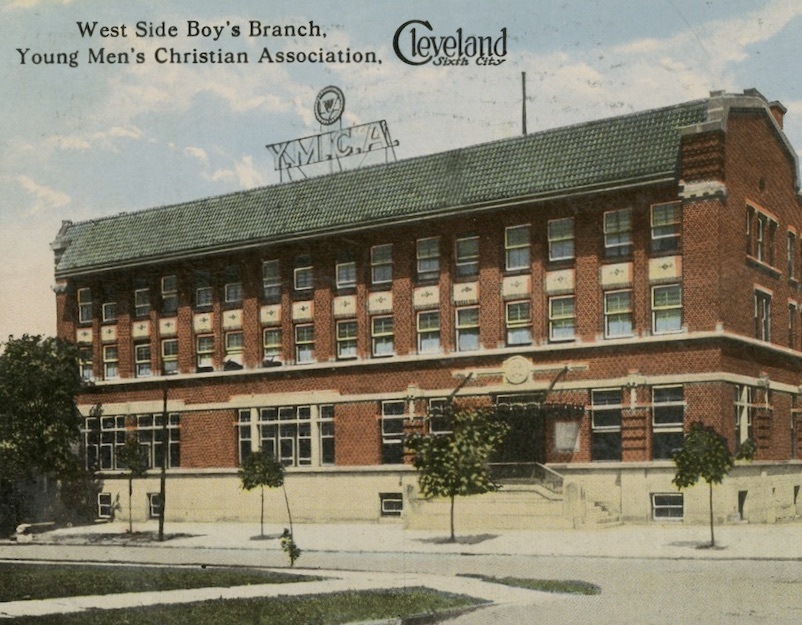
    <title type="html"><![CDATA[West Side Y.M.C.A. : A Cleveland Neighborhood Center for Over a Century]]></title>
    <summary type="html"><![CDATA[<p><strong><em>In 1895, the Board of Directors of Cleveland's Young Men's Christian Association decided the time was right to build the organization's first branch facility on the city's West Side.  It was a decision that not only produced several important "firsts" for the organization but, in the longer view, created a new community center on Franklin Boulevard that would serve the surrounding neighborhood for more than a century.</em></strong></p><img src="https://clevelandhistorical.org/files/fullsize/e95030159fc082e7def69a9aaaf5408e.jpg" alt="The West Side YMCA" /><br/><p>The origins of the building at 3200 Franklin Boulevard, which today is home to a condominium development known as "Franklin Lofts,"  may be said to go back to May 7, 1898, and the sudden death of W. A. Ingham, a prominent Cleveland bookseller and publisher.  Ingham's business had sustained a severe and unexpected loss in 1889 from which neither it nor he fully recovered, and, when he died, Ingham left his widow in a precarious financial condition.  According to her late husband's will, she had two options.  She could continue to live in their grand Italianate style house on the northwest corner of Franklin Avenue and Duane (West 32nd) Street, or she could sell the house and receive a lump sum of money from the estate.  The widow in question was Mary B. Ingham (also known as Mary Bigelow Ingham), a Cleveland pioneer feminist, a charter member of the national Women's Christian Temperance Union, a co-founder of the Cleveland Institute of Art, and an author of numerous articles and books about the lives of nineteenth century women.  She decided to stay in the house for the next two years while her husband's estate was being probated, taking in roomers to help pay the bills.  As the estate proceedings drew to a close, she elected to have the house sold and, in the Fall of 1900, she moved out, taking up residence on the campus of Oberlin College.  There, she continued to write and publish and, undoubtedly, continued to influence yet another generation of American women.</p><p>W.A. Ingham's death in 1898, and the decision of Mary B. Ingham to move out of their house in 1900, paved the way for the Young Men's Christian Association (YMCA) to establish a branch facility on the west side of Cleveland.  Since 1895, the Cleveland YMCA had been looking for an opportunity to do so.  In 1897, it had mounted a campaign to establish a location, but, according to the March 18, 1900, edition of the Plain Dealer, it had failed for lack of support.  When, in 1900, it came to the attention of a young men's club at the Franklin Avenue Methodist-Episcopal Church, located on the southwest corner of Franklin Avenue and Duane Street that the Ingham House, just across the street, was for sale, they mounted their own campaign to have it become the new west side YMCA.  Prominent west side business men joined the effort. Robert Wallace, the recently retired  president of  the Cleveland Shipbuilding Company, and as well  a long-time resident of Franklin Boulevard,  purchased the Ingham house and donated it to the YMCA.  Others contributed the money necessary to construct a gymnasium addition onto the rear of the house.  On November 5, 1901, the new West Side YMCA, which was initially called the West Side Boys Club, opened.  Not only was it Cleveland's first YMCA branch located on the city's west side, but it was also, according to contemporary newspaper accounts, the first YMCA in the United States whose membership was restricted to boys between the ages of 12 and 18.</p><p>The person who was tapped to head the new West Side YMCA was Mathew D. Crackel, Secretary of the Junior Department of the Central YMCA since 1897.  Crackel, who had been living in downtown Cleveland, immediately moved to Franklin Boulevard, the street on which, except for a two-year stay in Jerusalem in the 1930s where he established a YMCA for Jewish and Palestinian boys, he would live for the rest of his life.  Crackel  was known for his moral compass, his motivational speeches and his extended hiking and camping trips. The most memorable of the latter were his annual "gypsy trips," which began in 1902.  Each year, Crackel led a group of YMCA boys on long hikes that often covered hundreds of miles, and involved camping outdoors for weeks, before returning to Cleveland.  Crackel also headed the first Boy Scout troop in Cleveland, which was formed at the West Side YMCA in 1910.  He served as Secretary of the West Side YMCA until his retirement in 1933.  </p><p>It was during Mathew Crackel's tenure as head of the West Side YMCA that the building which currently sits on the northwest corner of Franklin Boulevard and West 32nd Street was erected.  In 1909, the Cleveland YMCA had decided to expand its membership by constructing new and larger facilities for its Central YMCA on Prospect Avenue as well as for its East End and West Side branches.  The new West Side YMCA facility was to be built at the same general location as the existing facility.  The lot on Franklin immediately to the west of the Ingham House was purchased and the house on it razed.  The Ingham house was razed as well and the gymnasium, which had been attached to the rear of it, was moved to the rear of the lot to the west.  The new building was erected on and straddled both of the lots.  It was designed by architect Albert Skeel, an English immigrant who trained in Cleveland at the offices of the well-known architect Frank Barnum.  Four stories in height, including its basement which held the lobby and served as the building's "ground" floor, it had 120 feet of frontage on Franklin Boulevard and an equal amount on West 32nd Street.  It was equipped with a gymnasium (giving this branch two gymnasiums), a swimming pool, an indoor running track, a handball court, game rooms, reading rooms, club rooms, a dormitory with capacity for 100 occupants, and a large kitchen and dining room.  (Later, an addition with more handball courts was constructed onto the west side of the new building.) Construction was begun and completed in 1911 at a cost of $110,000.   The new West Side YMCA was dedicated by Cleveland Mayor Newton D. Baker on March 21, 1912. </p><p>In the years, and decades that followed, the West Side YMCA became more than just a place for young men to go and follow the tenets of what was then referred to as "muscular Christianity."  In addition to the athletics, the clubs, the reading rooms and the other programs designed for young men, the building also served as a place for neighborhood residents to gather and participate in community events.  There were open houses and receptions, meetings of a variety of local organizations, art and other exhibitions, political gatherings, concerts, workshops, fund-raising events, lectures, and even a circus, which were attended by residents of what was then called the Near West Side, but what eventually became known as the Ohio City neighborhood.  As Cleveland's west side changed demographically in the post World War II era, the West Side YMCA changed with it, converting dormitories that had been built for young men moving to Cleveland into transitional housing for Cleveland's  homeless, and hosting the Hispanic Culture Center in recognition of the growing Hispanic presence in the neighborhood.  It also became a favorite place for older neighborhood men, especially retirees, to go and play handball.  Change of a different type came to the West Side YMCA in 1953, when it was hit by the tornado that destroyed many buildings on the west side of Cleveland.  The original wooden gymnasium building on the property was totally destroyed and the main building suffered substantial damage.  The old complex roof built with Spanish tile on its sloped front was rebuilt as a flat roof, giving the building thereafter a very different look.  By the 1980s, the West Side YMCA, like many other inner city YMCAs, was facing yet another challenge, this time to stay financially afloat. Efforts by members of the community  helped to keep it open for another two decades, but, on September 1, 2004, the West Side YMCA closed its doors for good.  The building was later sold to a developer who, in 2010, converted it into the Franklin Lofts.</p><p><em><strong><a href="https://clevelandhistorical.org/items/show/933">For more (including 15 images) view the original article</a></strong></em></p>]]></summary>
    <published>2020-12-22T03:40:17+00:00</published>
    <updated>2026-04-17T19:17:42+00:00</updated>
    <link rel="alternate" type="text/html" href="https://clevelandhistorical.org/items/show/933"/>
    <id>https://clevelandhistorical.org/items/show/933</id>
    <author>
      <name>Jim Dubelko</name>
    </author>
  </entry>
  <entry>
    <title type="html"><![CDATA[Ball-Wilson House: A Lake Captain&#039;s Residence]]></title>
    <summary type="html"><![CDATA[<p><strong><em>When a grief-stricken Captain John Ball moved out of the house at 2902 Franklin Boulevard in 1862, little did he know that it would soon become the childhood home of a little girl who grew up to be a pioneer feminist, a prolific writer, and one of Cleveland's most prominent florists.</em></strong></p><img src="https://clevelandhistorical.org/files/fullsize/42f944ccf9020486646d422c175dea91.jpg" alt="The Ball-Wilson House" /><br/><p>In 1852, John Ball, a Lake Erie ship captain, his wife Harriet Blake Ball, and their eight children moved into a new, two-story brick house on the northwest corner of State (West 29th) Street and Franklin Avenue (Boulevard), in what was then the City of Ohio (also referred to as "Ohio City").  Two years later, that city would merge with the City of Cleveland, and Ohio City would become Cleveland's near west side.  The house, which today, some 170 years later, still stands on the corner of Franklin Boulevard and West 29th Street is, according to local architectural historian Craig Bobby, of the Greek Revival style, but, in his estimation, was also influenced by the emerging Italianate style.  The notable Greek Revival features of the house include the straightforward stone lintels and sills on almost all the windows and the front door, and the dentil course immediately under the roof eaves.  The hipped roof and the cupola are viewed by Bobby as suggesting the Italianate influence,</p><p>Captain Ball, who was 40 years old when he moved into the house at 2902  Franklin Boulevard, which then bore an address of 181 Franklin Avenue, may have envisioned living in this roomy house with his wife and children for the rest of his life.  However, his family's residence in it was cut short, possibly because of a series of personal tragedies that befell the Ball family between the years 1858 and 1861.  In 1858, Ball's wife Harriet died suddenly, and then two of the couple's children, Mary (17) and Eunice (21) died from illnesses within three months of each other in December 1860 and February 1861.  At some point in time after the death of Eunice, Captain Ball moved his remaining children out of the house on Franklin Avenue and leased it in 1862 to the Gilbert and Susan Grant family.</p><p>The house at 2902 Franklin Boulevard has for decades been commonly known  in Cleveland as the Ball-Wilson house, because Gilbert and Susan Grant's daughter Ella, who was about eight years old in 1862 when the family moved into the house, grew up to become Ella Grant Wilson, a feminist pioneer, and one of the first  women in Cleveland to successfully own and operate her own florist business.  Later, she became well-known as a garden editor and  columnist for the Plain Dealer, as well as the author of two books describing her interactions as a florist with the wealthy families who lived on Cleveland's grand Euclid Avenue in the late nineteenth and early twentieth centuries.  The Grant family only lived in the house on Franklin Boulevard for five years, but that was enough time for Ella to form friendships with children of some of the more prominent west side Clevelanders that would last  a lifetime.  Among her west side childhood friends was Julia Castle, her "desk mate" at the neighborhood's Kentucky Street School.  Julia was the youngest daughter of William Castle, mayor of Ohio City from 1853-1854 and, following the merger of Ohio City and Cleveland, the  first mayor of the combined cities.  The Castle family lived at 186 Franklin (which today would be 2913 Franklin), almost directly across the street from the Grants.  In addition to the life-long friendships she formed there as a child, Ella Grant Wilson also made her first sale of flowers on Franklin Avenue.  In her book Famous Old Euclid Avenue of Cleveland, Volume One, published in 1932, she recounted a story of a man walking by her house one day, noticing her flower garden and offering her two tickets to the circus in exchange for a bouquet of  flowers.</p><p>In 1868, the Grant family moved from the house on Franklin Avenue to University Heights (today, Tremont) where Ella Grant just a few years later would build her first greenhouse on Jennings Avenue (West 14th Street), near Rowley Avenue, and start her florist business.  After the Grant family's departure, the Ball family rented out the house at 2902 Franklin for several  more years before selling it, in 1873, to Captain William B. Guyles.  In that the Ball-Wilson House is named after both its relatively obscure first owner and a pioneer Cleveland woman who never actually owned it, an argument could  be made that it should have instead been named after Captain Guyles.  Like John Ball, Guyles was a lake captain, but a much more notable one.  One biographical article contended that, in the 20 years that he commanded ships on the Great Lakes, he never had an accident which resulted in the loss of life or "considerable" property loss.  After retiring as a lake captain, Guyles became a marine inspector for a commercial insurance company.  In the early 1850s, he was elected to a seat on Ohio City's council and served on a committee that facilitated the merger of Ohio City and the City of Cleveland in 1854.  In 1870, as a member of the city's Board of Trade, he proposed a design for the improvement of Cleveland's harbor that led to the construction of the city's first breakwater in 1885.  After moving into the house on the corner of Franklin Avenue and State Street, Guyles became, like several other prominent residents of Franklin Avenue, a director of the People's Savings Bank, the president of which was then Robert Russell Rhodes, who lived across the street from him.  </p><p>Captain Guyles lived in the house at 2902 Franklin Boulevard until his death in 1896.  In 1900, his widow sold the house  to the next door neighbor at 2908 Franklin, who   used it as rental property for the next decade.  The house became  owner-occupied once again in 1912 when it was sold to James and Catherine (Moan) Walsh.  The Walshes, who were second generation Irish Americans, lived in the house until their deaths, his in 1932 and hers in 1935.  After Catherine's death, the house was inherited by one of her nephews, James V. Moan, who used it as rental property for the next three plus decades.  In 1970, Moan sold the house to Thomas and Claire Farnsworth, early Ohio City pioneers, who lived in it for the next five years.  It was about at this time that the house underwent rehabilitation, which included the removal of the wrap-around porch which had likely been added to it in the first decade of the twentieth century.  In 1980, the house was featured as one of the improved historic houses on the sixth annual Ohio City House and Garden tour.  As of 2020, the house was no longer single-family occupied, but instead an Airbnb rental property.</p><p><em><strong><a href="https://clevelandhistorical.org/items/show/919">For more (including 9 images) view the original article</a></strong></em></p>]]></summary>
    <published>2020-11-24T19:23:40+00:00</published>
    <updated>2026-04-17T19:17:42+00:00</updated>
    <link rel="alternate" type="text/html" href="https://clevelandhistorical.org/items/show/919"/>
    <id>https://clevelandhistorical.org/items/show/919</id>
    <author>
      <name>Jim Dubelko</name>
    </author>
  </entry>
  <entry>
    <title type="html"><![CDATA[Adele von Ohl Parker: The Second Act]]></title>
    <summary type="html"><![CDATA[<p><strong><em>"There are many women leading a butterfly's existence who would be glad to go into something worthwhile."</p><p>– Adele von Ohl Parker, Los Angeles, California. Summer, 1916.</em></strong></p><img src="https://clevelandhistorical.org/files/fullsize/b68cb6e8c1a8be0c021f3bb9c2aa9e10.jpg" alt="At home on her North Olmsted ranch" /><br/><p>As World War I raged across battlefields in Europe, Adele von Ohl Parker, nationally known daredevil rider, waged a campaign  in the United States for the creation of a mounted Red Cross to be composed entirely of upper-class horsewomen.  Conscious of the limitations that society placed upon women like herself in the early twentieth century,  she believed that women would rally around her campaign.  She wasn't wrong, but before such a mounted Red Cross could be successfully organized here, World War I came to an end.</p><p>Adele Ohl was born on December 13, 1885, into an upper-class family in Plainfield, New Jersey.  Her maternal Scottish ancestors had operated horse farms there since the early eighteenth century, and were said to have supplied horses to George Washington during the American Revolution.  Adele grew up around horses and learned to ride them expertly at a riding academy in Plainfield that was owned by her grandmother and managed by her mother.  When she was still a teenager, she began doing daredevil tricks with her horse Delmar.  In 1905, after adding back onto her last name the "von" that her paternal German ancestors had dropped when they came to America, nineteen year old Adele von Ohl  appeared at the Hippodrome Theater in New York City. There, riding Delmar, she performed an act in which they plunged off a high platform into a tank of water below. The act caught the attention of the East Coast media, who were quick to label her one of America's most daring woman riders, also noting that Adele did not ride a horse sidesaddle like most women then did, but instead rode astride her horse as men did.  </p><p>Adele von Ohl's act also caught the attention of William "Buffalo Bill" Cody, who hired her in 1907 to perform tricks on horseback for his Wild West extravaganza.  She toured the country with Buffalo Bill's troupe from 1907 to 1909.  In that latter year, she married James Letcher Parker, a bronco rider also performing with Cody's show.  They both left Cody's Wild West for the Vaudeville circuit, appearing over the course of the next two decades in acts with "Wild West" themes, like "Cheyenne Days," "Texas Round-up," and "Rodeo Days."  During this period, Adele Parker also appeared with the Ringling Bros. and  Barnum & Bailey Circus and worked for several years as a stunt woman in Hollywood, appearing in early movies with cowboy star Tom Mix.  In the fall of 1928, Parker traveled to Cleveland, where she was scheduled to appear at Keith's Palace Theater.  Her show, however, was canceled and, as she later said, "I was stranded in Cleveland with two horses and seven cents."  Perhaps she recognized that Vaudeville was coming to an end, and perhaps she also recognized that, at age 42, her daredevil riding days were coming to an end too.  Whatever the reason, she approached A. Z. Baker, President of the Union Stockyards in Cleveland, where her horses were being stabled, and asked him if she could perform an exhibition of daredevil riding at the livestock show that was being held that Fall in downtown Cleveland at Public Hall.  She then used the exhibition to generate interest in a new riding school – the Von Ohl School of Horsemanship – that she decided she would open in Cleveland, a city she believed held promise to become an important equestrian center in the Midwest.  And thus the stage was set for the beginning of the second act of her equestrian career.</p><p>During the years 1928 and 1929, Parker sited her new riding school at various places in the Cleveland area, including the new Equestrium built by the Union Stockyards at 6800 Denison Avenue in Cleveland, and the Armory of Troop A, 107th Cavalry of the Ohio National Guard located in Shaker Heights.  Neither place turned out to be a good fit, and, in the fall of 1929, she moved her school to North Olmsted, Ohio, where she rented six acres of land on the Henry Giesel farm.  (A decade later, she would purchase the land from the Giesel family.)  Located on Mastick Road, just west of Clague Road, it had bridle paths that led down into Cleveland Metroparks Rocky River Reservation, making it an ideal location for a riding school.</p><p>It is not clear exactly when or why the Von Ohl School of Horsemanship became Parker's Ranch, but the "when" was certainly no later than by May 23, 1930, when a short article about a YWCA horse riding event there appeared in the Plain Dealer.  The "why" for the name change may have been a nod to her husband who helped her start the  ranch in North Olmsted,  but then soon thereafter departed.  The two were divorced several years later.  Following his departure,  Adele's brother Percy, a dog trainer, and her sister Winnonah ("Nona"), an animal trainer and talented horseback rider in her own right,  moved onto Parker's Ranch to assist their sister in its operation.  Over time the ranch grew to have some 34 buildings, including four barns which stabled from 60-70 horses, half of whom were owned by the ranch.  The ranch also became home to an assortment of other animals, including cows, donkeys, goats, chickens, rabbits and pomeranian dogs.  According to the 1940 census, the ranch also came to employ a staff of at least ten persons, ranging from secretaries to cooks to handymen to stablemen.  The Plain Dealer, in an article that appeared on June 22, 1930, called it a "dude ranch in industrial Ohio."</p><p>While Parker's Ranch was founded as  a riding school, it soon became much more than that as Adele Parker initiated programs and events at the ranch that focused on children, including disabled children.  Shortly after opening Parker's Ranch, Adele started a day camp for children.  Day camp was inspired by a program she had developed for kids in Los Angeles a decade earlier called "Junior Rough Riders."  Held  every summer for many years,  day camp at Parker's Ranch was  four days each week for an eight-week session.  At day camp, children were not only taught how to ride horses, but also to love horses and how to care for them.  Along the way, they were also taught a lot of life lessons from Parker and her staff.  She also instituted a number of annual events on the ranch, which gave children opportunities to perform on horseback in front of friends, families and neighbors.  One of those events was the annual Mother's Day Show.  Another was the Annual Horse Show.  And, starting in 1959, the fiftieth anniversary of her last year with Buffalo Bill Cody, Parker began a Wild West show of her own, modeling it after Cody's.  Proceeds from the annual Wild West shows, as well as from other events on the ranch, went to the Society for Crippled Children, today known as Easter Seals.</p><p>In addition to the programs, events and other activities at Parker's Ranch, Adele Parker also gave riding lessons at Cleveland's famed Karamu House  to African American children, a number of whom appeared in riding competitions representing Parker's Ranch.    She also  found time to pursue other passions.  She was a talented sketch artist and oil painter.  She also was, in 1961, one of the founding trustees of the Olmsted Historical Society.  Parker continued to appear at Cleveland area events on horseback well into her seventies, performing at her fifth annual Wild West Show in 1963 when she was 77 years old. When Parker died at her ranch on January 21, 1966 from heart failure, the papers reported that she had no surviving family.  And yet they also noted that more than 300 area children had attended her funeral.  These children were part of the estimated 10,000 children in Cuyahoga, Medina and  Summit Counties that she taught to ride at Parker's Ranch during the Second Act of her equestrian career.  In a real sense, they were her surviving family as well as her legacy in northeast Ohio.</p><p><em><strong><a href="https://clevelandhistorical.org/items/show/904">For more (including 15 images) view the original article</a></strong></em></p>]]></summary>
    <published>2020-02-13T19:48:30+00:00</published>
    <updated>2026-04-17T19:17:42+00:00</updated>
    <link rel="alternate" type="text/html" href="https://clevelandhistorical.org/items/show/904"/>
    <id>https://clevelandhistorical.org/items/show/904</id>
    <author>
      <name>Jim Dubelko</name>
    </author>
  </entry>
  <entry>
    <title type="html"><![CDATA[Martha House: The Home for Jewish Girls]]></title>
    <summary type="html"><![CDATA[<img src="https://clevelandhistorical.org/files/fullsize/1b6a936198fb12f770e275e1846029a8.jpg" alt="Martha Wolfenstein" /><br/><p>Established as a home for girls who came to Cleveland seeking employment more than a century ago, Martha House was considered to be a great blessing for many young Jewish single and self-supporting girls and young women from the ages of fourteen to twenty-two. In many cases, without relatives or friends, Martha House became an ideal residence, with all the comforts of home life at a moderate cost, and with the least possible restrictions to the girls’ personal freedoms. Named as a tribute to the memory of Martha Wolfenstein (1869-1906), gifted Jewish author and eldest daughter of Bertha (Brieger) and Dr. Samuel Wolfenstein, superintendent of the Cleveland Jewish Orphan Asylum, Martha House was first located at 2234 East 46th Street, between Cedar and Central Avenues, and was supported by the Cleveland Council of Jewish Women and its officers and trustees. A Board of Directors was created by the Council to administer the affairs of the organization, with vacancies being filled by appointment by the President of the Council.</p><p>The opening of Martha House in 1907 offered a most welcome solution to one of the gravest problems faced by Dr. Wolfenstein and his associates – the immediate future of discharged orphan asylum inmates who faced the world at an all-too-early age and for whom shelter and protection were tenuous. A new branch of work for the Council, Martha House was the direct outgrowth of those who recognized the needs of the city’s rapidly expanding Jewish population. While there was nothing in the constitution or governing by-laws to prevent the acceptance of others, it was understood that Martha House would benefit Jewish girls. However, the rules were framed with sufficient latitude to permit temporary housing for others in an emergency.</p><p>As reported in <em>The Jewish Review and Observer</em> (May 24, 1907), it was anticipated that the home would be fully-equipped and ready for occupancy by June 1, 1907, marking an important philanthropic event in the city. Initial monetary contributions were used for repairs and furnishings to the home, formerly the property of Mr. Malcolm Vilas. Once in running order, it was expected that the institution would be financially self-sustaining. </p><p>The building and its grounds were situated in a residential section of the city, not too remote from the centers of the Jewish population it aimed to serve. Additionally, it was adaptable to larger needs and permanence foreseen in its future. Described as “large and airy,” the home could easily accommodate 18 girls. The downstairs consisted of an entrance hall, parlor, library, dining room, kitchen, pantry, and one bedroom. Upstairs, there were sixteen bedrooms with white iron beds and large clothes presses. One room contained a large fireplace.</p><p>Residents were kept under the mild but wise surveillance of a governing board, whose interests were as much material as they were in the young girls’ moral and physical welfare. No efforts were spared to secure work for those temporarily unemployed as well as those inadequately paid for whom instruction would improve and increase their earning capacity.</p><p>At its opening, five applications for admission to Martha House had been granted. Mrs. Henry Woolf was to be the acting matron. In September of the following year, the board hired Miss Minnie Goldberg as matron. By this time, there were fifteen residents, whose occupations varied from stenographers, clerks, and factory hands to milliners’ and dressmakers’ helpers. By May 28, 1909, just two years since its June 1907 opening, Martha House was still under the capable guidance of Miss Goldberg. The fourteen residents enjoyed the surroundings and best influences the home provided.</p><p>Nine years later in 1918, a new home for Martha House was acquired, because the original East 46th Street site was found to be inadequate for the number of young women who applied for admission. Located at 2032 East 90th Street, the new Martha House was purchased by the Cleveland Council of Jewish Women with funds subscribed by the Jewish community. </p><p>Located on the west side of East 90th Street just south of Euclid Avenue and diagonally across from the Colonial Club building, the four-suite brick apartment house was remodeled to accommodate between forty and fifty girls. A formal dedication ceremony for the new Martha House took place on January 11, 1919, at the Hotel Statler, attended by various prominent dignitaries including Mayor Harry L. Davis. This new Martha House, which existed from 1919 to 1926, had a recreation room, dining room, laundry, pantry and kitchen on the basement floor. On the main floor were seven bedrooms, a living room, reading room, three baths and a resident worker’s apartment. There were fourteen bedrooms on the second floor.</p><p>As head of the household, Mrs. Emma Frensdorf took a personal interest in the activities offered, and aimed to make the house inviting for the few leisure hours the girls had. Not mere boarders, they shared in the house’s upkeep and décor, adding their artistic touches to the draperies and other furnishings. A spirit of pride and a hospitable atmosphere pervaded the young women’s new quarters. Rooms were attractive and well kept. Meals were well prepared. Every effort was made to look after the girls’ health. Medical services including those by house physician Dr. J. Selman and Mount Sinai Hospital were available at a nominal fee. </p><p>During the week, residents ate breakfast, straightened their rooms and went to their places of employment. In the evening after dinner, they were free to spend the time as they pleased. From time to time there was a program of activities which included: House Council; personality club; sewing; dramatics; piano lessons; dancing; lectures and concerts to which the community was invited. There were also classes in dressmaking, sewing and millinery. Dances were arranged periodically. Several ambitious girls attended night elementary and high schools. On Sundays, the girls typically performed personal duties and pastimes. In addition to secular holidays, Friday evenings and all the Jewish holidays were observed with appropriate ceremonies. Seats for temple services were provided for those who wished to attend.</p><p>From its opening nineteen years earlier in 1907, there had been a need for Martha House, a need which was championed by the Cleveland Council of Jewish Women and the community but that eventually changed. In a letter dated December 14, 1925, Mr. Charles Nemser, Executive Director of the Council Educational Alliance of Cleveland, requested the cooperation of the (National) Jewish Welfare Board in investigating the feasibility of turning over the facilities of Martha House to the ‘’Young women of the community, under a typical recreational-educational program of the YWHA type.”’</p><p>Emily Solis-Cohen, field secretary of the Jewish Welfare Board for Women’s Work, was assigned to this investigation. Her investigation, which occupied ten days, was devoted to interviews with executives and officers of organizations; study of activities and records of various organizations; results of related questionnaires and finally, studies previously made by other agencies, all of which were carefully reviewed. The facts ascertained with reference to the Jewish population (particularly the number of girls and young women); the activities of Jewish organizations; and other pertinent information were offered as the basis for the recommendations contained in the report.</p><p><em>The Report of Availability of Martha House – Cleveland, Ohio as a Jewish Center for Women and Girls – April, 1926</em> highlighted budget and demographic data. The Federation of Jewish Charities, of which Martha House was a member, paid nothing regularly towards its support except in the years 1916-1919 when it gave a monthly subsidy of $50 (excluding June and July), and during these same years an additional $1,000. The Council of Jewish Women contributed $700. In 1925, receipts were $8,838.42 and expenditures were $10,315.14, with a resulting deficit of $1,476. It was expected that $1,000 would have been required for the next four months, while plans were being made for the future.</p><p>The resident capacity of forty-two girls was utilized for several years but by 1923 the number of residents had dwindled to thirty. A study made by the Bureau of Social Research showed that of this number, twelve girls were foreign-born and had been in Cleveland less than five years. There were twenty-five wage earners (of whom twelve earned less than $20 weekly), while ten girls had relatives residing in Cleveland. After this study, certain changes were made in the admission policy. Finally, it was decided that since so many girls had relatives, the home was no longer functioning as a home for the homeless and that it would be better to try placing those seven girls with families.</p><p>By the time of its closing on March 1, 1926, there was little demand for the facilities the home provided. At its meeting in June 1926, the Jewish Recreation Conference of the Federation of Jewish Charities voted to recommend to the Council of Jewish Women that Martha House be sold and utilized for recreational purposes.</p><p><em><strong><a href="https://clevelandhistorical.org/items/show/875">For more (including 6 images) view the original article</a></strong></em></p>]]></summary>
    <published>2019-10-12T16:48:29+00:00</published>
    <updated>2026-04-17T19:17:39+00:00</updated>
    <link rel="alternate" type="text/html" href="https://clevelandhistorical.org/items/show/875"/>
    <id>https://clevelandhistorical.org/items/show/875</id>
    <author>
      <name>Gail Greenberg</name>
    </author>
  </entry>
  <entry>
    <title type="html"><![CDATA[Rainey Institute: Building on Anna Edwards&#039; Dream]]></title>
    <summary type="html"><![CDATA[<p><strong><em><span style="font-weight:400;">If Anna M. Edwards, the first Director (then called "Superintendent") of the Eleanor B. Rainey Memorial Institute could attend an El Sistema concert today, she would probably at first be surprised that the Institute was involved in such a thing. But once she came to understand what music, and other visual and performing arts, programs at Rainey were doing for the children of Cleveland's Hough neighborhood, she would, while perhaps personally noting the irony of it all, be very pleased.</span></em></strong></p><img src="https://clevelandhistorical.org/files/fullsize/360e45df2b1005232b7d844e311585b0.jpg" alt="Willson Avenue Industrial Institute" /><br/><p>Anna M. Edwards dreamed of a career in music. Born in the Dayton, Ohio, area in 1849, she was the daughter of a Presbyterian minister who had moved his family to Cleveland near the end of the Civil War. Here, she attended local schools and then studied music at the Oberlin Conservatory of Music. By 1870, she was teaching music at the Lake Erie Seminary (today, Lake Erie College). However, when she was just 25 years old, her music career came to an end as a result of her involvement in the Women's Crusade (1873-1874), a national protest movement by women against America's saloon keepers. Edwards, according to her friend Edith Stivers, was persuaded by Frances Willard, legendary temperance reformer and women's suffragist, to give up her music career and go to work for the Woman's Christian Temperance Union (WCTU), a national organization led entirely by women that grew out of the Crusade and which was formally organized here in Cleveland in 1874.  </p><p>Edwards became the WCTU's Superintendent of Scientific Temperance Instruction for Ohio. This position required her to travel around the state, and later around the country, giving temperance lectures wherever she went. After a decade or so of this exhausting work, she began spending more of her time working at the non-partisan WCTU mission on St. Clair Street (St. Clair Avenue) near Willson Avenue (East 55th Street). The mission was located in a neighborhood that was brimming with saloons and home to many Eastern European immigrants, especially Slovenians. One day, according to accounts by several of her contemporaries, Edwards saw several young boys making a delivery of beer to a local saloon. They were drinking the "dregs" of the beer they were delivering and appeared to be intoxicated. Witnessing this was an epiphany for her. She decided then and there to devote the rest of her life to keeping boys like these away from saloons.</p><p>In 1888, Edwards took over the chairmanship of a WCTU reading room located on Willson Avenue, re-energized the neighborhood "Band of Hope" (a temperance pledge youth group), and opened the Flag Coffee House (so-called because of the flags she placed in its windows). The coffee house openly and actively competed with nearby saloons by offering boys a full dinner and a cup of coffee for just ten cents. Her work with the boys of this neighborhood eventually caught the attention of Eleanor B. Rainey, the widow of a wealthy Cleveland industrialist, who offered to provide Edwards with a larger and better facility for her work.  Rainey purchased a lot on the northeast corner of Willson and Dibble Avenues and built on it a three-story, 9,000-square-foot building, designed in the Tudor style by architects Badgley and Nicklas to resemble a large house. Officially called the Willson Avenue Industrial Institute, it opened in 1904. It had offices, and reading and game rooms, on the first floor; classrooms and a gymnasium on the second floor; and a custodian's apartment on the third floor. (Walfred and Anna Danielson, immigrants from Sweden and Canada respectively, and their son Harold, lived in that apartment and worked for the Institute for much of the period 1904-1940.)  </p><p>Just one year after the Institute opened, it was faced with a crisis that threatened its continued existence. Eleanor Rainey, its benefactor, suddenly died. The crisis was resolved when her heirs stepped in and agreed to continue their mother's support of the Institute's work, and the non-partisan WCTU (later known as the Women's Philanthropic Union) agreed to rename the Institute the "Eleanor B. Rainey Memorial Institute."  For the next half-century, the operations of Rainey as a settlement house were funded by Eleanor Rainey's heirs, particularly by her daughter Grace Rainey Rogers, who became sole owner of the building on East 55th Street and Dibble Avenues in 1931 and the sole surviving child of Eleanor Rainey in 1938. During this period, Rainey Institute functioned as a traditional settlement house, offering instruction in industrial trades for boys, home economics instruction (and also stenography and bookkeeping) for girls, and youth recreational activities. One of the young Slovenian boys who benefitted from these programs was Frank Lausche. He grew up to become Cleveland mayor (1942-1944), Ohio governor (1949-1957), and one of Ohio's United States Senators (1957-1969).</p><p>Anna Edwards served as superintendent of Rainey Institute until her death in 1923. She was succeeded by her younger sister, Flora, who served until her death in 1949. Upon her death, Flora Edwards was succeeded by Jessie Peloubet, whose mother was a close friend and associate of the Edwards sisters. Already 67 years old when she became superintendent, Peloubet faced many challenges during the decade of the 1950s. In 1957, the Goodrich settlement house moved from E. 31st Street to a location on E. 55th Street just up the street from Rainey Institute. The new Goodrich-Gannett neighborhood center, and several local organizations that provided funding to Cleveland settlement houses, put pressure on Rainey to either close, merge with Goodrich-Gannett, or move elsewhere. </p><p>Additionally, the decade of the 1950s saw the Hough neighborhood in which Rainey was located undergo racial transition, changing from primarily white and middle or working class in 1950 to primarily African American and working or lower class by 1960. Finally, the estate of Grace Rainey Rogers, Rainey's benefactor, who died in 1943, remained in administration well into the 1950s, forcing Peloubet to deal with estate executors and trustees in New York for the Institute's operational expenses. In 1955, pursuant to the terms of Rogers' will, the Rainey Institute land and building were finally conveyed from the estate to a newly formed non-profit corporation and a board of trustees was appointed that was charged with the financial management of an endowment left by Rogers for the continuing operating expenses of Rainey. </p><p>The record is silent as to how well Peloubet addressed these challenges, but by the end of 1959 she was no longer Rainey's superintendent, and, for a six-month period, Rainey was administered by League Park Center, Inc., a social services agency that was located, like Rainey, in the Hough neighborhood. According to an article which appeared later in the Cleveland Press on May 19, 1964, Rainey almost closed during this period. Shirley Lautenschlager, a social worker with a degree from Western Reserve University's School of Applied Social Sciences, was hired by the board of trustees in June 1960 to become the new director, of Rainey--the title of "superintendent" apparently having been discarded. Lautenschlager, who noted that, when she arrived, Rainey was functioning as little more than a recreation center, instituted a number of new social programs at Rainey that were intended to serve Hough's current population, including after school care for seven to twelve year olds; activities for teenagers including game rooms, clubs, and dances; and gardening, cake decorating and sewing classes. Several years later, in 1964, following the taking of a survey in the Hough neighborhood, Rainey also began offering piano lessons to the children of Hough. These and other music classes proved so popular with the neighborhood's parents and children that two years later Rainey Institute decided to concentrate its efforts solely in the field of music, becoming an affiliate of Cleveland Music Settlement in 1966. The institute also appointed a new Director that year who had a background in both music and social work.</p><p>For Rainey Institute, Zandra Richardson, the new Director hired in 1966, was like the second coming of founder Anna Edwards. Like Edwards, Richardson came to Cleveland from the Dayton area, and like Edwards, Richardson's first love was music. Both Edwards and Richardson became involved in social services because of their desire to help children in need and both ultimately worked for more than four decades helping children in what is today Cleveland's Hough neighborhood. Zandra Richardson, who served as Director from 1966 until 2008, left a deep imprint on the history and evolution of Rainey Institute as an arts center for underprivileged children. During her tenure, many new music and other arts programs were introduced at Rainey. One of the earliest new programs was a summer camp program promoted by Cleveland Music Settlement and Karamu House in 1967, the first summer following the 1966 Hough Riots. At summer camp, African American children were introduced to art, drama, African drumming, vocal music and dance. Several years later, Rainey expanded the summer camp program to include drama, art and music, and dance. Kids attending also received instruction in reading, math, and creative writing, and participated in recreational activities.</p><p>As time passed, Rainey's focus as a music and arts center gradually changed as theater and dance became more popular than music instruction. As a result, in 1997 Rainey severed its affiliate status with Cleveland Music Settlement. During first half of Richardson's directorship, she and Rainey's Board of Trustees, anchored by long-time trustee Theodore Horvath who worked tirelessly to preserve Rainey Institute's endowment, also initiated a long-term plan to build a new and larger facility so that more children in Hough and other nearby neighborhoods could be introduced to the visual and performing arts. In 2011, just three years after Richardson retired as Director, and with the guidance of new Director, Lee Lazar, many Cleveland businesses and charitable organizations, and Cleveland Councilwoman Fannie Lewis, Rainey Institute opened its new 27,500-square-foot Arts Center, just down the street from the old Rainey Institute building. In the same year as the new Arts Center opened, Isabel Trautwein, a violinist with the Cleveland Orchestra, established an El Sistema string orchestra program at Rainey. El Sistema, one of the most notable programs at Rainey today, promotes peaceful social change through music.</p><p>Under the directorship of Richardson and her successors, there have been many success stories at Rainey, of students who went on to have fulfilling careers in many different fields of endeavor ranging from music to government service to teaching to the business world. One of those former Rainey students is Stephanie D. Howse, an African American woman who had a successful career as an environmental engineer, before turning to public service and becoming State Representative from Ohio's 11th District. Today, Rainey Institute is a thriving art center, each year serving more than 2,500 children like Howse who hail from the Hough and other nearby neighborhoods of the City of Cleveland. </p><p>And the old Rainey Institute Building? It has not been forgotten by the City of Cleveland, which made it a Cleveland Landmark in 2018. From an early twentieth-century settlement house founded by a woman who gave up a career in music to help immigrant children threatened by saloons to a twenty-first century arts center, which uses music and other visual and performing arts to cultivate self-expression and promote social emotional growth in a new demographic of disadvantaged children in the neighborhood, Rainey Institute has come full circle, a statement with which Anna M. Edwards would certainly agree, even if she did find it ironic.</p><p><em><strong><a href="https://clevelandhistorical.org/items/show/869">For more (including 17 images) view the original article</a></strong></em></p>]]></summary>
    <published>2019-05-02T21:58:59+00:00</published>
    <updated>2026-04-17T19:17:38+00:00</updated>
    <link rel="alternate" type="text/html" href="https://clevelandhistorical.org/items/show/869"/>
    <id>https://clevelandhistorical.org/items/show/869</id>
    <author>
      <name>Jim Dubelko</name>
    </author>
  </entry>
  <entry>
    <title type="html"><![CDATA[Wilkins School of Cosmetology : Haircare and Hospitality ]]></title>
    <summary type="html"><![CDATA[<img src="https://clevelandhistorical.org/files/fullsize/b19c6174e4e70b1c644560859fcfb17a.jpg" alt="Wilkins School of Cosmetology Postcard" /><br/><p>In the early 20th century, many African Americans sought refuge in northern cities from the tyranny and violence of the Jim Crow South. For those participating in this Great Migration, a city such as Cleveland seemed a logical choice, with the promise of economic and social benefits, not least a growing African American population to provide a sense of community. In the midst of this influx, African Americans became increasingly channeled into the crowded Cedar-Central neighborhood. Churches, music halls, and even beauty parlors in the community all played a signal role in providing places where black newcomers could come together. The Wilkins School of Cosmetology was one such place that reflected the mixture of entrepreneurship and social service that helped make Cedar-Central a vital community. </p><p>The school's founder Edith Wilkins, the eldest of twelve children, was born in 1893 in a white-washed cabin of the farm of her grandparents in Plumville, Arkansas. After graduating from the Poro College of Cosmetology in St. Louis, she moved to Cleveland with her husband George, a South Carolina-born fireman for White Sewing Machine Co., and two daughters in 1918. After waiting tables at Halle Bros. department store, Wilkins soon established a career as a beautician when she opened her first salon at 3812 Scovill Avenue. </p><p>On the advice of friends, Wilkins became a cosmetology educator when she took over an existing beauty school located on the main floor of the <a href="https://clevelandhistorical.org/items/show/19">Phillis Wheatley</a> building on Cedar Avenue at East 46th Street. The Phillis Wheatley Association provided support and a safe place to live for young, unmarried African American women newly arrived from the South. Although this location seemed to be a fitting spot for the parlor, the business's soaring popularity necessitated an expansion that simply was not possible in the Phillis Wheatley building. Wilkins ultimately purchased her own house on East 46th just north of Cedar Avenue in early 1936. Following renovation, it officially opened as the Wilkins School of Cosmetology. </p><p>Throughout the 1930s and 1940s the Wilkins School of Cosmetology grew further. Wilkins educated students from not only the U.S., but also Canada, Cuba, Africa, and the Caribbean. The school also provided African Americans, especially women, a space in their community where they could connect and grow together. Beauty parlors served as important social spaces for both women and men in the African American community. They were safe spaces, away from the hostilities sometimes faced in the white world around them, which explains why the Wilkins School was regularly featured in the <em>Negro Motorists' Green Book</em>. Moreover, the school gave black women a sense of empowerment while teaching them skills to become financially independent. Wilkins often allowed new students to study tuition-free and in many cases would even cover their room and board until they could pay their own way. Reflective of the school's communitarian nature, Edith Wilkins hosted many social and professional groups at the school such as the Jewelites Social Club, the Venus Club, the Economical Art Club, and the Business and Professional Women's Club. During the depression and war decades the school maintained continuous enrollment. Many of its graduates either found work in other salons, came back to work for the school, or in some instances pursued higher education. </p><p>By the 1950s and 1960s the Civil Rights movement gained steam in Cleveland. Wilkins and the School of Cosmetology, from the beginning, had supported other African American business endeavors in Cleveland. These included not only other salons and beauty parlors, but also the <em>Cleveland Call and Post</em> newspaper, and the Eliza Bryant Home, formerly known as <a href="https://clevelandhistorical.org/items/show/859">The Cleveland Home for Aged Colored People</a>. Wilkins also was able to get the school into the national and even international spotlight through her political work striving for the rights of African Americans and women. As a representative of the Cleveland Council of Negro Women, Wilkins had the opportunity to travel to many countries, including to Belgium to attend the World Brotherhood of Christians and Jews. Wilkins is also considered one of the founding members of the Ohio Association of Beauticians. </p><p>After turning over administration of the school to her daughter Lucille Francis in 1974, Wilkins remained active in the school and in the community. Her daughter continued to run the school in the same way as her mother before her. She maintained its reputation of being a modern, technologically advanced institution while also keeping its programs widely publicized in the press. During her tenure, the graduating classes reached record numbers, and the institution celebrated its thirty-fifth commencement exercise. Lucille, like her mother also had a strong sense of what the School of Cosmetology meant to the community, and frequently asked public figures in the African American community to come and give lectures, as well as to speak at commencement exercises. </p><p>After Edith Wilkins's passing in 1988, the School of Cosmetology started to lose its popularity. Newspaper articles and advertisements slowly decreased, but the School still lived on through the memorialization of Wilkins. She is memorialized at the Eliza Bryant Home hall of fame, as well as the St. James A.M.E. Church in honor of her service to the church's Women’s Day. Although it is unclear when the building at 2112 East 46th Street was demolished, records indicate that the land on which it stood was given to the Lane Metro Christian Methodist Episcopal Church in 1997, with the lot remaining empty today.</p><p><em><strong><a href="https://clevelandhistorical.org/items/show/868">For more (including 10 images) view the original article</a></strong></em></p>]]></summary>
    <published>2019-05-01T02:49:09+00:00</published>
    <updated>2026-04-17T19:17:36+00:00</updated>
    <link rel="alternate" type="text/html" href="https://clevelandhistorical.org/items/show/868"/>
    <id>https://clevelandhistorical.org/items/show/868</id>
    <author>
      <name>Rebekah Knaggs </name>
    </author>
  </entry>
  <entry>
    <title type="html"><![CDATA[Cogswell Hall: For More Than a Century Providing Affordable Housing for People at Risk]]></title>
    <summary type="html"><![CDATA[<img src="https://clevelandhistorical.org/files/fullsize/b220d6a079bb6ff24b35cea4df3f1a92.jpg" alt="Cogswell Hall" /><br/><p>In Benjamin S. Cogswell's 1908 obituary, the Cleveland Plain Dealer noted that, following his election in 1875 as Cuyahoga County Clerk of Courts, his wife "began one of the most vigorous liquor campaigns ever seen in this county.  It resulted in the indictment of nearly 1,000 saloon keepers.  Cogswell dropped out of politics at the end of his term."  These few sentences say little about Benjamin Cogswell and more about his wife, Helen Marion Cogswell, the founder of Cogswell Hall and an early era activist in the Women's Christian Temperance Union (WCTU), the national organization founded in Cleveland  in 1874 to promote sobriety and  to lobby for the prohibition of the manufacture and sale of alcohol in the United States.  </p><p>After her husband retired from politics in 1878, Helen Cogswell shifted her work at the WCTU into a different arena.  She became a member of the Committee on Prison and Jail Visitation.   She visited jails all over Cuyahoga County, speaking to incarcerated women, listening to their stories and providing them with moral encouragement. And she advocated that the WCTU establish a home for these "friendless" women so that, upon their release from jail, they could have a chance to become useful members of society.  In 1892, acting on Cogswell's recommendations, the WCTU created the first "Training Home for Friendless Girls" in a rented space at Forest Avenue (East 37th Street) and Scovill Avenue (Community College Drive).  While the home initially focused on the rehabilitation of young women already in jail, by 1897 it began engaging in more preventive action--providing a home and training that would keep  young women without friends or family out of jail.</p><p>In 1899, the Training Home for Friendless Girls moved to the west side of Cleveland and into a large house at the corner of Duane Avenue (West 32nd Street) and Franklin Boulevard, after an anonymous donor purchased the house and donated it to the WCTU. The Training Home remained at this location until 1914 when the present larger house at 7200 Franklin Boulevard was built.  It is three stories tall, has a brick facade and is English gothic style. The architect of the new house, which has 22 single rooms for residents, was Charles Hopkinson, who designed a number of buildings on Franklin Boulevard, including the Franklin Circle Masonic Temple.  Helen Cogswell, who had founded the Home for Friendless Girls in 1892, lived long enough to see the home move into and thrive at its new location.  She died four years later In 1918, at the age of 85.</p><p>Over the decades that followed, the names and residential policies of the Training Home changed as urban life in Cleveland threw different challenges at young women and others at risk in the community.  In 1952, the house was renamed Cogswell Hall to honor its founder.  In the same year, it became primarily a short-term residence for young women attending nearby trade or business schools, or working at low income jobs.  Then, in the early 1970s, Cogswell Hall shifted its focus, and opened its doors to low-income elderly women, whom it determined were now the members of the community with the greatest need for affordable housing.  In the 1990s, there was another change when Cogswell Hall began providing housing to single adult women of all ages.  Two decades later, in 2009, when a new addition was added to the original house and separate men and women bathroom facilities installed, federal Fair Housing laws became applicable to Cogswell Hall and it began renting rooms to men for the first time in its history.</p><p>A Monument where Girls Cease to be Friendless.  That's what the Plain Dealer called the Training Home for Friendless  Girls in an article published on March 10, 1918, just a little over a month following the death of founder Helen Marion Cogswell. Nearly 100 years have now have passed since her death.  Over those years, Cogswell Hall has evolved into a monument not only to the good work which she did, but also to the work which her successors have done and continue to do to this day,  providing affordable housing to both men and women in the Detroit Shoreway neighborhood.</p><p><em><strong><a href="https://clevelandhistorical.org/items/show/803">For more (including 9 images) view the original article</a></strong></em></p>]]></summary>
    <published>2017-06-14T14:07:17+00:00</published>
    <updated>2026-04-17T19:17:41+00:00</updated>
    <link rel="alternate" type="text/html" href="https://clevelandhistorical.org/items/show/803"/>
    <id>https://clevelandhistorical.org/items/show/803</id>
    <author>
      <name>Jim Dubelko</name>
    </author>
  </entry>
  <entry>
    <title type="html"><![CDATA[Albina R. Cermak: She Brought Her Hat to the 1961 Mayoral Bid]]></title>
    <summary type="html"><![CDATA[<img src="https://clevelandhistorical.org/files/fullsize/bcd9a361758ae469d049a8ec8fa94340.jpg" alt="Albina Rose Cermak, ca. 1960" /><br/><p>It is autumn 1961 and an election campaign is underway. You see a woman with a white hat walking around the neighborhood speaking with residents. Her demeanor makes her stand out from the crowd and her face is one not to forget. Her huge smile is enthusiastic and bright, and her eyes shine with great hope for the future. Her presence is one of compassion and persistence. She believes that personal contact with the people of Cleveland is the best way the develop a strong, trustworthy relationship during a political campaign. This charismatic woman was Albina Rose Cermak, who was raised on the city's West Side by a Republican father and her mother who was a suffragette. This house overlooked the downtown skyline and the beautiful Lake Erie.</p><p>From her home on Cliff Drive near Edgewater Park, Albina Cermak could behold the skyline of the city she hoped to govern. Cermak was the first woman to run for mayor of Cleveland. Other women had been mayors of mostly small towns in the United States before 1961, but Albina was the first woman to run for mayor in a major U.S. city since another in Seattle in the 1920s. Throughout her election race, Cermak often wore a white hat, which became one of her trademarks. Her opponent was Mayor Anthony Celebrezze, who had been in office since 1953. Cermak believed that Mayor Celebrezze was ill-suited to his position. Her campaign argued that his office had caused major damage to the city's economy. Cermak was running as a Republican in a largely Democratic city. In many ways she did not stand a chance to win the '61 elections, despite her progressive ideas during her campaign. </p><p>The aftermath of World War II brought heightened challenges as the "urban crisis" enveloped the once-prosperous industrial city. Unfortunately, Cleveland political and business leaders had failed to uplift the city. Cermak believed that City Hall was not reliable or responsive to the needs of Clevelanders. She promised that if elected this would change, by appointing responsible individuals. Her two most important ideas to improve Cleveland were to bring back industry and use better code enforcement to improve slum areas. Her other focuses were taking action on air and lake pollution and advocating for a more reliable transportation system that ran throughout the Greater Cleveland area.</p><p>Although her ideas were a great blueprint for improving Cleveland, they were not enough to win the election. Anthony Celebrezze dominated the vote in 1961. A number of factors help explain why Albina Cermak did not win the '61 election. Many of her ideas were ahead of her time. She was also campaigning during a time when very few women held a powerful political position. The media also influenced how the people viewed her. Some local newspapers promoted her campaign, while one editorialized that her campaign was laughable. Even though she would never be mayor, her actions during in the campaign were advanced and unforgettable.</p><p>Albina Cermak's 1961 mayoral campaign showed her love and devotion for her city. She would continue to run for political positions and be involved in many committees until her death in 1978. Her mayoral campaign may not have been a success, but it definitely was not a failure. Cermak paved the way for the women in Cleveland in the professional and political world. Almost forty years later, Jane Campbell not only ran for mayor of Cleveland, but was victorious in the election. Women like Albina Rose Cermak showed courage in breaking down barriers against women holding political and professional careers.</p><p><em><strong><a href="https://clevelandhistorical.org/items/show/681">For more (including 6 images) view the original article</a></strong></em></p>]]></summary>
    <published>2014-12-05T07:55:07+00:00</published>
    <updated>2026-04-17T19:17:40+00:00</updated>
    <link rel="alternate" type="text/html" href="https://clevelandhistorical.org/items/show/681"/>
    <id>https://clevelandhistorical.org/items/show/681</id>
    <author>
      <name>Mari Deinhart</name>
    </author>
  </entry>
  <entry>
    <title type="html"><![CDATA[Frances Payne Bolton]]></title>
    <summary type="html"><![CDATA[<img src="https://clevelandhistorical.org/files/fullsize/e829755af1b6acb4519dd4a5f1340d3f.jpg" alt="Swearing In of Bolton, 1940" /><br/><p>Congressman Frances Payne Bolton was born Frances Payne Bingham into a wealthy and prominent family of Cleveland in 1885. Two of her grandfathers, William Bingham and Henry B. Payne, introduced her to the world of politics at an early age.  William Bingham, well known for his hardware wholesale company Wm. Bingham & Co., served on the Cleveland City Council. Payne became Cleveland's first solicitor under its municipal charter and was later elected to city council before ultimately serving at a national level as a Democratic Senator.  Having the familial link to politics may have prepared her for a future political career but her marriage and the death of her husband, Chester C. Bolton, provided her the position for candidacy.  She began serving as a Republican House of Representatives member in 1940 to fill her late husband's position and continued serving until her 1968 defeat.</p><p>Frances Bolton's family's wealth allowed for the best schooling and many travel opportunities that served her in her future career. Her father was a wealthy banker-industrialist, but it was her uncle Oliver Hazard Payne, who worked alongside John D. Rockefeller in founding the Standard Oil Company, that earned a great deal of economic wealth and established trust funds for each of the Binghams. With this trust, Frances Payne Bolton would be known as one of the wealthiest women in the United States and use her funds to finance various philanthropic measures.</p><p>Bolton is most recognized for her involvement with the healthcare field, specifically nursing. Bolton began her involvement by volunteering with the Visiting Nurses Association in 1904 and learned about the healthcare system, nursing profession, and social welfare programs through the experience. Her wealth provided her opportunities to benefit society. She influenced the founding of the Army School of Nursing, which created Army-trained nurses, rather than volunteers, to be used in World War I. She is well remembered throughout Cleveland for providing the financial contributions that enabled Western Reserve University, now Case Western Reserve University, to open one of the first university schools of nursing in the country in 1923. In 1935 the school was renamed the Frances Payne Bolton School of Nursing. As Bolton became a congressman she authored the Bolton Act, which created the Cadet Nurse Corps in 1943. This program expanded the number of trained nurses for the war effort.</p><p>Bolton's political actions beyond healthcare have been influential but often overlooked. As she was elected into the House of Representatives, she joined only five other women in that legislative body.  Bolton was a "distinctly conservative" member of Congress but often progressive in her support for measures of equality, including supporting a bill to support equal pay for men and women in the workplace in 1954. Bolton's career helped set an example for future women of the possibility to embark on political careers and the success that can be achieved in those careers.</p><p>Bolton became involved with foreign affairs in Congress and achieved great success in her career. She reorganized the Foreign Affairs committees and created five permanent sub-committees for better functioning. She paid her own way on several travel missions and became an expert on Communism (writing Strategy and Tactics of World Communism) and the first woman to head an official mission abroad. In 1953 she was promoted to a delegate to the United Nations; she was the first woman to achieve this position.  Bolton's work on her mission to Africa remains one of her most overlooked contributions. This trip allowed for a better U.S. connection with the continent and its people, understanding their way of life, building better relationships and promoting the developing of democratic governments in the countries visited. Bolton continued her position in Foreign Affairs until she was defeated in the election of 1968.</p><p>After her defeat, Bolton retired from politics but her civic work and philanthropies continued.  Historic preservation was another of the causes Bolton supported with her time and finances throughout her life; Mount Vernon was of particular interest to Bolton and lay behind her creation of the Accokeek Foundation to preserve the shores across the Potomac River. Because of her age, she only continued her support for a few more years until passing away in 1977. The immense show of support through local newspapers and at her funeral was indicative of the influence Bolton had on the public. She was praised and remembered as a humanitarian, philanthropist, politician, and patriot.</p><p><em><strong><a href="https://clevelandhistorical.org/items/show/678">For more (including 9 images) view the original article</a></strong></em></p>]]></summary>
    <published>2014-12-04T22:01:48+00:00</published>
    <updated>2026-04-17T19:17:40+00:00</updated>
    <link rel="alternate" type="text/html" href="https://clevelandhistorical.org/items/show/678"/>
    <id>https://clevelandhistorical.org/items/show/678</id>
    <author>
      <name>Renée Hubbell</name>
    </author>
  </entry>
  <entry>
    <title type="html"><![CDATA[Harriet Keeler: Author and Teacher]]></title>
    <summary type="html"><![CDATA[<p><strong><em>In an era characterized by limited educational and career opportunities for American women, Harriet Keeler found celebrity in Cleveland as a nature writer, educator and social reformer.   A memorial to the author in Cleveland Metroparks Brecksville Reservation marks her many achievements, as well as the legacy she carved out pursuing a love of teaching and nature.</em></strong></p><img src="https://clevelandhistorical.org/files/fullsize/3cb7d188e30a08cc4cba557bd3456db8.jpg" alt="Harriet Keeler, 1912" /><br/><p>In 1912, Harriet L. Keeler was chosen as the temporary superintendent of schools for the sixth largest city in the United States. The Cleveland Leader released a feature interview with the recently honored public figure to mark the occassion. The conversation began wth the most pressing of questions: had the unmarried 65 year old ever had a romance in her life? The accomplished author, suffragist, civic activist, social reformer, and retired school teacher offered the politest of responses, "I have lived an intellectual life for my romance, of course having that mother love which is natural to my sex, and which has had its outlet in the love and teaching of children, the love of animals and the love of plants." These outlets of Keeler's intellectual life served her well. Keeler's love of teaching and nature propelled her success as a writer.
While Keeler was recognized in Cleveland for a 38-year career in the public schools and as a respected voice in the Progressive Era women's club movement, she was best known as an author in her day. The life-long educator penned a series of seven nature guides between 1894 and her death in 1921. Keeler's writing style was informed by her experience as a teacher and vast knowledge of botany, language, and literature. Her work as a nature writer offers a glimpse into the way privileged women operated within and utilized conservative gender roles to better their own lives and make substantial, lasting contributions to society.
The opportunities afforded to Harriet Keeler in pursuing her passions as an author, educator, and amateur botanist inversely grew from a limitation of options available to American women during the 19th century. Born in the mid 1840s, Keeler followed a path taken by many young women with means and access to education during the era — she became a teacher. The job of providing an ethical and moral education to children seemed a natural extension of traditional female responsibilities; this allowed honorable, self-sacrificing women to take hold of an opportunity to be paid horribly as educators. After leaving school at the age of 14, Keeler worked as a teacher in Cherry Hill, New York. Working in schools provided women such as Keeler a temporary, socially accepted reprieve from domestic life and motherhood. It also gave them a chance to expand their education by attending either an Academy School (high school) or a "normal school" designed to train teachers. While the administration of schools remained predominately in the hands of men, the field of teaching became the domain of women. By 1900, 75% of American teachers were female.
After a short stint teaching, Harriet Keeler studied at a college preparatory school and proceeded to attend Oberlin College. Keeler's decision to attend Oberlin College in the 1860s set her apart from her female peers; co-educational and women's colleges were scarce, but would grow in popularity toward the end of the century. Graduating with a bachelor of arts from the College Department at Oberlin College, Keeler likely received advanced training in classical languages, literature, and higher mathematics in addition to more common liberal arts studies that centered on education. With few professional job options deemed respectable for women at the time, it is no surprise that upon receiving her degree she accepted employment with a school system.
Just as ideas of proper gender roles steered Keeler and other American women towards careers such as teaching, the study of nature had also become an acceptable pursuit for those deemed the fairer sex. Interaction within the tamed outdoors was already understood to be an extension of a woman's domestic life. With popular conceptions of nature morphing in contrast to an urbanizing country during the latter half of the 1800s, what the city lacked in virtue was imbued upon the natural world. The morality of womanhood found company in romantic visions of picturesque rural landscapes.
Additionally, a division between "scientific" and "recreational" botany emerged early in the century — the latter being cast from the world of science and left to the musings of writers and women. By the end of the 19th century, women had long been active in the informal study of plants. Botany, with its practical application in preparing home remedies, had been taught to women in order that they could perform domestic duties and educate children. Women played an integral part in the identification and organization of North American plant life, but often in an informal role. By the time of Keeler's first foray into publishing nature writing, a tradition of women botanists preceded her.
The opportunities and experiences afforded to Harriet Keeler as a teacher and student converged with the release of her first book on amateur botany in 1894, <em>The Wildflowers of Early Spring</em>. An extensive knowledge of science, Latin terminology, and classical literature, combined with the educator's sensibility for arranging information in a comprehensive and digestible format, can be credited for the popular success of Keeler's writing. Timing also played its part. Not only did her book coincide with the first realized efforts to develop a park system in Cleveland, but the concept of nature was finding new relevance throughout the United States. An increasingly literate female and male population was enamored with birds, flowers, and trees. The 1890s witnessed the beginnings of the nature study movement as well as the blossoming of a nationwide crusade to create idealized, rural-esque park spaces for city dwellers.
It was a good time to be a nature writer. In 1893, the first publication of Frances Theodora Parsons' <em>How to Know the Wild Flowers</em> sold out within five days. By the turn of the century, similar "how-to-know" nature guides were commonplace. Within this overcrowded market, Keeler's comprehensive and scientific approach distinguished her writing from the glut of nature writing available to the public. Her 1900 book <em>Native Trees and How to Identify Them</em> became a seminal amateur work on the subject and would be reprinted over a dozen times.
Harriet Keeler, in the company of countless other middle- and upper-class American women at the turn of the 20th century, navigated through cultural restrictions using preconceived ideals of womanhood as a springboard for creating professional and personal opportunities. While her work as an author and educator were informed by societal boundaries, these acceptable outlets for Keeler's intellectual life proved frutiful.  Through her chosen vocations, Keeler provided lasting contributions to Cleveland in the social changes she helped push forward, the lives she touched as a teacher, and the legacy of her written word.  </p><p>Harriet Keeler's life also inspired a different type of tribute. Following her death in 1921, colleagues and friends — including many prominent Clevelanders — immediatley began work planning a physical memorial to the author, teacher and social advocate. By 1923, three hundred acres of wooded terrain in Brecksville Reservation were dedicated as the <a href="https://clevelandhistorical.org/items/show/663">Harriet Keeler Memorial Woods</a>. The Cleveland Metropolitan Park Board agreed to preserve the grounds from future development, so that the land would act as a home to the flowers, trees and animals that the prominent Clevelander loved. </p><p>Thumbing through the writings of Harriet Keeler, one is reminded of the knowledge and pleasure she has provided to explorers of open fields and forests in Cleveland and throughout the country. Following in this tradition, find a moment to peruse her work and identify a tree or flower when taking your next hike through the Harriet Keeler Memorial Woods in the Brecksville Reservation. Using her words and vast reserves of knowledge as a guide, we are encouraged to discover connections between our natural environment and its underlying world of science, history, and literature.</p><p><em><strong><a href="https://clevelandhistorical.org/items/show/669">For more (including 12 images&#32;&amp;&#32;2 audio files) view the original article</a></strong></em></p>]]></summary>
    <published>2014-10-17T00:20:45+00:00</published>
    <updated>2026-04-17T19:17:40+00:00</updated>
    <link rel="alternate" type="text/html" href="https://clevelandhistorical.org/items/show/669"/>
    <id>https://clevelandhistorical.org/items/show/669</id>
    <author>
      <name>Richard Raponi</name>
    </author>
  </entry>
  <entry>
    <title type="html"><![CDATA[Harriet Keeler Memorial]]></title>
    <summary type="html"><![CDATA[<p><strong><em>Located along the Wildflower Loop Trail of Cleveland Metroparks Brecksville Reservation, a boulder inset with a bronze tablet honors Progressive Era Clevelander Harriet Keeler as a "Teacher - Author - Citizen."   Having lived at a time before women could vote, Keeler forged her own pathway towards citizenship in an effort to reform Cleveland politics and society.</em></strong></p><img src="https://clevelandhistorical.org/files/fullsize/19435e96e28b188f69afbf58100ae50a.jpg" alt="Harriet Keeler Memorial Woods" /><br/><p>The name of <a href="https://clevelandhistorical.org/items/show/669">Harriett L. Keeler</a> has mingled in the memories of Cleveland park users with impressions of Brecksville Reservation's rugged woodlands and colorful wildflowers. Since the dedication of the Harriet Keeler Memorial Woods over 90 years ago, a shelter house, picnic grounds and nature trails have also shared their identity with the celebrated author and respected educator. Along the Wildflower Loop Trail that meanders through the grounds, a boulder inset with a bronze tablet reminds visitors of the "Teacher – Author – Citizen" in order that she may "liveth in the continuing generation of the woods she loved." The simple text offers a compelling, if vague, portrait of one of Cleveland's most distinguished women at the turn of the 20th century. While the inscription easily conveys to a passerby that Keeler was both revered as a Cleveland teacher and local author of nature guides, what did it mean to be a "citizen" during Keeler's lifetime or at the time of the plaque's dedication in 1936 – and why was this word chosen to honor and encapsulate her legacy for future generations?</p><p>To grasp its meaning, we must remember that Ohio women were denied a hallmark of citizenship until the ratification of the Nineteenth Amendment in 1920 – just six months before Harriet Keeler's death. For Keeler, women's inability to vote in political elections was symptomatic of the "topsy-turvy" age in which she lived. This turn of phrase offered by Keeler to the Women's Club of Cleveland during a 1913 speech reveals her sense of a society strangely off-axis and marked by poverty, inequality, political corruption and exploitation. Unable to vote and generally excluded from the inner circles of politics and business, middle and upper class women such as Keeler joined together to form clubs, leagues and reform organizations in an effort to improve their lives and recreate the American city. Lacking unity in purpose, but unprecedented in scope, a foundation of grassroots movements emerged in a collective battle against urban disorder. These organizations empowered women to influence American politics and to create professional opportunities for themselves. Harriet Keeler and her peers helped create and was actively involved in what would be called the Progressive Movement. In turn, the topsy-turvy era in which she lived shaped her legacy as a suffragist, social reformer, and leading citizen of Cleveland.</p><p>The city Harriet Keeler first encountered when she moved to Cleveland in 1871 to become superintendent of the primary schools was largely unrecognizable by the time of her speech to the Women's Club. Keeler watched as Cleveland's population grew from 93,000 to over 560,000 persons during this time. Glimpses of her prior life growing up on a New York farm, or studying at the rural confines of Oberlin College, surely contrasted with daily visions of city streets teeming with immigrants and streetcars. Year by year, she witnessed the emergence of numerous smokestacks peaking through the city's skyline. As industry flourished, it would have been impossible for Keeler to avoid the physical traces of corporations building a city – not just in the smells and sights of cast-off materials from manufacturing processes, but through her dealings with overcrowded classrooms and parents dependent on their children's labor to survive. During her 38-year career as a teacher and administrator, she experienced the transformation of public schools into replicas of factories that spit students out as quickly as they could arrive. By the mid 1880s, she needed only to glance at a newspaper or to take a short walk beyond downtown for a reminder of the disorder that characterized urban life. The influence of unbridled commercialism, political corruption, and unchecked corporate influence was hammered into the physical landscape of an industrial city.</p><p>Despite all the drab characterizations, it was still an age of optimism and hope for middle and upper class residents. Ranked the sixth largest city in the country by the time of her 1913 speech, Cleveland boasted a modern electrical plant, an elaborate park system, municipally owned public transportation, and grandiose plans for a grouping of civic buildings near the historic center of town. Additionally, city life offered a wide range of employment and social opportunities to women. Throughout her time in Cleveland, Keeler was active in women's clubs and civic organizations. Just as teaching was a socially tolerated career for unmarried women, Keeler's participation in these local clubs was a traditional and popular way for women with leisure time to socialize, further their education, and participate in cultural activities. In her late 20s and early 30s, Keeler attended female reading circles and local theater, presented papers to a teacher's club, volunteered on Ladies Committees, and participated in Oberlin College Alumni functions.</p><p>On the eve of the Progressive Era, the club movement exploded in popularity; countless American women became involved in civic affairs during these years. Working within their communities, middle and upper class women's groups expanded their activities to reforming social injustices in the industrial city. The influence of men, as found in commercialism and politics, appeared to have created quite the mess of things. With a historic precedent of the female sex being associated with duties of the home, philanthropy, education, culture and religion, these clubs exerted claims of superior morality to justify their intrusion into the male dominated world of politics and civic life. Harriet Keeler's skill as writer offered a unique path into this restricted world. Following the publication and success of her first book on wildflowers in 1893, the author became a public figure. Her work was included in the Women's Press Club exhibition at the 1893 World's Columbian Exposition. She regularly gave lectures on wildflowers and botany, and was noted as a board or executive member in multiple committees devoted to the cultural advancement of women.</p><p>In an 1896 toast given to the local National Collegiate Alumni, Keeler paid tribute to the "new woman" – one of intellect, who was destined to fill a high mission in the world. Through the turn of the century, this mission of the new woman expanded in scope and influence. Women's clubs became better organized and ingrained into the world of politics and reform, quickly progressing to the state and national level, with the goal of instituting reform through legislation and collective action such as boycotts. The concept of fulfilling a high mission in the world was evident in Keeler's civic work. By 1903, Keeler sat on the board of Cleveland's chapter of the National Consumers League, which advocated for fair working conditions as well as ending the exploitation of children and women in the workplace. As the honorary vice president of the local league in 1909, Keeler urged women to write their senators to request the creation of the National Children's Bureau. The Bureau was to gather data on illiteracy, child labor, juvenile courts, crimes against children, orphanages and infant mortality. Probably the loftiest of missions undertaken by Keeler was in her service on the board of the short-lived Cleveland Peace Society - an organization that participated in a national movement to promote peace and end all war.</p><p>While Keeler continued to volunteer with reform organizations and publish books on amateur botany, she remained a teacher and administrator with the Cleveland public schools until her retirement in 1908. The author stayed active with the school system even after leaving behind her career responsibilities. Echoing the campaigns of other women's clubs throughout America to improve conditions for both teachers and students, Keeler championed ideas such as reduced class sizes, the hiring of tutors, and providing teachers better pay and more autonomy in their classroom. In a nod to the respect garnered by Keeler from both administrators and teachers, the life-long educator and advocate for school reform was nominated to the position of Superintendent of Schools in 1912 following an unexpected resignation of the post. Initially named an "inspiration candidate" by the school board without her knowledge, Keeler quickly found herself appointed the first woman Superintendent of Schools for the City of Cleveland.</p><p>Once having completed this temporary term as Superintendent of Schools, Keeler continued to utilize her privilege and position as a prominent social figure to advocate for social reform. In January 1913, Harriet Keeler was elected president of the Woman Suffrage Party of Cleveland. Largely due to the public successes of the Progressive Era women's club movement, women's suffrage achieved new levels of popular support following the first decade of the 20th century in Cleveland and the United States. Battling against deeply entrenched social norms, however, proved daunting. A state constitutional amendment that would have granted women the vote had failed in 1912. The goal of the Suffrage Party and Harriet Keeler was to gather enough signatures to bring the issue to another vote in 1914. Keeler acted as the spokeswoman of the Suffrage Party, represented the organization at fairs and suffrage parades, circulated petitions, helped organize bi-weekly lectures and mass meetings in the different wards of Cleveland, and spoke to women's clubs throughout the city. Keeler, in ill health, resigned from her position as president in January 1914. Despite the Cleveland branch of the Ohio Woman Suffrage Association advising that it was too soon to renew a campaign for amending the Ohio constitution, the referendum was included on the 1914 ballot but failed.</p><p>Six years and one global war later, women were granted the right to vote. Harriet Keeler continued to publish nature guides all the while. Within two months of her death in 1921, plans to designate a wooded area of the Brecksville Reservation to Keeler's memory were approved by the Cleveland Metropolitan Park District commissions. Friends and associates of Keeler designed and dedicated a boulder monument by 1925 and financed Brecksville Reservation's first educational nature trail in 1929. Fifteen years following Keeler's death, a new granite boulder and memorial plaque was dedicated to the memory of the distinguished teacher and author. Occurring in the depths of the Great Depression – a time characterized by a resurgence in social reform efforts, as well as the reversal of advances achieved toward gender equality – the choice of the word "citizen" recalls the efforts of women such as Harriet Keeler who helped reshape American politics, society and the urban landscape during the Progressive Era.</p><p>Obscured by time, this fitting tribute has met with the same fate as all lasting memorials; as years passed and personal remembrances faded, new generations of park patrons were offered the opportunity to inscribe their own meaning and memories to the grounds' namesake. Only in this way can Harriet Keeler live on "in the continuing generation of the woods that she loved."</p><p><em><strong><a href="https://clevelandhistorical.org/items/show/663">For more (including 9 images) view the original article</a></strong></em></p>]]></summary>
    <published>2014-07-14T00:58:16+00:00</published>
    <updated>2026-04-17T19:17:40+00:00</updated>
    <link rel="alternate" type="text/html" href="https://clevelandhistorical.org/items/show/663"/>
    <id>https://clevelandhistorical.org/items/show/663</id>
    <author>
      <name>Richard Raponi</name>
    </author>
  </entry>
  <entry>
    <title type="html"><![CDATA[A Reprieve for Maria Barstow: Wisconsin&#039;s First Lady Finds a Home in Cleveland]]></title>
    <summary type="html"><![CDATA[<img src="https://clevelandhistorical.org/files/fullsize/62b7859e4c6d1260dbce12fd6784deda.jpg" alt="A Second Empire Style House" /><br/><p>The years 1856 to 1865 were tough ones for all Americans, as the country reeled toward and then fought a bloody civil war over slavery.  But they were especially tough years for Maria Quarles Barstow.  In 1856, her husband, William A. Barstow, the third governor of Wisconsin, left office under a cloud of a scandal as the result of campaign law violations in his re-election effort.  Then came his failure and embarrassment on the battlefield in the Civil War.  And finally, just months after the war ended, William Barstow suddenly died, leaving her a 42-year old widow with four boys--ranging in age from eleven to nineteen, to raise.</p><p>And that's when Cleveland, and the house at 4211 Franklin Avenue, gave her a reprieve from a horrendous decade.  Prior to 1865, Maria had never lived in Cleveland.  However, her husband's family were west side pioneer settlers and she came to Cleveland in late December of that year to bury her husband and to start her life anew.  Her husband's spinster sister and bachelor brother took her and the boys in--all of them living together in a small house on State (West 29th) Street.  Then, in 1868, she had a opportunity to gather her family together in their own home.  She rented the new Second Empire style house   near the corner of Franklin Avenue and Harbor (West 44th)  Street that had just been built by German immigrant carpenter Ferdinand Dryer.</p><p>Maria had landed in a good neighborhood.  Just across the street from 4211 Franklin lived Hannes Tiedeman, who had not yet torn down his modest house and replaced it with Franklin Castle.  Also living on the street a few blocks to the west was Stephen Buhrer, who had just been elected Cleveland's mayor.  Up the street toward  Franklin Circle lived Henry Coffinberry, a prominent early Cleveland industrialist and son of Judge Coffinberry.  Further up the street was coal magnate and real estate developer Daniel Rhodes. Living next door to Rhodes were his daughter and son-in-law Marcus Hanna, who one day would put William McKinley in the  White House.  Two of Rhodes's sons, including noted American historian James Ford Rhodes, also lived nearby on the Avenue.</p><p>Maria Barstow and her sons only lived in the house at 4211 Franklin Avenue for about three years.  It was likely financial circumstances that forced her in 1872 to move back in with her husband's family on State Street.  But perhaps the three years in the new house on Franklin Avenue were long enough to stabilize and rebuild her family, and introduce her sons to Cleveland's business elite. Frank Barstow married a daughter of Stephen Buhrer, becoming not only connected to this Cleveland political family, but also to John D. Rockefeller, a long-time friend of Buhrer.  Likely through this family connection, Frank met Rockefeller and eventually became one of the founders of the original Standard Oil Trust.  He amassed a fortune by the time of his death in 1909.  </p><p>Maria Barstow survived her husband William by more than 50 years, dying in 1916 in Lima, Ohio, at the age of 93.  The former first lady of Wisconsin is buried alongside her husband William in Brookmere Cemetery, on the southwest side of Cleveland.</p><p>The house at 4211 Franklin has been home over the years to other interesting people, including the vice-president of a large Cleveland industrial business from 1879 to 1883, and an Ohio circuit court judge whose family owned the house for almost 40  years from 1883 to 1920.  But in more recent years the house fell into disrepair and faced foreclosure and possible demolition.  It was rescued in 2012 by the Ohio City Near West Development Corporation.  The stately nineteenth century home now has new owners who have restored to its nineteenth century beauty and grandeur.  </p><p><em><strong><a href="https://clevelandhistorical.org/items/show/647">For more (including 9 images) view the original article</a></strong></em></p>]]></summary>
    <published>2014-02-09T19:28:18+00:00</published>
    <updated>2026-04-17T19:17:40+00:00</updated>
    <link rel="alternate" type="text/html" href="https://clevelandhistorical.org/items/show/647"/>
    <id>https://clevelandhistorical.org/items/show/647</id>
    <author>
      <name>Jim Dubelko</name>
    </author>
  </entry>
  <entry>
    <title type="html"><![CDATA[Fairfax Neighborhood]]></title>
    <summary type="html"><![CDATA[<img src="https://clevelandhistorical.org/files/fullsize/053045c05bdd03389ec3816099482658.jpg" alt="Fairfax Recreation Center Dedication, 1959" /><br/><p>Fairfax neighborhood's namesake, Florence Bundy Fairfax, was a decorated civil servant with a remarkable story. Born in Cleveland on Christmas Eve in 1907, Florence Bundy spent her teenage years living on the <a href="https://clevelandhistorical.org/items/show/915">Kenyon V. Painter estate</a> in Cleveland Heights, where her parents worked as house servants. After graduating from Cleveland Heights High School in 1924, she earned her degree in Chemistry from Mather College for Women at Western Reserve University in 1929. In 1953, while on a vacation to the summer resort of Idlewild, she narrowly survived an automobile accident that killed her husband, Lawrence Fairfax, on a Michigan highway. But the Fairfax name would soon be immortalized through the continued selfless work of Mrs. Fairfax.</p><p>Her passion for youth recreation developed during her college years. While a student at Mather, she excelled as a swimmer, and due to her passion and proficiency for the sport she was hired by the Department of Recreation in Cleveland to teach swimming classes following her graduation. During her tenure in the Department of Recreation, Fairfax was appointed the first African American Supervisor of Summer Playgrounds and, later, Recreation Supervisor and Recreation Superintendent. Recognizing her impact on and dedication to the Department of Recreation, particularly in the Cedar-Central neighborhood, when the city decided to erect a recreation center on East 82nd Street in 1957, Fairfax was the person for whom the structure was named when it opened two years later.</p><p>Shortly after the new recreation center was completed in 1959 and named for Mrs. Fairfax, the area bounded by Euclid Avenue and Woodland Avenue north to south and East 105th Street and East 71st Street east to west came to be designated as the Fairfax neighborhood, replacing earlier names such as East End, East Central, and "Green Pastures." That same year a cleanup project was started in an attempt to further boost the neighborhood with bases of operation located at the recreation center itself and the Karamu House. For the next twenty years, similar community cleanup initiatives persisted, largely under the direction of the Fairfax Foundation, an organization established with the goal of continuing community revitalization, and in 1971 the Fairfax Security Patrol was established. A unique program funded by members of the community, the Fairfax Security Patrol employed eleven off-duty Cleveland police officers to patrol the neighborhood in an effort to curb criminal activity in the area.</p><p>Complementing these community-led initiatives, area churches like Antioch Baptist and St. James A.M.E. contributed to the preservation of the community by providing support systems and social venues for area residents along with buying up property in the neighborhood to prevent undesirable businesses from entering and exploiting the area. Adding to these efforts, in 1992 the Fairfax Renaissance Development Corporation was established, which still holds as its mission the improvement of the Fairfax neighborhood through comprehensive community development.</p><p>While the menace of urban decay has continually posed a serious threat to the Fairfax neighborhood and its residents, the efforts of area institutions, individuals like Florence Bundy Fairfax, and the community at large helped prevented this historically significant neighborhood from succumbing to the wrecking ball of urban renewal, a trend that claimed tremendous amounts of urban space across the United States during the twentieth century.</p><p><em><strong><a href="https://clevelandhistorical.org/items/show/632">For more (including 5 images) view the original article</a></strong></em></p>]]></summary>
    <published>2013-12-04T21:32:37+00:00</published>
    <updated>2026-04-17T19:17:40+00:00</updated>
    <link rel="alternate" type="text/html" href="https://clevelandhistorical.org/items/show/632"/>
    <id>https://clevelandhistorical.org/items/show/632</id>
    <author>
      <name>Joseph Wickens</name>
    </author>
  </entry>
  <entry>
    <title type="html"><![CDATA[Pioneering Women Doctors : Founding the Woman&#039;s General Hospital]]></title>
    <summary type="html"><![CDATA[<img src="https://clevelandhistorical.org/files/fullsize/cc51433a1f4f78109e330afcfbbbf225.jpg" alt="Dr. Martha Canfield " /><br/><p>Geneva Medical College of New York admitted the first woman into its medical training program in 1847. What began as a joke within the male student body helped launch the beginning of new career goals for women. Dr. Elizabeth Blackwell was the first woman to enter and graduate from a medical program in the United States, yet even with this advancement, men continued to treat women as inferior. Dr. Blackwell was forced to travel to Europe to gain the necessary experience; Paris, France namely, which was the mecca for women interested in medicine at this time. </p><p>In the 1850s, Dr. Myra King Merrick emerged as a leading female physician in Cleveland. Dr. Merrick became interested in medicine when her husband became ill and his treatment fell upon her. She studied medicine at the Central Medical College in Rochester, New York, and worked as a nurse at the Hydropathic Institute in order to gain experience. In 1852 she returned to Cleveland with her family, and during the Civil War she relocated to Lorain County where she helped treat wounded soldiers. </p><p>In 1867, Dr. Merrick and Dr. Cleora Seaman founded the Cleveland Homeopathic College for Women on Prospect Avenue. When the Cleveland Homeopathic School of Medicine stopped admitting women into their medical program, Dr. Merrick and Dr. Seaman felt it was an injustice. Both doctors saw the dire need for women to have a place to learn and gain professional experience. The college produced a number of prominent Cleveland women doctors, including Dr. Kate Parsons, Dr. Sarah Marcus, Dr. Martha Canfield, and Dr. Josephine Danforth Gillette. These leading women physicians helped build the reputation of the Women's and Children's Free Medical and Surgical Dispensary, which eventually became Woman's General Hospital.</p><p>Dr. Merrick and Dr. Parsons founded the dispensary in 1878 and the other women doctors served not only as physicians, but also on the board of directors. Dr. Canfield in particular played an important role in the dispensary's transformation into a hospital. These women each helped pave the way for other women to achieve the dream of becoming doctors. They provided a place not only for education, but also for a chance to obtain experience in the field and pass their knowledge on to the next generation of women doctors.</p><p><em><strong><a href="https://clevelandhistorical.org/items/show/589">For more (including 8 images) view the original article</a></strong></em></p>]]></summary>
    <published>2013-02-20T13:38:05+00:00</published>
    <updated>2026-04-17T19:17:39+00:00</updated>
    <link rel="alternate" type="text/html" href="https://clevelandhistorical.org/items/show/589"/>
    <id>https://clevelandhistorical.org/items/show/589</id>
    <author>
      <name>Kimberly Cole </name>
    </author>
  </entry>
  <entry>
    <title type="html"><![CDATA[The House That Brass Built: The Farnan Family Builds One of Detroit Shoreway&#039;s Treasures]]></title>
    <summary type="html"><![CDATA[<img src="https://clevelandhistorical.org/files/fullsize/3f6c070bd717c2c46e9668d86a978117.jpg" alt="The House that Brass Built" /><br/><p>The yellow pastel colored, Italianate style house on the corner of W. 73rd Street and Herman Avenue, which in recent years has been restored to its nineteenth century grandeur, was built by a member of the family that pioneered Cleveland's brass industry.
Cleveland's first brass foundry was built in 1852 on Center Street (located in the East Bank of the Flats) by Irish immigrant Walter Farnan. The business quickly flourished as brass was a important metal alloy used in many products manufactured in the nineteenth century. It was especially critical in the construction of municipal water works systems, and thus Farnan Brass Works became an early supplier in the 1850s to the Cleveland waterworks system.
In 1860, Walter Farnan's oldest son James, now active in the family business, purchased 12 acres of farmland on Detroit Avenue in what was then northern Brooklyn Township. Today it is part of the Detroit Shoreway neighborhood of the west side of Cleveland. According to county tax records, James Farnan, who became owner of Farnan Brass Works upon the death of his father in 1866, built the house which is the subject of this story in 1870. Unfortunately, James did not live long enough to enjoy his grand house. He died from cancer in 1875 at age 44. Mary Farnan, his widow, not only completed the task of raising the couple's four surviving children but, in addition, took over the reins of Farnan Brass Works, running the company for 36 years until her own death in 1911. She was so successful as a business woman that, in 1894, she was able to hire noted local architect W. D. Benes to design an extensive remodeling of her home.
The house that brass built was originally located on what is now the northeast corner of W. 70th Street and Detroit Avenue. Several years after Mary Farnan's death, the house was purchased by Thomas "Coal Oil" Masterson, an Irish immigrant, political activist and local entrepreneur, who, in 1917, moved the house to <a href="https://clevelandhistorical.org/items/show/288">Kilbane Town</a>. Masterson and his family lived in the house on the corner of W. 73rd and Herman for nearly 50 years. It was sold by the family in 1968 shortly after the death of Thomas Masterson's widow, Ida.
In the late 1970s and early 1980s, efforts began to be undertaken by concerned citizens to revitalize Cleveland's historic Detroit Shoreway neighborhood, including rehabilitating and restoring many of the historic houses in the neighborhood. Tim and Mimi Elliott, two suburbanites, moved into the neighborhood and began restoring a number of those historic houses.  One of them was the Farnan's Italianate mansion that Coal Oil Masterson had moved to the corner of W. 73rd and Herman. The restoration of that house by the Elliotts took years of patience, hard work and quality craftsmanship.  Today, as a result of their labors, the house that brass built is once again a neighborhood jewel.</p><p><em><strong><a href="https://clevelandhistorical.org/items/show/524">For more (including 8 images) view the original article</a></strong></em></p>]]></summary>
    <published>2012-07-17T09:55:55+00:00</published>
    <updated>2026-04-17T19:17:39+00:00</updated>
    <link rel="alternate" type="text/html" href="https://clevelandhistorical.org/items/show/524"/>
    <id>https://clevelandhistorical.org/items/show/524</id>
    <author>
      <name>Jim Dubelko</name>
    </author>
  </entry>
  <entry>
    <title type="html"><![CDATA[Adella Prentiss Hughes: Creating the Cleveland Orchestra]]></title>
    <summary type="html"><![CDATA[<img src="https://clevelandhistorical.org/files/fullsize/66fb6a8ab8cf11f8ee80c00472ae4bf5.jpg" alt="Lioness of Cleveland&#039;s Music" /><br/><p>At the turn of the twentieth century, Adella Prentiss Hughes, musical organizer and pioneer, sought to change the music scene in her hometown of Cleveland. She took a music degree that she earned from Vassar College in 1890, and went on a grand tour of Europe. The focus of her trip? To study international music. She spent her time well, by networking with a number of world famous conductors. By the time she returned to America in 1891, she had made a name for herself as a professional accompanist and soloist, yet she wanted a change. She found her true passion in the art of promotion. She especially loved promoting Cleveland's thriving musical performances.</p><p>By 1901, Adella was a fixture in the Cleveland music scene. Being extremely motivated, fashion forward, and equipped with a brilliant mind, she regularly booked outdoor performances. Her favorite venue was Grays Armory. She ultimately wanted to gain enough public interest to fund a permanent Cleveland Orchestra. Over the next 15 years, Hughes kept a steady stream of operas, symphonies, ballets and orchestras playing at Grays Armory. She finally had the idea for the Musical Arts Association in 1915, and just three years later, the Cleveland Orchestra was created. The Orchestra was musically anchored by Russian conductor Nikolai Sokoloff and financially led by a dedicated following of businessmen and professionals.  </p><p>The orchestra was such a hit that it needed to have its own concert space. Under Hughes's direction, the funding for Severance Hall began in 1930. She was able to secure over five million dollars in public donations, and nearly three million dollars from John Long Severance. Hughes was so successful in raising money for the construction of the building that she had money left over. So much so that when construction was completed they had money left over to begin an endowment earmarked for the maintenance of the building. The completion of Severance Hall and the creation of the Cleveland Orchestra marked the fulfillment of two lifelong dreams for Hughes. Her love for music, along with her determination, helped bring these dreams to fruition.</p><p><em><strong><a href="https://clevelandhistorical.org/items/show/464">For more (including 8 images) view the original article</a></strong></em></p>]]></summary>
    <published>2012-05-20T14:51:21+00:00</published>
    <updated>2026-04-17T19:17:39+00:00</updated>
    <link rel="alternate" type="text/html" href="https://clevelandhistorical.org/items/show/464"/>
    <id>https://clevelandhistorical.org/items/show/464</id>
    <author>
      <name>Janelle Daling&amp;#32;&amp;amp;&amp;#32;John Horan</name>
    </author>
  </entry>
  <entry>
    <title type="html"><![CDATA[Cleveland Music School Settlement: Almeda Adams&#039;s Gift of Music]]></title>
    <summary type="html"><![CDATA[<img src="https://clevelandhistorical.org/files/fullsize/ceee7cbaa6150996210e713b2313a786.jpg" alt="Almeda Adams" /><br/><p>The Music Settlement offers music lessons to a wide audience, especially underprivileged children, to create a community of artistic expression. Created as part of the settlement movement, the Music Settlement remains one of the largest settlement houses in the country. The settlement movement began in the late nineteenth century and peaked during the early twentieth. Social reformers hoped to alleviate the poverty of their neighbors and create a more equitable society. They hoped to achieve this through settlement houses in which upper and middle class volunteers provided education, healthcare, and other services in poor, urban areas.</p><p>Almeda Adams established the Music Settlement in 1911 inside the walls of the Goodrich House with support from future Cleveland Orchestra founder <a href="https://clevelandhistorical.org/items/show/464">Adella Prentiss Hughes</a>. Although blind, Adams mastered and taught music with the help of colleagues and a $1,000 donation from the Fortnightly Musical Club. The settlement house provided free or inexpensive musical training for the Cleveland's immigrant population, especially children. Within a few years, attendance more than tripled and the school was forced to move several times to accommodate growing class sizes. During the Depression, class fees were waived for most students. In 1938 Edmund Burke, a wealthy banker, sold his forty-two room house to the Cleveland Music School Settlement. The Music Settlement still resides in the Burke Estate at 11125 Magnolia Drive although the campus now encompasses five buildings. </p><p>By 1963 the Cleveland Music School Settlement had 1,300 active members. In 1966, it began a music therapy program which assist both children and adults with special needs. Currently, the organization offers early childhood education for children ages 3 to 8 and allows people of all ages to begin taking music lessons in instruments ranging from violin to the harp. Just as Almeda Adams might have dreamed, the Music Settlement remains a force in the artistic community and many of its graduates perform with the Cleveland Orchestra. Today it is one of the largest schools of its kind in the United States, serving 4,500 students from infants to adults.</p><p><em><strong><a href="https://clevelandhistorical.org/items/show/402">For more (including 5 images) view the original article</a></strong></em></p>]]></summary>
    <published>2012-01-25T10:06:06+00:00</published>
    <updated>2026-04-17T19:17:38+00:00</updated>
    <link rel="alternate" type="text/html" href="https://clevelandhistorical.org/items/show/402"/>
    <id>https://clevelandhistorical.org/items/show/402</id>
    <author>
      <name>Sule Holder&amp;#32;&amp;amp;&amp;#32;Sarah Kasper</name>
    </author>
  </entry>
  <entry>
    <title type="html"><![CDATA[Lee-Scottsdale Building]]></title>
    <summary type="html"><![CDATA[<img src="https://clevelandhistorical.org/files/fullsize/24369525a932b9cbe4a858a4e4ffa3cc.jpg" alt="The Lee-Scottsdale Building" /><br/><p>The Lee-Scottsdale Building, located at 3756 Lee Road in Shaker Heights' Moreland neighborhood, is one of the oldest commercial buildings in that neighborhood of the city.  Over the years, visitors to this four-story Romanesque and Renaissance motiffed building located near Shaker Heights' southern boundary line with Cleveland may have noticed and wondered about the meaning of the non-English words that are prominently carved into the stone entrance way to the building: "Uradoven Prvej Katolickej Slovenskej Zenskej Jednoty."  The words, written in the Slovak language, translate in English to "Office of the First Catholic Slovak Ladies Association," and they identify the organization which erected the building in 1930.</p><p>The First Catholic Slovak Ladies Association (FCSLA) is one of the oldest still existent ethnic fraternal benefit societies in the United States.  It was founded in 1892 by Anna Hurban at St. Ladislas Church, a Slovak Catholic Church located on Holton Avenue in the Buckeye Road neighborhood of Cleveland.  Hurban was a Slovak immigrant who had settled in the Slovak ethnic enclave of this southeast side Cleveland neighborhood in the late nineteenth century.  The FCSLA was organized to provide insurance benefits to Slovak women who sought financial security from the many environmental risks that faced Slovak immigrants working in and living near the industrial factories that at this time dotted the landscape in Cleveland's Lower Buckeye Road area.</p><p>The FCSLA for several decades conducted its business out of the homes of the women who served in the organization's various executive positions.  However, in the 1920s, the organization's leadership decided that it was important to the organization's efficiency to establish a central office. In 1929, land was purchased on the southwest corner of Scottsdale and Lee Roads and the architectural firm of Fox, Duthie and Foose was hired to design a headquarters building for the FSCLA.  Construction of the building began in 1929 and was completed in 1930.</p><p>The building, which included first floor retail shops, an auditorium, and residential units on the upper floors, served as the headquarters of the FCSLA from 1930 until 1968.  In that latter year, the organization moved into its new headquarters on Chagrin Boulevard. Since the late1960s, the Lee-Scottsdale building has served a variety of other retail, office and residential uses in Shaker Heights.  Interestingly, in the 1970s, the Cleveland Modern Dance Association (now DANCECleveland), which is another long-standing organization managed by and devoted primarily to serving the interests of Cleveland area women, operated its dance studio out of this building at 3756 Lee Road.</p><p>The Lee-Scottsdale Building was designated an historic landmark by the Shaker Heights Landmark Commission in 1988.</p><p><em><strong><a href="https://clevelandhistorical.org/items/show/398">For more (including 8 images) view the original article</a></strong></em></p>]]></summary>
    <published>2012-01-20T11:04:12+00:00</published>
    <updated>2026-04-17T19:17:38+00:00</updated>
    <link rel="alternate" type="text/html" href="https://clevelandhistorical.org/items/show/398"/>
    <id>https://clevelandhistorical.org/items/show/398</id>
    <author>
      <name>Jim Dubelko</name>
    </author>
  </entry>
  <entry>
    <title type="html"><![CDATA[East End Neighborhood House: A Social Settlement Born on a Hungarian Woman&#039;s Front Porch]]></title>
    <summary type="html"><![CDATA[<img src="https://clevelandhistorical.org/files/fullsize/a74621dd903e473d462e320a7656204b.jpg" alt="East End Neighborhood House" /><br/><p>In 1907, Hedwig Kosbab, a Hungarian immigrant's daughter and social worker, began teaching English to children on the porch of her mother’s home. As Kosbab’s programs expanded, she moved them first to a storeroom at East 89th Street and Woodland Avenue. In 1910 Kosbab’s venture incorporated at East End Neighborhood House and over the next year held high-profile fundraisers that included a charity bridge party at the Colonial Club and a benefit performance of <em>The Three Lights</em> by May Robson at the Colonial Theater. In 1911 the organization moved into a former saloon at 9410 Holton Avenue to serve a growing immigrant population in the predominantly Hungarian, Slovak, and Italian Buckeye, Woodland, and Woodhill areas and also maintained a summer playground and training garden at Woodland and East 93rd Street. East End Neighborhood House was guided by influential board members such as Samuel Mather, Rollin White (founder of White Consolidated Industries, co-founder of American Ball Bearing Company, and founder of Baker Motor Vehicle Company), and O. P. Van Sweringen.</p><p>East End Neighborhood House moved to 2749 Woodhill Road in 1916. The house had previously served as the residence of J. T. and Catherine Wamelink. J. T. Wamelink was a Dutch immigrant, musician, composer, and music store proprietor who also invested in real estate on Cleveland’s east side in the latter half of the nineteenth century. On one of his parcels Wamelink created a triangular subdivision bounded by Woodland Avenue, Woodland Hills Avenue (later Woodhill Road), and Steinway Avenue, a new street whose name reflected his musical interest. The Wamelinks retained eight acres to the east, across Woodland Hills Avenue, as their homestead. There they built a large, two-and-a-half story, hipped-roof frame house in 1894. After Mr. Wamelink died in 1900, Catherine subdivided much of the homestead in 1907. These lots remained unbuilt, and in 1912 the Weybridge Land Company, a “straw corporation” for M. J. and O. P. Van Sweringen’s real estate interest, bought the entirety of the Wamelink property before transferring it to the Van Sweringen Company. Both entities stipulated in the transfer deeds a life interest for Mrs. Wamelink that enabled her to remain in her home, which she did until her death in 1915. The Van Sweringen Company continued to own the property until East End Neighborhood House acquired it in 1933. </p><p>In the years after Hedwig Kosbab died in 1922, East End Neighborhood House initiated other clubs, summer programs, and craft classes in addition to the ongoing English classes she had started. The organization directed more of its energies toward serving African Americans following the Buckeye neighborhood’s racial transition that began in the 1940s. A $100,000 addition designed by architect Philip L. Small was completed in 1950. The addition contained a large room with a stage, lounges with a kitchen, sewing rooms, woodworking and ceramic rooms, craft rooms, and a photographic dark room. East End Neighborhood House served more than 4,000 people at that time and had a daycare for children and older individuals, programs for children, transportation, a gardening center, music and art programs, and vocational training for high school dropouts. Two classes for adults entitled "Understanding Your Child" and "Home Nursing" were created in 1959. A new "Taking Off Pounds Sensibly" program began in 1961 that had group therapy discussions every week. East End Neighborhood House also collaborated with other organizations and groups to put on events such as Circus Day and the Soap Box Derby. </p><p>Today, East End Neighborhood House remains in its 2749 Woodhill Road location and is thriving. It still offers daycare and after-school programs for children and services to the elderly. The organization now offers home visits for children at risk and hosts Alcoholics Anonymous meetings.</p><p><em><strong><a href="https://clevelandhistorical.org/items/show/372">For more (including 11 images) view the original article</a></strong></em></p>]]></summary>
    <published>2011-12-21T00:14:04+00:00</published>
    <updated>2026-04-17T19:17:38+00:00</updated>
    <link rel="alternate" type="text/html" href="https://clevelandhistorical.org/items/show/372"/>
    <id>https://clevelandhistorical.org/items/show/372</id>
    <author>
      <name>Jessica Poiner</name>
    </author>
  </entry>
  <entry>
    <title type="html"><![CDATA[Soldiers&#039; Aid Society: Rebecca Rouse and the Local Care Campaign for Union Troops]]></title>
    <summary type="html"><![CDATA[<img src="https://clevelandhistorical.org/files/fullsize/df526cb968fafe42e88b2daf11e3e71a.jpg" alt="Soldiers&#039; Aid Society on Bank Street" /><br/><p>The Soldiers' Aid Society of Northern Ohio grew out of Cleveland's Ladies' Aid Society's efforts to assist soldiers serving in the Civil War. The parent organization of the Soldiers' Aid Society was the U.S. Sanitary Commission, which was established by the federal government in June 1861 to provide aid and medical care for Union soldiers throughout the North.  Before this occurred, however, the Ladies' Aid Society (1861-1865) was organized by Rebecca Rouse, only five days after President Lincoln's first call for troops to fight in the Civil War in April 1861. This small group of Cleveland women from various churches met on April 20 and organized a "blanket raid" by collecting blankets and quilts for soldiers being mustered at Camp Taylor in Cleveland. The officers of the organization were Rebecca Rouse, who served as the president, Mrs. John Shelley and Mrs. William Melhinch, who served as vice-presidents, Mary Clark Brayton, secretary, and Ellen F. Terry, treasurer. The Ladies Aid Society merged with several other of Cleveland's charitable groups in October 1861 to form the Soldiers' Aid Society of Northern Ohio.</p><p>The Cleveland Branch of the Soldiers' Aid Society was located at 95 Bank (West 6th) Street and served as a model for the creation of smaller aid societies in other towns and villages. It was the first permanently organized branch of the U.S. commission and the first to enter the field. The organization, financed mainly by private donations, cared for the sick and wounded, provided ambulance and hospital service, asked for clothing and medical supplies, and sent food to soldiers in the field throughout the Civil War. Rebecca herself frequently visited military hospitals at the front. She also helped organize a "sanitary fair" in 1864 to raise funds to help soldiers.  The Northern Ohio Sanitary Fair was widely advertised and held in a temporary building in Public Square. Single admission to the fair was $.25 and over $100,000 was raised.  For a few years after the end of the Civil War, the organization helped returning soldiers find employment and file benefits claims. The Soldiers' Aid Society of Northern Ohio finally closed in 1868.</p><p><em><strong><a href="https://clevelandhistorical.org/items/show/264">For more (including 7 images&#32;&amp;&#32;2 audio files) view the original article</a></strong></em></p>]]></summary>
    <published>2011-07-18T13:01:49+00:00</published>
    <updated>2026-04-17T19:17:38+00:00</updated>
    <link rel="alternate" type="text/html" href="https://clevelandhistorical.org/items/show/264"/>
    <id>https://clevelandhistorical.org/items/show/264</id>
    <author>
      <name>Suzanne Gross</name>
    </author>
  </entry>
  <entry>
    <title type="html"><![CDATA[Velma West: &quot;The Modern Murderess&quot;]]></title>
    <summary type="html"><![CDATA[<p><strong><em>While gangsters, bootleggers and gamblers were among the cast of interesting characters drawn to the bustling Gordon Square business district during its heyday, the historic Four Corners intersection also has ties to one of the most infamous murderers of the 1920s.  </em></strong></p><img src="https://clevelandhistorical.org/files/fullsize/5cd06ae6aac2fd7c7b18ce80b8b7e965.jpg" alt="Velma West in Court" /><br/><p>On December 7, 1927, Velma West and her mother Catherine Van Woert spent the day Christmas shopping in downtown Cleveland.  Upon their return to Catherine's home in East Cleveland, they were met by the local police and Lake County sheriff.  West was taken into custody and transported to the Lake County jail for questioning in the murder of Thomas Edward West.  After three hours of interrogation, Velma West admitted to the murder of her husband. Local papers quickly picked up on the sensational story of a 21 year old, cigarette-smoking city-girl that beat her husband to death with a claw hammer.</p><p>Hailing from East Cleveland, young Velma Van Woert was employed at Rothman Variety on the corner of West 65th Street and Detroit Avenue at the age of 19. She worked there for about a year before being fired. During this time, she had agreed to marry the 56 year old owner of a nearby restaurant where she regularly spent her lunch breaks. Just weeks before the planned wedding, Velma met Thomas Edward West. She broke off her engagement and married the farmer in 1926, moving to his home in the small, rural community of Perry, Ohio.  The following year, Thomas was found murdered; the young flapper accused of the crime quickly captured the city's attention. </p><p>Velma West's story was intriguing. Her childish persona did not match the callousness of the crime. She was spoiled, prone to extreme mood swing, in fragile mental and physical health, and inclined to faint in public. West also embodied for many readers the strangeness and excesses of city life. Descriptions of her short hair, choice of clothes, cigarette smoking, biting tongue, and care-free attitude were presented as clues to the underlying causes of Velma's violent outburst. </p><p>The mystery surrounding this case was not if West killed her husband, but what led the young woman to commit such an unspeakable act.  New angles to the drama were regularly presented in local papers, including physical abuse, a "strange" love for her girlfriend, and insanity.  West quickly became a Cleveland celebrity.  Reporters fixated on her fashion choices, newspapers were condemned for their sympathetic treatment of an accused murderer, and a local theater even offered the young woman a leading role upon her release.   </p><p>On March 5, 1928, Velma West pleaded guilty to the second degree murder of her husband.  The crime never went to trial. She was sentenced to life in prison, and transported to the Woman's Reformatory at Marysville.</p><p><em><strong><a href="https://clevelandhistorical.org/items/show/216">For more (including 6 images) view the original article</a></strong></em></p>]]></summary>
    <published>2011-06-01T17:41:56+00:00</published>
    <updated>2026-04-17T19:17:37+00:00</updated>
    <link rel="alternate" type="text/html" href="https://clevelandhistorical.org/items/show/216"/>
    <id>https://clevelandhistorical.org/items/show/216</id>
    <author>
      <name>Richard Raponi</name>
    </author>
  </entry>
</feed>