<?xml version="1.0" encoding="UTF-8"?>
<feed xmlns="http://www.w3.org/2005/Atom">
  <title type="text">Cleveland Historical</title>
  <updated>2026-10-31T17:37:20+00:00</updated>
  <generator uri="http://framework.zend.com" version="1.12.20">Zend_Feed_Writer</generator>
  <link rel="alternate" type="text/html" href="https://clevelandhistorical.org/"/>
  <link rel="self" type="application/atom+xml" href="https://clevelandhistorical.org/items/browse?output=rss2"/>
  <id>https://clevelandhistorical.org/</id>
  <author>
    <name>Cleveland Historical</name>
    <uri>https://clevelandhistorical.org</uri>
  </author>
  <link rel="hub" href="https://pubsubhubbub.appspot.com/"/>
  <entry>
    <title type="html"><![CDATA[The McCart Street Gang: AKA The Gang from Cheyenne]]></title>
    <summary type="html"><![CDATA[<img src="https://clevelandhistorical.org/files/fullsize/6b34ede1dd6eda38fdffb6a048a3fb51.jpg" alt="Michael Gorman, aka Red Fox or Foxy" /><br/><p>Many Cleveland moviegoers have seen Martin Scorsese's 2002 film "Gangs of New York," a story about the vicious street gangs that populated New York's notorious Five Points District around the time of the U.S. Civil War.  Few Clevelanders, however, know that from about 1888 to the early years of the twentieth century, Cleveland was home to a street gang that was just as notorious and vicious as any nineteenth century New York street gang. </p><p>Everyone who lived in Cleveland during the late nineteenth century knew of the McCart Street Gang.  As a young physician practicing medicine on the West Side of Cleveland in the 1890s, even Dr. George Crile ( later one of the founders of the Cleveland Clinic) knew that he had to look out for the Gang when he went out to minister to sick patients late at night.</p><p>The gang was named after McCart Street, which is known today as West 69th Street.   This long and narrow west side street was developed by Irish immigrant John McCart and soon came to be the home of a large number of Irish-American families. The McCart Street Gang itself was composed exclusively of first and second generation Irish-American boys and young men.  The most famous members of the McCart Street Gang-Patrick Gorman, Michael "Foxy" Gorman, and Michael "Gillie" Gallagher, all lived on McCart Street at one time or another during the 1890s.</p><p>The reign of terror imposed by the McCart Street Gang (which, for reasons lost to history, was also referred to as "The Gang from Cheyenne" or sometimes  simply as "Da Gang"),  fell mostly upon an area just west of the intersection of West 65th Street and Detroit Avenue. In the 1890s, this was the northeastern quadrant of the Village of West Cleveland, which existed as a separate suburb of Cleveland from 1871-1894.  During its final years as a suburb, West Cleveland was not able to marshal sufficient safety forces to respond effectively to the crime wave launched in its community by the McCart Street Gang.</p><p>During the McCart Street Gang's heyday, west siders would read in their local papers of the many sensational and daring crimes committed by the Gang-- often on main streets in broad daylight. Things began changing in 1894 however, as West Cleveland was annexed to the City of Cleveland. First, a new police station was built in the former village and staffed with a group of dedicated police officers. One of the first Cleveland police officers to take on the Gang was Officer Thomas Commerford, who suffered serious injury when he traveled to McCart Street in August 1894 to arrest one of Foxy Gorman's younger brothers.  </p><p>By the close of the decade, a coalition of law enforcement officials, local businesses and the residents of McCart Street ended the gang's reign of terror. Local businesses organized in 1895 and demanded better law enforcement from the City. In the same year, residents of McCart Street, who felt that the name of their street had been disgraced by the gang's crime spree, successfully petitioned Cleveland City Council to change the name of their street to Hillside Avenue. In the end, heightened Cleveland police efforts, aggressive prosecutions, and tough judges during the final years of the 1890s placed key members of the gang behind bars, effectively ending the gang's power and influence in the neighborhood for good.</p><p><em><strong><a href="https://clevelandhistorical.org/items/show/72">For more (including 9 images) view the original article</a></strong></em></p>]]></summary>
    <published>2010-09-23T11:59:31+00:00</published>
    <updated>2026-04-20T23:10:39+00:00</updated>
    <link rel="alternate" type="text/html" href="https://clevelandhistorical.org/items/show/72"/>
    <id>https://clevelandhistorical.org/items/show/72</id>
    <author>
      <name>Jim Dubelko</name>
    </author>
  </entry>
  <entry>
    <title type="html"><![CDATA[West Cleveland Town Hall]]></title>
    <summary type="html"><![CDATA[<img src="https://clevelandhistorical.org/files/fullsize/3f773eacffc4c8e04b9ef2164895610a.jpg" alt="6802 Herman Avenue, 1948" /><br/><p>Carved out of the Brooklyn Township territory, West Cleveland was incorporated as a village in 1871. The new suburb consisted of 1,500 acres of land and was bounded on the north by Lake Erie, on the east by the Cleveland corporation line near Gordon Avenue (West 65th Street), on the west by Highland Avenue (West 117th Street), and on the south by Lorain Street. The village was developed by landowners as a residential subdivision. It was hoped that the suburban setting would appeal to the housing wants and needs of Clevelanders living in an industrial area of the near west side known as the "Triangle". The plan was successful, and the area was predominately settled by working class immigrants.</p><p>A two-story, wood-framed structure at West 83rd Street and Detroit Avenue was built as the town hall for the Village of West Cleveland.  The building housed the local jail and governmental offices, but also regularly acted as a site for voting and community meetings. With the expansion of the Village of West Cleveland to around 6,000 people in the 1890s, the local government proved inadequate in providing necessary services such as police protection and the grading of roads.  In 1893, residents of West Cleveland voted to annex their suburb to the City of Cleveland. The following year, appointed commissioners from West Cleveland and Cleveland negotiated and agreed on provision for the terms of West Cleveland's annexation.  As part of this agreement, the site of the town hall was to become a police station.  Auctions were held for the purchase of the historic building. Initial plans to relocate the structure and have it act as a school were never realized.  Instead, the building ended up in the hands of Irish immigrant and land developer James Faerron in 1894. The new owner moved the town hall to a lot of land off of McCart Street (West 69th Street) and used it as a residence. In 1912, the City of Cleveland purchased portions of Faerron's land to extend Herman Avenue. The building was once again moved, this time to its current location at 6802 Herman Avenue. </p><p><em><strong><a href="https://clevelandhistorical.org/items/show/214">For more (including 8 images) view the original article</a></strong></em></p>]]></summary>
    <published>2011-06-01T17:37:05+00:00</published>
    <updated>2026-04-17T19:17:37+00:00</updated>
    <link rel="alternate" type="text/html" href="https://clevelandhistorical.org/items/show/214"/>
    <id>https://clevelandhistorical.org/items/show/214</id>
    <author>
      <name>Jim Dubelko&amp;#32;&amp;amp;&amp;#32;Richard Raponi</name>
    </author>
  </entry>
  <entry>
    <title type="html"><![CDATA[The Black Hawk Legend: An Exotic Civic Booster Narrative]]></title>
    <summary type="html"><![CDATA[<img src="https://clevelandhistorical.org/files/fullsize/7bcff0ebb716c83ea4a4259fd181b03b.jpg" alt="Ma-ka-tai-me-she-kia-kiak (Black Hawk)" /><br/><p>One of Cleveland's oldest and most enduring legends is that famed Sauk war chief Black Hawk was born in Cleveland and that the grave of his mother Summer Rain is located on the grounds of Riverside Cemetery.</p><p>The story dates back to 1833 when, according to two Cleveland newspapers, Black Hawk stopped here on his way home from a triumphal tour of New York, Philadelphia and other east coast cities. While in town, he visited Chang and Eng Bunker, the Siamese Twins, who were being exhibited locally as part of nineteenth-century America's fascination with physical deformities. Neither newspaper article, however, included mention that Black Hawk was born in what is now Cleveland or that, while here, he had visited the grave of his mother. </p><p>Black Hawk returned to Cleveland's papers decades later, after the Civil War, in romanticized stories about his previous visit to Cleveland. Native Americans once again had become objects of fascination as American troops confronted Native cultures on the Great Plains and drove them off the land. To many Americans Native Americans represented the savage forces of nature that needed to be civilized by technology, democracy, and American ideals.</p><p>In 1875, W. W. Armstrong, owner and editor of the Cleveland Plain Dealer, editorialized that Black Hawk had canoed several miles up the Cuyahoga River to visit the place where he was born and where he spent his childhood. A few years later, in 1879, Frederick T. Wallace, a city of Cleveland lawyer and local literary figure, claimed that he had been informed by an "intelligent gentleman since deceased" that Black Hawk had been born in Cleveland and that the grave of his mother was located on a bluff overlooking the west bank of the Cuyahoga River on the grounds of the recently opened Riverside Cemetery. Finally, in 1883 Harvey Rice, a well respected nineteenth century Cleveland civic leader who had been living in Cleveland in the 1830s, published <em>Pioneers of the Western Reserve</em>, a history of Cleveland in which he repeated Wallace's account of the birthplace of Black Hawk and the location of the grave of Black Hawk mother's at Riverside Cemetery.</p><p>In the 1870s and 1880s, with little direct evidence to support their claims, Cleveland's civic boosters appear to have constructed the legend of Black Hawk's birth and familial connections to Cleveland. Perhaps the legend was based on early dealings with the area's original population. Or perhaps it was done to promote Cleveland by connecting the city's emerging industry and civilization to Black Hawk; a symbol of Native Americans and the previously powerful and untamed forces of nature out of which Cleveland had been born.</p><p>According to this apocryphal narrative, the southeast corner of the bluff on the grounds of Riverside Cemetery is not only the final resting place of many of Cleveland's early civic and industrial leaders, but also that of Summer Rain, mother of Black Hawk.</p><p><em><strong><a href="https://clevelandhistorical.org/items/show/263">For more (including 7 images) view the original article</a></strong></em></p>]]></summary>
    <published>2011-07-18T08:16:14+00:00</published>
    <updated>2026-04-17T19:17:38+00:00</updated>
    <link rel="alternate" type="text/html" href="https://clevelandhistorical.org/items/show/263"/>
    <id>https://clevelandhistorical.org/items/show/263</id>
    <author>
      <name>Jim Dubelko&amp;#32;&amp;amp;&amp;#32;Mark Tebeau</name>
    </author>
  </entry>
  <entry>
    <title type="html"><![CDATA[Kilbane Town: A Story About One of Cleveland&#039;s Most Famous Boxing Champions]]></title>
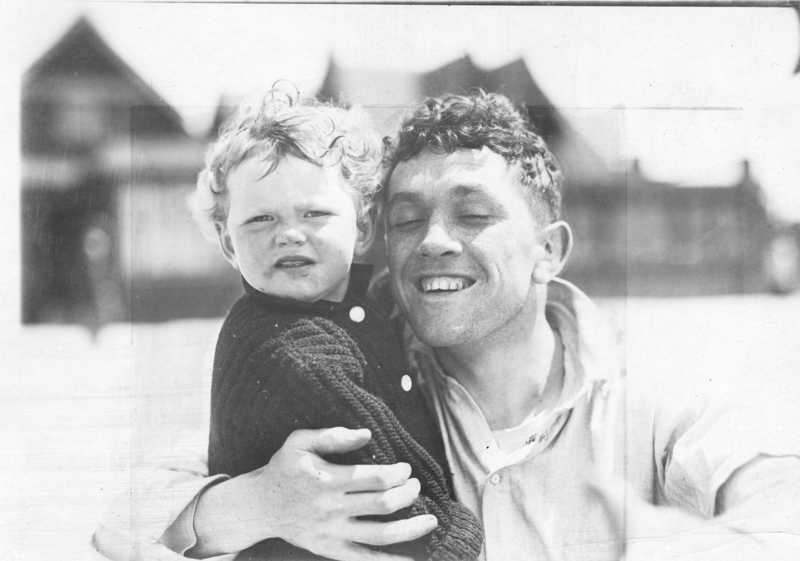
    <summary type="html"><![CDATA[<p><strong><em>It hadn't been called "Kilbane Town" in 100 years.  In 2012, Cleveland City Council resurrected the name to honor an extraordinary Clevelander.</em></strong></p><img src="https://clevelandhistorical.org/files/fullsize/bef8b2fa76b7c3f4e940516d91225130.jpg" alt="Johnny Kilbane and Daughter, 1913" /><br/><p>The Cleveland Leader dubbed the west side neighborhood near Herman Avenue and West 74th Street "Kilbane Town," in honor of world featherweight boxing champion Johnny Kilbane. In March 1912, Kilbane Town was the end point of one of the longest and largest St. Patrick's Day parades in city history.</p><p>Just one month earlier, the diminutive second-generation Irish American from the west side of Cleveland, had faced Abe Attell, a scrappy Jewish-American boxer, for the world featherweight boxing title in a match held in Los Angeles. Attell had dominated the featherweight class since 1901, holding the World Featherweight Champion title between 1901 and 1905, and again from 1906 until 1912. He had even defeated Kilbane less than two years earlier, on October 24, 1910, in a title match held in Kansas City. This time the result would be different. Kilbane defeated Attell in their grueling 20 round rematch to become world champion.</p><p>Kilbane returned to Cleveland on the perfect day for an Irish-American boxer--St. Patrick's Day.  At 4 PM on March 17, 1912, his train pulled into Union Station located on Lakeside Avenue between West 6th and West 9th Streets.  There, Johnny emerged from the train waving a green flag symbolizing his Irish roots.  Throngs of Clevelanders were there to greet him, literally covering the hillsides and embankments near the Station.  Cleveland newspapers "conservatively" estimated that the crowd in downtown Cleveland that day numbered 200,000.</p><p>A parade sponsored by the La Salle Club of St. Malachi Church formed at the Station and carried Johnny and his family by automobile to the steps of Cleveland City Hall (then located at East 4th and Superior Avenue).  Mayor Newton Baker, who broke his rule against attending parades on Sunday, was there to greet Johnny.  The parade then wound its way through the streets of downtown Cleveland, before crossing the Cuyahoga River onto Cleveland's west side.  There, the parade proceeded all the way down Detroit Avenue to West 74th Street--to Kilbane Town, finally and reluctantly disbanding there at 7:00 PM, approximately three hours after the parade began. </p><p>Johnny Kilbane was born and raised in Cleveland's Old Angle, before moving uptown to West Herman Avenue in 1910.  He was an affable man who captured the public's love and affection as much by his fighting prowess as by his reputed clean living style and devotion to his blind father, young wife and daughter. Johnny did much to bring respectability to a sport that was, at the time, generally considered to be disreputable.</p><p>After his boxing days were over, Johnny Kilbane remained in the public eye by operating a west side gym for kids and later by embarking on a career in politics which included a term as State Senator.  He ended his public career as Clerk of Courts for Cleveland Municipal Court, a position he held until his death in 1957.</p><p>In 2012, one hundred years after Johnny Kilbane won the World Featherweight Boxing title, Cleveland City Council passed legislation renaming Herman Avenue between West 74th and West 76th Streets "Kilbane Town" in honor of that historic sports event.</p><p><em><strong><a href="https://clevelandhistorical.org/items/show/288">For more (including 9 images) view the original article</a></strong></em></p>]]></summary>
    <published>2011-07-23T16:18:09+00:00</published>
    <updated>2026-04-17T19:17:38+00:00</updated>
    <link rel="alternate" type="text/html" href="https://clevelandhistorical.org/items/show/288"/>
    <id>https://clevelandhistorical.org/items/show/288</id>
    <author>
      <name>Jim Dubelko</name>
    </author>
  </entry>
  <entry>
    <title type="html"><![CDATA[Needham Castle: Once One of the Grandest Mansions on the West Side]]></title>
    <summary type="html"><![CDATA[<img src="https://clevelandhistorical.org/files/fullsize/c0c223e927490a26cfe82fadf1dc72da.jpg" alt="Needham Castle" /><br/><p>Where a grocery store and parking lot now stand on the south side of Detroit Avenue just west of West 58th Street there once stood a mansion so large that neighbors called it "Castle Needham" after the man who built it.  The castle was said to be "surrounded by spacious grounds, on which flowers and fruit trees grew in rich abundance."  Other sources noted the "marble fountain on the front lawn which distinguished it from its neighbors," and that it was "one of the most interesting landmarks in the residence district."</p><p>Castle Needham, or Needham Castle as it was later called, was built in 1842 by Needham M. Standart, a nineteenth century Lake Erie shipbuilder who was born in New York and moved to Milan, Ohio in the 1820s.  In the 1830s, Standart relocated to fast-growing Cleveland where he built a number of Lake Erie steamers, including the famous steamboat Cleveland.  He served as mayor of Ohio City from 1840-1841 and was one of the commissioners who in 1854 negotiated the terms of the annexation of Ohio City to the City of Cleveland.  </p><p>In the decades leading up to the Civil War, Needham Castle was the site of "brilliant evening parties" that were said to be the talk of the west side for weeks afterwards.  It was also rumored that more than "brilliant talk" occurred at Needham Castle and that its famed cupola was often used in these years as a hiding place for runaway slaves as part of Cleveland's Underground Railroad.  </p><p>Shortly after the end of the Civil War, Needham Standart, whose son William had commanded the famous "Standart's Battery" of the 1st Ohio Light Artillery during the war, suffered a severe business reversal and was forced to declare bankruptcy.  Needham Castle was sold to pay his debts.  In the early 1870s, it was acquired by early Cleveland industrialist Daniel P. Rhodes (the father of historian James Ford Rhodes), who attempted to preserve the castle while redeveloping the surrounding mansion grounds into a residential subdivision.  Before Rhodes could complete the project, however, he died suddenly in 1875.</p><p>In the 1880s, Needham Castle was purchased by Herman and Ida Stuhr.  Herman Stuhr, a German immigrant architect  and lumber dealer, designed several commercial buildings in Cleveland and built a number of the houses on West Clinton Avenue that still stand on that street today.  In 1912, Stuhr decided to convert Needham Castle into a three-family residence for his extended family.  Shortly after completing the project, Herman Stuhr, like previous owner Daniel Rhodes, died suddenly.</p><p>In the years following Herman Stuhr's death, Needham Castle continued to be the subject of neighborhood talk.  Every March 6, for more than 50 years from the early 1880s until the mid-1940s, Herman Stuhr's widow, Ida, who lived to age 95, hosted a grand dinner party at Needham Castle for friends and family in celebration of her birthday.  She continued to host these parties at Needham Castle until 1946 when she moved out to live with her daughter and sold  the castle to St. Mary Romanian Orthodox Church.  </p><p>In the years following World War II, St. Mary used Needham Castle as an apartment house for Romanian immigrants coming to America in the wake of the communist takeover of their country.  The castle also served as a photography studio, its beautiful Victorian era rooms and decor serving as the perfect backdrop for parish wedding pictures.</p><p>St. Mary also had planned to eventually build a new and larger church on the mansion property, but abandoned the plan in the early 1950s when its parish priest could not resolve his differences with city leaders over living conditions in the Detroit-Shoreway neighborhood.  Instead, St. Mary built its new church on a site on Warren Road.  In 1954, Needham Castle was purchased by a realty company which tore down the historic old mansion and built a Kroger grocery store in its place.</p><p>Some mysteries of Needham Castle, including the rumor that it served as an Underground Railroad site, have been largely lost to history.  However, one mystery has been solved.  Although Needham Castle had stood at 5913 Detroit Avenue for more than 110 years and was widely touted as one of the most famous landmarks on Cleveland's west side, an exhaustive search in 2011 of newspapers, city and county records, public libraries, and private historical society collections, failed to uncover a single photo, painting or other image of the house.  Then, in 2014, a descendant of Herman and Ida Stuhr, who had read this story online, generously provided copies of photos and sketches of the historic mansion.  A number of those now appear in the photo array that accompanies this story.</p><p><em><strong><a href="https://clevelandhistorical.org/items/show/324">For more (including 9 images) view the original article</a></strong></em></p>]]></summary>
    <published>2011-08-15T10:15:22+00:00</published>
    <updated>2026-04-17T19:17:38+00:00</updated>
    <link rel="alternate" type="text/html" href="https://clevelandhistorical.org/items/show/324"/>
    <id>https://clevelandhistorical.org/items/show/324</id>
    <author>
      <name>Jim Dubelko</name>
    </author>
  </entry>
  <entry>
    <title type="html"><![CDATA[&quot;Black Jack&quot; McGinty: From the Old Angle to the Desert Inn]]></title>
    <summary type="html"><![CDATA[<p><strong><em>Like world champ Johnny Kilbane, Thomas McGinty saw boxing as a way out of the poverty that was endemic among Irish immigrants in early twentieth century Cleveland. </em></strong></p><img src="https://clevelandhistorical.org/files/fullsize/39e79d8a565384103b99215439b4b6d4.jpg" alt="Thomas J. McGinty (1892-1970)" /><br/><p>He wasn't called "Black Jack" when, in 1912, he married Helen Mulgrew from West 67th Street and the two newly weds moved into a house at 1377 West 69th Street. In 1912, he was Tommy McGinty, and he was one of Cleveland's best featherweight boxers.</p><p>Like world featherweight boxing champion <a href="https://clevelandhistorical.org/items/show/288">Johnny Kilbane</a>, Tommy McGinty was a second generation Irish-American who grew up in Cleveland's Old Angle and saw boxing as a way out of the poverty that was endemic to the Angle in early twentieth century Cleveland. By 1909, Tommy McGinty, just like Johnny Kilbane, was boxing under the management of the legendary Jimmy Dunn. Also like Kilbane, McGinty moved uptown in the years just before World War I to what is now the Detroit Shoreway neighborhood. However, while Kilbane went on to win the featherweight boxing title in 1912, McGinty's career was cut short in 1911 by an injury he suffered in a fight. Turning lemons into lemonade, McGinty withdrew from the ring and became one of Cleveland's earliest and most successful fight promoters.</p><p>In addition to promoting boxing matches in Cleveland, however, Tommy McGinty also promoted gambling, operating a cheat spot at 2077 West 25th Street that was famously raided by Cleveland Safety Director Elliot Ness on July 21, 1936. It was his promotion of gambling that gave Tommy McGinty the moniker "Black Jack" McGinty.</p><p>While McGinty's cheat spot on West 25th street catered to a lower economic class, McGinty also provided gambling opportunities to the rich and famous. In 1930, he built the <a href="https://clevelandhistorical.org/items/show/331">Mounds Club</a> on Chardon Road, just across the Lake County line. The Mounds Club was famous in Cleveland for two decades as a swanky night club that featured lively entertainment, alcohol and gambling. Like McGinty's cheat spot on West 25th Street, the Mounds Club too was often the target of raids by local law enforcement officials.</p><p>In 1950, after the State of Ohio had closed down the Mounds Club, Tommy McGinty, now better known as Thomas J. McGinty, took his gambling operations national and, along with several organized crime figures from Cleveland, founded the Desert Inn in Las Vegas. McGinty's ownership of the Desert Inn, as well as his association with alleged organized crime figures Moe Dalitz and Morris Kleinman, soon drew the attention of federal authorities. In 1951, McGinty was subpoenaed to testify before Senator Estes Kefauver's committee on organized crime in America.</p><p>McGinty avoided federal prosecution and shortly thereafter retired to West Palm Beach, Florida, where he died in 1970--a long way away from the home that he and Helen Mulgrew shared on West 69th Street in 1912.</p><p><em><strong><a href="https://clevelandhistorical.org/items/show/326">For more (including 6 images) view the original article</a></strong></em></p>]]></summary>
    <published>2011-08-17T04:39:29+00:00</published>
    <updated>2026-04-17T19:17:38+00:00</updated>
    <link rel="alternate" type="text/html" href="https://clevelandhistorical.org/items/show/326"/>
    <id>https://clevelandhistorical.org/items/show/326</id>
    <author>
      <name>Jim Dubelko</name>
    </author>
  </entry>
  <entry>
    <title type="html"><![CDATA[Mounds Club]]></title>
    <summary type="html"><![CDATA[<img src="https://clevelandhistorical.org/files/fullsize/e669d151b92fd999ba06a3a303fee547.jpg" alt="Band Stage in Dining Room of the Mounds Club" /><br/><p>The story in the <em>Cleveland Plain Dealer</em> read like a script from one of Bruce Willis's <em>Die Hard</em> movies. In the early morning hours of September 29, 1947, a dozen masked commandos armed with submachine guns and referring to each other by numbers attacked the Mounds Club, one of the Cleveland area's most glamorous night clubs. They penetrated the electrified fence surrounding the Club, overwhelmed the Club's security forces and then robbed 300 club patrons of an estimated $450,000 in jewelry and cash. While both the local Mayfield Mob and the infamous Purple Gang from Detroit were suspected of the armed robbery, no one was ever charged and the crime remains unsolved to this day.</p><p>The Mounds Club was built in 1930 by Thomas "Black Jack" McGinty, a second generation Irish-American who was then known as Cleveland's biggest sports and gambling promoter. He was also known to be an associate of the Cleveland Gang, an organized crime group that controlled gambling and other illegal enterprises in Cleveland in the decades of the1930s and 1940s. Several members of the Cleveland Gang, including Moe Dalitz and Morris Kleinman, were reputed to be silent owners of the Mounds Club. </p><p>Located on Chardon Road in Willoughby Hills, just across the Lake County line at the site of present day La-Vera Party Center, the Mounds Club was conveniently placed just out of the reach of Cleveland and Cuyahoga County law enforcement officials. The Mounds Club did indeed offer its patrons opportunities to gamble and drink illegal liquor. It also, however, featured some of the best entertainment in the Cleveland area in that era. Well-known singers like Sophie Tucker, Helen Morgan and Lena Horne, and comedians like Joe E. Lewis, performed there. When the Club was attacked by masked robbers in 1947, comedian Peter Lind Hayes and his wife, singer Mary Healy, were actually on stage performing. The careers of a number of Hollywood singers and actresses began with stints at the Mounds Club.</p><p>In the years 1930-1948, the Mounds Club had been the target of a number of raids by Lake County and State of Ohio law enforcement officials. The Club nevertheless had always managed to stay in business and one step ahead of the law until Frank Lausche was elected to his second term as Ohio's Governor in 1948. In early 1949, Governor Lausche vowed to close the Mounds Club which he claimed had for too long flouted Ohio's gambling and liquor laws. </p><p>In July 1949, Governor Lausche's state liquor law enforcement officials did just that, obtaining a court order to close down and padlock the Mounds Club. While owner Thomas "Black Jack" McGinty appealed the order closing his club, he clearly saw the writing on the wall. He and his Cleveland Gang associates sold their interests in the Mounds Club in 1950, taking their money out of Ohio and investing it in a new and what they believed would be safer and even more lucrative enterprise—the new Desert Inn in Las Vegas, Nevada.</p><p><em><strong><a href="https://clevelandhistorical.org/items/show/331">For more (including 7 images) view the original article</a></strong></em></p>]]></summary>
    <published>2011-08-27T18:54:48+00:00</published>
    <updated>2026-04-17T19:17:38+00:00</updated>
    <link rel="alternate" type="text/html" href="https://clevelandhistorical.org/items/show/331"/>
    <id>https://clevelandhistorical.org/items/show/331</id>
    <author>
      <name>Jim Dubelko</name>
    </author>
  </entry>
  <entry>
    <title type="html"><![CDATA[Zitiello Bank]]></title>
    <summary type="html"><![CDATA[<img src="https://clevelandhistorical.org/files/fullsize/30f3154f21ec19d1b16f2ededf12532b.jpg" alt="The Zitiello Bank Building" /><br/><p>The Zitiello Bank, located at 6810 Herman Avenue, was the earliest known ethnic bank opened in the Detroit-Shoreway neighborhood.</p><p>The bank was founded by Joseph Zitiello, an immigrant from the Campania region of Italy who came to Cleveland in 1898.  Joseph was just one of several members of the Zitiello family who by 1910 had purchased homes on West 69th Street.  As was customary with Italian immigrants, a number of the Zitiellos were proprietors of small businesses that were operated out of their homes. Joseph ran a butcher shop.  Luigi was a saloon keeper.  Pasquale was the neighborhood grocer.   </p><p>By 1910, Joseph Zitiello had achieved financial success as a butcher and began to engage in private banking.  In 1916, he built the Zitiello Bank building on the corner of West 69th and Herman Avenue.  In 1920, Zitiello, who by this time was known as the "King of the Italian Colony" on the west side of Cleveland, incorporated the Zitiello Bank.  Later, the Zitiello Bank opened a branch office on Fulton Road.  In 1929, while at this branch office, Joseph Zitiello was shot by several assailants who were attempting to rob the bank. Zitiello returned their fire, chasing the would-be robbers from his bank.</p><p>The Zitiello Bank, like many small banks, was forced to close during the Great Depression. Even so, the Zitiello family remained in the neighborhood, contributing both to the community and to their new country.  In 1967, Ronald J. Zitiello, an American soldier and grandchild of one of the original Zitiello immigrants from Italy, was killed in the Vietnam War.  A memorial garden dedicated to his memory is located in the neighborhood.</p><p>More than one hundred years have passed since the first Zitiello immigrants from the Campania region of Italy came to Cleveland and settled on West 69th Street.  Today, a number of descendants of those original immigrants still live on West 69th Street, helping to anchor the ongoing revitalization of this old Cleveland neighborhood. </p><p><em><strong><a href="https://clevelandhistorical.org/items/show/450">For more (including 7 images) view the original article</a></strong></em></p>]]></summary>
    <published>2012-05-08T17:24:58+00:00</published>
    <updated>2026-04-17T19:17:39+00:00</updated>
    <link rel="alternate" type="text/html" href="https://clevelandhistorical.org/items/show/450"/>
    <id>https://clevelandhistorical.org/items/show/450</id>
    <author>
      <name>Jim Dubelko</name>
    </author>
  </entry>
  <entry>
    <title type="html"><![CDATA[E. A. Schellentrager House: Glenville’s Evergreen Manor]]></title>
    <summary type="html"><![CDATA[<img src="https://clevelandhistorical.org/files/fullsize/3face41d2719d85168d4a02b61f6185d.jpg" alt="Evergreen" /><br/><p>Situated at 690 Lakeview Road in Cleveland's historic Glenville neighborhood, the E. A. Schellentrager House, known to the Schellentrager family as "Evergreen," was built in 1893.  It was designed by one of Cleveland's most prolific late nineteenth-century architects, Fenimore C. Bate.  Bate was very possibly Cleveland's most successful architect of houses designed in the Queen Anne style.  Bate is also notable as the architect who designed Grays Armory on Bolivar Avenue in downtown Cleveland.</p><p>Ernst August Schellentrager, for whom Evergreen was built, was an immigrant from the Thuringia region of Germany who came to Cleveland in 1864 as a 14 year old. By 1867, he was employed as an assistant pharmacist in a downtown drug store.  Just six years later he opened his own drug store on St. Clair Avenue--at what today would be 3361 St. Clair.  He operated his drug store from that downtown Cleveland location for 46 years.</p><p>In addition to operating his drug store and being father to nine children, E. A. Schellentrager was a Cleveland community activist. He served on the Cleveland School Board for 14 years from 1878 until 1892. He was compelled to resign his position that year when he and his family moved to Glenville, then a suburb of Cleveland.  While on the Cleveland School Board, Schellentrager headed the German instruction committee. He also served as Board President in 1886.  </p><p>Schellentrager was an early leader in the efforts to promote the professionalization of the pharmacist practice in Ohio.  He was an active member of the Ohio and Cleveland Pharmacists' Associations, and was one of the founders of the Cleveland School of Pharmacy.  He served as President of the Cleveland Pharmacy School for 22 years--from its inception in 1882 to 1904. In 1908, the Cleveland School became one of Western Reserve University's colleges.  </p><p>E.A. Schellentrager lived at Evergreen for 11 years.  In 1904, the same year that he stepped down as President of the Cleveland School of Pharmacy, Schelletrager sold the two-acre estate to a real estate developer. The family moved to a house on East 115th Street, where E. A. lived until his death in 1926.  </p><p><em><strong><a href="https://clevelandhistorical.org/items/show/486">For more (including 8 images) view the original article</a></strong></em></p>]]></summary>
    <published>2012-05-30T08:49:27+00:00</published>
    <updated>2026-04-17T19:17:39+00:00</updated>
    <link rel="alternate" type="text/html" href="https://clevelandhistorical.org/items/show/486"/>
    <id>https://clevelandhistorical.org/items/show/486</id>
    <author>
      <name>Jim Dubelko</name>
    </author>
  </entry>
  <entry>
    <title type="html"><![CDATA[The House That Brass Built: The Farnan Family Builds One of Detroit Shoreway&#039;s Treasures]]></title>
    <summary type="html"><![CDATA[<img src="https://clevelandhistorical.org/files/fullsize/3f6c070bd717c2c46e9668d86a978117.jpg" alt="The House that Brass Built" /><br/><p>The yellow pastel colored, Italianate style house on the corner of W. 73rd Street and Herman Avenue, which in recent years has been restored to its nineteenth century grandeur, was built by a member of the family that pioneered Cleveland's brass industry.
Cleveland's first brass foundry was built in 1852 on Center Street (located in the East Bank of the Flats) by Irish immigrant Walter Farnan. The business quickly flourished as brass was a important metal alloy used in many products manufactured in the nineteenth century. It was especially critical in the construction of municipal water works systems, and thus Farnan Brass Works became an early supplier in the 1850s to the Cleveland waterworks system.
In 1860, Walter Farnan's oldest son James, now active in the family business, purchased 12 acres of farmland on Detroit Avenue in what was then northern Brooklyn Township. Today it is part of the Detroit Shoreway neighborhood of the west side of Cleveland. According to county tax records, James Farnan, who became owner of Farnan Brass Works upon the death of his father in 1866, built the house which is the subject of this story in 1870. Unfortunately, James did not live long enough to enjoy his grand house. He died from cancer in 1875 at age 44. Mary Farnan, his widow, not only completed the task of raising the couple's four surviving children but, in addition, took over the reins of Farnan Brass Works, running the company for 36 years until her own death in 1911. She was so successful as a business woman that, in 1894, she was able to hire noted local architect W. D. Benes to design an extensive remodeling of her home.
The house that brass built was originally located on what is now the northeast corner of W. 70th Street and Detroit Avenue. Several years after Mary Farnan's death, the house was purchased by Thomas "Coal Oil" Masterson, an Irish immigrant, political activist and local entrepreneur, who, in 1917, moved the house to <a href="https://clevelandhistorical.org/items/show/288">Kilbane Town</a>. Masterson and his family lived in the house on the corner of W. 73rd and Herman for nearly 50 years. It was sold by the family in 1968 shortly after the death of Thomas Masterson's widow, Ida.
In the late 1970s and early 1980s, efforts began to be undertaken by concerned citizens to revitalize Cleveland's historic Detroit Shoreway neighborhood, including rehabilitating and restoring many of the historic houses in the neighborhood. Tim and Mimi Elliott, two suburbanites, moved into the neighborhood and began restoring a number of those historic houses.  One of them was the Farnan's Italianate mansion that Coal Oil Masterson had moved to the corner of W. 73rd and Herman. The restoration of that house by the Elliotts took years of patience, hard work and quality craftsmanship.  Today, as a result of their labors, the house that brass built is once again a neighborhood jewel.</p><p><em><strong><a href="https://clevelandhistorical.org/items/show/524">For more (including 8 images) view the original article</a></strong></em></p>]]></summary>
    <published>2012-07-17T09:55:55+00:00</published>
    <updated>2026-04-17T19:17:39+00:00</updated>
    <link rel="alternate" type="text/html" href="https://clevelandhistorical.org/items/show/524"/>
    <id>https://clevelandhistorical.org/items/show/524</id>
    <author>
      <name>Jim Dubelko</name>
    </author>
  </entry>
  <entry>
    <title type="html"><![CDATA[Oliver Alger House]]></title>
    <summary type="html"><![CDATA[<img src="https://clevelandhistorical.org/files/fullsize/bdccfea0ed4f93faf7f4db7235e77588.jpg" alt="The Oliver Alger House" /><br/><p>The Oliver Alger House was built by one of the village of West Cleveland's most popular mayors.  A successful commission agent in Cleveland before becoming a gentleman farmer, Oliver Alger served as mayor of  West Cleveland for six years--longer than any other mayor of the village which was annexed to the City of Cleveland in 1894. Alger's house, which in the late nineteenth century was one of the grandest mansions on Detroit Avenue, was saved from the wrecking ball in 1998 when the Detroit-Shoreway Community Development Organization arranged for it to be moved to the northwest corner of Franklin Boulevard and West 77th Street. (Interestingly, the house had been moved one time before--about forty feet west of its original site when West 67th Street was extended north to Detroit Avenue in the early 1900s.)  The house is now one of the historic grand houses in the Franklin Boulevard-West Clinton Historic District of Cleveland.  </p><p>In a strange twist of post-mortem fate, it was not only Oliver Alger's Detroit Avenue mansion that was moved twice after his death in 1891.  In 1894, the Village Town Hall for West Cleveland where Alger presided as Mayor from 1883-1889, was moved by Irish immigrant James Faeron to a vacant lot on West 69th Street and then moved again in 1911 to its present location on Herman Avenue when the City of Cleveland extended Herman Avenue west from West 67th to West 69th Street.</p><p>And even more strangely, fate bestowed yet one more after death move on Oliver Alger--one which has impacted his legacy not only as the most famous and popular mayor of West Cleveland but also as a local horticulturalist who was so talented that his farm was visited in 1867 by an editor of a national journal devoted to horticultural interests.  In 1915, less than three decades after Alger's death, the City of Cleveland, as part of a plan (which never materialized) to build a convention center on the Erie Street Cemetery grounds, removed the remains of hundreds of people from the cemetery and reinterred them at Highland Park Cemetery.  Among the remains removed were those of Oliver Alger and his wife Mary and their infant son who had been buried in a vault on the northeast corner of the cemetery.  At Highland Park Cemetery, Oliver Alger's remains, as well as those of his wife and their infant child, are entombed under a nondescript patch of grass that lies between  two monuments--one erected to a man named James Miller and the other to man named Enoch Collier. </p><p>Today, residents and visitors to Herman Avenue near West 69th Street are reminded of the history of the Village of West Cleveland by the former town hall building that now sits at 6702 Herman Avenue.  The 1998 relocation of Oliver Alger's mansion from Detroit Avenue to Franklin Boulevard reminds residents and visitors of the grandeur of nineteenth century Franklin Boulevard which was arguably second only to Euclid Avenue's Millionaire's Row as Cleveland's most prestigious residential avenue.  But a visitor to the southern tip of Section 2 in Highland Park cemetery where Oliver Alger is buried will find nothing there--not even a faded stone, as a memorial to one of West Cleveland's most popular mayors and one of Cuyahoga County's pioneer horticulturalists.</p><p><em><strong><a href="https://clevelandhistorical.org/items/show/526">For more (including 8 images) view the original article</a></strong></em></p>]]></summary>
    <published>2012-07-25T17:23:21+00:00</published>
    <updated>2026-04-17T19:17:39+00:00</updated>
    <link rel="alternate" type="text/html" href="https://clevelandhistorical.org/items/show/526"/>
    <id>https://clevelandhistorical.org/items/show/526</id>
    <author>
      <name>Jim Dubelko&amp;#32;&amp;amp;&amp;#32;Raymond L. Pianka</name>
    </author>
  </entry>
  <entry>
    <title type="html"><![CDATA[Tiedemann House : More popularly known as &quot;Franklin Castle&quot;]]></title>
    <summary type="html"><![CDATA[<p><strong><em>The High Victorian Eclectic style stone house located on the north side of Franklin Boulevard across from West 44th Street is known to many Clevelanders as "Franklin Castle."  It has been witness to much of the history of Cleveland's west side in its more than a  century of existence.  </em></strong></p><img src="https://clevelandhistorical.org/files/fullsize/ad90318786748484f6e7d3214bd72072.jpg" alt="Tiedemann House (Franklin Castle)" /><br/><p>The Tiedemann House was built in the period 1881-1883 by Hannes Tiedemann, a German immigrant who became prosperous first as a wholesale grocer and then later as a banker.  The house was designed by the famed Cleveland architectural firm of Cudell and Richardson.  When Tiedemann built the house in the late nineteenth century, Franklin Boulevard was one of the most upscale residential avenues in Cleveland, perhaps second only to famed Euclid Avenue's Millionaires' Row.  </p><p>Hannes Tiedemann built his grand house on Franklin Boulevard, not only to provide a more upscale residence for his family, but also to provide a temporary place for friends, family and others emigrating from Germany to stay when they first arrived in Cleveland.  The house replaced an earlier house on the property which was razed during the construction of the new house.  Hannes, his wife Louise and their two surviving children, August and Dora, moved into the new house in 1883.  There, the two children grew to adulthood.  Both children later married and provided Hannes and Louise with a total of six grandchildren--all boys.  </p><p>Hannes Tiedemann sold Franklin Castle in 1896--just one year after his wife Louise died.  In the century that followed, the house saw many new owners and several new uses.  For forty-seven of those years--from 1921 to 1968, the house was known as Eintracht Hall.  During these years, it was the home of the German-American League for Culture, an ethnic cultural organization that, in its early years, was involved in political causes, and, in later years, functioned as a  German singing club.</p><p>Around the time that the German club sold the house in 1968, rumors began to circulate around the west side of Cleveland that the house was haunted by the nineteenth century ghosts of Mrs. Tiedemann as well as the couple's teenage daughter Emma who died before the house was even built.  In the mid-1970s, one owner of the house capitalized on these rumors and offered tours of  "haunted" Franklin Castle to the public.</p><p>In 1985, Michael DeVinko purchased the Tiedemann House and spent a large sum of money restoring it.  DeVinko, whose stage name was Mickey Deans and who was the last husband of legendary singer and actress Judy Garland, lived in the house for over a decade.  Shortly after he sold the house in 1999, the house was torched by an arsonist, causing substantial damage to it. A new owner spent a large sum of money in repairs, but, as a result of the two economic recessions in the first decade of the twenty-first century, was unable to complete restoration of the house.  </p><p>In 2011, the house was purchased by a European couple, who had title to it placed in the name of  Oh Dear! Productions, LLC.  Over the next several years, the couple renovated the Tiedemann House.  It appears that the couple still owns the house in 2026, albeit under a slightly different corporate name.</p><p><em><strong><a href="https://clevelandhistorical.org/items/show/531">For more (including 10 images) view the original article</a></strong></em></p>]]></summary>
    <published>2012-07-31T18:07:04+00:00</published>
    <updated>2026-10-31T17:37:20+00:00</updated>
    <link rel="alternate" type="text/html" href="https://clevelandhistorical.org/items/show/531"/>
    <id>https://clevelandhistorical.org/items/show/531</id>
    <author>
      <name>Jim Dubelko</name>
    </author>
  </entry>
  <entry>
    <title type="html"><![CDATA[Franklin Circle: The Centerpiece of Josiah Barber&#039;s Radial Street Plan]]></title>
    <summary type="html"><![CDATA[<img src="https://clevelandhistorical.org/files/fullsize/85fab9b62b6651d70d5e498834c5de1c.jpg" alt="Franklin Circle - circa 1920" /><br/><p>Franklin Circle, the centerpiece of one of Cleveland's rare radial street designs, was surveyed in 1836--the same year in which Ohio City became a city and Cleveland's chief commercial competitor across the Cuyahoga River.  The land for the Circle, which lies at what is today the intersection of West 28th Street, Fulton Road, and Franklin Boulevard, was donated to Ohio City by Josiah Barber, a Connecticut pioneer who came to the Western Reserve in 1818 and settled the area just west of the Cuyahoga River and just south of the Lake.  Today this area lies at the heart of the Ohio City neighborhood. </p><p>As originally laid out, the Circle was called Franklin Place or Franklin Square, and was informally utilized for several decades as an open farmers market.  Later, after Ohio City was annexed to the City of Cleveland, Cleveland moved that "west side" market in 1859 to the northwest corner of Pearl (West 25th) Street and Lorain Avenue, and eventually in 1912 to the northeast corner of that same intersection where it has been known ever since as the West Side Market.  The City then built on the Circle the west side's first public park, which featured a water fountain surrounded by an iron fence.  In 1872, Franklin Boulevard was extended through the park as part of a renovation by the City of Cleveland. At about this time, the park was remodeled with a rock garden and, for years thereafter, was  known as Modoc Park.   In 1907, a combination of streetcar tracks and newly constructed apartment buildings contributed to almost destroy the park-like setting of the Circle, which thereafter became known simply as Franklin Circle.</p><p>From the mid-nineteenth century until the early twentieth century, Franklin Circle was surrounded by some of the grandest mansions on the west side of Cleveland, including those of Marcus Hanna, Daniel Pomeroy Rhodes, James Ford Rhodes, and Robert Russell Rhodes. Today, the Circle is still a pleasant area of the near west side with a park-like ambiance.  However, most of the great mansions of the Circle are long gone.   They have been replaced by multifamily and institutional buildings, including Lutheran Hospital and the Masonic Temple, which in the early twentieth century joined Franklin Circle Christian Church as the predominant buildings on the Circle.</p><p><em><strong><a href="https://clevelandhistorical.org/items/show/535">For more (including 9 images) view the original article</a></strong></em></p>]]></summary>
    <published>2012-08-14T18:04:45+00:00</published>
    <updated>2026-04-17T19:17:39+00:00</updated>
    <link rel="alternate" type="text/html" href="https://clevelandhistorical.org/items/show/535"/>
    <id>https://clevelandhistorical.org/items/show/535</id>
    <author>
      <name>Jim Dubelko</name>
    </author>
  </entry>
  <entry>
    <title type="html"><![CDATA[Robert Russell Rhodes Mansion]]></title>
    <summary type="html"><![CDATA[<img src="https://clevelandhistorical.org/files/fullsize/b5d79b18e5f6c2196a88680527db807e.jpg" alt="Robert Russell Rhodes Mansion" /><br/><p>The Italian Villa style house at 2905 Franklin Boulevard in Ohio City was built in 1874 by a businessman who, according to one local historian, zealously sought to avoid involvement in government--even though his extended family was deeply involved in politics for much of the nineteenth century.  There is some gentle irony then that, for most of the twentieth century and for the first nineteen years of the twentieth first century, the Robert Russell Rhodes mansion was owned by Cuyahoga County, which used it to provide a variety of different government services to the public.    </p><p>Robert Russell Rhodes (1846-1916) was a great-grandson of Josiah Barber, the west side pioneer from Connecticut who arrived in Brooklyn Township in 1818 and settled  and developed 140 acres of land in what became the heart of Ohio City.  In 1836, Barber  served as the new city's first mayor.  Robert Rhodes was also the oldest son of Daniel Pomeroy Rhodes, who, a decade after Josiah Barber settled in what became Ohio City, migrated to the area from Vermont, married Josiah Barber's granddaughter Sophia Russell, and soon became wealthy in the coal and iron industries.  Daniel, a staunch Democrat, was active in local politics his entire adult life.  In 1864, politics in the Rhodes family moved to a new level, when Daniel Rhode's daughter Charlotte Augusta married Republican Marcus Hanna, the man who many contend engineered the first modern day political campaign that put William McKinley in the White House in 1896.  </p><p>Robert Russell Rhodes could never seem to avoid the political influences in his life--even when it came to his own marriage.  In 1868, four years after his sister married Marcus Hanna, Robert married Kate Castle, who was the daughter of William B. Castle, a member of the Whig party and Ohio City's last mayor before its annexation to Cleveland in 1854.  One year later, Castle was elected mayor of Cleveland--the first westsider to hold that office.  </p><p>Robert Rhodes, who was heir to many of his father's business interests, spent much of his life on Franklin Circle.  He grew up on the southeast side of Franklin Circle in the Rhodes family mansion and, following his marriage to Kate Castle, built his own mansion on the southwest side of Franklin Circle.  During these years, Franklin Circle may have seemed to him to be almost like a Rhodes family park.  The land for the circle had been donated by Robert's great-grandfather Josiah Barber, and most of the great homes and estates that surrounded the Circle in the mid- to late nineteenth century were owned by Rhodes family members, in-laws, and business associates.</p><p>In 1888, Robert Rhodes, like a number of other wealthy Franklin Avenue area residents of this era, sold his mansion on Franklin Circle and moved to Rockport Township--to a stretch of land along Lake Erie that later became the suburb of Lakewood.  He died in Lakewood in 1916.</p><p>In 1914, Cuyahoga County purchased the Robert Russell Rhodes house from the heirs of John Meckes, a German immigrant ,who had in 1888 purchased the home from Robert Rhodes.  In the 100 years that have elapsed since that purchase, the house has served the county as a juvenile detention home (1918-1932), a county nursing home (1939-1962), county welfare department (1962-1963), a school for disabled children (1963-1977), and as the county archives (1977-2019).  After the county archives moved from the building, it was sold by the county and is currently being redeveloped as a 33-suite residential apartment building.</p><p><em><strong><a href="https://clevelandhistorical.org/items/show/536">For more (including 9 images) view the original article</a></strong></em></p>]]></summary>
    <published>2012-08-14T23:22:56+00:00</published>
    <updated>2026-04-17T19:17:39+00:00</updated>
    <link rel="alternate" type="text/html" href="https://clevelandhistorical.org/items/show/536"/>
    <id>https://clevelandhistorical.org/items/show/536</id>
    <author>
      <name>Jim Dubelko</name>
    </author>
  </entry>
  <entry>
    <title type="html"><![CDATA[Franklin Circle Christian Church: Where President James A. Garfield Once Preached]]></title>
    <summary type="html"><![CDATA[<img src="https://clevelandhistorical.org/files/fullsize/3b4100769484ca69b4430f418a6b6dec.jpg" alt="Franklin Circle Christian Church" /><br/><p>The origins of the founding of Franklin Circle Christian Church, located at 1688 Fulton Road, lie in America's Second Great Awakening, an early nineteenth century movement which was characterized by a resurgence in religious enthusiasm and a diversification in Christian religious groups.  Northeastern Ohio became a center of this new religious fervor and home to a number of new Christian religious groups, including the Mormons (Kirtland), the Shakers (Warrensville Township), and the Amish (Holmes County).  In this era, as Cleveland State University history professor David Goldberg taught his graduate history students, Ohio beckoned to religious enthusiasts much like a century or so later California would beckon to altruistic baby boomers. </p><p>The Disciples of Christ, which founded Franklin Circle Christian Church in 1842, was another new Christian group that grew out of the Second Great Awakening and found fertile ground for its new religion in northeastern Ohio.  The Disciples of Christ were adherents to the religious philosophy of Thomas and Alexander Campbell, father and son ministers, who urged Christians to put aside the doctrinal differences that divided different sects and return to the principles of the primitive Christian Church.   In 1848, the parish built its first permanent church on Franklin Circle.  It was large and cavernous and was known to its parishioners as "God's Barn."  Three decades later, the parish hired the noted Cleveland architectural firm of Cudell and Richardson to design a new church on Franklin Circle--on a parcel of land just south of "God's Barn."  The new church was built in the years 1874-1875 and has become one of the oldest and best known landmarks on the near west side of Cleveland. </p><p>Franklin Circle Christian Church and the Disciples of Christ have a long history of promoting education and engaging in social activism in northeastern Ohio.  In 1850, the Disciples of Christ founded the Western Reserve Eclectic Institute, which later became known as Hiram College.  Future United States President James A. Garfield was a student at the new college in the early 1850s and returned to it in 1858 to become President of the College.  In 1857, Garfield also served as pastor at Franklin Circle Christian Church.  The Church's members also included fervent supporters of the nineteenth century Temperance and Prohibition movements.  Long time parishioner Abraham Teachout, a lumber merchant who lived on Franklin Avenue, was the church's Sunday School Superintendent for 25 years in the late nineteenth century.  In 1884, he ran for Congress on the Prohibition ticket and remained a fervent Prohibitionist until his death in 1912.</p><p>Franklin Circle Christian Church continued to engage in educational programs and social activism but by the twentieth century it was serving a constituency very different from the Franklin Boulevard neighborhood of the nineteenth century.  By the twentieth century, the neighborhood had become home to many working class and immigrant families.  The Church's outreach programs ministered to the needs of that new community well into the twenty-first century.</p><p>On January 19, 2025, Franklin Circle Christian Church held a commemorative worship service, in which its pastor and members of its congregation announced that they were leaving the church building which had been home to their congregation since 1875, and were forming a "Mosaic Faith Community" with St. Paul Community Church at 4427 Franklin Boulevard and Harbor and Bridge, a non-profit corporation affiliated with the United Methodist Church. Services for the Mosaic Faith Community have since then been held at St. Paul Community Church.</p><p>On April 20, 2026, Franklin Circle Christian Church sold the church and associated buildings at 1688 Fulton to a limited liability company with the name of 1688 Fulton LLC.  While the limited liability company's articles of incorporation do not indicate an express purpose for the property it purchased, it is interesting to note that, before selling the property, Franklin Circle Christian Church, in June 2025, filed with the Cuyahoga County Recorder a document titled "Release of Deed Restriction." The document purports to  remove a restriction of exclusive use of the church land for "Sunday School and Church purposes . . . " that was imposed by an early parishioner, Albert Reuben Teachout, who donated  a substantial amount of the land at 1688 Fulton upon which the church  and affiliated  buildings stand.</p><p><em><strong><a href="https://clevelandhistorical.org/items/show/537">For more (including 8 images) view the original article</a></strong></em></p>]]></summary>
    <published>2012-08-15T07:56:14+00:00</published>
    <updated>2026-09-30T22:03:12+00:00</updated>
    <link rel="alternate" type="text/html" href="https://clevelandhistorical.org/items/show/537"/>
    <id>https://clevelandhistorical.org/items/show/537</id>
    <author>
      <name>Jim Dubelko</name>
    </author>
  </entry>
  <entry>
    <title type="html"><![CDATA[Louis Patrick Smith House]]></title>
    <summary type="html"><![CDATA[<img src="https://clevelandhistorical.org/files/fullsize/532bc2e91c25d18ad3ef08b50afa6234.jpg" alt="Louis Patrick Smith house" /><br/><p>The house at 7200 Detroit Avenue,which today is the Craciun-Berry Funeral Home, had an unusual beginning and an unusual end for the family which first owned and occupied it.  Legend has it that, in 1888, the house was given as a wedding present to Louis Patrick Smith and his bride Margaret Farnan by Smith's father, Patrick Smith, a wealthy Irish immigrant who had made his fortune in nineteenth century Cleveland in towing and dredging work on Lake Erie.  Almost 90 years after that wedding, and long after the house had been sold out of the Smith family and converted into a funeral home, Louis Patrick Smith, Jr., the last surviving child of Louis Patrick Smith and Margaret Farnan, returned for a final time to the house in which he grew up when, on June 17, 1971, his wake was held at this funeral home.</p><p>The wedding of Louis Patrick Smith and Margaret Farnan in January 1888 was a society event in Cleveland that year.  Louis was the oldest son of Patrick Smith, who, according to an 1885 article appearing in the Cleveland Leader, was listed among Cleveland's millionaires--a  list which included John D. Rockefeller, Mark Hanna, and other nineteenth century Cleveland "captains" of industry.  The bride Margaret Farnan also came from a wealthy family.  Her grandfather, Walter Farnan, who like Patrick Smith was an immigrant from Ireland, in 1852 founded Farnan Brass Works, the first brass foundry in Cleveland.  Perhaps not to be outdone by her new son-in-law's wealthy family, Margaret Farnan's mother Mary, according to County deed records, gave the newly wed couple a part of the Farnan estate located along Detroit Avenue between West 70th and West 73rd Streets, including the land upon which the house at 7200 Detroit Avenue presently stands.</p><p>Louis Patrick Smith and Margaret Farnan raised their four children, including Louis Patrick Jr., in the house at 7200 Detroit Avenue.  The children grew up and moved from the house, but the house remained the family's home until 1929 when Louis Patrick, who had survived his wife Margaret, died.  For a period of time in the 1930s and early 1940s the house served Cuyahoga County as a social services office.  However, by the mid 1940s, the house had become vacant, was suffering from deterioration, and was rat-infested.  That's when Daniel Berry stepped in and saved the house.</p><p>Daniel Berry, born in Cleveland in 1897, was a west side Irish American who  became involved in the funeral business in 1918 when a shortage of embalmers' assistants during the great Spanish Flu epidemic steered him to his life-long profession.  Thereafter, Berry worked at O'Malley Funeral Home on Detroit Avenue in Cleveland before founding the Berry Funeral Home at 1411 West 65th Street in 1932.  The business was so successful that Berry needed a larger facility for his funeral business.  In 1947, Berry purchased the Louis Patrick Smith home at 7200 Detroit Avenue, transferring his business to this new location.</p><p>In the half-century that followed, three generations of the Berry family worked at the funeral home at 7200 Detroit Road.  Over the years, a number of changes were made to the exterior of the Louis Patrick Smith house, including the construction of an addition to the rear of the home, removal of an exterior second floor railing, and the construction of a car port.  </p><p>In 2001, the Craciun family, descendants of Romanian-American John Craciun, Jr. who had opened historic Craciun Funeral home in the World War II era, acquired ownership of the Berry Funeral Home, changing its name to the Craciun-Berry Funeral Home.  In retaining the Berry name after acquiring the home, the Craciun family not only preserved  the grand house that has stood at the corner of West 73rd  and Detroit Avenue for more than 120 years, but also the name of Daniel Berry, the Irish-American, who first saved the house from likely demolition in the post World War II period. </p><p><em><strong><a href="https://clevelandhistorical.org/items/show/538">For more (including 10 images) view the original article</a></strong></em></p>]]></summary>
    <published>2012-08-17T14:06:19+00:00</published>
    <updated>2026-04-17T19:17:39+00:00</updated>
    <link rel="alternate" type="text/html" href="https://clevelandhistorical.org/items/show/538"/>
    <id>https://clevelandhistorical.org/items/show/538</id>
    <author>
      <name>Jim Dubelko</name>
    </author>
  </entry>
  <entry>
    <title type="html"><![CDATA[Lutheran Hospital: One of Ohio City&#039;s Oldest Institutions]]></title>
    <summary type="html"><![CDATA[<img src="https://clevelandhistorical.org/files/fullsize/99642cb43f072da662a4499c1f25c0bd.jpg" alt="Lutheran Hospital, 1963" /><br/><p>Founded in 1896, Lutheran Hospital is one not only one of Ohio City's oldest institutions.  It is also one of the largest, its campus covering an area from Franklin Boulevard south to Jay Avenue, and from West 25th Street west to West 28th Street.  The hospital has also had a major impact on historic Franklin Circle.</p><p>Organized by the Evangelical Lutheran Hospital Association, the hospital  was first sited in the Beckwith House,  located on the northwest side of Franklin Circle at 247 Hanover (West 28th) Street.  That house was built by M.E. Beckwith, one of Cleveland's earliest professional photographers.  (In the mid-nineteenth century, Beckwith operated a "photographic parlor and art studio" at the corner of West 25th Street and Detroit.) </p><p>In 1898, the hospital moved across the Circle and purchased the Marcus Hanna mansion at 2603 Franklin Boulevard. Hanna was the man who engineered William McKinley's successful 1896 presidential campaign and, as a result, became known as  a political king maker.  His mansion had been built in 1869 on land deeded to his wife by her father, Daniel P. Rhodes.  A wealthy west side industrialist, Rhodes lived next door on the southeast side of the Circle at 2609 Franklin.  Hanna and his family lived in their mansion on Franklin from 1868 until 1890.  (In the latter year, they moved to the far west side into a new mansion at 10400 Lake Avenue,  The area  would later  become known as Cleveland's Edgewater neighborhood.)</p><p>In 1922, Lutheran Hospital razed the Hanna Mansion (and the Warmington mansion east of it) and built in their place its first hospital building.  In 1948,  the hospital expanded  west, in the process razing Daniel Rhodes' Franklin Circle mansion, which had been serving as the home of St. John's Orphanage since the death of Rhodes' widow Sophia in 1909. </p><p>In the decades that followed, Lutheran Hospital expanded its Franklin Boulevard campus an additional number of times, as a result of  major projects in the 1960s and 1970s.  Now well into its second century of operation, Lutheran Hospital, which became part of the Cleveland Clinic system in 1996, continues to be a large and vibrant institution in  Ohio City and continues to have an imposing presence on historic Franklin Circle.</p><p><em><strong><a href="https://clevelandhistorical.org/items/show/540">For more (including 10 images) view the original article</a></strong></em></p>]]></summary>
    <published>2012-08-20T16:57:03+00:00</published>
    <updated>2026-04-17T19:17:39+00:00</updated>
    <link rel="alternate" type="text/html" href="https://clevelandhistorical.org/items/show/540"/>
    <id>https://clevelandhistorical.org/items/show/540</id>
    <author>
      <name>Jim Dubelko</name>
    </author>
  </entry>
  <entry>
    <title type="html"><![CDATA[Abraham Teachout House]]></title>
    <summary type="html"><![CDATA[<img src="https://clevelandhistorical.org/files/fullsize/a7aaf2894c9642fb15aadbe43097640f.jpg" alt="The Teachout House" /><br/><p>In 1886, 69-year-old Abraham Teachout, a fierce supporter of the Prohibition movement gave a speech at the party's annual Cuyahoga County convention which he ended with the words: "The saloons must go but I am afraid I will not see the day." Teachout, who had been the Prohibition Party's district congressional candidate in 1884, did not live to see the age of Prohibition—but it was not for lack of trying. The owner and builder of the Teachout house at 4514 Franklin Boulevard, lived 26 more years after giving that speech, dying in 1912 at the age of 95 years old. America's short-lived Prohibition era would not begin until the passage of the Eighteenth Amendment to the U.S. Constitution in 1920—some eight years after Teachout's death. </p><p>Abraham Teachout, one of Cleveland's wealthy nineteenth century businessmen and a close friend of John D. Rockefeller, was born in western New York in 1817. In 1836, he moved with his family to northeastern Ohio, settling in North Royalton, where the Teachouts are considered to be one of that suburb's early pioneer families. Over the course of the next 20 years Abraham engaged in a number of businesses moving to several cities, including Painesville, Columbus and Chattanooga, Tennessee, before achieving success as a Cleveland lumber merchant. Teachout was one of the first to ship lumber out of the South by rail to urban centers north of the Ohio River. He also was founder of the A. Teachout Co., which specialized in the manufacture of doors, sashes and other related building construction materials. The company, which was eventually headed by three generations of the Teachout family, had its offices on Prospect Avenue (formerly Michigan Street) in downtown Cleveland for many years. </p><p>The Teachout House is one of the most interesting houses on Franklin Boulevard. The house has over 5,000 square feet of living area and is notable for its impressive windows and its somewhat onion-shaped cupola. Teachout purchased the land upon which the Teachout house was built in 1883. At the time, he and his family lived on Fulton Road. It is unknown how long the house was under construction, but the family moved into the house shortly after construction was completed in 1887. Abraham lived in the house until his death in 1912. During his 25 years of residence on Franklin Boulevard, the elderly businessman was often seen being driven in his carriage by his African-American carriage driver, Mack Henry, a former slave. After Abraham's death, his widow (who was his third wife--the first two wives predeceased him) remained in the house another decade, selling the house to the Michael and Mary Malloy family in 1924. </p><p>Abraham Teachout was a notable supporter of Hiram College. Hiram was founded in 1850 by the Christian Disciples of Christ congregation of which Teachout was a long time member. He worshiped at the <a title="Franklin Circle Christian Church" href="https://clevelandhistorical.org/items/show/537#.WBXghvkrJ7c" target="_blank" rel="noreferrer noopener">Franklin Circle Christian Church</a>  for nearly 50 years and served as superintendent of the church's Sunday school program for 25 years. Abraham sat on the Hiram College Board of Trustees for many years, as did his son Albert and later his grandson David. It was as a result of a $10,000 gift by Abraham Teachout that Hiram College built its first college library in 1900. Prior to the construction of a new library building in 1995, Hiram College's library was known as the Teachout-Cooper Memorial Library. Abraham Teachout and many members of his immediate family and other family relatives are buried in the Teachout family plot at Riverside Cemetery.</p><p><em><strong><a href="https://clevelandhistorical.org/items/show/565">For more (including 9 images) view the original article</a></strong></em></p>]]></summary>
    <published>2012-12-06T14:36:02+00:00</published>
    <updated>2026-04-17T19:17:39+00:00</updated>
    <link rel="alternate" type="text/html" href="https://clevelandhistorical.org/items/show/565"/>
    <id>https://clevelandhistorical.org/items/show/565</id>
    <author>
      <name>Jim Dubelko</name>
    </author>
  </entry>
  <entry>
    <title type="html"><![CDATA[A Tinnerman Presence: A Story about Industry and Neighborhood]]></title>
    <summary type="html"><![CDATA[<img src="https://clevelandhistorical.org/files/fullsize/999c4ff769a6f13781f47989907da2c8.jpg" alt="George A. Tinnerman House" /><br/><p>School children walking past the northwest corner of Franklin Boulevard and West 65th Street will someday remember it as where the Rite Aid neighborhood drugstore was located.  Adults in the neighborhood remember that it used to be where the old Pick-N-Pay grocery store stood.  Only the older residents of the neighborhood remember that up until the mid-1960s the Kaufman Funeral Home stood on this corner.  And perhaps there are only a few, if any, left in the neighborhood who remember that, before it was the Kaufman Funeral Home, the grand old house on the corner of Franklin Boulevard and West 65th Street belonged to George August Tinnerman, a German immigrant who launched one of the great industrial enterprises in the history of Cleveland.</p><p>George August Tinnerman was born in Bavaria in 1845.  In 1847, the year before the 1848 Revolutions which shook central Europe from Vienna to Paris, George immigrated to America with his parents Henry and Sophia Tinnerman.  Like his father who was a wheelright, George entered the trades but as a tinner.  In 1868, he opened a hardware store on Lorain Avenue--just east of its intersection with Fulton Road.  Among the products George sold were cast iron stoves.  In 1875, according to his son Albert, George became dissatisfied with the cumbersome cast iron stoves and invented the first steel range--a forerunner of today's range stoves.  George became so successful in selling his new steel stoves that, in 1913, he closed his hardware store and began to exclusively manufacture stoves and ranges.  </p><p>In 1890, as George Tinnerman grew financially successful, he and his family moved from their house on Fulton, which abutted the Tinnerman stove and range manufacturing plant, to a more fashionable address on the northwest corner of Franklin Boulevard and Gordon Street (now West 65th Street).   George and his wife Caroline completed the raising of their four children in this house, and, when the children became adults, three of them acquired houses on Franklin Boulevard in the 6000-7000 block--none more than a few minutes walk from their parents' home on the corner of West 65th.  Members of the Tinnerman family continued to live on Franklin Boulevard until well into the decade of the 1940s.</p><p>In 1925, George A. Tinnerman died and his son Albert H. Tinnerman, who until 1938 lived at 6910 Franklin Boulevard, took over the family business.  In 1925, Albert  invented a new fastener for stoves called a "speed nut."  As it turned out, Albert's invention had application not only in the manufacture of stoves, but also in the manufacture of automobiles and aircraft.  In the 1930s, Albert's son, George A. Tinnerman II, convinced Henry Ford to use the speed nuts in his automobiles, and in the 1940s, during World War II, the United States government also began using Tinnerman's speednuts in its aircraft.  One source claimed that the federal government's use of the Tinnerman speed nut not only reduced the weight of American war planes, but also cut production time in half.</p><p>In 1950, Tinnerman Products-- now a national manufacturer of speed nuts and other clips and fasteners, moved from its original location on Fulton Road to a new state of the arts facility on Brookpark Road in the suburb of Brooklyn.  During the decades of the 1950s and 1960s, Tinnerman Products continued to grow under the guidance of Albert Tinnerman and then his daughter Alberta Buttris, a third generation Tinnerman and granddaughter of George A. Tinnerman.  In 1969, the company's separate corporate existence in Cleveland came to an end when it merged with Cleveland industrial giant, Eaton Corporation.</p><p>Today, the Tinnerman Stove and Range Company building at 2048  Fulton Road is home to Vista Color Imaging, a visual marketing solutions business.  The former 100,000 square foot Tinnerman Products headquarters and factory in Brooklyn is now vacant and in search of a new business owner.  And at the corner of Franklin Boulevard and West 65th Street, a Rite Aid drug store now stands where the fashionable home of George A. Tinnerman once stood.  But, with three other homes of the George Tinnerman family still standing on the 6000-7000 block, you can still feel the Tinnerman presence on Franklin Boulevard.</p><p><em><strong><a href="https://clevelandhistorical.org/items/show/566">For more (including 11 images) view the original article</a></strong></em></p>]]></summary>
    <published>2012-12-13T09:34:04+00:00</published>
    <updated>2026-04-17T19:17:39+00:00</updated>
    <link rel="alternate" type="text/html" href="https://clevelandhistorical.org/items/show/566"/>
    <id>https://clevelandhistorical.org/items/show/566</id>
    <author>
      <name>Jim Dubelko</name>
    </author>
  </entry>
  <entry>
    <title type="html"><![CDATA[Fifth Church of Christ Scientist]]></title>
    <summary type="html"><![CDATA[<img src="https://clevelandhistorical.org/files/fullsize/72bd0a75c6740f893336db410ebeeb66.jpg" alt="Vacant, circa 2013" /><br/><p>Many people don't know the difference between a Christian Scientist and a Scientologist--other than perhaps to hazard a guess that Tom Cruise is a member of one or the other of these two religious groups.  Clevelanders do, however, know a beautifully designed church when they see one.  The Fifth  Church of Christ, Scientist, located until 2016 on the southeast corner of Lake Avenue and West 117th Street, was not only one of Cleveland's most beautifully designed churches, but, as it exterior sides formed an octagon, it was also one of the city's most uniquely-designed churches.  </p><p>The Fifth Church of Christ served as the home of a Christian Science congregation from 1927-1989.   Christian Science is a Christian religious sect that was founded in 1866 by Mary Baker Eddy, a New Englander who was influenced by the religious fervor of America's Second Great Awakening.  Soon after the religion's founding, Christian Scientists began to appear in Cleveland.  In 1891, Christian Scientists built their first church in Cleveland on the corner of Kennard (East 46th) Street and Cedar Avenue and appropriately named it the First Church of Christ, Scientist.  Three additional churches--named the Second, Third and Fourth Churches, were built on the east side of Cleveland during the period 1891-1914. </p><p>In 1915, Cleveland's Christian Scientists crossed the river and formed their first west side congregation.  The congregation--appropriately named the Fifth Church of Christ, had as its first permanent house of worship a church built on the northeast corner of West 58th Street and Franklin Avenue in 1889, home originally to the Franklin Congregational Church.  That church served the Fifth Church of Christ congregation for ten years.  In 1925 the congregation purchased land for a new church to be located on the southeast corner of Lake Avenue and West 117th Street, just across the municipal corporation line from Lakewood.  Architect Frank W. Bail (who also designed the majestic Cuyahoga County Juvenile Court building on East 22nd Street in Cleveland and the elegant Lake Shore Hotel (now LakeShore Towers) on Edgewater Drive in Lakewood) was hired to design the new Fifth Church of Christ.</p><p>Bail, a talented architect, began his design of the new Fifth Church of Christ much like other Christian Science churches built in the early twentieth century-- an ornate temple in neoclassical style.  However, Bail modified the traditional round temple style of these other Christian Scientist churches, giving the new Fifth Church of Christ an octagonal shape, making it unique among the sacred structures of Cleveland.  Bail also utilized some unusual materials for the church's exterior, including Birmingham buff sandstone and Nebo marble.  Construction of the new church was completed in 1927 and thereafter it served the Fifth Church of Christ congregation for more than 60 years.  </p><p>In 1989, the Fifth Church of Christ church closed its doors and a grocery store chain, which purchased the church, threatened to demolish it.  When nearby residents protested, then Ward-17 councilman (and later Cleveland Housing Court Judge) Raymond Pianka led an effort to have the church declared an historic landmark and to enact legislation to protect it, and other historic landmarks in Cleveland, against "demolition by neglect." The grocery chain eventually bowed to the community pressure and, in 2002, donated the historic sacred structure to the City of Cleveland.  </p><p>Although Ray Pianka's efforts in the 1990s saved the church from destruction then, the historic building on Lake Avenue was once again threatened with demolition in 2014.  And this time, there was no one around to save it from the wrecking ball.  The City of Cleveland contended it did not have the funds to repair and maintain this unique historic church and sold it to a local developer who proposed to build a mixed use development on the site.  A ground roots community effort was made to save at a part of the historic structure, but that ultimately failed because of estimated preservation costs.   In October 2016, the Fifth Church of Christ Scientist was torn down.  </p><p><em><strong><a href="https://clevelandhistorical.org/items/show/601">For more (including 11 images) view the original article</a></strong></em></p>]]></summary>
    <published>2013-04-01T18:00:16+00:00</published>
    <updated>2026-04-17T19:17:40+00:00</updated>
    <link rel="alternate" type="text/html" href="https://clevelandhistorical.org/items/show/601"/>
    <id>https://clevelandhistorical.org/items/show/601</id>
    <author>
      <name>Jim Dubelko</name>
    </author>
  </entry>
  <entry>
    <title type="html"><![CDATA[The Great Cleveland Stockyards Fire]]></title>
    <summary type="html"><![CDATA[<img src="https://clevelandhistorical.org/files/fullsize/5c2995b0c521e470edc48608a30906f2.jpg" alt="The Great Stockyard Fire" /><br/><p>He was caught by chance.  In early December 1945, Cleveland police officers had picked up and questioned two 14-year old girls on an unrelated matter.  The girls mentioned a 12-year old boy in the neighborhood who had boasted about setting fires.  The boy was brought in and he eventually confessed to setting the March 11, 1944 fire that the Cleveland Plain Dealer called "one of the most spectacular and disastrous" in the city's history.  He said that he had done it for a thrill. </p><p>The fire that the boy set was at the Cleveland Union Stockyards on West 65th Street between the Big Four railroad tracks and Storer Avenue.  It destroyed ten acres of pens and adjoining buildings on the stockyards' 40-acre property.  Billowing black clouds of smoke from the fire could be seen for miles and prompted hundreds of people to call the Plain Dealer to find out what was burning.  Newspaper accounts claimed that 25,000 people turned out to watch 15 Cleveland Fire Department engine companies battle the blaze for hours.  </p><p>When it was all over, Cleveland firefighters Norman Kitzerow and Patrick Mangan lay dead and three other firemen had suffered life-threatening injuries in the fire fight.  Over 100 animals--hogs and cattle, had died too, some in the blaze itself and others afterwards when, running crazed on W. 65th Street, they were shot dead by police armed with submachine guns.</p><p>Cleveland's stockyards hadn't always been as large as they were at the time of the Great Fire.  Nor had they always been located on W. 65th Street.  For most of the nineteenth century, a number of small stockyards existed in the city, with the largest of these in the Walworth Run valley near Columbus Street.  In 1881, a group of Cleveland businessmen joined together to form the Cleveland Union Stockyards Company and aggregate the city's stockyards on a nine acre parcel of land on what was then considered the far west side of Cleveland.  Adjacent lots were purchased in the decades that followed.  </p><p>By 1926, the peak year of Cleveland Union Stockyards activity, one million hogs, 400,000 sheep, and 135,000 cattle were annually slaughtered there.  In that era, the Stockyards were the third largest industry in Cleveland, each year doing fifty million dollars worth of business.  It was also the seventh largest stockyard in the United States, and the largest between New York and Chicago.</p><p>In the short term, the Stockyards recovered from the 1944 fire.  Employees were seen the next day building temporary pens on the site.  But just as most Clevelanders in the 1940s didn't know that their city was already sliding toward decline, Stockyards officials didn't yet realize that the glory days of their enterprise were behind them.  All around the country, large stockyards, including Cleveland's, were opening up smaller branch stockyards closer to other communities they served.  And when companies like Swift & Co. decided in the 1950s and early 1960s to abandon Cleveland as a meatpacking center, the end for the Cleveland Union Stockyards was near.  </p><p>Union Stockyards closed in 1968.  Another entity, Cleveland Livestock Market Several, tried to keep the stockyards open and did so until 1974, when it ended its operations.  The property was then sold,  the pens and associated buildings were torn down, and a K-Mart was built on the site.</p><p><em><strong><a href="https://clevelandhistorical.org/items/show/629">For more (including 9 images) view the original article</a></strong></em></p>]]></summary>
    <published>2013-11-22T13:35:44+00:00</published>
    <updated>2026-04-17T19:17:40+00:00</updated>
    <link rel="alternate" type="text/html" href="https://clevelandhistorical.org/items/show/629"/>
    <id>https://clevelandhistorical.org/items/show/629</id>
    <author>
      <name>Jim Dubelko</name>
    </author>
  </entry>
  <entry>
    <title type="html"><![CDATA[Cleveland Union Stockyards: When Cattle Roamed the West Side]]></title>
    <summary type="html"><![CDATA[<img src="https://clevelandhistorical.org/files/fullsize/f9cbc82d33a9c20695b5de306a64106d.jpg" alt="Moo-ve out of the Way" /><br/><p>You're driving south on West 65th Street in your Ford Model T, sometimes called a Tin Lizzie.  You pass St. Colman Roman Catholic Church on your left, then the Cleveland Trust bank building on the corner of Lorain Avenue, and just a little later Gordon Elementary School on your right.  You're behind a trolley on this cold Monday morning, January 24, 1927.  Traffic is moving even slower than usual. You wonder what the holdup is ahead.  </p><p>Then you hear it . . . the sound of hard hooves on red brick street. You don't see them at first.  But as you get closer to Clark  Avenue and the Big Four Railroad tracks, you catch a glimpse of the herd-- brown, black and white splotches of color, a dozen or so head of cattle, coming your way, weaving through traffic. The steers pay no attention to the rules of the road. Some are trying to make it to the middle of the street, others want to turn back, but the drovers with their long sticks are there to guide them, keeping them close to the curb. As you proceed past the intersection, you reach the herd, taking in the smell now as well, and you carefully pass by.  </p><p>The herd is on its way to the slaughterhouse of the Long Dressed Beef packinghouse on West 68th Street, where the individual cattle will become steaks, roasts and other beef products for Cleveland's meat-hungry population.  But after you have passed them and the flow of traffic on West 65th has improved a little, you and your traveling companions don't give the cattle or the fate that awaits them any further thought.</p><p>For the first two-thirds of the twentieth century, it wasn't unusual for motorists like these to encounter herds of cattle, flocks of sheep, or a drove of hogs, all on their way from the Cleveland Union Stockyards to nearby slaughterhouses-- sometimes more elegantly referred to as "abbatoirs." On a daily basis, buyers from Swift & Company, Ohio Provision, Theurer-Norton, Webb Beef, Gibbs, Inc., and the other meat packers and renderers whose buildings stretched around the Stockyards like a giant inverted "C," would come to the yards.  There they dickered with commission agents of the farmers who had raised the cattle, sheep and hogs in Ohio, Michigan and elsewhere and had then transported them by rail to Cleveland's Union Stockyards for sale.  Buyer and seller squabbled over quantity and price per pound.  And, when a buyer was finally sure that he hadn't been given a "bum steer," a deal would be struck.  All that remained then was to transport the animals purchased to the meat packer's slaughterhouses.  Given their geographical proximity to the Stockyards, the easiest way to accomplish that was to simply walk the animals there. </p><p>And so west side motorists, like those traveling south on West 65th Street on January 24, 1927, had to deal with these walking cattle, sheep, and pigs that slowed down traffic.  But their inconvenience was minor compared to what people who lived in the Stockyards district had to endure.  Residents of the Isle of Cuba, the Czech immigrant neighborhood located just east of the stockyards and packinghouses, dealt daily and constantly with raucous animal noise and horrific stench.  Moreover, every so often  animals would escape, and residents would come home to find cattle, hogs or sheep munching their lawns, trampling their gardens, breaking fence posts, and sometimes even endangering their children.</p><p>The meat packers and renderers of the Stockyards District, as well as the stockyards themselves, certainly did create neighborhood nuisance.  But as Cleveland's third largest industry, they also employed thousands of Clevelanders.  It all ended--jobs as well as nuisance, in the late 1950s through early 1970s, when first the  packinghouses abandoned Cleveland as a regional meatpacking center and then the Stockyards closed.   </p><p>Today, the ruins of the old packinghouses still stretch along the east side of West 65th Street between Clark and Storer Avenues, but now you have to look at an historic photo or talk to a long-time resident of the Stockyards neighborhood to understand a little bit of what it was once like to see cattle ambling their way down the streets of Cleveland's west side.</p><p><em><strong><a href="https://clevelandhistorical.org/items/show/644">For more (including 9 images) view the original article</a></strong></em></p>]]></summary>
    <published>2013-12-13T18:49:18+00:00</published>
    <updated>2026-04-17T19:17:40+00:00</updated>
    <link rel="alternate" type="text/html" href="https://clevelandhistorical.org/items/show/644"/>
    <id>https://clevelandhistorical.org/items/show/644</id>
    <author>
      <name>Jim Dubelko</name>
    </author>
  </entry>
  <entry>
    <title type="html"><![CDATA[B. F. Tyler House: Home of One of Ohio City&#039;s Founders]]></title>
    <summary type="html"><![CDATA[<img src="https://clevelandhistorical.org/files/fullsize/5f85b9cb6d1030065acc420d2301187a.jpg" alt="The B. F. Tyler House" /><br/><p>You might not notice this house as you drive  south on West 44th Street, first crossing the bridge over I-90 and then approaching the bridge over the Big Four railroad tracks near Train Avenue.  But just before you get to that second bridge, take a glance to your right because that two-story brick home at 4403 Fenwick Avenue is special. Not only is it one of the oldest houses in the Clark-Fulton neighborhood and an unusual example of Italianate architecture for the Cleveland area, but it was also built by one of the pioneer founders of Ohio City.</p><p>Benjamin F. Tyler was born in Jefferson County, New York, in 1802.  He came to Cleveland in 1832 as the principal representative of an investment group from Buffalo, which included New York state judge Philander Bennett, his wife Sarah's uncle.  The out-of-state group had entered into an agreement with two Cleveland merchants, Charles M. Giddings and Norman C. Baldwin, to purchase and redevelop Lorenzo Carter's 80-acre farm on the west bank of the Cuyahoga River in what was then Brooklyn Township.  At the time, the Ohio and Erie Canal was nearing completion and people everywhere were flush with land speculation fever.   </p><p>The investors, who became known as the Buffalo Land Company, surveyed the land they had purchased and began draining the marsh lands that lay near the Old River Bed and the shores of Lake Erie.  The group developed plans for a ship channel (which was eventually built) that was intended to divert lake and river traffic away from Cleveland to their lands.  They laid out the streets for commercial and residential buildings.  And, along with Josiah Barber and other large land owners to the south, they organized Ohio City (technically, "the City of Ohio"), achieving city status in 1836 several days ahead of Cleveland.  Tyler's partner, Norman Baldwin, became a mayor of Ohio City, while another local partner, Charles Winslow, served as President of Ohio City Council.  (Winslow was also father-in-law to C.L. Russell who later famously led the Ohio City forces in the 1836 Battle of the Bridge against Cleveland.)  </p><p>Tyler, unlike the other investors who were living in Buffalo--then a city eight times the size of Cleveland, decided to settle down and become a permanent resident of Ohio City.  He built a home on Detroit Avenue just to the southeast of where St. Malachi church stands today.  He and his wife Sarah raised their children there.  He built commercial buildings, dealt extensively in real estate, and became a director of the Bank of Cleveland.  Importantly, he formed a partnership with Charles Hoyt in 1832 which led to the founding of the Cuyahoga Steam Furnace Co. He also served a term on the Ohio City Council and was a vestryman at St. John Episcopal Church.  In the 1850s, as sentiment against the Kansas- Nebraska Act led to the creation of the national Republican Party, Tyler became an early convention delegate of that political party in Cleveland.</p><p>In 1856, two years after Ohio City was annexed to the City of Cleveland, Tyler purchased the farm land upon which the house at 4403 Fenwick now sits, as a gift to his wife Sarah.   Construction of the house was completed in or about 1859.  With an all brick facade, simple box style, and almost commercial appearance, it is different than the usual Italianate style of design built in this era in Cleveland.</p><p>Six years after building the house on Fenwick Avenue, Benjamin F. Tyler succumbed to cancer at age 63. He was buried at Monroe Street Cemetery.  After his death, Sarah sold the farmhouse to German immigrants and moved into a house on Franklin Avenue.  While the house at 4403 Fenwick has had a number of different owners over the past century and a half, since 1963 it has been owned by one Cleveland family.</p><p><em><strong><a href="https://clevelandhistorical.org/items/show/645">For more (including 10 images) view the original article</a></strong></em></p>]]></summary>
    <published>2014-01-20T10:32:41+00:00</published>
    <updated>2026-04-17T19:17:40+00:00</updated>
    <link rel="alternate" type="text/html" href="https://clevelandhistorical.org/items/show/645"/>
    <id>https://clevelandhistorical.org/items/show/645</id>
    <author>
      <name>Jim Dubelko</name>
    </author>
  </entry>
  <entry>
    <title type="html"><![CDATA[The Isle of Cuba: Cleveland&#039;s West Side Czech Neighborhood in its Early Years]]></title>
    <summary type="html"><![CDATA[<img src="https://clevelandhistorical.org/files/fullsize/95951dcc1fbfdb4cf645789224c5973c.jpg" alt="A West Side Czech Parade" /><br/><p>In 1895, Hugo Chotek, a Czech-American journalist who lived in Cleveland, wrote a history of the city's early Bohemian (Czech) community.  To learn about the origins of the community's west side settlement, south of the Walworth Run, he interviewed surviving pioneer settlers, including 73-year old Maria Novak, who had come to the west side--then Brooklyn Township, as a young woman in 1853.  Maria painted a bleak picture of the social life there, far away from the much larger Bohemian settlement that had developed on the east side, near Broadway Avenue. "Our social life was dire with little if anything in the way of entertainment," she told Choteck.</p><p>Perhaps the years had clouded Maria's memory or perhaps she was referring only to those very first years of the west side settlement, which, according to the United States census, numbered only 13 families in 1860, but then grew to more than 100 families by 1870.  What is certain, however, is that once the Cleveland newspapers around 1867  began reporting on the settlement, which they referred to as the "Isle of Cuba," no one in Cleveland imagined it as a place lacking in entertainment.  </p><p>For the last three decades of the nineteenth century, Cleveland newspapers routinely reported on the wild Bohemians of the Isle of Cuba who danced to harmonica music in the saloons and dance halls scattered about their west side neighborhood, occasionally drank too much beer, and sometimes engaged in knife fights with predictably unhappy endings.  (Author's note: Given the centrality of saloons in the early days of the community, I selected the original location of one of the saloons--Link's, on what today would be the northeast corner of Clark Avenue and West 47th Street, as the site of this story.)  </p><p>In 1882, the Cleveland Leader wrote that this neighborhood was called "Isle of Cuba" because of the periodic overflows of the Walworth Run and its tributaries which flooded the area and left the high grounds in a shape that some thought looked like the Caribbean island.  But most Clevelanders, given what they had been reading in the local papers, probably thought  it was because the neighborhood was isolated from the rest of the city and was populated by Slavic immigrants with strange customs, who more than occasionally engaged in rowdy behavior.</p><p>Also contributing to this view of the neighborhood in this period were reports by the local newspapers, especially the Cleveland Leader, of the long running battle between church officials and the lay parishioners of St. Procop Roman Catholic Church on Burton (West 41st) Street, on the eastern edge of the Isle of Cuba.  The Leader characterized this battle, which lasted from the mid-1870s until the late 1880s, as one between a dictatorial Slavish church and an open-minded lay population.  It called upon Cleveland's Protestant ministers to conduct "missionary work" among the west side Bohemians.  From time to time thereafter, the paper commented on the spiritual progress that these ministers were making in that community.  </p><p>As the nineteenth century was winding down, the news stories about rowdy Bohemian adults on the Isle of Cuba gradually were replaced with stories about rowdy juvenile gangs.  During the Spanish-American War, one neighborhood gang called the "Cubans" regularly conducted battles against a gang on the other side of the Walworth Run aptly named the "Spaniards."  A few years later, when the British were fighting the Boers in South Africa, these same boys--or their younger brothers, renewed their battles under the gang names of the "Britons" and the "Boers." </p><p>Over the decades, the neighborhood name "Isle of Cuba" morphed into "Island of Cuba," then to "Little Cuba," and then to the "Cuba District" or just simply "Cuba."  And finally, at least according to Cleveland newspaper accounts, the name became passé in the late 1920s. By then, the west side Bohemians, along with the Germans, Slovaks, Irish, Italians and other ethnic groups living in the area, had created a mature neighborhood with retail shops up and down Clark Avenue, industrial businesses throughout the neighborhood, and durable neighborhood institutions, including, in addition to St. Procop's Church and other Christian denominational churches, Ceska Sin Sokol Hall, and Mravenec Building and Loan Association, later known as People's Savings and Loan Association. No longer was it considered to be a place isolated from the rest of Cleveland.</p><p><em><strong><a href="https://clevelandhistorical.org/items/show/646">For more (including 9 images) view the original article</a></strong></em></p>]]></summary>
    <published>2014-01-30T15:01:55+00:00</published>
    <updated>2026-04-17T19:17:40+00:00</updated>
    <link rel="alternate" type="text/html" href="https://clevelandhistorical.org/items/show/646"/>
    <id>https://clevelandhistorical.org/items/show/646</id>
    <author>
      <name>Jim Dubelko</name>
    </author>
  </entry>
</feed>
