<?xml version="1.0" encoding="UTF-8"?>
<feed xmlns="http://www.w3.org/2005/Atom">
  <title type="text">Cleveland Historical</title>
  <updated>2026-04-17T14:57:08+00:00</updated>
  <generator uri="http://framework.zend.com" version="1.12.20">Zend_Feed_Writer</generator>
  <link rel="alternate" type="text/html" href="https://clevelandhistorical.org/"/>
  <link rel="self" type="application/atom+xml" href="https://clevelandhistorical.org/items/browse?output=rss2"/>
  <id>https://clevelandhistorical.org/</id>
  <author>
    <name>Cleveland Historical</name>
    <uri>https://clevelandhistorical.org</uri>
  </author>
  <link rel="hub" href="http://pubsubhubbub.appspot.com/"/>
  <entry>
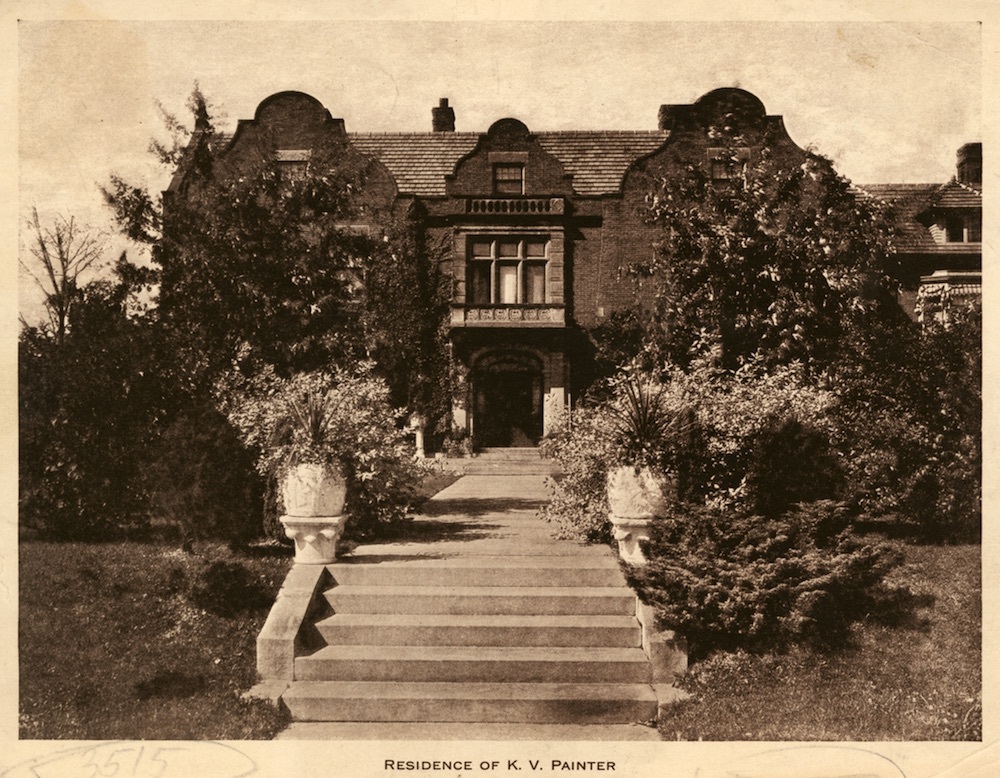
    <title type="html"><![CDATA[Painter Estate: A Globetrotting Banker&#039;s Menagerie]]></title>
    <summary type="html"><![CDATA[<p><strong><em>The ornithology collections of the Cleveland Zoo and the Cleveland Museum of Natural History trace their origins partly to the backyard zoo and aviary that banker and investor Kenyon V. Painter cobbled together on his Cleveland Heights estate from his far-flung travels around the world.</em></strong></p><img src="https://clevelandhistorical.org/files/fullsize/c7cbbf59c14e2c23996cae29b6353712.jpg" alt="The Residence of Kenyon V. Painter" /><br/><p>Kenyon V. Painter (1867 - 1940) grew up on the 25th block of Euclid Avenue. His father, John Vickers Painter, a wealthy banker, railroad man and associate of John D. Rockefeller, purchased 8.5 acres in Cleveland Heights and hired Frank Skeel to design a summer home for his family. After the elder Painter’s untimely death in 1903, his wife and son Kenyon continued construction. The 65-room Jacobean-style house, completed in 1905, was situated on a property covering more than 50 acres. After serving as a summer refuge for more than a decade, the estate became the family's permanent home in 1915. Mr. Painter followed his father into a successful banking career with Cleveland’s Union Trust Company. </p><p>Painter was a product of the Gilded Age. His wealth and stature afforded him many luxuries and hobbies, including expensive automobiles, big game hunting in Africa, and flirtations as an inventor (Painter sought a patent for a novel golf ball design in 1903). As an automobile enthusiast, Kenyon received one of Cleveland’s earliest speeding tickets for traveling along Rockefeller Parkway in 1901 at twice the 10 mph limit. In 1903, he “ran over” a young boy at a downtown intersection, breaking the boy’s collarbone and shoulder. Painter’s chauffeur took the boy to Lakeside hospital. The police arrested Kenyon, who posted bond, claiming the boy ran out in front of his car. It is plausible that Painter's social status helped his case. Among his well-connected friends was former President of the United States Theodore Roosevelt, with whom he shared safari resources during his frequent hunting trips to the African continent.</p><p>Despite his seemingly freewheeling nature, Kenyon Painter also sought to establish familial roots. He married Mary Chisholm in 1889. They had one daughter who died in 1894.  Mary died in 1901, and soon after, Painter married Maud Wyeth. They would have four children but again suffer the loss of a daughter in 1921 – somewhat ironically, in an automobile accident. </p><p>Painter's globetrotting safaris often mixed leisure with business. Kenyon and Maud honeymooned for three months on a safari in German East Africa, one of 31 extended hunting trips between 1907 and the 1930s. During these trips, Painter established investments near Arusha, Tanganyika, where he developed an 11,000-acre coffee estate, and built Arusha’s first post office, church, hospital, hotel, and coffee research facility with an $11 million investment. </p><p>Kenyon Painter's passion for wild animal trophies and specimens manifested itself on his Cleveland Heights estate grounds. In 1928, Tudor details were added to the mansion in addition to a garage, a stable, zoo and aviary, playhouse, and a small house for Painter's secretary. His trophy room surpassed any other and his two aviary facilities were filled with specimens personally secured when visiting foreign countries. The New York Zoological Society documented his bird collection in its September 1913 bulletin. The writer lauded “Painter’s aviaries as excellent examples of what can be done in private enterprise… Everything possible was done for the comfort of the birds…” He went on to document the birds in the collection, noting it “is cared for by a very intelligent Italian woman, and the uniformly perfect condition of her charges attests her skill in handling them.” In time, Painter would donate birds to the Cleveland Natural History Museum and to Cleveland Brookside Zoo to support the ornithology collections.</p><p>Like many fortunate sons, Painter may have taken for granted the privilege that his father's fortune afforded him. In 1935, he was involved in a notable financial fiasco. As the director and major stockholder of the Union Trust Bank, Painter borrowed nearly $3 million and was unable to pay it back, causing the bank to fail. He was sued and sentenced to prison in Columbus but fell ill and was hospitalized. Ohio Governor Davey pardoned the conviction and Painter returned to the estate where he lived quietly until his death in 1940. </p><p>Painter's life was marked by adventure and intrigue, loss and disgrace, excessive wealth and financial disaster. Philanthropy is perhaps his most lasting legacy. Painter's donations to the Natural History Museum and Cleveland Zoo helped both organizations start their ornithology collections with contributions following his early safaris. The Natural History Museum documents letters of thanks for the donation of a Turaco and parrot in 1930 and cites catalogs of his earlier donations. The zoo indicated Painter's donations included a Japanese robin, two black-headed parrots, two Indian geese, an Australian parakeet, two cranes, four Singapore doves, a silver pheasant, a South African golden oriole, and a South African black-breasted dove. Upon the sale of his estate in 1942, Painter's widow, Maud, donated his remaining aviary of 500 birds to the Cleveland Zoo. </p><p>Likewise, the sprawling Painter Estate found a new life. Shortly after Kenyon Painter's death, the Ursuline Academy (a school for girls at East 55th Street and Scovill Avenue in Cleveland since 1893) was in need of more space. On February 21, 1942, Maud Painter agreed to sell her Cleveland Heights mansion and property to the Ursuline Sisters for use as an educational facility. The sisters modified the house for classrooms and a library and used auxiliary buildings for related school facilities, including a gymnasium in the main trophy room where Kenyon had once kept his prized specimens. In 1943, they renovated the Aviary building. By 1964, the sisters built a new school building on the property with classroom space for 540 students, a new gymnasium, dining room, chapel, and administrative offices. The Aviary and Trophy Rooms were converted to house the Fine Arts Department. As the school progressed through the 20th century, additional facilities were added on the grounds and the mansion was used to house the nuns and for administrative offices and functions. </p><p>In 1979, the Painter Estate was declared a Cleveland Heights Landmark. It also has been featured on the Heights Community Congress’s “Heights Heritage Tour.” Despite its historic significance, the future of the Painter Estate is unclear. By the turn of the 21st century, studies were commissioned to explore options to renovate and utilize the mansion for schooling functions once again. Cost estimates to maintain or convert the mansion space were prohibitive for the nuns. They sold the property and building to Beaumont School in July 2009 and some administrative functions remained in Painter’s house. By 2017-18, Beaumont School administrators and directors removed staff from the building for safety and maintenance concerns and subsequently adopted a plan to demolish the mansion and use the land for athletic facilities. The City of Cleveland Heights has resisted action on the plan, and the ‘mothballed’ building stands today.</p><p><em><strong><a href="https://clevelandhistorical.org/items/show/915">For more (including 10 images) view the original article</a></strong></em></p>]]></summary>
    <published>2020-08-25T14:50:21+00:00</published>
    <updated>2026-03-04T21:32:04+00:00</updated>
    <link rel="alternate" type="text/html" href="https://clevelandhistorical.org/items/show/915"/>
    <id>https://clevelandhistorical.org/items/show/915</id>
    <author>
      <name>Jim Lanese</name>
    </author>
  </entry>
  <entry>
    <title type="html"><![CDATA[Mid Century Exhibits at the Cleveland Zoo: The Modernization of Zoological Gardens]]></title>
    <summary type="html"><![CDATA[<p><strong><em>A look at Cleveland Zoological Park exhibits constructed between 1940 and 1960 tells the story of a dramatic change in how American zoological parks were perceived, built and managed over the last century.</em></strong></p><img src="https://clevelandhistorical.org/files/fullsize/dd78c96ff8aac74f7d20769b09a40399.jpg" alt="Monkey Island, 1937" /><br/><p>Similar to cities, the landscape of zoological gardens in the United States have witnessed many changes during the last century.  Zoo exhibits in places such as Cleveland have transformed from barred enclosures to intricate replications of natural environments.  If you look closely at wildlife exhibitions, it is possible to interpret a little about the history of the era in which they were built.  Whether influenced by the Modernism of the 1950s or the environmental movement of the 1960s, the spaces tell us stories about the people who built and visited zoos.  The development and refinement of these spaces was not only vital to the popularity and financial stability of zoos, but was necessary to meet both internal and public standards for providing healthy living conditions that promote positive behavior in animals. </p><p>Shaped by public usage as well as innovations in design and administrative methods, animal exhibitions offer a unique form of civic architecture. Exhibits were not only built to act as suitable homes for its occupants, but to be appealing, attractive and informative to hordes of spectators.  They were designed to inform us about distant lands, animal behaviors, species characteristics or conservation practices.  The spaces also reflect the goals and ideals of the zoo administration and staff. Due to the incredible amount of planning and cost required to develop exhibits, the physical development of zoos in the United States has been slow. Exhibits constructed during different eras exist side by side within the same landscape. Recognizing the changes in design and public usage provides insight into the time periods in which they were constructed. A look at Cleveland Zoological Park exhibits between 1940 and 1960 offers a point of departure to explore how these spaces reflect the history of zoological gardens in the United States.</p><p><em><strong><a href="https://clevelandhistorical.org/items/show/619">For more (including 9 images) view the original article</a></strong></em></p>]]></summary>
    <published>2013-07-22T00:57:47+00:00</published>
    <updated>2026-03-04T21:32:01+00:00</updated>
    <link rel="alternate" type="text/html" href="https://clevelandhistorical.org/items/show/619"/>
    <id>https://clevelandhistorical.org/items/show/619</id>
    <author>
      <name>Richard Raponi</name>
    </author>
  </entry>
  <entry>
    <title type="html"><![CDATA[Reinventing Cleveland&#039;s Zoo: Education and Recreation for the Whole Family]]></title>
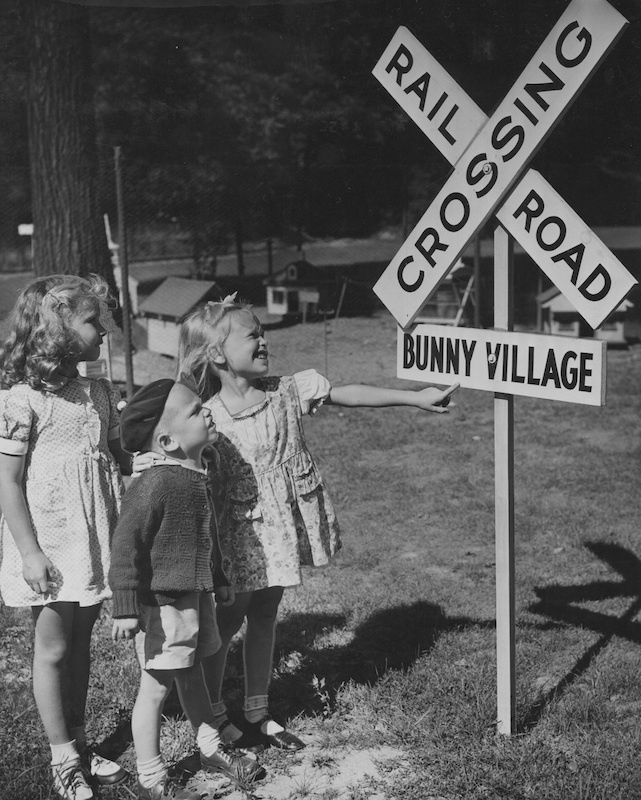
    <summary type="html"><![CDATA[<p><strong><em>Cleveland's public zoo was reinvented during the 1940s, paving the way for it to become one of the  city's most popular attractions.  What changed?</em></strong></p><img src="https://clevelandhistorical.org/files/fullsize/1b2ae627ae73c4839736b56e0aed4b9a.jpg" alt="Bunny Village, 1946" /><br/><p>Did you know that zoos and aquariums in the United States attract nearly 175 million visitors a year?  While not taking into account repeat visitors, this staggering number is over half of the entire population of the county.  With two-thirds of all adults in attendance having a child in tow, the popularity of these institutions can partly be attributed to their successful development as spaces for both education and recreation. In Cleveland, efforts toward this end were realized by the public zoo during the 1940s, and symbolized by a name change from the Brookside Zoo to the Cleveland Zoological Park. With a new name, and under new leadership, the Cleveland Zoo was physically reinvented as a site for children and families.  Both exhibits were constructed and resources developed to attract the new target audience.  By focusing on expanding its role as a space for education while simultaneously cultivating an enjoyable experience for young patrons, the Cleveland Zoological Park established itself as both a valuable and popular civic institution by the end of the 1950s.</p><p>During its first fifty years in existence, Wade Park Zoo and Brookside Zoo were far from prestigious institutions. Despite waves of public interest, the zoo received its fair share of complaints concerning stagnated development and physical deterioration. By the late 1930s, legislation had even been introduced to the City Council to abolish the zoo; this prompted the Cleveland Federation of Women's Club to advocate for the creation of a proper zoological society to manage the grounds. While this idea had been previously suggested and researched, the plans finally resonated enough with the City Council and Cleveland's public to be put into action. </p><p>The tide turned for the Cleveland Zoo in August of 1940. Cleveland's City Council voted to transfer management of the zoo from the city to the Cleveland Museum of Natural History. The non-profit, private organization was appropriated $50,000 a year, and proceeded to install a board of thirty leading citizens; the board created the position of 'Director,' and brought in Fletcher Reynolds to oversee the institution's development in 1942. While the growth of the zoo moved slowly due to its limited resources during World War II, the grounds and existing animal habitats were immediately cleaned and beautified. In October of 1944, the zoo was given a new name and fresh start as the Cleveland Zoological Park. </p><p>The new Cleveland Zoo quickly developed itself as an educational resource. The basement of the main zoo building was converted into a classroom, education and entertainment programs were created, a miniature train was added as an attraction, and a traveling zoo visited parks throughout the city to offer children a chance to both learn about and play with zoo animals. Once revenue became available for physical expansion, a Children's Zoo featuring a fairy tale theme park was added to the grounds. Coinciding with the construction of new exhibit spaces and the introduction of many exotic species to the animal collection, the mid-century zoo had emerged as a popular destination for Clevelanders. While reports of 50,000 daily visitors during the late 1940s were probably greatly exaggerated, each added attraction and shipment of new animals was accompanied by claims of record attendance in local papers.</p><p>Cleveland Zoological Park continued to expand and focus on children's attractions and educational programming throughout the 1950s. School visits and art classes became a commonplace sight at the zoo, and a teacher from the Cleveland Board of Education worked onsite beginning in 1951.   Additional petting and feeding exhibits were also developed, and Fletcher Reynolds regularly presented informational radio broadcasts. Cleveland's public zoo became a space associated with children, their education and recreation.  In turn, it attracted an audience of parents seeking to promote the betterment of their offspring. </p><p>While the public's usage of zoos remained recreational in nature, zoos materialized their role as educational institutions - a transition that guided development to present day. While numerous changes have taken place since the 1950s in how Cleveland's zoo is operated, designed and marketed, the prestige and success of the institution remains intertwined with a perceived educational value. Attracting more than one million visitors a years, Cleveland Metroparks Zoo has grown into one of the city's most popular attractions.</p><p><em><strong><a href="https://clevelandhistorical.org/items/show/617">For more (including 12 images&#32;&amp;&#32;2 audio files) view the original article</a></strong></em></p>]]></summary>
    <published>2013-06-26T10:49:47+00:00</published>
    <updated>2026-03-04T21:32:01+00:00</updated>
    <link rel="alternate" type="text/html" href="https://clevelandhistorical.org/items/show/617"/>
    <id>https://clevelandhistorical.org/items/show/617</id>
    <author>
      <name>Richard Raponi</name>
    </author>
  </entry>
  <entry>
    <title type="html"><![CDATA[The Great Depression and the Zoo: Infrastructure and Insecurity]]></title>
    <summary type="html"><![CDATA[<p><strong><em>Cleveland's Brookside Zoo faced a crisis at the onset of the Great Depression.  With Clevelanders going hungry, the city government was faced with the decision of whether to spend its limited resources caring for and feeding zoo animals.</em></strong></p><img src="https://clevelandhistorical.org/files/fullsize/179c4df538a371bbc6b80e9fcfbd6236.jpg" alt="WPA Rebuilds Brookside Park, ca. 1938" /><br/><p>The Great Depression was a trying time in the City of Cleveland. As early as 1931, nearly one third of the city's work force was unemployed, and things would only get worse. With an already growing economic divide between suburban communities and inner city residents, the depression hit those living in Cleveland the hardest; the tax base that financed local government all but dried up, leading to a financial crisis. Public funding for institutions such as parks and libraries were heavily cut, requiring that they operate on a shoestring budget. Brookside Zoo found itself in a predicament. While maintenance of park grounds could be delayed, animals in the zoo needed food and care. The economically conservative city government was unable to provide relief within its budget; as people were waiting in food lines, the decision to provide care for animals at the zoo raised a few eyebrows. The animal population dwindled, and existing structures and exhibits deteriorated.</p><p>Despite these setbacks, the depression era marked a period of incredible expansion and growth for both the Cleveland Metropolitan Park System and the City of Cleveland's Zoo. The Brookside Zoo offered free recreation, and droves of cash-strapped city residents visited its remains.  Aiding in its revitalization, federal work relief programs provided the labor needed to completely overhaul Brookside Park and Zoo. The latter would emerge the economic crisis with both a new skeleton of an infrastructure and a foundation of public support, paving the way for a period of expansion in the 1940s.</p><p>A comment by Captain Curley Wilson in 1934 concerning the shape of the public zoo summed up the depression-era state of affairs: "Sixth city-and 25th zoo -- but what are you going to do when you haven't got any money?"  Beginning his work as superintendent of the zoo in 1931,  plans for development of the grounds had already been stilted by a lack of available city funding.  All the while, attendance and usage of the free park increased due to both the newly found free time of the unemployed as well as the cautious spending habits of those with work.</p><p>Coming into his new job, Captain Wilson was initially charged with building the zoo to be on par with established zoological gardens in the United States. Efforts to remodel a bird preserve were undertaken, but plans for new structures were soon bypassed to meet the more immediate need of feeding animals. The new superintendent was instantly confronted with the staff's inability to afford adequate security at the zoo; a seal was killed at the hands of a bottle wielding vandal, birds were shot after-hours, and four locals executed a not-so-daring break-in to retrieve a pet monkey placed in the zoo's care by local police.  </p><p>Providing a bit of salt for an open wound, the shrinking zoo needed to deny donations of new animals due to the cost of their upkeep. Even when zoo advocate Laura Mae Corrigan offered a donation in 1933 of 28 animals acquired on safari in Africa, the city was initially forced to refuse the gift. While it was known that the exotic animals would be an incredible boon to the zoological garden's validity as an institution, there was no available money to cover the cost of caring for the animals. Eventually, the widow of steel magnate James W. Corrigan padded her donation with a $5000 check to provide four years worth of food for the zoo's new inhabitants. The gift from Africa would act as the highlight of Brookside's collection during the Depression era.   </p><p>Beyond Corrigan's generous gift, the zoo's infrastructure expanded greatly during the Depression era.  A hefty list of construction projects was undertaken at the zoo and Brookside Park, utilizing work relief programs.  Under the umbrella of the WPA, the zoo was provided two new exhibits - a Sea Lion pool and Monkey Island; runs for prairie dogs, guinea pigs and woodchucks were also constructed, and the bear pits were reconditioned.  The grounds were rehabilitated with new roads, a lake, animal shelters, picnic grounds, and parking lots.  All in all, Brookside Park and Zoo received much in the way of attention and resources from work relief programs.  </p><p>A decade of depleted funding during the Great Depression also had its adverse effects.  A 1940 inspection of the grounds found that nearly every building at the zoo leaked, and needed roofing and spouting.  Most structures required painting and new plumbing, fencing throughout the zoo needed repaired or replaced, and the heating plant was due for a complete overhaul. The deteriorating remnants of Cleveland's early zoo structures littered the grounds which were redeveloped by work relief laborers.  As the zoo emerged from the Great Depression, this contrast in the physical landscape aptly reflected the state of the institution; pushed forward by a resurgence in popularity and the evident possibilities for further expansion, the zoo's growth was restrained by its ties with Cleveland's Department of Recreation as just one of many public spaces in the city's vast park system.  </p><p><em><strong><a href="https://clevelandhistorical.org/items/show/615">For more (including 12 images) view the original article</a></strong></em></p>]]></summary>
    <published>2013-06-19T10:14:47+00:00</published>
    <updated>2026-03-04T21:32:01+00:00</updated>
    <link rel="alternate" type="text/html" href="https://clevelandhistorical.org/items/show/615"/>
    <id>https://clevelandhistorical.org/items/show/615</id>
    <author>
      <name>Richard Raponi</name>
    </author>
  </entry>
  <entry>
    <title type="html"><![CDATA[Cleveland&#039;s Zoo Goes on Safari: The Transition Away from Collection and Colonialism]]></title>
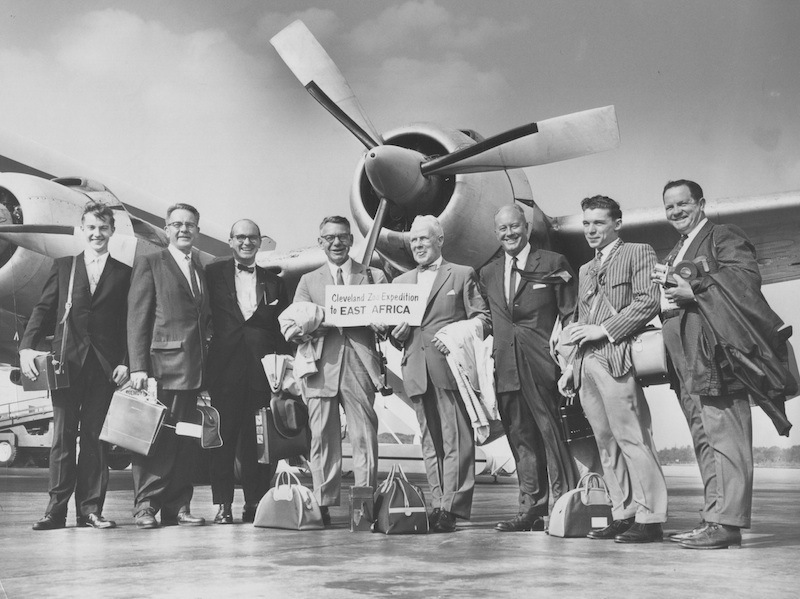
    <summary type="html"><![CDATA[<p><strong><em>Over ninety percent of all animals currently displayed in American zoos were born in captivity.  Highly regulated breeding and exchange programs, however, replaced a much different method of acquiring zoo animals beginning in the 1960s.  </em></strong></p><img src="https://clevelandhistorical.org/files/fullsize/c3513d42693aa350b5fe1c04ea68543f.jpg" alt="Cleveland Zoo Expedition, 1960" /><br/><p>A walk through the Cleveland Metroparks Zoo offers visitors a glimpse into a carefully curated society of animals from around the world. While the vast array of species provides a representation of life on different continents, it's highly unlikely that an inhabitant of the zoo has ever been outside of the United States. Over ninety percent of all animals displayed in zoos were born in captivity. Of course, this has not always been the case. Highly regulated breeding and exchange programs between zoos accredited by the Association of Zoos and Aquariums supplanted the practice of removing animals from their native environment. </p><p>The development of American zoos up until the 1960s hinged on an animal trade often steeped in colonialism, exploitation and a euro-centric worldview. It was an era characterized by famous animal traders and highly publicized trapping expeditions in distant lands. These excursions generated public interest and promoted a vision of zoos as educational institutions. Both the diversity of species provided by traders and a focus on big game animals helped draw in a curious public, and shaped what was expected of city zoos. In Cleveland, this period of institutionalization was pushed forward under the direction of the Cleveland Museum of Natural History and Zoo Director Fletcher Reynolds. In an effort to create a world-class zoo, expeditions were planned to East Africa for the collection of animals in 1950, 1955, 1959 and 1960. The safaris aided in both the expansion of the zoo and its rebranding as an educational civic organization.</p><p>For the first half of the 20th century, the zoo primarily housed and exhibited domestic animals for the viewing pleasure of spectators strolling through park grounds. These animals were not only more affordable, but did not require specialized care. Dating back to the zoo's formative years, with Jeptha Wade's deeding of a deer herd to the city along with his land, the primary means of growing the native collection was through gifts.  While animals were also purchased with park funds, these acquisitions were meant to enhance or replenish existing collections of domestic species.  </p><p>In 1931, approximately 300 of the zoo's 420 animals were domestic species. The small collection of exotic animals housed by the zoo, though, was the highlight of the park. Animals such as lions, elephants and alligators were showcased in the scattershot menagerie, and acted as a gauge for the zoo's status. Generally acquired with donated funds or as gifts from prominent citizens, these non-domestic species were readily available due to an established animal trade in Africa, Asia, and South America. The supply lines were set up to meet the demand of pet stores, vaudeville, circuses and private collectors by the middle of the 19th century. This international animal trade provided a framework from which American zoos developed. Species made available for sale would subsequently be identified with American zoological gardens. </p><p>With the transfer of management of the Brookside Zoo to the Cleveland Museum of Natural History in 1940, the zoo slowly began to develop as a professional zoological garden. As part of this process, the new administration took an active approach to curating and expanding the collection. To emerge as a leading zoological garden required the acquisition of a diverse array of non-domestic species. The board replaced over 100 animals during its first year, and, soon after, discontinued the practice of indiscriminately accepting donations. Drawing upon the experience of prestigious zoological societies throughout the United States, an expedition was planned with the goal of both attracting public attention and bringing in new animals. </p><p>Fletcher Reynolds undertook Cleveland Zoological Park's first African expedition in 1950. During a three-month trip to Cameroon in West Africa, Reynolds collected over 150 species of animals. While a safari conjures images of Reynolds chasing down game in the wilderness, the Zoo director's main purpose was to examine and purchase animals from dealers. By personally heading the expedition, he set up supply lines that the Cleveland Zoological Park could use in the future. The zoo showcased its new inhabitants upon his return, which included baby gorillas, chimpanzees, venomous reptiles, birds, a cheetah and a leopard. In addition, Reynolds returned to Cleveland with photographs and film of the expedition. These were presented to a public fascinated with Africa. The animals and images brought back from Cameroon were meant to be evidence of Cleveland Zoo's evolution into an educational resource for natural history.  </p><p>The next animal collecting expedition occurred in 1955. Plans  to construct a state-of-the-art $600,000 Pachyderm Building were made with the passage of a bond issue in 1952. The objective of the safari was to obtain elephants, hippopotamuses, rhinoceroses and giraffes from East Africa to inhabit and promote interest in the new exhibit.  The trip proved successful; with $65,000 slated for the purchase of animals from dealers, the zoo also acquired tortoises, birds, baboons, monkeys, a cheetah and a wildebeest.  The massive freight was transported by ship from East Africa to New York.</p><p>Later expeditions sponsored by the Zoo were of a much smaller scale, but were meant to meet the same ends as the previous safaris. A 1959 expedition to Africa acquired over a hundred birds and what would become one of the zoo's most iconic inhabitants — Karen the Bongo. At the time, Karen was the only bongo in captivity; both her capture and the expedition were a symbol of the zoo's rising prestige and status as a valuable civic asset. The final zoo-sanctioned safari occurred in 1960. Working with the Board of Education, a ten-week animal identification competition was held by the Cleveland Zoo that culminated in the naming of two students to accompany an expedition to East Africa. Despite the trip being cut short due to political and social unrest in the African nations, the zoo acquired 18 birds, two chimpanzees, and three monkeys. </p><p>That same year, seventeen African countries declared independence. With the dismantling of colonial influence in Africa, the age of collecting expeditions for the Cleveland Zoo came to an end. While the established animal trade would remain a means for purchasing new animals, the conservation movement of the 1960s would help bring into question both the ethics and environmental impact of removing animals from their native habitat. The focus of the Cleveland Zoological Park was redirected towards internal development, rather than the accumulation of animal species.</p><p><em><strong><a href="https://clevelandhistorical.org/items/show/613">For more (including 15 images) view the original article</a></strong></em></p>]]></summary>
    <published>2013-06-01T16:04:18+00:00</published>
    <updated>2026-03-04T21:32:01+00:00</updated>
    <link rel="alternate" type="text/html" href="https://clevelandhistorical.org/items/show/613"/>
    <id>https://clevelandhistorical.org/items/show/613</id>
    <author>
      <name>Richard Raponi</name>
    </author>
  </entry>
  <entry>
    <title type="html"><![CDATA[Balto vs. the Alaskan Black Death]]></title>
    <summary type="html"><![CDATA[<p><strong><em>It was a race against time to save the city of Nome from the Alaskan Black Death.  The only hope for the isolated, snowbound community was the delivery of diphtheria antitoxin by dog sled relay. An unlikely, fury national hero emerged from the treacherous serum run: Balto.</em></strong></p><img src="https://clevelandhistorical.org/files/fullsize/3d9140d3462220aef49bd451f1486448.jpg" alt="Balto and Togo" /><br/><p>With seven children dead, nineteen persons severely ill and 150 under surveillance for infection with the Alaskan Black Death, the small city of Nome, Alaska was under quarantine. Nome's sole doctor moved house to house treating the sick, while a nurse attended to infected Eskimo children. A diphtheria epidemic threatened to decimate the icebound town of 1,400, and the only serum available had expired and proved ineffective.  </p><p>In a race against time to save the city, the territorial Board of Health and Governor of Alaska moved to organize a relay of the area’s best dog sledding teams to transport a batch of serum by way of a postal route through the tundra. Newspapers in Cleveland and other urban centers latched onto the story. The public was reeled in with daily accounts of disease, blizzards, frostbite and subzero temperatures. Norwegian musher Gunner Kaasan and his sled team arrived in Nome with the life saving serum on February 5, 1925 at 5:30 A.M.  Having traveled over 50 miles through treacherous weather, he stumbled into the doctor’s home, handed over the medicine and returned to his dogs. The only words he spoke before collapsing from physical exhaustion commended the lead of his sled team, Balto: “Damn fine dog.”  </p><p>Balto quickly became an American hero and a symbol of the 1925 serum run. The story of the relay, and specifically one dog, had resonated with the public and created a sensation. Even though the disease had predominantly affected an indigenous population in what the press characterized as an uncivilized outpost, the course of events had struck a nerve in urban society. Both public interest in the serum run and Balto's rise to fame emerged from a nation's struggle to hold on to images of an idealized early American past. The run's captivating narrative was framed to portray the age-old theme of man versus nature, and the canine was inscribed with the values of the iconic 1920s hero - loyalty, courage and strength.  </p><p>The 1925 serum run unfolded as a true-life pulp serial, and was shaped as a reflection of urban societies’ values and anxieties. The nation was adjusting to a change; for the first time in the 1920s, more than half of the population lived in cities. The growth of cities was both reinforced by and encouraged mass production and consumerism. In an era characterized by economic prosperity and increased leisure time for many urban residents, a new mass culture emerged. Entertainment flourished; radios, movies, printed media and advertising campaigns could reach and influence a wider range of the public. The changing face of the American landscape tied the country together as never before. The culture and identity of the nation became both associated with and representative of urban society. Tensions mounted as a nation’s social norms faltered under the highly visible influence of consumerism and materialism.  </p><p>While urbanization had always been accompanied by a yearning for an idealized rural past, what seemed to be rapid steps towards modernity necessitated that a new American identity be forged. A moral world of yesteryear was drawn from constructed memories of frontier life.  The bygone era was imagined to be a simpler and primitive time, a moment in the country’s history when men negotiated their own destiny. Representations of traditional values and belief systems, which by their nature were reactionary and defined in contrast to imagined current standards, were echoed in popular culture as a means to address the perceived moral pitfalls of urbanity. </p><p>The story of the serum run was formulated within the context of these unsettling social and cultural changes. Where technology had proved useless in the harsh wilderness, men battled through the forces of nature in a desperate attempt to save Nome's most vulnerable citizens. Hearkening back to America's lost frontier, the simple, moral tale emphasized the goodness and strength of its characters. The familiar narrative broached the works of Zane Gray and Edgar Rice Burroughs.  </p><p>With the successful completion of the relay, the mushers were celebrated throughout Alaska. Leonhard Seppala and Gunnar Kaasan, both of Norwegian descent, found minor celebrity in United States. The run, however, came to be identified with Balto. An unlikely hero, Balto was aptly described in the newspapers as barrel-chested and inexperienced. Paralleling a common rags-to-riches theme, the dog had been used primarily for freight delivery and was never a lead on sled racing squad. Seppala, who owned and trained Balto, had passed over the dog for his own team. </p><p>Accounts of the relay often described Balto as only being chosen as the lead dog by Kaasan amidst a blizzard, when the former leader had proved ineffective in the adverse conditions. Balto's character and personality were formulated within a pattern of the typical 1920s hero. Described as courageous, strong and faithful, Balto joined the ranks of famous adventurers, athletes and protagonists of serials. The canine hero was featured in a Hollywood film and toured through America on the vaudeville circuit.  A monument was erected of his likeness in Central Park, and the 'Balto' name was attached to books and advertisements.  </p><p>The overshadowing success of Balto frustrated Leonhard Seppala, who was arguably the pivotal character in the success of the serum run. The men that had participated in the relay to save Nome, predominately either foreign born or indigenous to the area, had been relegated as background to Balto's story. Seppala believed that his lead racing dog, Togo, deserved the honors that were bestowed upon the second-rate freighting dog.</p><p>  As both Kaasen's superior at the Pioneer Mining Company and the owner of Balto, Seppala ordered his subordinate back to Alaska in 1926. Balto and six teammates from the run were left in the hands of a tour promoter, who sold the dogs to a dime museum. Months later, Cleveland businessman George Kimble came across the dog team chained to a sled at the museum. Securing a price of $2,000 and two weeks to pay the museum owner, Kimble began a crusade to save the dogs. His campaign placed collection boxes throughout Cleveland in hotel lobbies, drug stores, Public Square, restaurants and cigar shops. </p><p>With the assistance of the Cleveland Plain Dealer in promoting the cause, Kimble raised over $2300.00 in 10 days.   On March 19, 1927, the seven dogs were greeted with a parade through Public Square before being taken to their new home at the Brookside Zoo. An estimated 15,000 Clevelanders visited the sled team on their first day at the zoo, where Balto and his teammates lived out the remaining years of their lives as celebrities. A bronze tablet and granite monument inscribed with their names was dedicated in 1931. Originally erected to be a roster of heroic dogs and act as a shrine for animal lovers in Cleveland, the monument would be remembered as the gravestone of the dog pack. </p><p>  Struggling with impaired mobility and a weak heart, Balto was euthanized on March 14, 1933 at the age of fourteen.  Even in death, Balto’s celebrity as the dog that saved Nome endured. His body was mounted and placed on display at the Cleveland Museum of Natural History, where it rivaled a collection of shrunken heads as the most requested exhibit. In a nod to the Husky’s famed bravery, his thyroid and adrenal glands were preserved in George Crile's organ collection at the Cleveland Clinic.  With the pieces-parts of Balto’s corpse eternalized in Cleveland, public memory of the dog continued to be shaped nationally through books and film into the 21st century.  Building off of the narrative created by the 1920s press, posthumous characterizations of the canine persisted in attributing the success of the Serum Run to his valor.  The legend of Balto would withstand the test of time. The anthropomorphized hero acted as a furry reminder of an idealized pioneer past– a time when man, unaided by technology, battled against the forces of nature for survival and the advancement of civilization.</p><p><em><strong><a href="https://clevelandhistorical.org/items/show/610">For more (including 17 images&#32;&amp;&#32;1 audio file) view the original article</a></strong></em></p>]]></summary>
    <published>2013-05-04T23:42:20+00:00</published>
    <updated>2026-03-04T21:32:01+00:00</updated>
    <link rel="alternate" type="text/html" href="https://clevelandhistorical.org/items/show/610"/>
    <id>https://clevelandhistorical.org/items/show/610</id>
    <author>
      <name>Richard Raponi</name>
    </author>
  </entry>
  <entry>
    <title type="html"><![CDATA[Cleveland Metroparks Zoo]]></title>
    <summary type="html"><![CDATA[<img src="https://clevelandhistorical.org/files/fullsize/620568497fafdcea846a71810234c68c.jpg" alt="Schreckengost and Mastodon" /><br/><p>By 1907 the Wade Park Zoo on Cleveland's East Side had outgrown its limited space, so the city council decided to move the zoo to Brookside Park. Monkey Island, Sea Lion Pools, bear exhibits, and elephants joined the roster of animals Clevelanders could visit, but the original Wade Park site also continued to operate for the next three decades. After the Cleveland Museum of Natural History was constructed in the portion of Wade Park vacated by the original zoo, the museum took over operations of the Brookside Park zoo, which the city continued to own. In 1975, mirroring a wave of divestiture of city assets, the municipal government transferred the zoo to the Cleveland Metroparks. In the years that followed, the zoo continued to upgrade its exhibits in keeping with an international trend toward more humane animal enclosures several decades in the making. As early as the 1920s, the San Diego Zoo was the nation's most noted park to commit itself to matching natural habitats as closely as possible. </p><p>Marking the latest progression in zoo habitat development, the Cleveland Metroparks Zoo opened African Elephant Crossing in May 2011. Cages that gave the animals little room to move gave way to modern facilities that allow for the types of exercise these animals would get in the wild. Cleveland's first zoo elephant was Minnie, who arrived in 1907 and was purchased with "Pennies for Pachyderms" money from a Cleveland Press fundraiser. The next step occurred in 1956 when the Pachyderm House opened at the Cleveland Zoo. The stampede of excited children nearly trampled the master of ceremonies, Gordon Stouffer, son of the Cleveland-based Stouffer Foods founders. The method of training the elephants became known as elephant school. Due to their size and strength it is crucial that the elephants be able to follow commands. These days the zookeepers work with Moshi, Jo, and Martika. The elephants are trained to cooperate so that they can be examined daily to prevent health problems.</p><p>The recent elephant habitat is only the latest in a long line of improvements made since the 1970s. Under Cleveland Metroparks' supervision, the zoo expanded by building the Primate and Cat Building. Biothematic zones have been developed and expanded upon over the years.  Today, the Cleveland Metroparks Zoo includes The Rainforest, Wolf Wilderness, Australian Adventure and the Sarah Allison Steffee Center for Zoological Medicine.</p><p><em><strong><a href="https://clevelandhistorical.org/items/show/506">For more (including 8 images&#32;&amp;&#32;1 audio file) view the original article</a></strong></em></p>]]></summary>
    <published>2012-06-20T13:54:03+00:00</published>
    <updated>2026-03-04T21:32:00+00:00</updated>
    <link rel="alternate" type="text/html" href="https://clevelandhistorical.org/items/show/506"/>
    <id>https://clevelandhistorical.org/items/show/506</id>
    <author>
      <name>Lisa Alleman</name>
    </author>
  </entry>
  <entry>
    <title type="html"><![CDATA[Wade Park Zoo: Cleveland&#039;s Original Zoo]]></title>
    <summary type="html"><![CDATA[<img src="https://clevelandhistorical.org/files/fullsize/c1593541c472ebde607a8ff485d79822.jpg" alt="Sea Lions at Wade Park Zoo" /><br/><p>Jeptha Wade, whose fortune was largely derived from his establishment of the Western Union Telegraph, was a philanthropist whose generosity led to the creation of many cultural institutions in the Cleveland area.  The Cleveland Museum of Art and the Cleveland Metroparks Zoo owe a great deal to this portrait painter turned industrialist.  He was also very involved in what became Case Western Reserve University and the Hathaway Brown School. </p><p>In the late nineteenth century, Cleveland was a booming city and men like Jeptha Wade, John D. Rockefeller and the Severance family wanted to bring culture and an appreciation of the arts to the community.  The development of busy cities from rural areas changed the landscape. In the midst of the explosive urban growth, efforts were made to preserve nature and give residents an escape from the noise and bustle of the city by creating parks.  A popular feature included in some of these urban located parks were zoos.</p><p>In 1882, Jeptha Wade gave Cleveland its first zoo.  He donated over 70 acres of land from his estate and 14 deer along with their enclosure. This was the beginning of a zoo in what later became Wade Park. Along with the zoo attractions, Wade Park also housed a lagoon, tennis courts, picnic areas, and ball fields. The city added to the zoo population by purchasing 100 pigeons, two vultures and a seagull. Eventually, this early zoo became home for two black bears, elk, rabbits, two peccaries and a pair of lions. It contained the Deer Park, the Octagon Animal House, animal cages, a barn, a sea lion pool, and a carp pond.  </p><p>With time, the zoo outgrew the space in Wade Park. A decision was therefore made by the City Council in 1907 to move the zoo to Brookside Park. Following the move, the original location of the zoo was redeveloped as part of the Natural History Museum and the Cleveland Museum of Art projects.</p><p><em><strong><a href="https://clevelandhistorical.org/items/show/387">For more (including 6 images) view the original article</a></strong></em></p>]]></summary>
    <published>2012-01-09T21:33:11+00:00</published>
    <updated>2026-03-04T21:31:59+00:00</updated>
    <link rel="alternate" type="text/html" href="https://clevelandhistorical.org/items/show/387"/>
    <id>https://clevelandhistorical.org/items/show/387</id>
    <author>
      <name>Lisa Alleman</name>
    </author>
  </entry>
</feed>