<?xml version="1.0" encoding="UTF-8"?>
<feed xmlns="http://www.w3.org/2005/Atom">
  <title type="text">Cleveland Historical</title>
  <updated>2026-08-21T21:27:04+00:00</updated>
  <generator uri="http://framework.zend.com" version="1.12.20">Zend_Feed_Writer</generator>
  <link rel="alternate" type="text/html" href="https://clevelandhistorical.org/"/>
  <link rel="self" type="application/atom+xml" href="https://clevelandhistorical.org/items/browse?output=rss2"/>
  <id>https://clevelandhistorical.org/</id>
  <author>
    <name>Cleveland Historical</name>
    <uri>https://clevelandhistorical.org</uri>
  </author>
  <link rel="hub" href="http://pubsubhubbub.appspot.com/"/>
  <entry>
    <title type="html"><![CDATA[The Cleveland Health Museum: America&#039;s First Health Museum]]></title>
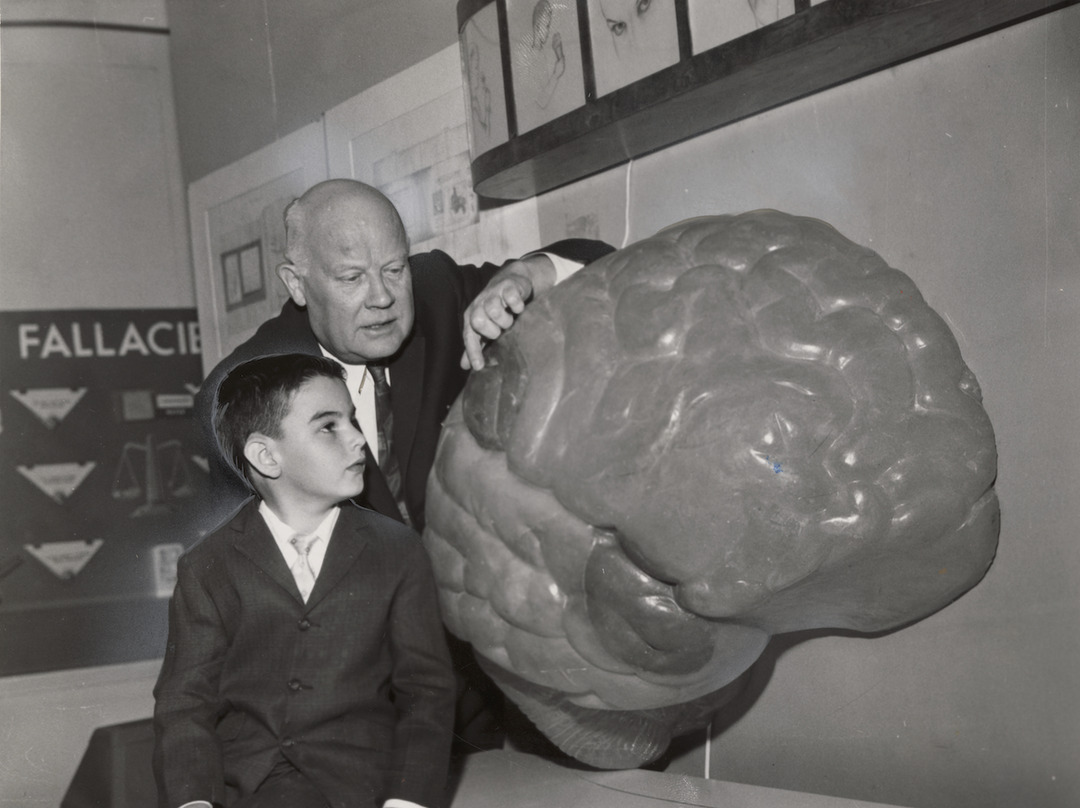
    <summary type="html"><![CDATA[<p><strong><em>In the early twentieth century, medical doctors and social organizations devoted much time and effort to developing new ways to show people how modern science could improve their health.  These doctors and organizations firmly believed  that showing people was better than lecturing them, and  they accordingly promoted new methodologies that  would visually demonstrate the health benefits of modern science.  One of the most interesting concepts that they promoted during this period was the health museum.</em></strong></p><img src="https://clevelandhistorical.org/files/fullsize/5a2803de6124a3a6c8425f07878bf611.jpg" alt="A Lesson in the Human Brain by Dr. Gebhard" /><br/><p>In 1911, from May 6 to October 31, an International Hygiene Exhibition  was held in Dresden, Germany.  Situated in the city's famous GroBer Garten, it occupied approximately 62 acres of the park grounds. There, representatives mostly from  Germany and other European countries presented exhibits of some 20,000 objects in 70 rooms that showed how advancements in modern science could improve health and hygiene, with emphasis in the fields of history, industry and populism.  One year after the International Exhibition closed, a health and hygiene museum—the first of its kind in the modern world—was built  in Dresden  on the Exhibition grounds.</p><p>While the United States did not officially participate in this International Exhibition, a number of American medical doctors and other Americans traveled to Dresden to see it. There is no newspaper account of  anyone from Cleveland attending; however, word of the Exhibition and the new  health museum  in Dresden certainly reached at least one person in Cleveland, Mildred Chadsey.</p><p>Mildred Chadsey was a graduate of the University of Chicago where she earned a degree in social work. In 1910 she moved to Cleveland and two years later accepted a position in new mayor Newton D. Baker's administration as the city's first housing official. The duties of that position  included serving as the city's chief sanitary inspector.  Not only was Chadsey the city's first housing official; she was also one of the first women to serve in any position in Cleveland city government.</p><p>On  November 27,1912, according to the Cleveland Press, Chadsey announced a plan to create a health museum in the "old East Ohio Building" then standing on Superior Avenue next to where Cleveland City Hall then stood. Over the next several years Chadsey recruited volunteers from Western Reserve University to gather information and statistics on Cleveland housing in furtherance of her museum project. However, before she could complete the project which was supported by Mayor Baker, but opposed by Cleveland City Council, Baker's term of office came to an end ,and with it,  Chadsey's tenure as the city's housing official.</p><p>While Mildred Chadsey's  1912 proposal  to build a health museum  in Cleveland died, the idea did not.  Two decades later, during the Great Depression, a number of Cleveland medical doctors and social organizations gathered together,  determined to create and fund a health  museum largely with private sector donations.  This time, the project succeeded.</p><p>Inspired by health exhibits in the Hall of Science at Chicago's 1933-1934 Century of Progress International Exposition, and led  by Dr. Lester Taylor, President of the Cleveland Academy of Medicine, 33 members of Cleveland medical community and various social organizations gathered on March 25, 1936, at the Dudley Allen Medical Library on Western Reserve University's campus to discuss how such a project might move forward in Cleveland.</p><p>Over the next four years, meetings were held, work was assigned, area dentists were invited to participate, funds were solicited, the project was incorporated under the name of the Cleveland Museum of Health and Hygiene, and displays and exhibits were prepared. Elisabeth Severance Prentiss, widow of Dr. Dudley P. Allen, a prominent late 19th and early 20th century surgeon, had promised to donate their former mansion at 8811 Euclid Avenue  to the museum when the project was nearing completion. In  January, 1940, she did so.  That May, the last essential addition to the project was made when Dr. Bruno Gebhard, the Director of the Health Museum in Dresden, who had fled Hitler's Germany and come to the United States, agreed to become the first Director of the Cleveland Health Museum.  Six months later, on November 14, the Cleveland Museum of Health and Hygiene opened its doors to the public.</p><p>In the museum's first years, the 15-room former mansion of Dr. Allen and his wife was sufficiently large for the early exhibits and displays of the museum, which included, according to an article appearing in the Plain Dealer on January 19, 1941: a model of a woman's head showing the size and location of various organs; a display revealing the number of babies born and the number of people who died each day in Cleveland, a display using a photograph of Public Square and the Soldiers' and Sailors' Monument to illustrate the number of blood cells in the human body; X-rays and skeletons of the human body; height and weight measuring devices; eye tests; and a display which taught practical tips for ensuring safety while lifting heaving objects.</p><p>One of the most interesting acquisitions by the Health Museum in its early years was that of the two alabaster statues of a nude woman and man, named respectively Norma and Normman.  They were the work of  obstetrician Robert Dickinson and sculptor Abram Belskie. Purchased by the Museum for $15,000, the female statue drew the most attention from patrons, especially after the Museum and the Plain Dealer co-sponsored a contest to find an area woman whose measurements were most like hers.</p><p>Within five years  after the Museum opened,  the Allen mansion became too small for its displays and exhibits, which became larger, more numerous, and more complex.  In 1946, as the result of a large donation  from James Bohannon, then president of the Brewing Corporation of America (producer of Carling's Black Label beer), the Museum purchased the former Lyman Treadway mansion at 8917 (later renumbered 8911) Euclid Avenue, which was larger,  located on more land, had more outbuildings, and was  just several houses up the street from the Allen mansion.</p><p>By 1947, in its new location and guided by Director Gebhard, the Cleveland Health Museum had exceeded all expectations and had become a museum which drew tens of thousands of visitors, while also providing training to hundreds of area medical personnel. By this date, the museum had more than 50,000 exhibits aimed at showing Clevelanders how to be and stay healthy.</p><p>In the early years of the museum's stay at the Treadway mansion, several of the exhibits  stood out more than others. One was the Transparent Women who arrived at the Museum in 1950, and who, after another contest, this time sponsored by the Cleveland Press and the Museum, became known as Juno.  Another was a mechanical human brain that was so large that it was necessary to build a separate pavilion onto the front of the Treadway  mansion in 1966 to house it.</p><p>As the museum continued to grow, its board of directors planned another addition to the Treadway mansion much larger than the glass pavilion built in 1966.  In 1970, the Museum board proposed to construct a one-story Mediterranean sand color brick building to the front of the current museum that would add 55,000 square feet to the Museum.  The new addition  included octagonal  exhibition halls and a theater that would seat 155 people, as wells as "20,000 square feet  . . . devoted to creating 13 experimental audio-visual teaching laboratories, a reference center, and 16 offices," according to an article in the Cleveland Press on June 22 of that year. Construction of the new addition, as well as of an expanded parking lot on the north end of the property was completed and the new wing opened to the public on May 14, 1972.</p><p>For the next two decades, the Health Museum operated both as a museum and as an educational facility for school children.  According to an article in the Cleveland Plain Dealer on July 9, 1978, each year 50,000 students coming from as far as 4000 miles from Cleveland visited the museum to attend a two-hour class with one of the museum's 15 special health instructors.</p><p>By the 1990s—a decade which saw extraordinary changes in downtown Cleveland, including the building of new playing facilities for all three of Cleveland's major sports teams, the Rock and Roll Hall of Fame Museum, and the Great Lakes Science Center—the Health Museum was becoming old and outdated, with a number of its exhibits not even working. Visitor attendance dropped nearly ten percent  between the years 1992 and 1995, falling from 102,148 to 92,262.</p><p>In 1998, the Museum Board of Directors, which was chaired by well-known Cleveland physician and television personality Dr. Theodore Castele, decided that, in order to successfully compete with other public institutions in Cleveland, a new health museum should be built to replace the aging yellow brick, windowless building on Euclid Avenue.  In addition to the construction a new museum building, the plans called for replacement of all of the museum's health exhibits—except for Juno, the transparent woman, and the 18-foot tooth display—and the restoration and renovation of the Henry W. White mansion just east of the museum, to serve as an administrative office building for the museum. Also, sadly, the plans called for the demolition of  the Treadway mansion which had housed the museum for more than 50 years. The total cost of the project was expected to be between $18 and $28 million. </p><p>By 2000, the White mansion was restored, and three years later, on February 15, 2003, the new museum, renamed HealthSpace, opened to the public.  Unfortunately, the new construction placed the museum more than $17 million in debt. Moreover, visitors did not respond to the new museum in the large numbers anticipated, possibly preferring to visit the new  Great Lakes Science Center downtown on the newly developed Cleveland lakefront.  In fact, the number of visitors to HealthSpace actually declined after the new facility was built.  In 2005, only fifty-eight thousand people visited HealthSpace, almost fifty percent less than the number who visited the museum in the 1990s before the new museum building was built.</p><p>Struggling with debt, the Board of Directors of Health Space announced in January 2006 that they would be selling the new museum  building to the Cleveland Clinic and moving to a new location.  The price that the Clinic paid for the building was exactly the same amount as the construction debt owed by the museum.  Months later, the museum announced that it would  be merging with the Cleveland Museum of Natural History.  The two museums had been supportive of each other ever since the Health Museum first opened in 1940. The merger was completed effected January 1, 2007, one day after the Health Museum closed its doors on Euclid Avenue for good.</p><p>Today (2026), a recently rebuilt Cleveland Museum of Natural History contains a number of exhibits directly related to human health.  In addition, and perhaps even more importantly, the Natural History Museum, in its new facility, presents many interactive exhibits just as early twentieth century medical doctors and other health professionals first proposed to teach health and hygiene: Do not lecture your patients; show them. Applied  at the Cleveland Museum of Natural History, this method may just also be the best way to show visitors how the natural world works.</p><p><em><strong><a href="https://clevelandhistorical.org/items/show/1082">For more (including 25 images) view the original article</a></strong></em></p>]]></summary>
    <published>2026-03-10T21:59:51+00:00</published>
    <updated>2026-07-29T17:40:59+00:00</updated>
    <link rel="alternate" type="text/html" href="https://clevelandhistorical.org/items/show/1082"/>
    <id>https://clevelandhistorical.org/items/show/1082</id>
    <author>
      <name>Jim Dubelko</name>
    </author>
  </entry>
  <entry>
    <title type="html"><![CDATA[Dittrick Medical History Center: A Showcase for Two Centuries of Healthcare Advancements]]></title>
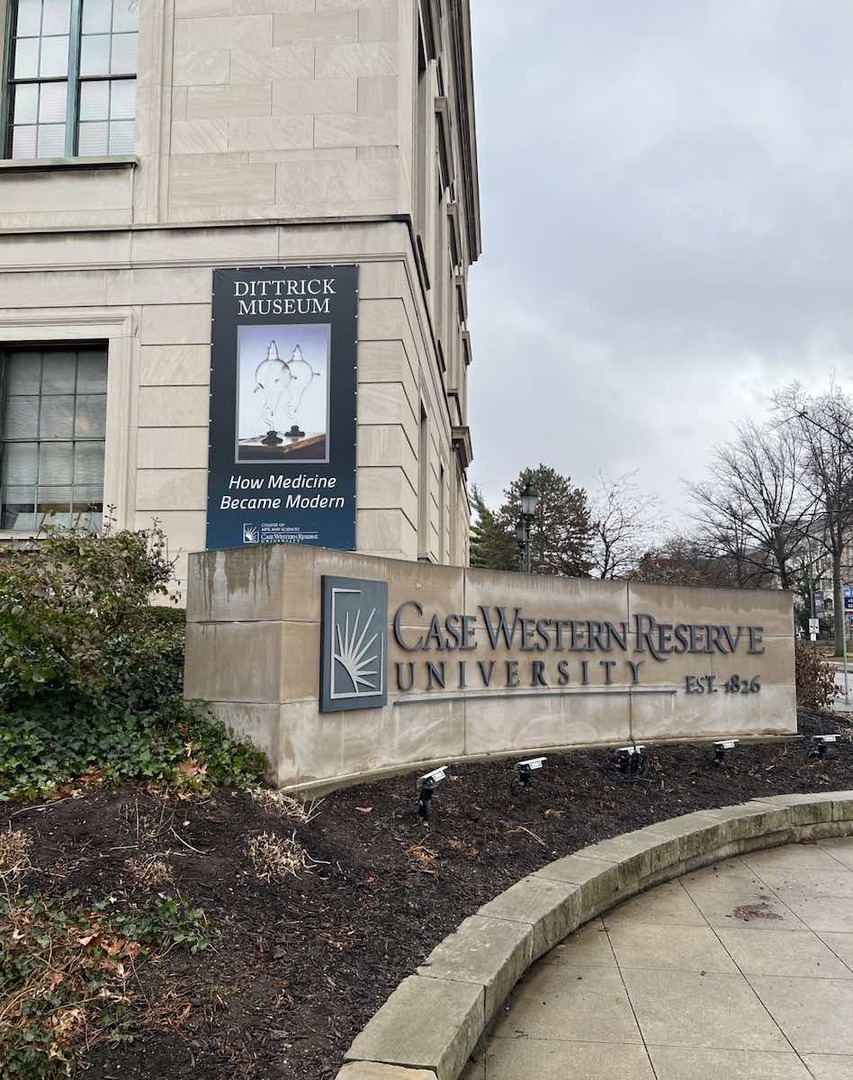
    <summary type="html"><![CDATA[<p><strong><em>In the late nineteenth century, the Cleveland Medical Library Association opened a fledgling museum "that represented a collection of heterogeneous articles stored in boxes, not arranged systematically, and not catalogued." By the twenty-first century, the Dittrick Medical History Center was recognized as one of the foremost medical museums. Its evolution unfolded alongside not only medical advances but also the city's broader growth as a healthcare hub.</em></strong></p><img src="https://clevelandhistorical.org/files/fullsize/ef7f6a8ea3687947e8d93b8f9918ab79.jpg" alt="Dittrick Medical History Center Today" /><br/><p>Medical history museums long existed in Europe prior to their origins in the United States, which occurred following the outbreak of the Civil War, and were initially used as educational centers for medical students. The Army Medical Museum was one of the United States’ first known medical history museums and was established to support the Union Army Medical Department’s library. Although the funding for the Army Medical Library decreased over the years, causing relocation and merging, other medical history museums in the U.S. somehow managed to survive and thrive, helping promote the continuance of medical education. For the surviving medical history museums, credit can surely be granted to institutional funding, but the real praise goes to the dedicated educators and collectors, the commitments made to their communities, and an ability to connect relevantly to an ever-changing audience. In its origins, the Dittrick Medical History Center, like the Army Medical Museum, struggled with financing and sustainability. The Dittrick’s history begins with a small library on Prospect Avenue for members and associates of the Cleveland Medical Library Association. Dudley P. Allen, one of the founders of the CMLA, was an avid collector, educator, and surgeon who collected medical books and instruments, which he would later donate to the museum. Upon his death, Allen’s will left a fund of roughly $200,000 to support the library’s maintenance. Allen’s generosity and commitment made him a most appropriate namesake for the medical library and museum on Western Reserve University’s campus, dedicated as the Allen Memorial Medical Library in 1926. Canadian physician Howard Dittrick came to Cleveland in the early twentieth century to work in healthcare and educate about medicine. Unsurprisingly, Dittrick connected with Allen and began researching and collecting medical instruments, tools, and practices from other parts of the world and previous time periods. Dittrick and Allen both aspired to turn the collection of “obsolete types of surgical instruments, microscopes, stethoscopes, diplomas, war material, and personal objects from prominent doctors” into a more robust museum, eventually for public audiences. Early nineteenth-century meeting minutes from the CMLA Executive Council reveal that the museum did not always exist on a large scale. Yet due to Dittrick’s advocacy, avid collecting, fundraising, and work cataloging the artifacts, a museum eventually gained traction within the CMLA community, which decided that the new space in the Allen Memorial Medical Library would have a specific section on the third floor established for a museum space. Although an achievement for Dittrick, it was not until 1934 that the museum, initially named the Museum of Historical and Cultural Medicine, earned enough respect and praise to become its own department. Dittrick continued to work avidly as the Director of the Museum of Historical and Cultural Medicine for about ten more years. In 1945, the CMLA decided to dedicate the Museum to Dittrick in honor of his fierce dedication and advocacy to make a museum of its kind flourish not only for the medical field but for the public. The Howard Dittrick Museum of Historical Medicine continued to grow and flourish over the years under new direction and guidance, all still with the spirit of Dittrick in mind. While museums like the Army Medical Museum were not able to sustain themselves, the Howard Dittrick Museum continued to receive donated artifacts, lend out collections, host guest lecturers, and keep its doors open for both research and public education. </p><p>Throughout the twentieth century and into the twenty-first, the Dittrick has mounted many permanent and temporary exhibits. Many of the exhibits have been timely. For the U.S. Bicentennial, the museum presented an exhibit that depicted health and medical care in the era of the American Revolution. Other, more permanent exhibits depict the history and improvement of medical technologies, including microscopes and stethoscopes. As the museum and its exhibits continued to adapt to changing times, such as online cataloging and technologically engaging activities, the Dittrick underwent another name change in 1998 to better reflect the mission and collections of artifacts, rare books, images, and other materials. Today, the Dittrick Medical History Center has one of the most prominent collections of contraceptives in the United States, as well as one of the largest collections of antique surgical instruments.</p><p><em><strong><a href="https://clevelandhistorical.org/items/show/985">For more (including 7 images) view the original article</a></strong></em></p>]]></summary>
    <published>2022-11-28T05:05:18+00:00</published>
    <updated>2026-04-17T19:17:42+00:00</updated>
    <link rel="alternate" type="text/html" href="https://clevelandhistorical.org/items/show/985"/>
    <id>https://clevelandhistorical.org/items/show/985</id>
    <author>
      <name>J. Wilson</name>
    </author>
  </entry>
  <entry>
    <title type="html"><![CDATA[Baldwin Bird Research Laboratory: Samuel Prentiss Baldwin, the &quot;Birdman&quot; of Cleveland]]></title>
    <summary type="html"><![CDATA[<img src="https://clevelandhistorical.org/files/fullsize/3add629dd12eee2880dfcd05acf9fad8.jpg" alt="The Baldwin Bird Research Laboratory" /><br/><p>Why have more people not heard of Samuel Prentiss Baldwin, the “Birdman” of Cleveland? Baldwin was born in 1868 and, as a young man, initially pursued a legal career. About midway through his life, however, he opted for a switch to ornithology. This by no means sprang out of nowhere; for much of his life, Baldwin had cultivated this interest during his spare time, inspired by the wonderful opportunities for studying birds in their natural woodland habitat on the eastern edges of Cleveland. It was around 1906, however, that he started down the path of ornithology on a professional level and truly devoted himself to this rather niche discipline. From here it was just a short step to establishing what would become his main haunt, the Baldwin Bird Research Laboratory on his Gates Mills property in 1914, taking advantage of its prime bird habitat.</p><p>In 1899, Samuel Prentiss Baldwin and his wife Lillian Hanna Baldwin, newlyweds, acquired a 450-acre forested farm called Hillcrest in the village of Gates Mills. It was at Hillcrest, as well as in the winter resort colony of Thomasville, Georgia, that the lawyer-turned-ornithologist began conducting his pioneering studies on wild birds. His achievements through his lab were considerable. Baldwin pioneered new methods for the study of bird migratory habits and physiology that became noted by the greater international ornithological community. Foremost among these achievements was his innovation of tracking bird migration through marked bird-banding. </p><p>Baldwin trapped and tagged birds before their migration, usually in their juvenile phase for the sake of their own well-being and for most efficient study, and tracking departures and re-arrivals and their timing so as to be able to understand breeding patterns. This enabled a new discovery: that the birds primarily studied, House Wrens, did not mate for life as previously hypothesized. Baldwin’s discovery was recognized by the Biological Survey of 1920. In addition to his pioneering research on bird migration and breeding patterns, Baldwin also made discoveries related to the regulation of their body temperature and further solidified that birds were, beyond a doubt, warm-blooded, just as their dinosaur ancestors were believed to have been. He used special lab tools to measure these temperatures not only from early adolescence in the bird life cycle, but from the embryo itself. To top that off, he published a book on that same topic, titled "Physiology of the Temperature of Birds."  </p><p>By the 1920s, his Baldwin Bird Research Laboratory on the Gates Mills property was a focal point in the rapidly developing field of ornithology. The vast majority of articles about Baldwin and his work are found in publications from the late 1920s through the 1930s, when he made his most substantial impacts in the field. His bird-banding innovation was sufficiently well-known for him to earn an honorary degree in Sciences from Dartmouth College in New Hampshire. He also was one of five American delegates to the Canadian National Museum exhibition in 1926. Finally, he was instrumental in collaborative work with Western Reserve University in the study of and experimentation on bird embryos. In his time, Baldwin was a figure of no small importance in the world of ornithology – and even science in general – and deserves more modern-day recognition. </p><p>Following Baldwin’s death in 1938, his wife Lilian deeded the S. Prentiss Baldwin Bird Sanctuary in his memory to the village of Gates Mills. Later, in the 1960s, an ordinance designated all of Gates Mills a bird sanctuary, and although a Cardinal appears on the village's "Bird Sanctuary" signs that mark the village limits, Samuel Prentiss Baldwin might wish it were a Wren.</p><p><em><strong><a href="https://clevelandhistorical.org/items/show/930">For more (including 10 images) view the original article</a></strong></em></p>]]></summary>
    <published>2020-12-13T22:42:32+00:00</published>
    <updated>2026-04-17T19:17:42+00:00</updated>
    <link rel="alternate" type="text/html" href="https://clevelandhistorical.org/items/show/930"/>
    <id>https://clevelandhistorical.org/items/show/930</id>
    <author>
      <name>Michael Finocharo</name>
    </author>
  </entry>
  <entry>
    <title type="html"><![CDATA[Materials Park: The Inventive Headquarters of the American Society for Metals]]></title>
    <summary type="html"><![CDATA[<img src="https://clevelandhistorical.org/files/fullsize/0495f8370e24dd460dbe38ac3af7513a.jpg" alt="The Geodesic Dome As It Appears Today" /><br/><p>Just 20 miles east of Cleveland, in Novelty, Ohio, a massive architectural marvel sits, enveloping an office building. An immense open-lattice geodesic dome covers the headquarters of ASM International. ASM, which stands for the American Society of Metals (originally known as the Steel Treaters’ Club), was founded in 1913 in Detroit, Michigan. The Society would subsequently grow into one of the largest scientific societies in the world, with over 50,000 members internationally. Known as ASM International today, the headquarters are situated on a campus called Materials Park that sits on land originally belonging to one of the founding members of the American Society of Metals, William Hunt Eisenman.</p><p>The dome and grounds are the culmination of the work of four men: the aforementioned Eisenman, John Terence Kelly, Thomas C. Howard, and R. Buckminster Fuller. Eisenman was not only a founding member of ASM but served as its National Secretary and first Managing Director; Fuller, a futurist and creator of the geodesic dome; Kelly, a modernist architect; and Howard, an engineer. Each was skilled in their respective crafts.</p><p>R. Buckminster Fuller was born in Milton, Massachusetts, in 1895. He began his studies at Harvard University in 1913 but was ultimately expelled for excessive socializing and missing his midterm exams. He then moved to Canada to work at a mill, where he showed an aptitude for working with machinery. During the course of his lifetime, he went on to hold 28 patents, author 28 books, and receive 47 honorary degrees. </p><p>The geodesic dome became Fuller's focus in 1947. The geodesic dome, which Fuller patented in 1954, uses tension to hold its shape; the structures need no support internally and are some of the strongest and lightest made of metal. ASM's dome, also called a space lattice, is 103 feet high and 274 feet in diameter. It weighs 80 tons and has 65,000 parts. Fuller's ASM dome anticipated the internationally famous geodesic sphere, Spaceship Earth at Disney's Epcot Center in Florida by more than two decades. This attraction not only built upon Fuller's innovation but even its name owes a debt to him. Indeed, Fuller argued in the 1960s, "We are all astronauts on a little spaceship called Earth," and he believed that by being better able to visualize the entire planet, humans might better address the global challenges of life on this “Spaceship Earth.”</p><p>Cleveland architect John Terence Kelly, born in 1922, grew up in Elyria, Ohio. He received a B.A. in Architecture from the Carnegie Institute of Technology and an M.A. in Landscape Architecture from Harvard University. Kelly was inspired by Fuller’s geodesic dome and used Fuller’s model in his design. He enlisted the help of Fuller to design the dome. Thomas C. Howard, born in 1931, had worked with Fuller and others at Synergetics, a firm founded in Raleigh, NC's Research Triangle Park in 1955. After his work on the ASM dome, Howard designed the Climatron at the Missouri Botanical Garden (1960) and Churchill Pavilion at the New York World's Fair (1964), now the Queens Zoo Aviary.</p><p>Completed in 1959, ASM’s headquarters design was regarded not only as modern but state of the art. ASM International is known for its innovation in science and engineering. This is extremely evident not only in ASM’s mission and achievements, but also in its physical office building. The design of the office building echoes the very nature of ASM International’s vision: “We are dedicated to informing, educating, and connecting the materials community to solve problems and stimulate innovation around the world.” The building showcases various types of metals in many aspects of its design. The three-level office building houses 90 staff members in its 50,000 square feet. The building uses an emphasis on metal in many aspects of its design. As noted by ASM, “Every door on the lobby level is stainless steel; the ‘floating’ main stairway is also of stainless steel, hung dramatically by the use of steel rods running the height of the three levels. Copper sheeting frames the elevator.”</p><p>The designers and builders of ASM’s headquarters were ahead of their time in terms of sustainability and green building practices. Many of the features the architects incorporated into the project would be recognized today within the “green” (environmentally sound) design field. The focus on environmental impact truly shaped the way ASM International designed and built its office building. While environmentally conscious and sustainable design may be at the forefront of today’s architectural achievements, this was not necessarily true at the time of the campus’s construction.</p><p>Incorporating sustainable building materials like those made from recycled resources, creating indoor environments by reducing air pollution and lowering emissions, and featuring landscaping options that reduce water usage by using plants that can survive with limited watering are all features that may be commonplace now. Environmental awareness in the 1950s and 1960s, while just barely starting to blossom in the minds of the public, was not what it is today. There wasn’t as much knowledge, and there certainly wasn’t as much data. </p><p>These facets of ecologically and environmentally conscious design can be seen in many features in ASM International’s office building and Materials Park. The office building is heated during the winter months using hot water carried through metal tubes near the windows and it is kept cool during the summer using aluminum screens. The building also features a roof covered in grass. </p><p>The building was registered as a historic landmark in the state of Ohio and was listed on the National Register of Historic Places in 2009. It went through a major renovation project, completed in 2011, but “because of the Historic Landmark designation, the building had to be returned as closely as possible to its original design.” Original features, “including 32 original Steelcase chairs, brass metal screens, a conference room table with stainless steel ASM medallion inlays, and door handles and hinges designed by Kelly,” as well as light fixtures also designed by Kelly, had to be refurbished. Updates in regard to sustainability were also considered, with lighting fixtures being retrofitted with LED lightbulbs.</p><p>The designers and architects behind the Materials Park, office building, and the land surrounding ASM International’s headquarters knew exactly how to embody the vision of the Society in their construction. The four men responsible for creating such a marvel established a legacy that has truly made its mark east of Cleveland. The use of green building practices was not typical of the time period, but that didn’t stop the creators from utilizing things like water-based heating, sunshields for cooling, and arranging for protection of the land around the building. </p><p>More than fifty years on, with a National Register of Historic Places accreditation in its possession, and a recent renovation of the office building, ASM International’s headquarters is set to continue its legacy far into the future. A hidden gem, only 20 miles east of Cleveland, the Materials Park of ASM International’s novel headquarters is a wonderful example of the geodesic dome and its connections to the greater world surrounding it. </p><p><em><strong><a href="https://clevelandhistorical.org/items/show/925">For more (including 9 images) view the original article</a></strong></em></p>]]></summary>
    <published>2020-12-13T14:56:04+00:00</published>
    <updated>2026-04-17T19:17:42+00:00</updated>
    <link rel="alternate" type="text/html" href="https://clevelandhistorical.org/items/show/925"/>
    <id>https://clevelandhistorical.org/items/show/925</id>
    <author>
      <name>Ally Jagoda</name>
    </author>
  </entry>
  <entry>
    <title type="html"><![CDATA[The Old Cleveland Aquarium: &quot;Brick By Brick... Fish By Fish... Drop By Drop&quot;]]></title>
    <summary type="html"><![CDATA[<p><strong><em>Cleveland's first aquarium, located in Gordon Park, was the product of a unique collaboration of public agencies and citizen volunteers. With support from the City and the Cleveland Museum of Natural History, volunteers fashioned the aquarium from a former bathhouse-turned-museum. Although it operated for barely a generation, the old Cleveland Aquarium played a role in elevating the stature of aquariums as serious marine research centers.</em></strong></p><img src="https://clevelandhistorical.org/files/fullsize/15c4fb1b8d86da8218e5c1a2db4d598d.jpg" alt="Cleveland Aquarium Expansion Plans" /><br/><p>The <em>Cleveland Plain Dealer</em> announced the grand re-opening of the Cleveland Aquarium in its September 5, 1954 edition, citing it as the “most public institution of its kind.” The unique aspect of the Aquarium’s development in Gordon Park was the “brick by brick... fish by fish... drop by drop” building of the facility by the Cleveland Aquarium Society, Cleveland Museum of Natural History (CMNH), as well as volunteer "sportsmen, amateur marine biologists, teachers, housewives, and youngsters." The effort began in 1954 when the building, utilized as a Trailside Museum, was threatened with closure. Aquarium Society members contributed material, labor, and fundraising efforts to retrofit the trailside facility to house a public aquarium.</p><p>Gordon Park had evolved from a bathing beach attraction on Cleveland’s east side along Lakeshore Boulevard during the 1940s and 1950s. The construction of an improved Memorial Shoreway (later part of Interstate 90) split the park into a lakefront boat access area and an inland park area with sports fields and picnic areas. The limited beach access and usage led the former bathhouse on the inland grounds to be converted to a Trailside Museum by CMNH in 1943. It housed natural history specimens of the area, including several small aquariums containing fish from Doan Brook and Lake Erie. The opportunity to create a large, dedicated, public aquarium became a reality with the cooperative efforts of the city, CMNH, and the volunteers who planned and built the facility to house local aquatic specimens as well as tropical species in a controlled habitat. Director William Kelley characterized the Cleveland Aquarium as an applied research center—as opposed to a “fish circus”—and hoped to continue the research theme to influence other aquaria around the world. </p><p>By the time the grand opening occurred, existing display tanks were renovated and ten 500-gallon tanks were installed to welcome aquatic life to Cleveland’s lakefront. The early years of the aquarium saw the expansion of the aquatic life collection via ‘expeditions’ to the Florida Keys. Staff and volunteers organized trips and contributors to harvest specimens and safely ship them back to Cleveland to include in the collection. During one 1955 "safari," aquarium staff returned with a baby shark, a moray eel, a sea turtle, a porcupine fish, and a spiny box fish among others. The staff was challenged to ship the specimens in their habitat and to acquire 600 gallons of ocean water for their new home. This challenge was met by the Aquarium staff who later improved upon a German colleague's formulated substitute seawater and dubbed it Instant Ocean. In 1964, Director Kelley left the Aquarium and patented the successful compound and founded Aquarium Systems, Inc. to market Instant Ocean and continue refinements here and in Europe for international distribution.</p><p>Throughout these developmental years, the Aquarium distinguished itself as a research facility beyond the role of museum collections and display of aquatic life. The growth and success of the Aquarium program was well received by the public and private funders alike. Museum visitors grew annually and foundation and corporate contributors supported the efforts. By the mid 1960s, these successes called for the expansion or development of a larger aquarium in Cleveland. After several proposals to relocate the facility, an expansion of the existing facility was agreed upon and a $300,000 grant from the Leonard C. Hanna Jr. Fund supported the tripling of the existing site. The continued growth of the Aquarium included cooperative efforts with universities and other aquarium programs. These initiatives enhanced its stature in the world of aquatic science. The species collection represented worldwide contributions of varieties of freshwater and ocean specimens.</p><p>The operation of the Aquarium was influenced by the nature of its creation. The contributions of volunteers and the cooperation of the CMNH to operate the Aquarium prompted the City of Cleveland to support the effort—Cleveland owned Gordon Park where the Aquarium stood. Annual reports indicated operating costs of $20,000-$30,000 with the city underwriting $17,000 and admissions, CMNH support, and occasional foundation contributions to cover costs. The revenue routinely fell short of expenses despite the increased annual attendance and popularity of the attraction. The multi-faceted budget became a political process. By 1961, CMNH began to study the option to separate the operation of the Aquarium and discussions began about its expansion. Throughout the 1970s operations persisted and the city maintained its annual $17,000 subsidy despite mounting annual deficits reaching $140,000 culminating in a showdown with Cleveland Mayor Dennis Kucinich in 1979. Increased external funding support and city council’s override of the mayor’s veto of increased admission fees kept the aquarium open for the foreseeable future. As the 1970s drew to a close, ’Moses,' the biggest and oldest resident grouper, died, perhaps signaling the aquarium's fate.</p><p>The early 1980s brought additional debate with the city which would decide the Aquarium’s future. Plans brought by private developers to relocate the Aquarium with other maritime museums in the Nicholson building (East 55th at Lake Erie shore) conflicted with the city’s proposal to develop the lakefront at East 9th Street to include a new aquarium. The administration of Mayor George Voinovich prevailed to support the downtown plan which never materialized as announced—instead the Rock and Roll Hall of Fame and the Great Lakes Science Center occupy the space. By 1985, structural problems due to saltwater corrosion emerged at the Gordon Park facility. Collapsed ceiling panels forced its closure in June 1985 and further negotiations removed the Cleveland Aquarium’s contents and program from CMNH oversight at Gordon Park to the Cleveland Metroparks Zoo in 1986 with continued hope of a new facility at the Inner Harbor. Discussions among aquarium supporters remained active through 2009, when developer Jeff Jacobs announced a project partnering with external developers and consultants to locate a new aquarium in the downtown Flats.</p><p><em><strong><a href="https://clevelandhistorical.org/items/show/874">For more (including 11 images) view the original article</a></strong></em></p>]]></summary>
    <published>2019-10-09T01:05:59+00:00</published>
    <updated>2026-04-17T19:17:42+00:00</updated>
    <link rel="alternate" type="text/html" href="https://clevelandhistorical.org/items/show/874"/>
    <id>https://clevelandhistorical.org/items/show/874</id>
    <author>
      <name>Jim Lanese</name>
    </author>
  </entry>
  <entry>
    <title type="html"><![CDATA[Look About Lodge: The Cleveland Natural Science Club]]></title>
    <summary type="html"><![CDATA[<p><strong><em>Look About Lodge in Cleveland Metroparks South Chagrin Reservation is a symbol of a time when General Science was introduced into the curriculum of Cleveland schools.  The lodge offered a home to science educators entrenched in a battle against juvenile delinquency and public perceptions of a failing educational system.</em></strong></p><img src="https://clevelandhistorical.org/files/fullsize/fdd5a5819eaa4bcac1f6cb2b0938c6aa.jpg" alt="The Science Club Receives a Telescope" /><br/><p>On June 29, 1927, the <em>Cleveland Plain Dealer</em> proclaimed the death of a "Schoolboy Reign of Terror" at the hands of science. Quoting the principal of Sterling Elementary School, located at the heart of the Cleveland's notorious "roaring third" police district, "Last year, in just a few months, I confiscated from small boys twenty-eight weapons of all varieties…Most of these were dirks made of cast-off butcher knives…Fights were uppermost in the mind of every boy." All had changed, according to the newspaper: "today harmony reigns. Fighting has ceased… Science wrought the change. A course in natural science has been running all year, and the children have become so interested that they no longer want to fight.”
Ellis Persing, associate professor at the Cleveland School of Education, helped institute and guide this scholastic experiment. Persing not only aided the training of teachers in offering courses on plants, birds and General Science, but personally taught the delinquent schoolboys to make electric motors, radios and telegraph instruments. As chairman of the Cleveland Schoolmasters Club's science committee, he worked to institute a twelve-year program of science study in public schools such as Sterling Elementary School. The curriculum of public schools, their administration, and the profession of teaching was undergoing massive changes in Cleveland and the country. </p><p>As part of this transformation, efforts were made in Cleveland during the 1920s to develop courses in General Science and introduce them into lower school grades. Persing, with a cadre of former university students, established the Cleveland Natural Science Club in 1925 to promote this cause. Founded on both an enthusiasm for and belief in the importance of science education, the club continued to steadily attract teachers and those interested in nature study. </p><p>Expanding in membership and purpose during the first half of the 1930s, the growth of the Cleveland Natural Science Club culminated in the construction of the current Look About Lodge in the Cleveland Metropolitan Park District's South Chagrin Reservation. The clubhouse is a symbol of a time when science education was pitted in a battle against knife wielding juveniles and perceptions of a faltering educational system. The club provided teachers both an opportunity for continued professional development and resources to promote change in Cleveland's public education system.
Persing, accompanied by peers throughout the Midwest, committed his time and labors to promote the inclusion of science courses at public schools. In a society radically altered by war and technological advances, proponents of revising school curriculum believed that an educated public needed the ability to think scientifically in order to solve modern world problems. Academics such as Persing provided specialized training to teachers, who incorporated biology, elementary science, and revamped nature study courses into public schools during the 1920s.</p><p>Through his work at the Cleveland School of Education, the associate professor connected with like-minded educators wishing to include natural sciences in their classrooms. In 1924, Persing and nineteen students formed the Cleveland Nature Club as an extension of their studies; Persing met with the teachers to hold informal discussions and perform fieldwork. Alumni of the group reformed as the Cleveland Natural Science Club the following year with the goal of promoting science education in classrooms, promoting the conservation of natural resources, and cultivating a public appreciation of the outdoors. Meetings and field trips offered members continued education, specialized training and hands-on experience to aid in professional development. Although composed mostly of women teachers, the club also attracted persons tied to outdoor education and public service clubs such as the Boy Scouts.
By 1931, the group grew to over 100 members. Meetings were held at libraries, homes and university buildings, but much of the club’s activities and fieldwork led them into the Cleveland Metropolitan Park District. The prior year, they helped develop and maintain nature trails in the Bedford and South Chagrin Reservations. Through the initiative of Persing, an arrangement was made with the Cleveland Metropolitan Park Board for the club to create its first headquarters in the South Chagrin Reservation. In return for the sole use of an old home located on parkland that was known as the Winslow farmhouse, the Cleveland Natural Science Club agreed to maintain the building and provide free educational programming to the public. </p><p>The club enthusiastically took on its new responsibilities. In addition to roofing, remodeling and repairing the ragged building, the grounds were landscaped with a Colonial Garden and private educational nature trail. Equipped with a natural history library, small museum, and unparalleled outdoor research facility, this shrine for nature study offered the small group of educators a space for recreation, study and club meetings. The small farmhouse, christened the Look About Lodge, brought to fruition the aims of the Cleveland Natural Science Club. Teachers of nature study and science were provided a home from which they could both share and expand their knowledge, experience and resources. The club would continue to grow as a place of interaction for educators, even as the successor institution to the Cleveland School of Education was defunded in 1936 by the Board of Education due to lack of available funds.
While maintaining its importance as a place for nature study, the growing popularity of both Look About Lodge and Cleveland’s park system during the depression era brought in new members. Although still composed mostly of female teachers, the professions and gender of club members diversified a bit. The small building soon proved inadequate for the growing club. With the assistance of the Cleveland Metropolitan Park Board, the Cleveland Natural Science Club secured a contract for the construction of a new Look About Lodge through the Works Progress Administration. </p><p>The lodge, completed in 1938, was fashioned to meet the needs of educators and natural history students. The design of the new structure more fully realized the club’s ambitions and expanding breadth of member interests. While an improvement in terms of available space, resources and layout, the building retained key features of the club's original headquarters: a museum, a library of scientific books, recreation grounds, and areas for study or group meetings. Its purpose also remained the same. Look About Lodge provided educators a place to explore and study the natural world in order that they may pass their scientific knowledge on to the public.</p><p><em><strong><a href="https://clevelandhistorical.org/items/show/689">For more (including 14 images&#32;&amp;&#32;6 audio files) view the original article</a></strong></em></p>]]></summary>
    <published>2014-12-22T02:36:19+00:00</published>
    <updated>2026-04-17T19:17:40+00:00</updated>
    <link rel="alternate" type="text/html" href="https://clevelandhistorical.org/items/show/689"/>
    <id>https://clevelandhistorical.org/items/show/689</id>
    <author>
      <name>Richard Raponi</name>
    </author>
  </entry>
  <entry>
    <title type="html"><![CDATA[John H. Glenn Research Center at Lewis Field: Leading the Way in America&#039;s Early Space Race]]></title>
    <summary type="html"><![CDATA[<p><strong><em>Cleveland's aeronautical and rocket laboratory provided a critical boost for moon-bound astronauts during the 1960s.</em></strong></p><img src="https://clevelandhistorical.org/files/fullsize/ad4af788ff7e152bd06c57f855f5e5aa.jpg" alt="Aerial View of the Lewis Center, 1958" /><br/><p>The NASA Glenn Research Center opened west of Cleveland, adjacent to Cleveland Hopkins International Airport, in 1941. Initially called the Aircraft Engine Research Laboratory, the facility first served as a National Advisory Committee for Aeronautics (NACA) research laboratory and was responsible for key aeronautic jet propulsion advancements during World War II. During this period, using wind tunnel testing, NACA developed airfoil shapes for wings and propellers, which simplified aircraft design. The shapes eventually found their way into the designs of many U.S. aircraft of the time, including a number of important World War II-era aircraft, such as the P-51 Mustang. </p><p>NACA existed since World War I and responded primarily to military aviation needs and challenges. The success of the Cleveland lab earned it a bright future with the advent of rocketry initiatives during the post war years. Abe Silverstein was appointed Director of Research for the lab in 1949. Over several years, he organized the program, personnel, and facility to focus upon guided rocket propulsion and the development of hydrogen and nuclear fuels for rockets. In 1957, the laboratory was recognized as a leader in these systems and the October launch of <em>Sputnik</em> propelled America’s entry into the space race powered by the rocketry work at the lab and at Plumbrook—a partner facility near Sandusky, Ohio.</p><p>In October, 1958 a legislative act was passed creating the National Aeronautics and Space Administration (NASA). As a result, the facility was absorbed by NASA and renamed the NASA Lewis Research Center in honor of George Lewis, NACA’s Director of Aeronautical Research. NACA and its missions and projects were incorporated into the new agency. The new agency would be responsible for civilian human, satellite, and robotic space programs, as well as aeronautical research. Abe Silverstein joined NASA headquarters in Washington and brought broad influence upon formative NASA policies and projects. During the 1960s and 1970s, the Lewis Research Center built and utilized the Rocket Engine Test Facility (RETF) to conduct experiments and develop technologies in support of the space program for the Mercury, Gemini, and Apollo programs to reach the moon and the ensuing STS (Space Shuttle) program. The center played an important role in perfecting the use of liquid hydrogen upper stage rocket fuel used in the space missions leading to the lunar landings beginning in 1969. </p><p>Completed in 1966, the Zero Gravity Research Facility (Zero-G) at Lewis has also been utilized in support of space flight components and fluid systems in a weightless or microgravity environment. The Zero-G is a ground based microgravity facility, the largest of its kind in the world. It is one of two 432 feet drop towers located at NASA Glenn. The facility is currently used by NASA-funded researchers from around the world to study the effects of microgravity on physical phenomena such as combustion and fluid physics, to develop and demonstrate new technology for future space missions, and to develop and test experiment hardware designed for flight aboard the International Space Station and future spacecraft.</p><p>The RETF earned a National Historic Landmark designation in 1984 to acknowledge its developments during the space missions of the 70’s and 80’s. However, neighboring airport expansion forced its closure in 1995 and demolition in 2003, and the withdrawal of its National Historic Landmark. The Zero-G, however, continues to hold the designation of a National Historic Landmark. In 1999, the Lewis Research Center was renamed NASA John H. Glenn Research Center at Lewis Field in honor of Ohio Senator John Glenn, the first American astronaut to orbit the earth. Today, NASA Glenn Research Center continues to conduct experiments to support the aeronautics and aerospace industries.</p><p><em><strong><a href="https://clevelandhistorical.org/items/show/60">For more (including 8 images&#32;&amp;&#32;1 video) view the original article</a></strong></em></p>]]></summary>
    <published>2010-09-22T11:17:43+00:00</published>
    <updated>2026-04-17T19:17:37+00:00</updated>
    <link rel="alternate" type="text/html" href="https://clevelandhistorical.org/items/show/60"/>
    <id>https://clevelandhistorical.org/items/show/60</id>
    <author>
      <name>Jim Lanese</name>
    </author>
  </entry>
  <entry>
    <title type="html"><![CDATA[Cleveland Museum of Natural History: From Humble Shack to Venerable Institution]]></title>
    <summary type="html"><![CDATA[<img src="https://clevelandhistorical.org/files/fullsize/cmnh1_ae14055c96.jpg" alt="Happy the Haplocanthosaurus, ca. 1977" /><br/><p>The Ark was a small, two-room frame house located on the northeast side of Public Square. It housed taxidermy ranging from birds to reptiles and mammals, which led to its being called the Ark in reference to the biblical story of saving the world's fauna from the great flood. The Arkites, as the group of 26 young men who frequented the Ark came to be known, were led by William Case, mayor of Cleveland from 1850 to 1851, and his brother Leonard Case Jr. Their father Leonard Case Sr. had started the Ark in the 1830s as a place to relax. After buying the property, he let his two sons take charge of the building and began to fade from popular society because of health issues. William Case worked in his father's companies but spent much of his time at the Ark. The Ark is important because there were no museums in Cleveland during this time. The Arkites collected, researched, and discussed findings with each other. As time passed, other societies were interested in representing Cleveland history and the Arkites were the most knowledgeable within the city. They began to present papers and work with others to curate and show their research. William Case's taxidermy bird collection is still on display in the Cleveland Museum of Natural History (CMNH) today.</p><p>CMNH considers the Ark as a part of its founding because of the work that was done by the Arkites. The Ark moved into adjacent Case Hall in 1876 after its building was demolished to build a new post office. Many other societies also used Case Hall, including the Kirtland Society, whose leader Jared Kirtland was also an Arkite. Case Hall lasted until 1916, when it too gave way to the new Cleveland Public Library.</p><p>When the Natural History Museum was established in 1920, it was located in the Lennox Building at Euclid Avenue and East 9th Street. The museum first moved down Euclid Avenue onto Millionaires Row in the Leonard Hanna Mansion. The mansion held many exhibits but most notably many of them were from the original Arkites, including William Case's birds as well as many exhibits donated by the Kirtland Society  in 1920. As the museum began to gather more and more collections, such as Jeptha Wade II's precious stone collection and discoveries of new animals and plants from the a safari that the museum had sponsored in Kenya in 1930, eventually it either had to expand or find a larger building.</p><p>The choice was made for the museum when the Hanna mansion was in the path of a planned highway. In 1958 the museum moved to Wade Park, where it is still located today. Since that time, the museum has enjoyed many achievements. In 1971 the CMNH sponsored a team of zoologists to breed bald eagles, which were threatened with extinction and had only a handful of working nests. They were the first team ever to artificially inseminate a bald eagle and repopulated the area and others with the national bird.</p><p>The CMNH's accomplishments built upon a firm foundation. The Arkites, with the Case family at its center, set the stage for this venerable institution in both spirit and collections. Thus, as this nationally significant museum looks toward its official centennial, it must also cast a glance back-more than 80 years before its official inception-to the humble shack that started it all. </p><p><em><strong><a href="https://clevelandhistorical.org/items/show/41">For more (including 9 images&#32;&amp;&#32;5 audio files) view the original article</a></strong></em></p>]]></summary>
    <published>2010-09-18T20:58:32+00:00</published>
    <updated>2026-04-17T19:17:36+00:00</updated>
    <link rel="alternate" type="text/html" href="https://clevelandhistorical.org/items/show/41"/>
    <id>https://clevelandhistorical.org/items/show/41</id>
    <author>
      <name>Emily Splain</name>
    </author>
  </entry>
  <entry>
    <title type="html"><![CDATA[Case Western Reserve University: The Evolution of a Renowned University]]></title>
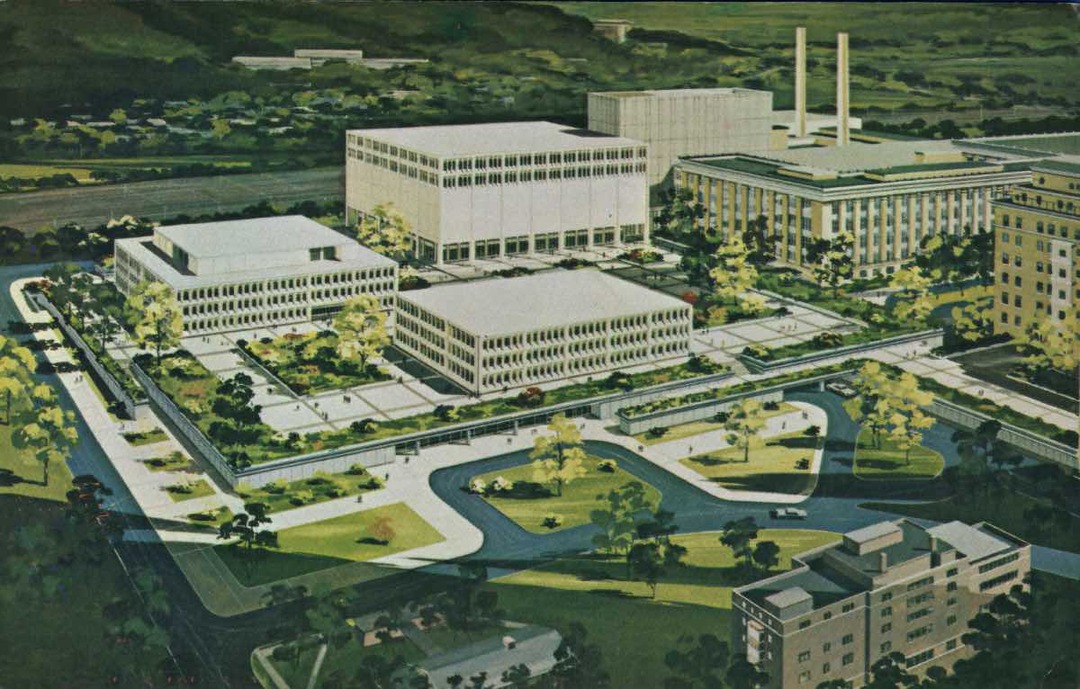
    <summary type="html"><![CDATA[<p><strong><em>Two colleges growing in parallel through the nineteenth century achieved a cooperative union in 1967 and emerged as a premier educational institution in Cleveland and beyond.</em></strong></p><img src="https://clevelandhistorical.org/files/fullsize/ba8a3ad4174ab34278f7d98d8eb8d28c.jpg" alt="Health Science Center" /><br/><p>Case Western Reserve University traces its roots to Western Reserve College, founded in Hudson, Ohio, in 1826.  Three faculty members began instruction in theology, ancient languages, and mathematics/natural philosophy and began to graduate students in 1830. Western Reserve grew up in Hudson through national economic hardships and many political and academic challenges. Abolitionism, the Civil War, and the education of women were among the issues that shaped the College in the mid to late 19th century. Presidents George Pierce, Henry Hitchcock, and Carroll Cutler guided the development and logistics of Western Reserve’s curriculum, facilities, and finances from 1834 to 1886. The Cleveland Medical College was founded in 1843 in downtown Cleveland as an autonomous department of Western Reserve College. Among the growth in faculty during this time, Edward Morley was appointed as a Professor of Chemistry in 1869 (remaining until 1906) as a leader in chemistry and physics instruction. Economic and population growth in northern Ohio encouraged the school’s leaders to consider the metropolitan area and its resources for a relocation of the College from Hudson to Cleveland. Industrialist Amasa Stone financed the college’s move to Cleveland’s University Circle in 1880. The College moved its programs to newly constructed buildings along Euclid Avenue adjacent to the Case School of Applied Science and within six years established Adelbert College (for men), the College for Women and embraced affiliation with Music and Art programs in the locale.   </p><p>The Case School of Applied Science was the brainchild of philanthropist Leonard Case, Jr. He financed the founding of the school in 1880 originally holding classes in the family home near Cleveland’s Public Square until construction of buildings along Glenwood Street (later becoming East Boulevard, then Martin Luther King Drive) in University Circle were completed. Western Reserve and Case became neighbors in 1882, and the schools began to share relationships through faculty research and program cooperation. CWRU historian, C. H. Cramer noted that in 1880, “the two schools agreed on ‘friendly cooperation’ —and for some time there was good will and good spirit between the institutions.”  A fire at Case Main building prompted Adelbert College to provide rooms and equipment for Case programs. One of the first appointments to the Case faculty was physicist Albert Michelson. The two schools’ relationship became the setting for the groundbreaking Michelson-Morley Experiment, an 1887 study which laid the groundwork for modern theories of physics involving the measurement of light. Four presidents: Cady Staley, Charles Howe, William Wickenden, and T. Keith Glennan guided Case School Applied Science into Case Institute of Technology by 1947. Increased cooperation and federation with Western Reserve University from 1886 to 1966 was evident despite faculty, student, and alumni resistance to any discussions of an institutional merger. </p><p>Meanwhile, WRU continued growing through the decades and into the 20th century with the addition of Schools of Law, Dentistry, Graduate Programs, Pharmacy, Applied Social Sciences, Nursing, Education, Architecture, Business/Management, and Library Science by 1941. Cleveland College of Western Reserve University (and affiliated with Case) was established on Public Square in the Chamber of Commerce Building to provide downtown access to programs during days and evenings. At Case, under President Wickenden, the curriculum was molded to include humanities as part of the engineering program. Also notable was the admission of women into undergraduate programs in the sciences at Case during 1943 to bolster the Army and Navy workforce during the war. Women continued to earn degrees through 1954 when admissions ceased until 1960 at which time women were welcomed to all science and engineering programs permanently. Upon the aftermath of World War II, Keith Glennan, a businessman, assumed the presidency of Case Institute of Technology. He guided an era of unprecedented growth and expansion of the school and its programs via newfound support from foundations and government contracts. Glennan twice used leaves of absence to join the Atomic Energy Commission and to head NASA during his tenure which expanded his university’s exposure and engagement. Glennan also endorsed the notion that engineers and technologists needed to broaden their knowledge of human and social behavior and, consequently, expanded the curricula to that end. He noted that one economical method to implement this educational approach was to federate with “the complementary institution that was within eyesight of the Case administration building.” Glennan was also influenced by the merger of Fenn College of Engineering with Cleveland State University which eliminated a private engineering school in Cleveland and by the insights of the Carnegie Foundation president John Gardner concerning the advantages of a merged university in Cleveland. He and WRU president John Millis began regular meetings to discuss the possibilities of a federation or merger and sought consultant studies and expert input concerning the prospect.</p><p>The name Case Western Reserve University was derived from the merger of Western Reserve University and Case Institute of Technology. The process culminated a year-long administrative consolidation after both institutions' trustees’ approved merger plans. The plan required equal partnership and status of Case and WRU, despite their respective size differences and renewed vocalized resistance by faculty and alumni. Robert Morse succeeded Glennan as president of Case on July 1, 1966, and one year later became president of Case Western Reserve University. Eight more presidents would lead the institution through 2017 which marked the 50th anniversary of the merger and a celebration of the benefits and growth of the University and its developmental impact upon the University Circle region of Cleveland. </p><p><em><strong><a href="https://clevelandhistorical.org/items/show/37">For more (including 12 images&#32;&amp;&#32;4 audio files) view the original article</a></strong></em></p>]]></summary>
    <published>2010-09-18T14:21:26+00:00</published>
    <updated>2026-04-17T19:17:36+00:00</updated>
    <link rel="alternate" type="text/html" href="https://clevelandhistorical.org/items/show/37"/>
    <id>https://clevelandhistorical.org/items/show/37</id>
    <author>
      <name>Jim Lanese</name>
    </author>
  </entry>
  <entry>
    <title type="html"><![CDATA[Cleveland Electric Illuminating Co.: &quot;Convenience-Cleanliness-Brightness-Luxury&quot;]]></title>
    <summary type="html"><![CDATA[<img src="https://clevelandhistorical.org/files/fullsize/da9d9b33fcf9bd94db235ca97999c0a4.jpg" alt="Charles F. Brush" /><br/><p>The firm founded in 1892 as the Cleveland General Electric Co. by Charles F. Brush became the Cleveland Electric Illuminating Company (C.E.I.)  just two years later and established its headquarters offices in the Cuyahoga Building on Public Square. C.E.I.'s stint in the Cuyahoga Building was short-lived, however. The company transferred its headquarters into the 75 Building, on the northwest corner of Public Square in 1914. C.E.I. outgrew its facilities at 75 Public Square as the demand for electrical power rose, and in 1956 broke ground to construct its own Illuminating Building right next door at 55 Public Square. C.E.I. signed a fifteen-year, $408,000 lease to occupy the first five floors of the Illuminating Building. Despite occupying all fourteen floors of the old 75 Building, the Illuminating Building offered 17% more space on those initial five floors alone. The monumental 1958 move included some 800 dolly-loads of office equipment and an additional 500 desks. Nevertheless, the move was completed in less than eighteen hours as workers never stepped foot outdoors thanks to existing pedestrian tunnels connecting one building to the other.</p><p>At the turn of the twentieth century, C.E.I. ran advertisements offering to wire homes with electricity for a price of $38.50, touting the benefits of domestic electricity, "Convenience-Cleanliness-Brightness-Luxury."   Eventually, the company became famous for its 1940s-1960s ad campaign, which promoted Cleveland as "the best location in the nation." This ad campaign aimed to attract major industries to Cleveland, and promoted C.E.I.'s contribution to the overall welfare of Northeast Ohio by emphasizing its own role in expanding business, industry, job opportunities, and improving the overall quality of life.</p><p>A massive workforce strike erupted in the midst of the "best location in the nation" ad campaign. On April 24, 1957 the members of Utility Workers Local 270 voted a resounding 1,754-63 in favor to strike against C.E.I.   Workers demanded that C.E.I. do away with its right to make job changes and transfers without informing the union, as well as re-negotiate wages to obtain a "substantial" increase. The strike ended on May 7 after a grueling fifteen-hour negotiation. The fifteen-day strike became the longest of its kind in C.E.I.'s prominent history, which had only witnessed a single six-hour strike in 1945. Resolutions involved a new two-year contract with a general wage increase of five percent, or the equivalent of ten to fifteen cents per hour.</p><p>During the 1960s, C.E.I. became pressured to respond to the increasing demand for nuclear power, and began to invest in nuclear power plants in collaboration with Toledo Edison in 1970.  The decade of the 1970s witnessed the widespread energy crisis, which drove up the price of coal dramatically. Likewise, domestic energy costs for consumers skyrocketed, and C.E.I. lost a considerable amount of customers. In order to stay afloat, C.E.I. merged with Toledo Edison in 1986 to form Centerior Energy. A little over a decade later in 1997, Centerior Energy combined with Ohio Edison and Penn Power to form FirstEnergy, which controls the electric system for northern Ohio and western Pennsylvania.</p><p><em><strong><a href="https://clevelandhistorical.org/items/show/20">For more (including 10 images&#32;&amp;&#32;1 audio file) view the original article</a></strong></em></p>]]></summary>
    <published>2010-09-15T14:44:34+00:00</published>
    <updated>2026-04-17T19:17:36+00:00</updated>
    <link rel="alternate" type="text/html" href="https://clevelandhistorical.org/items/show/20"/>
    <id>https://clevelandhistorical.org/items/show/20</id>
    <author>
      <name>Matthew Sisson</name>
    </author>
  </entry>
  <entry>
    <title type="html"><![CDATA[Cleveland Clinic]]></title>
    <summary type="html"><![CDATA[<img src="https://clevelandhistorical.org/files/fullsize/lg_clinic-art-deco-1920_54abe48524.jpg" alt="Clinic Building, ca. 1920s" /><br/><p>Four Cleveland physicians <a href="https://clevelandhistorical.org/items/show/603">founded</a> the Cleveland Clinic Foundation in February 1921, creating an institution dedicated not only to medical care, but also to research, innovation, and physician education. Three of the four founders had served together in a U.S. Army medical unit in France during World War I. The <a href="https://clevelandhistorical.org/items/show/573">Cleveland Clinic X-ray fire</a> of 1929 – a basement fire caused by combustible nitrocellulose film that left 123 dead – was a tragedy that temporarily set back the hospital's progress. After World War II, however, the Cleveland Clinic rose to become one of the nation's leading medical centers.</p><p>During the 1940s and 1950s, Clinic researchers pioneered dialysis and kidney treatment and were the first to identify carpal tunnel syndrome and isolate the neurotransmitter serotonin. The Cleveland Clinic also emerged as a national leader in cardiac procedures. Clinic physicians performed the first coronary angiography in 1958 and continued to make significant advances in heart surgery techniques in the proceeding decades. The Clinic's main campus, located along Euclid Avenue in Cleveland's Fairfax neighborhood, has undergone tremendous growth since the 1970s. As adjacent land has been purchased and numerous new facilities constructed in a process of expansion, it is no great surprise that the Cleveland Clinic has become one of the city's largest private employers.</p><p><em><strong><a href="https://clevelandhistorical.org/items/show/8">For more (including 8 images&#32;&amp;&#32;2 audio files) view the original article</a></strong></em></p>]]></summary>
    <published>2010-09-12T21:30:35+00:00</published>
    <updated>2026-04-17T19:17:36+00:00</updated>
    <link rel="alternate" type="text/html" href="https://clevelandhistorical.org/items/show/8"/>
    <id>https://clevelandhistorical.org/items/show/8</id>
    <author>
      <name>CSU Center for Public History and Digital Humanities</name>
    </author>
  </entry>
</feed>