<?xml version="1.0" encoding="UTF-8"?>
<feed xmlns="http://www.w3.org/2005/Atom">
  <title type="text">Cleveland Historical</title>
  <updated>2026-04-17T14:57:02+00:00</updated>
  <generator uri="http://framework.zend.com" version="1.12.20">Zend_Feed_Writer</generator>
  <link rel="alternate" type="text/html" href="https://clevelandhistorical.org/"/>
  <link rel="self" type="application/atom+xml" href="https://clevelandhistorical.org/items/browse?output=rss2"/>
  <id>https://clevelandhistorical.org/</id>
  <author>
    <name>Cleveland Historical</name>
    <uri>https://clevelandhistorical.org</uri>
  </author>
  <link rel="hub" href="http://pubsubhubbub.appspot.com/"/>
  <entry>
    <title type="html"><![CDATA[Mayfield Theater: Little Italy&#039;s Long-Dormant Movie House]]></title>
    <summary type="html"><![CDATA[<img src="https://clevelandhistorical.org/files/fullsize/0784085f598a1d7fe35fba61477ae732.jpg" alt="New Mayfield Repertory Cinema" /><br/><p>Walking or driving through Little Italy, how many of us have wondered, “Why doesn't someone reopen or repurpose that old theater?” It’s a reasonable question despite the obvious challenges (cost, parking, safety, etc.). After all, the Mayfield Theater—a.k.a., the Mayfield Art Theatre, the Old Mayfield Theater, and the New Mayfield Repertory Cinema—has been shuttered for close to 40 years.</p><p>The “Old Mayfield” moniker is particularly resonant for those passersby of the Baby Boomer generation whose moviegoing journeys to 12300 Mayfield Road were in the late 1960s. That’s when this now-unassuming hole in the wall briefly became the go-to spot for silent films, silver screen classics, and revivals. For a time, “old was the new new.”</p><p>That incarnation (the theater's third) also may have struck a chord simply because the place exuded “old.” Original Arts and Crafts–style glass transoms. Crown molding. Time-worn terrazzo floors. Tickets were issued from a closet-like opening in the entryway, after which visitors would enter a gloomy and cramped low-ceilinged lobby. Directly above, a tiny projection booth could be accessed only via a metal ladder. By the late ’60s the theater’s original seats (some allegedly taken from the <a href="https://clevelandhistorical.org/items/show/460">Euclid Avenue Opera House</a>) were gone, but their rickety replacements were a perfect musty accompaniment to the showing of a 1920s or ’30s movie. </p><p>The first of the Mayfield Theater’s many lives began in 1923, when Michele Mastandrea, an Italian immigrant, built the two-story brick building with a theater on the first floor and a large apartment on the second. Mastandrea had previously operated a dry goods store on that same parcel. Before that he worked as a shoe salesman in a shop on the current site of Maxi’s Bistro. Mastandrea and his wife Christina lived in a small house behind the theater (fronting Fairview Court) until they moved to the new building’s second floor quarters in 1929. They operated the theater and remained in the spacious eight-room apartment until their deaths in 1955 and 1958, respectively. </p><p>The Mayfield wasn’t Little Italy’s first theater. The Venice, which opened around 1915, was a converted storefront at 12016 Mayfield Road, current site of the Little Italy Visitor Center at Random and Mayfield. The Roma Theater, a few years older than the Venice, staged live performances and possibly short films. It was located directly across Random Road from the Venice, where Tony Brush Park now stands. Both venues closed more-or-less concurrently with the opening of the Mayfield, which continued to be the only theater in Little Italy throughout its 32-year run. Mastandrea’s offerings included Italian-language and second-run Hollywood movies, as well as occasional live performances of Italian plays. As the neighborhood’s largest gathering space, the Mayfield also hosted community meetings and lectures, benefit performances (e.g., for Holy Rosary Church), <a href="https://clevelandhistorical.org/items/show/377">Feast of the Assumption</a> and Columbus Day celebrations, and political gatherings. In November 1930—the night before the national election—Ohio senate candidates debated at the Mayfield. </p><p>Michele Mastandrea died in August 1955 and the theater closed. In January 1959, it reopened as the Mayfield Art Theater, part of a national chain of art movie houses. Veteran managers Jack Silverthorne and Jack Lewis upgraded the marquee, interior, and projection equipment, and installed a new CinemaScope (super-wide) screen. The two Jacks showed first-run foreign films, as well as domestic comedies, dramas, and documentaries. Rod R. Mastandrea, a Cleveland attorney and son of Michele Mastandrea, assumed control in September 1959, a tenure that ended that December when the curtain came down again, save for a very brief attempt at live theater in 1961.</p><p>Amid the tumult of 1968, some Clevelanders may have been particularly primed for nostalgia. Thus emerged the space’s third reincarnation: the Old Mayfield, which the <em>Plain Dealer</em>’s George Barmann christened “Cleveland’s first silent movie house since the silent movie houses.” Blood and Sand with Rudolph Valentino kicked things off on October 3, 1968. Forthcoming attractions included <em>The Gold Rush</em> with Charlie Chaplin, <em>Way Down East</em> with Lillian Gish, <em>Arizona Wooing</em> with Tom Mix, The <em>Hunchback of Notre Dame</em> with Lon Chaney, and <em>The Mark of Zorro</em> with Douglas Fairbanks.</p><p>The Old Mayfield's emergence wasn't driven by movie men. Instead, the rescuers were Sam Guarino, owner of Guarino’s restaurant and Hank Schulie of the Golden Bowl. After forming the Itlo Development Corporation (Itlo stood for Italian Little Italy Organization), the two restaurateurs cleaned the place up, hired a pianist, and installed a beer and champagne bar in a corner of the lobby. Alas, their enthusiasm was not enough to overcome the area’s incessant parking problems as well as the race-related tensions that typified the time and the neighborhood, and the theater closed in October 1969. It reopened briefly in January 1970 with a spate of Marx Brothers and W.C. Fields movies, but lapsed back into sleep by late spring. </p><p>After four years, the theater was resurrected for the last time by an English and drama professor and cinephile named Sheldon Wigod. Dubbing his new movie house the New Mayfield Repertory Cinema, he stuck with classic movies but interspersed them with foreign films—from Flynn to Fellini. Wigod brought a personal—and personable—touch to the business, introducing each film prior to its showing. It was during Wigod’s tenure that the building was designated a Cleveland Landmark. </p><p>Wigod’s labor of love did better than most; the New Mayfield Repertory Cinema stayed awake until 1985 but has been vacant ever since. However, it did receive a spot on the National Register of Historic Places in 2013. And why hasn’t there been another reawakening? We periodically see vague hints—a cleanup here, a supply truck there—but specifics are few and barriers are many. Parking challenges are clearly a major hurdle. However, it seems likely that adhering to modern fire and safety codes might play a part, as could the high cost associated with converting to a digital film format or turning the space into something other than a theater.</p><p><em><strong><a href="https://clevelandhistorical.org/items/show/1013">For more (including 7 images) view the original article</a></strong></em></p>]]></summary>
    <published>2024-02-07T20:21:13+00:00</published>
    <updated>2026-03-04T21:32:05+00:00</updated>
    <link rel="alternate" type="text/html" href="https://clevelandhistorical.org/items/show/1013"/>
    <id>https://clevelandhistorical.org/items/show/1013</id>
    <author>
      <name>Chris Roy</name>
    </author>
  </entry>
  <entry>
    <title type="html"><![CDATA[Allen-Sullivan House: A Forgotten and now Vanished Euclid Avenue Mansion]]></title>
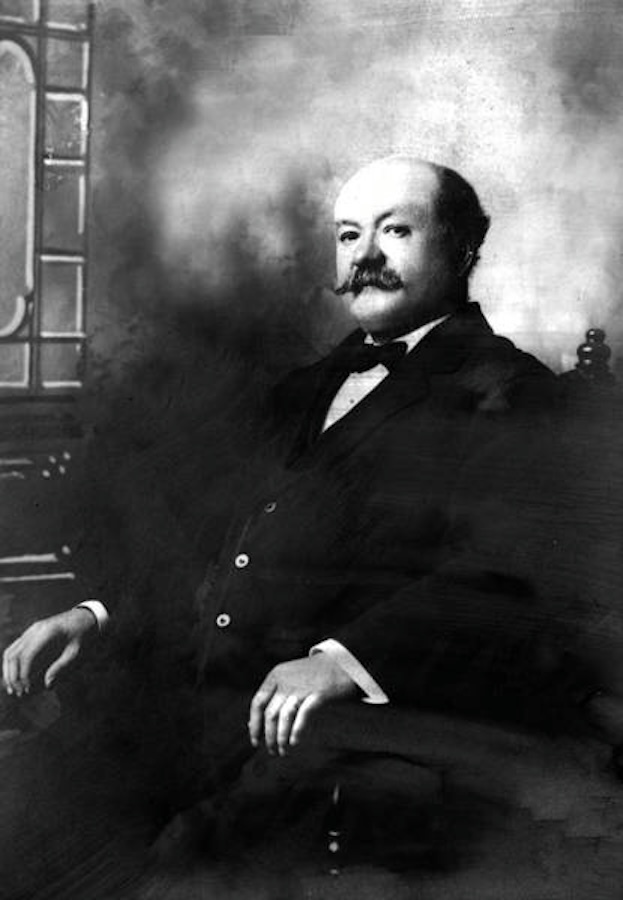
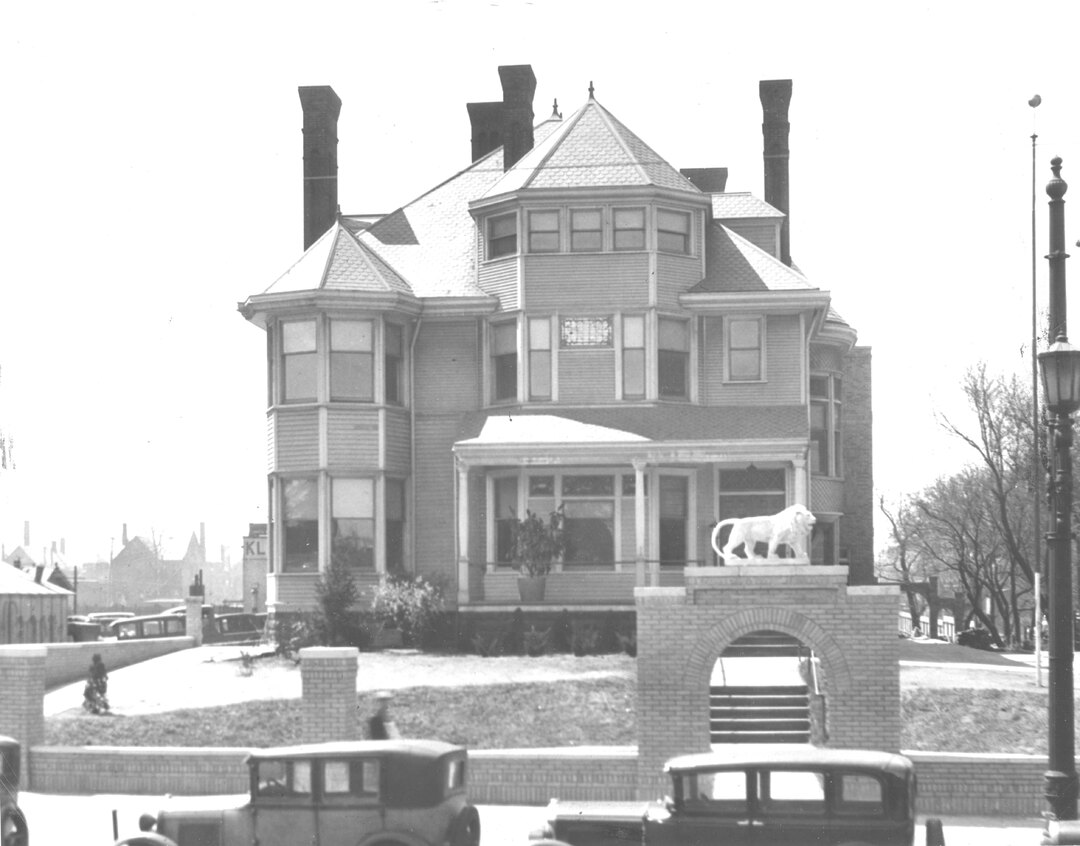
    <summary type="html"><![CDATA[<p><strong><em>It was one of the last grand houses from the nineteenth century left standing on Euclid Avenue, once described as the most beautiful residential street in the world.  And yet, inexplicably, the house was never designated an historic landmark; it was not put to any productive use in the last two decades of its existence; and little effort was made by anyone to save it from the wrecking ball.</em></strong></p><img src="https://clevelandhistorical.org/files/fullsize/34f19b8ae7f5a112075e74bbca5c62aa.jpg" alt="The Allen-Sullivan House" /><br/><p>In the late nineteenth century, Cleveland's Euclid Avenue was considered by travel writers to be one of the most beautiful residential streets in the world, compared favorably to the grandest avenues in Europe.  At the height of its grandeur, nearly 300 majestic homes graced its north and south sides from East 9th Street to East 90th Street.  Only a handful--six or seven depending on your count--of those nearly 300 houses are still standing today.  The Allen-Sullivan House was one of them.  And now it is gone!.</p><p>Richard N. Allen (1827-1890) was a railroad engineer who invented the paper car wheel, which dampened wheel noise and vibrations, revolutionizing railroad passenger travel in the nineteenth century.  The Massachusetts native, who had lived in Cleveland for a short period in the 1860s, returned to the city in 1881 after opening a factory near the Pullman Company's factory complex in Chicago.  He did not move back because Cleveland was close to that factory.  It was not.  However, he may very well have decided to return because Euclid Avenue was here.  It was then home to most of the richest men in America, and, as a result of his business successes, Allen, the former railroad engineer, was now a very rich man.  </p><p>Allen and his wife Susan purchased a house on Euclid Avenue that had been owned by Ephraim J. Estep, a prominent Cleveland attorney.  The house, likely built in the 1850s by one of the founders of the Joseph & Feiss Company, was located on the south side of the Avenue, just a few houses from Giddings Avenue (East 71st Street).  While Euclid Avenue from Giddings to East Madison (East 79th Street) was not as grand and desirable a neighborhood as the more famous section between East 22nd and East 40th Streets, which in the early twentieth century became known as "Millionaires' Row," it was still a very grand and desirable place to locate indeed.  Among the Allens' new neighbors were Morris A. Bradley (7217), heir to a shipping fortune and the father of future Cleveland Indians owner Alva Bradley; William J. Rainey (7418), said to be the largest coal and coke operator in the United States; Hiram Haydn (7119), pastor of the Old Stone Church and future President of Western Reserve University; Dr. Hiram Little (7615), a physician who became one of Cleveland's largest real estate developers; Edward Lewis (7706), a co-founder of Otis Steel Company and later a principal of Lake Erie Iron Company; and J. H. Thorp (7801), vice-president of Forest City Varnish Company.  </p><p>In 1881, when the Allens arrived on the Avenue, there were nineteen grand houses on Euclid between East 71st and East 79th Streets.  Less than two decades later that number had increased to thirty-six as several large lots were subdivided and sold to make more land available on the Avenue for Cleveland elites.  Many of those new houses going up in those ensuing decades were of Queen Anne design, the most popular architectural style of the period.  Queen Anne design is characterized, according to "A Field Guide to American Houses," by a "steeply pitched roof of irregular shape, usually with a dominant front-facing gable; patterned shingles, cutaway bay windows, and other devices used to avoid a smooth-walled appearance; and an asymmetrical facade with partial or full-width porch which is usually one story high and extended along one or both side walls."  </p><p>Perhaps simply to keep up with the Joneses, Richard and Susan Allen tore down the old Estep House in 1887 and built in its place a new three-story Queen Anne house.  According to local architectural historian Craig Bobby, this house, with approximately 9,000 square feet of living area, might have been viewed as "subdued" compared to other Queen Anne Houses that were built on Euclid Avenue in this period, but its massing was nevertheless "robust."  The house's boldest architectural feature was "an atypically wide, off-center bay . . . that [rose]  up onto the roof, nearly becoming a turret."  The house also featured a true turret on the east end of its front facade, which was deemphasized by a front porch which embraced the off-center bay, and bay windows on its east and west sides.</p><p>Richard Allen did not live very long after his mansion was completed.  He died suddenly in 1890 at the age of 63.  His widow Susan lived in the house until 1898, when she decided to move back to their native Massachusetts.  The house was then sold to Jeremiah J. Sullivan, a prominent Cleveland banker.  Sullivan, an Irish immigrant who moved to Cleveland in the early 1890s, was the founder of Central National Bank, which was one of  Cleveland's largest banks in the twentieth century.  In 1968, it erected the Central National Bank Building on the southwest corner of East Ninth and Superior.  The 23-story building--today known as  the AmTrust Financial Building--was at the time the fifth tallest building in downtown Cleveland. </p><p>When the Sullivan family moved onto Euclid Avenue in 1898, the Avenue was at its peak of wealth and elegance. Joining the Sullivan family as new residents of the East 71st-East 79th section of the grand Avenue in this decade were other prominent Clevelanders, including Dan Hanna (7404), the son of iron magnate and presidential kingmaker Marcus Hanna, and the future owner and publisher of the Cleveland Leader and the Cleveland News; David Z. Norton (7301), a Cleveland banker and principal of Oglebay Norton & Co., a large iron ore mining and shipping company; and Worchester Warner (7720) and Ambrose Swaney (7808), founders of machine and tool industrial giant, Warner and Swasey, and also life-long friends who built their Euclid Avenue houses next door to each other, just west of East 79th Street. These families were all witnesses not only to the zenith of the Avenue, but also to the beginning of its decline as a grand residential street.  By the time the Sullivan family moved out of their house in 1923 shortly after Jeremiah's death, Cleveland's elite were already fleeing the Avenue, as a result, according to Euclid Avenue historian Jan Cigliano, of encroaching commercial businesses,  the running of streetcars up and down Euclid Avenue, and a growing nearby African-American ghetto.  By 1930, only two elite families still resided on the section of Euclid Avenue between East 71st and East 79th--octogenarian Ambrose Swasey, who lived in his house until his death in 1937, and the son of David Z. Norton, who left the family's Avenue mansion for Cleveland Heights in 1939.</p><p>As Euclid Avenue declined as a residential street in the twentieth century, many of its grand houses were torn down, but others were put to different uses, sometimes commercial, sometimes multi-family, and sometimes institutional.  The Allen-Sullivan House was one of those put to other uses.  After the departure of the Sullivan family, it first served, from 1923 to 1931, as an upscale furniture store known as The Josephine Shop.  Then, in 1934, during the Great Depression, the house was purchased by the The Grand Lodge of Ohio, Order Sons of Italy (SOI) in America, an Italian-American fraternal organization.  The SOI made it their Ohio Grand Lodge, adding an auditorium onto the rear of the house.  On June 2, 1935, the organization held a dedication ceremony on the site, attended by many local, state and foreign dignitaries, including the Italian ambassador.  It was the first time that an ambassador from Italy had visited the State of Ohio.  </p><p>The SOI occupied the Allen-Sullivan House until 1946 when it sold it to the American Society of Heating and Ventilating Engineers (today known as ASHRAE--the American Society of Heating, Refrigerating and Air-Conditioning Engineers).  ASHRAE opened a national research laboratory on the site, operating it there from 1946 until 1961, when the laboratory closed.  The property was then sold in 1964 to Mary Fisco, spouse of Benjamin Fisco, an Italian immigrant who restored the house to its condition existing during the period when it was owned by the Sons of Italy. Fisco operated a party center there known for years as the Coliseum (or Colosseum) Party Center.  The party center closed in the late 1990s, several years after the death of Benjamin Fisco.   </p><p>Since the year 2000, according to City of Cleveland officials and others, the house had been vacant except for an onsite caretaker.  In that same period, a new owner purchased and assembled five sublots on and off Euclid Avenue near East 71st Street, including that upon which the Allen-Sullivan House stood.  According to officials at MidTown Cleveland, Inc., the owner of those properties had listed them for sale with an asking price of $3 million.  Given this owner's desire to sell, and the City of Cleveland's desire to continue redevelopment of its Midtown Corridor along Euclid Avenue, the future of the Allen-Sullivan House was precarious and it likely could not have avoided demolition without an effort on the part of the City and/or the future developer to save it. </p><p>While this was going on and the house still was standing, ASHRAE waged a campaign to have an Ohio historical marker placed in front of the Allen-Sullivan House to commemorate the national research laboratory that its organization operated there from 1946 to 1961.  When you consider all the history that was made at this, the last-standing Queen Anne-style house on the once grand residential Euclid Avenue, an historical marker alone should not have been enough.  The grand house itself should have been saved.</p><p>On June 21, 2021, time ran out for the Allen-Sullivan House.  No savior was found.  The house was torn down to make room for a city-approved apartment complex.  And so ends the story of one of the last grand houses standing for over a century on Euclid Avenue.</p><p><em><strong><a href="https://clevelandhistorical.org/items/show/864">For more (including 15 images) view the original article</a></strong></em></p>]]></summary>
    <published>2019-02-04T19:50:55+00:00</published>
    <updated>2026-03-04T21:32:04+00:00</updated>
    <link rel="alternate" type="text/html" href="https://clevelandhistorical.org/items/show/864"/>
    <id>https://clevelandhistorical.org/items/show/864</id>
    <author>
      <name>Jim Dubelko</name>
    </author>
  </entry>
  <entry>
    <title type="html"><![CDATA[Isabella Brothers Bakery: The West Side&#039;s Cathedral of Bakeries]]></title>
    <summary type="html"><![CDATA[<img src="https://clevelandhistorical.org/files/fullsize/d8b96ac84493c010cce1615908b961a1.jpg" alt="Early Delivery Truck" /><br/><p>The "Cathedral of Bakeries."  That's how one incensed customer in a letter to the editor referred to Isabella Brothers Bakery in 1976, when a Plain Dealer writer failed to mention it in an article that purported to list the best bread bakeries in Cleveland.  Perhaps, though, the paper's omission was excusable.  While the bakery was still producing its locally famous Italian breads, its best days had already passed, as large chain grocery stores were slowly putting it and many other small local bakeries and neighborhood stores out of business.  </p><p>Italian breads.  If you are of Italian descent--or even if you are not, and you grew up in the Detroit-Shoreway neighborhood, you undoubtedly remember the delicious Italian breads sold by Isabella Brothers Bakery. The business was founded in 1914 by Anthony Isabella, an immigrant from the Campania region in southern Italy.   Arriving in Cleveland in 1908, Anthony settled on West 69th Street, north of Detroit Avenue, where a colony of Italian immigrants, which included several of his father's sisters and other relatives, was already forming.  It is said that the view of Lake Erie from the north end of West 69th attracted these immigrants to this street--once the home of the notorious McCart Street gang, because it reminded them  so much of the Bay of Naples back in their homeland.</p><p>Anthony Isabella initially found work, like so many other Italian immigrants living in the neighborhood, at the Joseph & Feiss men's clothing factory on West 53rd Street.  However, he didn't stay there long.  He had apprenticed as both a butcher and baker in Italy and he soon went into business with a cousin (and future brother-in-law) Robert Mazzarella, the two men starting up a grocery store and a bakery at 1256-58 West 69th Street in 1914.  It was really the perfect location.  Not only did the two-story red brick building provide sufficient space for a grocery on the first store, living quarters for both men and some of their relatives on the second, and a bakery in a small building at the back,  but it already had the name "Isabella" carved in stone upon it.  Because the building had been erected in 1910 by one of Anthony Isabella's uncles.</p><p>In 1920, Anthony Isabella was joined in Cleveland by his younger brother A. Dominic, known to the family as "Mimi." The two brothers then formed Isabella Brothers Bakery, which continued for another decade to bake bread out of the building at 1258 West 69th. Meanwhile, Anthony's former partner, Robert Mazzarella, took over sole operation of the grocery store, later moving it in 1933 to the northeast corner of West 69th and Detroit where it became a neighborhood fixture for decades.</p><p>During this era of the early twentieth century, as the Italian population on the street grew to the point where virtually every person living there was either an Italian immigrant, or descended from or married to one, an incredible retail community developed on West 69th Street.  Italian immigrants, whom historians have noted were more apt in this period to become first generation retail business owners than immigrants from other ethnic groups, opened up numerous shops on the approximately one-half mile stretch of residential street between Detroit Avenue and the Lake Shore and Michigan Southern railroad tracks.  In the 1930 Cleveland city directory, ten such shops on the street were specifically listed, but the actual number was undoubtedly much higher than that.  The 1930 federal census suggests (by identifying a number of residents as owning their own shops or stores) that perhaps as many as 30 such businesses were operating out of the seventy-plus houses and apartment buildings on the street.  This number included up to ten barber shops, possibly six shoe-maker/repair stores, five groceries, two bakeries (Isabella Brothers and its neighborhood competitor Fiocca Brothers Bakery), two candy stores, and an assortment of other retail businesses--even a pool room.  There had also at one time been several saloons on the street, but of course none were listed in either the census or city directory in 1930. Prohibition had driven them underground.</p><p>Isabella Brothers Bakery thrived in this retail community, not only selling its twenty different types of Italian bread to residents on West 69th and other nearby streets, but also making deliveries to homes in other Italian neighborhoods on both the west and east sides of town.  Anthony Isabella's son Joseph, who in 2015 was still living on West 69th street, remembered those deliveries--how his father or uncle would drop him off in front of a house; how he would enter the house--regardless of whether the customer was home or not, and how he would place the customer's bread order in the bread box in the kitchen, and then leave.  </p><p>With the growth of the bakery's business well underway, Anthony Isabella and his wife Carrie decided in 1930 to purchase a parcel of land up the street at 1370 West 69th and there build a new a modern new bakery building.   The Isabella family continued to bake and deliver Italian bread from this new address well into the 1980s, as the next generation of Isabellas--Anthony's two sons, Louis and Joseph, gradually took over the reins of the business.  But, as noted earlier, large chain grocery  stores, eventually forced Isabella Brothers Bakery out of business.  The historic West 69th Street bakery closed its doors for good in 1988.  Today, the former bakery building is the home of Esperanza Threads.</p><p><em><strong><a href="https://clevelandhistorical.org/items/show/729">For more (including 13 images&#32;&amp;&#32;3 audio files) view the original article</a></strong></em></p>]]></summary>
    <published>2015-08-02T04:40:44+00:00</published>
    <updated>2026-03-04T21:32:02+00:00</updated>
    <link rel="alternate" type="text/html" href="https://clevelandhistorical.org/items/show/729"/>
    <id>https://clevelandhistorical.org/items/show/729</id>
    <author>
      <name>Jim Dubelko</name>
    </author>
  </entry>
  <entry>
    <title type="html"><![CDATA[Saint Rocco Catholic Church: Cleveland&#039;s &quot;Do-It-Yourself&quot; Italian Parish]]></title>
    <summary type="html"><![CDATA[<p><strong><em>It's not unusual to hear of stories where nineteenth or twentieth century working class immigrants scrimped, saved, and did without in order to raise funds to build some of Cleveland's grandest and most enduring sacred landmarks. What is unusual, however, is to learn about a parish where such immigrants did not just scrimp and save, but also actually built the sacred landmark themselves.</em></strong></p><img src="https://clevelandhistorical.org/files/fullsize/ee6e77b0398c8ba63826a3c6daea7bf8.jpg" alt="Early Era Procession (1933)" /><br/><p>In a 1964 article, the Cleveland Plain Dealer called St. Rocco the "Do-It-Yourself" parish. It was an apt nickname for the Italian parish, which celebrated its centennial in 2014, because of the numerous self-build projects it had undertaken over the years, including construction of the current church in the years 1949 to 1952. </p><p>Almost from the start, self-building became a feature of the parish. In 1914, a group of immigrants from the village of Noicattaro in the Apulia region of southern Italy, living in and around Fulton Road and Trent Avenue, met in the grocery store of fellow immigrant John Zaccaro and undertook to establish the first Italian parish on the west side. Believing that building a church would lead to diocesan recognition, they self-built a small brick structure in 1917-1918 on a single lot of land on Trent Avenue, just a stone's throw away from today's Fulton Road campus. The church was named St. Rocco, after the patron saint of the sick, who was especially venerated in southern Italy. Despite their effort, the parish was not officially recognized until 1922, when Cleveland Bishop Joseph Schrembs appointed Father Alphonse Di Maria, the assistant pastor at St. Anthony Italian Church in downtown Cleveland, as the first pastor.
In 1924, the Order of the Blessed Virgin Mary of Mercy (Mercedarian Order) was given charge of the parish and Father Sante Gattuso, a priest from Sicily, appointed second pastor, replacing Father Di Maria, who had resigned for health reasons. Father Gattuso would serve as pastor for the next 42 years. By the time of his appointment, immigrants from Faeto in the Apulia region, Guilianova in the central region, Laganadi in the Calabria region, Floridia in Sicily, and from other villages in southern and central Italy had become members of the fledgling parish. Immigrants from Trento and other towns in northern Italy began joining the parish later in the decade. Father Gattuso almost immediately embarked upon an ambitious building plan for the fast-growing parish. He purchased land on the east side of Fulton Road, south of Clark Avenue, and hired a contractor who in 1926 built a new and larger church with attached school building on the new Fulton Road campus.
In the decade of the 1930s, as the Great Depression crippled the American economy, St. Rocco parish began self-building again. In 1933, the parish self-built an addition to the school and then in 1935 one to the parish house. In 1940, Father Gattuso planned for the parish to build a new and larger church, but World War II intervened. During the war years, the men of the parish--many of them working in the building trades--saved bricks and other materials from building sites, literally creating a brick yard on the church campus. In 1949, construction of the new church finally began. Scores of parishioners volunteered their time, the men excavating, erecting the superstructure, and doing the masonry work, while women brought home-cooked meals to the site. Even retired parishioners contributed. Michael Girardi, Gaetano Farrugia, and Gennaro Di Pasquale, all elderly immigrants from southern Italy, were singled out for special recognition and became known as the Three Musketeers. In 1952, when the church was completed, Father Gattuso estimated that the labor donated by the parish had saved the church hundreds of thousands of dollars.
In the years that followed, additional self-build projects were undertaken by the parish, especially in the decade of the 1950s. In 1955, interior decorations were made to the church. The following year, the old church was converted into a gym for school children. In 1957, a memorial to the members of the parish who had served in World War II was built and, later in the same year, the grade school was remodeled. In 1959, parishioners constructed a one-story addition onto the school. The parish continued to undertake self-build projects throughout the remaining decades of the twentieth century, helping to defray the cost of maintaining an inner city church. Perhaps its history of self-building is one reason why St. Rocco Church is, and will likely always remain, a fixture and one of the most important community assets in the Clark-Fulton neighborhood.</p><p><em><strong><a href="https://clevelandhistorical.org/items/show/687">For more (including 12 images&#32;&amp;&#32;1 audio file) view the original article</a></strong></em></p>]]></summary>
    <published>2014-12-16T06:41:00+00:00</published>
    <updated>2026-03-04T21:32:02+00:00</updated>
    <link rel="alternate" type="text/html" href="https://clevelandhistorical.org/items/show/687"/>
    <id>https://clevelandhistorical.org/items/show/687</id>
    <author>
      <name>Jim Dubelko</name>
    </author>
  </entry>
  <entry>
    <title type="html"><![CDATA[Joseph and Feiss Company: A Pioneer in Progressive Industrialism]]></title>
    <summary type="html"><![CDATA[<img src="https://clevelandhistorical.org/files/fullsize/300f5c5c5235cd6dc5fcebf0b47c2d09.jpg" alt="Moving to the West Side" /><br/><p>If your ancestor was a Czech or Italian immigrant who lived on the west side of Cleveland, there's a good chance he or she worked at the Joseph & Feiss Company, or at least had a relative or close friend who worked there.  A Cleveland business since the mid-nineteenth century, Joseph & Feiss was by 1930 the oldest garment manufacturer in the United States.  It employed thousands of immigrants and second and third generation Americans at its mammoth plant on West 53rd Street.  They worked there until Hugo Boss, the large German concern which had purchased the company in 1989, closed the Cleveland plant in 1998, transferring the remaining workers to another plant in the Cleveland suburb of Brooklyn.</p><p>Joseph & Feiss was founded in 1841 by Caufman Koch, a Jewish immigrant from Bavaria who moved his clothing business from Meadville, Pennsylvania to Cleveland in 1845--at a time when a lot of merchants, following the completion of the Ohio Erie canal a decade earlier, were moving to the fast-growing city on Lake Erie.  In the early years, he operated a small shop at various locations downtown, procuring  the garments he sold from immigrant tailors who worked out of their homes in nearby Cleveland neighborhoods. </p><p>One of those early contract workers was Frank Yidrack, a Bohemian immigrant who came to Cleveland with his parents in 1854 when he was just 4 years old.  In 1860,  when he was 10, his father pulled him out of school and put him to work at home making garments for Mr. Koch's business.  This was the beginning of Yidrack's 60-year career with Joseph & Feiss.  For the first ten years he worked out of his house, and, then when the company began to transition to the factory method of operation in 1870, Frank became a cutter in a factory for the next 50 years.  The company honored him  with a dinner in 1920, and there he told those present a story about the early years of the company.  During the Civil War, when he was just a little boy, Frank would travel downtown to the company's offices then on Superior Avenue near West 6th Street, bringing with him clothing that he and his father had made.   Caufman Koch would greet him at the door, take the clothing from him and say:  "Well, Frank, what do you want now?"  "All the money," young Frank would respond.  Koch would then laugh and feign indignation: "Oh, no!  You can't have it all.  We need some of it for ourselves."  </p><p>Frank Yidrack's story probably got some good laughs at that 1920 dinner.  But, in addition to being humorous, it was allegorical for one of the most important issues for industrial businesses like Joseph & Feiss in the late nineteenth and early twentieth centuries, Labor-Management relations.  Prior to 1909, Joseph & Feiss was a typical garment manufacturer of that era, paying its employees as little as possible and working them for as many hours as hard it reasonably could.  But in that year, Richard Feiss, son of Julius Feiss (the "Feiss" in Joseph & Feiss), became factory manager.  While living in Boston from 1897-1904 and obtaining his undergraduate and law degrees from Harvard University, Feiss had become a disciple of Frederick Taylor, the well-known industrial efficiency engineer of the late nineteenth century.  When Feiss returned to Cleveland, he set out to manage the company's work force in a manner that would maximize productivity but at the same time create a humane work environment that would keep workers healthy and happy.  According to Cleveland State University historian David Goldberg, Feiss accomplished this by joining together Taylor's principles of scientific management with Progressive era welfare capitalism, establishing a work environment at Joseph & Feiss that many at the time viewed as the most progressive in America.</p><p>Feiss, with the assistance of Progressive era reformer Mary Barnett Gilson whom Feiss made head of the company's employment and services department, redesigned the chairs employees sat on and the tables they worked upon to reduce injury and fatigue; provided employees with well-lit and well-ventilated work areas; sponsored employee dances, picnics, choral societies, clubs, orchestras, and athletic programs; provided medical and counseling services; established employee savings programs; awarded promotions based on performance; and increased wages. In addition, in 1917, Feiss introduced the five-day work week for employees at the company's plant, several years before Henry Ford, often cited as the first industrial employer in the United States to do so.</p><p>Perhaps it was progressive policies like the above that kept Joseph & Feiss a non-union shop in the decades of the 1910s and 1920s--a time when garment manufacturers in New York, Chicago, and elsewhere were fast becoming union shops.  It wasn't until 1934, during the Great Depression and almost a decade after Richard Feiss was forced out of the company in 1925 by his father and older brother, that the American Clothing Workers of America, finally won the right to bargain for and represent the garment workers of Joseph & Feiss.</p><p>Joseph & Feiss would remain one of Cleveland's largest employers for another five decades, employing over 2,000 employees at its West 53rd Street plant throughout this period.  Eventually, however, new plant technology, cheaper labor sources, and changing markets ended the company's 150-year run in Cleveland.  In 2003-2004, several years after the plant closed operations, the main factory building was razed, leaving on the site today only the company's office building on West 53rd Street and its massive warehouse building near the intersection of Walworth Avenue and Junction Road.  In 2015, the warehouse received new life when it was purchased with the intent to make it the new home of Menlo Park Academy, a public charter school for gifted children.  After $17 million in repairs and renovations, the school opened its doors in the historic building in the Fall of 2017.</p><p><em><strong><a href="https://clevelandhistorical.org/items/show/653">For more (including 12 images) view the original article</a></strong></em></p>]]></summary>
    <published>2014-04-20T16:47:14+00:00</published>
    <updated>2026-03-04T21:32:02+00:00</updated>
    <link rel="alternate" type="text/html" href="https://clevelandhistorical.org/items/show/653"/>
    <id>https://clevelandhistorical.org/items/show/653</id>
    <author>
      <name>Jim Dubelko</name>
    </author>
  </entry>
  <entry>
    <title type="html"><![CDATA[Zitiello Bank]]></title>
    <summary type="html"><![CDATA[<img src="https://clevelandhistorical.org/files/fullsize/30f3154f21ec19d1b16f2ededf12532b.jpg" alt="The Zitiello Bank Building" /><br/><p>The Zitiello Bank, located at 6810 Herman Avenue, was the earliest known ethnic bank opened in the Detroit-Shoreway neighborhood.</p><p>The bank was founded by Joseph Zitiello, an immigrant from the Campania region of Italy who came to Cleveland in 1898.  Joseph was just one of several members of the Zitiello family who by 1910 had purchased homes on West 69th Street.  As was customary with Italian immigrants, a number of the Zitiellos were proprietors of small businesses that were operated out of their homes. Joseph ran a butcher shop.  Luigi was a saloon keeper.  Pasquale was the neighborhood grocer.   </p><p>By 1910, Joseph Zitiello had achieved financial success as a butcher and began to engage in private banking.  In 1916, he built the Zitiello Bank building on the corner of West 69th and Herman Avenue.  In 1920, Zitiello, who by this time was known as the "King of the Italian Colony" on the west side of Cleveland, incorporated the Zitiello Bank.  Later, the Zitiello Bank opened a branch office on Fulton Road.  In 1929, while at this branch office, Joseph Zitiello was shot by several assailants who were attempting to rob the bank. Zitiello returned their fire, chasing the would-be robbers from his bank.</p><p>The Zitiello Bank, like many small banks, was forced to close during the Great Depression. Even so, the Zitiello family remained in the neighborhood, contributing both to the community and to their new country.  In 1967, Ronald J. Zitiello, an American soldier and grandchild of one of the original Zitiello immigrants from Italy, was killed in the Vietnam War.  A memorial garden dedicated to his memory is located in the neighborhood.</p><p>More than one hundred years have passed since the first Zitiello immigrants from the Campania region of Italy came to Cleveland and settled on West 69th Street.  Today, a number of descendants of those original immigrants still live on West 69th Street, helping to anchor the ongoing revitalization of this old Cleveland neighborhood. </p><p><em><strong><a href="https://clevelandhistorical.org/items/show/450">For more (including 7 images) view the original article</a></strong></em></p>]]></summary>
    <published>2012-05-08T17:24:58+00:00</published>
    <updated>2026-03-04T21:32:00+00:00</updated>
    <link rel="alternate" type="text/html" href="https://clevelandhistorical.org/items/show/450"/>
    <id>https://clevelandhistorical.org/items/show/450</id>
    <author>
      <name>Jim Dubelko</name>
    </author>
  </entry>
  <entry>
    <title type="html"><![CDATA[Alta House: Rockefeller&#039;s Gift to Little Italy]]></title>
    <summary type="html"><![CDATA[<img src="https://clevelandhistorical.org/files/fullsize/acd3104799ccaaa6e4aa40ff841dcffe.jpg" alt="Alta House original design" /><br/><p>Alta House is a landmark building in the Little Italy neighborhood. Constructed in 1900 by John D. Rockefeller Sr., and named for his daughter Alta Rockefeller Prentice, Alta House started as a settlement house for the immigrants coming over from Italy. This was part of the settlement house movement during which many immigrants who came to the United States were looking for a place where they could feel at home. </p><p>One of the main purposes of Alta House was to help the community grow, and to make the people better citizens. As part of this, Alta House early on offered immigrants a place to go for help with both food and board. It also helped people find employment and housing. With time, however, the responsibilities and services of Alta House expanded further. For instance, it acted as a day care for the parents who had to go to work and could not leave their children at home. Later on, it also provided education for people of all ages in the community, as well as a safe place for the children of the community to play and socialize. More recent responsibilities include helping the elderly with food and care, as well as other charities.    </p><p>Alta House has also had its share of difficulties. In the mid 1970s, a youth set fire to the settlement house several times. The city eventually decided to tear part of  the house down in order to rebuild it. In the process, a new design was preferred for the rebuilding. Therefore, when the reconstruction of Alta House was complete in 1982, it no longer had its original appearance. But, although its facade had changed, Alta House continued to provide its traditional services to the community. And so it does even today. </p><p><em><strong><a href="https://clevelandhistorical.org/items/show/396">For more (including 5 images&#32;&amp;&#32;1 audio file) view the original article</a></strong></em></p>]]></summary>
    <published>2012-01-13T16:30:51+00:00</published>
    <updated>2026-03-04T21:31:59+00:00</updated>
    <link rel="alternate" type="text/html" href="https://clevelandhistorical.org/items/show/396"/>
    <id>https://clevelandhistorical.org/items/show/396</id>
    <author>
      <name>Michael Sharaba</name>
    </author>
  </entry>
  <entry>
    <title type="html"><![CDATA[The Feast of the Assumption: Little Italy&#039;s Annual Festival]]></title>
    <summary type="html"><![CDATA[<img src="https://clevelandhistorical.org/files/fullsize/4f6335fa4a750d0bf84bb9628886e3fc.jpg" alt="Holy Rosary Church" /><br/><p>Holy Rosary Church on Mayfield Road was constructed in 1892 to fulfill the need of Cleveland's Italian population for a Catholic institution. The church, located in historic Little Italy, is a staple in the Italian community and has been so since its construction. Not only does the church provide Catholic services to its parishioners. It also sponsors a festival every year that originated back in Italy and is celebrated all over the world. The festival is known as the Feast of the Assumption and celebrates Virgin Mary's passage into Heaven. The festival takes place over three days.</p><p>During the festival, a statue of Virgin Mary is paraded down the streets while crowds of people follow the virgin and put money on it as a donation for the church and its charities. The festival is also a time when the people of Little Italy can show their wares and cooking skills to both the community and to the thousands of other people who come to partake in the festival and festivities. Some of the money raised by the festival goes to various charities in and around the neighborhood as well as the parochial school that was built to accommodate the many inhabitants of Little Italy. </p><p>The Feast of the Assumption continues to this day as people still attend for both the services and the celebration.  It is a time of great celebration but still remains true to its faith and purpose - the materialization of the Assumption of Mary. </p><p>The festival is celebrated in mid-August every year. </p><p><em><strong><a href="https://clevelandhistorical.org/items/show/377">For more (including 7 images&#32;&amp;&#32;1 audio file) view the original article</a></strong></em></p>]]></summary>
    <published>2011-12-21T21:32:40+00:00</published>
    <updated>2026-03-04T21:31:59+00:00</updated>
    <link rel="alternate" type="text/html" href="https://clevelandhistorical.org/items/show/377"/>
    <id>https://clevelandhistorical.org/items/show/377</id>
    <author>
      <name>Michael Sharaba</name>
    </author>
  </entry>
  <entry>
    <title type="html"><![CDATA[WSM Produce Arcade]]></title>
    <summary type="html"><![CDATA[<img src="https://clevelandhistorical.org/files/fullsize/aa1746663c14b27d55f81e3a2af3be08.jpg" alt="Produce Vendors, 1962" /><br/><p>Some of the names on the stalls in the produce arcade at the West Side Market — Calabrese, DeCaro — have been there for generations, while others, most notably those of Middle Eastern descent, reflect a more recent crop of fruit and vegetable vendors at the market. Since it opened in 1914, the L-shaped structure which borders the main market building on its north and east sides has been the place to find fresh fruits, vegetables, and flowers.  It has also been a place where hard working immigrant families (particularly Italians, early on) could start their own family business to pass on to succeeding generations.</p><p>Joe DeCaro's parents, for example, were Italian immigrants who met in Cleveland and opened a vegetable stand at the West Side Market in 1934. All of Joe's siblings worked at the family stand at one time or another, but Joe took over when his parents passed away, and he will soon be turning the business over to his daughter. Many of these original produce vendors have since left the market, but taking their place in many instances have been some of Cleveland's newest immigrants: Arab-Americans.</p><p>Running a produce stand at the market can be hard work, but the job was made easier after the city completed a series of renovations to the produce arcade in 2001. Most notably, the space was finally enclosed (it had no doors and very rudimentary window coverings previously) and provided with central heating, putting an end to the frigid winters that vendors and market goers once had to endure. New electrical and plumbing connections were also installed. As people continue to flock to the West Side Market, the roughly forty produce vendors there stand poised to carry on with a century-old Cleveland food tradition.</p><p><em><strong><a href="https://clevelandhistorical.org/items/show/302">For more (including 7 images, 2 audio files,&#32;&amp;&#32;1 video) view the original article</a></strong></em></p>]]></summary>
    <published>2011-07-27T10:47:44+00:00</published>
    <updated>2026-03-04T21:31:59+00:00</updated>
    <link rel="alternate" type="text/html" href="https://clevelandhistorical.org/items/show/302"/>
    <id>https://clevelandhistorical.org/items/show/302</id>
    <author>
      <name>CSU Center for Public History and Digital Humanities </name>
    </author>
  </entry>
  <entry>
    <title type="html"><![CDATA[Stone Mad Pub]]></title>
    <summary type="html"><![CDATA[<img src="https://clevelandhistorical.org/files/fullsize/434cfcf1a0fc989fbc3c6b1255ae0bc7.jpg" alt="Stone Mad Pub, Exterior" /><br/><p>Opened in 2008, Stone Mad Pub is the latest in a long tradition of saloons and bars located at 1306 West 65th Street. The history of the building speaks to the importance of these establishments within a community, and reflects the changes that the Detroit Shoreway neighborhood has experienced over the last century. </p><p>The building was constructed as a tavern and store house by Cleveland's <a href="https://clevelandhistorical.org/items/show/156">Leisy Brewing Company</a> in 1912. The construction of the bar coincided with a period of great success for the brewery. As Cleveland's largest brewery at the turn of the century, Leisy owned multiple taverns throughout the city. This was a common practice for breweries of the era. Saloon keepers generally paid rent at the first of the month and were billed weekly for beer and whiskey. Breweries established the prices, which were generally the same throughout all of their saloons. </p><p>The choice to build on West 65th was likely due to the rapidly growing working-class immigrant population in the neighborhood. The neighborhood surrounding the tavern was densely populated with Irish, Italian, and Romanian immigrants. At a time when boardinghouses were common -- and living quarters were cramped -- the saloon offered a space to socialize and relax. The saloon keepers, who could generally speak English, were important members of the ethnic community. They regularly acted as intermediaries between the immigrant population and government officials. Some establishments even acted as banks for their patrons. </p><p>While production for Leisy Brewing Company peaked in 1918, the Prohibition enacted between 1920-1933 quickly resulted in the brewery's downfall. The bar on 1306 West 65th Street, however, continued operation as a popular speakeasy of the time. What is now known as the Detroit Shoreway neighborhood was notorious for Romanian, Irish, and Italian bootleggers during the Prohibition. Oral histories from the neighborhood suggested that the speakeasy at 1306 was raided by the police one night, and that barrels of whiskey were cracked open and poured onto West 65th Street. Despite such displays, Prohibition had little effect on the alcohol consumption of Cleveland residents. It is estimated that whereas Cleveland had about 1,200 bars in 1919, by 1923 these had all been replaced by over 3,000 speakeasies. Even more common was the sale of liquor in neighborhoods by those with an entrepreneurial spirit, and the brewing and distilling of homemade beverages for personal use. </p><p>Following Prohibition, the bar on 1306 West 65th Street continued to reflect its place within an ethnic community. The establishment was operated through the 1950s by an Italian social club known as the Societa Operia Italiana di Mutuo Soccorso del West Side. Italian social clubs, which were generally made up of people from the same family or hometown, peaked in popularity during the 1930s and 1940s. With the effects of post World War II suburbanization and assimilation, these societies slowly lost their importance as social and recreational outlets. By the 1960s the establishment was known as the I & R Bar, or the Italian and Romanian Bar. Due to the continued decline in the presence of these ethnic communities in the surrounding neighborhood, the establishment became the R & A Lounge by the 1980s. </p><p>With the disappearance of commerce and industry from the area, the neighborhood began to show signs of physical deterioration. Through the efforts of community organizers and citizen action groups, the commercial district on West 65th Street and Detroit Avenue has been revitalized over the last three decades. Efforts to develop the area as a center for the arts are also well on their way. These changes in the neighborhood were both instigated by and helped foster a resurgence in the creation of locally operated businesses. As with much of the redevelopment that has occurred in Detroit Shoreway, Stone Mad Pub acknowledged and preserved the history of the area while creating an establishment that would also serve the needs of a rapidly changing neighborhood. The front bar was designed as a traditional Irish pub, while the dining room took on an Italian motif.</p><p><em><strong><a href="https://clevelandhistorical.org/items/show/213">For more (including 5 images) view the original article</a></strong></em></p>]]></summary>
    <published>2011-06-01T17:36:46+00:00</published>
    <updated>2026-03-04T21:31:58+00:00</updated>
    <link rel="alternate" type="text/html" href="https://clevelandhistorical.org/items/show/213"/>
    <id>https://clevelandhistorical.org/items/show/213</id>
    <author>
      <name>Richard Raponi</name>
    </author>
  </entry>
  <entry>
    <title type="html"><![CDATA[Our Lady of Mt. Carmel (West)]]></title>
    <summary type="html"><![CDATA[<img src="https://clevelandhistorical.org/files/fullsize/ourladyofmtcarmelchurch-clevelandstateuniveristy-clevelandmemory_presschurchmix012-exterior-1972_68f25b9ae3.jpg" alt="Our Lady of Mt. Carmel" /><br/><p>Upon entering Cleveland's west side "Little Italy", one is instantly met with a display of Italian colors on benches, fire hydrants, sidewalks, and telephone poles. Best known for its street processionals and annual church festival, this small Italian neighborhood dates back to the early 20th century. At the core of this Italian American community lies Our Lady of Mount Carmel Roman Catholic Church. </p><p>The smaller of two Italian settlements on Cleveland's west side during the early 1900s, early settlers predominately hailed from the Campania coastal region of Italy.  Initially drawn to Cleveland by work opportunities offered in local factories and manufacturers, the choice to settle in what is now the Detroit Shoreway neighborhood has been attributed to the close proximity of the lake and the area's resemblance to the Bay of Naples. The Italian neighborhood replaced what was previously an Irish settlement, and was bounded by West 65th, West 69th, Detroit Avenue, and the lake.</p><p>Following in the footsteps of immigrant groups that came before them, the Italian community first set up societies and organizations to provide security and help ease the process of relocation. For Italian immigrants, these groups generally grew from familial or territorial ties. Efforts then focused on developing churches.  For the Italians living north of Detroit Avenue, securing a full time pastor was initially delayed due to the small size of the community.  Sacraments were received at St. Rocco's, the Roman Catholic church built by the West Side Italian community near Fulton Avenue and West 33rd Street.  In 1924, the first mass for what would become Our Lady of Mt. Carmel was held at St. Helena's Romanian Catholic Church on West 65th and Detroit Avenue.  A room in a house on West 69th Street was then transformed into a chapel and masses were held there until 1926.  That year, under the leadership of Father Sante Gattuso of St. Rocco's, the mission of Our Lady of Mt. Carmel was founded. </p><p>The room on West 69th Street was replaced in 1926 by a saloon on the same street that had been converted into a chapel.  Despite the effects of the Great Depression, enough money was eventually saved to purchase a double house on Detroit Avenue in 1932.  This house would remain the home of Our Lady of Mt. Carmel until 1949, when post war prosperity (and a financially successful Our Lady of Mt. Carmel celebration) enabled the parish to begin construction of a building to house both a school and church. As the parish continued to thrive through both the contributions of a growing congregation and the revenue raised by its annual festival, a parish hall was constructed in 1951 and work soon began on a new church.  Taking about one year to construct, Our Lady of Mt. Carmel Catholic Church was dedicated on April 19, 1953.</p><p>As residents of Cleveland's larger Italian neighborhoods relocated outside of the city in suburbs and new ethnic neighborhoods, the Mount Carmel community would retain a strong presence in the west side of Cleveland.  While the small Italian community did not escape the effects of assimilation and suburbanization, the church's commitment to the neighborhood intensified. Under the guidance of Pastor Rev. Marino Frascati, Our Lady of Mt. Carmel helped lead the efforts to redevelop the neighborhood and create what became known as the Detroit Shoreway neighborhood.</p><p><em><strong><a href="https://clevelandhistorical.org/items/show/184">For more (including 6 images) view the original article</a></strong></em></p>]]></summary>
    <published>2011-03-13T20:14:55+00:00</published>
    <updated>2026-03-04T21:31:58+00:00</updated>
    <link rel="alternate" type="text/html" href="https://clevelandhistorical.org/items/show/184"/>
    <id>https://clevelandhistorical.org/items/show/184</id>
    <author>
      <name>Richard Raponi</name>
    </author>
  </entry>
  <entry>
    <title type="html"><![CDATA[Italian Cultural Garden]]></title>
    <summary type="html"><![CDATA[<img src="https://clevelandhistorical.org/files/fullsize/cmp-italian-34markerdedication_b840de7753.jpg" alt="Marker Dedication, June 1934" /><br/><p>With the dedication of a bust of the poet Virgil, the Italian Cultural Garden was opened on October 12, 1930 before a crowd of 3000 local Italians celebrating Columbus Day and the 2000th anniversary of Virgil's birth. Over the next decade, the Italian Garden Delegation added sculptures, and designed and constructed the formally landscaped space. On September 14, 1941, the Italian Cultural Garden was officially dedicated. It cost over $100,000 to build the garden, with the city contributing approximately $18,000 and the Federal Government  contributing over $94,000 through WPA funds.</p><p>Cleveland's Italian community started to slowly form during the Civil War. The U.S. Census of 1870 shows a very limited Italian presence in the city, as only 35 Italian immigrants were registered. The next 50 years, however, saw a far more explosive growth as 20,000 Italians moved to the city. By the late 1920s, 6 Italian neighborhoods were established in Cleveland; Big Italy, between Woodland Ave. and Orange Ave. from E. 9th St. to E. 40th St., was the largest community. Another neighborhood grew up around the St. Marian Church at E. 107th St. and Cedar Ave., and Collinwood also housed a significant number of Italians. On the west side, Italians took up residence in two areas; one near Clark and Fulton Avenues, and one on Detroit near W. 65th St. At the end of the 1920s some Italians moved out of Big Italy to an area at Woodland Ave. and E. 116th St. After WWII many Italians moved to the suburbs while others kept the Italian neighborhoods viable into the 1970s. </p><p>In 1960 there were still 19,317 foreign-born Italians in the city. By 1990 this count was 1,429 though still the second largest European immigrant group in Cleveland.Today, Little Italy, centered at Mayfield and Murray Hill Roads is Cleveland's identified Italian community.   </p><p>Designed formally, the two-level Italian Cultural Garden was, to borrow Clare Lederer's phrasing, "grandly conceived in the spirit of the Italian Renaissance." The upper level of the garden has a large circular marble fountain, a stone parapet, and a bronze bust of the poet Virgil. Mounted on a stone column taken from the ancient Roman forum, this sculpture was a gift from the Italian government under Mussolini. The upper level also includes a block of stone extracted from the side of Monte Grappa in northern Italy. This is in honor of the many northern Ohio members of the 332nd Regiment of Infantry who fought on Italian soil during World War I. There is also a table that recalls the flight of Italian General Balbo from Rome to Cleveland in 1933. </p><p>The lower level is accessible from above by two curved staircases that flank a semicircular, brick-paved court. Set into a thirty-foot, decorated retaining wall is a double shell fountain. Six medallions of carved stone adorn the wall and represent six Italian cultural figures: Giotto di Bondone, a painter, sculptor and architect (1267-1337); Michelangelo, a painter, sculptor, architect and poet (1475-1564); Petrarch, a scholar, poet and humanist (1304-1374); Guiseppe Verdi, an operatic composer (1813-1901); Leonardo da Vinci, painter, sculptor, draftsman, architect, engineer and scientist (1452-1519); and Guglielmo Marconi, an inventor best known for his work in radio technology (1874-1937).</p><p><em><strong><a href="https://clevelandhistorical.org/items/show/115">For more (including 7 images&#32;&amp;&#32;5 audio files) view the original article</a></strong></em></p>]]></summary>
    <published>2010-12-31T12:12:50+00:00</published>
    <updated>2026-03-04T21:31:58+00:00</updated>
    <link rel="alternate" type="text/html" href="https://clevelandhistorical.org/items/show/115"/>
    <id>https://clevelandhistorical.org/items/show/115</id>
    <author>
      <name>Mark Tebeau</name>
    </author>
  </entry>
  <entry>
    <title type="html"><![CDATA[Little Italy: An Abruzzi Outpost on Mayfield Hill]]></title>
    <summary type="html"><![CDATA[<img src="https://clevelandhistorical.org/files/fullsize/li3_7d25b7c101.jpg" alt="Mayfield Road, 1968" /><br/><p>One of Cleveland's most enduring ethnic neighborhoods, Little Italy was established in the late 19th century by immigrants largely from the villages of Ripamolisano, Madrice, and San Giovanni in Italy's Abruzzi region. Giuseppe Carabelli, an Italian artisan came to Cleveland via New York to open a sculpting and stone masonry business. Carabelli's early employees developed reputations as expert stonemasons due to their contributions to monumental works at nearby Lake View Cemetery. The residential space to the south of the cemetery became occupied with numerous Italian families near the turn of the century.</p><p>Neighborhood life in Little Italy revolved around both the Holy Rosary (Roman Catholic) Church and the Alta (Settlement) House. Holy Rosary parish was commissioned by the Cleveland Catholic Diocese in 1891 when the Scalabrini Fathers were summoned from Italy to serve Cleveland's eastern Italian residents. During the ensuing years the parish grew, built two churches and served as the central religious and social hub of the neighborhood.</p><p>The Alta House began as a nursery and Kindergarten agency for the neighborhood. Carabelli approached the agency about expanding social services to the community. By 1898, contributions from John D. Rockefeller provided programs and facilities in the name of his daughter, Alta, to serve the immigrant community assimilating to American society.  Both Holy Rosary and the Alta House remain as central religious social forces in the neighborhood today.In recent times, Little Italy has been able to capitalize on its ethnic heritage and has become a popular shopping and dining destination for people from all over Northeast Ohio. </p><p>Interestingly, Little Italy was not the only Italian neighborhood on Cleveland's east side. The Woodland Avenue/ Central Market area defined the  "Big Italy" neighborhood in Cleveland. It was an older and much larger home to Italian and Sicilian immigrants. This area fell into decline after World War II and, by the 1960s, had been essentially destroyed by encroaching freeways and urban renewal.</p><p><em><strong><a href="https://clevelandhistorical.org/items/show/35">For more (including 8 images&#32;&amp;&#32;3 audio files) view the original article</a></strong></em></p>]]></summary>
    <published>2010-09-18T11:18:27+00:00</published>
    <updated>2026-03-04T21:31:57+00:00</updated>
    <link rel="alternate" type="text/html" href="https://clevelandhistorical.org/items/show/35"/>
    <id>https://clevelandhistorical.org/items/show/35</id>
    <author>
      <name>Michael Sharaba</name>
    </author>
  </entry>
</feed>