<?xml version="1.0" encoding="UTF-8"?>
<feed xmlns="http://www.w3.org/2005/Atom">
  <title type="text">Cleveland Historical</title>
  <updated>2026-04-17T14:57:09+00:00</updated>
  <generator uri="http://framework.zend.com" version="1.12.20">Zend_Feed_Writer</generator>
  <link rel="alternate" type="text/html" href="https://clevelandhistorical.org/"/>
  <link rel="self" type="application/atom+xml" href="https://clevelandhistorical.org/items/browse?output=rss2"/>
  <id>https://clevelandhistorical.org/</id>
  <author>
    <name>Cleveland Historical</name>
    <uri>https://clevelandhistorical.org</uri>
  </author>
  <link rel="hub" href="http://pubsubhubbub.appspot.com/"/>
  <entry>
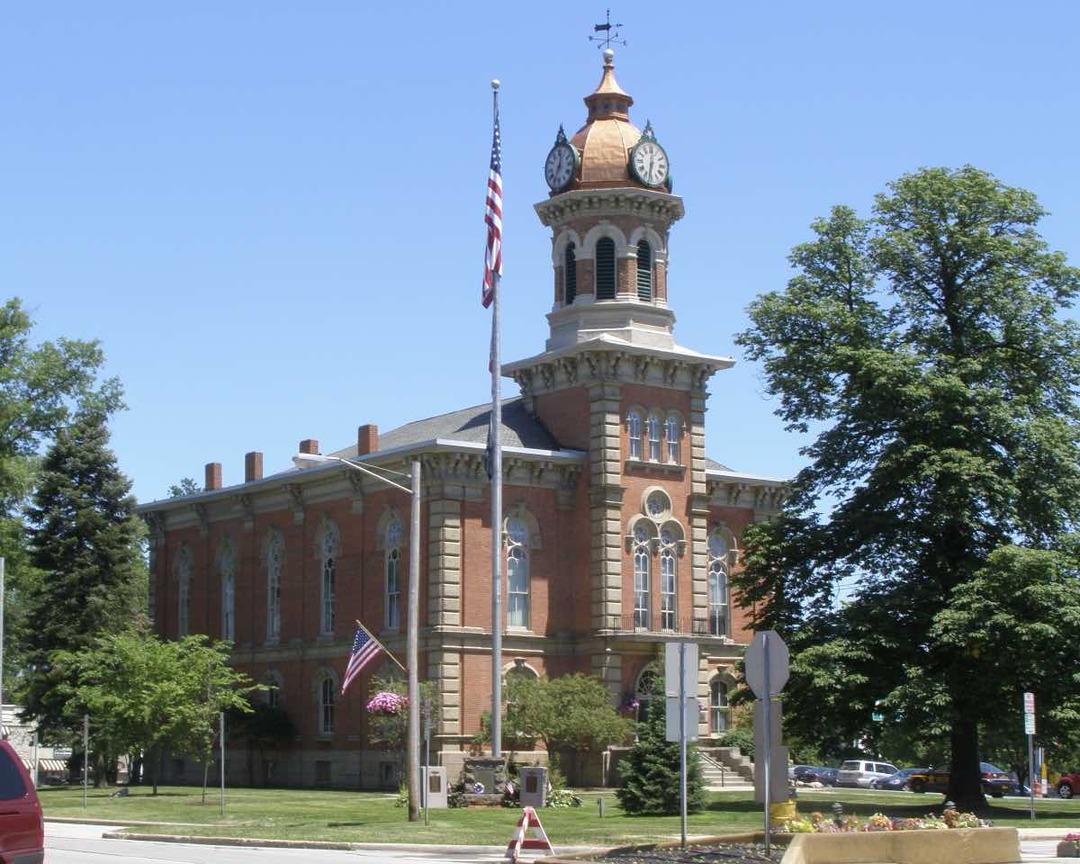
    <title type="html"><![CDATA[Geauga County Courthouse: From Log Cabin to Landmark on the Chardon Square]]></title>
    <summary type="html"><![CDATA[<p><strong><em>Resilience, perseverance, and dedication to history drive Chardon residents to continue improving their beloved courthouse, which has served as the seat of governance for Geauga County since 1805.</em></strong></p><img src="https://clevelandhistorical.org/files/fullsize/9ad50285c8e25a45f5fa52bd2fdf78b4.jpg" alt="The Fourth Geauga County Courthouse" /><br/><p>Chardon’s early planning began with Peter Chardon Brooks, a wealthy Boston merchant who acquired land from the Connecticut Land Company in 1798. He offered the land to settlers with the only stipulation being to name it Chardon. The commissioners accepted this proposal in 1808. Before Chardon could be settled, one matter of prerequisite importance had to be addressed – the establishment of a permanent seat of justice for the Geauga County. The commissioners of the county's Common Pleas Court then assigned Samuel W. Phelps to purchase and lay out land for this purpose. Reflecting New England ideals of structure and order, in 1808, the first building to be erected in Chardon was a courthouse.  </p><p>Reflecting the realities of frontier life, however, this first “courthouse” was little more than a repurposed log cabin, originally built by Abraham Skinner for Captain Edward Paine Jr. and his family. The one-room building was primitive, with a single door and window, a basic fireplace and chimney, and wide, rough boards for flooring. It also served as a temporary jail. It had a large, split log that functioned as a seat for the judges and a single large table providing a desk for the lawyers.  Realizing that the log cabin had served its temporary functions, the time came for a larger courthouse. </p><p>In 1813, Samuel King was contracted to build the second courthouse where the fire station currently stands on the square. It was built of rugged timber and had two floors. The first floor housed one cell as a temporary jail, and the second floor was the courtroom. The courthouse had multiple additional functions as Chardon was being built up. It also served as a meeting hall for political, religious, and social gatherings, as well as providing a school room for the few children who lived in Chardon. </p><p>By 1824, village leaders realized that Chardon needed better quarters for the county offices. The county allotted funds to build the southern half of the third courthouse, which also served as a jail. It was not until 1829 that the northern half of the courthouse was completed. Built of bricks in Greek Revival style, this two-story building featured large columns on the front portico. Its increased architectural sophistication mirrored the growing wealth of the county and its businesses. Unfortunately, this courthouse was not to last. </p><p>On July 25, 1868, the <em>Cleveland Plain Dealer </em>reported terrible news: “the whole business portion of Chardon, including the courthouse and jail, were burned last night.” The damage was not only material, estimated at the then-enormous sum of $100,000, but also functional; the loss of the official county buildings cast uncertainty of Chardon’s future as the county seat.  </p><p>After the fire, Chardon's citizens refused to give up. The county quickly issued a contract to Messrs, Herrick & Simmonds of Cleveland to rebuild the business district and courthouse. A newspaper article from December 4, 1868, reported on the rebuilding of Chardon: “When the improvements are completed, Chardon will become one of the handsomest villages in the State.” Another newspaper article from January 29, 1869, raved about “Chardon rising from her ashes. A disaster transformed into a blessing.” By this time, six months after the disaster, Chardon had already established a building committee, secured funding, and had built Union Block (now Main Street) on the former ruins, as well as the Randall Block (now South Hambden Street), a new section that expanded the business district around the square. The highlight of rebuilding was the courthouse, now located at the head of the public square. </p><p>Unlike its predecessors, the architecturally picturesque fourth Geauga County Courthouse, with its octagonal steeple and interestingly designed windows, endures. Faced with brick and stone trim, the North Italianate building cost $88,862. The courthouse and the two blocks of storefronts to its west form a historic district listed on the National Register of Historic Places. The square tower, detailed cupulas, and dome give this building its distinctive look. The dome roof with clock faces on four sides and its weathervane are the crowning features. Chardon had built a courthouse to match the prestige of the town and its importance in Geauga County.     </p><p>In 2020, city officials began to discuss the need to expand the courthouse. The county's judiciary had outgrown the building, which needed not only structural renovations but also technological upgrades, especially to security features. More than a century and a quarter after the current courthouse was built, Chardon residents remained protective of their historic buildings. Originally, when it was proposed for the courthouse to get an addition, residents and the Chardon Square Association sent letters opposing the expansion. County Commissioner Janet Novak acknowledged that the community had “strong feelings” about historic Chardon Square and that “any change to the square was a sensitive subject.” These concerns delayed the expansion project for years. </p><p>In 2023, city officials and Chardon residents finally reached an agreement on the expansion. As the project neared completion in 2025, Commissioner James Dvorak, a retired Chardon bricklayer and stonemason, applauded city leaders’ willingness to prioritize the historic preservation of a building whose “Italianate arches and towers have defined Chardon Square for more than 150 years,” which meant that the addition to the courthouse had to blend with the existing structure. Dvorak noted that. the county returned to the same Cleveland-area quarry used in the 19th century to source Berea sandstone to ensure that the expansion matched the original. The latest addition to the Geauga County courthouse shows how much history means to the residents of Chardon. </p><p>As Chardon grows, residents still treasure its historical atmosphere. A newspaper article from 1902 boasted of “Chardon, typical New England village. Ideal place to live. Good churches, good schools, good water, and good air.” This statement still holds true well over a century later. People move to Chardon because it is safe, beautiful, and a good place to settle with children. This is true of Chardon because of the resilience, perseverance, and good nature of the people that have lived here since its founding in 1805. Chardon has been strong for a couple hundred years, and at the pace it's going, it will remain strong into the future.</p><p><em><strong><a href="https://clevelandhistorical.org/items/show/1066">For more (including 9 images) view the original article</a></strong></em></p>]]></summary>
    <published>2025-11-13T19:37:34+00:00</published>
    <updated>2026-03-04T21:32:06+00:00</updated>
    <link rel="alternate" type="text/html" href="https://clevelandhistorical.org/items/show/1066"/>
    <id>https://clevelandhistorical.org/items/show/1066</id>
    <author>
      <name>Jez Lambert</name>
    </author>
  </entry>
  <entry>
    <title type="html"><![CDATA[Cook-Bousfield Mansion]]></title>
    <summary type="html"><![CDATA[<p><strong><em>The Cook-Bousfield mansion sits at the corner of Franklin Boulevard and West 32nd, formerly known as Duane Street. Famously dubbed the west side’s “Millionaires' Row,” Franklin was home to elite businessmen and influential politicians. The Cook-Bousfield mansion sits only a few hundred yards from Franklin Circle, the newly rehabbed Rhodes mansion, and  the Spitzer-Dempsey mansion.</em></strong></p><img src="https://clevelandhistorical.org/files/fullsize/ef8928a8f725dde1f21dea44a47d7479.jpg" alt=" Cook-Bousfield Mansion" /><br/><p><span style="font-weight:400;">The Cook-Bousfield mansion at 3105 Franklin Boulevard was originally built in 1853 for businessman Hiram Cook. It was constructed in the popular Italianate style. Not much is known about Hiram Cook, other than that he was a wealthy lumber dealer in the area. Cook sold the residence early on, and notable Cleveland residents John and Sarah Bousfield (née Featherstone) moved into the home in 1863. John Bousfield owned Cleveland Wooden Ware Manufacturing Company with his business partner J. B. Hervey. The business eventually collapsed and led to the Bousfield's temporarily leaving the company of Franklin’s finest. It is likely that the Bousfields were responsible for the substantial style change to the mansion around 1869. No longer strictly Italianate, the mansion boasted a mansard roof that covered the original belvedere. The mansard roof remains today, essentially blending the Italianate style with Second-Empire influence. </span>
<span style="font-weight:400;">When Bousfield’s woodenware business went under in 1875, he lost everything, including his home. The bank did not actually foreclose on the home until around 1880, but the Bousfields were already plotting their return to Franklin. Because of his social status, John Bousfield was involved with his neighbor’s businesses and had good relationships with Cleveland’s west side elite. Along with prominent names like Coffinberry and Rhodes, he was involved in founding People’s Gas Light Company, of which he later became President. He was also Vice President of the People’s Savings & Loan Association, which later foreclosed his 3105 Franklin home. Luckily, these positions earned him enough money to build a new mansion on the corner of Franklin and West 38th Street, just northeast of his old one. Known as </span><a href="https://clevelandhistorical.org/items/show/938"><span style="font-weight:400;">Stone Gables</span></a><span style="font-weight:400;">, this new home would be even more grandiose, with seventeen rooms just for the Bousfields. The couple rented out the remaining half of the house, supplementing their income. Stone Gables still stands as a private residence and inn, and it has been painstakingly restored. </span>
<span style="font-weight:400;">The mansion at 3105 Franklin passed through various forfeiture banks until it was purchased by land speculator Cyrus Bosworth, an heir to Leonard Case. It’s unclear if Bosworth purchased the home to live in or intended to resell it, but in 1885 the property was sold to John Pankhurst, a wealthy proprietor of the </span><span style="font-weight:400;">Globe Iron Works</span><span style="font-weight:400;"> and Globe Ship Building. Pankhurst’s business partners included Henry Coffinberry and Robert Wallace, who also owned homes on Franklin. After Pankhurst died in 1898, his widow sold the home to John M. Leich, president of Star Brewing Company, for $20,000. It was the last time the home was used as a private residence. In 1913 the property changed hands again. However, this time the Young Women’s Christian Association (YWCA) bought it and the neighboring mansion to the east. In 1928, the year before the onset of the Great Depression, YWCA demolished the mansion to the east and constructed a new dormitory complex of two three-story buildings for single working women to rent rooms. The dormitory buildings were designed by the firm of </span><span style="font-weight:400;">Howell & Thomas</span><span style="font-weight:400;">. Howell & Thomas was a small firm that designed many homes in the east side suburbs, including eleven demonstration homes for the Van Sweringen brothers. The firm also designed various YWCA buildings throughout Ohio and Texas. </span>
<span style="font-weight:400;">As the residential wealth that built the homes declined, religious institutions such as the YWCA moved in. Even before the Great Depression, much like the wealthy residents of Euclid Avenue, fortunes diminished and large city homes became less desirable. Franklin Boulevard went from a neighborhood of Cleveland’s elite to mainly working-class immigrants who rented out rooms in converted rooming houses. Many formerly elegant homes were overcrowded and unsightly as a result of housing shortages and the economic downturn of the 1930s. This is best exemplified by the decades-old story of a CWA census worker finding more than 80 people living in the old </span><a href="https://clevelandhistorical.org/items/show/847"><span style="font-weight:400;">Belden Seymour</span></a><span style="font-weight:400;"> home. However, unlike Euclid Avenue, the great homes have mostly persevered throughout this period and have survived despite commercial encroachment in the area.</span>
<span style="font-weight:400;">The YWCA remained at 3105 Franklin until 1957, when the properties were sold to The Sisters of the Humility of Mary, who operated Our Lady of Lourdes Academy just east of the site at 3307 Franklin, which is now an empty lot. The Sisters of the Humility of Mary, a Roman Catholic congregation, were looking to house sisters teaching at Lourdes Academy in the old YWCA dormitories. </span>
<span style="font-weight:400;">Both the YWCA buildings and the Cook-Bousfield mansion were sold again in 1976, after the Academy had merged. The new owners renovated the properties into an elderly care facility for seniors with mental illnesses. It was at this time that an above-ground tunnel connecting the mansion and the dormitories was added, presumably for ease of access for the workers and patients. The tunnel covered the original front entryway of the Cook-Bousfield mansion, and it is likely that the original ornate wooden doors were removed. According to a <em>Plain Dealer</em> article from 1920, the “double doors of black walnut, with ornate carvings of lion’s heads” came from the studio of John Herkomer, who had a shop at Erie (East 9th) and Eagle Street. Not constructed during the period of historical significance, the tunnel has been demolished. When crews were demolishing the tunnel in 2020, they revealed one of the original side porches of the mansion, which may have been turned into a pantry during its institutional days.</span>
<span style="font-weight:400;">Beginning in 2021, the Cook-Bousfield mansion and YWCA dormitory complex were rehabilitated for upscale apartments. There are approximately 38 apartment units throughout the buildings, with an adjoining courtyard. The YWCA complex was gutted and little of the original interior remains. However, due to the project’s tax credit status, the floor plan of the interior is mostly true to the original layout. Many of the historic elements of the Cook-Bousfield mansion, such as the ceilings, flooring, and woodwork, were covered up over time due to its institutional uses. These historic features are rediscovered in the modern setting. The Cook-Bousfield mansion’s conversion into apartments is, simply put, another chapter in its storied life.</span></p><p><em><strong><a href="https://clevelandhistorical.org/items/show/955">For more (including 15 images) view the original article</a></strong></em></p>]]></summary>
    <published>2022-01-14T18:50:11+00:00</published>
    <updated>2026-03-04T21:32:05+00:00</updated>
    <link rel="alternate" type="text/html" href="https://clevelandhistorical.org/items/show/955"/>
    <id>https://clevelandhistorical.org/items/show/955</id>
    <author>
      <name>Nate J. Lull</name>
    </author>
  </entry>
  <entry>
    <title type="html"><![CDATA[Fuller-Collins House: Hidden from View for Nearly a Century]]></title>
    <summary type="html"><![CDATA[<p><strong><em>At one time, Miles Avenue was the Euclid Avenue of Newburgh, a village in Cuyahoga County that in the early nineteenth century rivaled Cleveland in population and economic importance.  In 1866, just one year after America's Civil War came to an end and at a time when Newburgh was beginning its transformation from a rural community into a center for steel production in northeast Ohio, Silas Fuller, a carpenter who lived in Chagrin Falls, purchased three acres of land on Miles Avenue just outside the village center.  On it he built a beautiful two-story red brick house which is still standing today.</em></strong></p><img src="https://clevelandhistorical.org/files/fullsize/ae675211b972936621012b2eb7151a17.jpg" alt="Fuller-Collins House " /><br/><p>For decades, motorists driving up and down Miles Avenue in Cleveland's Union-Miles Park neighborhood would not have noticed the Fuller-Collins House. Located on the northwest corner of that street's intersection with East 100th Street, it had been all but hidden from view by a string of commercial buildings that began going up on Miles Avenue in 1920. Nearly 90 years later, in or about 2008, two of those commercial buildings were torn down, exposing the beautiful house once more to public view. But though you can now once again see it as you drive up or down Miles Avenue, it remains a house filled with mystery and unrevealed secrets.</p><p>A review of tax records suggests that the house was most likely built in 1867 by or for Silas Fuller, a carpenter from Chagrin Falls, Ohio. Two stories in height, red brick-veneered and with a front and rear wing, it is of Italianate design, popular in America from about 1840 to 1880. Italianate houses are distinguished primarily by their wide eaves with supporting brackets, and by tall narrow windows, especially on the first floor. There are a number of subtypes of Italianate design, the most common being the simple hipped roof subtype, which features a rectangular box-shaped house with a hipped roof and often a central cupola. The Fuller-Collins House is a less common subtype known as a front-gabled roof. According to <em>A Field Guide to American Houses</em>, only about ten percent of surviving Italianate houses in America are of this subtype. </p><p>As its name suggests, the front-gabled roof subtype features a front gabled roof, similar to Greek Revival houses from which this subtype draws inspiration. Silas Fuller learned the carpenter trade from his father and older brothers during the period 1825-1860 when the Greek Revival style was in vogue. For this reason, he may have found this subtype of an Italianate house easier to design and/or build, or maybe he just preferred it to other Italianate subtypes. In addition to the above-noted elements of the Fuller-Collins House, it is further notable, according to local architectural historian Craig Bobby, due to its window and door hoods which combine flat and arched lines, and which have drip-moldings at both ends to carry away precipitation. Also notable is the two-story windowed-bay on the west side of the house, which has a non-Italianate modification at its top executed circa 1890. Additionally, the house at one time had a covered one-story porch which extended along the south and east sides of the house's front wing, which might have been original or a replacement executed at and near the time of the side bay alteration. </p><p>Silas Fuller owned the house for only three years, selling it in 1869. It is unknown why Fuller, who at the time was married and still raising young children, sold the house after such a short period of ownership. It is also actually not known whether Fuller and his family ever lived in the house at all, for no directory records to date have been found listing where he lived during that decade. By the time that the 1870 census was taken, Silas Fuller had moved to Portage County and the only members of his family that could also be found in that census were living apart from him in Geauga County. Adding to this mystery is an article about Fuller that appeared in the Cleveland Plain Dealer several decades later, on December 8, 1901. It stated that, from 1865 to 1883 — which included the year in which the Fuller-Collins House was built — Fuller was traveling through the Great Lakes region, covering some 27,000 miles, while engaging in his antique clock collecting hobby, which was the subject of the article. Therefore, why Fuller built the Fuller-Collins House, whether the Fuller family ever lived in the house, and, if so, why they departed after such a short period of ownership, remain a mystery.</p><p>Emmett F. Collins was the second owner of the Fuller-Collins House, residing in it with his second wife, Abigail. Emmett was a farmer, who, when he was nearly 60 years old, turned to real estate for a living. It was in the 1860s when Newburgh Village was beginning its transformation into a steel production center in northeast Ohio. He purchased and sold lots in residential subdivisions located close to the mills and other factories, and developed at least five residential subdivisions of his own in the Village and Township, becoming wealthy in the process. The lots in these subdivisions provided housing for many mill and factory employees, a large number of whom were immigrants. The first immigrants arriving in Newburgh to work in its mills and factories were from England, Scotland, Wales, the Isle of Man, and Ireland. Later, they came from Bohemia, Hungary, Poland, and other countries in Eastern Europe. In 1873, this industrialized area of Newburgh was annexed to Cleveland, becoming the latter city's Ward 18, famously known as "the Iron Ward." </p><p>It is possible that Collins and/or his wife Abigail made significant exterior changes to the Fuller-Collins house during their ownership to give it an even grander appearance on Miles Avenue. These changes, as noted above, may have included modifications to the two-story windowed bay and to the front porch, and may also have included modifications to the window and door hoods. Collins lived in the house until his death in 1880; his widow Abigail remained in the house until her own death in 1898.</p><p>During the time that the Fuller-Collins House was owned by the Fuller and Collins families, it was located in Newburgh Township; it sat on a narrow three-acre lot that fronted on Miles Avenue; and the surrounding neighborhood was largely rural. That all changed during the twenty-plus years (1898-1921) when the next family, the Daytons, owned the house. Matilda Dayton, a boarder whose family had rented rooms in the Fuller-Collins House from 1895 to 1898, acquired the house as a result of a bequest in the will of Abigail Collins. Prior to Matilda's death in 1909, she and her husband Eli deeded the house to their son William, who created a residential subdivision out of the three acres, with sublots on the west and east sides of new Dayton Street (today, East 100th Street). At about the same time that the Dayton subdivision was being created, this area of former Newburgh Township —it had become Corlett Village in 1907 — was annexed to Cleveland, putting an exclamation point to the reality that the Fuller-Collins House was no longer located in a rural neighborhood.</p><p>The Dayton family was the last owner-occupier of the Fuller-Collins House. As the immediate neighborhood, which was near the Polish neighborhood of Warszawa (today, Slavic Village) became populated in the early twentieth century with East European immigrants, the house was converted around the time of the Great Depression into a two-family dwelling and was occupied by renters. In the mid-twentieth century, while the neighborhood was undergoing racial transition, the house continued to be used as a two-family dwelling. However, in the year 2000, the Fuller-Collins House was acquired by a contractor, who appears to have renovated and made major repairs to the house, and converted it back into a single family dwelling. Several years later, the commercial building that had sat in front of the house, blocking it from view since 1920, was torn down. At about the same time, the house was acquired by its present owner. According to the best information available online, the Fuller-Collins House is today being used as a group home for disadvantaged adult men.</p><p><em><strong><a href="https://clevelandhistorical.org/items/show/852">For more (including 11 images) view the original article</a></strong></em></p>]]></summary>
    <published>2018-11-21T13:17:04+00:00</published>
    <updated>2026-03-04T21:32:04+00:00</updated>
    <link rel="alternate" type="text/html" href="https://clevelandhistorical.org/items/show/852"/>
    <id>https://clevelandhistorical.org/items/show/852</id>
    <author>
      <name>Jim Dubelko</name>
    </author>
  </entry>
  <entry>
    <title type="html"><![CDATA[W. J. Roberts House: The Restoration of a Grand Franklin Boulevard Home]]></title>
    <summary type="html"><![CDATA[<img src="https://clevelandhistorical.org/files/fullsize/ff37f7dbef0e6f7914d4e6f5ff31dc5f.jpg" alt="The W. J. Roberts House" /><br/><p>Many of the houses on Franklin Boulevard tell a story of the wealth that could be accumulated in Cleveland in the late nineteenth and early twentieth centuries as the City became an industrial powerhouse in the Midwest.  The house at 5005 Franklin Boulevard is one such house.  But this house--like others along the Boulevard, also tells a story of renewal and restoration.  </p><p>Built in 1874 by Dudley Baldwin, a wealthy nineteenth century Cleveland railroad man, banker, and real estate developer, the house was first owned and occupied by Harvey and Alice Murray, before it was purchased in 1882 by Teresa Roberts, the wife of William J. Roberts, an up and coming industrialist in  Cleveland's early industrial era.  Born in 1844 in Cincinnati, "W. J.," as he was known, left the Queen City and came to Cleveland when he was about 30 years old to find his fortune.  It was an era when Cleveland was beginning to catch (and would later surpass) Cincinnati in both population and industrial might.</p><p>Robertsin  became associated with two Clevelanders, Samuel Gibson and Fred Beckwith.   In 1874, the three started the Gibson, Roberts and Beckwith Lead Works  on Champlain Street, where the Terminal Tower Complex sits today. Later, the company moved its manufacturing operations to the Flats on the east bank of the Cuyahoga River, in an area then known as Cleveland Centre.  There, the company built a new factory  for its lead piping and other lead products manufacturing.  The business rapidly grew and continued to operate at this location well into the twentieth century when it merged with several other companies to form the United Lead Co.  Roberts continued his involvement in the business, and later, once his reputation as a businessman was firmly established, also became involved in Cleveland's banking industry, becoming President of Brooklyn Savings & Loan Association.</p><p>By all accounts, the Roberts were very happy in their grand Italianate house at 5005 Franklin Boulevard.  One story that has been passed down in the family is that, at one point, W. J. and Teresa Roberts decided to sell the house--possibly to move to an even grander address, but, after making the deal, were so unhappy at the prospect of leaving the house, that they bought it back--at a higher price than what they sold it for!  The couple and their children lived in the house for nearly 40 years, until his death in 1919.  The following year, Teresa sold the house and moved into an apartment.</p><p>After the Roberts family left, and as Franklin Boulevard became a less desirable location in the first half of the twentieth century for Cleveland's wealthy West Siders, the house, like many on Franklin Boulevard, searched for a new use and, like many others, became a boarding house.  Elida Humphrey, a widow, operated the house as such from the late 1920s until her death in 1957.  By this time, two new problems threatened neighborhood houses as deindustrialization and flight to the suburbs hit the City of Cleveland hard.  Many of the grand old homes on Franklin Boulevard began to deteriorate from age, neglect and disrepair.  </p><p>In the 1970s, as Ohio City began to experience re-gentrification and Detroit-Shoreway activists to the west began their efforts to revitalize historic Gordon Square, a number of the grand old homes on Franklin Boulevard experienced renewal and restoration.   Henry Kinicki and Tillie Tybuszewski, who purchased the W. J. Roberts house in 1976, converted it back to a single-family dwelling and lived in it for nearly three decades.  In 2005, they sold the house to Russell Cendrowski and Roger Scheve, who then painstakingly restored it remarkably to its original nineteenth century grandeur.  Next trip down Franklin Boulevard, be sure to pay attention to the beautiful Italianate house on the southwest corner of the Boulevard and West 50th Street.</p><p><em><strong><a href="https://clevelandhistorical.org/items/show/716">For more (including 12 images) view the original article</a></strong></em></p>]]></summary>
    <published>2015-07-04T07:23:56+00:00</published>
    <updated>2026-03-04T21:32:02+00:00</updated>
    <link rel="alternate" type="text/html" href="https://clevelandhistorical.org/items/show/716"/>
    <id>https://clevelandhistorical.org/items/show/716</id>
    <author>
      <name>Jim Dubelko</name>
    </author>
  </entry>
</feed>
