<?xml version="1.0" encoding="UTF-8"?>
<feed xmlns="http://www.w3.org/2005/Atom">
  <title type="text">Cleveland Historical</title>
  <updated>2026-04-17T14:57:04+00:00</updated>
  <generator uri="http://framework.zend.com" version="1.12.20">Zend_Feed_Writer</generator>
  <link rel="alternate" type="text/html" href="https://clevelandhistorical.org/"/>
  <link rel="self" type="application/atom+xml" href="https://clevelandhistorical.org/items/browse?output=rss2"/>
  <id>https://clevelandhistorical.org/</id>
  <author>
    <name>Cleveland Historical</name>
    <uri>https://clevelandhistorical.org</uri>
  </author>
  <link rel="hub" href="http://pubsubhubbub.appspot.com/"/>
  <entry>
    <title type="html"><![CDATA[Cleveland State University: Established 1964]]></title>
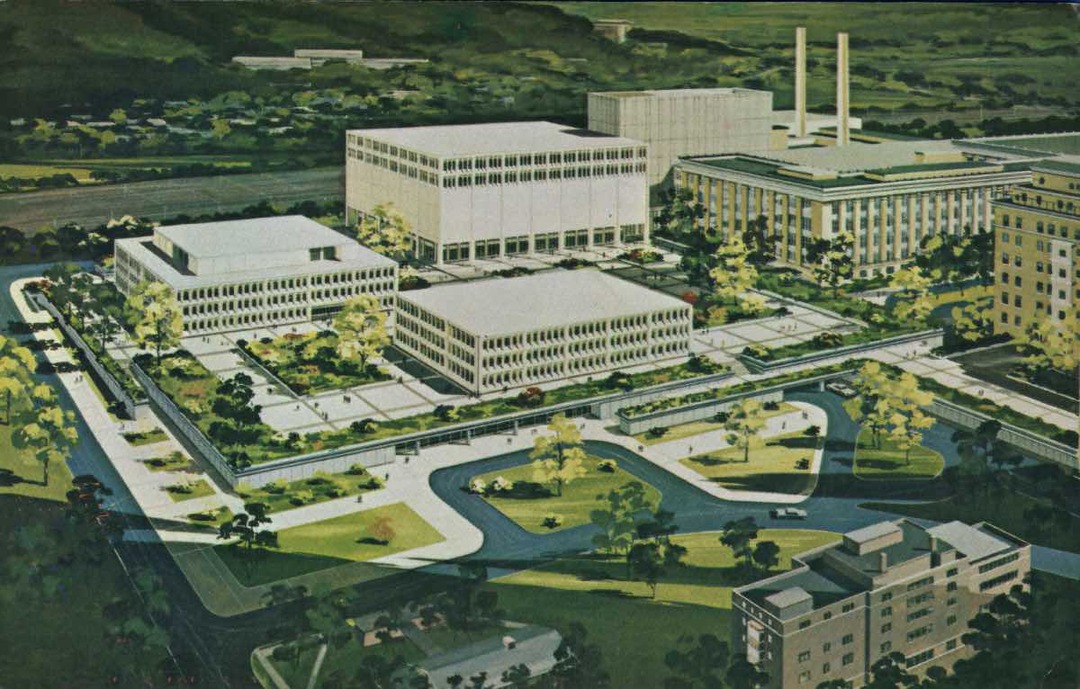
    <summary type="html"><![CDATA[<img src="https://clevelandhistorical.org/files/fullsize/45f57f5f456aa5b2775710108bf926e2.jpg" alt="Along Euclid Avenue" /><br/><p>Desiring to place a public institution of higher learning within thirty miles of every Ohio resident, Governor James Rhodes proposed the establishment of a state university in Cleveland following a unanimous recommendation from the Ohio Board of Regents in June 1964. The result was House Bill No. 2, a bipartisan effort introduced to the House during a special session convened by Rhodes in November. The bill easily passed through the legislature and on December 18, 1964, Rhodes signed it into law. The new university assumed responsibility for Fenn College, making the campus its nucleus, and on September 27, 1965, classes officially began at Cleveland State University.</p><p>Fenn College was a small institution of 1,675 full-time students with only a few buildings comprising its campus including the 22-story Fenn Tower. CSU's first year saw enrollment jump to 3,416 full-time scholars and in order to accommodate the dramatic influx of students, military-style Quonset huts were erected for class instruction. Recognizing the need to expand, in March 1966 the Board of Trustees announced design plans for University Tower, Main Classroom, and the Science Building. Three years later under President Harold Enarson the Cleveland-Marshall Law School became part of Cleveland State, remaining at its location on Ontario Street until 1972 when the building was sold to make way for the new Justice Center. In 1977 Cleveland-Marshall's permanent building was completed on campus with Prince Charles presiding over the dedication of the school's new home. That same year CSU's second President, Walter Waetjen, announced the College of Urban Affairs would replace the Institute of Urban Studies, becoming the university's seventh college when its doors opened. Now called the Maxine Goodman Levin College of Urban Affairs, it ranks #2 among schools of its kind in the country.</p><p>The 1980s in many ways proved to be a turbulent time for the young university. Over a period of several months in 1982 three people were slain on campus by Frank Spisak Jr. who was eventually apprehended in September and sentenced to death the following summer. The decade would close in controversy after a salary dispute led to the firing of administrator Raymond Winbush. The incident heightened racial tensions on campus and led to the student occupation of Fenn Tower in protest of his dismissal. Recruiting violations by the Men's Basketball program and the eventual demise of head coach Kevin Mackey added to the decade's despair, though the team would become a rallying point for the university in 1986. That year Mackey's Cinderella squad took the NCAA tournament by storm, advancing to the Sweet 16 before falling to Navy.</p><p>CSU had more to cheer about in 1991 as the long-awaited 13,610-seat Convocation Center was finally completed. Later renamed the Bert L. & Iris S. Wolstein Convocation Center, the venue has hosted a diverse array of events ranging from monster truck shows to a presidential debate. The new Convocation Center, however, could not prevent the turmoil that plagued the 1980s from spilling over into the 1990s as disputes between the administration and faculty led to the faculty unionizing while declining enrollment numbers forced the Board of Trustees to consider major cutbacks. Then, as the decade wound down and the world braced for Y2K, the PeopleSoft program the university used to manage financial aid records crashed unexpectedly. The fallout from this episode nearly forced CSU to close its doors and it took a number of years for the university to fully recover.</p><p>A new era was ushered in at CSU in 2001, however, when Michael Schwartz became Cleveland State's fifth  president. Under President Schwartz the university moved away from its open enrollment policy in implementing admissions standards, the honors program was established, and campus revitalization efforts commenced. These efforts included the construction of a new student center, increased campus housing, renovation of the law school building, and installation of the now iconic "CSU" letters on Rhodes Tower. Schwartz stepped down in 2009 with Ronald Berkman picking up the torch in his place. President Berkman, a unanimous selection by the Board of Trustees, has continued to improve CSU, notably orchestrating the construction of The Center for Innovation and Entrepreneurship.</p><p>In 2014 Cleveland State celebrated its 50th  anniversary and while the first five decades may have been trying at times, CSU has transformed itself from an inward facing commuter campus to an outwardly directed anchor of the emerging Campus District. Beginning with a handful of buildings tucked away between East 24th  Street and the Innerbelt Freeway, Cleveland State now boasts eight colleges, over 200 academic programs, and an enrollment of some 17,000 students.</p><p><em><strong><a href="https://clevelandhistorical.org/items/show/77">For more (including 14 images&#32;&amp;&#32;8 audio files) view the original article</a></strong></em></p>]]></summary>
    <published>2010-11-03T13:18:38+00:00</published>
    <updated>2026-03-04T21:31:58+00:00</updated>
    <link rel="alternate" type="text/html" href="https://clevelandhistorical.org/items/show/77"/>
    <id>https://clevelandhistorical.org/items/show/77</id>
    <author>
      <name>Joseph Wickens</name>
    </author>
  </entry>
  <entry>
    <title type="html"><![CDATA[Cleveland Institute of Art]]></title>
    <summary type="html"><![CDATA[<img src="https://clevelandhistorical.org/files/fullsize/cia1_c225c9ce0c.jpg" alt="Student On Weaving Loom, 1975" /><br/><p>The Cleveland Institute of Art was founded in 1882 as the Western Reserve School of Design for Women. The school began very small, holding classes in the home of its founder Sarah M. Kimball with only one student and one teacher, but it quickly grew.  The school, despite its name, did attract a few male students and in 1892, the school was renamed the Cleveland School of Art. It became independent after plans for a merger with Western Reserve University fell through. In 1904 a new home for the school was built on Juniper and Magnolia Drives in University Circle. The school remained there until 1956, when it opened a larger facility nearby on East Boulevard. In 1949, the school took on its current name: the Cleveland Institute of Art. The school also purchased a former Ford assembly plant on Euclid Avenue in 1981, converting it into the Joseph McCullough Center for Visual Arts. </p><p>The Cleveland School of Art was also involved in the community of Cleveland. In 1917 the school began summer and weekend classes for adults and children.  These classes continue today.  History also affected the school, during the Great Depression the school took part in the WPA Federal Arts Project and during World War II mapmaking and medical drawing were added as courses.  The school also added more academic courses overtime, although the original purpose of the school was to teach practical skills over theoretical academic ones.  </p><p>In 2014 CIA left its Ford Drive building to consolidate into the McCullough Center on Euclid Avenue. At this time it built an addition called the George Gund Building on one side of the old factory building. Its former home on East Boulevard was demolished four years later to create additional green space in the heart of University Circle.</p><p><em><strong><a href="https://clevelandhistorical.org/items/show/47">For more (including 6 images&#32;&amp;&#32;3 audio files) view the original article</a></strong></em></p>]]></summary>
    <published>2010-09-19T12:20:15+00:00</published>
    <updated>2026-03-04T21:31:58+00:00</updated>
    <link rel="alternate" type="text/html" href="https://clevelandhistorical.org/items/show/47"/>
    <id>https://clevelandhistorical.org/items/show/47</id>
    <author>
      <name>CSU Center for Public History and Digital Humanities</name>
    </author>
  </entry>
  <entry>
    <title type="html"><![CDATA[The Cleveland Institute of Music]]></title>
    <summary type="html"><![CDATA[<img src="https://clevelandhistorical.org/files/fullsize/cim1_0a835e861a.jpg" alt="CIM Director Victor Babin, 1966" /><br/><p>The Cleveland Institute of Music was founded in 1920 by a small group of backers who each contributed $1,000 to get the music conservatory off the ground. Initially the school focused on student performance. Classes were first taught in the Statler Hotel, then moved to various residences on Euclid Avenue until the institute built its own facility in University Circle in 1961.  </p><p>CIM's first artistic director was Ernest Bloch, a Swiss composer and teacher who came to Cleveland from New York City. Bloch began teaching Dalcroze Eurhythmics, a holistic method of music education focusing on the expression of both musical and physical rhythms that is still taught to students today. The institute offers a comprehensive liberal arts education in conjunction with Case Western Reserve University and also provides a preparatory program for younger students. Since its founding, CIM continues to have a close relationship with the Cleveland Orchestra. The number of enrolled students in CIM's inaugural year was five. A century later, more than 400 students enroll in a typical academic year.</p><p><em><strong><a href="https://clevelandhistorical.org/items/show/46">For more (including 8 images&#32;&amp;&#32;6 audio files) view the original article</a></strong></em></p>]]></summary>
    <published>2010-09-19T10:44:45+00:00</published>
    <updated>2026-03-04T21:31:58+00:00</updated>
    <link rel="alternate" type="text/html" href="https://clevelandhistorical.org/items/show/46"/>
    <id>https://clevelandhistorical.org/items/show/46</id>
    <author>
      <name>CSU Center for Public History and Digital Humanities</name>
    </author>
  </entry>
  <entry>
    <title type="html"><![CDATA[Case Western Reserve University: The Evolution of a Renowned University]]></title>
    <summary type="html"><![CDATA[<p><strong><em>Two colleges growing in parallel through the nineteenth century achieved a cooperative union in 1967 and emerged as a premier educational institution in Cleveland and beyond.</em></strong></p><img src="https://clevelandhistorical.org/files/fullsize/ba8a3ad4174ab34278f7d98d8eb8d28c.jpg" alt="Health Science Center" /><br/><p>Case Western Reserve University traces its roots to Western Reserve College, founded in Hudson, Ohio, in 1826.  Three faculty members began instruction in theology, ancient languages, and mathematics/natural philosophy and began to graduate students in 1830. Western Reserve grew up in Hudson through national economic hardships and many political and academic challenges. Abolitionism, the Civil War, and the education of women were among the issues that shaped the College in the mid to late 19th century. Presidents George Pierce, Henry Hitchcock, and Carroll Cutler guided the development and logistics of Western Reserve’s curriculum, facilities, and finances from 1834 to 1886. The Cleveland Medical College was founded in 1843 in downtown Cleveland as an autonomous department of Western Reserve College. Among the growth in faculty during this time, Edward Morley was appointed as a Professor of Chemistry in 1869 (remaining until 1906) as a leader in chemistry and physics instruction. Economic and population growth in northern Ohio encouraged the school’s leaders to consider the metropolitan area and its resources for a relocation of the College from Hudson to Cleveland. Industrialist Amasa Stone financed the college’s move to Cleveland’s University Circle in 1880. The College moved its programs to newly constructed buildings along Euclid Avenue adjacent to the Case School of Applied Science and within six years established Adelbert College (for men), the College for Women and embraced affiliation with Music and Art programs in the locale.   </p><p>The Case School of Applied Science was the brainchild of philanthropist Leonard Case, Jr. He financed the founding of the school in 1880 originally holding classes in the family home near Cleveland’s Public Square until construction of buildings along Glenwood Street (later becoming East Boulevard, then Martin Luther King Drive) in University Circle were completed. Western Reserve and Case became neighbors in 1882, and the schools began to share relationships through faculty research and program cooperation. CWRU historian, C. H. Cramer noted that in 1880, “the two schools agreed on ‘friendly cooperation’ —and for some time there was good will and good spirit between the institutions.”  A fire at Case Main building prompted Adelbert College to provide rooms and equipment for Case programs. One of the first appointments to the Case faculty was physicist Albert Michelson. The two schools’ relationship became the setting for the groundbreaking Michelson-Morley Experiment, an 1887 study which laid the groundwork for modern theories of physics involving the measurement of light. Four presidents: Cady Staley, Charles Howe, William Wickenden, and T. Keith Glennan guided Case School Applied Science into Case Institute of Technology by 1947. Increased cooperation and federation with Western Reserve University from 1886 to 1966 was evident despite faculty, student, and alumni resistance to any discussions of an institutional merger. </p><p>Meanwhile, WRU continued growing through the decades and into the 20th century with the addition of Schools of Law, Dentistry, Graduate Programs, Pharmacy, Applied Social Sciences, Nursing, Education, Architecture, Business/Management, and Library Science by 1941. Cleveland College of Western Reserve University (and affiliated with Case) was established on Public Square in the Chamber of Commerce Building to provide downtown access to programs during days and evenings. At Case, under President Wickenden, the curriculum was molded to include humanities as part of the engineering program. Also notable was the admission of women into undergraduate programs in the sciences at Case during 1943 to bolster the Army and Navy workforce during the war. Women continued to earn degrees through 1954 when admissions ceased until 1960 at which time women were welcomed to all science and engineering programs permanently. Upon the aftermath of World War II, Keith Glennan, a businessman, assumed the presidency of Case Institute of Technology. He guided an era of unprecedented growth and expansion of the school and its programs via newfound support from foundations and government contracts. Glennan twice used leaves of absence to join the Atomic Energy Commission and to head NASA during his tenure which expanded his university’s exposure and engagement. Glennan also endorsed the notion that engineers and technologists needed to broaden their knowledge of human and social behavior and, consequently, expanded the curricula to that end. He noted that one economical method to implement this educational approach was to federate with “the complementary institution that was within eyesight of the Case administration building.” Glennan was also influenced by the merger of Fenn College of Engineering with Cleveland State University which eliminated a private engineering school in Cleveland and by the insights of the Carnegie Foundation president John Gardner concerning the advantages of a merged university in Cleveland. He and WRU president John Millis began regular meetings to discuss the possibilities of a federation or merger and sought consultant studies and expert input concerning the prospect.</p><p>The name Case Western Reserve University was derived from the merger of Western Reserve University and Case Institute of Technology. The process culminated a year-long administrative consolidation after both institutions' trustees’ approved merger plans. The plan required equal partnership and status of Case and WRU, despite their respective size differences and renewed vocalized resistance by faculty and alumni. Robert Morse succeeded Glennan as president of Case on July 1, 1966, and one year later became president of Case Western Reserve University. Eight more presidents would lead the institution through 2017 which marked the 50th anniversary of the merger and a celebration of the benefits and growth of the University and its developmental impact upon the University Circle region of Cleveland. </p><p><em><strong><a href="https://clevelandhistorical.org/items/show/37">For more (including 12 images&#32;&amp;&#32;4 audio files) view the original article</a></strong></em></p>]]></summary>
    <published>2010-09-18T14:21:26+00:00</published>
    <updated>2026-03-04T21:31:57+00:00</updated>
    <link rel="alternate" type="text/html" href="https://clevelandhistorical.org/items/show/37"/>
    <id>https://clevelandhistorical.org/items/show/37</id>
    <author>
      <name>Jim Lanese</name>
    </author>
  </entry>
</feed>
