<?xml version="1.0" encoding="UTF-8"?>
<feed xmlns="http://www.w3.org/2005/Atom">
  <title type="text">Cleveland Historical</title>
  <updated>2026-05-02T04:00:30+00:00</updated>
  <generator uri="http://framework.zend.com" version="1.12.20">Zend_Feed_Writer</generator>
  <link rel="alternate" type="text/html" href="https://clevelandhistorical.org/"/>
  <link rel="self" type="application/atom+xml" href="https://clevelandhistorical.org/items/browse?output=rss2"/>
  <id>https://clevelandhistorical.org/</id>
  <author>
    <name>Cleveland Historical</name>
    <uri>https://clevelandhistorical.org</uri>
  </author>
  <link rel="hub" href="http://pubsubhubbub.appspot.com/"/>
  <entry>
    <title type="html"><![CDATA[The Cleveland Health Museum: America&#039;s First Health Museum]]></title>
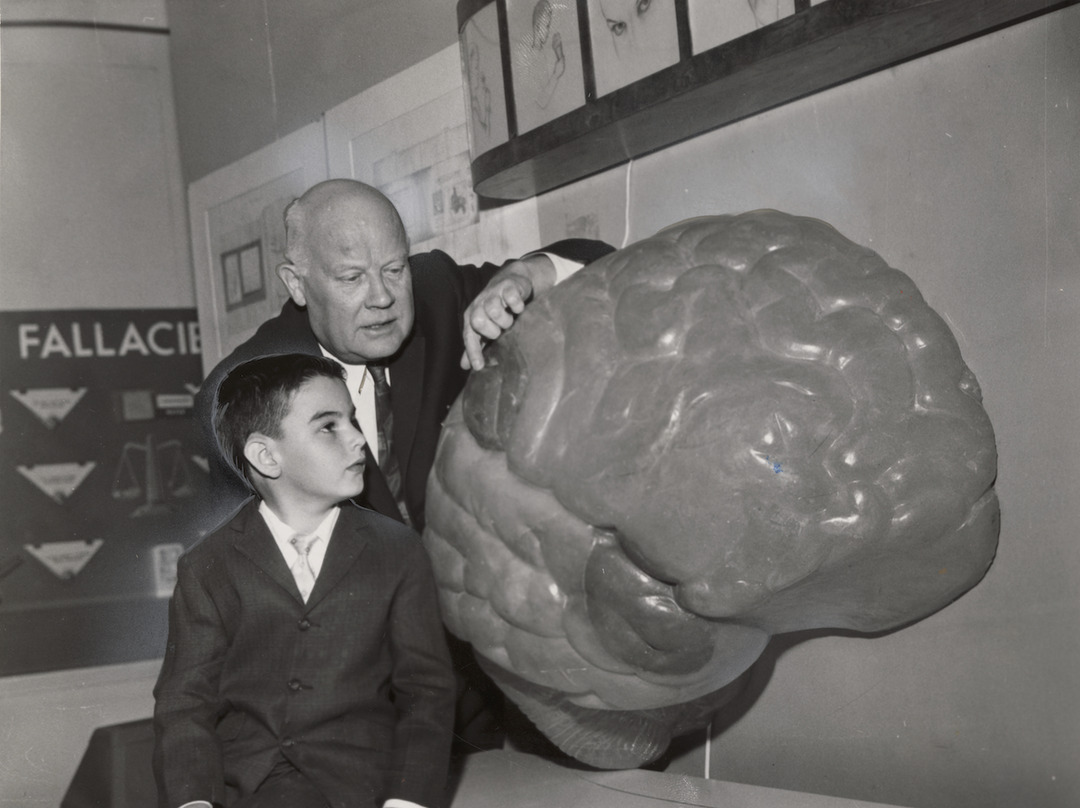
    <summary type="html"><![CDATA[<p><strong><em>In the early twentieth century, medical doctors and social organizations devoted much time and effort to developing new ways to show people how modern science could improve their health.  These doctors and organizations firmly believed  that showing people was better than lecturing them, and  they accordingly promoted new methodologies that  would visually demonstrate the health benefits of modern science.  One of the most interesting concepts that they promoted during this period was the health museum.</em></strong></p><img src="https://clevelandhistorical.org/files/fullsize/5a2803de6124a3a6c8425f07878bf611.jpg" alt="A Lesson in the Human Brain by Dr. Gebhard" /><br/><p>In 1911, from May 6 to October 31, an International Hygiene Exhibition  was held in Dresden, Germany.  Situated in the city's famous GroBer Garten, it occupied approximately 62 acres of the park grounds. There, representatives mostly from  Germany and other European countries presented exhibits of some 20,000 objects in 70 rooms that showed how advancements in modern science could improve health and hygiene, with emphasis in the fields of history, industry and populism.  One year after the International Exhibition closed, a health and hygiene museum—the first of its kind in the modern world—was built  in Dresden  on the Exhibition grounds.</p><p>While the United States did not officially participate in this International Exhibition, a number of American medical doctors and other Americans traveled to Dresden to see it. There is no newspaper account of  anyone from Cleveland attending; however, word of the Exhibition and the new  health museum  in Dresden certainly reached at least one person in Cleveland, Mildred Chadsey.</p><p>Mildred Chadsey was a graduate of the University of Chicago where she earned a degree in social work. In 1910 she moved to Cleveland and two years later accepted a position in new mayor Newton D. Baker's administration as the city's first housing official. The duties of that position  included serving as the city's chief sanitary inspector.  Not only was Chadsey the city's first housing official; she was also one of the first women to serve in any position in Cleveland city government.</p><p>On  November 27,1912, according to the Cleveland Press, Chadsey announced a plan to create a health museum in the "old East Ohio Building" then standing on Superior Avenue next to where Cleveland City Hall then stood. Over the next several years Chadsey recruited volunteers from Western Reserve University to gather information and statistics on Cleveland housing in furtherance of her museum project. However, before she could complete the project which was supported by Mayor Baker, but opposed by Cleveland City Council, Baker's term of office came to an end ,and with it,  Chadsey's tenure as the city's housing official.</p><p>While Mildred Chadsey's  1912 proposal  to build a health museum  in Cleveland died, the idea did not.  Two decades later, during the Great Depression, a number of Cleveland medical doctors and social organizations gathered together,  determined to create and fund a health  museum largely with private sector donations.  This time, the project succeeded.</p><p>Inspired by health exhibits in the Hall of Science at Chicago's 1933-1934 Century of Progress International Exposition, and led  by Dr. Lester Taylor, President of the Cleveland Academy of Medicine, 33 members of Cleveland medical community and various social organizations gathered on March 25, 1936, at the Dudley Allen Medical Library on Western Reserve University's campus to discuss how such a project might move forward in Cleveland.</p><p>Over the next four years, meetings were held, work was assigned, area dentists were invited to participate, funds were solicited, the project was incorporated under the name of the Cleveland Museum of Health and Hygiene, and displays and exhibits were prepared. Elisabeth Severance Prentiss, widow of Dr. Dudley P. Allen, a prominent late 19th and early 20th century surgeon, had promised to donate their former mansion at 8811 Euclid Avenue  to the museum when the project was nearing completion. In  January, 1940, she did so.  That May, the last essential addition to the project was made when Dr. Bruno Gebhard, the Director of the Health Museum in Dresden, who had fled Hitler's Germany and come to the United States, agreed to become the first Director of the Cleveland Health Museum.  Six months later, on November 14, the Cleveland Museum of Health and Hygiene opened its doors to the public.</p><p>In the museum's first years, the 15-room former mansion of Dr. Allen and his wife was sufficiently large for the early exhibits and displays of the museum, which included, according to an article appearing in the Plain Dealer on January 19, 1941: a model of a woman's head showing the size and location of various organs; a display revealing the number of babies born and the number of people who died each day in Cleveland, a display using a photograph of Public Square and the Soldiers' and Sailors' Monument to illustrate the number of blood cells in the human body; X-rays and skeletons of the human body; height and weight measuring devices; eye tests; and a display which taught practical tips for ensuring safety while lifting heaving objects.</p><p>One of the most interesting acquisitions by the Health Museum in its early years was that of the two alabaster statues of a nude woman and man, named respectively Norma and Normman.  They were the work of  obstetrician Robert Dickinson and sculptor Abram Belskie. Purchased by the Museum for $15,000, the female statue drew the most attention from patrons, especially after the Museum and the Plain Dealer co-sponsored a contest to find an area woman whose measurements were most like hers.</p><p>Within five years  after the Museum opened,  the Allen mansion became too small for its displays and exhibits, which became larger, more numerous, and more complex.  In 1946, as the result of a large donation  from James Bohannon, then president of the Brewing Corporation of America (producer of Carling's Black Label beer), the Museum purchased the former Lyman Treadway mansion at 8917 (later renumbered 8911) Euclid Avenue, which was larger,  located on more land, had more outbuildings, and was  just several houses up the street from the Allen mansion.</p><p>By 1947, in its new location and guided by Director Gebhard, the Cleveland Health Museum had exceeded all expectations and had become a museum which drew tens of thousands of visitors, while also providing training to hundreds of area medical personnel. By this date, the museum had more than 50,000 exhibits aimed at showing Clevelanders how to be and stay healthy.</p><p>In the early years of the museum's stay at the Treadway mansion, several of the exhibits  stood out more than others. One was the Transparent Women who arrived at the Museum in 1950, and who, after another contest, this time sponsored by the Cleveland Press and the Museum, became known as Juno.  Another was a mechanical human brain that was so large that it was necessary to build a separate pavilion onto the front of the Treadway  mansion in 1966 to house it.</p><p>As the museum continued to grow, its board of directors planned another addition to the Treadway mansion much larger than the glass pavilion built in 1966.  In 1970, the Museum board proposed to construct a one-story Mediterranean sand color brick building to the front of the current museum that would add 55,000 square feet to the Museum.  The new addition  included octagonal  exhibition halls and a theater that would seat 155 people, as wells as "20,000 square feet  . . . devoted to creating 13 experimental audio-visual teaching laboratories, a reference center, and 16 offices," according to an article in the Cleveland Press on June 22 of that year. Construction of the new addition, as well as of an expanded parking lot on the north end of the property was completed and the new wing opened to the public on May 14, 1972.</p><p>For the next two decades, the Health Museum operated both as a museum and as an educational facility for school children.  According to an article in the Cleveland Plain Dealer on July 9, 1978, each year 50,000 students coming from as far as 4000 miles from Cleveland visited the museum to attend a two-hour class with one of the museum's 15 special health instructors.</p><p>By the 1990s—a decade which saw extraordinary changes in downtown Cleveland, including the building of new playing facilities for all three of Cleveland's major sports teams, the Rock and Roll Hall of Fame Museum, and the Great Lakes Science Center—the Health Museum was becoming old and outdated, with a number of its exhibits not even working. Visitor attendance dropped nearly ten percent  between the years 1992 and 1995, falling from 102,148 to 92,262.</p><p>In 1998, the Museum Board of Directors, which was chaired by well-known Cleveland physician and television personality Dr. Theodore Castele, decided that, in order to successfully compete with other public institutions in Cleveland, a new health museum should be built to replace the aging yellow brick, windowless building on Euclid Avenue.  In addition to the construction a new museum building, the plans called for replacement of all of the museum's health exhibits—except for Juno, the transparent woman, and the 18-foot tooth display—and the restoration and renovation of the Henry W. White mansion just east of the museum, to serve as an administrative office building for the museum. Also, sadly, the plans called for the demolition of  the Treadway mansion which had housed the museum for more than 50 years. The total cost of the project was expected to be between $18 and $28 million. </p><p>By 2000, the White mansion was restored, and three years later, on February 15, 2003, the new museum, renamed HealthSpace, opened to the public.  Unfortunately, the new construction placed the museum more than $17 million in debt. Moreover, visitors did not respond to the new museum in the large numbers anticipated, possibly preferring to visit the new  Great Lakes Science Center downtown on the newly developed Cleveland lakefront.  In fact, the number of visitors to HealthSpace actually declined after the new facility was built.  In 2005, only fifty-eight thousand people visited HealthSpace, almost fifty percent less than the number who visited the museum in the 1990s before the new museum building was built.</p><p>Struggling with debt, the Board of Directors of Health Space announced in January 2006 that they would be selling the new museum  building to the Cleveland Clinic and moving to a new location.  The price that the Clinic paid for the building was exactly the same amount as the construction debt owed by the museum.  Months later, the museum announced that it would  be merging with the Cleveland Museum of Natural History.  The two museums had been supportive of each other ever since the Health Museum first opened in 1940. The merger was completed effected January 1, 2007, one day after the Health Museum closed its doors on Euclid Avenue for good.</p><p>Today (2026), a recently rebuilt Cleveland Museum of Natural History contains a number of exhibits directly related to human health.  In addition, and perhaps even more importantly, the Natural History Museum, in its new facility, presents many interactive exhibits just as early twentieth century medical doctors and other health professionals first proposed to teach health and hygiene: Do not lecture your patients; show them. Applied  at the Cleveland Museum of Natural History, this method may just also be the best way to show visitors how the natural world works.</p><p><em><strong><a href="https://clevelandhistorical.org/items/show/1082">For more (including 25 images) view the original article</a></strong></em></p>]]></summary>
    <published>2026-03-10T21:59:51+00:00</published>
    <updated>2026-05-01T00:23:53+00:00</updated>
    <link rel="alternate" type="text/html" href="https://clevelandhistorical.org/items/show/1082"/>
    <id>https://clevelandhistorical.org/items/show/1082</id>
    <author>
      <name>Jim Dubelko</name>
    </author>
  </entry>
  <entry>
    <title type="html"><![CDATA[Dittrick Medical History Center: A Showcase for Two Centuries of Healthcare Advancements]]></title>
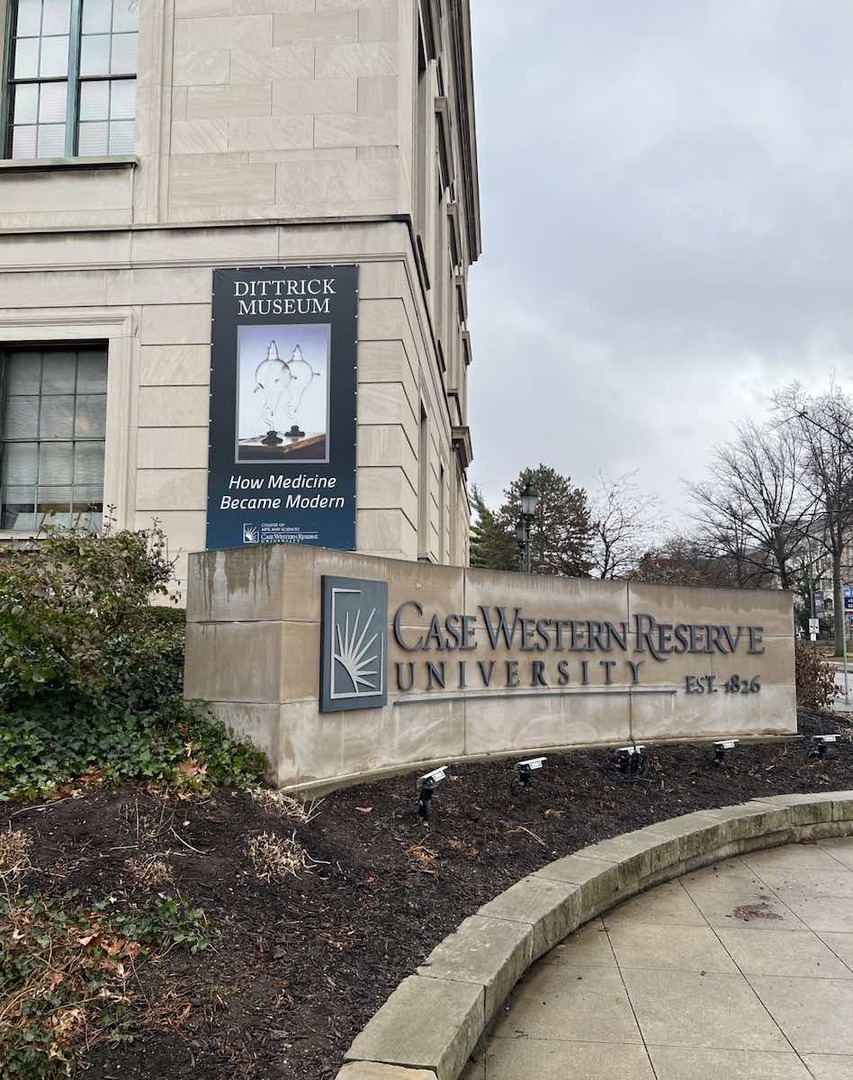
    <summary type="html"><![CDATA[<p><strong><em>In the late nineteenth century, the Cleveland Medical Library Association opened a fledgling museum "that represented a collection of heterogeneous articles stored in boxes, not arranged systematically, and not catalogued." By the twenty-first century, the Dittrick Medical History Center was recognized as one of the foremost medical museums. Its evolution unfolded alongside not only medical advances but also the city's broader growth as a healthcare hub.</em></strong></p><img src="https://clevelandhistorical.org/files/fullsize/ef7f6a8ea3687947e8d93b8f9918ab79.jpg" alt="Dittrick Medical History Center Today" /><br/><p>Medical history museums long existed in Europe prior to their origins in the United States, which occurred following the outbreak of the Civil War, and were initially used as educational centers for medical students. The Army Medical Museum was one of the United States’ first known medical history museums and was established to support the Union Army Medical Department’s library. Although the funding for the Army Medical Library decreased over the years, causing relocation and merging, other medical history museums in the U.S. somehow managed to survive and thrive, helping promote the continuance of medical education. For the surviving medical history museums, credit can surely be granted to institutional funding, but the real praise goes to the dedicated educators and collectors, the commitments made to their communities, and an ability to connect relevantly to an ever-changing audience. In its origins, the Dittrick Medical History Center, like the Army Medical Museum, struggled with financing and sustainability. The Dittrick’s history begins with a small library on Prospect Avenue for members and associates of the Cleveland Medical Library Association. Dudley P. Allen, one of the founders of the CMLA, was an avid collector, educator, and surgeon who collected medical books and instruments, which he would later donate to the museum. Upon his death, Allen’s will left a fund of roughly $200,000 to support the library’s maintenance. Allen’s generosity and commitment made him a most appropriate namesake for the medical library and museum on Western Reserve University’s campus, dedicated as the Allen Memorial Medical Library in 1926. Canadian physician Howard Dittrick came to Cleveland in the early twentieth century to work in healthcare and educate about medicine. Unsurprisingly, Dittrick connected with Allen and began researching and collecting medical instruments, tools, and practices from other parts of the world and previous time periods. Dittrick and Allen both aspired to turn the collection of “obsolete types of surgical instruments, microscopes, stethoscopes, diplomas, war material, and personal objects from prominent doctors” into a more robust museum, eventually for public audiences. Early nineteenth-century meeting minutes from the CMLA Executive Council reveal that the museum did not always exist on a large scale. Yet due to Dittrick’s advocacy, avid collecting, fundraising, and work cataloging the artifacts, a museum eventually gained traction within the CMLA community, which decided that the new space in the Allen Memorial Medical Library would have a specific section on the third floor established for a museum space. Although an achievement for Dittrick, it was not until 1934 that the museum, initially named the Museum of Historical and Cultural Medicine, earned enough respect and praise to become its own department. Dittrick continued to work avidly as the Director of the Museum of Historical and Cultural Medicine for about ten more years. In 1945, the CMLA decided to dedicate the Museum to Dittrick in honor of his fierce dedication and advocacy to make a museum of its kind flourish not only for the medical field but for the public. The Howard Dittrick Museum of Historical Medicine continued to grow and flourish over the years under new direction and guidance, all still with the spirit of Dittrick in mind. While museums like the Army Medical Museum were not able to sustain themselves, the Howard Dittrick Museum continued to receive donated artifacts, lend out collections, host guest lecturers, and keep its doors open for both research and public education. </p><p>Throughout the twentieth century and into the twenty-first, the Dittrick has mounted many permanent and temporary exhibits. Many of the exhibits have been timely. For the U.S. Bicentennial, the museum presented an exhibit that depicted health and medical care in the era of the American Revolution. Other, more permanent exhibits depict the history and improvement of medical technologies, including microscopes and stethoscopes. As the museum and its exhibits continued to adapt to changing times, such as online cataloging and technologically engaging activities, the Dittrick underwent another name change in 1998 to better reflect the mission and collections of artifacts, rare books, images, and other materials. Today, the Dittrick Medical History Center has one of the most prominent collections of contraceptives in the United States, as well as one of the largest collections of antique surgical instruments.</p><p><em><strong><a href="https://clevelandhistorical.org/items/show/985">For more (including 7 images) view the original article</a></strong></em></p>]]></summary>
    <published>2022-11-28T05:05:18+00:00</published>
    <updated>2026-04-17T19:17:42+00:00</updated>
    <link rel="alternate" type="text/html" href="https://clevelandhistorical.org/items/show/985"/>
    <id>https://clevelandhistorical.org/items/show/985</id>
    <author>
      <name>J. Wilson</name>
    </author>
  </entry>
  <entry>
    <title type="html"><![CDATA[Metro Health Medical Center: The Nation&#039;s First Public Hospital System]]></title>
    <summary type="html"><![CDATA[<img src="https://clevelandhistorical.org/files/fullsize/da7984ba506b87f9c9bd84a634c486eb.jpg" alt="Metro General&#039;s &quot;Twin Towers&quot;" /><br/><p>In 1958, City Hospital officially became Cleveland Metropolitan General, through a vote of the Cuyahoga County electorate to transfer the hospital from city to county control.  As the newest addition to the County's growing portfolio of health, judicial, and transportation divisions, City Hospital was renamed Cleveland Metropolitan General to underscore the change from a city focus to a broader county role. This change reflected a trend in the 1950s towards increasing county control over city governance due to the redistribution of the population into the suburbs rather than the core city. The county takeover of Metro General also marked the beginning of the Cuyahoga County Hospital System. Today, the CCHS, now known as The MetroHealth System, is recognized as the nation's first public hospital system. Metro Health Medical Center is still the oldest and largest member of MetroHealth System, and is recognized nationally for its MetroLife Flight program and its Trauma and Burn unit. Serving as one of the busiest trauma centers in the nation and with more than 3,000 admissions annually, it is also the only Level 1 Trauma Center in the region.</p><p>The most iconic image of Metro Health Medical Center is without a doubt its Twin Towers, the structures whose nickname stemmed from the simultaneous construction of the World Trade Center's Twin Towers. The towers were built as a part of the county-initiated $40 million expansion undertaken at the campus on Scranton Road between 1962 and 1972, primarily funded through tax levies. The project included the construction of the towers--each a 12 story "hospital in the round." The reports on the towers at the time revolved around the benefits of the round construction of the towers, allowing for a central nurse's station in the corridor connecting the towers, and patient rooms forming a semi-circle on both sides. Each tower could hold 503 beds in total, with each floor accommodating 28 patients in semi-private rooms and private bathroom facilities. The towers also featured air conditioning, a pulmonary intensive care unit, and a burn treatment center. Showcased was the state-of-the art food delivery system, the "Cyberail" system of 'robot carts,' one of the first systems of its kind installed in the nation. The towers, more formally known as North Building, were built as part of the $40 million, ten year building project, costing $18.5 million themselves, over 46% of the total budget. This building plan was conceived in order to transform the campus into a modern and unique major medical center. The plan for the 'Twin Towers' embodied the hope of a nation in the future and acted as a stalwart of growth for a city experiencing troubled times.</p><p>Metro Health Medical Center has refocused its many programs and functions in response to the ever-changing demographics of its constituency, yet it continues to tie itself to the community and is the main source for affordable healthcare in the Cleveland area. The hospital-sponsored Community Health Centers stretch across Cuyahoga County from the east side of Cleveland to the west side, from the inner city out to its suburbs. Depending on the community in which they reside, the centers offer bilingual staff, pediatrics, geriatrics, WIC programs, safe sex education, and family planning services.   Also important to the hospital's mission is school-based centers which deliver medicine to the people.  Most importantly, the centers are formulated for no-cost or low-cost for patients who cannot pay, and are tailored to the community's needs. This is, and has always been, the niche for Metro Health Medical Center amongst the medical giants of Cleveland.  It is the 'neighborhood' hospital and remains dedicated to providing medical care for all Cuyahoga County residents.</p><p><em><strong><a href="https://clevelandhistorical.org/items/show/584">For more (including 9 images) view the original article</a></strong></em></p>]]></summary>
    <published>2013-02-13T09:22:42+00:00</published>
    <updated>2026-04-17T19:17:39+00:00</updated>
    <link rel="alternate" type="text/html" href="https://clevelandhistorical.org/items/show/584"/>
    <id>https://clevelandhistorical.org/items/show/584</id>
    <author>
      <name>Shannon Stewart</name>
    </author>
  </entry>
  <entry>
    <title type="html"><![CDATA[Lincoln Park Baths]]></title>
    <summary type="html"><![CDATA[<img src="https://clevelandhistorical.org/files/fullsize/cphdh-lincolnparkbaths2009_15488ea325.jpg" alt="Lincoln Park Baths, 2009" /><br/><p>The construction of city-run public bathhouses in Cleveland began around the turn of the twentieth-century as municipal leaders became concerned about health and sanitation in the city’s teeming immigrant neighborhoods. Many of Cleveland’s poorest residents at this time did not have bathtubs in their residences. According to an 1899 survey, only one bathtub existed for every 600 Cleveland homes. Even those who did have tubs could not always afford to heat bath water and thus used their tubs for storage instead of bathing. Aside from improving sanitation, the proponents of public baths believed that public bathhouses would help teach middle-class American values to the city’s newly-arrived European immigrants. Personal cleanliness, they argued, would instill self-respect and improve moral character, making better American citizens out of immigrants.</p><p>The city opened its first bathhouse in 1904 at 1609 Orange Avenue and initially charged $.02 for a bath or shower. New bathhouses soon opened in other immigrant neighborhoods, including the Lincoln Park Baths in Tremont in 1921. Between 1904 and 1921, ten public bathhouses were opened and run by the City of Cleveland, the Lincoln Park facility being the last. Interestingly, the term “bathhouse” is a misnomer since few (and eventually, none) of the houses contained bathtubs. They did, however, have dozens of showers—generally separate stalls on the main floor for men and women, and open children’s shower rooms in the basement, separated by gender.</p><p>A 1920 Cleveland Foundation survey marveled at the fact that 482,000 baths and showers had been taken at the four bathhouses that had been built by 1918. The report rhetorically (and clumsily) asked, “May we not assume that these 482,000 baths were by all odds better baths, by reason of having been taken under public showers, than they would have been if taken under the multifariously improvised arrangements that have to be resorted to in the many homes, in the more congested districts, that lack bath tubs?”</p><p>However, Cleveland bathhouses (Lincoln Park included) provided more than bathing services. Many contained gymnasiums, swimming pools, playgrounds, meeting spaces, and community clinics. In this way, the bathhouses took on the role of community centers, where neighborhood residents could interact with one another and participate in enriching activities outside of their home, school or workplace. </p><p>Despite the fact that bathers paid a fee to use the baths, the bathhouses always cost the city money to operate. In 1918, for example, Cleveland’s four bathhouses took in $17,000 while expenditures came to around $56,000. And although bathhouses in Cleveland went through a period of expanded use and importance during the Great Depression, actual bathing declined in the years following World War II as indoor plumbing and private, in-home bathrooms proliferated. Declining revenues and high operational costs in the aging facilities eventually led all of the city’s bathhouses to close by 1954.</p><p>Like many government buildings built in the early 20th Century, elegance, style and a sense of power, durability and stability were central. For example, Lincoln Park Baths’ terra cotta tile roof and round-arched clerestory (an upper portion of a wall containing windows for supplying natural light to a building) clearly were meant to emulate an elite Roman bathhouse. The building’s surface is raised/textured stucco, framed by Doric columns and ornamented with three carved, raised fish murals: one on either side of the door and one over it. Other ornamental touches include smaller, sculpted, nautilus shell murals; “egg and dart” molding below the roofline; and a highly inviting central walkway connecting the front and back.</p><p>Recast in the 1930s as Lincoln Park Recreation Center, the facility remained open as Tremont, and many other inner-city neighborhoods, fell further into poverty, neglect, and disrepair. Shower facilities remained in the building’s basement, but plumbing was removed from the upper floors and replaced by open space for meetings, ping pong, pocket billiards, basketball, boxing, medical dispensaries, boy scout meetings, dances, drama and orchestra rehearsals.</p><p>By the early 1980s, the Lincoln Park Recreation Center’s condition was such that an estimated $600,000 was required for plumbing, wiring, masonry and window replacement, and to reduce hazards of asbestos insulation and repair a leaking roof. Unable to swallow these costs, the facility closed its doors in March 1984. </p><p>Only two years later, Westlake-based Zaremba Company bought the building with intentions to make it the anchor of an imaginative and aggressive plan that also included “six free-standing townhouses and a duplex.” The structure’s reincarnation was underway. In 1996, redevelopment was complete and the Lincoln Park Baths/Recreation Center was now the Lincoln Park Condominiums. Three floors consisting of four units were available: two three-story units totaling 2065 square feet and two single-story units of 1094 square feet each. Four years later, one of the larger units sold for $269,000—roughly ten times the median price of a typical Tremont residence, and precisely ten times as much as the entire appraised value of the facility prior to its renovation.</p><p><em><strong><a href="https://clevelandhistorical.org/items/show/154">For more (including 6 images&#32;&amp;&#32;1 audio file) view the original article</a></strong></em></p>]]></summary>
    <published>2011-03-08T08:26:34+00:00</published>
    <updated>2026-04-17T19:17:37+00:00</updated>
    <link rel="alternate" type="text/html" href="https://clevelandhistorical.org/items/show/154"/>
    <id>https://clevelandhistorical.org/items/show/154</id>
    <author>
      <name>Michael Rotman&amp;#32;&amp;amp;&amp;#32;Chris Roy</name>
    </author>
  </entry>
</feed>