<?xml version="1.0" encoding="UTF-8"?>
<feed xmlns="http://www.w3.org/2005/Atom">
  <title type="text">Cleveland Historical</title>
  <updated>2026-05-02T03:01:43+00:00</updated>
  <generator uri="http://framework.zend.com" version="1.12.20">Zend_Feed_Writer</generator>
  <link rel="alternate" type="text/html" href="https://clevelandhistorical.org/"/>
  <link rel="self" type="application/atom+xml" href="https://clevelandhistorical.org/items/browse?output=rss2"/>
  <id>https://clevelandhistorical.org/</id>
  <author>
    <name>Cleveland Historical</name>
    <uri>https://clevelandhistorical.org</uri>
  </author>
  <link rel="hub" href="http://pubsubhubbub.appspot.com/"/>
  <entry>
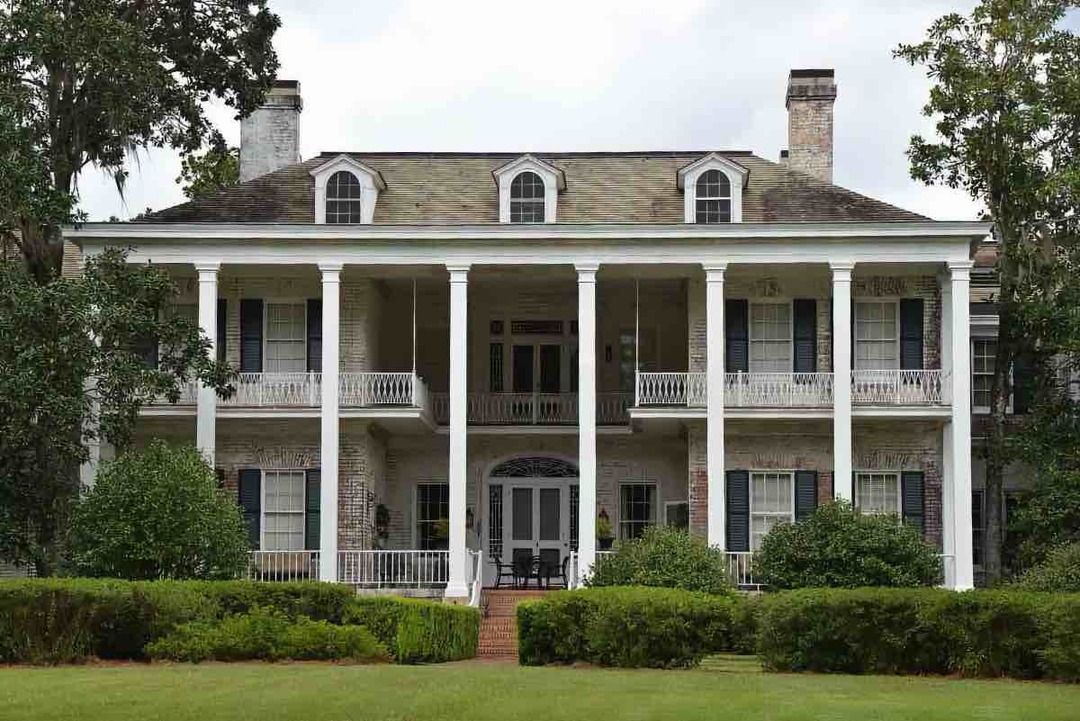
    <title type="html"><![CDATA[Thomasville Quail Plantations: The Hanna and Wade Winter Retreats in South Georgia&#039;s Red Hills Region]]></title>
    <summary type="html"><![CDATA[<p><strong><em>The names Hanna and Wade are immediately familiar to most longtime Clevelanders. These families amassed fortunes in industries such as iron, oil, coal, steel, tobacco, shipping, telegraphs, railroads, and finance at a time when Cleveland was on the rise, and they poured tremendous sums of philanthropic money into education, healthcare, and the arts. Their names appear throughout the city—Hanna Building, Hanna Theatre, Hanna House at University Hospitals, Wade Park, Wade Oval, Wade Lagoon, Wade Chapel—and one will find their names among the prominent funds that support the collections of the Cleveland Museum of Art. However, fewer Clevelanders may know that the Hanna and Wade legacies are just as visible in the Red Hills region of southwestern Georgia near the Florida border.</em></strong></p><img src="https://clevelandhistorical.org/files/fullsize/aae43c740fda8a1d55797d2d1cebe1be.jpg" alt="Pebble Hill Plantation" /><br/><p>Starting in the 1890s, wealthy Clevelanders were among the northern elites who transitioned from staying at the fashionable winter resort hotels of Thomasville, Georgia, to tranforming former cotton fields and pine forests into private retreats and quail hunting grounds. One of the earliest Cleveland investors in the Red Hills was Howard Melville (“Mel”) Hanna, born in New Lisbon, Ohio, in 1840. After moving to Cleveland in 1852 and serving in the U.S. Navy during the Civil War, Hanna invested in an oil refinery that he sold to his friend John D. Rockefeller’s Standard Oil Company of Ohio, as well as in iron and steel, tobacco, and shipping. He also worked closely with his older brother <a href="https://clevelandhistorical.org/items/show/680">Marcus Alonzo Hanna</a> in the M. A. Hanna Company. </p><p>While his brother Mark was actively managing William McKinley’s 1896 presidential bid, Mel Hanna bought not one but two large former cotton plantations in the pine-studded Red Hills southwest of Thomasville. The Hanna brothers might never have visited Thomasville if not for their sister Salome, who with her husband J. Wyman Jones of New Jersey, had a few years earlier become the first northerner to buy a Thomas County winter estate (christened “Elsoma” in a play on her name). She encouraged her brothers to visit Thomasville. Long a favored winter resort city, Thomasville was arriving at a turning point. By the 1890s, local leaders' concerns about yellow fever led them to enact quarantines, ban train stops, and prohibit alcoholic beverages in public accommodations, even as railroads built by Henry Flagler and Henry’s Plant were opening newer resorts deep into Florida. While coastal Florida eclipsed Thomasville’s popularity with winter tourists, the Red Hills continued its appeal as a hunting paradise with hundreds of thousands of acres of woodlands known for abundant bobwhite quail, wild turkeys, doves, and ducks.</p><p>Mel Hanna’s first purchase in 1896 was a plantation previously owned by his nephew, Charles Merrill Chapin (Salome Hanna's son from her first marriage), who had bought it five years before. The estate, which had originally belonged to Paul Coalson, included an antebellum house that probably dated to the 1830s. Upon acquiring the property, Hanna renamed it Melrose Plantation. A few months later, he bought the adjacent Pebble Hill Plantation, whose main house—built in 1850 by some of the thirty-seven people enslaved by planter John W. H. Mitchell and his wife Julia—had continued to be occupied by the Mitchells’ son for 15 years after she died in 1881. </p><p>Mel and his wife Kate spent their winters at Melrose, joined by their children Kate Benedict, Howard Melville Jr., and Mary Gertrude. In 1905, Hanna expanded the main house, and after his death in 1921, his son hired the renowned Cleveland architectural firm Walker and Weeks to design Georgian Revival–style cottages, barns, and outbuildings. After Hanna Jr.’s death in 1945, his daughters, Fanny (Mrs. Julian Castle Bolton) and Kate (Mrs. Warren Bicknell Jr., named for her aunt) shared the estate. Eventually, in 1952, they divided Melrose, creating a separate estate for Kate and Warren Bicknell called Sinkola Plantation. </p><p>Meanwhile, in 1901, Mel Hanna deeded Pebble Hill to his daughter, Kate Benedict Hanna Ireland, for the symbolic sum of one dollar. She lived there with her husband, Robert Livingston Ireland (also of Cleveland), and later with her second husband Perry W. Harvey. The Harveys expanded Pebble Hill from 3,000 to 10,000 acres. In 1934, two years after her husband died, Kate Harvey’s antebellum main house burned down, leaving only the loggia standing. She then commissioned Cleveland architect Abram Garfield (son of U.S. President James A. Garfield) to build a new fireproof 28-room mansion combining Federal and Greek Revival styles. Kate Harvey lived just four months after its completion. Pebble Hill then passed to her daughter, Elizabeth “Pansy” Ireland Poe, who lived there for four decades. In 1950, she established the Pebble Hill Foundation, ensuring preservation of the estate as a historic house museum, which opened to the public in 1983.</p><p>In 1905, Hanna purchased a third Thomasville estate, Winnstead Plantation, which he gifted to his daughter Mary Gertrude and her husband, Coburn Haskell. Haskell, a former employee of the M. A. Hanna Company, had left to pursue the manufacture of his 1899 patented invention of the modern golf ball. After his death in 1922, Mary Gertrude remained at Winnstead until her passing in 1945, after which the family sold the property. </p><p>The Hanna legacy in Thomasville extended well beyond these estates. Kate Benedict Hanna Ireland’s son, Robert Livingston Ireland Jr., co-owned Foshalee and Ring Oak plantations with Cleveland businessman David S. Ingalls. When Mel Hanna’s grandson Howard Melville Hanna III died in 1936, his widow Pamela remarried Cleveland lawyer and M. A. Hanna president George M. Humphrey. Humphrey built a mansion at Milestone Plantation, which became an occasional retreat for President Dwight D. Eisenhower during Humphrey’s tenure as Secretary of the Treasury. By the middle of the twentieth century, other Hanna descendants owned additional quail plantations around Thomasville. </p><p>Yet the Hannas were not the only Clevelanders who wintered in and bought land in Thomasville. Another was Jeptha Homer Wade II, grandson of Western Union Telegraph founder Jeptha Homer Wade and an early benefactor of the Cleveland Museum of Art. In 1903, Wade began assembling parcels for his own winter retreat south of Thomasville, eventually controlling over 10,000 acres. In 1905, he commissioned Cleveland architects Hubbell and Benes, the same firm that had designed Cleveland’s <a href="https://clevelandhistorical.org/items/show/380">Wade Memorial Chapel</a>, to design Millpond—a Spanish Revival mansion that featured a glass atrium flanked by a loggia. For Millpond’s gardens, Wade retained Frederick Law Olmsted’s apprentice Warren H. Manning, who also designed the grounds at the Vanderbilts’ Biltmore House in North Carolina, the Seiberlings’ Stan Hywet Hall in Akron, the Mathers’ <a href="https://clevelandhistorical.org/items/show/363">Gwinn</a> in Bratenahl, and Wade's Valley Ridge Farm in Hunting Valley. </p><p>Wade and his wife Ellen wintered at Millpond until her death in 1917 and his nine years later after which Millpond was placed in a trust for their children, Jeptha Homer Wade Jr., George Garretson Wade, and Helen W. Wade (Mrs. Edward B. Greene). Helen inherited her brothers’ interests, and when she passed away in 1958, her daughter Helen Wade Garretson Perry owned Millpond for nearly forty more years. Thereafter, the home continued to be owned by descendants of Wade.</p><p>The Hannas, like some other northern industrialists, took former cotton plantations once worked by enslaved or sharecropping Black workers and reimagined them as winter retreats, albeit still depending on Black labor. They retained the term “Plantation” in their names but repurposed the land for hunting quail. In contrast, the Wades and other northerners cobbled together smaller farms and forestlands to fashion 20th-century hunting plantations. Ironically, it was the longstanding practice of burning fields and forests before each next cotton-planting cycle that had the Red Hills region so conducive to quail plantations. In their desire to maintain this quality, winter residents came to embrace conservation practices, especially those recommended by the noted forester and ornithologist Herbert Stoddard. In 1923, a group of plantation owners (including Clevelanders Hanna, Wade, and bird researcher <a href="https://clevelandhistorical.org/items/show/930">Samuel Prentiss Baldwin</a>) formed the Committee on the Cooperative Quail Investigation, which funded a several-year study by Stoddard under the U.S. Bureau of Biologial Survey that culminated in 1931 in Stoddard's influential book on quail conservation.</p><p>Though they learned to embrace forest conservation and wildlife management, quail plantation owners could not overcome wider environmental changes after World War II, including habitat loss amid conversion of farms to exotic grasses or short-rotation pine plantations, pesticide use, and suburban sprawl. By the end of the century, the quail “harvest” plummeted by more than 75 percent. Today, family-owned quail plantations like Wade’s Millpond and conservation organizations are working to restore quail populations. Meanwhile, historic sites such as Hanna’s Pebble Hill offers visitors a glimpse of the leisured lifestyles that Cleveland industrialists enjoyed in Thomasville.</p><p><em><strong><a href="https://clevelandhistorical.org/items/show/1054">For more (including 20 images) view the original article</a></strong></em></p>]]></summary>
    <published>2025-03-25T22:42:17+00:00</published>
    <updated>2026-04-17T19:17:43+00:00</updated>
    <link rel="alternate" type="text/html" href="https://clevelandhistorical.org/items/show/1054"/>
    <id>https://clevelandhistorical.org/items/show/1054</id>
    <author>
      <name>J. Mark Souther</name>
    </author>
  </entry>
  <entry>
    <title type="html"><![CDATA[Corning House: The Last Surviving Vestige of Cranwood  Farm and Race Track]]></title>
    <summary type="html"><![CDATA[<p><strong><em>Warren Corning worked in the distillery business for 30 years, building a very successful company with offices and other facilities in both Cleveland and Peoria, Illinois.  In the early 1880s, perhaps in anticipation of selling and retiring from that business, he purchased more than 200 acres of land in rural Newburgh Township (today, part of the Cleveland suburb of Garfield Heights), creating upon that land a horse and cattle farm which he called "Cranwood."</em></strong></p><img src="https://clevelandhistorical.org/files/fullsize/29ae01444341edcfd43a704983683751.jpg" alt="Corning House in Garfield Heights" /><br/><p>If you happen to find yourself one day driving down East 131st Street in the Garfield Heights Cranwood neighborhood, you may wish to take note of the multi-family brick dwelling on the northwest corner of East 131st and Christine Avenue. Known in that suburb as the Corning House, it is the last remnant of both a wealthy 19th century Clevelander's cattle and horse farm and, as well, a popular early twentieth century horse race track. The story of how this farm and race track fit into the history of this Cleveland suburb begins with Warren Corning.</p><p>Warren Holmes Corning was born in Painesville, Ohio, in 1841. In 1857, his family moved to Cleveland, and, as a sixteen year old, he entered into the distillery business, successfully working his way up from the bottom to ownership of a very profitable company. In 1887, Corning sold his company and retired from that business, becoming an investor in and officer of several large Cleveland banks, including First National Bank and Guardian Trust Company. In 1893, the Corning family moved from their house on Prospect Avenue into one of Euclid Avenue's grand mansions, built in 1874 for wealthy Cleveland banker, <a href="https://clevelandhistorical.org/items/show/817">Daniel Eells</a>. While no longer standing, it once stood on the north side of Euclid Avenue, just east of East 30th Street, next door to the founder of the Otis Steel Company, and only three doors down from the mansion of Samuel Andrews, one of John D. Rockefeller's original partners. </p><p>In 1883, Corning began purchasing land off Windfall Road (today, East 131st Street), between Miles and Broadway Avenues, in what was then Newburgh and Warrensville Townships, eventually assembling more than 200 acres of land. (Today, that land lies in the northeast part of the Cleveland suburb of Garfield Heights.) In 1884, Corning built a large house on land that fronted on Windfall Road. The house was designed, according to local architectural historian Craig Bobby, in the Queen Anne style, but it was an "understated" version of that style, then considered more suitable for a country residence. In its original design, the two and one-half story brick house featured asymmetrical massing, gabled roofs and a covered porch which extended across the entire front of the house. The interior of the house had, and still does today, approximately 8,000 square feet of living space. </p><p>According to the Garfield Heights Historical Society, Corning named the cattle and horse farm he developed on this land "Cranwood," a word that referred to both the cranberry bushes that grew wild on the land and the woods that were also prevalent there. An article appearing in the Plain Dealer on February 18, 1911, suggested another possible explanation--that the farm was named after one of Warren Corning's prize stallions. Whatever the name's origin, Corning took the business of his "horse nursery" very seriously and he soon built a small trotting track on land just across Windfall Road from his house. That track—no longer standing—would today be located east of East 131st Street, and between Thornhurst and Rexwood Avenues. Cleveland newspapers made regular mention of Cranwood Farm in the late 1880s as one of Cuyahoga County's several popular venues for harness (trotting) races. </p><p>Unfortunately for Warren Corning, his "retirement" life of raising cattle and nursing trotting horses on Cranwood Farm did not last long. In 1894, while undergoing an operation to remove cartilage from one of his knees, he developed "blood poisoning," which resulted in the amputation of a leg and eventually his premature death in 1899 at the age of 58. </p><p>By 1904, according to newspapers, Standard Land Company, a corporation owned by his heirs, was leasing the Corning house, and planning to redevelop the rest of his farm as a residential subdivision. Just seven years later in 1911, however, much of the redevelopment plan was put on hold when Standard Land Company leased the Cranwood Farm lands, including the Corning house and the trotting track across the street, to Alvin Pennock, who had formerly worked for Warren Corning at Cranwood Farm as a horse trainer.</p><p>In 1911, Pennock opened Cranwood Race Track for harness racing, enlarging the track created during Warren Corning's ownership and converting the Corning house into a race track clubhouse which featured a large restaurant and bar with seating for 150 people.  For a time, the restaurant was managed by Frank Bartek, whose parents were immigrants from Bohemia (today, part of the Czech Republic). According to local newspaper articles, the upstairs of the house was, during this period, separately leased to wealthy horse owners and their families as living quarters during the racing season. </p><p>In June 1914, a fire at Cranwood Race Track damaged the Club House, but Alvin Pennock was able to repair and reopen it in time for the Fall racing season. In that same year, Pennock added the new sport of automobile racing to the calendar of events held at the track. While Cranwood was a popular and very accessible race track, harness and auto racing did not last even a decade at the East 131st street location.</p><p>In 1922, Cranwood Race Track moved to a new and larger facility on Miles Avenue in Warrensville Heights, midway between Lee and Warrensville Center Roads. In 1959, the Miles Avenue race track closed when the land upon which it stood was targeted for industrial development. Edward J. DeBartolo purchased the Cranwood franchise, but then terminated it and transferred its racing dates to the calendar of Thistledown Race Track in North Randall. </p><p>Even before Cranwood Race Track moved to Miles Avenue, the Corning House appears to have ceased being used as a clubhouse. Alvin Pennock, who had acquired title to the house in 1915 from Standard Land Company, sold it in 1920 to the William and Louise Enslen family, who moved into it that year and, according to local directories, soon redeveloped the house into a multi-family dwelling. Changes to the exterior of the building included a major redesign of the front porch which at one time extended across the entire front facade of the house, replacing that original porch with several smaller porches located at three separate entrances to units of the multi-family dwelling. By the time the 1930 federal census was taken, there were four families residing in the house. In 1935, the former clubhouse building was again damaged in a fire, but once again it was repaired. By the time the 1940 census was taken, the number of families residing in separate units in the Corning House had increased to five. A decade later, the 1950 census listed six families living in the house. </p><p>Members of the Enslen family continued to own, live in and lease out rental units in the Corning House until 1976, when Clarence Enslen, the last of William and Louise Enslen's surviving children, sold it and moved to Parma. As of 2024, the Corning House was still being utilized as a multi-family dwelling. While Cranwood Farm and Cranwood Race Track are long gone from Garfield Heights, their names live on in the northeast section of that suburb which has been known as the Cranwood neighborhood. The neighborhood also has had an elementary school and a street titled with that locally historic name, but the only true surviving vestige of Warren Corning's farm and Alvin Pennock's race track in this suburb is the Corning House.</p><p><em><strong><a href="https://clevelandhistorical.org/items/show/1015">For more (including 11 images) view the original article</a></strong></em></p>]]></summary>
    <published>2024-02-21T03:31:39+00:00</published>
    <updated>2026-04-17T19:17:43+00:00</updated>
    <link rel="alternate" type="text/html" href="https://clevelandhistorical.org/items/show/1015"/>
    <id>https://clevelandhistorical.org/items/show/1015</id>
    <author>
      <name>Jim Dubelko</name>
    </author>
  </entry>
  <entry>
    <title type="html"><![CDATA[Franchester Place: Politics and Pastures]]></title>
    <summary type="html"><![CDATA[<img src="https://clevelandhistorical.org/files/fullsize/2a540b1c364864896cf378e9c23e2949.jpg" alt="Franchester Place, The Back Terrace" /><br/><p>The southwestern quadrant of Lyndhurst, Ohio, is bounded by Richmond Road on the east, Cedar Road on the south, Oakmont Road on the west, and Mayfield Road on the north. Portions of this bucolic, one-square-mile corner of the city have been home to the Mayfield Country Club, Lyndhurst Park Estates, and Hawken School for the past century. Limited access from surrounding roadways has kept the entire area private and secure since the country club opened in 1908. The southeastern corner of this real estate was occupied by a few of Cleveland’s most prominent and influential families. Chester C. and <a href="https://clevelandhistorical.org/items/show/678">Frances P. Bolton</a> made their home, Franchester Place, on the largest of these parcels from 1917 to 1977.   </p><p>Chester Castle Bolton was born in Cleveland to Charles Chester and Julia Castle Bolton in September 1882, the oldest of the couple’s five sons. Charles Bolton was a prominent local industrialist (Hanna Mining) and business leader, and his wife Julia was the daughter of William Castle, who had served as Mayor of Cleveland in 1855-57. Young Chester Bolton attended University School in Shaker Heights and went on to Harvard, where he completed his degree in 1905. Two years later, he returned to Cleveland and married Frances Payne Bingham. Bingham was also from a long line of Cleveland industrialist and philanthropic families. Early in their marriage, Chester and Frances purchased land in Lyndhurst to build their home. Chester commissioned architect Prentice Sanger, his Harvard classmate, to design the Georgian Revival frame colonial for their house. Construction began in 1914 and was completed in 1917. The 6,700-square-foot home is positioned on a southwestern parcel of their 110-acre farm that abuts the Mayfield Country Club golf course.   </p><p>The surrounding space was aptly described in 1918 in a detailed 44-page real estate promotional booklet: “Lots of Distinction ... for the owner who considers his neighbor’s outlook as well as his own … for buildings, grounds, gardens, or new plantations without impairing desirable privacy.” The booklet presented 40 available parcels in meticulous detail, including their terrain, soil properties, and plant and tree growth. By the time of its publication, the Boltons had already joined neighbors Henry Sherman, Otto Miller, Gardner Abbott, and in-laws Dudley and Elizabeth Blossom, in building stately homes and grounds that created an exclusive community near the Richmond-Cedar Road intersection. The Euclid Creek divides the western Mayfield Country Club grounds from the available parcels noted in the booklet. The Boltons’ philanthropic spirit was manifest in 1922 with a gift of a portion of their land to Hawken School that enabled the school to move from its Cleveland location to Lyndhurst to meet expanding needs. The Hawken School lower campus remains on the site where earlier farms occupied much of Boltons’ space along Richmond Road with rich pasture land. </p><p>  Meanwhile, Chester Bolton had joined the Army National Guard in 1917 and served as an Army Ordnance officer before returning home to Lyndhurst in 1918. He began his political career as a Lyndhurst council member for three years and then moved on to the Ohio Senate. In 1928 he was elected to the United States Congress. Although he lost in 1936, he was re-elected to Congress two years later. Early during his public service, Bolton cultivated a deep interest in breeding cattle, notably Guernsey dairy cattle. He began raising the cattle on his acreage in Lyndhurst, building his herd to nearly 200 heads at Franchester Place.  </p><p>  The rich milk of the Guernsey grew very popular in the Cleveland area. Increased demand, coupled with ideal conditions for dairy farming, prompted investments by Cleveland’s wealthy industrialists and prominent citizens. The Chagrin Valley Guernsey Breeders’ Association, comprised of farm owners including Walter White (White Motors), Elbert Baker (<em>Plain Dealer</em> publisher), Jeptha Wade II (mining and manufacturing), Francis E. Drury (Perfection Stove Co.), and the Van Sweringens (rail developers), joined Bolton. Colectively, they owned and operated farms in Lyndhurst, Willoughby, Gates Mills, Chagrin Falls, and Hunting Valley along with other cattlemen in Cleveland’s eastern counties. Chester C. Bolton served as the President of the Association and soon after was named President of the American Guernsey Cattle Club, a national organization. Bolton further expanded his dairy operation by establishing Franchester Farm on 1,200 acres in Ravenna, Ohio, to accommodate a growing herd and reduced the Lyndhurst operation to the “laboratory pastures.” By 1933 he owned the largest herd of Guernseys in Ohio and the tenth largest in the United States. Dairy processing and distribution complemented the milk production. The <a href="https://clevelandhistorical.org/items/show/200">O. A. Dean Dairy</a>, Hillside Dairy, and Bruder Dairy in Cleveland Heights were convenient for the eastern farms to market and distribute the milk. Dean Dairy worked closely with Franchester Farms; one of the Bolton sons later became a Director of Dean Properties. </p><p>  Chester Bolton passed away in 1939 while serving his fifth term in the House of Representatives. Frances was elected to complete the term and went on to represent Ohio’s 22nd District for another 29 years until her defeat in 1968. Throughout both careers, Franchester Place served not only as a dairy farm but as a gathering place for business and political events hosted by the Boltons. Though she maintained other homes, Frances continued her legal residence at Franchester Place until her death in 1977.    </p><p>The Bolton property was maintained for a few more years while it was sold to TRW (Thompson Ramo Wooldridge), a global automobile and aerospace electronics giant to build its world headquarters. The space-age building was completed in 1983 and occupied until 2002 when TRW was absorbed in a corporate takeover, leading to the sale of its headquarters property to a developer that built the Legacy Village shopping center on the Cedar-Richmond corner. TRW donated its building and the remaining land of Franchester to the Cleveland Clinic, which operated a wellness campus there for the next two decades. In 2022, Cleveland Clinic abandoned the site and demolished the TRW building in 2023 with plans to market the property. Despite the transitions that followed Frances Payne Bolton's death, Franchester Place has continued to be maintained as an event center.</p><p><em><strong><a href="https://clevelandhistorical.org/items/show/1014">For more (including 14 images) view the original article</a></strong></em></p>]]></summary>
    <published>2024-02-13T19:31:25+00:00</published>
    <updated>2026-04-17T19:17:43+00:00</updated>
    <link rel="alternate" type="text/html" href="https://clevelandhistorical.org/items/show/1014"/>
    <id>https://clevelandhistorical.org/items/show/1014</id>
    <author>
      <name>Jim Lanese</name>
    </author>
  </entry>
  <entry>
    <title type="html"><![CDATA[Bradford House: Hiding in Plain Sight in Cleveland&#039;s Corlett Neighborhood]]></title>
    <summary type="html"><![CDATA[<p><strong><em>In October 1904, a reporter for the <em>Cleveland Leader</em> traveled to Newburgh Township to see the house of Charles Putnam on Miles Avenue. Following the visit, he wrote an article about the house, stating that it had been built in 1801, was known locally as the "Bradford Mansion," and was one of the oldest houses still standing in the Western Reserve.</em></strong></p><img src="https://clevelandhistorical.org/files/fullsize/6ebab1ca8894979de4f9d2871bb5ce62.jpg" alt="The Bradford House, 11715 Miles Avenue" /><br/><p>There are many mysteries surrounding the history of the Bradford House at 11715 Miles Avenue, but the question of whether it was built in 1801 is not one of them. While the house is indeed one of Cleveland's oldest, it was clearly not built in that year. Lot 468 in Newburgh Township, the 100-acre lot upon which the house at a later date was built, was as yet undeveloped and unoccupied. It may have still been owned in that year by the Connecticut Land Company which later, before the formation of Cuyahoga County in 1810, apparently sold it to Oliver Ellsworth, one of America's founding fathers. Ellsworth, who lived in Connecticut and was a delegate to both the 1776 Continental Congress and the 1787 Constitutional Convention, served as one of Connecticut's first two senators and, perhaps most notably, was appointed in 1796 by President George Washington to serve as the third Chief Justice of the United States Supreme Court.</p><p>Oliver Ellsworth died in 1807, and in 1816, according to Cuyahoga County deed records, his heirs and their spouses conveyed to Ellsworth's oldest son Martin all of the interest they held in Western Reserve lands which they had inherited from Ellsworth's estate, including Lot 468 in Newburgh Township. In 1833, Martin Ellsworth, who lived in Windsor, Connecticut, sold Lot 468 to Alvin and Grafton Bradford, two cousins from Williamsburg, Massachusetts, a small town in western Massachusetts that was located only 50 miles from Windsor.</p><p>In the spring of 1833, Alvin and Grafton Bradford, and their wives—all of them under 30 years of age—left Williamsburg and set out for Newburgh Township, Ohio—some 500 miles away—with the intent to settle and start new lives on Lot 468. They built a house there that year, which a review of county tax records suggests is likely the main section of the house that still stands today at 11715 Miles. Unfortunately, in October 1833, Abigail Bradford, the wife of Alvin, died from a disease she had contracted in Newburgh, according to an obituary appearing in a Boston newspaper. It was possibly cholera which took many lives in northeast Ohio during the Great Cholera Pandemic of 1829-1837. Alvin Bradford departed Newburgh and returned home to Williamsburg to bury his wife. Afterwards, apparently concluding the "West" was no longer for him, he deeded his half interest in Lot 468 to his cousin Grafton. </p><p>Grafton Bradford and his wife Charlaine stayed, living in the house the Bradford cousins and their wives had built on Lot 468, farming the land and raising four children there. Tax records also suggest that, in 1846 or 1847, they built the addition still joined to the east side of the house, perhaps in response to the needs of their growing family. </p><p>The one and one-half story house built by the Bradfords has been described by some as Greek Revival in architectural style, and indeed houses of that style were being designed and constructed in the United States in the 1830s. However, local architectural historian Craig Bobby has noted that houses as old as this one often lack a "style" and that some would therefore describe this house as "vernacular" rather than Greek Revival. Bobby also indicated that the Ohio Preservation Office considers houses like this one to be examples of a "type" called "Hall and Parlor."  Another architectural historian of note, Gary Stretar, who focuses on the architecture of early nineteenth century houses, believes the house is a "classic example of an early 'Western Reserve' style house of possibly the second wave of settlers, maybe 1835-1845."  Stretar also noted that such story and a half houses have Greek Revival features and a wing that often contained the work rooms, including a kitchen.  He finally noted that "[r]arely does a house of this period survive in an urban setting."</p><p>In addition to farming the land he owned in Newburgh Township, Grafton Bradford was active in the Cuyahoga County Total Abstinence Society and also served one year (1841) as a trustee of Newburgh Township. In 1850, perhaps because of increased traffic on the new Cleveland and Chagrin Falls Plank Road which their house fronted, or perhaps because of news that the Cleveland and Mahoning Railroad was planning to soon lay tracks through their farmland, Grafton and Charlaine Bradford sold Lot 468 and moved to Ravenna, in more rural Portage County, where they purchased new farm land and lived out their lives.</p><p>The Bradford House and the 100 acre lot upon which it then stood passed through several hands before it was purchased in 1863 by Jesse Bishop, a Cleveland lawyer, judge and real estate speculator. In 1874, Bishop entered into a land development partnership with real estate developer James M. Hoyt and in 1876 they platted a residential subdivision on a portion of Lot 468 which included the land upon which the Bradford House stood. The old house could have been razed or moved by the developers, but instead it, and a little more than one and one-half acres of the land upon which it stood, were purchased by Ransom C. Putnam, a Newburgh farmer, who very possibly wanted to preserve the historic house that his family later referred to as the Bradford Mansion.</p><p>Ransom Putnam, who was already fifty-nine years old when he purchased the Bradford House, lived in it until his death in 1896. Less than a year before his death, according to an article appearing in the <em>Cleveland Leader</em> on December 1, 1895, the house was the site of a grand Putnam family reunion, attended by four generations of the Putnam family. Upon Ransom Putnam's death, the house passed to his daughter Harriet Putnam who lived in it for a time with various siblings and nieces and nephews. One of them was Charles Putnam who was living in the house in October 1904 when the reporter from the <em>Cleveland Leader</em> came to visit. Unlike his grandfather and his father William H. Putnam, Charles was not a farmer but instead worked at one of the rolling mills that had come to Newburgh in the second half of the nineteenth century as the area industrialized.</p><p>Harriet Putnam owned the Bradford House until her death in 1921, the house then passing to her nephew Ransom Waldeck. All in all, members of the extended Putnam family owned the house from 1874 until 1933, with three generations of the family living there as adults. Over the years, Ransom, and later his daughter Harriet, subdivided the one and one-half acre lot upon which the Bradford House was standing, creating four additional lots on the north side of Miles upon which houses were built. All of these houses were initially occupied by members of the extended Putnam family, as was another adjacent to the west. Other members of the Putnam family lived in several houses across the street from these houses. During the last decade of the nineteenth and first two decades of the twentieth century, there were so many members of the extended Putnam family living on Miles Avenue between East 116th and East 119th Streets that this block could easily have been known—and perhaps locally it was—as Putnam Place.</p><p>In 1933, the same year in which the Bradford House likely was becoming a century home, the Ransom family sold it to Anton and Mary Salamon, Slovenian immigrants. The Salamon family owned the house for the next 45 years, and it likely benefited from this family's care, especially while Anton Salamon, a building contractor who was a carpenter by trade, still lived. Over the course of the next two decades, following the Salamon family's sale of the house in 1978, the Bradford House changed owners 12 times before it was purchased in 1997 by Senique Pearl, who still owns the house as of the writing of this story in 2023.With a little bit of luck, and continued care from its current owner, the Bradford House, one of the Corlett neighborhood's most historic houses, may well make it to its 200th birthday in 2033.</p><p><em><strong><a href="https://clevelandhistorical.org/items/show/1010">For more (including 13 images) view the original article</a></strong></em></p>]]></summary>
    <published>2023-12-28T05:39:56+00:00</published>
    <updated>2026-04-17T19:17:43+00:00</updated>
    <link rel="alternate" type="text/html" href="https://clevelandhistorical.org/items/show/1010"/>
    <id>https://clevelandhistorical.org/items/show/1010</id>
    <author>
      <name>Jim Dubelko</name>
    </author>
  </entry>
  <entry>
    <title type="html"><![CDATA[Mason&#039;s Farm: How an Ordinary Working Farm Became an Extraordinary Black Leisure Destination]]></title>
    <summary type="html"><![CDATA[<p><strong><em>The article <a href="https://greenbookcleveland.org/locations/cedar-country-club-masons-farm/">Mason's Farm</a> originally appeared in <a href="https://greenbookcleveland.org"><i>Green Book Cleveland</i></a>, our sister project exploring the history of Black entertainment, leisure, and recreation in Northeast Ohio. Named for its proprietor Benny Mason, Mason's Farm was a Black-owned working farm in Solon that achieved national renown as a music venue and resort in the 1930s-40s.</em></strong></p><img src="https://clevelandhistorical.org/files/fullsize/208d4ec5c66d58b3c214bf1744dbf507.jpg" alt="Cover of Mason&#039;s Farm Booklet" /><br/><p>In 1935, Benjamin “Benny” Mason purchased a 160-acre farm in Solon on Cochran Road south of Route 43 and established what became known as “Mason’s Farm,” a popular resort, country club, and jazz venue. A well-known game operator, Mason purchased the farm and the Cedar Country Club subsequently opened in 1936. Upon the farm’s opening, Mason remarked, “I want to do something for my people. I want to make this farm a place where they can relax and enjoy themselves. I want to provide a place for them comparable to other races.” Despite its rural location beyond the east suburbs of Cleveland, one of the features Mason boasted was the Cedar Country Club's proximity to the city itself, claiming only a twenty-five-minute drive from Carnegie and East 55th Street in Cleveland. With the accessibility of the resort, both in location and its integrated clientele, the farm quickly became a popular destination for visitors across the country as well as Clevelanders. The Cedar Country Club gained national acclaim as the “showplace of Ohio.” The resort included furnished cabins, a restaurant, and nightclub. Some of its features included a riding academy, picnic grounds, and occasionally tours of the farm for students.</p><p>The Cedar Country Club also functioned as a nightclub and jazz venue that boasted popular artists Tiny Grimes, saxophonist Coleman Hawkins, and many others. The Cedar Country Club, which one <i>Call and Post</i> feature lauded as "Ohio's Swankiest Summer Resort," was routinely described as luxurious and enjoyed a listing in the 1939 edition of the <i>Negro Motorists' Green Book</i>. While it looked like a barn from the exterior, the clubhouse boasted a bar in the basement, another bar on the ground floor as well as a dance hall, and a lounge and private rooms on the second floor. It was available to be rented out for private parties, banquets, and other events. Mason renamed Cedar Country Club "Mason's Farm" in 1941 and hired restaurateur U. S. Dearing as manager. In addition to its leisure destination status, Mason’s Farm was also a working farm with more than 2,500 head of livestock and 145 of its 160 acres set aside for growing corn, wheat, and oats.</p><p>Mason himself was an eccentric character in Cleveland history, often running into legal trouble. Some of the allegations against him included purchasing stolen jewelry, transporting alcohol during Prohibition, and the frequent policy promoting that made Mason famous. Mason was known as the “king of policy games” as he notoriously ran illegal numbers rackets. In the summer of 1932, Benny Mason became the target of the Mayfield Road mob. In a number of attempts by the Mayfield Road mob to expand their own illegal numbers games into areas controlled by Mason, four men were arrested outside of Mason’s home and thought to be there to kill him.</p><p>Throughout his time both as a policy operator and owning the farm, Mason was notorious for “resigning” as the lead policy operator, but ultimately would move his operation’s headquarters and resume his business. Despite protests from management that claimed no gambling was permitted on the property, policy games continued to take place at the resort, making it a well-known gambling center in Cleveland. Residents in Solon in 1938 explained that while they did not see any “big-time gambling,” Mason’s Farm did have several slot machines. Though this reputation may have accounted for its disappearance from the <i>Green Book</i> after just one year, Mason's Farm remained very popular throughout the 1940s.</p><p>However, Mason redirected a significant portion of his wealth from these illicit games to support his community. Mason was known for his philanthropy, particularly for his donations to Black churches in Cleveland as well as paying educational costs for Black students. Throughout the early to mid-twentieth century across the country, policy and numbers games were cornerstones in providing economic opportunities to Black communities. Gambling rackets not only provided employment opportunities to Black residents in the community, but they also became a widespread source of investment into businesses and philanthropy. </p><p>Mason's establishment closed in 1951 and was sold to the Nickel Plate Railroad to form an industrial park. Benny Mason was involved in a fatal car crash in 1954 near London, Ohio, that took his life and the life of his friend Walter Woodford as well as critically injuring his wife Blanche.</p><p><em><strong><a href="https://clevelandhistorical.org/items/show/967">For more (including 8 images) view the original article</a></strong></em></p>]]></summary>
    <published>2022-10-08T13:06:33+00:00</published>
    <updated>2026-04-17T19:17:42+00:00</updated>
    <link rel="alternate" type="text/html" href="https://clevelandhistorical.org/items/show/967"/>
    <id>https://clevelandhistorical.org/items/show/967</id>
    <author>
      <name>Cheyenne Florence</name>
    </author>
  </entry>
  <entry>
    <title type="html"><![CDATA[Spice Acres <br />
: Sustainable Farming in Cuyahoga Valley National Park]]></title>
    <summary type="html"><![CDATA[<img src="https://clevelandhistorical.org/files/fullsize/82dc398cc2c7e9192d7b556c50c7f8a0.jpg" alt="Spice Acre SIgn" /><br/><p>On any given night people flock to Spice Kitchen on Detroit Avenue in Cleveland’s Detroit Shoreway neighborhood for great food, but diners might not realize where that food comes from prior to arriving at their table. Ben Bebenroth of Spice Kitchen has a 13-acre farm aptly named Spice Acres located in Cuyahoga Valley National Park which supplies some of the food that he cooks. The produce he grows also inspires the dishes he cooks, which vary based on what’s in season. The food he cooks in early summer will be vastly different than what appears on his menu in the early fall. What he doesn’t get from his farm he buys from local farmers in a 150-mile radius from his restaurant. Bebenroth is committed to the farm-to-table ideal as a means to provide the best cuisine to offer his guests. Even the floral decorations that grace the tables come from his farm. </p><p>Spice Acres is one of eleven farms that are part of the Countryside Initiative, which promotes sustainable farming practices within Cuyahoga Valley National Park. Those lucky few, like Bebenroth, who get a long-term lease, are then able to continue the tradition of sustainable farming practices. The process of acquiring a lease is a time-consuming process, in order to ensure that the lessee’s vision and business plan are in line with the Initiative’s stated mission. The Countryside Initiative was started in 1999 as a way to incorporate working farms into the National Park landscape. Farming was a part of the Cuyahoga Valley for generations prior to the suburbanization that started to consume farmland starting in the early 20th century. One farm that has been able to hang on is Szalay's Farm, which has been around for about 80 years. With the creation of the Countryside Initiative the plan was to implant farming ventures back into the Cuyahoga Valley as a means of education as well as allowing farmers to come in and farm the land. As part of the lease process, a farmer who is bidding on one of the current farms submits a business plan which outlines how they will use the land once they sign the lease. The application process takes several months to complete so as to ensure the right fit for the prospective farmer and farm. This process also helps to sort out those who are able to really farm for a long period of time. Once the application process is complete, the Initiative and the farmer enter into a 60-year lease agreement. </p><p>Bebenroth’s vision is to promote the farm-to-table ideal in which people are able to get food within a 150-mile radius of their home, which aligns with the Initiatives mission of preservation. What started as a small garden in his back yard led to signing a multi-year lease with the Countryside Initiative so as to expand his growing capacity for Spice Kitchen. At Spice Acres he brings that vision to life as he adds a variety of produce and livestock to his property to support the variety of menu items on offer at his restaurant. Thus far he has added pigs to his farming venture and hopes to continue to add other livestock to his ever-expanding farm bounty. Farming for Bebenoth has also become a way of creating an environment of social change on a local level. He has found that educating children is often easier than reeducating adults in healthy eating habits. Although he offers a variety of education programs that focus on being health-conscious in what they eat, Bebenroth also encourages people to be good stewards of the land. </p><p>In recent years Spice Acres has offered themed outdoor dinners, called Plated Landscapes Dinners, which feature in-season produce. As part of the dinner Bebenroth offers tours of his farm prior to the beginning of dinner, and he also engages with his guests during dinner. His hope is to show people the benefits of eating food that is grown closer to their home. Offering these outdoor dinners allows people to get a better feel of how the farm-to-table movement works and could have a positive impact on their daily lives. Interacting with people on his farm while having a meal together also allows for dialogue between those who grow the food and those who partake in the themed dinners. Interacting with his guests is an important aspect of his work, at both Spice Acres and Spice Kitchen, to inspire people to eat more local food. During the summer months he also allows families to visit his farm and encourages them to procure items from special meals from his farm. One example of people getting food items from his farm is obtaining flowers for their Easter table or a ham for Thanksgiving. </p><p>The Countryside Initiative has impacted how the Cuyahoga Valley National Park educates visitors on farming practices not only within the boundaries of the park but within the greater Cleveland-Akron area. Over the years the Initiative has increased its presence not only by leasing farms but also by setting up farmers' markets so people have a means of buying locally grown food, such as the farmers' market at Howe’s meadow during the summer months. The hope is to ensure that people can become more aware of how their food is grown and encourage engagement between the grower and the buyer. Allowing farmers to lease land from the Cuyahoga Valley National Park has meant that a way of life may be preserved for future generations to experience a way of life that is slowly fading from the American landscape.</p><p><em><strong><a href="https://clevelandhistorical.org/items/show/879">For more (including 10 images) view the original article</a></strong></em></p>]]></summary>
    <published>2019-11-20T20:07:44+00:00</published>
    <updated>2026-04-17T19:17:39+00:00</updated>
    <link rel="alternate" type="text/html" href="https://clevelandhistorical.org/items/show/879"/>
    <id>https://clevelandhistorical.org/items/show/879</id>
    <author>
      <name>Jenny Payne</name>
    </author>
  </entry>
  <entry>
    <title type="html"><![CDATA[Cleveland&#039;s Greenhouse Industry: &quot;Gardens Under Glass&quot;]]></title>
    <summary type="html"><![CDATA[<p><strong><em><div>"An acre of lettuce under the artificial rain is a sight to remember. The sun plays rainbows on the mist and glints from the little pools and bright green leaves; the moisture stirs rich smells from the light earth; the rain itself, the patter of the drops on the leaves, the grateful odor of the plants and soil, all are in miniature, confined under a sky of glass—within is spring, beyond lies winter."</div>
<div>— John W. Love, "Manufacturing Cleveland’s Vegetables," <em>Cleveland Plain Dealer</em>, February 4, 1923</div></em></strong></p><img src="https://clevelandhistorical.org/files/fullsize/beca9c6f4cb2fd59903c6c5f4c01fff5.jpg" alt="A &quot;World Under Glass,&quot; 1970" /><br/><p>On the southern rim of the industrial Flats along the Cuyahoga River, Martin Luther Ruetenik, son of a German immigrant pastor, built his first greenhouse on Schaaf Road in the village of Brooklyn Heights in 1885.  Over time his greenhouses and truck farms earned him the nickname the “Celery King.” By 1900 a handful of other growers, including Fred Witthuhn, had joined him, placing a total of five acres “under glass.”  Despite increasing competition from southern and western states, the Brooklyn Heights greenhouse industry continued to expand, and Ruetenik pioneered scientific methods that made Cleveland’s hothouse industry a national model.  By the mid-1920s, some fifty businesses maintained eighty acres of greenhouses that grew primarily tomatoes, leaf lettuce, and cucumbers in rapid rotation.  A secondary focus of the industry was to supply Easter lilies and “the potted plant and window box trade.”  </p><p>Ruetenik and other growers banded together in 1926 to form the Cleveland Hothouse Vegetable Growers’ Cooperative Association.  This organization undertook scientific research and promoted greenhouse produce.  It also started the Greenhouse Vegetable Packing Company in Berea, which graded and packed tomatoes and other produce bound for market.  Martin Reutenik maintained a fleet of Ford Model T’s that trucked produce to markets from Indiana to Pennsylvania.  However, the majority of the vegetables grown in Cleveland-area greenhouses were sold locally from small roadside stands and in Central and West Side Markets.  </p><p>Greenhouse agriculture was no simple endeavor.  In fact, it was both laborious and expensive.  In summer, when Ohio’s outdoor farms were in the middle of their growing season, greenhouse farmers were hard at work sterilizing soil, cleaning boilers, and repiping their greenhouses as needed.  Sometimes they burned tobacco stems in large cans, releasing clouds of blue smoke to kill insects inside the greenhouses.  In fall, hothouse workmen transplanted seeds twice, ultimately placing them at regular intervals in long rows.  Mimicking the work of bees, they tapped tomato blossoms with electric vibrating rods every other day to force fruit to develop on the plants.  Using steel pipes to release steam, hothouse growers carefully regulated the temperature inside the greenhouses to create ideal conditions for crop development.  Every few years workers also had to sterilize the soil with steam “lest the slightest disease invade the indoor empire.”  </p><p>Cleveland’s greenhouse industry continued to expand through the mid-20th century, reaching 400 acres under glass and employing 1,000 hothouse farmers, many of them Puerto Rican migrants, by the early 1960s.  By that time greenhouses stretched for more than two miles along either side of Schaaf Road, and additional smaller concentrations could be found in Olmsted Falls, Rocky River, Columbia Station, Berea, Avon, Sheffield Lake, and Wooster.  In 1966, Governor James A. Rhodes visited the A. G. Heinrichs Greenhouse on Schaaf Road to promote Ohio’s greenhouse industry.  At a special luncheon there, he washed down nine large hothouse tomatoes and a cucumber and Bibb lettuce salad with a glass of tomato juice.  Even as Rhodes was extolling the hothouse growers’ successes, the “Greenhouse Capital of America,” which produced 80 million pounds of tomatoes each year, was already on the cusp of decline.  </p><p>Greenhouse agriculture was always a high-cost undertaking that depended on high yields per acre to generate a profit.  A single acre under glass not only required misting plants from overhead pipes with 750,000 gallons of water per year, it also produced a hefty heating bill.  As the cost of burning coal in boilers to heat greenhouses became prohibitive in the early 1960s, farmers turned to natural gas, but then the energy crisis of the early 1970s drove up the price of gas so much that many greenhouse owners could no longer afford to operate.  Pollution from nearby factories in the Flats produced smog that only compounded the problems associated with Cleveland’s notoriously dark, cloudy winters. Sometimes heavy rains caused chemicals in the air to seep into the greenhouses, burning plants.  Industrial expansion also placed a premium on spacious farmlands outside the city, and many struggling hothouse growers were eager to sell.  One such farmer, Edwin Orth, sold all but three acres of his 60-acre Brooklyn Heights farm in 1969, including 16 greenhouses, which became part of a new industrial park.  Growing competition from government-subsidized greenhouse companies in Canada further undercut Cleveland’s greenhouses.</p><p>By the 1980s, most of the large greenhouses in Brooklyn Heights were no more.  Smaller ones remained, but they turned away from growing vegetables in favor of flowers, trees, shrubs, and seasonal plants such as poinsettias. Today one can still see the Ruetenik mansion, which the “Celery King” built in the 1930s on Schaaf Road.  Nearby a small handful of remnant greenhouses operate to this day, offering a hint of Cleveland’s onetime national reputation as a center of “manufactured” vegetables.  </p><p>Could Northeast Ohio recapture its position as the “Greenhouse Capital of America?”  If the Cuyahoga Valley Greenhouse Growers Association, formed in 2009, has its way, it will do so using state-of-the-art sustainable greenhouse technologies.  The Green City Growers Cooperative, opened in 2013 in Cleveland’s Central neighborhood, produces hydroponic Butterhead, Cleveland Crisp, and Green leaf lettuce in a 3-1/4-acre greenhouse that overlooks the RTA rapid transit line.  As the nation’s largest urban food-production greenhouse, Green City Growers is not so much a sign that Cleveland is returning to its coal-fueled hothouse heyday as it is a suggestion that the Forest City might become a national leader in environmentally friendly urban agriculture.</p><p><em><strong><a href="https://clevelandhistorical.org/items/show/713">For more (including 11 images) view the original article</a></strong></em></p>]]></summary>
    <published>2015-06-22T18:51:40+00:00</published>
    <updated>2026-04-17T19:17:40+00:00</updated>
    <link rel="alternate" type="text/html" href="https://clevelandhistorical.org/items/show/713"/>
    <id>https://clevelandhistorical.org/items/show/713</id>
    <author>
      <name>J. Mark Souther</name>
    </author>
  </entry>
  <entry>
    <title type="html"><![CDATA[North Union Shaker Village: &quot;The Valley of God&#039;s Pleasure&quot;]]></title>
    <summary type="html"><![CDATA[<img src="https://clevelandhistorical.org/files/fullsize/340a0d9e43b72e524ae184ad6dba1d46.jpg" alt="Shaker Sisters Drying Yarn, 1876" /><br/><p>In 1811 Jacob Russell moved his family from their home in Windsor Locks, Connecticut, into the wilderness of the Connecticut Western Reserve. Upon his arrival, Russell purchased 475 acres in Warrensville Township, founded by the Daniel Warren family from Ackworth, New Hampshire, in 1808. Ralph Russell, the ninth of twelve Russell children, first visited his parents' tracts of land in 1811. After his visit, he returned to Connecticut to lead 18 other Russell family members to the Northeast Ohio settlement in 1812. Between 1818 and 1821, Ralph Russell experienced a whirlwind of life events. In 1818 he married Laura Ellsworth, a childhood friend from Connecticut. Then in 1821, the patriarch of the Russell family, Jacob Russell passed away. </p><p>Ralph Russell was stricken with grief due to the loss of his father and traveled to Lebanon, Ohio, to seek spiritual guidance from the Union Village Shaker Community in 1822. Russell was so moved by the beliefs and teaching of the Shakers that he returned to his family's settlement and began converting family members to his newfound religion. Russell converted three of his brothers to the religion, and they dedicated their family, land, and belongings to the North Union settlement, land within modern day Shaker Heights and Cleveland Heights. The first official meeting of the North Union Shaker community occurred in 1828, where 36 members signed the Covenant, officially dedicating their lives to Shakerism. Oddly enough, Ralph Russell's name does not appear on the Covenant. Russell and his family later moved away from the community to Aurora, Ohio, where he lived until his death in 1866. </p><p>Visitors to meetings of The United Society of True Believers in Christ's Second Appearing named them "Shakers" or "Shaking Quakers" due their sporadic and erratic movements during worship. Although it was not their official name, the Shakers across America adopted the nickname and used it in the marketing of their products. The Shakers were one of a number of utopian-minded sects that originated in the "Burned Over District" in western New York and were inspired by the Second Great Awakening, such as the Oneidas, Millerites, and Mormons. Founded by Mother Ann Lee, who immigrated to the United States from Manchester, England, in search of religious freedom in 1774, the Shakers were known for their communal living, pacifism, celibacy, and equality amongst all people. Within their communities, men and women were viewed as equals. Men and women leaders, called Elders and Eldresses, were viewed as having the same level of power within the community. The Shakers enjoyed a reputation as hardworking and industrious people who lived their motto of "Put your hands to work and your Hearts to God." </p><p>At their height of membership in the 19th century, the Shakers occupied a total of 24 settlements in the United States. Shaker settlements worked within certain industries not only to put their hands to work, but also to provide for community members and generate economic stability for the community. North Union was no exception. The North Union community, who named this place "The Valley of God's Pleasure," was known for bee keeping, broom making, textile production, blacksmithing, animal husbandry, and harvesting seeds and herbs used for cooking and medicinal purposes. The community made sure that all of the needs of the community members were met before selling their products and services to the "outside world." For North Union, interaction with the outside world usually consisted of doing business at markets in downtown Cleveland and at Doan's Corners (East 105th and Euclid Avenue - present day University Circle). </p><p>Shaker communities were divided into different families where familial ties were dissolved, and everyone became a Shaker brother or Shaker sister. North Union was divided into three families: Mill, Center, and East. These families were relatively autonomous as each had its own Elder, Eldress, Deacon, and Deaconess. The Mill family was closest in proximity to and worked in the community's mills, and the East family oversaw childcare and education for new converts. The Center family was the most spiritually advanced and served as the administrative center for the whole community. North Union took in orphans and runaways. After completing a "novice period" and signing a covenant to give up all their personal belongings, new members were assigned to a junior family order. Each family played a significant role in the development of North Union, which reached its peak membership of 300 Shakers by 1850. </p><p>In 1843, the North Union Shakers claimed that Jesus Christ visited their community for three months. Nonetheless, by the 1870s any residual excitement from the purported visit had surely dwindled in the North Union Shaker community.  Although the North Union Shakers took in orphans and runaways, it was not enough to overcome the repopulation challenges resulting from their celibate beliefs. Along with the decrease in devout dedication to Shaker beliefs after the Civil War, the lure of industrialization pulled the younger members away from the community. The remaining members decided to move to southwestern Ohio Shaker colonies, and the North Union settlement officially closed in 1889. Also, it has been suggested that Brother Joseph Slingerland influenced the sale of North Union in order to strengthen Union Village and bolster that community, which continued until July 1920.</p><p><em><strong><a href="https://clevelandhistorical.org/items/show/674">For more (including 10 images) view the original article</a></strong></em></p>]]></summary>
    <published>2014-12-03T12:13:03+00:00</published>
    <updated>2026-04-17T19:17:40+00:00</updated>
    <link rel="alternate" type="text/html" href="https://clevelandhistorical.org/items/show/674"/>
    <id>https://clevelandhistorical.org/items/show/674</id>
    <author>
      <name>Marilyn Miller</name>
    </author>
  </entry>
  <entry>
    <title type="html"><![CDATA[East Cleveland Township Farms]]></title>
    <summary type="html"><![CDATA[<img src="https://clevelandhistorical.org/files/fullsize/a200fa191a284cdf1e543b9c153383e2.jpg" alt="Underground RR Stop?" /><br/><p>Although it is hard to imagine, Cleveland Heights was once covered in towering trees, large farms, quarries and vineyards. While people moved from the City of Cleveland into other adjacent areas in the 1830s and 1840s, Cleveland Heights remained fairly undeveloped until the turn of the 20th century, partially due to its remote location at the top of a bluff. A 1903 map of East Cleveland Township (out of which grew Cleveland Heights) shows just eight roads, with most of the land divided into large parcels and farms. Mayfield Road opened in 1828 as a six-foot-wide dirt road. Conversion to a plank toll road in 1877 encouraged both an increase in commerce and emigration to the area by farmers and quarry workers. Connected to Mayfield Road, Euclid Avenue and the railroad lines, Noble Road was one of the earliest streets in Cleveland Heights. However, Noble's distance from the streetcar lines and developments in the southern areas ensured that the street remained relatively undeveloped into the 1920s. Evidence of the rural history of the northern half of Cleveland Heights can be found in the early farm homes that still stand on or near Noble Road. The early settlers of the northern half of Cleveland Heights were mostly farmers and workers at the Bluestone Quarry. Many, like William Quilliams (whose house still stands at 884 Quilliams Road), went on to become leaders in the growing community of Cleveland Heights. Other pioneers went in different directions. In 1851, Asa and Teresa Cady (whose home can be seen at 3921-23 Bluestone Road) were among the 14 members of the First Presbyterian Church of Collamer who broke their connection with that church because it "maintained fellowship with slaveholders." Mr. Cady served as vice president of the Cuyahoga Anti-Slavery Society and the home was long rumored to be a stop on the Underground Railroad. While Cleveland Heights has changed dramatically over the last 100 years, these homes serve as reminders of a more rural past. The City of Cleveland Heights has designated several as Landmarks, recognizing their importance to our community's heritage.</p><p><em><strong><a href="https://clevelandhistorical.org/items/show/502">For more (including 6 images) view the original article</a></strong></em></p>]]></summary>
    <published>2012-06-13T11:27:46+00:00</published>
    <updated>2026-04-17T19:17:39+00:00</updated>
    <link rel="alternate" type="text/html" href="https://clevelandhistorical.org/items/show/502"/>
    <id>https://clevelandhistorical.org/items/show/502</id>
    <author>
      <name>Mazie Adams</name>
    </author>
  </entry>
  <entry>
    <title type="html"><![CDATA[Jared Potter Kirtland: The Whippoorwill Farm]]></title>
    <summary type="html"><![CDATA[<img src="https://clevelandhistorical.org/files/fullsize/81bcffbb000c44611c1af1e129660e1d.jpg" alt="Whipporwill" /><br/><p>The address 14013 Detroit Avenue in Lakewood, Ohio, was the site of much debate in the early 1950s. A group of activists, including C.H. Webster from the Museum of History, Dr. Bruno Gebhard, the Director of the Cleveland Health Museum, and Margaret Manor Butler, local writer and historian, was attempting to save the address from becoming a grocery store. The home at the site was part of a farm known as Whippoorwill and was originally built of stone in 1839 for Dr. Jared Potter Kirtland and his family.  Later, the Kirtland home was extensively remodeled and became a part of an estate and farm that Dr. Kirtland used for his botanical studies. In the 1950s, the Kirtland home belonged to Mrs. H.E. Williard. She intended to sell the property to the Kroger's Grocery chain, and if she succeeded the home and other farm buildings would be torn down. Many citizens of the area, with the support of the Cleveland Press, wanted to preserve the farm and create a museum to honor Dr. Kirtland. </p><p>Jared Potter Kirtland was a physician, naturalist, botanist, teacher and philanthropist. He moved from Poland, Ohio, to Rockport Township (which would later become part of Lakewood) later in life to become the Chair of the Theory and Practice of Medicine at the Cleveland Medical College. He published papers in medical journals and conducted the first geologic survey of Ohio. He was a staunch abolitionist who had been active in the cause of assisting escaped slaves in Poland. He also served as a doctor during the Civil War, performing physicals for the Ohio Volunteer Infantry for no pay. Kirtland was also a co-founder of Western Reserve University's Medical School and his personal collection became the foundation for the Cleveland Museum of Natural History. At the 40th anniversary of the Natural History Museum a new hall was debuted in his honor. </p><p>Kirtland studied and taught medicine, keeping records of his observations in nature. He was a botanist and horticulturist whose eminence led to the naming of a bird - the Kirtland Warbler. His Rockport home, Whippoorwill, began to be constructed in 1839. The gardens he kept at Whippoorwill were legendary and many scientists, naturalists, and even celebrities traveled to view them. Dr. Kirtland developed twenty-six varieties of cherry trees and six varieties of pears. Lakewood became an area with many orchards, vineyards and other crops that could be sold at market. Kirtland assisted growers with his knowledge of vegetation and helped his neighbors with their plants.  </p><p>One of Kirtland's many contributions to the Cleveland area was cleaner water. He pushed for the creation of better water treatment facilities to the city. During his studies of the Mahoning River contamination, the doctor became convinced that clean water was necessary for the sake of public health. He went on to serve on a committee that fought to secure safe drinking water for Cleveland. The discoveries he made regarding a type of freshwater mollusk during this time were published in a Science journal in 1834.</p><p>Despite all his contributions to Lakewood and Cleveland, the team seeking to preserve Whippoorwill did not succeed. Re-zoning was granted and the sale went through. Kroger built their store which became a Finast supermarket. When Finast became Giant Eagle the store moved across the street. The old supermarket building was eventually demolished, making way for a gas station.  Although no physical remnant stands to remind Clevelanders of his accomplishments, Kirtland's contributions to the study of nature and science endure. Kirtland is remembered by some, and a few of his possessions have been saved by the Lakewood Historical Society.  </p><p><em><strong><a href="https://clevelandhistorical.org/items/show/379">For more (including 8 images) view the original article</a></strong></em></p>]]></summary>
    <published>2011-12-21T22:22:25+00:00</published>
    <updated>2026-04-17T19:17:38+00:00</updated>
    <link rel="alternate" type="text/html" href="https://clevelandhistorical.org/items/show/379"/>
    <id>https://clevelandhistorical.org/items/show/379</id>
    <author>
      <name>Lisa Alleman</name>
    </author>
  </entry>
  <entry>
    <title type="html"><![CDATA[Coonrad Farm: Cheese Production in the Cuyahoga Valley]]></title>
    <summary type="html"><![CDATA[<img src="https://clevelandhistorical.org/files/fullsize/b73bafce86f281e0ffad0a506383dcc0.jpg" alt="Dairy Cattle" /><br/><p>Both historic and modern farmers in the Cuyahoga Valley faced significant daily choices about what to grow or raise on their properties each year. Early nineteenth-century farmers had few livestock, and mostly for personal and family consumption. Innovations in transportation, including the Ohio & Erie Canal and later railroads in the mid-nineteenth century connected farmers to the city and made it worthwhile to start raising larger numbers of dairy cattle. Cheese factories in Akron and Cleveland, which purchased unprocessed milk from dairy farmers, emerged along the canal routes, causing the value of milk produced in the valley to almost triple between 1870 and 1910. With these new sources of income, dairy farmers invested more money in specialized grains, better barns, and breeds of cattle known for higher milk yields. Dairy farming became so important to nineteenth-century valley life that the Western Reserve became known regionally as "Cheesedom."</p><p>In the 1870s, Jonas Coonrad (1836-1919), built a cheese factory on his 300 acre farm in Brecksville. Coonrad moved to Cleveland in 1866 and, despite his lack of farming experience, decided to purchase a farm in the southeast corner of Brecksville Township to begin his own cheese-making business. Coonrad obtained milk from his own 500 cows, as well as from other farmers in the surrounding communities. The profitable business also allowed the Coonrad family to build a large brick farmhouse in 1875. According to its National Register of Historic Places nomination, the Coonrad farmhouse represents "one of the finest late-nineteenth-century residences in the Cuyahoga Valley."</p><p>Jonas Coonrad competed with other valley cheese factories, including the Oak Hill Factory in Peninsula, which produced over 70,000 pounds of cheese per year. Allen Welton built the Oak Hill Factory in the 1860s, as well as a second cheese factory at Hammond's Corners in Bath Township. The Cuyahoga Valley also included the Tilden Cheese Factory on Richfield Road, and Sumner Creamery on Medina and Granger Roads. Sumner Creamery, the only business to survive into the twenty-first century, now operates out of Akron.</p><p>Near the end of the nineteenth century, new and faster forms of transportation forced valley cheese factories to compete with larger businesses in Cleveland and Akron. Jonas Coonrad closed his factory in 1879 after the completion of the Valley Railroad created competition between his company and cheese distributors in Cleveland. Despite the failure of his cheese factory, Coonrad's elaborate farmhouse, now the Coonrad Ranger Station, still stands overlooking what remains of the Ohio & Erie Canal.</p><p><em><strong><a href="https://clevelandhistorical.org/items/show/354">For more (including 5 images&#32;&amp;&#32;1 audio file) view the original article</a></strong></em></p>]]></summary>
    <published>2011-11-17T13:50:33+00:00</published>
    <updated>2026-04-17T19:17:38+00:00</updated>
    <link rel="alternate" type="text/html" href="https://clevelandhistorical.org/items/show/354"/>
    <id>https://clevelandhistorical.org/items/show/354</id>
    <author>
      <name>Carolyn Zulandt</name>
    </author>
  </entry>
  <entry>
    <title type="html"><![CDATA[Jonathan Hale Farm]]></title>
    <summary type="html"><![CDATA[<img src="https://clevelandhistorical.org/files/fullsize/939f7d4ea161807a57ef748bf4a2267a.jpg" alt="Farm and Village" /><br/><p>In the southwestern Cuyahoga Valley sits a tall red brick house on over 140 acres of the Hale Farm and Village. Now a tourist destination and educational trip for school groups, the Hale Farm provides a window into 19th century valley farm life. Jonathan Hale arrived in the Western Reserve from Connecticut in 1810 to begin a new life of hard work and dedication to his farm. In 1824, Jonathan and his sons began laying each brick of the famous home, an architectural landmark in the Cuyahoga Valley. </p><p>Jonathan's son Andrew Hale, who inherited the farm after his father's death, increased the Hale Farm's size and productivity. Based on market demands, Andrew developed specialized farming practices, which included commercial orchards and dairy products. </p><p>The third generation to own and operate the Hale Farm, Andrew's son Charles Oviatt (C.O.) Hale (1884-1938), was a farmer in name only. Part of the newer generation of "gentlemen farmers," C.O. Hale transformed the farm into an inn and recreational retreat for friends and visitors. Hiring local families to work on his land, C.O. Hale oversaw the labor and production of fruits and vegetables, hay, and maple syrup. </p><p>In the 1930s, the great-granddaughter of Jonathan Hale and C.O. Hale's niece, Clara Belle Ritchie, inherited the farm. A business woman with a strong interest in the investment-value of the farm, Clara Belle supervised the farm's restoration and donation to the Western Reserve Historical Society. Visitors to the farm today experience a living history museum that features reenactments, crafts, and historical interpreters to educate about Western Reserve farm life in the 1800s. </p><p><em><strong><a href="https://clevelandhistorical.org/items/show/338">For more (including 5 images&#32;&amp;&#32;4 audio files) view the original article</a></strong></em></p>]]></summary>
    <published>2011-09-29T13:42:55+00:00</published>
    <updated>2026-04-17T19:17:38+00:00</updated>
    <link rel="alternate" type="text/html" href="https://clevelandhistorical.org/items/show/338"/>
    <id>https://clevelandhistorical.org/items/show/338</id>
    <author>
      <name>Carolyn Zulandt</name>
    </author>
  </entry>
  <entry>
    <title type="html"><![CDATA[Stanford House]]></title>
    <summary type="html"><![CDATA[<img src="https://clevelandhistorical.org/files/fullsize/f65496eb2c59911beac23585ef495569.jpg" alt="George Stanford&#039;s Home" /><br/><p>The Cuyahoga Valley's early settlers from New England arrived to find their purchased properties hidden beneath a wilderness of dense forest. By the early 19th century, small hamlets and townships developed where farm families cooperated and exchanged goods. James Stanford, who moved his wife and children from Pennsylvania to Ohio around 1802, participated in surveying parties who gathered information about communities throughout Summit County. After surveying near Boston Township, James decided to move his family to a nearby 169-acre property on the western bank of the Cuyahoga River. James and his wife Polly continued to live on and work the farm for the rest of their lives. Later owners included James' son George, and grandson George C. Stanford.</p><p>Creating a new and successful farm required hard work, perseverance, and patience. Farmers often waited up to five years for their farm to become self-sustaining, and even longer for their land to become prosperous. By the 1880s, George C. Stanford cultivated about 100 acres of the farm, and focused his efforts on raising wheat, hay, cattle, and sheep. Like all farmers in the valley, the Stanford family also kept a garden where they grew a variety of fruits and vegetables. </p><p>The history of the Stanford family illustrates the importance of participation in local communities during the early years of valley townships. George Stanford and his son George C. Stanford served in a variety of offices in Boston Township. Both father and son were elected as justice of the peace during their lifetimes. George C. Stanford additionally served as township assessor and Boston postmaster. Each generation's active community involvement lent prominence to the Stanford family name.</p><p>Like many of the valley's properties, the Stanford farm and house witnessed many occupants throughout the centuries before becoming a part of the Cuyahoga Valley National Park. The Stanford House now serves as lodging for the national park's visitors, who can eat, sleep, and explore the valley's past within the walls of this historic house.</p><p><em><strong><a href="https://clevelandhistorical.org/items/show/336">For more (including 5 images&#32;&amp;&#32;2 audio files) view the original article</a></strong></em></p>]]></summary>
    <published>2011-09-12T18:20:48+00:00</published>
    <updated>2026-04-17T19:17:38+00:00</updated>
    <link rel="alternate" type="text/html" href="https://clevelandhistorical.org/items/show/336"/>
    <id>https://clevelandhistorical.org/items/show/336</id>
    <author>
      <name>Carolyn Zulandt</name>
    </author>
  </entry>
  <entry>
    <title type="html"><![CDATA[Searles Creamery: In the Heart of Cuyahoga County&#039;s Onetime Dairy Belt]]></title>
    <summary type="html"><![CDATA[<img src="https://clevelandhistorical.org/files/fullsize/1b882875de13e39517d76a82fa883541.jpg" alt="Searles Homestead" /><br/><p>Royalton Township was founded in 1818. It was not much different than any of the other Western Reserve townships, as it was primarily a community based on general family farming. With the exception of a smith shop, a boarding house, and a sawmill, small farms predominated the community.  However, Royalton's rolling green hills, coupled with the rise of the nearby city of Cleveland, led to the growth of North Royalton's most notable industry. In the years following the Civil War, North Royalton became the center of dairy farming in Cuyahoga County, providing milk, eggs, cheese, and other dairy products to an increasing number of hungry Cleveland consumers.                           </p><p>Central to this industry in Royalton was the Searles family creamery, cheese factory, and drugstore on State and Royalton roads. Originally built and owned by the Wyatt family, the creamery was maintained by the Searles family, and the store eventually outlived the creamery. Indeed, the number of farms in the area decreased in the mid 20th-century as Cleveland residents, once central to the growth of these farms, flocked out of the city and turned nearby, formerly rural communities into bustling residential suburbs. </p><p>At present, one can only imagine a North Royalton filled with dairy farms, with the Searles pasture across State Road as the most prominent example. This was the reality in late 19th-century North Royalton. You can still buy your milk and cheese at this site, albeit in a very different way: a supermarket is now located here.</p><p><em><strong><a href="https://clevelandhistorical.org/items/show/284">For more (including 6 images) view the original article</a></strong></em></p>]]></summary>
    <published>2011-07-23T10:22:55+00:00</published>
    <updated>2026-04-17T19:17:38+00:00</updated>
    <link rel="alternate" type="text/html" href="https://clevelandhistorical.org/items/show/284"/>
    <id>https://clevelandhistorical.org/items/show/284</id>
    <author>
      <name>Matthew Kish</name>
    </author>
  </entry>
  <entry>
    <title type="html"><![CDATA[Humphrey Popcorn: A Taste of Euclid Beach]]></title>
    <summary type="html"><![CDATA[<img src="https://clevelandhistorical.org/files/fullsize/f75e95cb07069944b36fd24ab6476587.jpg" alt="Euclid Beach Popcorn Stand, ca. 1920s" /><br/><p>Imagine a century-old northeast Ohio company that's literally "up to its ears" in ears – popcorn, that is.  While the Humphrey family name naturally evokes vivid memories of Cleveland's bygone days at Public Square and Euclid Beach Park, a piece of that legacy lives on at The Humphrey Company in Warrensville Heights, where Humphrey popcorn and taffy are still being made today.</p><p>From growing their own popping corn on their farm in Wakeman, Ohio, right down to the ingredients and vintage equipment, Dudley Humphrey Jr., his wife Betsy and a handful of dedicated employees are keeping the taste and smells of the old Euclid Beach Park alive and continuing a fourth-generation family business.</p><p>Dudley's grandfather, Dudley Sherman Humphrey II was in the popcorn business in the late 1800s.  He and his father, Dudley Sherman Humphrey I had invented a new type of popcorn popper, which seasoned the corn as it popped. They sold the machines themselves until sometime in the 1880s or early 1890s, when they got into the retail popcorn business.  Beginning in June 1893, the family opened popcorn stands throughout Cleveland, including one in the corner of May's Drug Store on the heavily trafficked Public Square.</p><p>During this time, Euclid Beach was just starting out, and Humphrey II had a popcorn stand there.  In 1901, he bought out the original owners and changed the park's image by creating a family-friendly atmosphere that made Euclid Beach a success until it closed in 1969. Among the park's top concessions were Humphrey popcorn balls and their signature candy kisses.</p><p>After Euclid Beach closed, the Humphreys refocused on popcorn.  The family had been growing its own supply of corn for popping on its Wakeman farm, which they had repurchased in the 1920s. Today, the 500 acre farm is capable of providing a year's supply to the Humphrey Company, much to the delight of munchie lovers, young and old.</p><p><em><strong><a href="https://clevelandhistorical.org/items/show/273">For more (including 8 images) view the original article</a></strong></em></p>]]></summary>
    <published>2011-07-21T21:30:13+00:00</published>
    <updated>2026-04-17T19:17:38+00:00</updated>
    <link rel="alternate" type="text/html" href="https://clevelandhistorical.org/items/show/273"/>
    <id>https://clevelandhistorical.org/items/show/273</id>
    <author>
      <name>Gail Greenberg&amp;#32;&amp;amp;&amp;#32;Diane Rolfe</name>
    </author>
  </entry>
  <entry>
    <title type="html"><![CDATA[French-Andrews Fruit Farm]]></title>
    <summary type="html"><![CDATA[<img src="https://clevelandhistorical.org/files/fullsize/76250ad8b1cdddbd1459148f7f0f6c6c.jpg" alt="Andrews Family Home" /><br/><p>If you face the Lakewood Plaza strip mall on the north side of Detroit Avenue today, you are looking at the site where the family farmhouse of Mrs. Virginia (Jennie) Harron Andrews once stood. It may be hard to imagine this home and the 80-acre French & Andrews fruit farm that sat directly behind it in full operation, given its stark contrast with present day Detroit Avenue. </p><p>If you allow your mind to travel back 150 years or so, however, the urban noise will fade away and you will perhaps hear the clippity-clop of a horse-pulled fruit wagon traveling to the market on the oak planks paving Detroit Avenue. The wagon would be coming from the French & Andrews fruit farm run by Virginia's husband, Edwin Andrews, and her uncle Collins French. You may even be able to smell the plum and cherry blossoms that decorated the landscape famous for producing luscious strawberries, grapes, apples and pears, and hear the chatter of the Bohemian women hired to harvest the bounty.</p><p>Collins French's parents Price and Rachel French were among Rockport Township's (as Lakewood was then known) earliest settlers when they arrived there in 1818. Price was believed to be descended of an English lord, and his wife contained the blood of a Cherokee Indian chief. After Price served in the war of 1812 and the couple had children, they traveled west from Vermont to Rockport to farm its cheap, abundant land. Price constructed the family home on the southwest corner of Wyandotte and Detroit Avenue. It was the first brick home in Lakewood. The bricks were furnished by Richard Muscut for $1.25 per 1000 bricks. It was arranged that Mr. Muscut would be paid in 1/3 money and 2/3 wheat, corn, pork and potatoes.</p><p>Collins, the French's oldest son, eventually took over his father's farm and also became a trustee of Rockport Township. In 1832, he married Rosetta.  They had no children of their own but adopted Rosetta's niece, Virginia Harron, affectionately calling her Jennie (Virginia Avenue was later named after her). Virginia married Edwin Andrews, who became Collin French's business partner.  The French and Andrews families ran their successful fruit farm and nursery on their land north of Detroit Avenue to Lake Erie between Lakeland and Andrews Avenues. Virginia and Edwin had four sons who all worked on the farm and helped build Lakewood's reputation as a prosperous fruit-growing center in the second half of the 19th century.  </p><p>The Andrews home on Detroit Avenue, built in the 1850s, was eventually torn down in the late 1930s to make way for the Mars Shopping Center (now Lakewood Plaza) and its parking lot. The family converted its orchards into residential developments around the turn of the 20th-century as Lakewood's population rose and the community became more suburban than rural. This trend continued as Lakewood quickly emerged as a full-fledged suburb of Cleveland, making it a challenge today for even the liveliest of imaginations to picture a time when Detroit Avenue was dotted with farmhouses and fruit orchards, as opposed to stoplights and shopping centers.   </p><p><em><strong><a href="https://clevelandhistorical.org/items/show/245">For more (including 7 images) view the original article</a></strong></em></p>]]></summary>
    <published>2011-07-11T15:34:32+00:00</published>
    <updated>2026-04-17T19:17:37+00:00</updated>
    <link rel="alternate" type="text/html" href="https://clevelandhistorical.org/items/show/245"/>
    <id>https://clevelandhistorical.org/items/show/245</id>
    <author>
      <name>Tim Rinehart</name>
    </author>
  </entry>
</feed>
