<?xml version="1.0" encoding="UTF-8"?>
<feed xmlns="http://www.w3.org/2005/Atom">
  <title type="text">Cleveland Historical</title>
  <updated>2026-04-17T13:55:15+00:00</updated>
  <generator uri="http://framework.zend.com" version="1.12.20">Zend_Feed_Writer</generator>
  <link rel="alternate" type="text/html" href="https://clevelandhistorical.org/"/>
  <link rel="self" type="application/atom+xml" href="https://clevelandhistorical.org/items/browse?output=rss2"/>
  <id>https://clevelandhistorical.org/</id>
  <author>
    <name>Cleveland Historical</name>
    <uri>https://clevelandhistorical.org</uri>
  </author>
  <link rel="hub" href="http://pubsubhubbub.appspot.com/"/>
  <entry>
    <title type="html"><![CDATA[Cleveland Athletic Club: The Star-Studded History Behind the Athlon ]]></title>
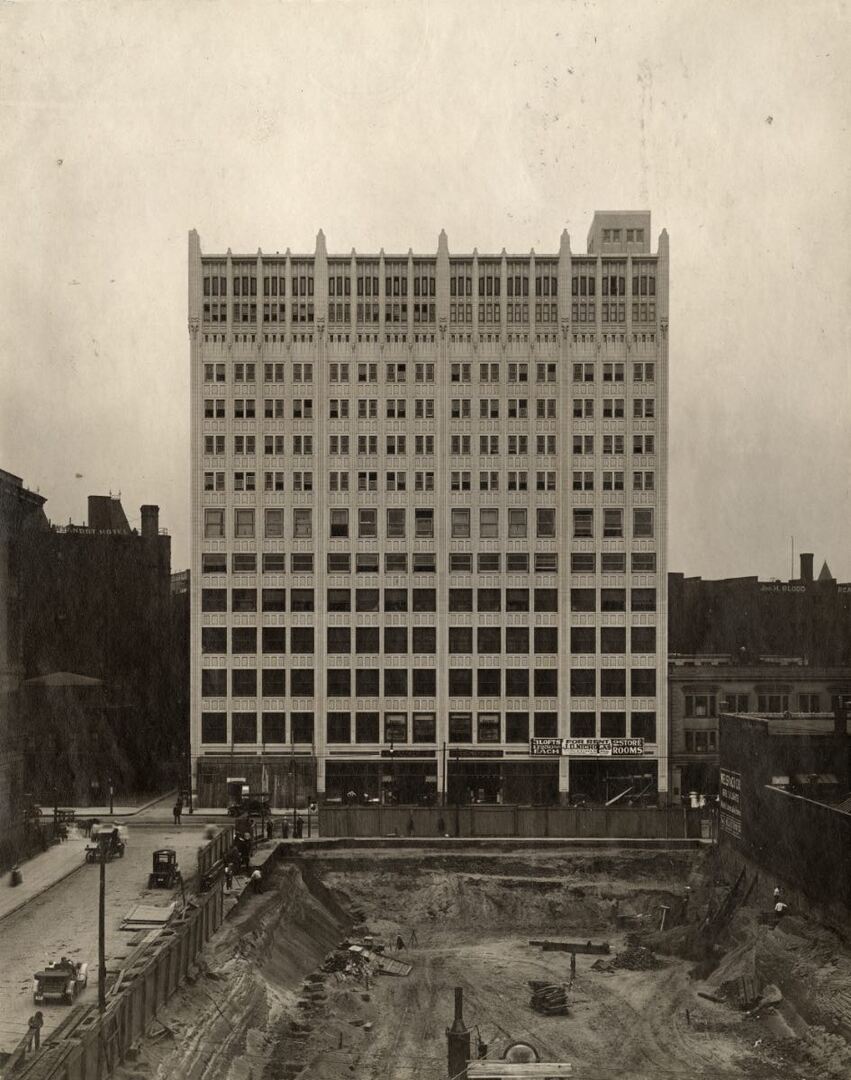
    <summary type="html"><![CDATA[<p><strong><em>The Cleveland Athletic Club was an epicenter of sports culture in Cleveland  for almost a century. Athletes from home and abroad used the CAC's state-of-the-art training facilities and amenities, including a large gymnasium, an indoor track, and an Olympic-sized swimming pool, some of them making sports history in the process.</em></strong></p><img src="https://clevelandhistorical.org/files/fullsize/3045ffb5f072f18bc25d854d4ddf7bba.jpg" alt="CAC under Construction " /><br/><p>For much of the twentieth century, sports and physical fitness were interwoven with Cleveland’s civic life. One place where this sporting culture took shape was the Cleveland Athletic Club (CAC) Building on Euclid Avenue, designed by architect J. Milton Dyer, who also held other notable local commissions, including for the design of Cleveland City Hall. The architectural contract awarded to Dyer totaled $150,000, marking the building as a significant investment for its time. Operating from 1908 until its closure in 2007, the Cleveland Athletic Club served generations of members and offered state-of-the-art athletic facilities that reflected the growing interest in organized recreation and physical training in the early twentieth century. </p><p>The CAC’s origins date to the night of August 10, 1907, when a group of founding members held their first preliminary meeting in the rooms of the Cleveland Auto Club. At that meeting, they elected a temporary president, secretary, and treasurer, and began organizing what would become one of Cleveland’s leading private athletic institutions. Most of these early members were affluent businessmen and professionals who contributed their own funds to establish the club and recruit additional members. Membership grew steadily during the club’s early years, even as members debated the final location of the clubhouse. </p><p>Formal elections were held in 1908. W. P. Murray was once again elected president. Also elected that evening were A. J. Huston as vice president, George A. Schneider as secretary, and A. H. Bedell as treasurer. After two more years of discussion, members decided on a site on Euclid Avenue in 1910. The finished clubhouse occupied the upper ten floors of the 15-story Cleveland Athletic Club Building, which opened in November 1911, giving the CAC a permanent home. </p><p>From its earliest years, the Cleveland Athletic Club distinguished itself through its facilities, which included multiple gymnasiums, boxing rings, handball courts, and a large indoor swimming pool, as well as dining rooms, meeting spaces, and social areas. These amenities made the club both a center for athletic training and a favored spot for Cleveland’s business and professional community to gather. </p><p>The clubhouse attracted many prominent athletes to its facilities for training exercises. Boxing legend Joe Louis trained for several days at the CAC during a visit to Cleveland in 1936. Swimming exhibitions and competitions were also held in the club’s twelfth-floor natatorium, attracting many skilled swimmers. The most illustrious was Johnny Weissmuller, who set the world record for 150-yard backstroke in the club pool in 1922 before going on to win five gold medals in the next two summer Olympics and, later, starring in the <i>Tarzan</i> films. </p><p>Track meets hosted by the club marked another contribution to the city’s sporting culture and gave young athletes a place to develop their skill during the winter months. Among them was Jesse Owens, who participated in meets there during his school years. At the time, Owens was already gaining recognition locally for his remarkable speed, shattering several records—some of them his own—on the club’s track. </p><p>The Cleveland Athletic Club remained a strong institution for nearly a century, serving as one of a number of prestigious anchors on the city’s most celebrated street. Although the CAC closed in 2007, the building continues to offer a reminder of the era when large cities’ athletic clubs were prominent features of urban civic life. When it was converted into apartments in 2019, the CAC Building got new name—The Athlon—that commemorates its history as a place that connected the city to regional and national athletic networks and gave Clevelanders an opportunity to see some of the great athletes of their time.</p><p><em><strong><a href="https://clevelandhistorical.org/items/show/1075">For more (including 8 images) view the original article</a></strong></em></p>]]></summary>
    <published>2025-12-01T17:13:53+00:00</published>
    <updated>2026-04-14T16:29:12+00:00</updated>
    <link rel="alternate" type="text/html" href="https://clevelandhistorical.org/items/show/1075"/>
    <id>https://clevelandhistorical.org/items/show/1075</id>
    <author>
      <name>Clark Helm</name>
    </author>
  </entry>
  <entry>
    <title type="html"><![CDATA[Hermit Club : The Evolution of Cleveland&#039;s Oldest Private Club Dedicated to the Performing Arts]]></title>
    <summary type="html"><![CDATA[<img src="https://clevelandhistorical.org/files/fullsize/ca4a7f164a9b812e223d53fcf1c3bdfc.jpg" alt="Second Hermit Club" /><br/><p>The Hermit Club was founded in 1904 by Cleveland architect Frank B. Meade, who was inspired by a visit to New York City's Lambs Club, a private social club devoted to the performing arts. After returning to Cleveland, Meade envisioned a similar space to serve the city's musicians and actors. He designed a clubhouse in a British pub style modeled after the Lambs Club.</p><p>Meade and his associates recruited members from all over Cleveland, notably from the Gatling Gun Company, which employed many musicians and performers. A budget of $10,000 was set for constructing a clubhouse on <a href="https://clevelandhistorical.org/items/show/806">Hickox Alley</a> (now East 3rd Street), near the Euclid Avenue Opera House, then the center of Cleveland's theater district. The building's brickwork, leaded windows, and floral wood engravings evoked its English inspiration. </p><p>From its beginning, the Hermit Club was both ambitious and exclusive. By 1909 it had grown large enough to need a bookkeeper, and its annual dues increased from $20 to $60, a substantial sum at the time. This high membership fee ensured that members were affluent and dedicated to musicianship and performance. The Club formed house and finance committees by 1910 to organize events and collaborations. </p><p>The Hermit Club quickly became a center for musical performance. Under the leadership of Meade, himself a trained musician, the Club featured musical concerts by the Original Fadette Jazz Orchestra, which included five violinists, a cellist, a bass violist, a clarinetist, a cornetist, and two pianists. The Club's first production, Hermits in Holland, set the tone for other musical "pilgrimages," including performances set in Spain, Austria, Mexico, Africa, California, the American South, and so forth. These location-specific shows involved elaborate costumes, makeup, and acting as the Hermits tried to embody the cultures they portrayed on stage. By the mid-1920s, the Hermit Club hired an orchestra conductor and began composing original music. </p><p>The Hermit Club also played a notable role in Cleveland's civic and charitable life. Proceeds from early productions supported causes such as the Cleveland Day-Nurse Premature-Babies Dispensary and the Hospital of Cleveland. The Club shared costumes and resources with other organizations, hosted “ladies' nights,” fielded its own baseball team, and even branded tobacco and cigarette boxes. In 1911, the Club began accepting junior members between the ages of 21 and 23, offering them reduced dues and training from senior members, all in an effort to connect with colleges and engage younger performers. </p><p>The Club also adapted to legal and social change. When Ohio adopted prohibition in 1912, the Club halted its alcohol sales, resuming only after repeal in 1933. Membership held steady at around 100 members, but it then dropped during World War II when 40 members left for military service. After the war, membership rebounded. In 1971, the Hermits voted to permit women to attend meetings and participate formally, though women had long been present at some social events and galas. </p><p>A major physical change came in 1928, when the Hermit Club sold its original clubhouse as demand for office and retail space intensified on lower Euclid Avenue. The Club followed the eastward drift of Cleveland's entertainment district to Playhouse Square, building its new clubhouse at 1628 Dodge Court in a similar Tudor style to that of the original. Although Meade stepped down as the Club's president in 1938, the organization he founded continued to thrive. </p><p>In more recent decades, the Hermit Club maintained its status as a private institution with roughly 100 dues-paying members. Its biggest modern transformation came in 2016, when a 50-seat public restaurant serving German cuisine opened inside the building. While most of the clubhouse remains private, the restaurant allows non-members to experience the space and learn about Cleveland's cultural legacy. The Club has also maintained its musical tradition, contributing performances honoring figures such as Judy Garland and Frank Sinatra. </p><p>More than a century after its founding, the Hermit Club remains a living testament to Cleveland's artistic heritage. Like Playhouse Square, it nurtures a performance culture interwoven with civic engagement while providing a place for people to enjoy food and music.</p><p><em><strong><a href="https://clevelandhistorical.org/items/show/1070">For more (including 10 images) view the original article</a></strong></em></p>]]></summary>
    <published>2025-11-18T19:35:38+00:00</published>
    <updated>2026-03-28T21:23:14+00:00</updated>
    <link rel="alternate" type="text/html" href="https://clevelandhistorical.org/items/show/1070"/>
    <id>https://clevelandhistorical.org/items/show/1070</id>
    <author>
      <name>Jordan Gallegos </name>
    </author>
  </entry>
  <entry>
    <title type="html"><![CDATA[Club Azteca: A Center for the Mexican-American Community]]></title>
    <summary type="html"><![CDATA[<p><strong><em>The autumn of 1951 was a momentous time for Cleveland's Mexican community. After years of raising funds through biannual fiestas and receiving gifts from Mexican organizations across the United States and even a contribution from the National Bank of Mexico, Club Azteca closed a deal to purchase a building for its first permanent home in the neighborhood that would later be known as Detroit Shoreway. The club served as a social and cultural center for Mexican Clevelanders for the next seven decades.</em></strong></p><img src="https://clevelandhistorical.org/files/fullsize/da447b7bda34d7bb32839e5cfabd5c31.jpg" alt="Club Azteca Exterior | Exterior del Club Azteca" /><br/><p>Club Azteca had its start in discussions among Mexican men who were taking English classes at the Hiram House settlement on Orange Avenue in the early part of the Great Depression. With the encouragement of a Hiram House language instructor, they decided in 1932 to establish Club Azteca as the first formal Mexican organization in Cleveland to provide a forum and safe haven for socializing, cultivating cultural traditions, and addressing common issues such as limited economic opportunity and discrimination that faced their community. The first Club Azteca president was Felix Delgado, who had left central Mexico to work as a Texas sharecropper before moving to Cleveland in 1923 to work on the Baltimore & Ohio Railroad. </p><p>Mexicans had been moving to Cleveland since the Mexican Revolution in 1910, and their numbers grew further during and after World War I. Like Delgado, many took jobs on the railroads, as well as in the steel mills, at a time when such jobs were being vacated by U.S. soldiers. Unlike some immigrant groups that concentrated in a single neighborhood, Mexicans had no single, well-defined center, and this remained true into the 1930s. </p><p>For its first twenty-five years, Club Azteca held biweekly or monthly meetings in the homes of members. The club also organized occasional larger events at venues such as Swiss Hall and St. Michael's Hall in Tremont, Ceska Sin Sokol Hall in Clark-Fulton, and Carpathia Hall in Detroit Shoreway. Such events included Club Azteca's commemorations of the anniversaries of Mexican Independence in 1820 and Mexico's defeat of the French army in the Battle of Puebla on May 5, 1862 (Cinco de Mayo). The event featured a historical pageant with members playing the part of Mexican military heroes. </p><p>When it incorporated in 1945, Club Azteca numbered more than 300 members. As the community and the club expanded after World War II, Club Azteca's leaders began to seek a permanent home closer to where many members now lived on the Near West Side. By 1951, the club had pooled enough resources to buy a former hardware store and apartment building at 5602 Detroit Avenue, which it fixed up over the next few years through "sweat equity." The new Club Azteca–Casa Mexico officially opened on June 15, 1957.</p><p>In addition to being a place to dance and socialize on weekend nights and to gather for potluck Sunday dinners, Casa Mexico provided important community services. It had a welcoming committee that delivered gift baskets to newcomers, and if a family arrived with nowhere to stay, the club found temporary quarters by tapping its members. The club also served as a clearinghouse for information that new migrants needed about where to buy food and how to do a myriad of daily activities in the city. For blue-collar workers who lived in roominghouses without kitchens, Club Azteca provided homemade meals. </p><p>Although Cleveland's Hispanic communities remained distinct, certain moments drew them together. In 1978, for example, the annual celebration of the feast day of Our Lady of Guadalupe (the patron saint of Mexico) at St. Michael's Hall encompassed not only Mexican but also Puerto Rican Clevelanders. The celebration included both Mexican and Puerto Rican music, and foods included the familiar enchiladas, burritos, and tacos alongside pastellas, a kind of Puerto Rican pastry. The festivities included a promenade by the queens and princesses of Club Azteca and its Puerto Rican counterpart, Club San Lorenzo, an organization founded in 1969 by natives of San Lorenzo, Puerto Rico. In 1990, a new event called Festival 90 drew together Club Azteca, Club San Lorenzo, and Club Alma Yaucana, another organization founded in 1961 to welcome newcomers from Yauco, Puerto Rico. </p><p>Although it was cooperating with other organizations, Club Azteca was beginning to suffer financial challenges in the 1980s, leading it to use its Detroit Avenue hall primarily as a nightclub to generate much-needed revenue. Club Azteca hosted "Puerto Rican Night" dances on Saturdays, an appeal to a community that was about five times larger than the city's Mexican-American community by 1990. By the end of the twentieth century, in spite of continuing to have many "social members" who enjoyed its nightclub, Club Azteca had dwindled to only 67 voting members, which led its officers to worry about the club's future. </p><p>Indeed, within a few more years Club Azteca's building fell into disuse. During this difficult time, Ruth Rubio-Pino, whose parents had managed the club from the mid-1950s until 2007, became president under a new Club Azteca administration in 2015. She tried to revive the struggling organization but found little support and the headquarters building now essentially beyond repair. After the building went into foreclosure in 2019, Club Azteca's small remaining membership was able to relieve its financial burden by transferring its building to the Cuyahoga Land Bank in 2020. </p><p>When a developer acquired the building as part of several parcels it was assembling to erect a large apartment building, it and Club Azteca agreed to develop a plan for incorporating the organization's heritage into the new building's design. Although Casa Mexico was demolished in 2021, exactly 70 years after its purchase, Club Azteca continues to explore possibilities for creating a space to honor its long legacy as a community anchor for Mexican culture and social action in Northeast Ohio.</p><p>___</p><p>El otoño de 1951 fue un momento crucial para la comunidad mexicana de Cleveland. Después de años de recaudar fondos mediante fiestas bianuales y de recibir regalos de organizaciones mexicanas a lo largo y ancho de los Estados Unidos, e incluso una contribución del Banco Nacional de México, el Club Azteca llegó a un acuerdo para comprar un edificio para su primera sede permanente en el barrio que más tarde sería conocido como la Detroit Shoreway. El club sirvió como un centro cultural y social para los habitantes mexicanos de Cleveland durante las siguientes siete décadas.</p><p>El Club Azteca tuvo su inicio en conversaciones entre los hombres mexicanos que estaban tomando clases en el asentamiento social de la Hiram House en la avenida Orange en los comienzos de la Gran Depresión. Alentados por un instructor de lenguas de Hiram House, decidieron en 1931 establecer el Club Azteca como la primera organización formal mexicana en Cleveland para proveer un foro y un lugar seguro para socializar, cultivar las tradiciones culturales y ocuparse de cuestiones de interés común como las limitades oportunidades económicas y la discriminación con la que se enfrentaban en sus comunidades. El primer presidente del Club Azteca fue Félix Delgado, que había dejado el centro de México para trabajar como aparcero en Texas, antes de mudarse a Cleveland para trabajar en el ferrocarril de Baltimore & Ohio.</p><p>Los mexicanos se habían estado mudando a Cleveland desde la Revolución Mexicana en 1910 y sus cifras habían crecido más durante y después de la Primera Guerra Mundial. Como Delgado, muchos tomaron trabajos en los ferrocarriles, así como en las siderurgias, en un tiempo en el que esos trabajos estaban siendo abandonados por los soldados de los Estados Unidos. A diferencia de otros grupos inmigrantes que se concentraban en un único barrio, los mexicanos no tenían un centro único y bien definido, y esto siguió siendo cierto hasta avanzados los años treinta.</p><p>Durante sus primeros veinticinco años, el Club Azteca tuvo reuniones cada dos semanas o mensualmente en las casas de sus miembros. El club también organizaba eventos más grandes en espacios como el Swiss Hall y el Hall de St. Michael en Tremont, el Ceska Sin Sokol Hall en Clark-Fulton y el Carpathia Hall en la Detroit Shoreway. Estos eventos incluían las conmemoraciones del Club Azteca de los aniversarios de la independencia de México en 1820 y de la derrota del ejército francés en la Batalla de Puebla el 5 de mayo de 1862 (Cinco de Mayo). Los eventos incluyeron una representación histórica con los miembros del club interpretando el papel de los héroes militares mexicanos.</p><p>Cuando se estableció formalmente en 1945, el Club Azteca contaba con más de 300 miembros. Según la comunidad y el club se expandieron después de la Segunda Guerra Mundial, los líderes del Club Azteca empezaron a buscar una sede permanente más cerca de donde muchos miembros vivían entonces en el Near West Side. Para 1951, el club había juntado suficientes recursos para comprar una antigua ferretería y edificio de apartamentos en el número 5601 de la avenida Detroit, que arreglaron a lo largo de los siguientes años trabajando sin remuneración. El nuevo Club Azteca-Casa México oficialmente se inauguró el 15 de junio de 1957.</p><p>Además de ser un lugar para bailar y socializar en las noches de los fines de semana, y para reunirse para cenas compartidas los domingos, la Casa México proveyó servicios comunitarios importantes. Tenía un comité de bienvenida que repartía cestas de regalos a los recién llegados, y si una familia llegaba sin un lugar en el que quedarse, el club les encontraba un alojamiento temporal valiéndose de sus miembros. El club también servía como un centro para distribuir información que los nuevos migrantes necesitaba sobre dónde comprar comida y cómo hacer múltiples actividades diarias en la ciudad. Para los trabajadores que vivían en pensiones/casas de huéspedes sin cocinas, el Club Azteca proveía comida casera.</p><p>Aunque las comunidades hispanas de Cleveland poseían características distintas, ciertos momentos las juntaban. En 1978, por ejemplo, la celebración anual del Día de Nuestra Señora de Guadalupe (la patrona de México) en el Hall de St. Michael reunió no solamente a los mexicanos de Cleveland, sino también a los puertorriqueños. La celebración incluyó tanto música mexicana como puertorriqueña, y las comidas incluyeron enchiladas, burritos y tacos, además de pastelillos puertorriqueños. Las festividades incluyeron un desfile ceremonial de las reinas y las princesas del Club Azteca y de su contraparte puertorriqueña, el Club San Lorenzo, una organización fundada en 1969 por los nativos de San Lorenzo, Puerto Rico. En 1990, un nuevo evento, llamado Festival 90, juntó al Club Azteca, al Club San Lorenzo y al Club Alma Yaucana, otra organización fundada en 1961 para dar la bienvenida a los recién llegados de Yauco, Puerto Rico.</p><p>Aunque estaba cooperando con otras organizaciones, el Club Azteca estaba comenzando a enfrentarse a retos financieros en los años 80, lo que llevaría al uso de su sala en la avenida Detroit como discoteca para generar unos ingresos que se necesitan mucho. El Club Azteca acogía los bailes de la “Noche Puertorriqueña” los sábados, un llamamiento a una comunidad que, para 1990, era cinco veces más grande que la comunidad mexicanoamericana. Para el final del siglo XX, a pesar de que continuaba teniendo muchos “miembros sociales” que disfrutaban de su club nocturno, el Club Azteca se había reducido a solamente 67 miembros con derecho a votación, lo que llevó a sus oficiales a preocuparse por el futuro del club.</p><p>En efecto, en unos cuantos años más, el edificio del Club Azteca cayó en desuso. Durante estos tiempos difíciles, Ruth Rubio-Pino, cuyos padres habían administrado el club desde mediados de los años 50 hasta 2007, se convirtió en presidenta bajo una nueva administración del Club Azteca en 2015. Ella intentó revivir la organización, que se encontraba en dificultades, pero encontró poco apoyo y el edificio de su sede ahora en condición esencialmente irreparable. Después de que el edificio se enfrentase a un embargo en 2019, la reducida membresía que le quedaba al Club Azteca pudo aliviar su carga financiera mediante la transferencia de su edificio al Cuyahoga Land Bank en 2020.</p><p>Cuando un promotor adquirió el edificio como parte de varias parcelas que estaba reuniendo para erigir un edificio de apartamentos grande, este y el Club Azteca acordaron desarrollar un plan para incorporar la herencia de la organización en el diseño del nuevo edificio. Aunque la Casa México fue demolida en 2021, exactamente 70 años después de su compra, el Club Azteca continúa explorando la posibilidad de crear un espacio para honrar su legado longevo como pilar de la comunidad para la cultura mexicana y la acción social en el noroeste de Ohio.</p><p><em><strong><a href="https://clevelandhistorical.org/items/show/1008">For more (including 7 images) view the original article</a></strong></em></p>]]></summary>
    <published>2023-11-21T20:59:40+00:00</published>
    <updated>2026-03-04T21:32:05+00:00</updated>
    <link rel="alternate" type="text/html" href="https://clevelandhistorical.org/items/show/1008"/>
    <id>https://clevelandhistorical.org/items/show/1008</id>
    <author>
      <name>J. Mark Souther&amp;#32;&amp;amp;&amp;#32;Matías Martínez Abeijón</name>
    </author>
  </entry>
  <entry>
    <title type="html"><![CDATA[Mason&#039;s Farm: How an Ordinary Working Farm Became an Extraordinary Black Leisure Destination]]></title>
    <summary type="html"><![CDATA[<p><strong><em>The article <a href="https://greenbookcleveland.org/locations/cedar-country-club-masons-farm/">Mason's Farm</a> originally appeared in <a href="https://greenbookcleveland.org"><i>Green Book Cleveland</i></a>, our sister project exploring the history of Black entertainment, leisure, and recreation in Northeast Ohio. Named for its proprietor Benny Mason, Mason's Farm was a Black-owned working farm in Solon that achieved national renown as a music venue and resort in the 1930s-40s.</em></strong></p><img src="https://clevelandhistorical.org/files/fullsize/208d4ec5c66d58b3c214bf1744dbf507.jpg" alt="Cover of Mason&#039;s Farm Booklet" /><br/><p>In 1935, Benjamin “Benny” Mason purchased a 160-acre farm in Solon on Cochran Road south of Route 43 and established what became known as “Mason’s Farm,” a popular resort, country club, and jazz venue. A well-known game operator, Mason purchased the farm and the Cedar Country Club subsequently opened in 1936. Upon the farm’s opening, Mason remarked, “I want to do something for my people. I want to make this farm a place where they can relax and enjoy themselves. I want to provide a place for them comparable to other races.” Despite its rural location beyond the east suburbs of Cleveland, one of the features Mason boasted was the Cedar Country Club's proximity to the city itself, claiming only a twenty-five-minute drive from Carnegie and East 55th Street in Cleveland. With the accessibility of the resort, both in location and its integrated clientele, the farm quickly became a popular destination for visitors across the country as well as Clevelanders. The Cedar Country Club gained national acclaim as the “showplace of Ohio.” The resort included furnished cabins, a restaurant, and nightclub. Some of its features included a riding academy, picnic grounds, and occasionally tours of the farm for students.</p><p>The Cedar Country Club also functioned as a nightclub and jazz venue that boasted popular artists Tiny Grimes, saxophonist Coleman Hawkins, and many others. The Cedar Country Club, which one <i>Call and Post</i> feature lauded as "Ohio's Swankiest Summer Resort," was routinely described as luxurious and enjoyed a listing in the 1939 edition of the <i>Negro Motorists' Green Book</i>. While it looked like a barn from the exterior, the clubhouse boasted a bar in the basement, another bar on the ground floor as well as a dance hall, and a lounge and private rooms on the second floor. It was available to be rented out for private parties, banquets, and other events. Mason renamed Cedar Country Club "Mason's Farm" in 1941 and hired restaurateur U. S. Dearing as manager. In addition to its leisure destination status, Mason’s Farm was also a working farm with more than 2,500 head of livestock and 145 of its 160 acres set aside for growing corn, wheat, and oats.</p><p>Mason himself was an eccentric character in Cleveland history, often running into legal trouble. Some of the allegations against him included purchasing stolen jewelry, transporting alcohol during Prohibition, and the frequent policy promoting that made Mason famous. Mason was known as the “king of policy games” as he notoriously ran illegal numbers rackets. In the summer of 1932, Benny Mason became the target of the Mayfield Road mob. In a number of attempts by the Mayfield Road mob to expand their own illegal numbers games into areas controlled by Mason, four men were arrested outside of Mason’s home and thought to be there to kill him.</p><p>Throughout his time both as a policy operator and owning the farm, Mason was notorious for “resigning” as the lead policy operator, but ultimately would move his operation’s headquarters and resume his business. Despite protests from management that claimed no gambling was permitted on the property, policy games continued to take place at the resort, making it a well-known gambling center in Cleveland. Residents in Solon in 1938 explained that while they did not see any “big-time gambling,” Mason’s Farm did have several slot machines. Though this reputation may have accounted for its disappearance from the <i>Green Book</i> after just one year, Mason's Farm remained very popular throughout the 1940s.</p><p>However, Mason redirected a significant portion of his wealth from these illicit games to support his community. Mason was known for his philanthropy, particularly for his donations to Black churches in Cleveland as well as paying educational costs for Black students. Throughout the early to mid-twentieth century across the country, policy and numbers games were cornerstones in providing economic opportunities to Black communities. Gambling rackets not only provided employment opportunities to Black residents in the community, but they also became a widespread source of investment into businesses and philanthropy. </p><p>Mason's establishment closed in 1951 and was sold to the Nickel Plate Railroad to form an industrial park. Benny Mason was involved in a fatal car crash in 1954 near London, Ohio, that took his life and the life of his friend Walter Woodford as well as critically injuring his wife Blanche.</p><p><em><strong><a href="https://clevelandhistorical.org/items/show/967">For more (including 8 images) view the original article</a></strong></em></p>]]></summary>
    <published>2022-10-08T13:06:33+00:00</published>
    <updated>2026-04-04T22:11:29+00:00</updated>
    <link rel="alternate" type="text/html" href="https://clevelandhistorical.org/items/show/967"/>
    <id>https://clevelandhistorical.org/items/show/967</id>
    <author>
      <name>Cheyenne Florence</name>
    </author>
  </entry>
  <entry>
    <title type="html"><![CDATA[Cafe Tia Juana : Second Wave Jazz in Glenville]]></title>
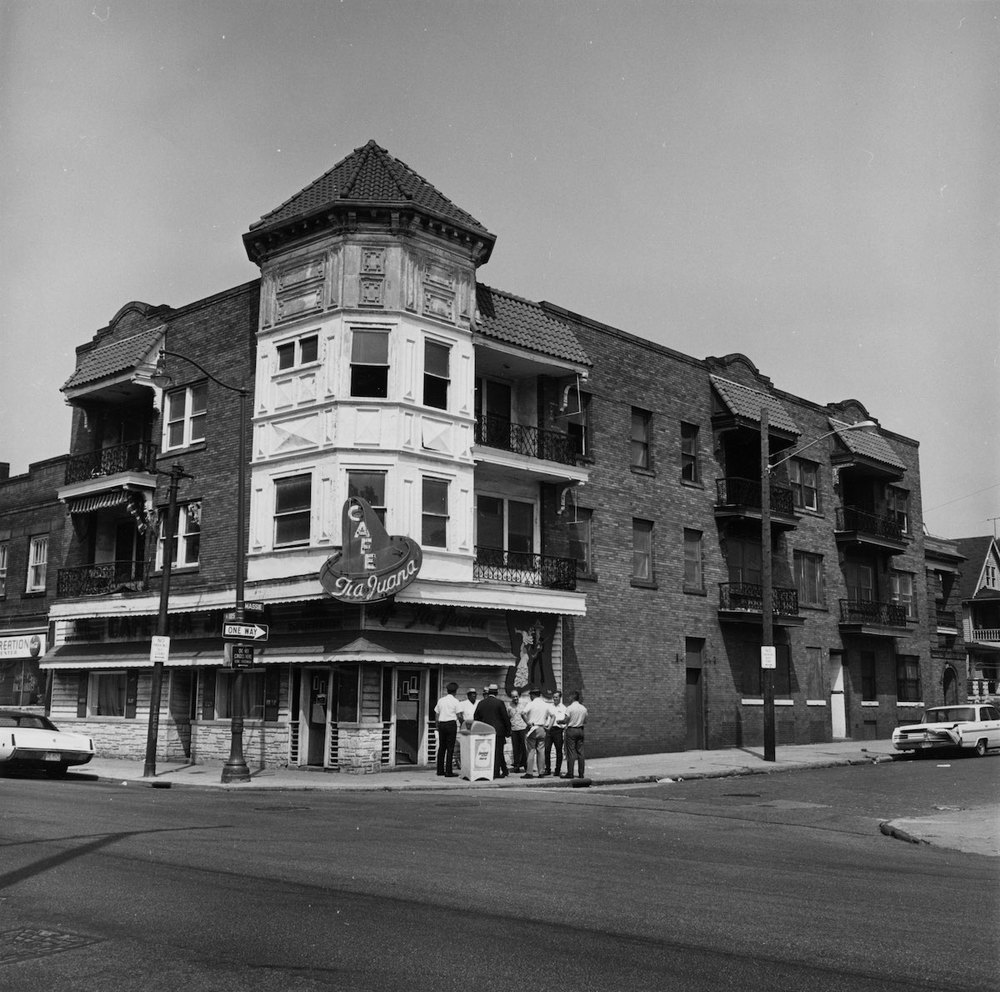
    <summary type="html"><![CDATA[<p><strong><em>Cafe Tia Juana was meant to be a catalyst for change during the racially divided 1940s. The most "plush" jazz club in Cleveland became one of the most infamous, with a reputation that eventually brought the café to its demise. </em></strong></p><img src="https://clevelandhistorical.org/files/fullsize/0cf03608bde602831950bef6fa0a19db.jpg" alt="Cafe Tia Juana at the corner of Massie Avenue and East 105th Street" /><br/><p>It’s a typical cold and drizzly evening in Cleveland, 1948. A young woman can be seen walking along the cracked asphalt. The buzzing light of the flickering neon sign ahead beckons her as the wafting sounds of snare drum riffs, husky baritone vocals, and a blaring trumpet become louder. The sultry-sounding music coming from behind the fogging windows increases her anticipation. The rat-a-tat riffs and spontaneous blats of the saxophone call her name as her heartbeat quickens with excitement. At last, she enters into its musical oasis.</p><p>This musical escape was called Cafe Tia Juana, a true oasis for Cleveland’s jazz fanatics during a time of tumultuous racial tensions in the late 1940s to 1960s. Located in the Glenville neighborhood, Cafe Tia Juana was one of Cleveland’s most popular jazz clubs and was nationally recognized for bringing the hottest names of jazz through its doors. It eventually developed a dually famous and infamous reputation, encapsulating contradiction. It was said that the club provided “a rich formula of beauty and glamour and top-flight musical talent,” yet was simultaneously “a source of disorder and aggression to the community.” Perhaps this complex identity mirrors the time, place and culture in which it was birthed. Cafe Tia Juana opened during jazz’s second wave, not the earlier Jazz Age, featuring the free form of bebop. Cafe Tia Juana developed a dual reputation for lawlessness and sensuality while also providing an interracial haven where people from mixed backgrounds could gather. The club–like jazz itself–broke through the social expectations of its time.</p><p>Cafe Tia Juana was intentionally integrated when racial segregation was common. The club was opened in 1947 by Catherine and Arthur “Little Brother” Drake, along with Little Brother’s previous business partner, Willie Hoge. The inspiration for the venture came after Catherine Drake was barred from entering a club in Cleveland because she was African American. She was with Hoge at the time, who was solely permitted, as he was a white customer. In response, the two Drakes and Hoge decided to open their own venue that would not discriminate against anyone who wanted to enter, creating an inclusive congregation of musical talents and admirers alike. Catherine Drake became the first African American woman to own and manage a jazz club in Cleveland.</p><p>The club’s appearance made it stand out amongst numerous other venues. It was designed by Charles L. Sallee Jr., the first African American graduate of the Cleveland Institute of Art. Sallee designed the club with unapologetic lavishness in a colorfully playful “Mexican style” with a surprising element of posh sophistication, using velvet carpets and excessive draperies. The interior architecture was also unique, with a four-leaf clover-shaped bar and booth design based around an elevated revolving stage in the center. Despite the club’s Spanish name (a variation of the Mexican city, Tijuana), Sallee’s design is rooted in Southeast Asian inspiration versus the “South of the Border” theme which advertisements claimed. Sallee served in the military during World War II and was stationed in the Philippines for some time where he drew his inspiration for the design of Cafe Tia Juana. The country’s sunny skies, colorful architecture, and vibrant culture inspired the colorful Pacific Island atmosphere of Cafe Tia Juana.</p><p>At its finest, Cafe Tia Juana was nationally recognized as a hot jazz club and was every bit the musical oasis that the Drakes had sought to create. It was luxuriously extravagant through its interior decorative style and by its nationally acclaimed jazz superstars. Impressively, in Cafe Tia Juana’s first two years of operation, it hosted the nation’s most famous jazz icons including Dizzy Gillespie, the King Cole Trio, Billie Holiday, Sarah Vaughan, and Ella Fitzgerald, with The King Cole Trio being advertised as an upcoming performance in the club’s introductory article in 1947. The <em>Cleveland Call and Post</em> described the club in those early years as the “fabulous, most beautiful cafe spot in the Midwest” and as a “plush and fabulous cafe spot where top-flight entertainment is the mode.”</p><p>Despite the club’s promising start, Cafe Tia Juana struggled to maintain its positive reputation. As early as 1949, Cafe Tia Juana started to experience financial hardship as customers began to dwindle, due to changing music trends. In efforts to maintain excitement and to mitigate revenue troubles, Cafe Tia Juana became liberal in its entertainment offerings, first hosting talent shows and local bands, then clambakes, fashion shows and eventually exotic dancers. This expansion of entertainment also coincided with the club’s change of management and chronic financial and legal troubles. Catherine Drake became the sole owner of the club and managed Tia Juana with her two sons after Hoge and Little Brother were sent to prison for numerous racket schemes. In 1961, the U.S. Treasury Department “seized for nonpayment of delinquent Internal Revenue taxes due from Cafe Tia Juana.” The club was eventually managed by Mansfield Turner who started to bring in national jazz attractions once more, starting with Valerie Carr, in efforts to boost its image. Despite Turner’s efforts for revitalization, Cafe Tia Juana became exclusively associated with its poor management, gambling escapades, illegal activity and violence through a series of stabbings and a shooting. </p><p>In 1969, Cafe Tia Juana was closed permanently and the original building complex that ran along the corner of Massie Avenue and 105th Street was bought by Cleveland Christ Church Citadel of Hope Ministries and, soon after, was demolished. Although Cafe Tia Juana is long gone, its memory remains as an important symbol of Cleveland’s music history. It was both impacted and influenced by jazz and race during its short life and was a catalyst for change, it challenged cultural norms and expectations, representing an iconic time from Cleveland’s past. Tia Juana opened as a reaction to the discriminatory character of Cleveland and its racially divided public spaces. The space stood for equality and change in the face of adversity, successfully creating a lasting legacy.</p><p><em><strong><a href="https://clevelandhistorical.org/items/show/882">For more (including 11 images) view the original article</a></strong></em></p>]]></summary>
    <published>2019-11-20T20:08:13+00:00</published>
    <updated>2026-03-04T21:32:01+00:00</updated>
    <link rel="alternate" type="text/html" href="https://clevelandhistorical.org/items/show/882"/>
    <id>https://clevelandhistorical.org/items/show/882</id>
    <author>
      <name>Petra Brown</name>
    </author>
  </entry>
  <entry>
    <title type="html"><![CDATA[Kokoon Arts Klub: A Chrysalis for the New Art]]></title>
    <summary type="html"><![CDATA[<p><strong><em>For decades, Cleveland was home to a hotbed of modernist art, risqué events and progressive cultural ideals. Maybe the city wasn't quite as staid and stuffy as its reputation at the time suggested. </em></strong></p><img src="https://clevelandhistorical.org/files/fullsize/1120207bd4062a72cf79c2395cba61b8.jpg" alt="Just hanging out" /><br/><p>The Kokoon Arts Klub was anything but conservative. Online sources describe it as a “Bohemian artists group.” The <em>Encyclopedia of Cleveland History</em> highlights its “unconventional activities and espousal of ‘new art.’” In 1923, the Bishop of Cleveland denounced the Klub’s annual Bal Masque’s “moral defects” and “immoral excesses.” That year, citing the event’s reputation for debauchery, Cleveland’s mayor cancelled the Bal.</p><p>But make no mistake: The Kokoon Arts Klub was deadly serious about art: Making it. Promoting it. And perhaps most important, challenging its conventions. The group was founded by Carl Moellmann and William Sommer, talented lithographers whose mainstream occupation—designing promotional posters for the Otis Lithograph and Morgan Lithograph Companies in Cleveland—offered little room for artistic expression. So in 1911, in a former tailor’s shop on East 36th Street near Carnegie Avenue, they launched the Kokoon Arts Klub, proclaiming “as the lowly cocoon was the forerunner of the beautiful butterfly, so might [we] hope that from this small beginning something of beauty should develop and emerge.” In addition to Moellman and Sommer, the Klub’s members included nationally recognized artists such as August Biehle, Joseph Boersig, Elmer Brubeck, Joseph Jicha, Henry Keller and Rolf Stoll. Many of these artists later became part of the “Cleveland School,” an arts community that helped (or had helped) found the Cleveland Museum of Art, The Cleveland Institute of Art and the City’s annual May Show.</p><p>Many of the Kokoon Klub’s founders were literal and figurative Bohemians—highly trained and forward-thinking artists from Bohemia which, prior to World War I, was part of the Austro-Hungarian Empire and now is the Czech Republic. In their lifetimes they had watched and learned as art traveled through “Modernistic” phases such as Impressionism, Post Impressionism, Cubism, Abstract Expressionism and Constructivism. At the Kokoon’s inception in 1911, the highly popular Art Nouveau style was evolving into Art Deco and all manner of creative types—painters, illustrators, ceramicists, musicians, dancers and writers—were drawing inspiration from the futuristic turn that art was taking. In Cleveland, the Kokoon Klub was home to many of the foremost proponents of Modernism.  </p><p>In addition to making art, the Klub held biennial exhibitions which, not surprisingly, drew controversial reviews. Their product, after all, was “new art” and Cleveland was hardly a cutting-edge town. Kokooners invited critics, artists and the general public to lectures and exhibitions. And they held several “Artist Curb Markets,” which became a way for creative types to generate badly needed income during the Depression. The first Curb Market, held in 1932 in University Circle, drew 12,000 people.</p><p>Beginning in 1913, Kokooners held an annual “Bal Masque.” These events were the talk of the town: wild (and wildly creative) celebrations of bohemianism that featured one-of-a-kind costumes, exotic dances, provocative art, periodic nudity, chaotic processions, giant props and over-the-top decorations. Newspaper writers were enthralled. Cleveland elites were appalled. But with the exception of the aforementioned 1923 cancellation, Bal Masques remained one of Cleveland’s most radical events for more than 30 years (1913 to 1946). They were always held before Lent (a sort of North Coast Mardi Gras), usually at a dance club or hotel such as the Masonic Hall, Hotel Winton, and Hotel Cleveland.</p><p>So what, exactly, could one expect at a Bal Masque? Well, first of all you had to get in, which required intensive preparation and originality, was well as an invitation. Attendees’ costumes had to adhere to the event’s theme, such as “Bal Dynamique,” “Bal Bizarre,” or “Bal Risqué.” A handmade costume also was essential: According to chroniclers, rented costumes were forbidden, as were “dominoes [half-masks worn over the eyes], tramps and ordinary clown costumes.” Kokooners manned the doors and vetted all entrants. If costumes weren’t up to snuff, you didn’t get in. </p><p>Inside, there was no end to the creativity and cacophony: A human butterfly emerged from a cocoon. Nude female dancers sashayed through kaleidoscopic lighting. Couples painted all blue danced the Conga. A women sported a purple and ivory-striped silk dress with hand-painted clefs, musical notes and plastic rats that glowed in the dark. A rubbernecker once described guests as “a strange troupe of revelers dressed in the fashion of all known tribes of the earth, and some believed to have only existed on Mars, if at all.”</p><p>But Bal Masques, otherworldly as they were, had down-to-earth goals. They were the organization’s principal funding source, as well as an essential PR vehicle—a high-profile way to showcase the Klub’s creative endeavors and promote artistic modernism. </p><p>As “new art” slowly became more acceptable, the Kokoon Klub lost some of its original intellectualism and became more of a social organization. Brought low by the Great Depression, Klub finances and membership declined. The last Bal Masque was held in 1946. The Klub held on for another ten years.</p><p>For 40-odd years, the Kokoon Klub was a transformative force in Cleveland’s (and even the nation’s) cultural history. According to chronicler Henry Adams, “[Kokoon] helped establish a market for a sort of modern art that had been considered absurd only a few years before.” Thankfully, the Klub’s creations live on, displayed in museums, galleries and private collections around the world. Scores of its posters and fine art pieces can be viewed online. Myriad original pieces, as well as the Kokoon Arts Club Papers, are housed at Kent State University.</p><p><em><strong><a href="https://clevelandhistorical.org/items/show/851">For more (including 12 images) view the original article</a></strong></em></p>]]></summary>
    <published>2018-11-06T15:38:19+00:00</published>
    <updated>2026-03-04T21:32:04+00:00</updated>
    <link rel="alternate" type="text/html" href="https://clevelandhistorical.org/items/show/851"/>
    <id>https://clevelandhistorical.org/items/show/851</id>
    <author>
      <name>Chris Roy</name>
    </author>
  </entry>
  <entry>
    <title type="html"><![CDATA[Jazz Temple: When Jazz Came to University Circle in the 1960s]]></title>
    <summary type="html"><![CDATA[<p><strong><em>Physical changes in neighborhoods are typical in most major cities, and with the passage of time they appear even more dramatic. Unlike fictional towns and buildings we’ve read about in childhood or seen in movies, change in community identity is inevitable.  Yet some images from the past populate our memories and we recall them with remarkable clarity.</em></strong></p><img src="https://clevelandhistorical.org/files/fullsize/4be345c46cab75278d8b8288ce1d1ba8.jpg" alt="Winston Willis, Dizzy Gillespie in rear of Jazz Temple Building" /><br/><p>The Mayfield Triangle: The former street address 11339 Mayfield Road is now 11400 Euclid Avenue. And although official street numbering changes over the years for one reason or another (zoning requirements, city planning, urban renewal, or real estate development), certain historical facts about some properties often become lost amid the changes. Today, observing motorists and pedestrians teeming around the bustling Euclid Avenue and Mayfield Road intersection, it’s fair to say that few if any of them know the history of the Triangle area before it was transformed into the mini-metropolis now known as Uptown Cleveland. For a brief time in the early 1960s, the triangular lot, then known as the Mayfield Triangle, upon which now rests the Museum of Contemporary Art building, was the site of a popular coffee house jazz club called the Jazz Temple. </p><p>When the 1960s dawned in the United States, it was heralded as a new decade of youth and change by a dynamic young president, John F. Kennedy, who assumed office trumpeting his “new frontier”. In previous years, the calm complacency of the post World War-II era had lent a relative tranquility, but it was gradually disappearing as post-war babies were becoming young adults. With a cultural landscape that included sleek cars, the Twist, the Pill, and a persistent atmosphere of cigarette smoke, the nation was on the verge of a decade of counterculture and social revolution. A great deal of this culture fermented on college campuses where students were beginning to find their voices and express their own individual political views and values. </p><p>At a time when the U.S. was approaching some of its most explosive times, including the rise of a free speech movement, music was rapidly becoming the main vehicle of self-expression for young people. Jazz and one of its subgenres, free jazz/improvisational jazz, were very attractive, especially to college students. So when a shrewd and savvy young African American entrepreneur named Winston Willis brought his coffee house jazz club to University Circle, within arm’s reach of the Western Reserve University (now CWRU) campus, and at affordable prices, it appeared to be a dream come true for all concerned. Imagined, engineered and created by young Willis, who was also a big fan of the musical genre, the Jazz Temple arrived on the scene at the tail end of the Beatnik era and smack in the heyday of ’60s-type coffee houses. Willis chose the club’s name to symbolize a devout gathering place dedicated to the icons of the jazz world where legendary artists could be collectively enjoyed and appreciated. </p><p>Having operated several successful small businesses, he sensed that something was lacking in this upscale college community.  So, after making a careful assessment of the area and determining what was needed and what would be likely to work, he decided that high-quality jazz performances at a student-friendly and affordable price was the answer.  Then, quickly putting his idea into action, he secured a lease on a vacated building, a former Packard automobile showroom, and immediately began remodeling, devoting careful attention to acoustics. Shortly thereafter, in 1962, the club opened to immediate success.  </p><p>The liquor-less establishment that seated approximately 450 people was near the ethnic enclave known as Murray Hill (Little Italy), a place that was notably hostile toward African Americans. As noted by former Cleveland mayor Carl B. Stokes, "... Cleveland was in the hands of ethnics, the immigrants from Middle and East European countries." Historian Dr. Todd M. Michney has observed that "... Little Italy's residents historically marked their territory and sought to ward off racial residential transition through the use of violence..." With surrounding institutional neighbors in the city’s so-called "cultural oasis," the Jazz Temple was a noteworthy, if incongruous jewel in the Mayfield Triangle. </p><p>From all over Cleveland and surrounding areas, dedicated jazz enthusiasts assembled to enjoy and appreciate the musical genre. Soon, the terms “preaching at The Temple” and “worshipping at The Temple” became popular colloquialisms and catchphrases. Legendary jazz greats, many of whom were considered musical geniuses, frequently headlined at the club. Miles Davis was cool but Kind of Blue, John Coltrane took Giant Steps to play My Favorite Things, and Dizzy Gillespie was blowin’ and Boppin’ and Groovin’. Many other notable artists also performed magnificent solo riffs, instrumentations and stunning improvisations that became sealed in memories forever.  Though sometimes described erroneously in the local press as "the ultimate 'beatnik' club", the Temple also featured popular female jazz vocalists like Dinah Washington and Gloria Lynne, as well as great stand-up comics like Dick Gregory, Redd Foxx, and Richard Pryor.</p><p>During the early 1960s, the Western Reserve student body was predominantly white, and these students and others from surrounding universities accounted for a large percentage of the club’s patronage. But as is typical of jazz establishments, there was a noticeable amount of race mixing and many interracial couples in attendance each night. Individuals who managed to navigate the social inequities of the time and gather in a communal appreciation of jazz.</p><p>As the club’s notoriety grew, it came to be considered by many world-famous jazz musicians as the “Jazz Mecca." But the interracial dating and race-mixing at the club triggered widespread resentment in racially polarized Cleveland.  Particularly in the Murray Hill (Little Italy) community, where visible racial tensions mounted. With attempted intimidation by local law enforcement, some nights saw as many Cleveland police officers in attendance in the club as regular customers. These visits were routinely followed by unscheduled and unannounced inspections and bogus citations. The warnings were dire and persistent, and thereafter, months of ominous threats of violence and anonymous phone calls during and after business hours foretold of the coming end. Several famous acts appearing at the club refused to be intimidated initially, insisting on performing. But finally, after several thwarted bombing attempts, the frequency and intensity of the threats were followed by a tremendous after-hours explosion in 1964 that completely demolished the Jazz Temple and its brief reign ended soon after. As reported in the local press:  “Police were unable to find reasons for the bombing of the interracial house of jazz but they found remnants of a bomb." And the message was clear.</p><p><em><strong><a href="https://clevelandhistorical.org/items/show/811">For more (including 10 images) view the original article</a></strong></em></p>]]></summary>
    <published>2017-09-23T21:49:29+00:00</published>
    <updated>2026-03-04T21:32:03+00:00</updated>
    <link rel="alternate" type="text/html" href="https://clevelandhistorical.org/items/show/811"/>
    <id>https://clevelandhistorical.org/items/show/811</id>
    <author>
      <name>Aundra Willis-Carrasco</name>
    </author>
  </entry>
  <entry>
    <title type="html"><![CDATA[Cleveland East Side Turners : The Complicated History of a Simple Social Club]]></title>
    <summary type="html"><![CDATA[<img src="https://clevelandhistorical.org/files/fullsize/7ccdc88a4c4b0d561662117cadb6f9fb.jpg" alt="Cleveland East Side Turners Building" /><br/><p>The small, two and half story, red brick building lying in the shadow of the long-abandoned Richmond Bros. complex on East 55th Street is not exactly welcoming.  The building sits on a weed-filled lawn behind a small parking lot, surrounded by a barbed-wire-topped chain link fence.  The windows are covered and the small sign above the doorway can barely be made out from the street.  Security cameras are prominently placed and focused on the entrance of the building.  An unassuming passerby may well wonder what sort of nefarious deeds are occurring there that warrant such secrecy and security.  Well, none, actually—other than some rather aggressive digging, setting and spiking.  It happens to be the hall of the Cleveland East Side Turners, Northeast Ohio’s most popular volleyball club.</p><p>Like its building, the history behind the East Side Turners would surprise many unknowing passersby.  Turners is an Americanization of Turnverein, a gymnastics movement started in 1811 by Friedrich Ludwig Jahn in the Germanic lands of Central Europe. Jahn was a nationalist who wanted a united Germany, but, above all, he believed proper exercise would propel the Germanic people to preeminence in the region. Seen by some as an eccentric outcast with xenophobic, anti-Semitic, and militaristic tendencies bent on improving the Germanic race, it is not hard to understand why some historians have drawn parallels between Jahn and a later German with a similar worldview and mindset—Adolph Hitler. Jahn was exiled during Clemons von Metternich’s anti-liberalism crusade in 1819, becoming a mere figurehead as his Turnverein evolved into a more inclusive group. After the Germanic Revolutions of 1848 the organization was disbanded and its leaders arrested, which led many members to seek new lives with greater freedom and economic opportunity in the United States.</p><p>The Cleveland Turnverein was the fourth formed in the U.S. behind Cincinnati, Boston, and Philadelphia. Established in 1850, the members initially met at Welch & Frank’s—a local, German-run shop, while practicing their gymnastic exercises in Bellevue Garden on Central Avenue near what would later become the Gateway complex. Membership grew as Germans continued to flock to the Cleveland area in the mid-19th century, until the Civil War intervened. The Turnverein members tended to be staunch abolitionists and the entire Cleveland Turnverein joined the Union Army en masse in 1861. Their initial three-month enlistment created the 150-man, Company K of the 7th Ohio Volunteers—the first all-German unit from Cleveland. Most members immediately reenlisted in the same regiment after this first stint, and the unit fought bravely at Fredericksburg, Chancellorsville and Chattanooga. One Turnverein member from the original Company K, Dr. Charles Hartmann, instead joined the illustrious 107th Ohio Infantry as the regimental surgeon.  At Chancellorsville on May 2, 1863, he entered the fray in an attempt to rally the troops and prevent the regiment from being routed. However, he was gunned down by advancing Confederate troops, and became the only surgeon killed in battle during the war.  </p><p>As German-American soldiers made their way home after the war and attempted to reunite the Turnverein, difficulties arose and the social club splintered. In 1867, a west side group began meeting at the Free German School auditorium on Mechanic Street (now West 38th). Another faction stationed on the near east side of downtown started calling themselves the Germania Turnverein in 1876, initially meeting at a hall on Woodland Avenue before building Germania Hall on Erie Street (East 9th) a dozen years later. Yet another group, calling themselves the Turnverein Vonvaerts, formed in 1890, and in 1893 they built the red-brick hall on the corner of Willson Avenue (East 55th) and Harlem Street. The Germania Turnverein merged with the Vonvaerts in 1908 and the combined clubs have since remained at that location in the shadow of the Richmond Bros. building. </p><p>The athletic emphasis of the Cleveland Turnverein was reestablished after World War I and they regularly held large, public gymnastic displays. Men and women would engage in elaborate demonstrations that showcased their agility and strength at public venues in front of enormous crowds—a kind of forerunner to today’s Cirque du Soleil. One prominent member, Dr. Karl Zapp, was an early and loud advocate for instituting physical education classes in school curricula. It is through his early efforts that American children have enjoyed the benefits, or torments, of gym classes since the 1920s. The Turnverein was also instrumental in popularizing bowling throughout the United States as a form of recreational exercise.  </p><p>Aside from brave Civil War medics, various lithe gymnasts and physical education proponents, many illustrious Clevelanders have been members of the Cleveland Turnverein. Ernst Mueller was one of Cleveland’s most successful brewers, founding the very popular Cleveland Home Brewing Co, and serving as President of the enormous Cleveland-Sandusky Brewing Corp.  The architect Theodore Schmitt was responsible for many public structures throughout Cleveland, including the Cuyahoga County Courthouse, the Joseph & Feiss Building, and the Euclid Avenue Temple, among many others. His father Jacob was Chief of Police for the city, and when he died in 1893, his obituary in the Cleveland Plain Dealer claimed that he was “better known than any other one man in the city.” Although the Turnverein concentrated on athletics, and gymnastics in particular, it also served as a German social club for the city’s large and influential German population, and many of its members were prominent citizens.</p><p>The World Wars brought certain prejudices, and German-Americans during this time sought to distance themselves from purely Germanic associations and better assimilate into American life. To this end, the Turnverein began referring to itself simply as the more acceptably American sounding--American Turners. By 1941, the Turnverein Vonvaerts had become the Cleveland East Side Turners.  </p><p>As the enthusiasm waned for public displays of gymnastics, the East Side Turners eventually transformed into an organization running popular volleyball leagues and tournaments. The outlying structures of the property on East 55th Street, which once included a separate meeting hall and a large kitchen facility, eventually were lost until only the gymnasium remained. Although this lone building in a corner of the resurgent St. Clair-Superior neighborhood may look foreboding, volleyball enthusiasts of every nationality are warmly welcomed here. Like the convoluted history of its ancestral gymnastics club, the nondescript brick building that is home to today’s Cleveland East Side Turners is far more interesting, and less frightening, than it seems at first glance.</p><p><em><strong><a href="https://clevelandhistorical.org/items/show/744">For more (including 12 images) view the original article</a></strong></em></p>]]></summary>
    <published>2015-11-04T15:03:18+00:00</published>
    <updated>2026-03-04T21:32:03+00:00</updated>
    <link rel="alternate" type="text/html" href="https://clevelandhistorical.org/items/show/744"/>
    <id>https://clevelandhistorical.org/items/show/744</id>
    <author>
      <name>Michael Barkacs</name>
    </author>
  </entry>
  <entry>
    <title type="html"><![CDATA[The Sachsenheim: Transylvanian Saxon Immigrants Find a Home on Cleveland&#039;s West Side]]></title>
    <summary type="html"><![CDATA[<img src="https://clevelandhistorical.org/files/fullsize/c1d27aa40af2d9a6aca9f62b1c6c5d3b.jpg" alt="The Sachsenheim" /><br/><p>According to legend, Prince Vlad III, the fifteenth century Wallachian prince who inspired Bram Stoker to create Dracula, once cruelly impaled a thousand Saxons on stakes in his bloody quest to conquer neighboring Transylvania.  While Vlad the Impaler  was an actual historical figure and while there is some historical evidence that the Saxons of Transylvania may have crossed paths with him in his incursions in the late 1400s into their lands, the legend itself is likely an exaggerated account of a battle gory by today's standards, but not so much so by those of the fifteenth century. Yet the legend does suggest something about the west side Transylvanian Saxon immigrants to the United States who, in 1907, purchased a large house at 7001 Denison Avenue in the Cleveland Stockyards neighborhood and converted it into a place they called the Sachsenheim.  The word translates literally to "Saxons' Home."  As you read a little bit more about the Saxons from Transylvania, you will understand why having a home was so important to them. </p><p>The Saxons were ethnic Germans who, at the invitation of King Geza II of Hungary, began immigrating in the twelfth century into Transylvania--at the time a vast, but thinly populated area east of Hungary, near lands further to the east that later became the Romanian principalities of Moldavia and Wallachia.  The Saxons called Transylvania "Siebenburgen"--seven towns, after the original seven fortified settlements they built there.  Over time they built more towns and villages.  As centuries passed, Transylvania--not Germany, became their home.  They survived Vlad the Impaler's assault upon their home in the fifteenth century, but the mid-nineteenth century brought a new threat to their home when nationalism took root in eastern Europe.  The ruling Hungarians implemented a policy called Magyarization, which aimed at destroying the language and culture of all non-Hungarians.  And, the Romanians, by now forming a majority of the population, contended that Transylvania should become part of a Romanian state.</p><p>Saxons began leaving Transylvania in large numbers in the late nineteenth and early twentieth centuries.  Many came here to Cleveland, where, by 1895, colonies existed on both the east and west sides of the city. Like other immigrant groups did in America's pre-welfare society, they formed local fraternal benefits organizations called Erster Siebenburgen Sachsen Kranken Untersteutszung Verein ("First Transylvanian Saxons Sick Benefit Society") to protect members of their community from catastrophic illness and industrial workplace injury and death. These local organizations later led to the creation of a national organization, known today as the Alliance of Transylvania Saxons (ATS) with local branches here in Cleveland and elsewhere in the United States.  It was west side Cleveland's Branch 1 that in 1907 bought and converted the dwelling at 7001 Denison Avenue into the Sachsenheim so that its members would have a place to gather and engage in cultural activities.  </p><p>The Eintracht Singing Society, organized in 1897, practiced and performed at the Sachsenheim.  In 1904, Branch 1 and the Eintracht united, according to an ATS publication, "beginning a period of intensive civic and cultural work in Cleveland."  In 1902, Branch 4 was organized for women.  Both branches over the years have actively maintained the Sachsenheim as well as planned the scheduling of cultural activities there.  In 1905, a second singing society was organized, "Hermania," which in 1922 united with the earlier formed singing society to form Eintracht-Hermania, the predecessor of today's surviving mixed chorus, Eintracht-Saxonia Sachsenchor.  Over the years, other cultural groups were organized at the Sachsenheim, including a cultural dance group called the Cleveland Saxon Dance Group.  These cultural groups perform today not only here in the United States, but also internationally in Europe.</p><p>The Sachsenheim itself changed over the years.  Renovations and expansions were made to the building--one in 1910 and and a second in 1925, which added a ballroom, two bowling alleys, a music room, dining room, a restaurant, and other amenities to the facility.  The Sachsenheim also opened itself during this era to the Stockyards Neighborhood, allowing local residents and organizations to use the hall for weddings, showers and other events.  The restaurant today hosts a weekly Taco Tuesday and is a popular gathering place for young people in the neighborhood.</p><p>Over the years since its founding, the Sachensheim has been maintained primarily through revenues raised by the events of the cultural activities groups. The women of the Auxiliary Committee of Branch 4 have for years provided catering services for events at the hall.  Money is also raised by the Sachsenheim's bi-annual homemade sausage sale that, according to the ATS, is "well known around town."  As a result of the efforts of these two local branches of the Alliance of Transylvania Saxons and others, as well as that of the singing society Eintracht-Saxonia Sachsenchor, and with help from time to time from other organizations and the residents of the Stockyards neighborhood, the Sachsenheim at 7001 Denison Avenue, while very far away from Transylvania, continues to this day to be the Transylvanian Saxons' home in Cleveland. </p><p><em><strong><a href="https://clevelandhistorical.org/items/show/671">For more (including 12 images) view the original article</a></strong></em></p>]]></summary>
    <published>2014-11-06T16:31:04+00:00</published>
    <updated>2026-03-04T21:32:02+00:00</updated>
    <link rel="alternate" type="text/html" href="https://clevelandhistorical.org/items/show/671"/>
    <id>https://clevelandhistorical.org/items/show/671</id>
    <author>
      <name>Jim Dubelko</name>
    </author>
  </entry>
  <entry>
    <title type="html"><![CDATA[Street Clubs of the East Side: &quot;We Do Our Own Thing Ourselves&quot;]]></title>
    <summary type="html"><![CDATA[<img src="https://clevelandhistorical.org/files/fullsize/1b2ca92c217f7880b4ce38ff4730531f.jpg" alt="E. 85th Street Club Cleanup, 1952" /><br/><p>In August 1940, residents on East 85th Street on Cleveland's east side decided to organize their efforts for the betterment of the their block and Mrs. Beatrice Beasley, a citizen of the street, founded the E. 85th Street Club. In its beginning stages, the E. 85th Street Club held meetings at members' homes routinely every month, whereas after the Fairfax Recreation Center was completed in 1958, meetings were held weekly. The street club served members from East 85th between Cedar Avenue and Central Avenue in Fairfax. The club was dedicated to doing good within its own block by holding an annual spring cleaning program, which entailed older members as well as the youth raking leaves, painting houses, whitewashing trees and curbs, and remodeling abodes. The organization also held a "Back to School" dance for the children, which included refreshments, prizes, and music disc-jockeyed by Eddie O'Jay, who was known for discovering and managing the R&B music group "The Mascots," later known as the legendary "O'Jays." Other community outreach events included giving fruit baskets to the sick, donating money to various Fairfax events, and holding neighborhood picnics and banquets.</p><p>"We do our own thing ourselves," "Improve, don't move" - These are the mottos that spearheaded street clubs into action. When federal urban renewal programs fell short in their attempt to stabilize urban neighborhoods, street clubs tried to fill the void. While the E. 85th Street Club's work may have been the most publicized, other street clubs took very similar actions to make their neighborhood a better place to live. Christmas parties, home renovations for the poor and elderly, and voiced opinions regarding community renewal were not unusual. Street clubs, also known as neighborhood clubs or civic clubs, were prominent especially on Cleveland's east side neighborhoods, such as Fairfax, Glenville, and Hough. An annual meeting called "Street Club Organization Day" started in 1968 to bring together street club presidents to lead combined efforts to address problems plaguing the community. Workshops were led by the Street Club Presidents League, as well as representatives of various community non-profit organizations such as Citizens for Better Housing Inc. and University-Euclid Development Center. Through the meeting, combined club efforts yielded clean-up campaigns and an award banquet. Street clubs also participated in yearly beauty contests known as "The Beautiful Block Contest" and "The Bright and Beautiful Contest," conducted by the Cleveland newspaper The Call & Post. Contests were judged based on appearance and the total house participation. While this encouraged blocks to clean and renovate homes, other streets sometimes experienced difficulty contending, for they were plagued by absentee landlords and even rats. Since then, street clubs and neighborhood associations have expanded to the outer parts of Cleveland, including Shaker Heights as well as the west side of Cleveland.</p><p><em><strong><a href="https://clevelandhistorical.org/items/show/666">For more (including 5 images&#32;&amp;&#32;1 audio file) view the original article</a></strong></em></p>]]></summary>
    <published>2014-08-13T20:46:48+00:00</published>
    <updated>2026-03-04T21:32:02+00:00</updated>
    <link rel="alternate" type="text/html" href="https://clevelandhistorical.org/items/show/666"/>
    <id>https://clevelandhistorical.org/items/show/666</id>
    <author>
      <name>Julie A. Gabb</name>
    </author>
  </entry>
  <entry>
    <title type="html"><![CDATA[Pla-Mor Roller Rink: Cleveland&#039;s Black Skating Mecca]]></title>
    <summary type="html"><![CDATA[<img src="https://clevelandhistorical.org/files/fullsize/10a90a3bf8f149d9744afb1e81b8ddec.jpg" alt="Pla-Mor Label" /><br/><p>For a generation in the 1940s-60s, Pla-Mor Roller Rink provided a much-needed recreational venue for all ages on the eastern end of the Cedar-Central (Fairfax) neighborhood and for a time was the only Black-owned skating rink in Cleveland. More than a place to skate, it also attracted top-billed musical acts.</p><p>On land now owned by Case Western Reserve University, Pla-Mor's location on Cedar Avenue at East 107th Street was a converted bus garage named the Coliseum, which opened in 1940. Built by the same syndicate that operated the Arena on Euclid Avenue, this multipurpose venue was intended for conventions, concerts, boxing shows, basketball games, and rollerskating. In 1942, Elmer "Al" Collins took over the "dark cavern," painted its interior, and opened the well-lighted Pla-Mor Roller Rink. He hired a full-time skating instructor and an organist to provide music for skaters. Not only did Collins enable many youths to compete in the National Roller Rink Operators Association that he founded, he also intervened in the fight against juvenile delinquency in Cedar-Central. In 1948 he even persuaded a "roving gang" that harassed the neighborhood to reconstitute as the Royal Dutchmen, a supervised social and athletic club that pledged to model constructive play for younger adolescents.</p><p>Pla-Mor hosted an array of events. Following World War II, the Negro Business Alliance of Cleveland sponsored the "Exhibit of Progress" several years in a row at the facility, drawing as many as 70,000 people to view displays and demonstrations of successful black enterprises, and in the latter half of the 1950s the Call & Post newspaper held its annual Home and Food Show there. The Future Outlook League, a civil rights organization founded in the 1930s, along with Black social organizations such as Coronet, the Ghana Club, and Les Charmantes, held lavish cabaret parties at Pla-Mor in the 1950s. Along with exhibitions and parties, the Pla-Mor ballroom attracted big-name music acts in the 1950s-60s, including Wynonie Harris, Dinah Washington, Frankie Lymon, the Marvelettes, and even B. B. King. In the late 1950s, DJs like WJMO's Ken Hawkins also spun records for dance nights.</p><p>But the Pla-Mor was best known for skating, which ranged from children's lessons to teen nights to skating shows such as those by the Roller Vanities. Racial discrimination contributed to Pla-Mor's popularity in the Black community. Although forbidden by law, segregation was common in Cleveland at mid century. From time to time, Blacks reported difficulties at Skateland, another popular roller rink at Euclid Avenue and East 90th Street. These problems seem to have escalated in the 1950s, when the adjacent Hough neighborhood transformed from 4 to 74 percent African American in only a decade. As late as 1955, after an interracial group of youth from Boys Town, Nebraska, went to Pla-Mor after exclusion from an undisclosed East Side rink, a spokesman at Skateland denied knowledge of the incident but openly admitted that the rink tried to deny African American entry except to private parties held by church or school groups. Although Skateland more openly hosted black events by the late 1950s, the Pla-Mor remained essential in the Black community.</p><p>In 1965 the Pla-Mor underwent renovation, and took the new name University Party Center. Count Basie's orchestra belted out jazz tunes at the Go-Go Girls Big Cabaret Party in June of the following year. It turned out to be the last of the storied shows at the place many still called the Pla-Mor. Just over a month later, the Hough Uprising broke out on Cleveland's East Side. The University Party Center went up in flames and, according to the Call & Post, was reduced to "twisted lengths of burned steel." Amid the chaos, the Townes family, who lived across the street, attempted to flee the danger in their 1957 Ford. When they drove through a nearby National Guard roadblock, police fired into their windshield, striking 16-year-old Diana Townes, who lost an eye. Four months later, the family's home also burned to the ground. </p><p>Today the mention of the Pla-Mor evokes bittersweet remembrances--both happy recollections of good times spent skating or dancing and sorrow for the roller rink's tragic end. Fondness for the good times led a handful of investors to reopen the former Euclid Rollerdrome as the new Pla-Mor in 2009 at 22466 Shore Center Drive in suburban Euclid, promising to keep the memory of its namesake alive. </p><p><em><strong><a href="https://clevelandhistorical.org/items/show/621">For more (including 6 images&#32;&amp;&#32;2 audio files) view the original article</a></strong></em></p>]]></summary>
    <published>2013-10-26T16:20:12+00:00</published>
    <updated>2026-03-04T21:32:01+00:00</updated>
    <link rel="alternate" type="text/html" href="https://clevelandhistorical.org/items/show/621"/>
    <id>https://clevelandhistorical.org/items/show/621</id>
    <author>
      <name>J. Mark Souther&amp;#32;&amp;amp;&amp;#32;Timothy Klypchak</name>
    </author>
  </entry>
  <entry>
    <title type="html"><![CDATA[Nighttown: A Dublin-Inspired Jazz Mecca]]></title>
    <summary type="html"><![CDATA[<img src="https://clevelandhistorical.org/files/fullsize/7af9f268dc7b93fa072593ac3448d30c.jpg" alt="Nighttown, 1977" /><br/><p>When John Barr opened Nighttown on February 5, 1965, it was a one-room bar. Constructed in 1920, the building had previously housed the Cedar Hill Diner, a deli, Sam’s Beauty Parlor and Stock's Candies. The Silhouette Lounge, which was run by mob-operated Cadillac Amusements, replaced Stock's Candies in 1960. After the feds shut down the Silhouette Lounge, Barr leased the storefront and named the tavern after the Dublin red-light district in James Joyce’s <em>Ulysses</em>. The space was quite small and had an upright piano upon which a few local musicians would occasionally play. A restaurant area was added in 1966.
As Nighttown became more popular, Barr expanded the restaurant and bar into three other storefronts surrounding the original space, yielding a 400-seat establishment comprising six dining rooms and three bars: the entire first floor of the three-story building. Barr sold Nighttown to Ireland-born Brendan Ring in 2001. As the building expanded (including a large covered patio named Stephen’s Green after Dublin, Ireland’s, best known city park), so did the list of guest performers. Barr had been a fan of stride piano, a type of jazz that was popular when the bar opened, but he only had space for one or two local players. When Brendan Ring became Nighttown’s general manager in 1993, he brought in Jim Wadsworth to book bigger national acts.
Nighttown enjoyed a reputation as one of the world’s premier venues for jazz music, according to <em>DownBeat</em> magazine. A short list of Nighttown’s performing alumni includes Freddy Cole, Jane Monheit, John Pizzarelli, Brian Auger, Ann Hampton Callaway, Tommy Tune, Ray Brown, Basia, Cyrille Aimee, Esperanza Spaulding, John Legend, Dick Cavett and Dick Gregory. In addition to formally booked acts, numerous musicians—from Wynton Marsalis to Stevie Wonder—dropped in for impromptu performances. Nighttown also became the home of the Press Club of Cleveland’s Journalism Hall of Fame in 2007.</p><p>Like many restaurants, Nighttown suffered from the upheaval of the coronavirus pandemic in 2020. Ring sold the restaurant to another operator who only managed to keep it open for several months. In 2025, restaurateur Brandon Chrostowski leased the former Nighttown space to relocate Edwin's, his French restaurant on Shaker Square that prepares formerly incarcerated people for success in the culinary and hospitality industries. </p><p><em><strong><a href="https://clevelandhistorical.org/items/show/550">For more (including 9 images&#32;&amp;&#32;3 audio files) view the original article</a></strong></em></p>]]></summary>
    <published>2012-09-06T16:14:22+00:00</published>
    <updated>2026-03-04T21:32:01+00:00</updated>
    <link rel="alternate" type="text/html" href="https://clevelandhistorical.org/items/show/550"/>
    <id>https://clevelandhistorical.org/items/show/550</id>
    <author>
      <name>Robin Meiksins</name>
    </author>
  </entry>
  <entry>
    <title type="html"><![CDATA[Mad Hatter Discotheque]]></title>
    <summary type="html"><![CDATA[<p><strong><em>The time was right when the Mad Hatter discotheque opened in downtown Cleveland in 1971. Unfortunately, times change. </em></strong></p><img src="https://clevelandhistorical.org/files/fullsize/ccfd67b45e86c1b33dd0e53cabbb256c.jpg" alt="Dancers silhouetted on the Mad Hatter&#039;s flashing stage" /><br/><p>Fans of Lewis Carroll’s <em>Alices Adventures in Wonderland</em> like to quote its key characters. Among this writer’s favorites are “It takes all the running you can do to keep in the same place” (the Red Queen), “No wise fish would go anywhere without a porpoise” (the Mock Turtle), and—most relevant to this article—”You can always take more but you can’t take less.” </p><p>The latter (lightly paraphrased) was spoken by the immortal Mad Hatter during the story’s Mad Tea Party. But it also summarizes the driving philosophy of Cleveland’s own Mad Hatter. One of the city’s first disco clubs (launched before anyone actually used the term “disco”), the Mad Hatter was all about “more”: More volume. More alcohol. More visual stimulation. More people per square foot. You really couldn’t take less! </p><p>The Mad Hatter, opened in 1971, was the first of what would become an 11-club nationwide chain co-owned by Cleveland’s Hamilton Biggar. “Ham,” who died in 2014, also co-founded <a href="https://clevelandhistorical.org/items/show/891">The Last Moving Picture Company</a> on Playhouse Square and the 13th Street Racquet Club between Euclid and Chester Avenues. Like Biggar’s other downtown development efforts, the Mad Hatter (located at 2150 East 18th Street in the former home of Socrates’ Cave) was a noble but doomed attempt to revive a moribund area. At the start of the 1970s, nightlife in and around Playhouse Square was largely non-existent. Except for the Hanna, all the theaters were shuttered, Sterling Lindner (a retail anchor at 1255 Euclid Avenue) closed in 1968, and Halle’s (the area’s keystone department store) was limping badly. Only Jim Swingos’ restaurant and hotel at East 18th and Euclid showed real signs of life. </p><p>But 200 yards up East 18th Street, Ham Biggar and the Mad Hatter were hell bent on being as popular and boisterous as the rock bands that often tore up Swingos’. Anchored by an enormous sound system (no live bands here), a bubble machine, a strobe-like, multi-colored dance floor and 2,500 square feet of sticky red-shag carpeting, the “Hatter” quickly became Cleveland’s disco hot spot. In the early years, however—before the “disco inferno”—attendees were more likely to sway to the sounds of classic rock: Rolling Stones, Aerosmith, Deep Purple, Led Zeppelin and so forth. By the mid 1970s, disco ruled, and hard rockers were supplanted by the likes of Donna Summer, Wild Cherry, Abba and the Bee Gees. Same new song on an old background. </p><p>The Mad Hatter was nothing if not timely. For most of the decade, Americans everywhere were listening, singing, dancing and even wearing disco. And a trip to “The Hatter” was the quintessential disco experience—particularly on Wednesdays when beer was a penny and mixed drinks were a quarter. By the late 1970s, however, things changed. Choreographed, inclusive and (most of all), danceable, disco was pushed aside by “punk” (raw, nihilistic and male dominated) along with “dance pop” and, when infused with punk, “new wave.” Music critics piled on—calling disco mindless, boring, formulaic, monotonous, and mechanical. On July 12, 1979, Disco Demolition Night was held at Comiskey Park in Chicago. A crate filled with disco records was blown up between games of a doubleheader. Fans were thrilled but the playing field was so badly damaged that the White Sox had to forfeit the second game.</p><p>Disco was rapidly dying and The Mad Hatter soon became old hat. The club staggered into the early 1980s, even morphing (unsuccessfully) into Pinky’s Jazz Showcase on Wednesday nights before closing for good. By the middle of the decade, nothing was left but an empty building and a cracked unisex sign (the Mad Hatter logo). Symbolizing Cleveland’s snail-like pace of change, it took almost thirty years for the structure to be removed, replaced by an annex to the Salvation Army’s Harbor Light complex—ironically, a safe haven for alcoholics.</p><p><em><strong><a href="https://clevelandhistorical.org/items/show/477">For more (including 5 images) view the original article</a></strong></em></p>]]></summary>
    <published>2012-05-23T10:25:46+00:00</published>
    <updated>2026-03-04T21:32:00+00:00</updated>
    <link rel="alternate" type="text/html" href="https://clevelandhistorical.org/items/show/477"/>
    <id>https://clevelandhistorical.org/items/show/477</id>
    <author>
      <name>Chris Roy</name>
    </author>
  </entry>
  <entry>
    <title type="html"><![CDATA[Tudor Arms Hotel: Originally the Cleveland Club]]></title>
    <summary type="html"><![CDATA[<p><strong><em>At the corner of Carnegie Avenue and Stokes Boulevard stands a baronial fortress of a building that looks as though it would be perfectly at home on Manhattan's Upper West Side. A closer inspection reveals city founder Moses Cleaveland in bas-relief, his stone likeness peering down on the corner of Carnegie and Stokes. The Cleaveland carving offers a clue to the building's origin.</em></strong></p><img src="https://clevelandhistorical.org/files/fullsize/b59490fa334baa2a1d6f5c67b384de71.jpg" alt="Looking West Toward Tudor Arms " /><br/><p>Constructed in 1926-30, the Tudor Arms opened in 1930 as the swanky, exclusive Cleveland Club. The enormous Gothic Revival structure, designed by Frank Meade (who also designed countless extravagant homes in Cleveland Heights and Shaker Heights), was the tallest and grandest in the University Circle area. The twelve-story building boasted ballrooms, a swimming pool, a bowling alley, tall ceilings, huge leaded windows, intricate and expensive detailing including gargoyles and even a sculpture of Moses Cleaveland, whose presence reflects the club's intent to represent his namesake city. Over the years, the Cleveland Club rented out its ballrooms and also hosted lavish parties and events. But the club could not sustain the building for very long. The tough economy finally forced the Cleveland Club to forfeit its lease on the building in 1939. </p><p>On July 1, 1939, hotel operator Torrance C. Melrose assumed the lease, opening the Tudor Arms Hotel with rooms on the upper seven floors and sub-leasing existing club spaces to the Cleveland Club. The Tudor Arms soon became a noted entertainment venue. Jazz musicians kept its grand ballroom, the Empress Room, swinging well into the night. The ballroom functioned as a supper club and offered dinner along with the entertainment, which included jazz as well as many types of performances, from the conservative Lawrence Welk to the flamboyant Patrice Wymore. The Plain Dealer described one of Wymore's performances at the Tudor Arms in the following way: "Patrice Wymore, the singer and dancer [who] beats up no small storm of entertainment performed in the Empress Room. Her rhinestone studded hosiery, by the way, retails at $75 a pair, and on her they're worth it!" At the time, many frowned upon Wymore's provocative performance believed such acts at the hotel tarnished the neighborhood's respectability. </p><p>In 1960, as racial tensions began to sweep the city's east side, University Circle institutions regarded the flashy hotel nightclub as an undesirable tenant in the neighborhood. Accordingly, Western Reserve University and the Case Institute of Technology took over the property for use as a graduate student dormitory. They started the process by slowly changing some of the rooms into dormitories, while others continued to be rented nightly. The process was successful, and by 1963 the building had been fully converted for student use. During the conversion, the Tudor Arms got a $500,000 facelift, but it was not an extensive remodel. Eventually, the newly federated Case Western Reserve University leased the building to Cleveland Job Corps, which occupied the Tudor Arms until the building was sold in 2007.</p><p>After years of neglect, the Tudor Arms Hotel needed restoration. Minimal updates over the years had kept the building running, but it was a far cry from the glory days of the 1930s. In 2011, four years after Cleveland developers MRN Ltd purchased the property and undertook a $22 million restoration plan, the Tudor Arms reopened as a Doubletree hotel. </p><p><em><strong><a href="https://clevelandhistorical.org/items/show/466">For more (including 13 images&#32;&amp;&#32;1 audio file) view the original article</a></strong></em></p>]]></summary>
    <published>2012-05-21T20:29:26+00:00</published>
    <updated>2026-04-11T17:32:25+00:00</updated>
    <link rel="alternate" type="text/html" href="https://clevelandhistorical.org/items/show/466"/>
    <id>https://clevelandhistorical.org/items/show/466</id>
    <author>
      <name>Eleanor Kaiser</name>
    </author>
  </entry>
  <entry>
    <title type="html"><![CDATA[Short Vincent: A Walk on Cleveland&#039;s Historic Wild Side]]></title>
    <summary type="html"><![CDATA[<img src="https://clevelandhistorical.org/files/fullsize/short-vincent-csuspeccoll-short-vincent-street-at-night-july54_a57e4aa8f7.jpg" alt="Short Vincent at Night, 1954" /><br/><p>Vincent Avenue, known in its heyday as "Short Vincent," spans only a single city block between East 6th and East 9th streets, but it was a hub of Cleveland nightlife in the early to mid-twentieth century. Located behind the lavish Hollenden Hotel near the city's center, Short Vincent, with its wild reputation, attracted both tourists and city residents, who flocked to its restaurants, bars, and music clubs. In comparison, East 4th Street could be argued as a modern day equivalent to Short Vincent due to the lure of entertainment packed into a short stretch of road. However, unlike the deliberate planning dedicated to the development East 4th, Short Vincent naturally evolved into a bustling entertainment center in downtown Cleveland. </p><p>Establishments sprang up on Short Vincent that catered to many forms of entertainment: drinking, delicious food, and dancing women. The south side of the street became known for its burlesque shows, specifically the performances at the internationally known Roxy Theater. After a show, patrons could stop and pick up a couple of hot dogs or the 39-cent house special of fried eggs, toast and jelly, and coffee at Coney Island right next door. Even the more respectable businesses on Short Vincent were known to attract underworld figures, mob bosses, and gamblers of all types. The Theatrical Grill, opened in 1937, not only hosted the day's top musical stars such as Judy Garland and Dean Martin, but was also the place to score the latest gambling lines and odds on sporting events, thanks to its notorious owner Morris "Mushy" Wexler. The Theatrical Grill also served as a headquarters for the famous Cleveland mobster, Alex "Shondor" Birns. </p><p>Bond Clothing, located around the corner from Short Vincent, complemented the "Mad Men" atmosphere that existed between East 9th and East 6th thanks to the male clientele that frequented the varied forms of entertainment that Short Vincent had to offer. Designer Charles Bond and his two business partners, Mortimer Slater and Lester Cohen, founded Bond Clothing in 1914 in Cleveland. In 1920, the trio opened their first men's department store in the old Hickox Building, located near the corner of Euclid and East 9th Street until the structure was torn town in 1946. In that same year, Bond Clothing relocated exactly on the corner of Euclid and East 9th. Bond Clothing's new store location sported a sleek Art Moderne design, and its interior solarium made the building feel like one large room with three floors.  As customers walked up the floating staircase with aluminum and glass railings and would pass a mural dedicated to the "Goddess of Fabric."  Also, the lighting of the building was carefully choreographed to bend the pastel shades that decorated the interior.</p><p>Bond's became nationally known for selling the fifteen-dollar two-piece suit. By the mid 1950s, Bond Clothing boasted over 100 stores nationwide, along with 50 catalogue stores in smaller cities. Bond's, however, did not remain a department store solely for men, and began to create women's clothing as well. Models used to show off the women's clothing line in the large bay window on the third floor. Supposedly, men used to walk by the window on their lunch breaks and gawk at the beautiful ladies wearing the latest fashions. Patrons could also look down from the upper floors of the Bond Clothing building and view burlesque dancers sunbathing on the roof of the Roxy. </p><p>Activity on the Short Vincent peaked in the 1930s and 1940s, steadily waning after World War II as suburbanization lessened the vitality of downtown Cleveland. Most of the fun on Short Vincent had ended by the late 1970s, as increasing portions of it were demolished to make way for new office buildings due to city urban renewal plans that did not advocate for restoring existing structures. Also, the Bond Clothing building, along with other Short Vincent establishments, was demolished in 1978 to accommodate the expansion of National City Bank that accompanied its move from a regional operation to a national enterprise. </p><p>An emerging trend toward sanitizing downtown entertainment also contributed to the demise of Short Vincent. One example of this these efforts was the closing of Mickey's Lounge Bar. Mickey's, owned by bookie and gambler Charles "Fuzzy" Lakis, closed in 1964 when the location was deemed a common nuisance by the fire marshal - an indirect route taken by the state liquor control board to finally close Mickey's down. Police officers no longer turned a blind eye to the goings on along Vincent Avenue, now enforcing parking bans that were routinely ignored in years past, and escalating their harassment of the bookies that seemed to run Short Vincent. Even though the majority of the establishments that lined Short Vincent no longer exist and the familiar faces that used to run the row have long gone, as a 1967 article of the Cleveland Press states, "If you look hard enough you will conjure them up – sitting on a sidewalk bench, puffing inevitable cigars, with a phone booth nearby because they're always outta business with a phone booth."</p><p><em><strong><a href="https://clevelandhistorical.org/items/show/64">For more (including 7 images, 2 audio files,&#32;&amp;&#32;2 videos) view the original article</a></strong></em></p>]]></summary>
    <published>2010-09-22T14:26:25+00:00</published>
    <updated>2026-03-04T21:31:58+00:00</updated>
    <link rel="alternate" type="text/html" href="https://clevelandhistorical.org/items/show/64"/>
    <id>https://clevelandhistorical.org/items/show/64</id>
    <author>
      <name>Marilyn Miller</name>
    </author>
  </entry>
  <entry>
    <title type="html"><![CDATA[Cleveland&#039;s Second Downtown: East 105th Street and Euclid Avenue]]></title>
    <summary type="html"><![CDATA[<img src="https://clevelandhistorical.org/files/fullsize/714bc755817731ebb961780c0d51542f.jpg" alt="Doan&#039;s Corners Postcard View, ca. 1905" /><br/><p>In the early 1800s the present-day intersection of Euclid Avenue and East 105th Street (then Doan Street) was known as Doan's Corners. Named after Nathaniel Doan, who owned a tavern, a hotel, and other businesses there, Doan's Corners was a stagecoach stop on the road between Cleveland and Buffalo, New York. Until the turn of the twentieth century, Doan's Corners lay in the midst of farmlands and country estates just east of "Millionaires' Row." Within a generation, however, many Clevelanders came to view the area around East 105th Street and Euclid Avenue as Cleveland's second downtown. The grand Alhambra Theater opened at 10403 Euclid Avenue in the early 1900s, and other entertainment venues followed in its wake. The area became a premier destination for arts and entertainment, with music clubs, restaurants, theaters, and retail shopping. These catered to a population that was increasingly moving eastward into neighborhoods like Hough, Glenville, and Wade Park. Streetcars also brought East Side suburbanites to the 105th Street area.</p><p>In the 1950s, nearby Hough and Glenville began to transform from majority-white to majority-black neighborhoods. The Euclid-East 105th area continued to attract a mostly suburban white clientele to its many entertainment venues.  Along with the Alhambra, there were a number of theaters. The Circle Theater hosted a number of musicians and Keith's 105th Street Theater showed motion pictures. The Circle Theater brought in big-time acts like Roy Acuff and his Grand Ole Opry.  Keith's 105th Street Theater and the Circle Theater helped give rise to artists and producers.  At midcentury the Euclid-East 105th area also began to attract a growing African American clientele. The change was not without problems. In the early 1950s a series of bombings rocked the Towne Casino, a music club that attracted interracial patronage. The venue finally closed amid fears of attacks possibly calculated to stave off integration.  By the 1960s, nearby University Circle institutional leaders and municipal officials eyed the district for urban renewal, envisioning an extension of their collective campus to replace this dense urban core.</p><p>After the Hough uprising and Glenville shootout in the later 1960s, white flight and disinvestment threatened to spell the end of the East 105th Street entertainment district. Not long after the riots, however, African American real estate developer Winston E. Willis stepped in and purchased many of the commercial properties around East 105th Street and Euclid Avenue, opening a number of adult-oriented businesses. However, Willis also opened a number of mainstream ventures, including the Scrumpy Dump Cinema and Winston's Place Fine Dining. He managed the block of businesses through his University Circle Properties Development Inc., whose UCPD signage mimicked that of the University Circle Police Department. Throughout the late 1970s and early 1980s, Willis was locked in legal battles with the city.  His use of the old Keith's 105th Theater as a billboard to rail against the nearby Cleveland Clinic's expansionist planning as an affront to African Americans surely added to the resolve of his opponents. Through a number of city investigations, Willis was imprisoned and his property confiscated. In the early 1980s, nearly all of Willis's properties   were demolished to make way for the William O. Walker Center, sounding the death knell for the anchor of Cleveland's "Gold Coast."</p><p><em><strong><a href="https://clevelandhistorical.org/items/show/49">For more (including 9 images&#32;&amp;&#32;7 audio files) view the original article</a></strong></em></p>]]></summary>
    <published>2010-09-19T17:26:53+00:00</published>
    <updated>2026-03-04T21:31:58+00:00</updated>
    <link rel="alternate" type="text/html" href="https://clevelandhistorical.org/items/show/49"/>
    <id>https://clevelandhistorical.org/items/show/49</id>
    <author>
      <name>Adonees Sarrouh&amp;#32;&amp;amp;&amp;#32;J. Mark Souther</name>
    </author>
  </entry>
  <entry>
    <title type="html"><![CDATA[The City Club: &quot;Cleveland&#039;s Citadel of Free Speech&quot;]]></title>
    <summary type="html"><![CDATA[<img src="https://clevelandhistorical.org/files/fullsize/beca792dc0cbc2b0afee6255c38dc473.jpg" alt="The Soviet Table with Mural in Background" /><br/><p>Founded in 1912, the City Club has long been known as "Cleveland's Citadel of Free Speech." The City Club was the brainchild of Mayo Fesler, a young reformer from St. Louis who came to Cleveland to direct the reorganization of the Municipal Association. Fesler convinced local business and civic leaders that Cleveland needed a City Club like those that existed in several other cities at the time. </p><p>The City Club moved several times, always in downtown, in its 110+ year history. It originated in <a href="https://clevelandhistorical.org/items/show/937">Weber's Restaurant</a> on Superior Avenue. After four years it moved to the Hollenden Hotel, where it remained for the next thirteen years. Its most enduring location was on Short Vincent across from the Theatrical Grill, where it stayed from 1929 to 1971. Following twelve years in the Women's Federal Savings Building (very near its original location), it moved in 1983 to the Citizens Building at 850 Euclid Avenue. It stayed there exactly forty years before relocating to a former storefront at 1317 Euclid Avenue, a location with far more visibility from passersby in Playhouse Square.</p><p>As the oldest continuous free speech forum in the United States, the City Club has always encouraged a nonpartisan, open exchange of ideas relating to the key issues of the day. The weekly Friday Forum – the club's trademark event – has proven to be highly successful, drawing locally, nationally, and internationally distinguished speakers to Cleveland. It was broadcast on radio station WHK starting in 1928 and is now heard live on WKSU (Ideastream) and is rebroadcast on more than 200 radio stations nationwide. Each Forum includes a mandatory question and answer session at the end of the week's speech or debate, allowing for genuine audience participation. The only time the rule was not applied was when Bobby Kennedy gave the eulogy to Martin Luther King Jr. in 1968. In the 1980s, President Ronald Reagan balked but ultimately acceded to the club's rule requiring speakers to field open, unfiltered questions from the audience.</p><p>The City Club was also highly active beyond the Forum. One tradition, the Anvil Revue, a satirical musical staged by a cast of club members to poke fun at politicians or institutions, was staged live annually from 1914 until 1976 and has since been enacted primarily on the club's radio broadcast. In an era when downtown Cleveland was by far the largest weekday hub of businessmen and professionals, the City Club was one of a number of favored lunch meeting places, and it was common for club members to enjoy pinochle and other card games. Members gravitated to various tables that sometimes assumed reflective nicknames, most notably the Soviet Table, which attracted left-leaning members. </p><p>For its first sixty years, the City Club was ostensibly open regardless of race or creed, but apart from its Forum, it was emphatically a men's-only organization. A separate Women's City Club formed in 1916. Unlike the City Club, whose main purpose was to foster the free exchange of ideas, by the 1920s the women's counterpart also took up a range of civic causes. When the City Club moved into the Women's Federal Savings Building in 1971, the Women's City Club opted to share that space. A year later, the City Club began admitting women as members. In more recent years, the City Club has extended its programming well beyond the traditional Friday Forum to encompass forums in neighborhood venues throughout the city. Ever with an eye to the future, the oldest free speech forum has subsidized the participation of area students, perhaps in the process cultivating the next generation of City Club members.</p><p><em><strong><a href="https://clevelandhistorical.org/items/show/26">For more (including 12 images&#32;&amp;&#32;3 audio files) view the original article</a></strong></em></p>]]></summary>
    <published>2010-09-16T15:01:04+00:00</published>
    <updated>2026-03-04T21:31:57+00:00</updated>
    <link rel="alternate" type="text/html" href="https://clevelandhistorical.org/items/show/26"/>
    <id>https://clevelandhistorical.org/items/show/26</id>
    <author>
      <name>CSU Center for Public History and Digital Humanities</name>
    </author>
  </entry>
  <entry>
    <title type="html"><![CDATA[Leo&#039;s Casino: Cleveland&#039;s Motown Outpost]]></title>
    <summary type="html"><![CDATA[<img src="https://clevelandhistorical.org/files/fullsize/a70964832d3eacfe9272536cc9d27a18.jpg" alt="Gladys Knight &amp; The Pips" /><br/><p>In 1963, business partners Leo Frank and Jules Berger opened Leo's Casino in the lounge of the old Quad Hall Hotel at 7500 Euclid Avenue. The club could host 700 people and regularly booked the top jazz and R&B acts of its era. The Supremes, Marvin Gaye, John Coltrane, Ray Charles and The Temptations all performed at Leo's Casino, as did comedians Richard Pryor and Flip Wilson. Otis Redding played his final concert there on December 9, 1967, dying in a plane crash in Wisconsin the following afternoon.</p><p>Co-owner Leo Frank opened his first club - Leo's - in 1952 at East 49th Street and Central Avenue. Leo's attracted the nation's leading jazz and R&B acts, but burned down in 1962, leading to the opening of Leo's Casino the following year. The new club, which quickly established itself as a key stop for touring Motown artists, was one of the most racially integrated nightlife spots in Cleveland. In July 1966 The Supremes played to a packed house of blacks and whites at Leo's not long after the Hough Uprising broke out mere blocks away from the club. </p><p>Eventually, bigger venues offering bigger paydays began to lure the most popular performers away from Leo's Casino. Continued population decline and disinvestment in Cleveland's east side after the Hough Uprising further hurt the club's fortunes. Leo's Casino closed in 1972 and was later torn down.  In 1999, the Rock and Roll Hall of Fame named it a historic landmark, placing a plaque on the site where Leo's Casino once stood.</p><p><em><strong><a href="https://clevelandhistorical.org/items/show/5">For more (including 10 images&#32;&amp;&#32;5 audio files) view the original article</a></strong></em></p>]]></summary>
    <published>2010-09-09T21:06:55+00:00</published>
    <updated>2026-03-04T21:31:57+00:00</updated>
    <link rel="alternate" type="text/html" href="https://clevelandhistorical.org/items/show/5"/>
    <id>https://clevelandhistorical.org/items/show/5</id>
    <author>
      <name>CSU Center for Public History and Digital Humanities</name>
    </author>
  </entry>
  <entry>
    <title type="html"><![CDATA[The Cleveland Agora: From College Dance Hall to Rock &amp; Roll Proving Ground]]></title>
    <summary type="html"><![CDATA[<p><strong><em>In 1967, an article in the Case student newspaper decried that Cleveland area college students had “no place to go” to socialize off-campus. One local music fan and entrepreneur stepped in and changed everything, putting Cleveland on the map as an international rock and roll destination.</em></strong></p><img src="https://clevelandhistorical.org/files/fullsize/adced2e64e0976ef952d9b6d55c12ef5.jpg" alt="Devo onstage at the Agora, ca. 1978" /><br/><p>After a stint distributing records for jukeboxes, Hank LoConti opened the original Agora club on February 27, 1966, at 2175 Cornell Road, in the former Ripa Hall, which had been home to an Italian hometown society for immigrants from Ripalimosani, Italy. With its location in Little Italy just across the railroad tracks from Case Institute of Technology and Western Reserve University, the original Agora was a simple venue intended primarily for students. The Agora grew steadily from the start, opening the nation's first in-house recording studio in 1968 and producing many live albums. As LoConti later reflected, from there the Agora “grew to the magnitudes no one had ever dreamed.” </p><p>As word spread and crowds began to swell, some residents in famously-protective Little Italy decided the Agora – with its raucous fans and loud music – didn’t fit with their vision for the neighborhood. A large group of locals formed one night to publicly voice their disdain for the college students’ unwelcome invasion. Moved by the group’s grievances but also pleased with the Agora’s rising success, LoConti arranged for a second lease at 1724 East 24th Street near Payne Avenue, opening a new club in July 1967, likely intending to reduce crowds on Cornell Road. For the next 18 months, LoConti operated two Agoras, nicknaming the original "Agora Alpha" and the new club "Agora Beta." Agora Beta would become the stuff of legend.</p><p>Throughout the 1970s, the Agora’s reputation grew as it began to host increasingly prominent acts and even expanded for a time into a chain with clubs in a dozen other cities. Deanna R. Adams’s book *Rock 'n' Roll and the Cleveland Connection* compares the Agora to other famous venues of the era, describing it as Cleveland’s counterpart to San Francisco’s Avalon Ballroom and New York’s Bottom Line. The Agora’s floor plan allowed fans to experience live performances up close, fostering an electric atmosphere that artists and audiences loved. Artists like Bruce Springsteen, Meat Loaf, Alice Cooper, Roxy Music, Southside Johnny, and more came back to Cleveland time and again to play the Agora.</p><p><a href="https://clevelandhistorical.org/items/show/978">WMMS</a>, Cleveland's leading rock radio station – and a national cultural force in its own right – also played a crucial role in the Agora's success. Disk jockeys like Kid Leo championed emerging rock acts and used their platforms to create buzz around upcoming shows at the Agora. WMMS’s Buzzard brand became synonymous with Cleveland’s rock identity, frequently broadcasting live performances from the Agora, and giving the club a regional and even national audience. Meanwhile, "Onstage at the Agora" became an internationally syndicated television show years before MTV brought rock music to the living room. At the Agora, attendees experienced a sense of community that went beyond entertainment, reinforcing Cleveland’s image as a “music town.”</p><p>As Cleveland underwent economic challenges and transformations in the 1980s, so too did the Agora. A fire broke out at the Agora in 1984 and forced the location to close. Due to a dispute with the property’s landlord, Cleveland State University, LoConti eventually opened the Agora in its present – omega? – form at East 55th and Euclid Avenue, formerly WHK Auditorium. Despite the apparent setback, the Agora, along with WMMS, continued to build its reputation as a proving ground for up and coming acts and bring a sense of cultural relevance to the city. Where once young Clevelanders had bemoaned having “no place to go,” the city now had rock and roll bragging rights.</p><p>The Agora’s legacy was ultimately recognized in the early 2000s, as Cleveland began to understand the importance of preserving its musical heritage. By this time, the Agora had solidified its reputation as a historical landmark, a status that attracted both financial support and media attention. The Agora was claimed to be “one of the hottest places to catch rock shows of every style and persuasion.” Seating an impressive 2,700 people in its theater and ballroom, the Agora was as welcoming as it was entertaining. The City of Cleveland acknowledged the Agora’s role in shaping Cleveland’s identity through renewal projects and official landmark status, recognizing it as more than just a concert hall but as a space where generations of Clevelanders have gathered to celebrate music and community. This support from the City of Cleveland, coupled with Cleveland’s broader efforts to promote its cultural assets, has allowed the Agora to continue evolving while honoring its roots.</p><p><em><strong><a href="https://clevelandhistorical.org/items/show/1">For more (including 6 images, 1 audio file,&#32;&amp;&#32;3 videos) view the original article</a></strong></em></p>]]></summary>
    <published>2010-05-26T16:03:12+00:00</published>
    <updated>2026-04-04T22:10:15+00:00</updated>
    <link rel="alternate" type="text/html" href="https://clevelandhistorical.org/items/show/1"/>
    <id>https://clevelandhistorical.org/items/show/1</id>
    <author>
      <name>Alex Wicker</name>
    </author>
  </entry>
</feed>