<?xml version="1.0" encoding="UTF-8"?>
<feed xmlns="http://www.w3.org/2005/Atom">
  <title type="text">Cleveland Historical</title>
  <updated>2026-05-02T03:02:18+00:00</updated>
  <generator uri="http://framework.zend.com" version="1.12.20">Zend_Feed_Writer</generator>
  <link rel="alternate" type="text/html" href="https://clevelandhistorical.org/"/>
  <link rel="self" type="application/atom+xml" href="https://clevelandhistorical.org/items/browse?output=rss2"/>
  <id>https://clevelandhistorical.org/</id>
  <author>
    <name>Cleveland Historical</name>
    <uri>https://clevelandhistorical.org</uri>
  </author>
  <link rel="hub" href="http://pubsubhubbub.appspot.com/"/>
  <entry>
    <title type="html"><![CDATA[The Singing Angels: &quot;Make Music, Make Friends, Make a Difference&quot;]]></title>
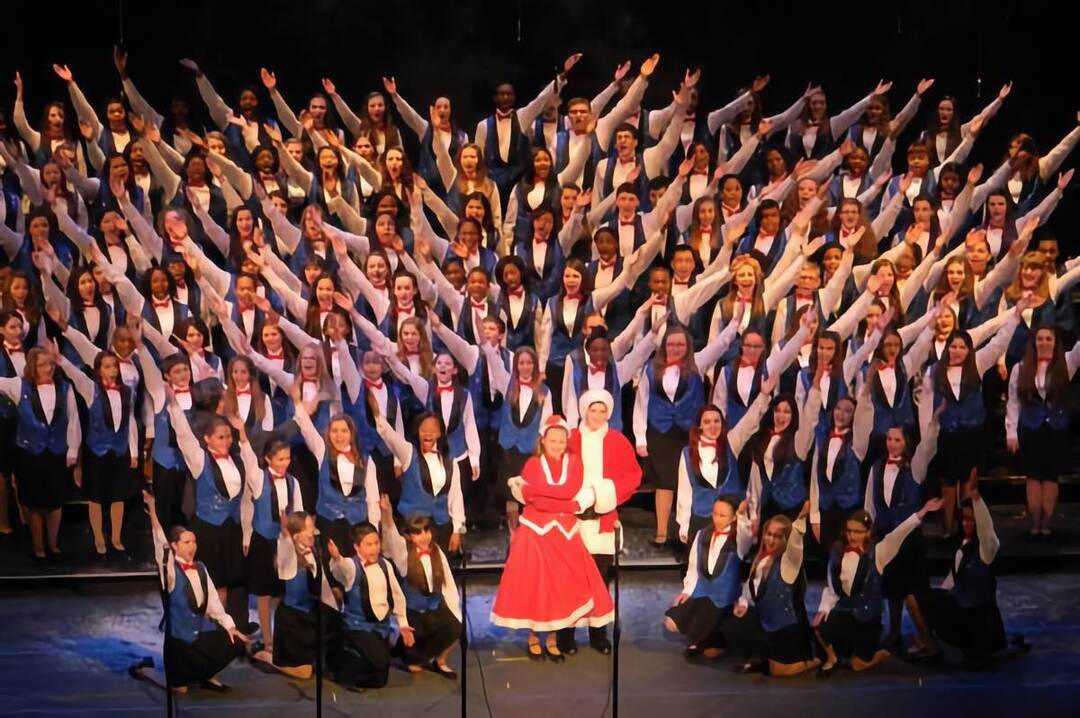
    <summary type="html"><![CDATA[<p><strong><em><span style="font-weight:400;">In the hot Italian sun in Rome in summer 2006, a small group of The Singing Angels from Cleveland were packed into the crowd of pilgrims at the Vatican during a Wednesday mass. The Angels were told they would hear their name called over the intercom while all the groups at the Vatican that day were acknowledged in their own languages. When the English announcements were finished, the Angels were disappointed not to hear their choir called out, but they chose to appreciate their opportunity to be in the Vatican. Fifteen minutes passed, and another announcement rang out: “Will the interfaith youth chorus, The Singing Angels, please make their way to the front of the assembly?” To their surprise, Pope Benedict XVI personally had chosen the Singing Angels to perform at the mass. The Singing Angels were able to perform their entire repertoire of religious music for Pope Benedict that day, one of many highlights in the choral group’s more than six-decade history. </span></em></strong></p><img src="https://clevelandhistorical.org/files/fullsize/0ca77c3f8fbdf608c4a58fb8c3a6f70a.jpg" alt="Annual Holiday Spectacular at Playhouse Square" /><br/><p><span style="font-weight:400;">William C. (Bill) Boehm,  was the founder and original conductor of The Angels, a youth choir that became known as The Singing Angels. Born in 1920 in Cleveland, Boehm earned his BA from Western Reserve University (now Case Western Reserve University). He later pursued a master's degree in Theater. From 1942 to 1948, Boehm served in the U.S. Army as a Captain in the 29th Infantry, stationed in Iceland and England before being honorably discharged.</span>
<span style="font-weight:400;">During his time in the Army, Boehm began to develop a passion for music. In postwar America, youth choruses were becoming increasingly popular. This period saw the rise of show choirs, which were described as “one of our nation’s most precious legacies.” After his military service, Boehm returned to Cleveland and focused on the arts, performing in various leading roles at <a href="https://clevelandhistorical.org/items/show/193">Cain Park</a>, a popular local theater venue. Despite his success, he began to feel a desire for change in his life.</span>
<span style="font-weight:400;">At the time, Boehm held very traditional views on music, believing that rock and roll had a negative influence on young people. He saw it as harmful, linking it to issues such as drug use and social decay. Boehm once remarked, "If Rock n' Roll could be controlled, it could be compelling, but it's not. It's devastating and crippling. It's related to drugs and killing and depravity." Concerned about the growing popularity of rock music and its potential harm to children, Boehm sought to create a positive alternative.</span>
<span style="font-weight:400;">Boehm’s idea was to form a youth choir that would focus on providing young people with a wholesome musical experience. He believed that good music could have a profound impact on children, encouraging them to express themselves creatively while avoiding the negative influences of rock and roll. With this vision in mind, Boehm reached out to an acquaintance who suggested he contact the Cleveland Friends of Music to sponsor his idea. They agreed to support the initiative, if he could sell tickets for the concerts. Boehm, confident in his concept, moved forward with the project, and thus The Singing Angels was born.</span>
<span style="font-weight:400;">The choir was designed to offer children an opportunity to engage with classical and choral music. Boehm envisioned a group where young people could develop their musical talents, learn discipline, and experience the joy of performing. He worked tirelessly to ensure that The Singing Angels would be a success, not only as a musical ensemble but as a positive community force for the youth involved.</span>
<span style="font-weight:400;">Over the years, The Singing Angels grew in popularity and gained recognition for their high-quality performances. Boehm's selection of music for the group covered several genres, including beautiful religious pieces, classical choices, Broadway hits, and some music from popular culture, but The Singing Angels excel at barbershop harmony. "Barbershop music is one of the few genuine American art forms [and] The Singing Angels are the only youth choir in America to do barbershop harmony." Under Boehm’s leadership, the choir performed for a variety of audiences and events, further solidifying its reputation as an important cultural institution. Boehm’s commitment to the children and his belief in the power of music as a force for good were central to the choir’s mission.</p><p>From the beginning, the Angels have rehearsed on Saturdays, first at Cleveland's YWCA. When the choir rapidly outgrew the space provided, they found a home at the <a href="https://clevelandhistorical.org/items/show/9">Masonic Temple</a> in downtown Cleveland until 2017, when the building was sold, and again, they needed to find a new location. Now, their rehearsal space resides in Cleveland's Old Brooklyn neighborhood.</p><p>The two most significant concerts of each performing season were performed at <a href="https://clevelandhistorical.org/items/show/6">Playhouse Square</a> in either the Allen, State, or Palace Theaters, depending on the year. The Angels also performed on local television and special programs with big stars such as Wayne Newton, Audrey Hepburn, Celine Dion, Bob Hope, and The Barenaked Ladies. They have performed for several presidents at the White House, including being invited to be in President Nixon’s inaugural parade and being the youth chorus chosen for the 2006 National Tree Lighting Ceremony with Ertha Kitt, Cathy Rigby, Bj Thomas, and John Connerly. The Angels often performed on local news programs, like channels 5 and 8, during the early morning shows, and when broadcasts ended every day before twenty-four-hour television, The Singing Angels sang the sign-on in the morning and the sign-off at night.</p>
<span style="font-weight:400;">Boehm’s dedication to music and his passion for guiding young people were evident in his work with The Singing Angels. Through the choir, he hoped to instill in young people not only musical skills but also important values such as teamwork, responsibility, and the importance of pursuing excellence. His vision was not just about creating talented musicians; it was about shaping well-rounded individuals who could make a positive impact on society.</p>
<span style="font-weight:400;">Though Boehm’s traditional views on music often set him apart from others in the industry, his work with The Singing Angels proved to be both innovative and impactful. The choir became an enduring legacy, demonstrating the power of music to inspire and uplift the next generation. Boehm’s unwavering belief in the potential of young people and his commitment to providing them with the tools to succeed made him a respected figure in the music community.</span>
<span style="font-weight:400;">William C. Boehm’s creation of The Singing Angels was born from his desire to offer children an alternative to the negative influences he associated with rock music. His vision was to provide young people with an opportunity to learn and perform high-quality music while promoting values of discipline, teamwork, and personal growth. Under Boehm’s leadership, The Singing Angels became a beloved and respected institution, leaving a lasting impact on the Cleveland community and beyond.</span></p><p><em><strong><a href="https://clevelandhistorical.org/items/show/1038">For more (including 12 images) view the original article</a></strong></em></p>]]></summary>
    <published>2024-11-21T19:25:04+00:00</published>
    <updated>2026-04-17T19:17:43+00:00</updated>
    <link rel="alternate" type="text/html" href="https://clevelandhistorical.org/items/show/1038"/>
    <id>https://clevelandhistorical.org/items/show/1038</id>
    <author>
      <name>Dawn Culp</name>
    </author>
  </entry>
  <entry>
    <title type="html"><![CDATA[The Sachsenheim: Transylvanian Saxon Immigrants Find a Home on Cleveland&#039;s West Side]]></title>
    <summary type="html"><![CDATA[<img src="https://clevelandhistorical.org/files/fullsize/c1d27aa40af2d9a6aca9f62b1c6c5d3b.jpg" alt="The Sachsenheim" /><br/><p>According to legend, Prince Vlad III, the fifteenth century Wallachian prince who inspired Bram Stoker to create Dracula, once cruelly impaled a thousand Saxons on stakes in his bloody quest to conquer neighboring Transylvania.  While Vlad the Impaler  was an actual historical figure and while there is some historical evidence that the Saxons of Transylvania may have crossed paths with him in his incursions in the late 1400s into their lands, the legend itself is likely an exaggerated account of a battle gory by today's standards, but not so much so by those of the fifteenth century. Yet the legend does suggest something about the west side Transylvanian Saxon immigrants to the United States who, in 1907, purchased a large house at 7001 Denison Avenue in the Cleveland Stockyards neighborhood and converted it into a place they called the Sachsenheim.  The word translates literally to "Saxons' Home."  As you read a little bit more about the Saxons from Transylvania, you will understand why having a home was so important to them. </p><p>The Saxons were ethnic Germans who, at the invitation of King Geza II of Hungary, began immigrating in the twelfth century into Transylvania--at the time a vast, but thinly populated area east of Hungary, near lands further to the east that later became the Romanian principalities of Moldavia and Wallachia.  The Saxons called Transylvania "Siebenburgen"--seven towns, after the original seven fortified settlements they built there.  Over time they built more towns and villages.  As centuries passed, Transylvania--not Germany, became their home.  They survived Vlad the Impaler's assault upon their home in the fifteenth century, but the mid-nineteenth century brought a new threat to their home when nationalism took root in eastern Europe.  The ruling Hungarians implemented a policy called Magyarization, which aimed at destroying the language and culture of all non-Hungarians.  And, the Romanians, by now forming a majority of the population, contended that Transylvania should become part of a Romanian state.</p><p>Saxons began leaving Transylvania in large numbers in the late nineteenth and early twentieth centuries.  Many came here to Cleveland, where, by 1895, colonies existed on both the east and west sides of the city. Like other immigrant groups did in America's pre-welfare society, they formed local fraternal benefits organizations called Erster Siebenburgen Sachsen Kranken Untersteutszung Verein ("First Transylvanian Saxons Sick Benefit Society") to protect members of their community from catastrophic illness and industrial workplace injury and death. These local organizations later led to the creation of a national organization, known today as the Alliance of Transylvania Saxons (ATS) with local branches here in Cleveland and elsewhere in the United States.  It was west side Cleveland's Branch 1 that in 1907 bought and converted the dwelling at 7001 Denison Avenue into the Sachsenheim so that its members would have a place to gather and engage in cultural activities.  </p><p>The Eintracht Singing Society, organized in 1897, practiced and performed at the Sachsenheim.  In 1904, Branch 1 and the Eintracht united, according to an ATS publication, "beginning a period of intensive civic and cultural work in Cleveland."  In 1902, Branch 4 was organized for women.  Both branches over the years have actively maintained the Sachsenheim as well as planned the scheduling of cultural activities there.  In 1905, a second singing society was organized, "Hermania," which in 1922 united with the earlier formed singing society to form Eintracht-Hermania, the predecessor of today's surviving mixed chorus, Eintracht-Saxonia Sachsenchor.  Over the years, other cultural groups were organized at the Sachsenheim, including a cultural dance group called the Cleveland Saxon Dance Group.  These cultural groups perform today not only here in the United States, but also internationally in Europe.</p><p>The Sachsenheim itself changed over the years.  Renovations and expansions were made to the building--one in 1910 and and a second in 1925, which added a ballroom, two bowling alleys, a music room, dining room, a restaurant, and other amenities to the facility.  The Sachsenheim also opened itself during this era to the Stockyards Neighborhood, allowing local residents and organizations to use the hall for weddings, showers and other events.  The restaurant today hosts a weekly Taco Tuesday and is a popular gathering place for young people in the neighborhood.</p><p>Over the years since its founding, the Sachensheim has been maintained primarily through revenues raised by the events of the cultural activities groups. The women of the Auxiliary Committee of Branch 4 have for years provided catering services for events at the hall.  Money is also raised by the Sachsenheim's bi-annual homemade sausage sale that, according to the ATS, is "well known around town."  As a result of the efforts of these two local branches of the Alliance of Transylvania Saxons and others, as well as that of the singing society Eintracht-Saxonia Sachsenchor, and with help from time to time from other organizations and the residents of the Stockyards neighborhood, the Sachsenheim at 7001 Denison Avenue, while very far away from Transylvania, continues to this day to be the Transylvanian Saxons' home in Cleveland. </p><p><em><strong><a href="https://clevelandhistorical.org/items/show/671">For more (including 12 images) view the original article</a></strong></em></p>]]></summary>
    <published>2014-11-06T16:31:04+00:00</published>
    <updated>2026-04-17T19:17:40+00:00</updated>
    <link rel="alternate" type="text/html" href="https://clevelandhistorical.org/items/show/671"/>
    <id>https://clevelandhistorical.org/items/show/671</id>
    <author>
      <name>Jim Dubelko</name>
    </author>
  </entry>
</feed>
