<?xml version="1.0" encoding="UTF-8"?>
<feed xmlns="http://www.w3.org/2005/Atom">
  <title type="text">Cleveland Historical</title>
  <updated>2026-05-10T00:03:31+00:00</updated>
  <generator uri="http://framework.zend.com" version="1.12.20">Zend_Feed_Writer</generator>
  <link rel="alternate" type="text/html" href="https://clevelandhistorical.org/"/>
  <link rel="self" type="application/atom+xml" href="https://clevelandhistorical.org/items/browse?output=rss2"/>
  <id>https://clevelandhistorical.org/</id>
  <author>
    <name>Cleveland Historical</name>
    <uri>https://clevelandhistorical.org</uri>
  </author>
  <link rel="hub" href="http://pubsubhubbub.appspot.com/"/>
  <entry>
    <title type="html"><![CDATA[Geauga Lake: An Environmental History]]></title>
    <summary type="html"><![CDATA[<img src="https://clevelandhistorical.org/files/fullsize/3683da36546c8e1c6b6675425a0b3414.jpg" alt="Geauga Lake in the 1930s" /><br/><p>Many think of Geauga Lake as a popular amusement park for much of the 20th century, but it has a little-known environmental history. The lake has existed for millennia and human activity has impacted it for a very small portion of its existence. The lake formed in a time before humans, saw the tenure of Native Americans, pioneers and settlers, and eventually urbanites seeking short excursions for leisure and recreation. Throughout these phases, Geauga Lake influenced local residents, and they, in turn, influenced the lake.</p><p>Geauga Lake is a "kettle" that was left behind during the retreat of the Wisconsin glaciation, which occurred about 12,000 years ago. As the glaciers retreated north, they scoured the land and left behind Geauga Lake, as well as other natural lakes. The land surrounding the lake was eventually inhabited by beech forests, the result of ecological succession, which would cover this area of Ohio for years. The land also consisted of silt loam soils, which are rich with nutrients. The fruit bearing vegetation and water brought animals like the now extirpated elk, panther, wolf, bear, wild cat, and beaver.</p><p>From 9500 B.C. to nearly the 18th century, different groups of Native Americans inhabited in northeastern Ohio. These groups from earliest to latest are the Paleo-Indians, Archaic Indians, the Woodland period, the Whittlesey Focus, and the Proto-historic period. There is some uncertainty about Native American boundaries, but it was once thought that perhaps the Erie people, a Proto-historic Iroquoian tribe, inhabited the lands including Geauga Lake. The current consensus is that these lands were instead inhabited by the Whittlesey Focus people and varying tribes until the pioneer era. Regardless, Erie and Whittlesey Focus cultures may give some insight into the interplay between human cultures and the environment around Geauga Lake. The Erie people were called “nation du Chat,” or the Cat Nation, by the French in the Jesuit Revelations of 1641. No Europeans ever officially met a member of the Erie people, but the Erie are said to have built palisaded towns on rivers such as the Chagrin and used these lands for hunting grounds. Similarly, the Whittlesey Focus people had towns with earthen walls topped with wooden stockades. Both groups grew corn, squash, and beans on a small scale. Geauga Lake may have been part of the hunting grounds of either of these groups, but it is unclear how the lake was used and viewed by native people. Compared to today, the lake was still relatively untouched and pristine, but the cultural importance of the lake to native people may never be discovered.</p><p>By the mid-18th century, Northeast Ohio was uninhabited by native people and by the end of the 18th century, white settlers began to arrive in the area. Joel S. Giles was not the first settler in the area, but he bought 100 acres of farmland near the lake for $4.00 an acre in 1817. The lake was named Giles Pond and eventually the Geauga Lake rail depot was constructed as part of the Erie Railroad. Eventually known as Picnic Lake, the lake brought people and groups for fishing, as well as for picnics and other group recreational excursions on the land around it. Soon it was known by its present name, Geauga Lake, and the 75-room Kent House was built in 1888 to accommodate recreation seekers. The lake fell under increasing pressure from human use, which gradually diminished the natural qualities that first brought people there. This paradox presents itself throughout much of the rest of the lake’s history.</p><p>Geauga Lake and the surrounding land was slowly transformed into an amusement park, beginning with a “primitive merry-go-round,” as stated by the Plain Dealer in a 1981 article on the park’s history, and growing to encompass a multitude of rides and roller coasters. Large swaths of trees were removed and massive amounts of concrete infrastructure, including parking lots, were installed to accommodate increasing numbers of patrons. As people left Cleveland to find amusement, the lake was being polluted and the land, contaminated. By 1970, the lake was almost fully surrounded by Geauga Lake Park and the newly opened Sea World of Ohio, which later became rebranded under the ownership of Six Flags and Cedar Fair. The lake and wetlands that make up the Geauga Lake site became less effective at filtering and slowing down the waters the flow into the Tinker’s Creek and Chagrin River watersheds. Installation of concrete infrastructure and asphalt parking lots replaced hydric soils, which are important for wetland and riparian function. On September 21, 2007, Cedar Fair, the current owners of the lake, closed down Geauga Lake Park and eventually Wildwater Kingdom, formerly Sea World, on the east side of the lake a few years later. </p><p>The land now sits, amusement park torn down, a shadow of its former self in the eyes of local residents. Parking lots, concrete pilings, and abandoned buildings dot the landscape. The lake has storm water runoff issues, leading to algae problems. The soils under the impervious surface may be contaminated with various chemicals including solvents and herbicides. Nonetheless, the potential for the lake to return to a more natural state, possibly bringing balance to the natural needs and human wants to the lake, presents itself. Plans are being developed to repurpose the site, but the outcome remains uncertain. Strong leadership backed by a small fortune can bring harmony between humans and nature back to Geauga Lake.</p><p><em><strong><a href="https://clevelandhistorical.org/items/show/795">For more (including 12 images) view the original article</a></strong></em></p>]]></summary>
    <published>2017-05-13T21:53:49+00:00</published>
    <updated>2026-04-17T19:17:41+00:00</updated>
    <link rel="alternate" type="text/html" href="https://clevelandhistorical.org/items/show/795"/>
    <id>https://clevelandhistorical.org/items/show/795</id>
    <author>
      <name>John Micklewright</name>
    </author>
  </entry>
  <entry>
    <title type="html"><![CDATA[Forest City Park: Cleveland&#039;s First Amusement Park]]></title>
    <summary type="html"><![CDATA[<img src="https://clevelandhistorical.org/files/fullsize/dca0c42d220a6cca47945469ce86c94a.jpg" alt="Dance Pavilion" /><br/><p>In this age of faster, higher coasters and parks like Cedar Point and King’s Island within a few hours drive, it is easy to forget some of the early amusement parks that once populated Northeast Ohio. The first such attraction for the city of Cleveland was Forest City Park in what is now the Slavic Village neighborhood. </p><p>Opened in 1883, Beyerle Park drew its name from its first operator, George William Beyerle, who envisioned a summer resort where people could get away from city life and enjoy themselves. Early versions of the park had picnic areas, a manmade lake, a boathouse, baseball grounds, a pavilion, and a small zoo. </p><p>Though the park was initially successful, within a decade of the park opening Beyerle was facing a number of financial problems. His business partner, J. Sykora, was signing checks without authorization. This coupled with a large number of lawsuits of patrons who were injured when a bridge collapsed on the lake forced Beyerle to sell the park. </p><p>Although the park was taken over by A. B. Schwab et al on May 5, 1889, and its name was changed to Forest City  Park, no great change would occur until 1902. It was at this time that Dudley Humphrey assumed management of the 65-acre park and transformed the mode of operation. Humphrey believed Forest City Park, as well as Euclid Beach Park, which he also managed at this time, were places of immoral influence that he needed to purify. Guests would be turned away at the gates if dressed inappropriately and removed from the park if they acted in a way not to Humphrey’s standards. Under his control, the park removed its beer garden, stopped serving alcohol, and cut down on vaudeville and sideshow acts. In place of these corrupt forms of entertainment, Humphrey added  rides and family friendly attractions- a shooting gallery, merry-go-round, a theater, and a “switchback” roller coaster. Under his management the two parks were on a system called the “Humphrey Park Plan”; this allowed guests to buy multiple tickets at a cheaper price and could use the tickets at either park. </p><p>Despite the numerous attractions that Humphrey brought to the park, attendance suffered. The large immigrant population in the neighborhood surrounding the park disliked the lack of alcohol on the grounds, whereas the people living further out found it easier to spend the day at Euclid Beach Park or Luna Park. At this time, Cedar Point was also growing in popularity; by the end of the decade, it added additional roads for easier access and opened the classic Cyclone roller coaster, the fastest and tallest in the world at this time, along the beach. </p><p>With the increased popularity of the automobile, Forest City Park faced a new challenge; built in the era of railroads and streetcars, the park had no parking spaces and showed no intentions of adding them. Without this access, patrons were left with the options of parking farther away off grounds and walking back to the park entrance or paying to take the street car. Without a suitable option for driving customers, attendance at the park continued to fall. </p><p>The final straw came in the early 1920s, when a fire damaged part of the park. The park closed for good soon after. In the 1930s, the city sold the westernmost part of the park to the steel mills to dump slag. By the 1960s, the rest of the park was filled in and houses placed on the empty fields, covering what little remained of the Slavic Village’s amusement park history. </p><p><em><strong><a href="https://clevelandhistorical.org/items/show/718">For more (including 8 images) view the original article</a></strong></em></p>]]></summary>
    <published>2015-07-08T13:44:40+00:00</published>
    <updated>2026-04-17T19:17:41+00:00</updated>
    <link rel="alternate" type="text/html" href="https://clevelandhistorical.org/items/show/718"/>
    <id>https://clevelandhistorical.org/items/show/718</id>
    <author>
      <name>Danielle Rose</name>
    </author>
  </entry>
  <entry>
    <title type="html"><![CDATA[Scenic Park: Stuntmen and Spirits on the Rocky River]]></title>
    <summary type="html"><![CDATA[<p><strong><em>Scenic Amusement Park had it all - dancing, rides, recreation grounds, theater and beer gardens. While a favorite destination of Clevelanders, not everyone approved of the frivolity offered at the park.</em></strong></p><img src="https://clevelandhistorical.org/files/fullsize/dc407b25461930dd69c53608ae6ae506.jpg" alt="The Pleasure Grounds of Scenic Park" /><br/><p>In the spring of 1903, the management of Scenic Amusement Park hired surveyors to study possibilities for overcoming the watery divide separating Lakewood and Rocky River. A scheme had been concocted to unite the two suburbs.  On the land that now comprises Cleveland Metroparks Scenic Park, surveyors formulated plans for a multichannel chute to span the width of the Rocky River.  Even though Scenic Park was the leading amusement park west of Cleveland, it was feared that the resort’s continued profitability hung in the balance of completing construction of the newest attraction.  Park management, however, had no intention of erecting a new stomach-dropping toboggan ride; one passage in the chute would transport boxes of cash to Rocky River, while the neighboring duct accommodated a dumbwaiter large enough to convey glasses of beer and liquor to Scenic Park's German Village in Lakewood. Far from being the most exotic diversion, it was assured to become a favorite park-destination for Cleveland’s working class.   </p><p>The proposed engineering feat infuriated an outspoken contingent of Lakewood residents; the village had been voted dry in November of the prior year.  Since its official opening in 1895, the popular amusement park drew the ire of many living in the surrounding community.   Grievances had been lodged with local law enforcement claiming that park management evaded Blue laws by offering music, sporting events, and alcohol on Sundays.  Rumors were abound that a not-so-secret drinking establishment was hidden away in the woods, and that it operated on the Sabbath.  Newspapers provided accounts by anti-saloon league members of fights, lewd comments, rowdyism, and inebriated women sitting on the laps of men.  It wasn't just the careless commingling of limbs that concerned Lakewood residents. Chartered in 1889 and incorporated as a village in 1903, Lakewood was experiencing growing pains.  The village’s potential as a prosperous suburban enclave laid in forging its identity as a residential community - a vision pitted in opposition to the urban character of amusement parks.</p><p>Drunken crowds and unruly behavior were nothing new along the shores of Lakewood. Scenic Park was the last vestige of pleasure gardens designed to attract Clevelanders and potential new residents to the undeveloped grounds in the late 1860s. Located at the picturesque confluence of the Rocky River and Lake Erie, the Clifton Park Association acquired and developed lands abutting the lakeshore and east river bank; the estate touted picnic grounds, bathing beaches, beer gardens, rental boats, a dance hall and hotel. The Rocky River Railroad was laid out in 1869, connecting the retreat with the burgeoning city to the west.  Liquor and beer flowed freely at the resort, as evidenced by the carnage of wrecked buggies leading away from the park on Detroit Avenue.  While a popular destination, the seasonal nature of the recreation grounds could not adequately sustain their operation. Land used for the dummy railway was eventually absorbed for commercial use by the Nickel Plate Railroad in 1881, and the hotel succumbed to flames the following year.  With accommodations and access to the pleasure garden limited, the Clifton Park Association invested little in maintaining or developing the land during the next decade.</p><p> It was waiting game for the land speculators, but their patience paid off.  In 1893, the Detroit Avenue streetcar line was opened by the Cleveland City Railway Co.  The hamlet of Lakewood was immediately accessible for settlement by city dwellers. The Clifton Park Association subdivided their real estate in anticipation of growth. Lakefront property was dedicated to high-end residential development; the rugged bluffs and flood-prone terrain along the Rocky River were slated to become a new type of recreation grounds. </p><p>Across the United States, both landholding and traction companies were investing in the development of amusement parks.  Private parks and picnic grounds in bucolic locals were enclosed and transformed into spaces for public recreation on the outskirts of every urban center by the late 1890s.  Landholding companies, such as the Clifton Park Association,  invested in amusement parks to draw people into the suburbs; additionally, they could lease their undeveloped properties to park operators. Most commonly, these new recreation grounds were built and run by traction companies. It was a wise investment.  Nothing promoted streetcar ridership during the summer more than amusement parks. As further incentive, the excess generating capacity of streetcar companies could be used to power lights and rides at parks located near the end of trolley lines. The Cleveland City Railway Co., leased the park grounds from the Clifton Park Association, and struck gold with the opening of Scenic Park.  Within weeks of the park’s formal opening, the Detroit Avenue streetcar line was overrun by throngs of Clevelanders wishing to breathe in the fresh air and wander through the charming mechanized wonderland. </p><p>Despite the characterizations presented by proponents of temperance, there was much more to Scenic Park than its beer gardens.  The amusement park offered dancing and theater pavilions, a half mile racing track, baseball and recreation grounds, picnic groves, merry-go-rounds, a playhouse for light opera and vaudeville, two boathouses, boat rentals, a Ferris wheel, shooting galleries, an Old Aunt Sally, shoot-the-chutes, swings, and restaurants. Thousands of electric lights illuminated the rustic scenery, lending an attractive backdrop for open air concerts, lavish theatrical performances, sporting and race events, pyrotechnical displays, equilibrists, aeronauts, and any sort of extravagant display that could capture public attention.   </p><p>While all were standard fare in American amusement parks, Scenic Park was renowned for its mile-long Thompson Scenic Railway; purchased and operated by agents of the Cleveland City Railway Co., it was the only scenic railway in the region at the turn of the century.  The mile long coaster skirted the bluffs of the Rocky River, propelling its riders through two tunnels ornamented by paintings and papier machee.  While a price was attached to rides and attractions, admittance to the park was generally free except on Sundays.   Throughout the summer, the amusement park regularly hosted benefit picnics for fraternal, social, political, and labor organizations.  Admission receipts were kept by the clubs, while park management indirectly profited from packed streetcars, concessions and paid attractions. </p><p>As bustling crowds of city dwellers flocked en mass on summer days to escape cramped neighborhoods and breath the clean air, residents of Rocky River and Lakewood could not help but notice the incursion of urban society upon their growing suburbs.  Episodes of drunkenness, crime, and occasional violence accompanied the crowds. The beer-soaked grounds of Scenic Park did little to promote high-end residential development or attract cosmopolitan citizenry into the area.  Lakewood residents were not alone in its concerns. Towns throughout Ohio were going dry at the turn of the century in an effort to thwart what was seen as a root of societal troubles; real estate sales were reported to have boomed in consequence. </p><p>Drying up Scenic Park proved a bit more difficult than expected. While the chute across the Rocky River was never constructed, a nine foot wide footbridge was erected in its place.  Jokingly referred to as the most used bridge in Cuyahoga County, visitors of Scenic Park crossed over the watery impasse onto a small strip of land where liquor was sold.  Following a thorough scouring of law books, the citizens of Lakewood realized that they had no authority to close down the beer garden. Adding fuel to the fire, low alcohol drinks known as "swanky" and "non-intox" continued to be sold on park grounds.  Despite receiving assurances from Scenic Park management of their compliance with the alcohol ban, residents continued to encounter rowdy park-goers and streetcars brimming over with drunkards leaving the grounds. </p><p>The Lakewood police took action during the summer of 1904.  The bridge was boarded up, and policemen disrupted day-to-day operations of the park by stamping out games of chance.  Scenic Park management was sent word that all Sunday amusements would be shut down if any attempt was made to reopen the footbridge.  A sample of "non-intox" was later obtained for analysis during July 4th festivities, and the park manager was arrested for the sale  of alcohol. Cleveland Electric Railway Company, which had acquired the Cleveland City Railway Co., soon-after declared that their lease with the Clifton Park Association would not be renewed following its expiration in 1910.  </p><p>The residents of Lakewood succeeded in drying up Scenic Park. In 1906, the grounds were sublet to the Lincoln Park & Amusement Co. and redeveloped as a family-friendly park. The newly-formed amusement company renamed the grounds Lincoln Park, and invested large sums of money to rebuild the park's infrastructure and public image.  The objectionable features of Scenic Park, alcohol and gambling, were erased from park grounds prior to reopening.  Lincoln Park offered many new attractions in their place, including displays of an Indian village, the streets of Cairo, and an old-time plantation.  Other amusements included a wild west show, a free circus, an illusion palace, a steeple chase, and the largest dancing pavilion in the state.  After one season, the Lincoln Park & Amusement Co. declared bankruptcy. The Cleveland Electric Railway Co. entered into negotiations to sublease the  park to various amusement promoters over the final years of their lease to no success. The amusement park was eventually dismantled.  In May of 1917, the Scenic Park property was purchased by the City of Lakewood from the Clifton Park Association. The land was donated in 1925 to the Cleveland Metropolitan Park Board for use as a gateway to the Rocky River Reservation.  The once-thriving playground for Cleveland's middle and working classes had been reclaimed by the citizens of Lakewood to both reflect and promote the desired residential character of their emerging suburb.</p><p><em><strong><a href="https://clevelandhistorical.org/items/show/702">For more (including 13 images&#32;&amp;&#32;1 audio file) view the original article</a></strong></em></p>]]></summary>
    <published>2015-04-22T06:26:05+00:00</published>
    <updated>2026-04-17T19:17:40+00:00</updated>
    <link rel="alternate" type="text/html" href="https://clevelandhistorical.org/items/show/702"/>
    <id>https://clevelandhistorical.org/items/show/702</id>
    <author>
      <name>Richard Raponi</name>
    </author>
  </entry>
  <entry>
    <title type="html"><![CDATA[Laughing Sal]]></title>
    <summary type="html"><![CDATA[<img src="https://clevelandhistorical.org/files/fullsize/2a893c697ce1e65ee141e8b735341b37.jpg" alt="Center Stage" /><br/><p>Laughing Sal evokes a number of different reactions from those who encounter her. Her larger than life presence, mechanical gyrations, and raucous cackle cause delight in some and fear in others.  Some deep thinkers have even speculated about the meaning of Laughing Sal. Is she the incarnation of modern wo(man) in an industrial age? A soulless, machine-powered being with an empty laugh and an empty mind?  </p><p>Love her or hate her, there is no doubting the fact that Sal creates a lasting impression on all who lay eyes on her.  She debuted at Euclid Beach amusement park in the 1930s, placed in a glass case at the entrance to the Surprise House, a traditional fun house with moving floors, slanted rooms, and distorting mirrors.  That is where she stayed until 1969, when Euclid Beach closed.  A Euclid Beach enthusiast purchased Sal in the years following the closing, and she has since appeared at events across Northeast Ohio, becoming a prominent symbol of the park.  Now those too young to have visited Euclid Beach themselves can be amused or terrified, delighted or repulsed, by Laughing Sal.    </p><p>Laughing Sal, however, was not unique to Euclid Beach Park and Cleveland. In fact, in the 1930s the Philadelphia Toboggan Company (PTC) mass-produced Laughing Sals (as well as 'Laughing Sams') and sold them to amusement parks across the United States.  The Old King Cole Papier Mache Company of Canton, Ohio got the contract from PTC to actually build the Sals, tweaking their laughing, papier mache Santa Claus model for the job.  Sal's gyrations were created by two rotating cams (or discs) attached to a single motor in her hips.  Springs in her arms, head, and chest provided even more movement.  Sal's  famous laugh emanated from a repeating record player hidden in the base of the figure.  The combined effect of Sal's evocative appearance, constant motion, and endless laughter proved to be a hit with amusement park goers, and Laughing Sals became a fixture in fun houses during the 1930s.  It appears that no more Sals were built by PTC and Old King Cole after the production of amusement park equipment temporarily ceased during World War II, however.  </p><p><em><strong><a href="https://clevelandhistorical.org/items/show/559">For more (including 7 images&#32;&amp;&#32;1 audio file) view the original article</a></strong></em></p>]]></summary>
    <published>2012-09-25T14:49:31+00:00</published>
    <updated>2026-04-17T19:17:39+00:00</updated>
    <link rel="alternate" type="text/html" href="https://clevelandhistorical.org/items/show/559"/>
    <id>https://clevelandhistorical.org/items/show/559</id>
    <author>
      <name>Michael Rotman</name>
    </author>
  </entry>
  <entry>
    <title type="html"><![CDATA[Euclid Beach Park Arch]]></title>
    <summary type="html"><![CDATA[<img src="https://clevelandhistorical.org/files/fullsize/6eb30f6a52e9ad7bef9aefe15ae7a55d.jpg" alt="Rededication, 2007" /><br/><p>Not much remains of Euclid Beach amusement park at its former location in Cleveland's Collinwood neighborhood.  Sure, nostalgia seekers know that Laughing Sal often makes appearances at local events, the rocket cars are regularly seen driving around town, and Humphrey popcorn balls and candy kisses can be found in nearly every area supermarket, but the actual location of their childhood memories is merely a shell of its former self. Parts of the concrete pier remain, but are crumbling.  A tree-lined walkway still overlooks Lake Erie, but the water is polluted, and the beaches are often covered in driftwood and garbage. High-rise apartment buildings and their expansive parking lots fill much of the rest of the old park space.  One thing has not changed, however: the Euclid Beach arch still stands in all its grandeur at the park's old entrance on Lakeshore Boulevard, a solitary reminder of the nearly 70 years of fun that took place there.  </p><p>The Euclid Beach arch was built in the 1920s. Before then, a shorter, more modest arch welcomed patrons to the park.  In a way, the wide-open, welcoming look of the arch is symbolic of the kind of amusement park the Humphrey family created when they took over Euclid Beach in 1901.  In contrast to many other parks at the time, the Humphrey's instituted a 'free gate' system. It cost nothing to enter Euclid Beach; patrons could spend as little or as much as they wanted on rides and concessions.  In contrast, the original operators of Euclid Beach charged an entry fee, and also erected high, opaque walls that blocked views of the rowdy activities taking place inside - drinking, gambling, freak shows, and the like.  The Humphrey's Euclid Beach, on the other hand, would be a family-friendly place where the rich and poor alike could enjoy good, clean fun.  </p><p>After Euclid Beach Park closed in 1969, the arch elicited mixed emotions of nostalgia and loss from those passing by on Lakeshore Boulevard, where it became an oddity in a sea of strip malls, high-rise apartments, and beaches unfit for swimming.  Nonetheless, the arch remains in place as an official City of Cleveland Landmark. It even survived being hit by a car in 2007, and was subsequently renovated and reinforced.  In 2022, plans were announced for a complete restoration and relocation of the arch further into Cleveland Metroparks' lakeside space to add to the park's appeal and ensure that even those who never visited Euclid Beach Park themselves can have their own sense of arrival in a place that generations of Clevelanders enjoyed.</p><p><em><strong><a href="https://clevelandhistorical.org/items/show/530">For more (including 8 images&#32;&amp;&#32;1 audio file) view the original article</a></strong></em></p>]]></summary>
    <published>2012-07-31T16:41:13+00:00</published>
    <updated>2026-04-17T19:17:37+00:00</updated>
    <link rel="alternate" type="text/html" href="https://clevelandhistorical.org/items/show/530"/>
    <id>https://clevelandhistorical.org/items/show/530</id>
    <author>
      <name>Euclid Beach Park Now&amp;#32;&amp;amp;&amp;#32;Michael Rotman</name>
    </author>
  </entry>
  <entry>
    <title type="html"><![CDATA[Euclid Beach Carousel : Recovering a Lost Amusement Ride]]></title>
    <summary type="html"><![CDATA[<img src="https://clevelandhistorical.org/files/fullsize/131484d3f6aec80cf9f43da51e3c06b3.jpg" alt="A Day at the Park, 1910" /><br/><p>More than forty years after its last ride in Cleveland, the Euclid Beach carousel returned to operation once again in its home city, a testament to both the hard work of a number of non-profit organizations and Cleveland's enduring love for all things Euclid Beach.  </p><p>When Euclid Beach Park closed in 1969, the carousel was sold to Palace Playland, an amusement park in Old Orchard Beach, Maine.  Palace Playland itself closed in 1996, and the carousel went up for auction.  This put the carousel in danger of being broken up, horse by horse, to a number of different bidders.  However, the Trust for Public Land, a national conservation organization, provided an emergency loan to Cleveland Tomorrow (now a part of the Greater Cleveland Partnership) in an effort to bring the carousel back to Cleveland intact. The auction took place in July 1997 in Olmsted Township during a Euclid Beach memorabilia show. In a dramatic scene, the bidder from the Trust for Public Land secured the entire carousel — all 54 horses along with two chariots — with a final bid of $715,000. When the auctioneer hollered "sold," onlookers erupted in cheers. The carousel was coming back to Cleveland. </p><p>Once the carousel was purchased, however, it quickly became clear that funds were lacking to put it back into operation. In 1999, Cleveland Tomorrow gifted the horses to the Western Reserve Historical Society (WRHS). They sat in storage for a number of years, periodically being displayed around Northeast Ohio. A 2003 plan to return the carousel to the site of the old Euclid Beach amusement park fell through. Some doubted whether the carousel would ever actually be operated again.  In 2010, Euclid Beach Park Now and the Euclid Beach Park Carousel Society, two non-profit organizations dedicated to preserving the history of Euclid Beach, collaborated with WRHS on a plan to place the carousel on the front lawn of the historical society's University Circle museum. A multi-million-dollar fundraising effort was launched to restore the carousel's mechanics and build a glassed-in pavilion to house the ride. The fundraising campaign was successful, and the carousel opened in November 2014. </p><p><em><strong><a href="https://clevelandhistorical.org/items/show/519">For more (including 10 images&#32;&amp;&#32;2 audio files) view the original article</a></strong></em></p>]]></summary>
    <published>2012-07-02T16:09:43+00:00</published>
    <updated>2026-04-17T19:17:39+00:00</updated>
    <link rel="alternate" type="text/html" href="https://clevelandhistorical.org/items/show/519"/>
    <id>https://clevelandhistorical.org/items/show/519</id>
    <author>
      <name>Euclid Beach Park Now&amp;#32;&amp;amp;&amp;#32;Michael Rotman</name>
    </author>
  </entry>
  <entry>
    <title type="html"><![CDATA[White City Park: Entertainment, Amusement, and Leisure on the Lake Erie Shore]]></title>
    <summary type="html"><![CDATA[<p><strong><em>White City was noted for its amusements, attractions, and recreational activities as businessmen and politicians commanded its fate for more than a century in a growing and prospering city.</em></strong></p><img src="https://clevelandhistorical.org/files/fullsize/9b21074194c03a9d4834bf53f1d1400f.jpg" alt="Aerial View of White City" /><br/><p>During the 1970s the area that now occupies the western edge of Cleveland’s Easterly Wastewater Treatment Plant was still known as White City Park. The tract of land bordered by Bratenahl Village to the west and the city sewer authority property to the east existed as a public park in various incarnations since 1900. Lake Shore Boulevard bounded its entrance to the south at East 140th Street in Collinwood Village (later annexed by Cleveland). The park's lakeshore was attractive to swimmers, fishermen, and boaters for the rest of the 20th century.  White City Park has shared several names and faces over the past century.</p><p>The 1.5-mile lakefront area to the east of Bratenahl Village was originally known as Manhattan Beach and is still informally named that today. The “White City” space noted above was first cited in the Cleveland Plain Dealer in June 1900 as Manhattan Beach Park in announcements of fraternal organization and secret society gatherings. The park also hosted baseball, bowling, a dance hall, entertainment, and a bathing beach. Its entertainment value to the Collinwood Village neighborhood was evident with the newspaper announcements and stories of daily activities and events at the park from 1900 to 1904. One socio-political dispute played out in the park and among its nearby neighbors. The Beal Law provided local options concerning alcohol sales and consumption. The dispute between the ‘wets’ and the ‘drys’ in the Collinwood community carried on for years. Undercover detectives were dispatched to the area in and around Manhattan Beach Park to ensnare alcohol salesmen for the Collinwood Mayor’s court. Repeated polling switched the wet-dry rules three times between 1902 and 1908 prior to Collinwood’s annexation into Cleveland in 1910, but stories abounded about the behavior in the neighborhood. Edward C. Boyce purchased Manhattan Beach Park early in 1905 with the intent to further develop it into an amusement park. </p><p>In the golden era of Cleveland’s amusement parks, White City Amusement Park was one of many built to compete with the most successful of them all, Euclid Beach Park, about a mile east on the lake, and was even served by the same streetcars. The two parks became common destinations for a day’s outing for the few seasons that White City Park and Euclid Beach Park were neighbors. White City Park shared a common design with the famous New York-based Coney Island. Ed Boyce, an owner of Coney Island’s Dreamland Park, adopted its concepts to build White City Park. The general idea was to bring in attractions, entertainers, and celebrities to draw people to the park. The Park was built in eleven weeks and featured a boardwalk, Shoot the Chutes, the Bostock Animal Show, Bump-the-Bumps, a scenic railway, and a midway which featured Drs. Couney and Stewart’s infant incubator hospital. About 20 premature babies, referred by Cleveland area physicians, were under care and on display as the best and most promising hope for infant survival. The first ‘resident’ arrived in June 1905 in time for the Park’s opening. The hospital gained local notoriety with full capacity and subsequent reunion celebrations in years to come.</p><p>Cleveland, however, suffered from a lack of star power and the Dreamland concept was less than successful. Unlike Euclid Beach, White City Park charged an admission fee, which hurt its business. After a fire burned down over half of the park in 1906 and a windstorm caused severe damage in 1907, the owners had been through enough. White City Park was closed in 1908 after only four years in operation. In 1909, new owners reopened it as Cleveland Beach Park to host local gatherings, much like Manhattan Beach Park did earlier in the decade. Between 1909 and 1911, investors and managers combined to rename attractions at White City. The Cleveland Trust Co. foreclosed on the property, a sheriff’s sale ensued, and M. F. Bramley bought White City land and Luna Park with the intention to manage several amusement parks in the region. He remodeled the property once more as Bay Park [Amusement Co.] in 1911, just barely long enough to be noted on some local maps. The company ceased operations within two months, spelling the end of amusement park activity.</p><p>The next several years saw White City revert to ‘city park’ mode with accommodations for picnic and game grounds and beach access. Much of the news concerning the area was devoted to the development of the adjacent sewage treatment plant serving Cleveland’s east side. Later in the decade, the grounds were devoted to stables and drill and practice by National Guard troops training for threatening World War I border duty. </p><p>Through the ensuing decades, the city of Cleveland maintained the park for swimming, fishing, and boating under the auspices of the White City Yacht Club and the Northeast Yacht Club despite occasionally dangerous water quality conditions created by the neighboring sewage treatment facility’s deficiencies. The constants which remain today through the evolving story of Collinwood’s northwestern shore, then and 100 years hence, are White City Park and the Manhattan Beach neighborhood.</p><p><em><strong><a href="https://clevelandhistorical.org/items/show/262">For more (including 15 images) view the original article</a></strong></em></p>]]></summary>
    <published>2011-07-17T16:14:48+00:00</published>
    <updated>2026-04-17T19:17:38+00:00</updated>
    <link rel="alternate" type="text/html" href="https://clevelandhistorical.org/items/show/262"/>
    <id>https://clevelandhistorical.org/items/show/262</id>
    <author>
      <name>Jim Lanese</name>
    </author>
  </entry>
  <entry>
    <title type="html"><![CDATA[Puritas Springs Park: The West Side&#039;s First Amusement Park]]></title>
    <summary type="html"><![CDATA[<img src="https://clevelandhistorical.org/files/fullsize/080407a54824e34a029fa16b4fe52efa.jpg" alt="Main Gate" /><br/><p>Puritas Springs Park was the first amusement park on the west side of Cleveland. It stood next to a deep ravine overlooking the Rocky River valley. This created a wooded picturesque setting.  While being unique because of its location, the amusement park was similar to all other parks in one way in that it was situated along the streetcar lines that connected Cleveland to its suburbs. </p><p>Puritas Park's story is one that can best be described as a labor of love. Early steam carousel operator John Gooding decided to install one of his carousels at Puritas Springs Park in 1898.  At the time, he leased the land from the Cleveland Electric Railway Company.  By 1901, he had leased the entire park and was free to pursue his dreams. He built a house on the land and began the arduous task of creating his amusement park.  </p><p>With little advertising, the park began to rise in popularity.  The one truly outstanding attraction was the Cyclone roller coaster. The Cyclone was higher and faster than any other coaster in the Cleveland area at the time. Also of fame was Jungle Larry who performed daily shows featuring exotic animals. Locals know him from his days at Cedar Point but he actually got his start at Puritas Park. </p><p>The park was closed in 1958 for financial reasons. The land was turned into a residential development. </p><p><em><strong><a href="https://clevelandhistorical.org/items/show/261">For more (including 4 images) view the original article</a></strong></em></p>]]></summary>
    <published>2011-07-17T15:58:34+00:00</published>
    <updated>2026-04-17T19:17:38+00:00</updated>
    <link rel="alternate" type="text/html" href="https://clevelandhistorical.org/items/show/261"/>
    <id>https://clevelandhistorical.org/items/show/261</id>
    <author>
      <name>CSU Center for Public History and Digital Humanities</name>
    </author>
  </entry>
  <entry>
    <title type="html"><![CDATA[Memphis Kiddie Park: An Enduring Children&#039;s Fun Spot]]></title>
    <summary type="html"><![CDATA[<img src="https://clevelandhistorical.org/files/fullsize/736455f132668a32f9b959e1ce7d7f52.jpg" alt="Memphis Kiddie Park Sign" /><br/><p>After reading an article on the amusement park industry in <em>Billboard</em> magazine, native Clevelander Stuart Wintner opened the Memphis Kiddie Park on Memphis Avenue in Brooklyn on May 28, 1952. The park was one of several designed and operated by Wintner, including parks in Philadelphia and Columbus. Although this small, family-run attraction seems unique today, the Memphis Kiddie Park once competed with similar child-oriented parks such as the Kiddieland parks in Warrensville Heights and at the Cleveland Zoo as well as with much bigger regional amusement parks such as Geauga Lake and Cedar Point. It has outlasted most of them and provides a nostalgic feeling for the families that bring their children there. </p><p>With its location amid postwar suburban tract housing, factories, and shopping plazas, Memphis Kiddie Park, like Wintner’s drive-in theater across the road, was aimed squarely at the children of working- and middle-class families. Easily accessible by car, the small roadside park was a natural draw, but it sweetened the deal by offering free parking. In this way, the park was both different from earlier amusement parks that touted their separation from urban life, including places like Puritas Springs, Euclid Beach, Geauga Lake, and Cedar Point, which shared with resorts a tendency to near springs or shorelines. </p><p>However, Memphis Kiddie Park was typical in its appeal to mass society. Just as older parks often lay at the end of trolley lines or along interurban lines and thus provided a different but comparably inexpensive form of access, it took advantage of suburban highways, anticipating many other suburban amusement and theme parks, most famously Disneyland. Like the earliest amusement parks on famous Coney Island, Memphis Kiddie Park and similar children’s amusement parks nationwide also charged no entrance gate fee. Guests could buy a roll of tickets to use for rides, paying only for each individual ride. Another way that Memphis Kiddie Park was typical in its early years was that it featured rides that were mass-produced and present at many other kiddie parks. In fact, the Allan Herschell Company, a ride maker based in Buffalo, New York, since the 1910s, not only made Memphis Kiddie Park’s rides but also similar or identical ones that once excited children in hundreds of locations nationally. Memphis Kiddie Park originally opened with nine Herschel-produced rides, which included the Train, Merry-Go-Round, Airplanes, Hand Cars, Boats, Kiddie Ferris Wheel, Jeeps, Skyfighters, and the Little Dipper. All were staples of kiddie parks across the country. </p><p>The Little Dipper is the most popular ride in Memphis Kiddie Park and serves a significant role in roller coaster history. It is significant because it is the oldest operating steel roller coaster in the country and helped usher in a new era of steel roller coasters that continues today. The roller coaster has one three-car train and seats two across with two rows per car, giving the coaster a capacity of twelve riders. The Little Dipper was one of the first roller coasters to operate on the chain lift system, which is now the most common system used for roller coasters today. The Little Dipper only became unique because most of the dozens of parks that also featured the ride closed decades ago, with the Little Dipper at western Pennsylvania’s Conneaut Lake Park standing as a rare exception. </p><p>Like drive-in theaters, kiddie parks recaptured a lost novelty only when they outlasted the demise of the heyday of their popularity as national phenomena. This happened as a result of the increasing competition for families’ leisure time brought by shopping malls, theme parks, television, and video game systems. Across the region and the nation, kiddie parks began to close and many owners lost interest in saving their parks and began selling their land. Memphis Kiddie Park now seems unique because its serves as a historic relic of the peak of amusement parks. The park has been able to sustain success because it still provides convenient, affordable fun in a location that is convenient for Clevelanders – and perhaps most importantly, it has achieved uniqueness through its persistence, establishing itself as a local landmark. Several generations of Clevelanders have gone to the Memphis Kiddie Park, and new families continue to plan on bringing their kids to the park one day for some good old-fashioned summer fun.</p><p><em><strong><a href="https://clevelandhistorical.org/items/show/260">For more (including 6 images) view the original article</a></strong></em></p>]]></summary>
    <published>2011-07-17T15:17:31+00:00</published>
    <updated>2026-04-17T19:17:38+00:00</updated>
    <link rel="alternate" type="text/html" href="https://clevelandhistorical.org/items/show/260"/>
    <id>https://clevelandhistorical.org/items/show/260</id>
    <author>
      <name>Nabil Habib</name>
    </author>
  </entry>
  <entry>
    <title type="html"><![CDATA[Luna Park: A Sliver of Coney Island in Cleveland]]></title>
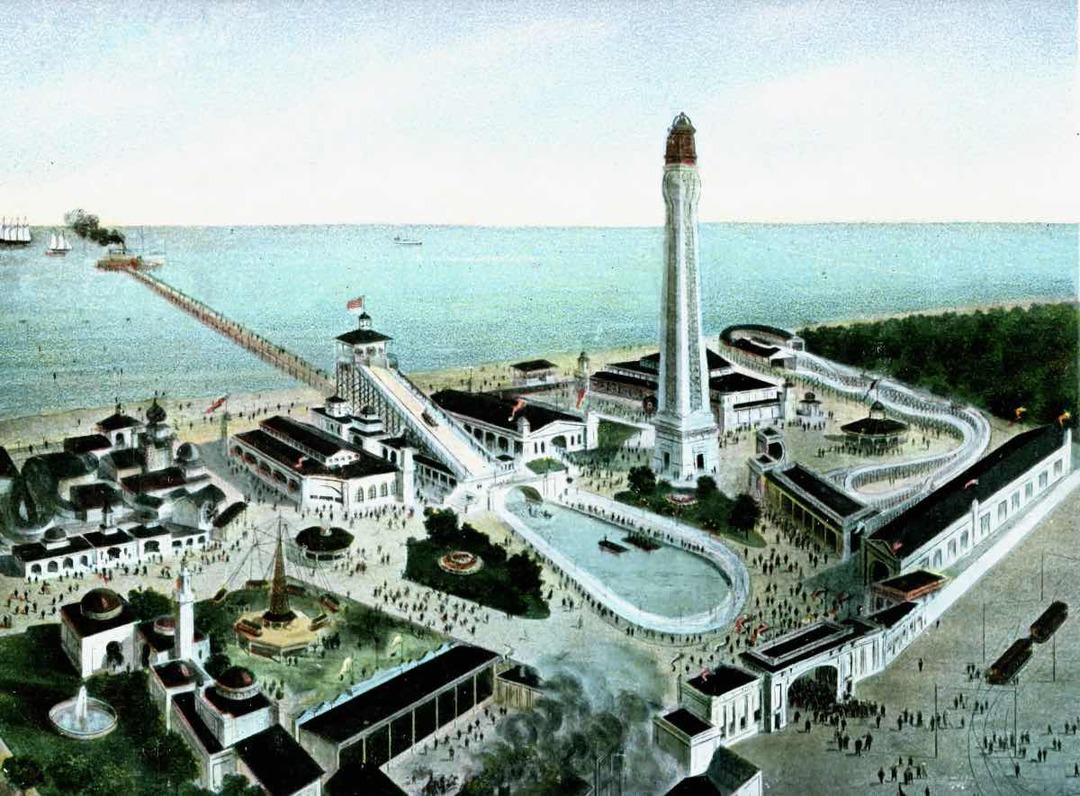
    <summary type="html"><![CDATA[<img src="https://clevelandhistorical.org/files/fullsize/c49be72c903728f083659ce8836e5bc0.jpg" alt="Entrance to Cleveland&#039;s Luna Park" /><br/><p>Luna Park opened in 1905 as the second in an international chain of amusement parks (all known as Luna Park) opened by Frederick Ingersoll, owner of the Ingersoll Construction Company. Ingersoll's company got its start building vending machines, roller coasters, and other amusement park rides. By 1901, however, the company had started building entire amusement parks as well. The two first Luna Parks opened in Cleveland and Pittsburgh in 1905. At its peak, Ingersoll's company ran over 40 amusement parks across the country and in such exotic locales as Mexico City and Berlin, Germany. </p><p>Luna Park was Euclid Beach Park's most significant competition throughout the early part of the 1900s. Unlike Euclid Beach Park, however, Luna Park charged admission at its gates and sold alcohol to its guests.  Portions of the park were copied from the Luna Park (unaffiliated with Ingersoll's parks of the same name) in New York City's Coney Island.  The park covered 35 acres of hilly ground in Cleveland's Woodland Hills neighborhood. In order to reach the entrance gates of Luna Park, patrons had to climb a steep flight of stairs. Later, an escalator was installed. Once inside, the park had a number of popular attractions, including a carousel, a ferris wheel, roller coasters, a funhouse, a dance hall, and a roller skating rink. The Luna Bowl, a 20,000 seat stadium on the park's grounds, played host to a number of sporting events and was home to two of Cleveland's earliest professional football teams in the 1920s: the Cleveland Bulldogs and the Cleveland Panthers.  </p><p>Luna Park lost much of its popularity in the 1920s. Alcohol Prohibition during this time seriously hurt the beer-serving park (Euclid Beach was alcohol free throughout its history). The Great Depression led to a further decline in attendance, and most of the park was demolished in 1931. </p><p>By 1940, Luna Park had been replaced by the Woodhill Homes housing project. </p><p><em><strong><a href="https://clevelandhistorical.org/items/show/259">For more (including 9 images) view the original article</a></strong></em></p>]]></summary>
    <published>2011-07-17T14:50:38+00:00</published>
    <updated>2026-04-17T19:17:38+00:00</updated>
    <link rel="alternate" type="text/html" href="https://clevelandhistorical.org/items/show/259"/>
    <id>https://clevelandhistorical.org/items/show/259</id>
    <author>
      <name>CSU Center for Public History and Digital Humanities</name>
    </author>
  </entry>
  <entry>
    <title type="html"><![CDATA[Euclid Beach Park: Amusements, Rides, and Restrictions]]></title>
    <summary type="html"><![CDATA[<img src="https://clevelandhistorical.org/files/fullsize/c14f60446b249c2dcbd842e349808cff.jpg" alt="Jr. Balloon Race, 1931" /><br/><p>In 1901, Dudley S. Humphrey became the owner of Euclid Beach amusement park, vowing to make the park a respectable, family friendly place for recreation. He had previously run a popcorn stand at the park, though the prevalence of alcohol, freak shows, and gambling under the old ownership did not mesh with his Protestant values. Humphrey's new Euclid Beach, where everything was guaranteed to be "of a highly moral and elevating character," instantly became a success. The park no longer had an admission fee, so one could enjoy a day at the park for little or no money. Streetcar companies introduced single fare service to the park, making getting there cheap and convenient too. Euclid Beach Park proudly touted these new, improved features with the motto: 'One Fare – Free Gate – No Beer.'</p><p><span>Occupying 90 acres of lakeshore property near the Collinwood-Euclid township border, the park grew rapidly under the Humphrey family management to add unique food options, attractions, amusements, and recreational resources for Cleveland’s growing population during the first half of the 20th century. A park railway connected beach and fishing facilities with a dancehall, theatre, and roller skating rink. A Ferris wheel, merry-go-rounds, and a funhouse were among the 157 "spaces and structures" on the park’s map. Rocket cars, roller coasters of all sizes, flying scooters, and "dodgem" cars attracted visitors of all ages as well as the park's arcade. Hundreds of local company and organization picnics filled the Euclid Beach schedule every season. Concerts and political rallies also marked the calendar. All tolled, millions of visitors enjoyed Euclid Beach during the 69 Humphrey management years with some event crowds rivaling the local pro sports gatherings of 85,000 plus.</span></p><p>The Humphrey's vision of Euclid Beach Park, sadly, also involved the strict regulation of African American visitors, who were admitted to the park but prevented from using all of its facilities. These practices culminated in a series of <a href="https://clevelandhistorical.org/items/show/562">protests and violent incidents</a> during the summer of 1946, prompting the mayor to order the park closed a month early. From that point on, the park's dancehall – whose racial policies had been the target of many of the protests – remained closed to the public. Nevertheless, Euclid Beach remained popular in the years after World War II but ultimately closed in 1969. </p><p>Although it has been closed since 1969, Euclid Beach lives on throughout Northeast Ohio in a number of ways. Cleveland Metroparks assumed management of Cleveland’s lakefront parks in 2013. A visit to Wildwood Park, which occupies the site of Euclid Beach amusements and the lakeside beach, now accommodates visitors, boaters, and swimmers in a park setting. In addition, even those too young to have visited the park themselves can still take a ride on the <a href="https://clevelandhistorical.org/items/show/561">rocket car</a>, crunch into an authentic <a href="https://clevelandhistorical.org/items/show/273">Humphrey popcorn</a> ball, hear the quavering cackle of <a href="https://clevelandhistorical.org/items/show/559">Laughing Sal</a>, and enjoy the park's 1910 <a href="https://clevelandhistorical.org/items/show/519">carousel</a>, lovingly restored after being rescued from a shuttered amusement park in Maine, in its new location at the Western Reserve Historical Society in University Circle.</p><p><em><strong><a href="https://clevelandhistorical.org/items/show/82">For more (including 11 images, 2 audio files,&#32;&amp;&#32;1 video) view the original article</a></strong></em></p>]]></summary>
    <published>2010-11-12T15:47:15+00:00</published>
    <updated>2026-04-17T19:17:37+00:00</updated>
    <link rel="alternate" type="text/html" href="https://clevelandhistorical.org/items/show/82"/>
    <id>https://clevelandhistorical.org/items/show/82</id>
    <author>
      <name>Michael Rotman&amp;#32;&amp;amp;&amp;#32;Jim Lanese</name>
    </author>
  </entry>
</feed>