<?xml version="1.0" encoding="UTF-8"?>
<feed xmlns="http://www.w3.org/2005/Atom">
  <title type="text">Cleveland Historical</title>
  <updated>2026-05-02T03:21:10+00:00</updated>
  <generator uri="http://framework.zend.com" version="1.12.20">Zend_Feed_Writer</generator>
  <link rel="alternate" type="text/html" href="https://clevelandhistorical.org/"/>
  <link rel="self" type="application/atom+xml" href="https://clevelandhistorical.org/items/browse?output=rss2"/>
  <id>https://clevelandhistorical.org/</id>
  <author>
    <name>Cleveland Historical</name>
    <uri>https://clevelandhistorical.org</uri>
  </author>
  <link rel="hub" href="http://pubsubhubbub.appspot.com/"/>
  <entry>
    <title type="html"><![CDATA[U. S. Dearing: Cleveland&#039;s  “Mister Restaurant”]]></title>
    <summary type="html"><![CDATA[<p><strong><em>In 1956, the <i>Call & Post</i>, Cleveland’s weekly African American newspaper, praised a leading light in the city’s restaurant field: “There is a double-star attraction featured by U. S. Dearing ... which has attracted the happy attention of approximately 65,000 Clevelanders during the past six months. Dearing’s double-feature is not a song and dance team or a couple of nationally famed stage stars; it is his Golden Brown Fried Chicken and his Hickory Smoked Barbecue.” So good was Dearing’s food that his wife, said to be a “fine cook” in her own right, confided to the paper that she usually served the restaurant’s food at parties in their 783 East Boulevard home: “I find it just too difficult to match the cooking that comes out of my husband’s kitchens,” she exclaimed.</em></strong></p><img src="https://clevelandhistorical.org/files/fullsize/eaf4757cad966edd111dcd2665e4ac21.jpg" alt="U. S. Dearing Outside His Last Restaurant" /><br/><p>Born in 1903 in Washington, Virginia, in the foothills of the Blue Ridge Mountains, Ulysses S. (“Sweets”) Dearing was abandoned at birth and raised by his uncle in a tarpaper shack. At age 14 he joined the Great Migration, arriving in Pittsburgh with no money and no formal education. After a stint working in a Carnegie Steel mill and as a butler, Dearing opened his own restaurant in the Hill District before buying and operating a small hotel there in the early 1930s. Soon thereafter, Dearing tried to open a restaurant and hotel in the rural outskirts of the city but suffered a flood that, with the weight of the Great Depression, returned him to financial ruin. </p><p>As a result, Dearing left the Steel City for the Forest City in 1932. According to a story he told often, Dearing arrived in Cleveland with 97 or 98 cents in his pocket, which he said he threw on the sidewalk after getting off the bus at East 107th Street and Euclid Avenue because he decided someone else might need it more than he. Over the next two years, Dearing worked as a short-order cook before eventually landing a job as the manager of the popular, Green Book–listed <a href="https://greenbookcleveland.org/locations/cedar-gardens/">Cedar Gardens</a> restaurant at 9706 Cedar, a Harlem-inspired “black and tan” club where jazz music brought the races together. There he earned the nickname “Prince of Green Pastures” because Cedar Gardens was the pulsing heart of an emerging upscale Black nightlife district that assumed this name upon the death in 1935 of Black actor Richard B. Harrison, beloved for his starring role in the Broadway hit <i>Green Pastures</i>.</p><p>Over the next decade, Dearing managed other entrepreneurs’ ventures, all of them featured in the <i>Green Book for Negro Motorists</i>, while struggling to launch his own. He managed Jack Hecht’s Cedar Gardens (1933–37), Benny Mason’s <a href="https://clevelandhistorical.org/items/show/967">Cedar Country Club/Mason's Farm</a> in Solon (1938–42), and Mason’s <a href="https://greenbookcleveland.org/locations/blue-grass-club/">Blue Grass Club</a> (1943–45). During his tenure at Mason’s Farm, Dearing briefly owned two restaurants of his own. First, he operated Dearing’s Tasty Shop (1938–39), formerly the <i>Green Book</i>–listed <a href="https://greenbookcleveland.org/locations/the-chicken-coop/">Chicken Coop</a>. Then he bought the Park Avenue Restaurant at 5622 Woodland in 1941 but owned it for less than a year. Dearing then opened his next Dearing’s at 9708 Cedar (next to Cedar Gardens) in the former Palace Cafe in 1943, but within a few months he had moved a block to the former site of <a href="https://greenbookcleveland.org/locations/club-ron-day-voo/">Club Ron-Day-Voo</a> at 9804 Cedar, where he remained until 1945. </p><p>Following the end of World War II, Dearing finally hit his stride, entering what was to turn out to be a nearly four-decade run. In 1946, he opened his newest Dearing’s restaurant at 1035 East 105th Street. His move to 105th, the main commercial thoroughfare running through Glenville, placed Dearing’s among the vanguard of Black-owned businesses in a neighborhood that was soon to transform from one of the city’s prime Jewish communities into the so-called “Gold Coast,” which supplanted “Green Pastures” as the most coveted address for upwardly mobile African Americans. For several years he shared his block with other illustrious Black-owned establishments, including <a href="https://clevelandhistorical.org/items/show/882">Cafe Tia Juana</a>, <a href="https://greenbookcleveland.org/locations/gold-coast-tavern/">Gold Coast Tavern</a>, and <a href="https://greenbookcleveland.org/locations/mercury-bar/">Mercury Bar.</a></p><p>Within a few years, Dearing had expanded to four locations that included the dining rooms Alonzo Wright’s <i>Green Book</i>–listed <a href="https://greenbookcleveland.org/locations/carnegie-hotel/">Carnegie</a> and <a href="https://clevelandhistorical.org/items/show/636">Majestic</a> Hotels, as well as in Club Amvets, which resurrected a former Dearing’s location at 9804 Cedar. He advertised citywide delivery service by 1949, although this effectively meant only a few square miles of the East Side at a time when the vast majority of African Americans still lived in either Cedar-Central or Glenville. Thereafter, with his own restaurant’s “shack fried chicken” and barbecued ribs having become wildly popular, Dearing scaled back to concentrate solely on his Glenville dining room. </p><p>Open 24 hours a day, Dearing’s flagship restaurant was known not only for its unforgettable fried chicken but also for its sumptuous Sunday dinners. One Sunday menu in 1953, for instance, included thirteen entree options — Roast Prime Rib of Beef Au Jus, Roast Young Hen Turkey with Gravy and Cranberry Sauce, Roast Loin of Pork with Candied Yams, Broiled Boston Lamb Chops on Toast Points, Baked Sugar-cured Ham with Fresh Fruit Sauce, Stewed Fresh Country Chicken Dublin Style, Roast Long Island Duckling with Stewed Apples, Sauce Baby Chicken Livers in Butter on Toast, Broiled Prime Boston Strip Steak with Mushrooms, Lobster a la Newburgh in Casserole, Saute Veal Sweet Breads with Fresh Mushrooms, Broiled Fresh Caught Lake Erie White Fish Maitre D’Hotel, Broiled Fresh Caught Red Snapper with Lemon Butter, and Fried Jumbo Frog Leg with Tartar Sauce — all modestly priced between $1.25 and $2.25. </p><p>The Glenville-based Dearing’s enjoyed a long run, proving so successful that Dearing began to expand with the assistance of his son U. S. Dearing Jr. In 1956, he opened Dearing’s Carry-Out Store, whose slogan was, “Your apartment is your dining room.” Between 1960 and 1970, Dearing’s added five additional locations: Dearing’s Chic-A-Rib Room (1960), later named Dearing’s Living Room Lounge, Mark I Lounge, Second Choice Lounge, and finally the Candlelight Room, in the former Gem Snack Bar & Bar-B-Q at 10932 Superior Avenue; Dearing’s Carry-Out (1963) at 12019 Ashbury Avenue; Dearing’s Continental Lounge (1968) at 12804 St. Clair Avenue; Dearing’s Party Center (1969) at 17324 Harvard Avenue; and finally Dearing’s Catering (1970), later known as the Mark III Lounge and Carry-Out, at 11223 St. Clair.</p><p>Amidst his overall expansion, Dearing sold his original Glenville restaurant in 1962 to his employee Grace Sears, but just two years later he bought back the building to attempt a new concept, Mr. D’s Pancake House, which offered more than 80 different pancakes and, like his original restaurant, was open around the clock. Just a year later, he pivoted again, turning it into Mr. D’s Seafood, but then he abruptly closed down before the end of 1965. Perhaps these more specialized eateries fell short of expectations with pancakes mainly appealing in the morning hours and seafood costing more. </p><p>For the remainder of the decade, Dearing’s overall enterprise continued to prosper. However, no sooner had Dearing reached the zenith of being proprietor of his own local chain than he began to scale back. In 1971, he phased out the Continental, and he also shuttered his carry-out on East 105th following a devastating fire in 1972. Four years later, he closed the Mark III on St. Clair and, soon after on the advice of his doctor, in 1977 he also sold the Party Center to Edward Haggins and Dale Carter, with whom he shared his famous fried chicken recipe. Carter then carried on the Dearing’s tradition in Lee-Harvard, first as Dearing’s Lounge and then as Juva De’, which featured musical acts like the O’Jays.</p><p>Dearing, meanwhile, spent his remaining years concentrating on his Candlelight Room at Superior and East 110th, which operated until a few months before his death in 1984. Although only one of the Dearing’s buildings (the one in Lee-Harvard) stands today, Dearing’s legacy lives in the memory of many who remember his culinary prowess and warm hospitality. It is therefore little surprise that the <i>Cleveland Press</i> dubbed him “Mr. Restaurant,” rightly recognizing Dearing’s reputation as one of and possibly<i> the </i>foremost Black restaurateur of the twentieth century in Cleveland.</p><p><em><strong><a href="https://clevelandhistorical.org/items/show/1073">For more (including 13 images) view the original article</a></strong></em></p>]]></summary>
    <published>2025-11-24T12:44:21+00:00</published>
    <updated>2026-04-17T19:17:43+00:00</updated>
    <link rel="alternate" type="text/html" href="https://clevelandhistorical.org/items/show/1073"/>
    <id>https://clevelandhistorical.org/items/show/1073</id>
    <author>
      <name>J. Mark Souther</name>
    </author>
  </entry>
  <entry>
    <title type="html"><![CDATA[Solomon Charles Waterford: The Crown Prince of Blues]]></title>
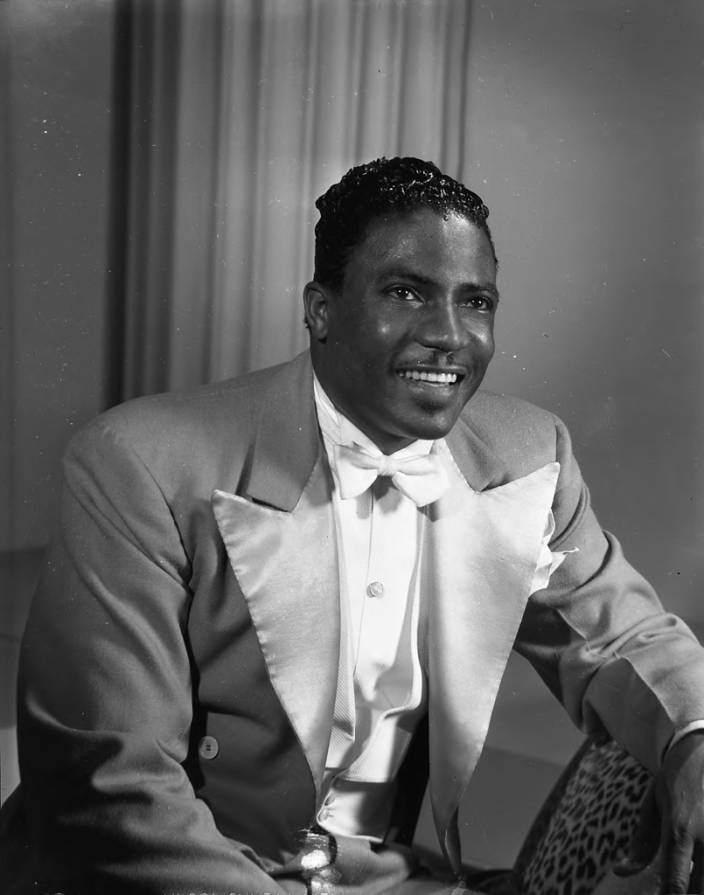
    <summary type="html"><![CDATA[<p><strong><em>Crown Prince Waterford, an Arkansas-born itinerant blues musician, toured the country in the mid-20th century. Waterford grew in popularity throughout Cleveland due to his performances at some of the area's top music bars and nightclubs.</em></strong></p><img src="https://clevelandhistorical.org/files/fullsize/6d9cb2bbf7a37afadfbf18cc7c3bae76.jpg" alt="Headshot of Crown Prince Waterford" /><br/><p><p class="p1">Soloman Charles Waterford, better known as Crown Prince Waterford, was born on October 26, 1916, in Jonesboro, Arkansas. Growing up, music was a staple to Waterford’s family, and it played a massive role in Waterford’s upbringing. In an interview with <i>Call and Post</i> reporter John E. Fuster, Waterford recollected,“It was just natural that I was born with a song in my heart.”Waterford’s father attended Wilberforce University, where he was a part of the Glee Club, and his mother was a talented pianist, organist, and harpist. Waterford was one of five children in his family. All three of his sisters were musicians, two of whom were members of Cleveland's original “Wings Over Jordan” chorus. His sister Evanna Cotten sang and played the piano in many nightclubs in Cleveland. Waterford’s brother was a member of the Glee Club at Tuskegee Institute, where Crown Prince also attended.</p><p>Waterford’s formal music career began in 1936 in Oklahoma City, where he had lived for most of his late adolescence. His first professional experience playing in a band began when he sang with Leslie Sheffield’s Rhythmaires. He later joined Jay McShann’s band, which Waterford noted gave him a big boost in the music industry. By the late 1930s, Waterford joined Andy Kirk’s 12 Clouds of Joy as the band’s blues shouter after auditioning at Chicago’s Savoy Ballroom. Waterford took a brief hiatus from his music career to serve in the United States Army during the Second World War. After the war, his career skyrocketed when he gained popularity playing in many of Chicago’s nightclubs.</p><p>Waterford, who made his living as an itinerant musician, made his first known appearance in Cleveland sometime in 1950. At this point, he had recorded for several different labels like Hy-Tone in Chicago and King Records in Cincinnati. In May 1950, Waterford played his first show at the <a href="https://greenbookcleveland.org/locations/loop-lounge/">Loop Lounge</a>, a Prospect Avenue nightclub that attracted many notable musicians such as Dizzy Gillespie and Billie Holiday. From July to mid-August that same year, Waterford performed nightly at one of the most well-known clubs in Cleveland, <a href="https://greenbookcleveland.org/locations/cafe-tia-juana/">Cafe Tia Juana</a>, which was located on East 105th Street. After this six-week engagement, Waterford was informed by his booking agency that he was scheduled to appear in Kansas City where he would form his own band. From there Waterford and his band performed at the Municipal Auditorium in Kansas City, followed by an additional fifty-two one-night shows throughout the South and finally to the West Coast, ending in Los Angeles. </p><p>Waterford returned to Cleveland in December 1950 with his new orchestra, “The Four Crowns.”<span class="Apple-converted-space"> He</span> and the Four Crowns—which included Jimmy Saunders on the piano, Benny Miller on the tenor saxophone, Bobby Smith on the drums, and Richard Mitchell on the bass—played at the grand reopening of the <a href="https://greenbookcleveland.org/locations/maxs-bar-and-turf-club-lucky-bar/">Lucky Bar</a> on Cedar Avenue on December 29th. The Lucky Bar was excited to have Crown Prince Waterford perform and announced at their reopening that they planned to hold the Crown Prince Amateur Contest on Tuesday nights. Waterford played at Lucky Bar until mid-January the following year.</p><p>Waterford continued to frequent Cleveland's leading nightspots. In September 1951, he returned to Cafe Tia Juana, where he shared the stage with Ray Bradley and his Combo, who were playing nightly at the popular south-of-the-border-themed nightclub. Additionally, his sister Evanna Cotten (sometimes referred to as “Evanti”) played the solovox during the intermission of Waterford’s set. Waterford played at Cafe Tia Juana until November 1951. After he completed his engagement at Cafe Tia Juana, he went on another tour where he played in numerous cities in the South and ended in California. Waterford returned to Cleveland in late 1952, and by this time his Orchestra had disbanded and he began to play independently. Waterford, along with other local performers, was invited to play at <a href="https://greenbookcleveland.org/locations/jacks-musical-bar/">Jack’s Musical Bar</a> on Cedar Avenue in April 1953, where he reportedly gave an “in-command performance.” Waterford was the main act on the Friday night he performed and then played two additional shows the following Saturday. A <i>Call and Post</i> reporter noted that Crown Prince arrived at Jack’s Bar, “Big, handsome, and in his finely tailored full dress suits of various colors.”</p><p>Waterford’s role in the music and nightclub scene extended beyond Cleveland and into the Cuyahoga Valley. Waterford played at <a href="https://greenbookcleveland.org/locations/lake-glen/">Lake Glen</a> Country Club in Peninsula, twenty-six miles south of Cleveland, every weekend from July to September of 1957. After his time at Lake Glen, Waterford took a road trip back to Oklahoma to visit his parents, and then he returned to Cleveland where he played several smaller shows at places like Wade Park Avenue’s Rufus Nelson’s Blackstone Cafe. In 1958, he recorded the first 45 records for Plaid, one of the house labels started by Tom Boddie, an African American Clevelander who went on to open Boddie Record Company in the Union-Miles neighborhood a few years later. Waterford returned to Lake Glen in August 1959, ending his weekend performances the following month. He played at several small Cleveland nightclubs after leaving Lake Glen. All mentions of Waterford in the <i>Call and Post</i> cease after 1961. As styles of music were evolving at this time Crown Prince attempted to become a “twist” artist in 1962 and recorded an album under the Orbit Record label, with his band the Twistologists.</p><p>As new styles and new artists emerged, Crown Prince Waterford left the music industry, became ordained as Reverend Charles Waterford, and moved to Florida in 1965. Rev. Waterford successfully set up several churches in northern Florida. Despite leaving his blues days behind, Waterford continued singing and recorded a gospel album titled <i>The Reverend Waterford Sings. </i>After he retired from the ministry, he briefly returned to his blues days when he performed at the Springing the Blues Festival in Jacksonville Beach in 2002.</p><p>Waterford passed away in Jacksonville at the age of 90 in 2007. From blues shouter to gospel artist, Crown Prince Waterford is remembered nationally and locally in Cleveland for his distinctive style of singing and the aura of royalty that gave him none other than the stage name, Crown Prince.</p><p><em><strong><a href="https://clevelandhistorical.org/items/show/1056">For more (including 4 images) view the original article</a></strong></em></p>]]></summary>
    <published>2025-04-08T14:01:33+00:00</published>
    <updated>2026-04-17T19:17:43+00:00</updated>
    <link rel="alternate" type="text/html" href="https://clevelandhistorical.org/items/show/1056"/>
    <id>https://clevelandhistorical.org/items/show/1056</id>
    <author>
      <name>Bali White</name>
    </author>
  </entry>
  <entry>
    <title type="html"><![CDATA[Gay Crosse: From Big Band Leader to Be-Bop Star]]></title>
    <summary type="html"><![CDATA[<p><strong><em>“Cleveland won’t appreciate Gay Crosse until he leaves here, plays the East, makes a success, then comes back.”</p><p>— Louis Jordan, 1946</em></strong></p><img src="https://clevelandhistorical.org/files/fullsize/b8f79fcb0d5787d19405a01e79682b8a.jpg" alt="Sylvester &quot;Gay&quot; Crosse" /><br/><p>Sylvester G. Crosse, known to many as Gay Crosse, was born in 1916 in Mobile, Alabama. The exact year that Crosse and his family arrived in Cleveland is unknown. However, by the early 1930s, Crosse attended Central High School, where he played in the school's marching band. Crosse was known for being a talented vocalist and saxophonist who had the ability to charm any crowd. Two years after he graduated high school in 1934, Crosse and his band were under contract with the Amusement Service Bureau, which scheduled a small tour for Crosse and his orchestra to play at different local events and venues.</p><p>Crosse’s career as a musician in Cleveland skyrocketed in the 1940s. Crosse’s band, by then known as Gay Crosse and His Hellions, had a Saturday night residency at <a href="https://greenbookcleveland.org/locations/maxs-bar-and-turf-club-lucky-bar/">The Lucky Bar</a>, sometimes called “The Lucky Room,” at 9812 Cedar Avenue from November 1941 until 1944. Crosse and his orchestra then played a six-week engagement at the newly opened <a href="https://greenbookcleveland.org/locations/blue-grass-club/">Blue Grass Club</a> located on the second floor of 2173 East 55th Street from December 1944 to February 1945. After his successful six-week engagement at Blue Grass Club, Gay Crosse and His Hellions were given a contract by Music Corporation of America (MCA), one of the largest agencies at the time with offices in London, New York, Chicago, Dallas, and Cleveland. Crosse returned to Blue Grass Club in October 1945 and played for a total of 27 months before parting ways in February 1948 to pursue other engagements. While Crosse grew the crowd of patrons at the Blue Grass Club during his two-year residency, he was also coming into national prominence when Crosse’s idol “the King of the Jukebox” Louis Jordan made him his protege in 1946. Jordan told a Call & Post reporter backstage at the Palace Theater, “Cleveland won’t appreciate Gay Crosse until he leaves here, plays the East, makes a success, then comes back.” Louis Jordan gave Crosse advice throughout his musical career and the two remained friends for many years.</p><p><p class="p1">After Gay Crosse and his band left Blue Grass Club in 1948, they began touring in July 1948 and were placed under new management with the Mason James Agency of Asheville, North Carolina. This tour was comprised of several one-night shows in Ohio, Pennsylvania, Virginia, North Carolina, South Carolina, Kentucky, Tennessee, and Alabama. Gay Crosse’s tour band included pianist Charlie Ross,<span class="Apple-converted-space">  </span>bassist John Lathan, vocalist Walter “Mouse” Carson, trumpeter Eddie Harris, and an additional saxophonist Baron Lee. After their tour ended in the fall, Crosse and his band returned to Cleveland and played several nightclub venues. In 1949 Crosse and his band now known as Gay Crosse and his Good Humor Six landed a record deal with Capitol Recording Company. Crosse and his Good Humor Six released their first record for the label titled “Light Up and Relax.” At this time, Crosse noted that his band was trying to abandon the “Louis Jordan” style which they had come to be associated with, for a more modern be-bop style of music arranged by the band's pianist, Charlie Ross.</p><p><p class="p1"><span class="s1">Crosse played several shows at Frolic Show Bar, a “black-and-tan” establishment in Detroit’s midtown in the winter of 1949. In early 1951, Crosse and his Good Humor Six briefly played at a popular club in Chicago called the Brass Rail and then made their way to Camden, New Jersey, and performed as the house band at Chubby’s, a popular restaurant and nightclub. That same year, John Coltrane began to play the tenor saxophone for the Good Humor Six. In March 1951, with the band's newest edition, the Good Humor Six played an extended engagement at <a href="https://clevelandhistorical.org/items/show/634"><span class="s2">Gleason’s</span></a> </span><span class="s3">located at 5219 Woodland Avenue. From June to early July of that same year,<span class="Apple-converted-space">  </span>the band played a nightly show at Prospect Avenue’s<span class="Apple-converted-space">  </span><a href="https://greenbookcleveland.org/locations/loop-lounge/"><span class="s2">Loop Lounge</span></a></span>. Crosse and the Good Humor Six then returned to The Lucky Bar for the remainder of that summer. The band at this time which included John Coltrane also welcomed new members late in 1951. Specks Wright joined the band as a drummer and had previously played with Dizzy Gillespie. Crosse also welcomed a new trumpeter, James Robertson<span class="Apple-converted-space">, </span>who once played with Earl Hines’s band. These new members along with the band’s veteran musicians, played at <a href="https://greenbookcleveland.org/locations/towne-casino/"><span class="s2">Towne Casino</span></a>, a popular mixed nightclub on Euclid Avenue near 105th Street, from January to February 1952. In early March to May 1952 Crosse and the Good Humor Six played at The Rose Room, previously known as <a href="https://greenbookcleveland.org/locations/heat-wave/"><span class="s2">Heat Wave</span></a> inside Cleveland’s <a href="https://clevelandhistorical.org/items/show/636"><span class="s2">Majestic Hotel. </span></a>The band played their new record, “Fat Sam From Birmingham” recorded for the Gotham label, which was a popular hit at the Rose Room. The band played at Club Ebony, sometimes referred to as the <a href="https://greenbookcleveland.org/locations/ebony-lounge/"><span class="s2">Ebony Lounge </span></a>between East 69th and Cedar Avenue in November 1952. Crosse and his Good Humor Six played  nightly shows at Club Congo, located on Woodland Avenue beginning in March 1953 to May 1954
<p class="p1">While flourishing as a talented musician in Cleveland, Crosse decided to grow in prominence as a successful businessman. Crosse was the owner of<a href="https://greenbookcleveland.org/locations/gays-hotel-and-gays-drive-in-bar-b-q/"><span class="s1"> Gay’s Hotel and Drive-In Bar-B-Q</span></a> which was located at 2117 East 83rd. Gay’s Hotel in its early years was referred to as “Gay’s Tourist Home” which opened in April 1954. <a href="https://greenbookcleveland.org/locations/musicians-and-entertainers-club/"><span class="s1">Gay’s Musicians and Entertainers Club</span></a> was located next door to Gay’s Hotel at 2123 East 83rd and also opened that same year. Gay’s Drive-In Bar-B-Q opened in the rear of Gay’s Hotel in 1956. </p><p>It appears that Crosse and the Good Humor Six had parted ways in the late ’50s. This may be due to Crosse’s focus turning more towards his business pursuits rather than continuing his musical career. Gay Crosse experienced ongoing health issues during the later years of his life, and in 1971, at the age of 54, Crosse passed away due to complications during an open heart surgery performed at the Huron Road Hospital. Gay Crosse established a successful career as a popular jazz musician, both locally and nationally. Crosse became one of Cleveland’s most successful African American businessmen in the mid-twentieth century. His ability to entertain and charm the patrons of the numerous nightclub locations in Cleveland helped maintain Crosse’s image as one of the city’s best musicians of the time.</p><p><em><strong><a href="https://clevelandhistorical.org/items/show/1053">For more (including 4 images) view the original article</a></strong></em></p>]]></summary>
    <published>2025-03-22T22:40:54+00:00</published>
    <updated>2026-04-17T19:17:43+00:00</updated>
    <link rel="alternate" type="text/html" href="https://clevelandhistorical.org/items/show/1053"/>
    <id>https://clevelandhistorical.org/items/show/1053</id>
    <author>
      <name>Bali White</name>
    </author>
  </entry>
  <entry>
    <title type="html"><![CDATA[Willie Pierson: A Builder of the Black Metropolis]]></title>
    <summary type="html"><![CDATA[<p><strong><em>At a 1947 testimonial dinner at the Phillis Wheatley Association to honor African American businessman Willie Pierson, John O. Holly, the president of Cleveland’s Future Outlook League, said, “If we had a few more Willie Piersons, this community would be almost self-sustaining.” Indeed, by investing in a number of businesses in the 1930s and ’40s with an eye toward creating opportunities in the city’s Black community, Pierson had become one of Cleveland’s most influential Black leaders of his time.</em></strong></p><img src="https://clevelandhistorical.org/files/fullsize/eb5d09b1f8ee1b136b28bedca3f07bed.jpg" alt="Willie Pierson House" /><br/><p>Willie Pierson was born in Guthrie, Oklahoma Territory, in 1898. After serving in World War I, he migrated to Cleveland’s Cedar-Central neighborhood, where he operated a pool room. Over the ensuing years, he garnered a reputation as a “numbers racketeer” and, in the process, amassed considerable wealth. At a time when African Americans struggled to get access to credit, engaging in lotteries and other forms of gambling was a common way to circumvent systemic exclusion. But like his better-known contemporary Benny Mason who operated the famed <a href="https://clevelandhistorical.org/items/show/967">Mason’s Farm</a> club in Solon, Pierson would not simply grow wealthy but also use his wealth to invest in Black community advancement.</p><p>Pierson’s first noteworthy business venture followed the repeal of Prohibition. In 1934 he and Rodger Price, who would become his partner in numerous business ventures, opened the <a href="https://greenbookcleveland.org/locations/log-cabin/">Log Cabin Grill</a> at 2290 East 55th Street. The Log Cabin, styled in the manner of a “swanky hunting lodge,” became one of the most popular establishments in the heart of what many called Cleveland’s Harlem. Along with the <a href="https://clevelandhistorical.org/items/show/636">Majestic Hotel</a> across the street, the Log Cabin appeared in the <em>Negro Motorists’ Green Book</em> and attracted visiting celebrities such as Duke Ellington and Joe Louis. </p><p>With the exception of the Log Cabin, Pierson and Price poured their money into ventures that helped fellow African American entrepreneurs succeed in pursuing their own ambitions. In placing hiring power in African Americans' hands, they went beyond the Future Outlook League's call, "Don't Buy Where You Can't Work." In 1936, the men invested in the dream of Robert H. (Bob) Shauter to own his own drugstore. Shauter, a graduate of the Western Reserve University School of Pharmacy, had worked as a soda clerk in white-owned pharmacies but now had the opportunity to use his degree in his own drugstore, <a href="https://greenbookcleveland.org/locations/shauter-drugs/">Shauter Drugs</a>, at 9208 Cedar Avenue. When he was denied the opportunity in the early 1940s to open another pharmacy in the Reserve Building at Woodland and East 55th, Shauter turned to <em>Call & Post</em> publisher <a href="https://clevelandhistorical.org/items/show/686">W. O. Walker</a> for help. Walker decided to buy the Reserve Building to create a space where Black businesses and professional offices would not be sealed out on account of race. But Walker needed investors, and few in the Black community had significant capital. Two exceptions were Pierson and Mason, who joined him in forming the Woodland-55th Corporation, which purchased the Reserve Building and the Leiden Drug Co. inside it in 1943, in turn enabling Shauter to expand his business, which became Cleveland’s first Black-owned drugstore chain. </p><p>Indeed, Pierson situated himself as a facilitator of pioneering businesses. His financial support solved the problem of Black bowling leagues’ difficulty in gaining access to lanes in white-owned alleys. Piggybacking on Elmer Reed’s founding of the National Bowling Association, an umbrella for Black leagues, in 1939, Pierson and Price helped Reed start a ten-lane venue called <a href="https://greenbookcleveland.org/locations/united-recreation/">United Recreation</a> at 8217 Cedar Avenue in 1941. United Recreation was reputedly the first Black-owned bowling alley in the United States. Another pioneering African American business that Pierson supported was Sears Brothers Jewelry and Watchmaking School, which had been denied a renewal of its lease in the Prospect Fourth Building in downtown. Pierson and his associates welcomed John and Burl Sears in the Reserve Building in 1945, aiding what was likely the nation’s largest Black watchmaking school.</p><p>As he invested in Black enterprises, Pierson enjoyed growing prosperity. After years of living in a tiny tenement near Cedar and East 36th, he bought a sizable home in 1939 at 2304 East 89th Street and became a generous supporter of nearby Karamu House, an interracial arts-focused settlement. He also burnished his reputation as a sportsman by owning thoroughbred horses stabled at Thistledown. By 1943, Pierson purchased a tile-roofed brick mansion at the fork of East Boulevard and East 98th Street in the Glenville neighborhood. In doing so, he was in the vanguard of the emergence of East Boulevard as the most prestigious residential address in what African Americans came to call the “Gold Coast.” Just as discriminatory lending practices led some African Americans like Pierson and Mason to turn to illicit numbers activities to generate capital, they also sealed off suburbs from Black homeownership, making places like the “Gold Coast” the closest attainable equivalent.</p><p>Not every venture Pierson took on enjoyed success. Another wartime investment that might have been his greatest triumph ended up being his biggest failure. Around the same time that he moved to East Boulevard, Pierson committed $100,000 to start what was billed as the nation’s first Black-owned and -operated factory. The idea originated not in Cleveland but in Toledo, where Black attorney Orlando J. Smith had recently failed to advance a vision for such a factory. Undeterred, Smith convinced Pierson, Price, Mason, and another investor to start the American Enterprises garment factory, which he would manage. On December 30, 1943, the factory opened in a building at 1250 Ontario Street, two blocks north of Public Square. With 210 power machines, the plant employed 129 workers, most of them African Americans, and enjoyed a federal war work contract to supply Army coats and other clothing. Despite its promise, the enterprise soon faltered. Even though it had added a significant number of major orders from the private sector, the factory began to struggle to obtain supplies and also suffered from Smith's managerial inexperience and what the owners complained was government officials' “Jim-Crow” refusal to extend loans. By January 1945, the factory was shuttered and the firm in bankruptcy.</p><p>After the war, Pierson tailored his longtime advocacy for mentoring and bringing Black entrepreneurs into co-owned business enterprises to the pressing need to create jobs for returning Black servicemen. He argued in 1946 that African Americans with the means should pool their resources, saying, “We’ll never control the business life in our own communities until we buy the buildings in which it is housed.” In 1947 he and Price helped Wendell Bishop, long a porter in the downtown Thom McAn Shoe Co. store, open his own shoe shop in the Reserve Building, a venture jointly owned by Bishop, Pierson, Price, Mason, W. O. Walker, and Frances Shauter (Bob Shauter’s widow). Echoing other Pierson beneficiaries, Bishop Shoes became the city’s first Black-owned shoe retailer. As Pierson told the audience at the testimonial dinner in his honor that same year, “If I had two million dollars I’d solve the economic problems of the Negro in Cleveland with the simple theory that wealth is not the cash you have in the bank but the money you put to work.” </p><p>Had Pierson remained in Cleveland and lived longer, he might have been overjoyed to see African Americans succeed in moving into once-exclusionary suburbs but saddened to see how white disinvestment and limited amassing of Black capital combined to hollow out the Cedar-Central neighborhood where he had helped build the pulsing heart of Cleveland’s Black Metropolis. But Pierson moved to Victorville, California, in 1951 after buying an interest in Murray's Dude Ranch (an important <em>Green Book</em> site along Route 66), and he died in 1963. One year after his death, former Log Cabin hostess Ella Mae Ellis bought the business, but it only lasted for seven more years. In 1965, Elmer Reed closed United Recreation after a drop in the popularity of bowling and a failure to get his insurance policy renewed. In 1966, the Woodland-55th Corporation sold the Reserve Building—for twenty-three years the city’s largest Black commercial and office building but now struggling—for a gas station. Likewise, Shauter Drugs' one remaining store closed in the early 1970s. </p><p>Although today there is no physical trace of Willie Pierson’s business empire, the houses where he lived as he rose toward the zenith of his entrepreneurial and philanthropic activity are still standing. Today the long line of grand homes on East Boulevard is, to many passersby, merely an attractive backdrop to the Cleveland Cultural Gardens, but the street’s houses also embody the legacy of the World War II years, when influential African Americans like Willie Pierson were pioneers of the emerging “Gold Coast.”</p><p><em><strong><a href="https://clevelandhistorical.org/items/show/1009">For more (including 8 images) view the original article</a></strong></em></p>]]></summary>
    <published>2023-12-08T23:28:54+00:00</published>
    <updated>2026-04-17T19:17:43+00:00</updated>
    <link rel="alternate" type="text/html" href="https://clevelandhistorical.org/items/show/1009"/>
    <id>https://clevelandhistorical.org/items/show/1009</id>
    <author>
      <name>J. Mark Souther</name>
    </author>
  </entry>
  <entry>
    <title type="html"><![CDATA[Mason&#039;s Farm: How an Ordinary Working Farm Became an Extraordinary Black Leisure Destination]]></title>
    <summary type="html"><![CDATA[<p><strong><em>The article <a href="https://greenbookcleveland.org/locations/cedar-country-club-masons-farm/">Mason's Farm</a> originally appeared in <a href="https://greenbookcleveland.org"><i>Green Book Cleveland</i></a>, our sister project exploring the history of Black entertainment, leisure, and recreation in Northeast Ohio. Named for its proprietor Benny Mason, Mason's Farm was a Black-owned working farm in Solon that achieved national renown as a music venue and resort in the 1930s-40s.</em></strong></p><img src="https://clevelandhistorical.org/files/fullsize/208d4ec5c66d58b3c214bf1744dbf507.jpg" alt="Cover of Mason&#039;s Farm Booklet" /><br/><p>In 1935, Benjamin “Benny” Mason purchased a 160-acre farm in Solon on Cochran Road south of Route 43 and established what became known as “Mason’s Farm,” a popular resort, country club, and jazz venue. A well-known game operator, Mason purchased the farm and the Cedar Country Club subsequently opened in 1936. Upon the farm’s opening, Mason remarked, “I want to do something for my people. I want to make this farm a place where they can relax and enjoy themselves. I want to provide a place for them comparable to other races.” Despite its rural location beyond the east suburbs of Cleveland, one of the features Mason boasted was the Cedar Country Club's proximity to the city itself, claiming only a twenty-five-minute drive from Carnegie and East 55th Street in Cleveland. With the accessibility of the resort, both in location and its integrated clientele, the farm quickly became a popular destination for visitors across the country as well as Clevelanders. The Cedar Country Club gained national acclaim as the “showplace of Ohio.” The resort included furnished cabins, a restaurant, and nightclub. Some of its features included a riding academy, picnic grounds, and occasionally tours of the farm for students.</p><p>The Cedar Country Club also functioned as a nightclub and jazz venue that boasted popular artists Tiny Grimes, saxophonist Coleman Hawkins, and many others. The Cedar Country Club, which one <i>Call and Post</i> feature lauded as "Ohio's Swankiest Summer Resort," was routinely described as luxurious and enjoyed a listing in the 1939 edition of the <i>Negro Motorists' Green Book</i>. While it looked like a barn from the exterior, the clubhouse boasted a bar in the basement, another bar on the ground floor as well as a dance hall, and a lounge and private rooms on the second floor. It was available to be rented out for private parties, banquets, and other events. Mason renamed Cedar Country Club "Mason's Farm" in 1941 and hired restaurateur U. S. Dearing as manager. In addition to its leisure destination status, Mason’s Farm was also a working farm with more than 2,500 head of livestock and 145 of its 160 acres set aside for growing corn, wheat, and oats.</p><p>Mason himself was an eccentric character in Cleveland history, often running into legal trouble. Some of the allegations against him included purchasing stolen jewelry, transporting alcohol during Prohibition, and the frequent policy promoting that made Mason famous. Mason was known as the “king of policy games” as he notoriously ran illegal numbers rackets. In the summer of 1932, Benny Mason became the target of the Mayfield Road mob. In a number of attempts by the Mayfield Road mob to expand their own illegal numbers games into areas controlled by Mason, four men were arrested outside of Mason’s home and thought to be there to kill him.</p><p>Throughout his time both as a policy operator and owning the farm, Mason was notorious for “resigning” as the lead policy operator, but ultimately would move his operation’s headquarters and resume his business. Despite protests from management that claimed no gambling was permitted on the property, policy games continued to take place at the resort, making it a well-known gambling center in Cleveland. Residents in Solon in 1938 explained that while they did not see any “big-time gambling,” Mason’s Farm did have several slot machines. Though this reputation may have accounted for its disappearance from the <i>Green Book</i> after just one year, Mason's Farm remained very popular throughout the 1940s.</p><p>However, Mason redirected a significant portion of his wealth from these illicit games to support his community. Mason was known for his philanthropy, particularly for his donations to Black churches in Cleveland as well as paying educational costs for Black students. Throughout the early to mid-twentieth century across the country, policy and numbers games were cornerstones in providing economic opportunities to Black communities. Gambling rackets not only provided employment opportunities to Black residents in the community, but they also became a widespread source of investment into businesses and philanthropy. </p><p>Mason's establishment closed in 1951 and was sold to the Nickel Plate Railroad to form an industrial park. Benny Mason was involved in a fatal car crash in 1954 near London, Ohio, that took his life and the life of his friend Walter Woodford as well as critically injuring his wife Blanche.</p><p><em><strong><a href="https://clevelandhistorical.org/items/show/967">For more (including 8 images) view the original article</a></strong></em></p>]]></summary>
    <published>2022-10-08T13:06:33+00:00</published>
    <updated>2026-04-17T19:17:42+00:00</updated>
    <link rel="alternate" type="text/html" href="https://clevelandhistorical.org/items/show/967"/>
    <id>https://clevelandhistorical.org/items/show/967</id>
    <author>
      <name>Cheyenne Florence</name>
    </author>
  </entry>
  <entry>
    <title type="html"><![CDATA[Wilkins School of Cosmetology : Haircare and Hospitality ]]></title>
    <summary type="html"><![CDATA[<img src="https://clevelandhistorical.org/files/fullsize/b19c6174e4e70b1c644560859fcfb17a.jpg" alt="Wilkins School of Cosmetology Postcard" /><br/><p>In the early 20th century, many African Americans sought refuge in northern cities from the tyranny and violence of the Jim Crow South. For those participating in this Great Migration, a city such as Cleveland seemed a logical choice, with the promise of economic and social benefits, not least a growing African American population to provide a sense of community. In the midst of this influx, African Americans became increasingly channeled into the crowded Cedar-Central neighborhood. Churches, music halls, and even beauty parlors in the community all played a signal role in providing places where black newcomers could come together. The Wilkins School of Cosmetology was one such place that reflected the mixture of entrepreneurship and social service that helped make Cedar-Central a vital community. </p><p>The school's founder Edith Wilkins, the eldest of twelve children, was born in 1893 in a white-washed cabin of the farm of her grandparents in Plumville, Arkansas. After graduating from the Poro College of Cosmetology in St. Louis, she moved to Cleveland with her husband George, a South Carolina-born fireman for White Sewing Machine Co., and two daughters in 1918. After waiting tables at Halle Bros. department store, Wilkins soon established a career as a beautician when she opened her first salon at 3812 Scovill Avenue. </p><p>On the advice of friends, Wilkins became a cosmetology educator when she took over an existing beauty school located on the main floor of the <a href="https://clevelandhistorical.org/items/show/19">Phillis Wheatley</a> building on Cedar Avenue at East 46th Street. The Phillis Wheatley Association provided support and a safe place to live for young, unmarried African American women newly arrived from the South. Although this location seemed to be a fitting spot for the parlor, the business's soaring popularity necessitated an expansion that simply was not possible in the Phillis Wheatley building. Wilkins ultimately purchased her own house on East 46th just north of Cedar Avenue in early 1936. Following renovation, it officially opened as the Wilkins School of Cosmetology. </p><p>Throughout the 1930s and 1940s the Wilkins School of Cosmetology grew further. Wilkins educated students from not only the U.S., but also Canada, Cuba, Africa, and the Caribbean. The school also provided African Americans, especially women, a space in their community where they could connect and grow together. Beauty parlors served as important social spaces for both women and men in the African American community. They were safe spaces, away from the hostilities sometimes faced in the white world around them, which explains why the Wilkins School was regularly featured in the <em>Negro Motorists' Green Book</em>. Moreover, the school gave black women a sense of empowerment while teaching them skills to become financially independent. Wilkins often allowed new students to study tuition-free and in many cases would even cover their room and board until they could pay their own way. Reflective of the school's communitarian nature, Edith Wilkins hosted many social and professional groups at the school such as the Jewelites Social Club, the Venus Club, the Economical Art Club, and the Business and Professional Women's Club. During the depression and war decades the school maintained continuous enrollment. Many of its graduates either found work in other salons, came back to work for the school, or in some instances pursued higher education. </p><p>By the 1950s and 1960s the Civil Rights movement gained steam in Cleveland. Wilkins and the School of Cosmetology, from the beginning, had supported other African American business endeavors in Cleveland. These included not only other salons and beauty parlors, but also the <em>Cleveland Call and Post</em> newspaper, and the Eliza Bryant Home, formerly known as <a href="https://clevelandhistorical.org/items/show/859">The Cleveland Home for Aged Colored People</a>. Wilkins also was able to get the school into the national and even international spotlight through her political work striving for the rights of African Americans and women. As a representative of the Cleveland Council of Negro Women, Wilkins had the opportunity to travel to many countries, including to Belgium to attend the World Brotherhood of Christians and Jews. Wilkins is also considered one of the founding members of the Ohio Association of Beauticians. </p><p>After turning over administration of the school to her daughter Lucille Francis in 1974, Wilkins remained active in the school and in the community. Her daughter continued to run the school in the same way as her mother before her. She maintained its reputation of being a modern, technologically advanced institution while also keeping its programs widely publicized in the press. During her tenure, the graduating classes reached record numbers, and the institution celebrated its thirty-fifth commencement exercise. Lucille, like her mother also had a strong sense of what the School of Cosmetology meant to the community, and frequently asked public figures in the African American community to come and give lectures, as well as to speak at commencement exercises. </p><p>After Edith Wilkins's passing in 1988, the School of Cosmetology started to lose its popularity. Newspaper articles and advertisements slowly decreased, but the School still lived on through the memorialization of Wilkins. She is memorialized at the Eliza Bryant Home hall of fame, as well as the St. James A.M.E. Church in honor of her service to the church's Women’s Day. Although it is unclear when the building at 2112 East 46th Street was demolished, records indicate that the land on which it stood was given to the Lane Metro Christian Methodist Episcopal Church in 1997, with the lot remaining empty today.</p><p><em><strong><a href="https://clevelandhistorical.org/items/show/868">For more (including 10 images) view the original article</a></strong></em></p>]]></summary>
    <published>2019-05-01T02:49:09+00:00</published>
    <updated>2026-04-17T19:17:36+00:00</updated>
    <link rel="alternate" type="text/html" href="https://clevelandhistorical.org/items/show/868"/>
    <id>https://clevelandhistorical.org/items/show/868</id>
    <author>
      <name>Rebekah Knaggs </name>
    </author>
  </entry>
  <entry>
    <title type="html"><![CDATA[Majestic Hotel: &quot;America&#039;s Finest Colored Hostelry&quot;]]></title>
    <summary type="html"><![CDATA[<img src="https://clevelandhistorical.org/files/fullsize/66e6a7bad6f35262c81350cfa7c096b4.jpg" alt="Majestic Hotel Postcard" /><br/><p>Opened in 1902 as a five-story, 250-room residential hotel known as the Majestic Apartments, the Majestic Hotel emerged after the Great Migration as Cleveland's primary African American hotel, a role it played until integration eased the need for hotels catering primarily to a black clientele. From the mid-1920s to mid-1940s it was owned by Josef Weiss, who was Jewish of Hungarian descent, and managed by an African American man named Ted Witbeck. The imposing brick structure on the corner of East 55th Street and Central Avenue in the heart of the city's Cedar-Central neighborhood provided African Americans with a quality place to stay on a visit or to call home. Although the Majestic was listed as apartments in the city directory from 1907 to 1929, its primary function became that of a hotel, and it was the largest Cleveland hostelry listed perennially in the <em>Negro Motorist Green Book</em>, a guide for Black motorists during the Jim Crow era. Not only did the Majestic provide a place for Blacks to stay, it gave them a place to eat, relax, and enjoy musical entertainment free from discrimination.</p><p>As early as 1931 the Majestic Hotel had a jazz club originally named the Furnace Room. There, one would find the owners and operators of other local clubs along with musicians who had finished their night's work at other establishments. Patrons enjoyed entertainment from various crooners, dancers and even an accordion player while enjoying the house specialty of barbecue and spare ribs. In 1934 "Mammy" Louise Brooks served New Orleans Creole fare in the Majestic Grill, which also operated inside the Majestic Hotel until it changed hands in 1936 and became Sadie's.</p><p>In 1934 the Furnace Room changed its name to the Heat Wave. Once the Heat Wave closed three years later, the spot within the hotel it vacated did not stay empty for long. By the end of September 1938 a new hot spot emerged at the location. Elmer Waxman's Ubangi Club enjoyed a very lively first week of existence according to the <em>Cleveland Plain Dealer</em>. After only a short run, the Ubangi Club joined the ranks of the Furnace Room and the Heat Wave in closing its doors for good. However, the next club to emerge from the location within the Majestic would enjoy more fame than any of its predecessors. The new club emerged near the end of World War II after Weiss sold the hotel to Black investors led by former Sohio gasoline station franchisee Alonzo G. Wright. </p><p>While the Majestic may have been a Black hotel located in a largely African American section of Cleveland, the audiences drawn to the hotel's Rose Room Cocktail Lounge in the 1950s were anything but segregated. Indeed, the Majestic and the Log Cabin across the street, were fixtures in the "Black and Tan" scene in Cleveland's version of Harlem. The largest attractions for jazz lovers, according to jazz historian Joe Mosbrook, were "Blue Monday" parties, which featured pianist Duke Jenkins and his band, along with many other jazzmen. These jam sessions made the Rose Room a preeminent venue through the 1950s. </p><p>Although Wright was committed to running a thoroughly modern and fashionable hotel and poured hundreds of thousands of dollars into updates in the mid-1940s and again in the late 1950s, like countless Black-owned hotels across the nation, the Majestic lost its reason for being as Jim Crow practices receded. When it reported on May 27, 1967, on the impending demolition of the Majestic to build the Goodwill Industries Rehabilitation Center, the <em>Call and Post</em>, Cleveland's leading Black newspaper, took a bittersweet tone. Observing that the new center would be "a tremendous community development in a slum area," it also concluded, "With the Majestic goes the sounds of music, the voices of the great, and a bright era of Negro community life."</p><p><em><strong><a href="https://clevelandhistorical.org/items/show/636">For more (including 5 images&#32;&amp;&#32;3 audio files) view the original article</a></strong></em></p>]]></summary>
    <published>2013-12-04T21:46:24+00:00</published>
    <updated>2026-04-17T19:17:40+00:00</updated>
    <link rel="alternate" type="text/html" href="https://clevelandhistorical.org/items/show/636"/>
    <id>https://clevelandhistorical.org/items/show/636</id>
    <author>
      <name>Shawn Morris</name>
    </author>
  </entry>
  <entry>
    <title type="html"><![CDATA[Phillis Wheatley Association: Social Services in Action]]></title>
    <summary type="html"><![CDATA[<img src="https://clevelandhistorical.org/files/fullsize/philliswheatleyassociation2_8d4549595f.jpg" alt="Children at Phillis Wheatley" /><br/><p>Cleveland’s Phillis Wheatley Association is known for providing a plethora of social services throughout Cleveland. When Jane Edna Hunter opened the Phillis Wheatley in 1911, it was known as a “home for working girls” regardless of their race or nationality. The seed for a home for young African American women was planted long before 1911. When Jane Edna Hunter was a child in South Carolina, she realized the obstacles facing many young African American women. After college, she determined that she could provide more opportunities in the North for African American women than she could in the South. Hunter eventually was able to make her dream come true when she purchased a home at 2265 East 40th Street. She decided to name the home Phillis Wheatley after an enslaved woman who became the first African American poetess.</p><p>The Phillis Wheatley started out with accommodations for fifteen temporary boarders, a kitchen, laundry facilities, and a place to entertain visitors. Hunter quickly learned that there was more community interest for lodging, which led the organization to take over the 72 rooms that comprised the Winona Apartments, thus doubling its ability to accommodate long-term residents and tripling its space for transient residents in light of the Great Migration of 1917. The Phillis Wheatley then took control of the nearby Annex building following a fundraising venture to have more meeting spaces for residents and community members. In 1925, Miss Hunter raised $550,000 to fund the current nine-story Phillis Wheatley building located at 4450 Cedar Avenue. Completed two years later, the new building provided safe and affordable housing in 135 dormitories on its top six floors for young African American women living and working in Cleveland.</p><p>Gradually, the Phillis Wheatley Association shifted its role, aiming its uplift efforts at not just young women, but rather the broader African American community. Its range of accommodations and services explains why it became a perennial listing in the Negro Motorists' Green Book. The Phillis Wheatley opened the Josephine Kohler Nursery School in the 1930s, which cared for preschoolers aged three to five, as well as school aged children aged six through ten. The association also opened the Sutphen School of Music, which taught children how to sing and play musical instruments. In addition, Camp Mueller gave urban children the opportunity to enjoy nature, to gain a greater sense of self-worth, to learn to work with others, and most importantly to have fun during two weeklong camp sessions. </p><p>In addition to children’s programs, the Phillis Wheatley Association also served adults. The Ford House provided a variety of afternoon and evening classes for men and women when it opened in the 1950s: tailoring, dressmaking, upholstering, catering, and millinery. The Ford House also provided adult education courses that were customized to an individual’s unique educational needs and provided social activities, such as bridge games. The Phillis Wheatley wanted to give its community skills that could help people gain employment and, in many cases, helped people find employment. </p><p>By the late 1960s, demand for housing in Cleveland for young African American women was decreasing and more women were leaving the Phillis Wheatley. On October 31, 1970, the top six residence floors of the headquarters building closed, while community activities and services of the first three floors continued. The Phillis Wheatley did not stay closed to housing for long. Instead of accommodating young African American women who moved to Cleveland, the Phillis Wheatley saw that there was an increased demand in housing for the elderly. As a result, the Phillis Wheatley reopened its doors as a subsidized housing facility for the elderly in 1972 with the assistance of a HUD 221-D3 grant. Staying true to the organization’s aim of providing social programs, the elderly residents were provided recreational activities and hot meals. The Phillis Wheatley hosts the Swinging Seniors program, which give seniors a nutritious meal while they play games, such as bingo, cards, or dominos on Mondays, Wednesdays, and Fridays. As of 2022, the Phillis Wheatley continues to house those 62 years of age and older who need affordable housing and provides social programs to the Greater Cleveland area. </p><p><em><strong><a href="https://clevelandhistorical.org/items/show/19">For more (including 6 images, 6 audio files,&#32;&amp;&#32;1 video) view the original article</a></strong></em></p>]]></summary>
    <published>2010-09-14T21:41:59+00:00</published>
    <updated>2026-04-17T19:17:36+00:00</updated>
    <link rel="alternate" type="text/html" href="https://clevelandhistorical.org/items/show/19"/>
    <id>https://clevelandhistorical.org/items/show/19</id>
    <author>
      <name>Sarah White</name>
    </author>
  </entry>
</feed>