<?xml version="1.0" encoding="UTF-8"?>
<feed xmlns="http://www.w3.org/2005/Atom">
  <title type="text">Cleveland Historical</title>
  <updated>2026-08-21T21:27:07+00:00</updated>
  <generator uri="http://framework.zend.com" version="1.12.20">Zend_Feed_Writer</generator>
  <link rel="alternate" type="text/html" href="https://clevelandhistorical.org/"/>
  <link rel="self" type="application/atom+xml" href="https://clevelandhistorical.org/items/browse?output=rss2"/>
  <id>https://clevelandhistorical.org/</id>
  <author>
    <name>Cleveland Historical</name>
    <uri>https://clevelandhistorical.org</uri>
  </author>
  <link rel="hub" href="http://pubsubhubbub.appspot.com/"/>
  <entry>
    <title type="html"><![CDATA[U. S. Dearing: Cleveland&#039;s  “Mister Restaurant”]]></title>
    <summary type="html"><![CDATA[<p><strong><em>In 1956, the <i>Call & Post</i>, Cleveland’s weekly African American newspaper, praised a leading light in the city’s restaurant field: “There is a double-star attraction featured by U. S. Dearing ... which has attracted the happy attention of approximately 65,000 Clevelanders during the past six months. Dearing’s double-feature is not a song and dance team or a couple of nationally famed stage stars; it is his Golden Brown Fried Chicken and his Hickory Smoked Barbecue.” So good was Dearing’s food that his wife, said to be a “fine cook” in her own right, confided to the paper that she usually served the restaurant’s food at parties in their 783 East Boulevard home: “I find it just too difficult to match the cooking that comes out of my husband’s kitchens,” she exclaimed.</em></strong></p><img src="https://clevelandhistorical.org/files/fullsize/eaf4757cad966edd111dcd2665e4ac21.jpg" alt="U. S. Dearing Outside His Last Restaurant" /><br/><p>Born in 1903 in Washington, Virginia, in the foothills of the Blue Ridge Mountains, Ulysses S. (“Sweets”) Dearing was abandoned at birth and raised by his uncle in a tarpaper shack. At age 14 he joined the Great Migration, arriving in Pittsburgh with no money and no formal education. After a stint working in a Carnegie Steel mill and as a butler, Dearing opened his own restaurant in the Hill District before buying and operating a small hotel there in the early 1930s. Soon thereafter, Dearing tried to open a restaurant and hotel in the rural outskirts of the city but suffered a flood that, with the weight of the Great Depression, returned him to financial ruin. </p><p>As a result, Dearing left the Steel City for the Forest City in 1932. According to a story he told often, Dearing arrived in Cleveland with 97 or 98 cents in his pocket, which he said he threw on the sidewalk after getting off the bus at East 107th Street and Euclid Avenue because he decided someone else might need it more than he. Over the next two years, Dearing worked as a short-order cook before eventually landing a job as the manager of the popular, Green Book–listed <a href="https://greenbookcleveland.org/locations/cedar-gardens/">Cedar Gardens</a> restaurant at 9706 Cedar, a Harlem-inspired “black and tan” club where jazz music brought the races together. There he earned the nickname “Prince of Green Pastures” because Cedar Gardens was the pulsing heart of an emerging upscale Black nightlife district that assumed this name upon the death in 1935 of Black actor Richard B. Harrison, beloved for his starring role in the Broadway hit <i>Green Pastures</i>.</p><p>Over the next decade, Dearing managed other entrepreneurs’ ventures, all of them featured in the <i>Green Book for Negro Motorists</i>, while struggling to launch his own. He managed Jack Hecht’s Cedar Gardens (1933–37), Benny Mason’s <a href="https://clevelandhistorical.org/items/show/967">Cedar Country Club/Mason's Farm</a> in Solon (1938–42), and Mason’s <a href="https://greenbookcleveland.org/locations/blue-grass-club/">Blue Grass Club</a> (1943–45). During his tenure at Mason’s Farm, Dearing briefly owned two restaurants of his own. First, he operated Dearing’s Tasty Shop (1938–39), formerly the <i>Green Book</i>–listed <a href="https://greenbookcleveland.org/locations/the-chicken-coop/">Chicken Coop</a>. Then he bought the Park Avenue Restaurant at 5622 Woodland in 1941 but owned it for less than a year. Dearing then opened his next Dearing’s at 9708 Cedar (next to Cedar Gardens) in the former Palace Cafe in 1943, but within a few months he had moved a block to the former site of <a href="https://greenbookcleveland.org/locations/club-ron-day-voo/">Club Ron-Day-Voo</a> at 9804 Cedar, where he remained until 1945. </p><p>Following the end of World War II, Dearing finally hit his stride, entering what was to turn out to be a nearly four-decade run. In 1946, he opened his newest Dearing’s restaurant at 1035 East 105th Street. His move to 105th, the main commercial thoroughfare running through Glenville, placed Dearing’s among the vanguard of Black-owned businesses in a neighborhood that was soon to transform from one of the city’s prime Jewish communities into the so-called “Gold Coast,” which supplanted “Green Pastures” as the most coveted address for upwardly mobile African Americans. For several years he shared his block with other illustrious Black-owned establishments, including <a href="https://clevelandhistorical.org/items/show/882">Cafe Tia Juana</a>, <a href="https://greenbookcleveland.org/locations/gold-coast-tavern/">Gold Coast Tavern</a>, and <a href="https://greenbookcleveland.org/locations/mercury-bar/">Mercury Bar.</a></p><p>Within a few years, Dearing had expanded to four locations that included the dining rooms Alonzo Wright’s <i>Green Book</i>–listed <a href="https://greenbookcleveland.org/locations/carnegie-hotel/">Carnegie</a> and <a href="https://clevelandhistorical.org/items/show/636">Majestic</a> Hotels, as well as in Club Amvets, which resurrected a former Dearing’s location at 9804 Cedar. He advertised citywide delivery service by 1949, although this effectively meant only a few square miles of the East Side at a time when the vast majority of African Americans still lived in either Cedar-Central or Glenville. Thereafter, with his own restaurant’s “shack fried chicken” and barbecued ribs having become wildly popular, Dearing scaled back to concentrate solely on his Glenville dining room. </p><p>Open 24 hours a day, Dearing’s flagship restaurant was known not only for its unforgettable fried chicken but also for its sumptuous Sunday dinners. One Sunday menu in 1953, for instance, included thirteen entree options — Roast Prime Rib of Beef Au Jus, Roast Young Hen Turkey with Gravy and Cranberry Sauce, Roast Loin of Pork with Candied Yams, Broiled Boston Lamb Chops on Toast Points, Baked Sugar-cured Ham with Fresh Fruit Sauce, Stewed Fresh Country Chicken Dublin Style, Roast Long Island Duckling with Stewed Apples, Sauce Baby Chicken Livers in Butter on Toast, Broiled Prime Boston Strip Steak with Mushrooms, Lobster a la Newburgh in Casserole, Saute Veal Sweet Breads with Fresh Mushrooms, Broiled Fresh Caught Lake Erie White Fish Maitre D’Hotel, Broiled Fresh Caught Red Snapper with Lemon Butter, and Fried Jumbo Frog Leg with Tartar Sauce — all modestly priced between $1.25 and $2.25. </p><p>The Glenville-based Dearing’s enjoyed a long run, proving so successful that Dearing began to expand with the assistance of his son U. S. Dearing Jr. In 1956, he opened Dearing’s Carry-Out Store, whose slogan was, “Your apartment is your dining room.” Between 1960 and 1970, Dearing’s added five additional locations: Dearing’s Chic-A-Rib Room (1960), later named Dearing’s Living Room Lounge, Mark I Lounge, Second Choice Lounge, and finally the Candlelight Room, in the former Gem Snack Bar & Bar-B-Q at 10932 Superior Avenue; Dearing’s Carry-Out (1963) at 12019 Ashbury Avenue; Dearing’s Continental Lounge (1968) at 12804 St. Clair Avenue; Dearing’s Party Center (1969) at 17324 Harvard Avenue; and finally Dearing’s Catering (1970), later known as the Mark III Lounge and Carry-Out, at 11223 St. Clair.</p><p>Amidst his overall expansion, Dearing sold his original Glenville restaurant in 1962 to his employee Grace Sears, but just two years later he bought back the building to attempt a new concept, Mr. D’s Pancake House, which offered more than 80 different pancakes and, like his original restaurant, was open around the clock. Just a year later, he pivoted again, turning it into Mr. D’s Seafood, but then he abruptly closed down before the end of 1965. Perhaps these more specialized eateries fell short of expectations with pancakes mainly appealing in the morning hours and seafood costing more. </p><p>For the remainder of the decade, Dearing’s overall enterprise continued to prosper. However, no sooner had Dearing reached the zenith of being proprietor of his own local chain than he began to scale back. In 1971, he phased out the Continental, and he also shuttered his carry-out on East 105th following a devastating fire in 1972. Four years later, he closed the Mark III on St. Clair and, soon after on the advice of his doctor, in 1977 he also sold the Party Center to Edward Haggins and Dale Carter, with whom he shared his famous fried chicken recipe. Carter then carried on the Dearing’s tradition in Lee-Harvard, first as Dearing’s Lounge and then as Juva De’, which featured musical acts like the O’Jays.</p><p>Dearing, meanwhile, spent his remaining years concentrating on his Candlelight Room at Superior and East 110th, which operated until a few months before his death in 1984. Although only one of the Dearing’s buildings (the one in Lee-Harvard) stands today, Dearing’s legacy lives in the memory of many who remember his culinary prowess and warm hospitality. It is therefore little surprise that the <i>Cleveland Press</i> dubbed him “Mr. Restaurant,” rightly recognizing Dearing’s reputation as one of and possibly<i> the </i>foremost Black restaurateur of the twentieth century in Cleveland.</p><p><em><strong><a href="https://clevelandhistorical.org/items/show/1073">For more (including 13 images) view the original article</a></strong></em></p>]]></summary>
    <published>2025-11-24T12:44:21+00:00</published>
    <updated>2026-07-29T17:40:22+00:00</updated>
    <link rel="alternate" type="text/html" href="https://clevelandhistorical.org/items/show/1073"/>
    <id>https://clevelandhistorical.org/items/show/1073</id>
    <author>
      <name>J. Mark Souther</name>
    </author>
  </entry>
  <entry>
    <title type="html"><![CDATA[Jesse Owens: The Cleveland Years]]></title>
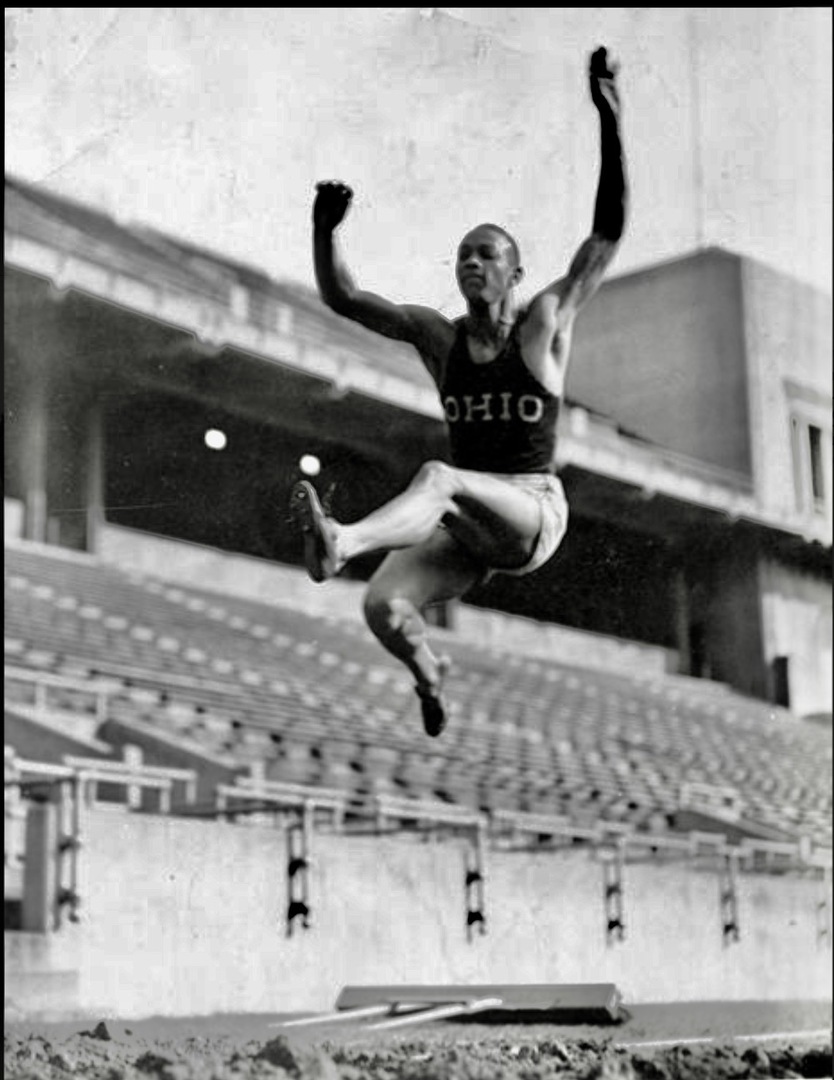
    <summary type="html"><![CDATA[<p><strong><em>In the 1936 Olympics held in Berlin, Germany, African American Jesse Owens won 4 gold medals for the United States, sending a clear message to Adolf Hitler about his Nazi regime and theories of white supremacy. Owens' early years in Cleveland contributed in no small way to his ability to cope with racism at home and abroad while at the same time performing at the highest levels in athletic competitions.</em></strong></p><img src="https://clevelandhistorical.org/files/fullsize/b06f252d1c7c1b369927bf03397a7f4e.jpg" alt="Setting an American Record in the Long Jump in 1935" /><br/><p>James Cleveland "Jesse" Owens, widely considered to be one of the greatest American athletes of the 20th century, was born in 1913 in Oakville, Alabama. His parents, Henry and Emma Owens, were sharecroppers who, like thousands of other African Americans living in the South in the post World War I era, decided to leave and migrate to one of the industrial cities of the North. By 1922, Henry and Emma and their eight children had moved to Cleveland and were renting a house on Hamilton Avenue near East 21st Street. The area was home to a small enclave of African Americans who lived within a larger ethnic neighborhood composed predominantly of immigrants from Poland, Lithuania, Russia, and Serbia. </p><p>Jesse, as he would later come to be called, was the family's youngest son. According to an interview he later gave in 1961, he made friends with the Polish boys in the neighborhood who were his age, saying that the color of his skin did not seem to matter to them. Like his father and older brothers who worked in the nearby steel mills, Jesse also worked in his new neighborhood, finding employment as a shoe shine boy at a nearby shoe repair shop on St. Clair Avenue.</p><p>In 1926, when he was 13 years old, his family moved to a house on East 90th Street, just south of Cedar Avenue. The move may have been prompted by his mother's discomfort in the Hamilton Avenue neighborhood. Years later, Owens remembered her keeping the window blinds closed all day and rarely venturing from the house unless accompanied by a member of her family. The family's new house was located in a part of the Cedar-Central neighborhood, east of East 55th Street, where many middle class and professional black families were settling in the 1920s. </p><p>The Owens family's relocation to East 90th Street would make all the difference to Jesse's future. He was enrolled in the sixth grade at nearby Bolton Elementary School and it was there that he acquired the name "Jesse" when his teacher asked him what his name was and he responded, with a Southern drawl, "J.C. . . Owens." Even more importantly, it was at Bolton where Owens was introduced to Charles Riley, a playground supervisor there. Riley was also the track coach at Fairmount Junior High on East 107th Street, the school where Owens would be attending the following year. Riley devoted himself to working with underprivileged youths and soon took Owens under his wing, training him every day before school started, often also bringing breakfast to the underweight boy. When Jesse started seventh grade at Fairmount the following year, Riley, seeing his potential, convinced him to try out for the track team.</p><p>It didn't take long before Cleveland began to take notice of track star Jesse Owens. Local papers reported in March 1928 that he took first place in the high jump at the annual Cleveland Athletic Club Indoor Meet held at Cleveland Public Hall. A year later, as an eighth grader competing at the same meet, he won three events--the high jump, the 40 yard low hurdles and the 40 yard dash--setting meet records in two of them. In March 1930, he returned to the Cleveland Athletic Club indoor meet at Public Hall for the final time as a junior high student, setting a new record in the high jump, besting the old record by more than two inches.</p><p>In the fall of 1930, Jesse Owens started high school at East Tech on East 55th Street. The joy of beginning high school may have been tempered, as it likely was for many other Cleveland students, by the deepening of the Great Depression which had struck America the year before. Just prior to its onset, Jesse's father was injured in a car accident and lost his job at the steel mill. Even after he recovered, he was not hired back. Jesse's older brothers also lost their jobs at the mill as the national economy slowed. To survive, Henry and Emma, along with the families of several of their adult children, moved in together into a two-family house at 2211 East 95th Street. Later, this extended family moved into a larger house at 2178 East 100th.</p><p>While his family struggled to just survive, Jesse thrived in high school, especially in sports. By this time, he was the only one of Henry and Emma Owens' eight children who had not dropped out of school to work and help support the family. Although he excelled in several sports in junior high, Owens was persuaded by East Tech's principal to now focus exclusively on his best sport, track and field. He also gave up the high jump--at the time arguably his best event--because East Tech already had a good jumper in future Olympic silver medalist Dave Albritton. Owens believed that he could best contribute to the success of his team at track meets by concentrating on the broad jump and several of the sprint events.</p><p>After a string of victories and record-setting performances at various track meets during his first two years at East Tech, Owens decided to try out for the 1932 Olympic team. At the tryouts held in June in Chicago, he found himself competing against older and more seasoned athletes and, despite performing well for a high schooler, he did not make that Olympic team. In his senior year, the high schooler bounced back, especially at the National Interscholastic Championships, where he won the long jump, as well as the 100 and 220 yard dashes, setting new national interscholastic records in all three events. The City of Cleveland honored Owens afterwards with a parade and a personal meeting with Mayor Ray T. Miller, who presented him with a laudatory city resolution.</p><p>As his high school years at East Tech came to a close, Jesse Owens publicly announced in August 1933 that he had decided to attend college at Ohio State University, where he planned to continue his amateur track and field career. It was a decision that angered leaders in the black community in Cleveland and elsewhere who referred to the university as "color-line Ohio State," because of its unfair treatment of black students at that time. According to Owens' principal biographer, however, Owens made his decision based solely upon which college he believed would best enable him to continue to contribute to his family's support. </p><p>Jesse Owens' support obligations had increased at the beginning of his senior year in high school when his girlfriend Ruth Solomon gave birth to their first child. From that point on, Owens added the obligation of supporting his child to what he felt was a continuing obligation to help support his parents. In the 1930s, colleges did not offer athletic scholarships in track and field. Therefore, for a track and field athlete like Owens, the only way to both attend college and meet family support obligations was to find a job that would enable him to do both. Ohio State offered him such a job, arranging for him to be hired as an elevator operator at the State House in Columbus while attending college. According to Owens, he made enough money at this job to not only pay his school tuition and personal living expenses, but to also send money home every week to both his mother and to Solomon, whom he married in Cleveland in 1935.</p><p>At Ohio State, Jesse Owens continued to win and set records in the long jump and sprint events. In May 1935, he achieved international fame and became a favorite for the 1936 Olympics to be held in Berlin, Germany, as a result of his performances at the Big Ten Championship Meet in Ann Arbor, Michigan. There, just days after being hospitalized for a back injury sustained in a fall down a flight of stairs on Ohio State's campus, he won the long jump, the 220 yard low hurdles, and the 100 yard dash, setting world records in all three events. One year later, at the Berlin Olympics, Owens won four gold medals--in the long jump, 100 and 200 meter dashes and as a member of the 400 meter relay team. He returned home to the United States to parades in New York City and in Cleveland. While some writers at the time contended that Hitler had snubbed Owens at the Olympics, historians have subsequently noted that the real snub he received was from President Franklin D. Roosevelt who, fearing to offend Southern Democrats, failed to even congratulate Owens, much less invite him to the White House.</p><p>Jesse Owens' Olympic victories signaled the beginning of the end of his days in Cleveland. After being honored with a parade in Cleveland for the second time, he looked for work in Cleveland but found very little that provided compensation commensurate with the level of success he had experienced at the Olympics. Since 1933, when not attending classes in Columbus, Owens had worked in Cleveland as a filling station attendant at <a href="https://greenbookcleveland.org/locations/wrights-service/" title="Wright’s Service @ Green Book Cleveland">Alonzo Wright's Sohio gas station</a> at East 93rd and Cedar. He now hoped that Cleveland would give him a better paying and more prestigious job, but the City instead offered him a position as a playground supervisor which paid an annual salary of only $1,600.00. He later referred to the combination of grand parades which honored him and the meager jobs which were offered him as "parades and poverty."</p><p>For several years following his Olympic experience, Owens explored businesses opportunities in Cleveland and elsewhere. One was the Jesse Owens Dry Cleaners store, which he and several business partners opened at the corner of East 100th and Cedar in 1938. Within a few years, however, the business failed, bankrupting Owens and causing a bank to foreclose on the house at 2187 East 87th Street which he had bought for his parents in 1936. According to a Call and Post news article, Owens was able to later buy a second house for them on Westchester Avenue in the Glenville neighborhood. However, just two weeks after moving into this house, Jesse's mother died. Two years later, his dad died, and, shortly after that, Jesse Owens departed Cleveland for good, accepting a management job in Detroit with the Ford Motor Company. Later, he moved to Chicago where he lived for most of the rest of his life. In 1980, Jesse Owens died at age 67. </p><p>In 1982, Cuyahoga County honored Jesse Owens by commissioning a statue of him which was placed in <a href="https://clevelandhistorical.org/items/show/518">Huntington Park</a>, just to the west of the Cuyahoga County Court House. More recently, in 2022, University Circle unveiled plans to honor Owens by constructing the Jesse Owens Olympic Oak Plaza at Wade Park. The plaza, located just north of the Rockefeller Lagoon, is (as of May 2023) partially constructed. Its centerpiece is an oak sapling which was cloned from the last of the surviving oak trees given to Owens by the German Olympic Committee in 1936 to commemorate his four Olympic gold medals. Were he alive today to witness these postmortem honors from the County and now University Circle, Inc., Jesse Owens might thank them but at the same time remind them that "parades" alone will not reduce "poverty" in underserved communities like the ones he lived in when he called Cleveland his home.</p><p><em><strong><a href="https://clevelandhistorical.org/items/show/1003">For more (including 18 images) view the original article</a></strong></em></p>]]></summary>
    <published>2023-05-24T22:13:34+00:00</published>
    <updated>2026-07-29T17:53:58+00:00</updated>
    <link rel="alternate" type="text/html" href="https://clevelandhistorical.org/items/show/1003"/>
    <id>https://clevelandhistorical.org/items/show/1003</id>
    <author>
      <name>Jim Dubelko</name>
    </author>
  </entry>
  <entry>
    <title type="html"><![CDATA[Cleveland Home for Aged Colored People: Cleveland&#039;s First Black Welfare Institution]]></title>
    <summary type="html"><![CDATA[<img src="https://clevelandhistorical.org/files/fullsize/bf8db431c57dc7760ea95d6ea3e920b6.jpg" alt="Home for Aged Colored People, 1940" /><br/><p>The Cleveland Home for Aged Colored People was a necessity for the African American community in Ohio’s largest city. The first residents of the Cleveland Home for Aged Colored People were from out of state. Jefferson Camp, who was formerly enslaved in Missouri, moved from St. Louis to Cleveland at the age of 93. Camp was one of the first residents of the home. Another one of the home’s first residents was Susan Maria Harris of Schenectady, New York, who moved there  on November 18, 1898. Then Richard Hickerman from Huntsville, Alabama, moved to the home on June 1, 1899, at the age of 75. </p><p>Eliza Bryant, Emma Ransom, and Mesdames Baker were among the women who conceived the idea of the Cleveland Home for Aged Colored People. On September 1, 1896, Eliza Bryant and the Lady Board of Managers incorporated the Cleveland Home for Aged People. The purpose of the home was to serve elderly members of the African American community. The Lady Board of Managers purchased a building at 284 Giddings (East 71st) Street and the Cleveland Home for Aged Colored People opened there on August 11, 1897. The Cleveland Home for Aged Colored People was the first African American established and maintained social welfare institution in Cleveland. </p><p>The Cleveland Home for Aged Colored People required a community effort to remain open. The home wrestled with many financial problems and did not receive any federal, state, or local government funding to help with the cost. Instead, the home depended on Cleveland’s African American community and philanthropists' support. The home held social functions to raise money. A 1902 Plain Dealer article titled “Danced for Charity Prominent Colored People Gave Concert and Ball for Home for Aged” described an event that brought out prominent African Americans to dance to the tunes of Mrs. Beulah Griffin-West and Walter Hackley. All the money made at each event went to the home. Philanthropists also helped the home. For example, John D. Rockefeller and Mrs. Laura S. Rockefeller donated money to help the home stay open. In 1915 home joined the Cleveland Welfare Federation, which alleviated some of the home’s financial problems.</p><p>The home on Giddings Street was not the most modern or comfortable house for the time. When it opened, it did not have an area for the residents to bathe regularly, nor did it have gas heating. The home could only house up to 16 residents at a time. It also ran into trouble with the Ohio building codes. The building was not able to be remodeled, so the Lady Board of Managers chose to find a new location for the home. The Lady Board of Managers bought a new home on 186 Osborne (39th) Street that cost $3,000. Following the completion of the renovations and upgrades, the new Cleveland Home for Aged Colored People reopened its doors in 1902. The need for the home continued to grow, and the home was not able to accommodate this new demand. In 1915 the home moved from its Osborne Street location to a large new, $9,000, red-brick house at 4807 Cedar Avenue. </p><p>In the 1960s the Cleveland Home for Aged Colored People would see many changes. During the 1960s the home would undergo a reorganization project. In 1960 the home's operators decided to change its name to the Eliza Bryant Home to honor one of their founders. During this era, the home would become integrated both in terms of residents and the staff. The home’s purpose was now to provide aid to all seniors no matter their race. The home received two remarkable gifts. The Dorcas Society had a property that it could not use, so the society gave the home to the Eliza Bryant Home. The new home was located on 1380 Addison Road. Then the A. M. McGregor House donated a $1.5 million gift to the Eliza Bryant Home. Chairman Paul D. White of the Eliza Bryant Home believed that these gifts would help the home continue its services to the elderly. In an article in the Call and Post, almost a year before these gifts for the home, the board of trustees was considering closing the home. If not for these donations the home would have closed.</p><p>The Cleveland Home for Aged Colored People, which would be renamed the Eliza Bryant Home, was a cornerstone of the elderly community. This home was created because a group of women saw a need to take care of the elderly members of our society. It is incredible that these women managed to establish and maintain a home in spite of their financial challenges and how the community rallied behind them to make this home run efficiently in a time when most African Americans had little. The home may not have had all the modern comforts of the time, but the staff made it work. This home gave a lot of seniors solace while living out their golden years. Until this day the home is still keeping the founders’ ideas alive and is still taking care of the elderly community.  In 1985 the home changed its name again, becoming Eliza Bryant Center. The home still takes care of the elderly, staying true to the founder’s ideal: “the mission is to provide quality services, outreach programs and a dignified, compassionate and secure environment for seniors.” </p><p><em><strong><a href="https://clevelandhistorical.org/items/show/859">For more (including 5 images) view the original article</a></strong></em></p>]]></summary>
    <published>2018-11-21T19:48:48+00:00</published>
    <updated>2026-04-17T19:17:42+00:00</updated>
    <link rel="alternate" type="text/html" href="https://clevelandhistorical.org/items/show/859"/>
    <id>https://clevelandhistorical.org/items/show/859</id>
    <author>
      <name>James M. Blockett III</name>
    </author>
  </entry>
  <entry>
    <title type="html"><![CDATA[Calvary Presbyterian Church: The Successful Integration of an Inner-city Congregation]]></title>
    <summary type="html"><![CDATA[<img src="https://clevelandhistorical.org/files/fullsize/9c4243b73966b09110c9a66acb00a934.jpg" alt="On the Corner of East 79th and Euclid Avenue" /><br/><p>On April 6, 1953, Dr. John Bruere, pastor of Calvary Presbyterian Church, mentioned that a "certain colored woman has been attending our services frequently of late." The appearance of an African American woman in the church's congregation "raised in his mind the question of segregation." Further discussion concerning the vices of racial segregation ensued during the Session meeting of Calvary's Elders. After some discussion the Elders agreed Calvary would stand opposed to racial segregation.  </p><p>Dedicated in 1890 on the corner of East 79th and Euclid Avenue, Calvary first catered to Cleveland's white elite. Women in fur coats and men dressed glamorously with top hats and overcoats, strolled down Euclid Avenue on Sunday mornings. They entered the church eager to socialize with their neighborhood acquaintances and spread their fortunate circumstances, in the name of religion, to less fortunate members of society. From the church's inception, Calvary's congregation prided itself on being a neighborhood church. </p><p>Since the church's founding, the surrounding community had made up the majority of the membership. As the elite left Euclid Avenue after the 1900s during the "flight to the Heights" phenomenon, Calvary chose to remain at its original location. When World War I created need for an alternative labor force, Cleveland factories turned to southern African Americans. In the ensuing Great Migration, southern blacks flooded into the central city, setting up residence predominantly in the Central neighborhood. By the 1950s, displacement due to urban renewal in Central caused African Americans to spread eastward into the neighborhoods surrounding Calvary. </p><p>Even before the influx of African American population, the neighborhoods surrounding Calvary had succumbed to neglect and visibly exuded a slum-like character. As African Americans moved in, they arrived in neighborhoods already tainted with poverty and despair. In the 1950s, with landlords' inattention to their properties and a lack of city housing inspections, slum-like conditions worsened. In addition, now racial tension accented the impoverished neighborhoods. </p><p>After Dr. Bruere had drawn attention to the question of racial segregation, Calvary's congregation emerged from behind the church's stone walls and filtered into the community. The congregation engaged with community members to clean up the neighborhood's houses and streets, close down bars, and rid the community of pesky vermin. In addition to polishing the surface of the neighborhoods, Calvary penetrated deep into the community to heal the wounds of racially spurred neglect. The programs aimed to instill pride, construct a new community image, and propagate the power of spirituality and morality to combat the negativity rampant in the neighborhoods. As a result of the cleanup programs, many area residents joined the church. Calvary's award-winning youth programs also attracted community residents. The Saturday Program aimed to keep the youth off the streets, providing a safe haven for children that came from broken homes. The church's free youth programs provided meals and educated the youth on practical skills. Calvary even had recreational sport teams. In the youth programs' heyday of 1966, WKYC-TV reported that, despite the Hough Riots, "nearly five thousand children" participated in Calvary's Saturday Youth Program.   </p><p>The betterment of the neighborhoods surrounding Calvary, as well as the promotion of social justice, remained the church's mission. Upholding the charter members' credo, Calvary remained a neighborhood church. During the 1950s and 1960s the nation struggled with racial segregation and discriminatory rhetoric. Calvary succeeded in achieving a racially integrated congregation through community outreach programs. By 1967, many saw Calvary as a beacon of social justice and activism in the inner city. </p><p>Calvary today continues to promote the same mission of social justice the church followed in previous decades. Through hot meal and childcare programs and cultivation of a welcoming atmosphere, Calvary still engages the community. A gradual decline of church attendance, however, forced Calvary pastors following Dr. Bruere to focus on membership retention and scouting. The racial congregational balance, once highlighted as one of the church's defining features, has since dissipated. Today Calvary Presbyterian Church, under the new name New Life at Calvary, has been described as one of "the largest predominantly African-American churches in Ohio." Regardless of the church's demographics, New Life at Calvary remains at the corner of East 79th and Euclid Avenue and continues to fight for social justice. New Life at Calvary remains a relevant fixture on Cleveland's east side. </p><p><em><strong><a href="https://clevelandhistorical.org/items/show/775">For more (including 8 images) view the original article</a></strong></em></p>]]></summary>
    <published>2016-12-06T23:07:36+00:00</published>
    <updated>2026-04-17T19:17:41+00:00</updated>
    <link rel="alternate" type="text/html" href="https://clevelandhistorical.org/items/show/775"/>
    <id>https://clevelandhistorical.org/items/show/775</id>
    <author>
      <name>Sarah Nemeth</name>
    </author>
  </entry>
  <entry>
    <title type="html"><![CDATA[The Glenville Plan: &quot;Urban Renewal is Black Removal&quot;]]></title>
    <summary type="html"><![CDATA[<img src="https://clevelandhistorical.org/files/fullsize/8d076ed2aecfb455be65fe3018aff0f6.jpg" alt="Councilman Leo Jackson" /><br/><p>"Urban renewal is black removal." So said 24th Ward Councilman Leo Jackson, a fiery African American politician who advocated for the advancement of his ward. This short but poignant quote summarized his feelings about urban renewal projects in Cleveland, which Jackson believed "created a market for slum operators" and forced African Americans out of their homes. The councilman is known for his efforts in fighting against slum operators and for his attempts to abolish the Board of Zoning Appeals, which unfortunately never came to fruition. The solution, according to Jackson, was to enforce strict zoning standards within Glenville in order to fight urban blight because assisting the community from within was less harmful to the well-being of urban residents than removing Glenville's existing structures and starting from scratch. For these reasons and the unsuccessful attempts to implement urban renewal in the Hough and Central neighborhoods, Councilman Jackson did not support urban renewal, especially "The Glenville Plan."</p><p>In the mid-twentieth century, African Americans were moving into Glenville and the Jewish population of Glenville, the former majority in the area, was moving out. This shift a common trend in the United States during the era of the Second Great Migration, when African Americans moved into northern cities such as Detroit, Chicago, and Cleveland. As the African American population in Glenville soared, the neighborhood suffered from overcrowding and deteriorating buildings due to the greed and neglect of the landlords who divided single-family homes into multi-family dwellings and failed to maintain their rental properties. The population shift also led to businesses leaving the Glenville neighborhood as they followed the Jewish population into the suburbs. On a national level, as urban areas decayed, plans for urban renewal emerged. Proposed in 1964, the Glenville Plan was created to remedy the urban blight that was creeping its way into the neighborhood as the demographics of the area were changing. </p><p>Like the federally funded University-Euclid urban renewal project to its south and west, the Glenville Plan claimed to be able to transform the crowded, disordered, and unplanned neighborhood to a planned, well-ordered place that was both pleasant and livable. Although the Plan claimed to preserve most residential neighborhoods, it would have altered the residential makeup of the area by reconfiguring residential neighborhoods. In addition, new housing would also have included tall-tower apartments, rowhouses, and walk-up apartments by razing the structures along the southeast corner of Glenville and along Lakeview Road.</p><p>Along with housing, other features of Glenville's urban renewal included the creation of a new shopping center, improving existing traffic patterns, and a new school that would also be utilized as a neighborhood center. To accommodate the retail decline, the Plan designed a shopping center along East 105th Street. The design of the center included two new buildings and ample off-street parking. The Plan also aimed to improve east-west travel by widening the streets of Greenlawn and Parkgate into three lanes and creating through streets to better connect the city. Finally, the Plan would have removed Parkwood School on East 110th Street and constructed a larger school with athletic fields and walkways for community use to promote student safety and community involvement. Most importantly, Glenville residents were encouraged, within the Plan, to begin the urban renewal process in their own homes by performing maintenance on their properties.</p><p>However, the Glenville Plan became just another urban fairytale. Not only did Leo Jackson spearhead opposition, so did the black professional class who had moved up into the large homes of the East Boulevard and Wade Park sections, which they tended to see as separate from Glenville. Fearing that Glenville might become "another Hough" if subjected to urban renewal, they spoke out. Ultimately, however, the plan faltered because after 1966, Cleveland had fallen out of favor with the federal government for its abysmal record of urban renewal failures, and then the Glenville Shootout turned the neighborhood into a war zone in the summer of 1968, dashing any lingering hopes of action.  Like the plans for the Hough and Central neighborhoods where there were good intentions on paper, the Glenville Plan never became a reality.</p><p><em><strong><a href="https://clevelandhistorical.org/items/show/638">For more (including 11 images&#32;&amp;&#32;1 audio file) view the original article</a></strong></em></p>]]></summary>
    <published>2013-12-04T21:51:26+00:00</published>
    <updated>2026-04-17T19:17:40+00:00</updated>
    <link rel="alternate" type="text/html" href="https://clevelandhistorical.org/items/show/638"/>
    <id>https://clevelandhistorical.org/items/show/638</id>
    <author>
      <name>Marilyn Miller</name>
    </author>
  </entry>
  <entry>
    <title type="html"><![CDATA[Glenville&#039;s Racial Transition: Making &quot;The Gold Coast&quot;]]></title>
    <summary type="html"><![CDATA[<img src="https://clevelandhistorical.org/files/fullsize/a304b3312e1eaf8fbeb18f8973d745f1.jpg" alt="The Jewish Migration, 1961" /><br/><p>The Jewish Community Federation collaborated with the Cleveland Board of Education to organize the Glenville Summer Tutoring Program in the summer of 1970. This program was designed to assist Glenville High School students, as the Call and Post describes, to "bone up on needed courses for the coming year." The Glenville Summer Tutoring Program is just one of many programs the Jewish Community Federation implemented to assist the Glenville community. What is the connection between the Jewish organization and the African American community of Glenville? Glenville was once a neighborhood that housed a largely Jewish population only thirty years before. Its rapid change begged the question of how the suburban Jewish community might relate to Cleveland, which one keen observer had dubbed a "City without Jews."</p><p>What was a quiet country escape east of Cleveland was annexed by the city in 1905. Migration trends in Cleveland shortly following the annexation saw Jews moving out of Woodland and settling in the Glenville area. Glenville eventually came to house the largest Jewish population within the city. However, during the Second Great Migration, African Americans moved away from the Jim Crow South and into northern urban areas such as Cleveland. Unlike non-Jewish neighborhoods, Jewish families often were more willing to sell their houses to African American families that were usually subject to racial discrimination within the real estate market, producing a "revolving door" of demographic change in Glenville. After selling their homes, the Jewish community moved out into the suburban Heights area due to the population influx and advances in their own economic situations, leaving the Glenville community with almost an entirely African American population.</p><p>African Americans comprised only 2 percent of Glenville's population of 61,614 in 1940. By 1950, the African American population increased to 40 percent of the 63,980 people living in the neighborhood. This drastic change could be easily observed by Glenville residents. Within the neighborhood, Jewish businesses were leaving, the school demographics rapidly switched from being predominantly Jewish to predominantly African American, large one-family houses were being rented out as multi-family dwellings, and synagogues were being converted into churches. The synagogue that once housed the congregation of Anshe Emeth Beth Tefilo was purchased by Cory Methodist Church after the congregation moved to what became known as Park Synagogue on Mayfield Road in Cleveland Heights.</p><p>What makes the Glenville neighborhood unique is the connection between the African American and Jewish community. Not only was there a relative lack of friction during the transitional years of the revolving door in the mid-twentieth century, the Jewish community continued to contribute to the Glenville community, not only with the Glenville Tutoring Project, but through many other initiatives sponsored or co-sponsored by the Jewish Community Federation. For many upwardly mobile African Americans, the middle decades of the twentieth century were ones in which Glenville's spacious homes with sweeping lawns and vibrant businesses along East 105th offered a sense of arrival, a sentiment embodied in the newcomers' nickname for the neighborhood: The Gold Coast.</p><p><em><strong><a href="https://clevelandhistorical.org/items/show/637">For more (including 8 images&#32;&amp;&#32;3 audio files) view the original article</a></strong></em></p>]]></summary>
    <published>2013-12-04T21:48:31+00:00</published>
    <updated>2026-04-17T19:17:40+00:00</updated>
    <link rel="alternate" type="text/html" href="https://clevelandhistorical.org/items/show/637"/>
    <id>https://clevelandhistorical.org/items/show/637</id>
    <author>
      <name>Marilyn Miller</name>
    </author>
  </entry>
  <entry>
    <title type="html"><![CDATA[African American Cultural Garden]]></title>
    <summary type="html"><![CDATA[<img src="https://clevelandhistorical.org/files/fullsize/afam-view_962fdde869.jpg" alt="African American Garden" /><br/><p>The African American Cultural Garden was dedicated in 1977 following years of effort by local community leaders such as Booker T. Tall. For many years the African American Cultural Garden's construction lay mostly dormant as the delegation developed plans and raised money for the garden along Martin Luther King Jr Drive. </p><p>Cleveland has a long history of African American settlement but mass migration from the South increased Cleveland's African American population considerably between 1890 and 1920. In 1900, about 6,000 African Americans lived in the city. By 1920, the number had grown to almost 35,000. Most of the African Americans who arrived in Cleveland came from the South; especially from Georgia and Alabama. Upon reaching Cleveland, many settled in the area along Central Ave. between the Cuyahoga River and E. 40th St. This was also the home to many Italian and Jewish residents at the time. </p><p>African Americans kept arriving in Cleveland even after the first great migration and World War I. Coupled with natural growth, the number of African Americans living in the city more than doubled between 1920 and 1930 to reach a total of 72,000. During the second great migration from the South, Cleveland's African American population grew from 85,000 in 1940 to 251,000 in 1960. By the early 1960s they made up over 30% of the city's population; a vast increase from the 1.6% of 1900. </p><p>As the suburbanization of the rest of the city's population accelerated, the African American community expanded to the east and northeast of the Central-Woodland area, particularly into Hough and Glenville. Cleveland's African American population stabilized in the 1970s and 1980s. In the 70s, fair housing programs and laws made it possible for middle-class African Americans to move to the suburbs. </p><p>When the African American Cultural Garden was dedicated in 1977 there were plans to honor six prominent African Americans: Richard Allen, founder and first bishop of the African Methodist Episcopal Church; Garrett Morgan Sr., inventor (of the safety helmet, gas mask, and a traffic light with a caution signal) and founder of the Cleveland Call & Post newspaper; Jesse Owens, who won four gold medals in the 1936 Olympic Games in Berlin and was awarded the Medal of Freedom in 1976; John P. Green, an elected official in Ohio who introduced the bill in 1890 that made Labor Day a holiday in Ohio; Jane Edna Hunter, who established the Phillis Wheatley Association to assist unmarried African American women and girls who had newly migrated to the North; and Langston Hughes, a major figure in the Harlem Renaissance who spent part of his youth in Cleveland. His poetry and prose offered evocative portrayals of African American life in America.</p><p>In his poem "Dreams," Langston Hughes writes:</p><p>Hold fast to dreams,</p><p>For if dreams die,</p><p>Life is a broken-winged bird,</p><p>That cannot fly,</p><p>Hold fast to dreams,</p><p>For when dreams go,</p><p>Life is a barren field,</p><p>Frozen with snow.</p><p>In 2003, the late Cordell Edge, a longtime Glenville resident, was appointed to engage a committee to develop the African American Cultural Garden. Mrs. Edge began a journey to cultivate and renew interest in the Garden and hired a landscape architect to develop a design within the specifications of the Cleveland Cultural Garden Federation. Later, Mayor Frank Jackson organized a task force to develop and implement a plan for the garden. In 2016 the first major element of the plan was dedicated. This element, called the Past Pavilion, depicts corridors within slave castles along the western coast of Africa. Present and Future Pavilions are planned to complete the garden as funds are raised.</p><p><em><strong><a href="https://clevelandhistorical.org/items/show/117">For more (including 4 images&#32;&amp;&#32;1 audio file) view the original article</a></strong></em></p>]]></summary>
    <published>2011-01-02T15:14:42+00:00</published>
    <updated>2026-04-17T19:17:37+00:00</updated>
    <link rel="alternate" type="text/html" href="https://clevelandhistorical.org/items/show/117"/>
    <id>https://clevelandhistorical.org/items/show/117</id>
    <author>
      <name>Mark Tebeau</name>
    </author>
  </entry>
</feed>