<?xml version="1.0" encoding="UTF-8"?>
<feed xmlns="http://www.w3.org/2005/Atom">
  <title type="text">Cleveland Historical</title>
  <updated>2026-04-17T14:56:59+00:00</updated>
  <generator uri="http://framework.zend.com" version="1.12.20">Zend_Feed_Writer</generator>
  <link rel="alternate" type="text/html" href="https://clevelandhistorical.org/"/>
  <link rel="self" type="application/atom+xml" href="https://clevelandhistorical.org/items/browse?output=rss2"/>
  <id>https://clevelandhistorical.org/</id>
  <author>
    <name>Cleveland Historical</name>
    <uri>https://clevelandhistorical.org</uri>
  </author>
  <link rel="hub" href="http://pubsubhubbub.appspot.com/"/>
  <entry>
    <title type="html"><![CDATA[Baldwin Bird Research Laboratory: Samuel Prentiss Baldwin, the &quot;Birdman&quot; of Cleveland]]></title>
    <summary type="html"><![CDATA[<img src="https://clevelandhistorical.org/files/fullsize/3add629dd12eee2880dfcd05acf9fad8.jpg" alt="The Baldwin Bird Research Laboratory" /><br/><p>Why have more people not heard of Samuel Prentiss Baldwin, the “Birdman” of Cleveland? Baldwin was born in 1868 and, as a young man, initially pursued a legal career. About midway through his life, however, he opted for a switch to ornithology. This by no means sprang out of nowhere; for much of his life, Baldwin had cultivated this interest during his spare time, inspired by the wonderful opportunities for studying birds in their natural woodland habitat on the eastern edges of Cleveland. It was around 1906, however, that he started down the path of ornithology on a professional level and truly devoted himself to this rather niche discipline. From here it was just a short step to establishing what would become his main haunt, the Baldwin Bird Research Laboratory on his Gates Mills property in 1914, taking advantage of its prime bird habitat.</p><p>In 1899, Samuel Prentiss Baldwin and his wife Lillian Hanna Baldwin, newlyweds, acquired a 450-acre forested farm called Hillcrest in the village of Gates Mills. It was at Hillcrest, as well as in the winter resort colony of Thomasville, Georgia, that the lawyer-turned-ornithologist began conducting his pioneering studies on wild birds. His achievements through his lab were considerable. Baldwin pioneered new methods for the study of bird migratory habits and physiology that became noted by the greater international ornithological community. Foremost among these achievements was his innovation of tracking bird migration through marked bird-banding. </p><p>Baldwin trapped and tagged birds before their migration, usually in their juvenile phase for the sake of their own well-being and for most efficient study, and tracking departures and re-arrivals and their timing so as to be able to understand breeding patterns. This enabled a new discovery: that the birds primarily studied, House Wrens, did not mate for life as previously hypothesized. Baldwin’s discovery was recognized by the Biological Survey of 1920. In addition to his pioneering research on bird migration and breeding patterns, Baldwin also made discoveries related to the regulation of their body temperature and further solidified that birds were, beyond a doubt, warm-blooded, just as their dinosaur ancestors were believed to have been. He used special lab tools to measure these temperatures not only from early adolescence in the bird life cycle, but from the embryo itself. To top that off, he published a book on that same topic, titled "Physiology of the Temperature of Birds."  </p><p>By the 1920s, his Baldwin Bird Research Laboratory on the Gates Mills property was a focal point in the rapidly developing field of ornithology. The vast majority of articles about Baldwin and his work are found in publications from the late 1920s through the 1930s, when he made his most substantial impacts in the field. His bird-banding innovation was sufficiently well-known for him to earn an honorary degree in Sciences from Dartmouth College in New Hampshire. He also was one of five American delegates to the Canadian National Museum exhibition in 1926. Finally, he was instrumental in collaborative work with Western Reserve University in the study of and experimentation on bird embryos. In his time, Baldwin was a figure of no small importance in the world of ornithology – and even science in general – and deserves more modern-day recognition. </p><p>Following Baldwin’s death in 1938, his wife Lilian deeded the S. Prentiss Baldwin Bird Sanctuary in his memory to the village of Gates Mills. Later, in the 1960s, an ordinance designated all of Gates Mills a bird sanctuary, and although a Cardinal appears on the village's "Bird Sanctuary" signs that mark the village limits, Samuel Prentiss Baldwin might wish it were a Wren.</p><p><em><strong><a href="https://clevelandhistorical.org/items/show/930">For more (including 10 images) view the original article</a></strong></em></p>]]></summary>
    <published>2020-12-13T22:42:32+00:00</published>
    <updated>2026-03-04T21:32:04+00:00</updated>
    <link rel="alternate" type="text/html" href="https://clevelandhistorical.org/items/show/930"/>
    <id>https://clevelandhistorical.org/items/show/930</id>
    <author>
      <name>Michael Finocharo</name>
    </author>
  </entry>
  <entry>
    <title type="html"><![CDATA[Dunkleosteus : Hunting Prehistoric Monsters in the Cleveland Metroparks]]></title>
    <summary type="html"><![CDATA[<p><strong><em>Buried in the shale cliffs of Cleveland Metroparks Rocky River Reservation, the bony armor of a prehistoric monster was uncovered by the Cleveland Museum of Natural History in 1928.  The discovery of these fossilized remains, along with the subsequent amassing of Devonian era specimens from the Cleveland Metroparks, helped set the stage for the museum to emerge as a prestigious scientific institution.</em></strong></p><img src="https://clevelandhistorical.org/files/fullsize/4b01d68612c57d64887d4453464ccc7c.jpg" alt="Excavation of Dunkleosteus terrelli, 1928" /><br/><p>Dragged silently downward by the weight of its armored head, the <em>Dunkleosteus terrelli’s</em> lifeless body disappeared into a murky cloud rising from the sea floor.  A death shroud of mud and freshly deposited sediment encased the remains.  As the body disintegrated in the stagnant oxygen-starved environment, organic chemicals were released into the surrounding ooze and triggered the formation of a casing around the decomposing matter. Sediments continued to accumulate above the remains. Pressure and chemical reactions turned the muds into shale, and the concretion to stone. The <em>Dunkleosteus</em> lay entombed for over 360 million years, when the clinks of a pick against stone rejoined the fearsome predator with the living world in the summer of 1928.  </p><p>This was no happenstance reunion; Peter Bungart and Jesse Earl Hyde of the Cleveland Museum of Natural History had been hunting sharks and armored fish in the Cleveland Metropolitan Park System for almost six years.  Walking along the river’s edge in the Rocky River Reservation, the intrepid duo observed a curved shape in the shale nearly 20 feet above them.  Bungart, a paleontologist, scaled the steep wall and wielded the tool of his trade.  A bone of the <em>Dunkleosteus</em> was found.  With permission of the Park Board, they returned ten days later to excavate the prehistoric monster. Its ancient tomb was carved from the cliff, and lowered to the bank of the Rocky River in 300 pound chunks. The solidified remains of primeval mud, ooze and petrified bone were transported to the Cleveland Museum of Natural History’s headquarters on East 9th Street and Euclid Avenue.</p><p>Bungart patiently chipped away at the stone in the basement of museum headquarters for nearly eight years. Armed with a dental drill, hammer, chisel, and blow torch, he released the <em>Dunkleosteus</em> from its encasement. With equal perseverance, the flattened remnants of the warrior fish were reshaped and the prehistoric puzzle was pieced together.  Only the bony armor comprising the predatory placoderm’s skull survived, but Bungart’s reconstruction was still the largest and most complete non-composite representation of the <em>Dunkleosteus terrelli</em> species  in the world.  Following the discovery of the armored fish by Ohio geologist Jay Terrill in 1867 along the shale banks of Cove Beach in Sheffield Lake, fossilized remains of the <em>Dunkleosteus</em> had been displayed at prestigious institutions such as the British Museum and the American Museum of Natural History in New York. Bungart’s monster, culled from the rocks of the Rocky River Reservation, became the first distinguished fossil fish specimen of the Cleveland Museum of Natural History.</p><p>   </p><p>The frightening vision of prehistoric life not only helped accredit the Cleveland Museum of Natural History as a relevant scientific institution, but presented a means for the new museum to promote its mission of public education. Imaginations in Cleveland had long run wild over the vicious fish that thrived in the region during the Devonian Period. Similar to its massive dinosaur successors, exhibition of the attention-grabbing skull discretely passed on scientific knowledge to curious museum visitors. Without a whisper, the peculiar depiction of ancient life inspired awe while evoking questions about geology and evolution.   </p><p>The petrified bones also helped validate the need for conservation and preservation of land within the Cleveland Metropolitan Park System. The taxes of Clevelanders were being funneled to the development of parks on the outskirts of the city, necessitating regular illustrations of the undertaking’s public benefits. The budget and efforts of the Park Board, however, were focused on the acquisition and development of land during these formative years.  Providing civic institutions such as the Cleveland Museum of Natural History access to parklands for field work and educational programming was paramount to inscribing value into the landscape. </p><p>Until the 1950s, the Cleveland Museum of Natural History took the lead in developing educational programming and performing scientific research in the park system. Fossil hunting expeditions continued, and the museum soon amassed a world-renowned collection of Devonian fish fossils. Both Big Creek and Rocky River Reservations proved to be incredibly fertile grounds for unearthing long-hidden vestiges of armored fish and sharks. Even as the museum’s collection expanded in size and diversity, the vicious predator <em>Dunkleosteus terrelli</em> remained the most famous of the prehistoric placoderms.  The Cleveland Museum of Natural History continues to maintain its notable collection of specimens, one of which is displayed in Kirtland Hall on museum grounds.  The cast of a <em>Dunkleosteus</em> skull, accompanied by a model representation of the armored fish in its horrifying entirety, can be viewed at the Cleveland Metroparks Rocky River Nature Center.</p><p><em><strong><a href="https://clevelandhistorical.org/items/show/728">For more (including 13 images&#32;&amp;&#32;3 audio files) view the original article</a></strong></em></p>]]></summary>
    <published>2015-08-02T01:44:05+00:00</published>
    <updated>2026-03-04T21:32:02+00:00</updated>
    <link rel="alternate" type="text/html" href="https://clevelandhistorical.org/items/show/728"/>
    <id>https://clevelandhistorical.org/items/show/728</id>
    <author>
      <name>Richard Raponi</name>
    </author>
  </entry>
  <entry>
    <title type="html"><![CDATA[Trailside Museums: Teaching Nature Painlessly ]]></title>
    <summary type="html"><![CDATA[<p><strong><em>The 1930s signaled the beginnings of a new era for the Cleveland Metropolitan Park System.  Under the guidance of the Cleveland Museum of Natural History, the Cleveland Metropolitan Park Board constructed three buildings that changed the way the public used and understood Cleveland parks.</em></strong></p><img src="https://clevelandhistorical.org/files/fullsize/57fb302e10ffb3ab649615369987333d.jpg" alt="Harold Wallin displays Fibber the barn owl" /><br/><p>Tucked away in the oak-hickory forests of the Cleveland Metroparks Brecksville Reservation, the black walnut doors, American chestnut paneling and Berea sandstone that front the Brecksville Nature Center blend harmoniously into the surrounding wooded landscape. Constructed with regional materials by laborers of the Civilian Conservation Corps and the Works Progress Administration, the historic exhibition space is a shrine to its location.  Details of the interior and exterior design relay stories of the flowers, trees and animals native to the vicinity.  A short path leading to the building extends visitors an invitation to explore, learn, and immerse themselves into the natural world.  Opened to the public in June of 1939, the Brecksville Nature Center was one of three trailside museums operated by the Cleveland Metropolitan Park Board in collaboration with the Cleveland Museum of Natural History.  The construction of these trailside museums during the 1930s signaled the beginnings of a new era for the Cleveland Metropolitan Park System.  Through the efforts and guidance of the Cleveland Museum of Natural History,  a foundation of educational and research programs emerged that both helped shape the use and provide cultural value to Cleveland's newest public spaces.</p><p>The partnership between the Metropolitan Park Board and the Cleveland Museum of Natural History that prompted the establishment of trailside museums grew from the board's efforts to display the benefits of a remote park system to Clevelanders. Through much of the 1920s, the Park Board had been busy both purchasing and pursuing eminent domain on what would amount to nearly 9,000 acres of land; while the property obtained was generally not suited for commercial, residential or agricultural uses, its speedy procurement was critical to keep prices low and prevent land speculation.  By plan, the Park Board had devoted very few resources to developing spaces for public use.  </p><p>With the skeleton of a park system in place, and the renewal of a tax levy up for a vote in 1930, the Park Board shifted the disbursement of over three-quarters of available funds to land improvements in 1928.  By making portions of park land physically accessible and developing recreational spaces, the board hoped to garner public approval and interest in the metropolitan park project.  There was a small hitch, however.  While maintaining small departments for legal needs, draftsmen, accounting, landscape design, police protection, engineering and golf course personnel, the organization had no employees devoted to offering programs or educational services to the public. Additionally, the Cleveland Metropolitan Park Board was limited in its powers to enter into contractual relationships with outside organizations.  The board relied on informal arrangements with civic institutions to provide cultural value to the public space.  In 1929, the Ohio State Legislature empowered the Park Board to enter into working contracts with non-profit corporations. Collaboration between the board and the Cleveland Museum of Natural History was cemented that year with the designation of Arthur B. Williams as the park system's first naturalist.  </p><p>Williams tirelessly worked as a "one-man department" performing extensive field research of the park grounds, creating publications for professional and general consumption, and integrating his findings into interpretive programs for the public.  Emulating a trailside museum model popularized at Bear Mountain State Park in New York, a small rustic cabin was opened under Williams' direction in the North Chagrin Reservation during the summer of 1931. Conceived as a tool to get people into the park, the North Chagrin Trailside Museum was embedded within the woods and acted as an adjunct to a nearby educational nature trail previously established by the Cleveland Museum of Natural History.  Both the museum and trail were designed to convey an educational narrative of the beech maple climax forest to park goers.  </p><p>Visitors to the museum were instructed by an assortment of hands-on exhibits pertaining to the natural history of the region - both inanimate and otherwise.  The most acclaimed attraction was an array of tame or baby animals, which included black snakes, skunks, opossums, woodchucks, turtles and owls. Whether it be Pete the raccoon, a collection of arrowheads or cross sections of trees, all exhibited objects and animals were common to the area.  Each was chosen to help inform visitors in their jaunts along the park trails. With Williams generally on hand to answer questions, or to summon crows to perch on his arm in anticipation of food, a visit to the museum was designed as an exercise in non-compulsory education.  Weekly informal talks and guided nature trail hikes were offered for those wanting more. </p><p>The exhibits, events and presentations offered by both Williams and Cleveland Museum of Natural History staff at the trailside museum proved successful in attracting an enthusiastic public.  By 1935, the informal outdoor lectures performed in a small clearing between the cabin and nature trail regularly packed in over 140 eager, inquisitive visitors. Over 34,000 persons had visited the North Chagrin Trailside Museum the prior year, and the educational nature trails continued to attract throngs of park patrons. With the immediate and apparent success of the trailside model in North Chagrin Reservation, plans had long since been concocted to build similar centers along educational nature trails in other parks. Limitations in staff and funding due to the looming economic depression thwarted these efforts.  </p><p>With the assistance of federal funding and work relief projects, additional trailside museums were erected in the Rocky River and Brecksville Reservations during the mid 1930s.  Each mirrored the characteristics of the North Chagrin museum: small rustic cabins were set into the woods adjoining educational nature trails, and were devoted to telling the story of the unique environments in which they sat.  In Rocky River, construction of the museum was supervised by the Metropolitan Park Board's Landscape Department as a Works Projects Administration project.  The cabin premiered in the fall of 1935, and was opened to the public the following summer. Under the guise of eyeballing resident toads, salamanders and pollywogs, programming and exhibits interpreted the habitat of the northern Ohio flood plain. Situated just a short walk from streetcars, the Rocky River museum soon matched the attendance of its North Chagrin counterpart. </p><p>The location of the third Trailside Museum was chosen to depict the oak hickory forests of the Brecksville Reservation.  While work on the building was started by the Civilian Conservation Corps, its completion - as well as the fine craftsmanship - can be attributed to skilled laborers employed through the Works Progress Administration.  Accompanying the opening of the Brecksville museum in 1939, the North Chagrin cabin was also enlarged and remodeled as a Works Project Administration project. A fourth Trailside Museum was opened in 1943 by the Cleveland Museum of Natural History at Gordon Park to interpret the habitat of Lake Erie. This collaboration with the City of Cleveland proved short-lived, however;  the building became inaccessible and was abandoned during the construction of the Memorial Shoreway, but was eventually revamped as the Cleveland Aquarium.</p><p>The three Trailside Museums within the park system continued to offer informal lectures, guided nature walks, and a variety of rotating and permanent exhibits.  Guarded by the forests from the sights and sounds of urban life, these small buildings acted as a hub for interaction between the public and representatives of the Cleveland Metropolitan Park District. The Park Board eventually took over the reins of managing the museums in 1954 following the creation of its own educational department.   Having consistently provided interpretive programming and hands-on educational opportunities at trailside museums for a quarter century, the Cleveland Museum of Natural History helped change the way the public perceived and used parks in Cleveland.  </p><p>Building upon the Natural History Museum's legacy, the Metropolitan Park District continued to expand educational programming within the park system. New, modernized nature centers were built to house public events and exhibitions, as well as to provide amenities to visitors. While both the North Chagrin and Rocky River Trailside Museums were eventually destroyed by fire, the museum in Brecksville Reservation was revamped as the Brecksville Nature Center.  The structure, dating back to the days of the Works Progress Administration, still stands as a reminder of the Park Board's earliest efforts to both engage with and provide educational programming to the public. </p><p><em><strong><a href="https://clevelandhistorical.org/items/show/673">For more (including 13 images&#32;&amp;&#32;6 audio files) view the original article</a></strong></em></p>]]></summary>
    <published>2014-11-11T19:31:33+00:00</published>
    <updated>2026-03-04T21:32:02+00:00</updated>
    <link rel="alternate" type="text/html" href="https://clevelandhistorical.org/items/show/673"/>
    <id>https://clevelandhistorical.org/items/show/673</id>
    <author>
      <name>Richard Raponi</name>
    </author>
  </entry>
  <entry>
    <title type="html"><![CDATA[Reinventing Cleveland&#039;s Zoo: Education and Recreation for the Whole Family]]></title>
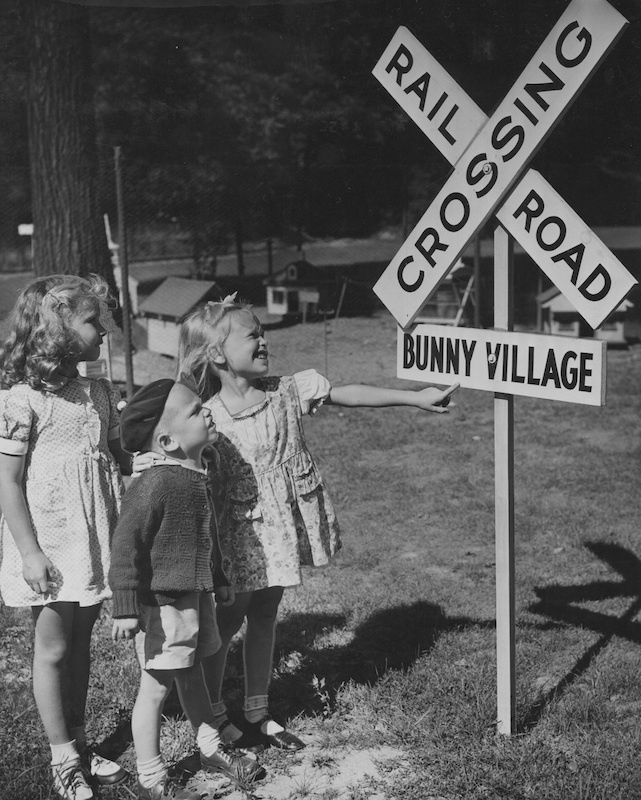
    <summary type="html"><![CDATA[<p><strong><em>Cleveland's public zoo was reinvented during the 1940s, paving the way for it to become one of the  city's most popular attractions.  What changed?</em></strong></p><img src="https://clevelandhistorical.org/files/fullsize/1b2ae627ae73c4839736b56e0aed4b9a.jpg" alt="Bunny Village, 1946" /><br/><p>Did you know that zoos and aquariums in the United States attract nearly 175 million visitors a year?  While not taking into account repeat visitors, this staggering number is over half of the entire population of the county.  With two-thirds of all adults in attendance having a child in tow, the popularity of these institutions can partly be attributed to their successful development as spaces for both education and recreation. In Cleveland, efforts toward this end were realized by the public zoo during the 1940s, and symbolized by a name change from the Brookside Zoo to the Cleveland Zoological Park. With a new name, and under new leadership, the Cleveland Zoo was physically reinvented as a site for children and families.  Both exhibits were constructed and resources developed to attract the new target audience.  By focusing on expanding its role as a space for education while simultaneously cultivating an enjoyable experience for young patrons, the Cleveland Zoological Park established itself as both a valuable and popular civic institution by the end of the 1950s.</p><p>During its first fifty years in existence, Wade Park Zoo and Brookside Zoo were far from prestigious institutions. Despite waves of public interest, the zoo received its fair share of complaints concerning stagnated development and physical deterioration. By the late 1930s, legislation had even been introduced to the City Council to abolish the zoo; this prompted the Cleveland Federation of Women's Club to advocate for the creation of a proper zoological society to manage the grounds. While this idea had been previously suggested and researched, the plans finally resonated enough with the City Council and Cleveland's public to be put into action. </p><p>The tide turned for the Cleveland Zoo in August of 1940. Cleveland's City Council voted to transfer management of the zoo from the city to the Cleveland Museum of Natural History. The non-profit, private organization was appropriated $50,000 a year, and proceeded to install a board of thirty leading citizens; the board created the position of 'Director,' and brought in Fletcher Reynolds to oversee the institution's development in 1942. While the growth of the zoo moved slowly due to its limited resources during World War II, the grounds and existing animal habitats were immediately cleaned and beautified. In October of 1944, the zoo was given a new name and fresh start as the Cleveland Zoological Park. </p><p>The new Cleveland Zoo quickly developed itself as an educational resource. The basement of the main zoo building was converted into a classroom, education and entertainment programs were created, a miniature train was added as an attraction, and a traveling zoo visited parks throughout the city to offer children a chance to both learn about and play with zoo animals. Once revenue became available for physical expansion, a Children's Zoo featuring a fairy tale theme park was added to the grounds. Coinciding with the construction of new exhibit spaces and the introduction of many exotic species to the animal collection, the mid-century zoo had emerged as a popular destination for Clevelanders. While reports of 50,000 daily visitors during the late 1940s were probably greatly exaggerated, each added attraction and shipment of new animals was accompanied by claims of record attendance in local papers.</p><p>Cleveland Zoological Park continued to expand and focus on children's attractions and educational programming throughout the 1950s. School visits and art classes became a commonplace sight at the zoo, and a teacher from the Cleveland Board of Education worked onsite beginning in 1951.   Additional petting and feeding exhibits were also developed, and Fletcher Reynolds regularly presented informational radio broadcasts. Cleveland's public zoo became a space associated with children, their education and recreation.  In turn, it attracted an audience of parents seeking to promote the betterment of their offspring. </p><p>While the public's usage of zoos remained recreational in nature, zoos materialized their role as educational institutions - a transition that guided development to present day. While numerous changes have taken place since the 1950s in how Cleveland's zoo is operated, designed and marketed, the prestige and success of the institution remains intertwined with a perceived educational value. Attracting more than one million visitors a years, Cleveland Metroparks Zoo has grown into one of the city's most popular attractions.</p><p><em><strong><a href="https://clevelandhistorical.org/items/show/617">For more (including 12 images&#32;&amp;&#32;2 audio files) view the original article</a></strong></em></p>]]></summary>
    <published>2013-06-26T10:49:47+00:00</published>
    <updated>2026-03-04T21:32:01+00:00</updated>
    <link rel="alternate" type="text/html" href="https://clevelandhistorical.org/items/show/617"/>
    <id>https://clevelandhistorical.org/items/show/617</id>
    <author>
      <name>Richard Raponi</name>
    </author>
  </entry>
  <entry>
    <title type="html"><![CDATA[Alwin C. Ernst House]]></title>
    <summary type="html"><![CDATA[<img src="https://clevelandhistorical.org/files/fullsize/827cda94541fff1c2f174ca78163419d.jpg" alt="Ernst House" /><br/><p>In ninety years, three prominent Cleveland families have called 2540 Fairmount Boulevard home. The story of this house mirrors that of Euclid Golf, an early planned suburban development that benefited from the eastward spread of Cleveland's wealthy off of Euclid Avenue in the late 19th and early 20th centuries and continued to serve as a favored address for professionals and industrialists.</p><p>The first owner of 2540 Fairmount was Alwin C. Ernst, founder of the public accounting firm Ernst & Ernst, the forerunner of Ernst & Young. Ernst is credited with pioneering the idea that accounting information could be used to make business decisions and with inventing management consulting. Born in Cleveland in 1881, he attended West High School and a business college, and then worked as a bookkeeper for the Audit Company. In 1903, he founded Ernst & Ernst with his older brother Theodore, who left the company three years later. Alwin Ernst went on to build the business to more than 50 offices in the United States and two in Canada. When Ernst died suddenly after collapsing in the Union Club on May 13, 1948, Cleveland Mayor Thomas A. Burke said, "No matter what occasion in Cleveland called for a civic group to help out, you could count on Mr. Ernst to be in the group."</p><p>The second owners of 2540 Fairmount were John and Susanna Carlin. John Carlin was a lawyer who had grown up on Millionaires' Row. His father, Anthony, had been a pioneer in the steel rivet business and was one of the last millionaires to build on Euclid Avenue. Susanna came from humble circumstances. Her mother was widowed and raised ten children on her own. They met at the Guardian Building. He was working as a lawyer at the firm Henderson, Quail, Barkley and Schneider. She was one of the building's elevator operators. Their fairytale wedding in St. John's Cathedral in downtown Cleveland was one of the most significant social events of 1941. The Carlin's moved from 3233 Euclid to their Euclid Golf home in 1950. When John Carlin died in December 1973, 2540 Fairmount was valued at $95,000 and his estate was valued in excess of $7 million.</p><p>Patrick Parker of Parker Hannifin Corporation, and his wife Madeline, were the third owners. They purchased the house in 1985 for $330,000.</p><p><em><strong><a href="https://clevelandhistorical.org/items/show/523">For more (including 7 images&#32;&amp;&#32;1 audio file) view the original article</a></strong></em></p>]]></summary>
    <published>2012-07-12T19:01:59+00:00</published>
    <updated>2026-03-04T21:32:00+00:00</updated>
    <link rel="alternate" type="text/html" href="https://clevelandhistorical.org/items/show/523"/>
    <id>https://clevelandhistorical.org/items/show/523</id>
    <author>
      <name>Deanna Bremer Fisher</name>
    </author>
  </entry>
  <entry>
    <title type="html"><![CDATA[Wade Park Zoo: Cleveland&#039;s Original Zoo]]></title>
    <summary type="html"><![CDATA[<img src="https://clevelandhistorical.org/files/fullsize/c1593541c472ebde607a8ff485d79822.jpg" alt="Sea Lions at Wade Park Zoo" /><br/><p>Jeptha Wade, whose fortune was largely derived from his establishment of the Western Union Telegraph, was a philanthropist whose generosity led to the creation of many cultural institutions in the Cleveland area.  The Cleveland Museum of Art and the Cleveland Metroparks Zoo owe a great deal to this portrait painter turned industrialist.  He was also very involved in what became Case Western Reserve University and the Hathaway Brown School. </p><p>In the late nineteenth century, Cleveland was a booming city and men like Jeptha Wade, John D. Rockefeller and the Severance family wanted to bring culture and an appreciation of the arts to the community.  The development of busy cities from rural areas changed the landscape. In the midst of the explosive urban growth, efforts were made to preserve nature and give residents an escape from the noise and bustle of the city by creating parks.  A popular feature included in some of these urban located parks were zoos.</p><p>In 1882, Jeptha Wade gave Cleveland its first zoo.  He donated over 70 acres of land from his estate and 14 deer along with their enclosure. This was the beginning of a zoo in what later became Wade Park. Along with the zoo attractions, Wade Park also housed a lagoon, tennis courts, picnic areas, and ball fields. The city added to the zoo population by purchasing 100 pigeons, two vultures and a seagull. Eventually, this early zoo became home for two black bears, elk, rabbits, two peccaries and a pair of lions. It contained the Deer Park, the Octagon Animal House, animal cages, a barn, a sea lion pool, and a carp pond.  </p><p>With time, the zoo outgrew the space in Wade Park. A decision was therefore made by the City Council in 1907 to move the zoo to Brookside Park. Following the move, the original location of the zoo was redeveloped as part of the Natural History Museum and the Cleveland Museum of Art projects.</p><p><em><strong><a href="https://clevelandhistorical.org/items/show/387">For more (including 6 images) view the original article</a></strong></em></p>]]></summary>
    <published>2012-01-09T21:33:11+00:00</published>
    <updated>2026-03-04T21:31:59+00:00</updated>
    <link rel="alternate" type="text/html" href="https://clevelandhistorical.org/items/show/387"/>
    <id>https://clevelandhistorical.org/items/show/387</id>
    <author>
      <name>Lisa Alleman</name>
    </author>
  </entry>
</feed>