Filed Under Education

Fenn Tower

"The Campus in the Clouds"

The origins of Cleveland State University date to 1870, when the Cleveland Young Men's Christian Association began offering free evening classes in French and German. After a decade of sporadic course offerings, the YMCA's evening educational program became firmly established in 1881. In 1906, the YMCA combined its newly created day school with the evening program under the name Association Institute. Fifteen years later, it was renamed the Cleveland YMCA School of Technology.

The need to achieve accreditation led the YMCA to reorganize its educational program in 1930. At that time, the school was renamed Fenn College, in honor of Sereno Peck Fenn, who had served as president of the Cleveland YMCA for 25 years and as a board director between 1868 and 1920. College lore holds that another motivation for the name change was students’ desire for a more prestigious-sounding diploma.

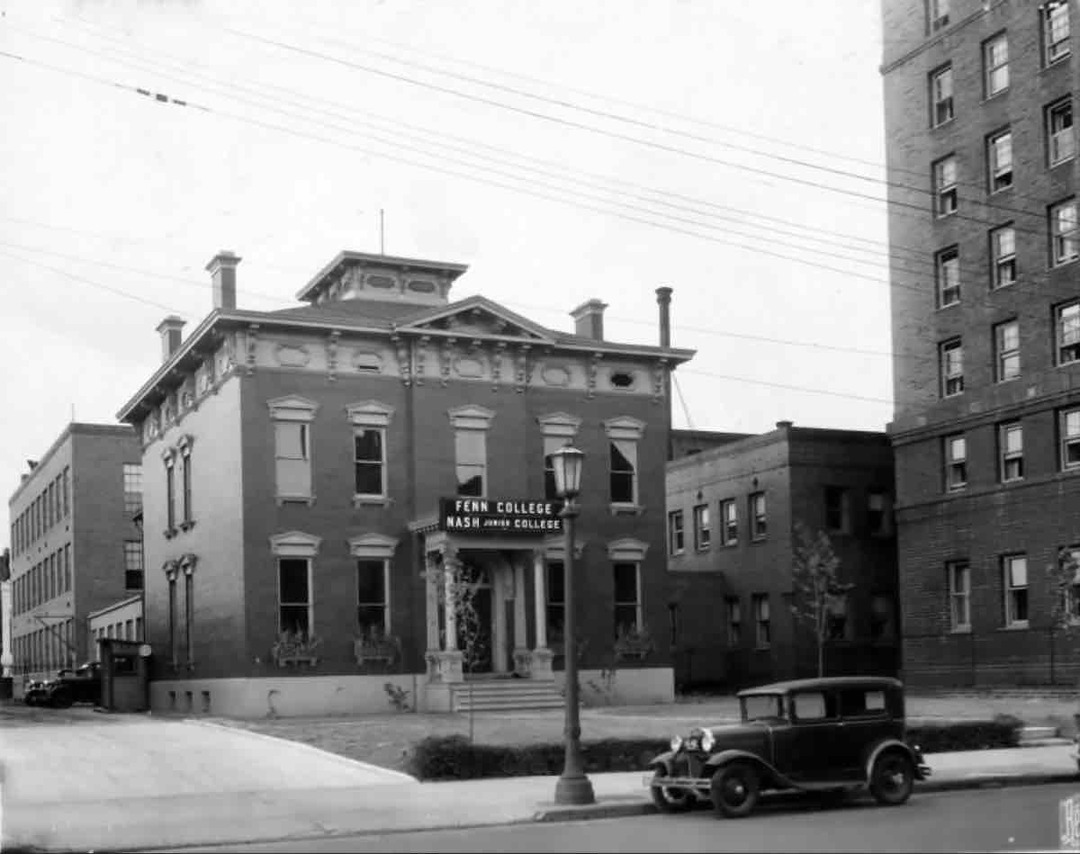
With several private colleges in Cleveland, including Case Institute of Technology and Western Reserve University, Fenn College focused on serving students for whom college otherwise would be financially unattainable. It offered a low-cost, high-quality education and became the second college in Ohio, after the University of Cincinnati, to adopt a cooperative education program. This model of alternating classroom study with paid employment was required for all day students and optional for evening students. Fenn also operated Nash Junior College, the first such program in the state, for a few years in the 1930s.

In 1937, Fenn College purchased the 22-story National Town and Country Club building at Euclid Avenue and East 24th Street. The tower had been conceived during the height of Cleveland’s Roaring Twenties prosperity. Composed of many of the city’s leading businessmen and professionals, the club broke ground only days after the 1929 stock market crash. Designed by George B. Post—the architect of the New York Stock Exchange and the Cleveland Trust Company—the building reflected the Art Deco style with strong Mayan motifs. 

Its lower floors contained resort-like amenities, including six bowling alleys, an English pub, formal dining rooms (one of them paneled with Macacauba wood from East Africa), a Turkish bath, a natatorium, a gymnasium, and handball and squash courts. Upper floors served as guest rooms for members and their guests from out of town. The tower’s crown featured a terrazzo-tiled solarium that even provided “ultraviolet ray equipment” to counter Cleveland’s dreary winters.

The club held only one event in the building before the Great Depression forced its dissolution, leaving the tower vacant until Fenn College acquired it. Renamed Fenn Tower in 1939, the former club provided much-needed classroom and office space and gave the college a prestigious Euclid Avenue address. Variously nicknamed the "Skyscraper Schoolhouse" and the "Campus in the Clouds,” the reconfigured Fenn Tower contained classrooms, a library, a gymnasium, a pool, student lounges, and other amenities—all within its vertical confines.

Throughout its history, Fenn College never operated at a deficit. By 1963, however, increasing operating costs, competition from the new Cuyahoga Community College, and rumors of a possible state takeover placed the institution under severe financial strain. That year, the college released A Plan for Unified Higher Education in Cleveland–Northeastern Ohio, calling upon the state to charter a public university in Cleveland, using Fenn College as its nucleus.

In his 1962 campaign for governor, James A. Rhodes proposed that every Ohioan should live within 30 miles of a state university. At the time, the nearest such institution to Cleveland was Kent State. On December 18, 1964, Governor Rhodes signed legislation creating Ohio's seventh state university, Cleveland State University, and announced the appointment of a board of trustees with James Nance as its first chairman.

For the next forty years, as CSU expanded westward along Euclid Avenue, Fenn Tower continued to serve a variety of functions, including classrooms, offices, and a class-registration and health center. In 2006, this once self-contained skyscraper “campus” for commuters became a residence hall, marking CSU’s first step toward developing a substantial residential student population.

Video

Fenn College, Pt. 1: Early History Cleveland State University archivist William Becker describes the early history of Fenn College. Source: CSU Center for Public History + Digital Humanities
Fenn College, Pt. 2: Campus in the Clouds CSU archivist William Becker describes the history of Fenn Tower. Source: CSU Center for Public History + Digital Humanities

Audio

Fenn Tower Was My Home CSU alumnus and Olympic wrestler Matt Ghaffari describes fond memories of Fenn Tower's ballroom, swimming pool, and sports training rooms during the late 1970s. Source: Cleveland Regional Oral History Collection
From Commuter School to Campus Community Former CSU President Michael Schwartz describes why steps were taken to increase housing options for students at CSU. Source: Cleveland Regional Oral History Collection

Images

Fenn Tower ca. 1955-60
Fenn Tower ca. 1955-60 Looking east from Lou Cohen's Used Cars towards Fenn Tower, which housed Fenn College, the predecessor of Cleveland State University, at that time. This photo is undated, but the cars suggest it was perhaps in the late 1950s. Source: Cleveland Memory, Michael Schwartz Library Special Collections at Cleveland State University
R. K. Winslow House
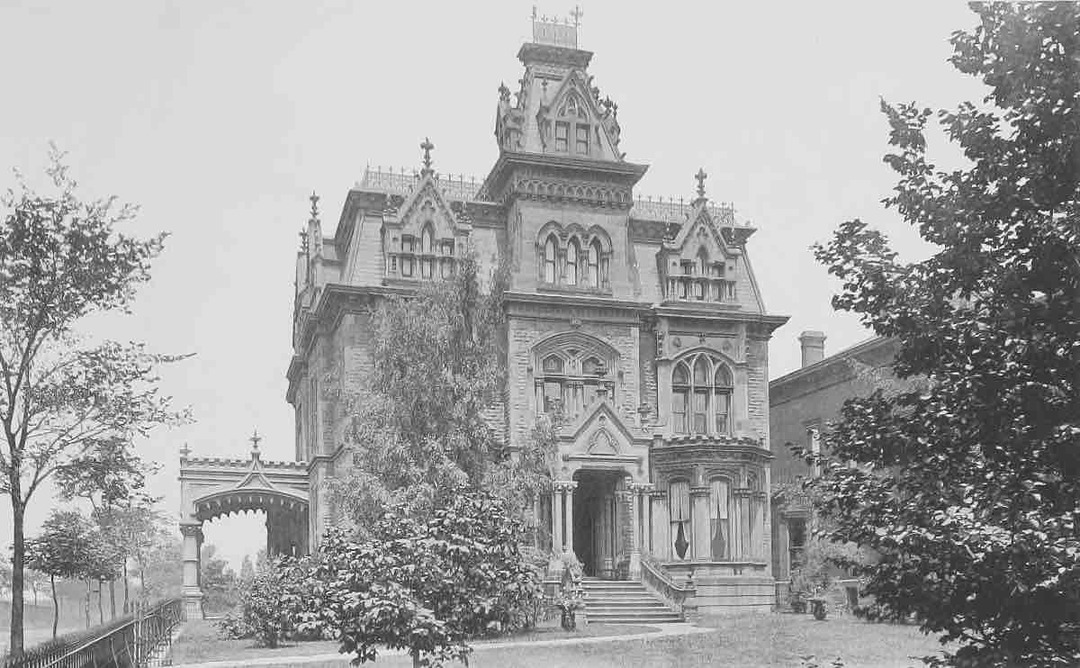
R. K. Winslow House This house was located at 2409 Euclid Avenue on the site of the future National Town and Country Club (Fenn Tower). Built in 1878 for Rufus K. Winslow, the Victorian Gothic–style mansion had 18 rooms and 5 bathrooms. It was demolished in 1927. Winslow was a shipping magnate who also served as president of the Kirtland Society of Natural Sciences. He was a leading amateur ornithologist who had a large collection of stuffed, mounted birds of the region displayed in this home. Source: Cleveland Memory, Michael Schwartz Library Special Collections at Cleveland State University Date: 1889
Old Prospect Avenue Campus
Old Prospect Avenue Campus Prior to moving into the vacant National Town & Country Club (Fenn Tower), the Fenn College campus was located in a series of buildings abutting the Central YMCA on Prospect Avenue. Note the name "Nash Junior College." Part of Fenn, it was Ohio's first junior college, defined at the time as serving students from sophomores in high school to sophomores in college. Source: Cleveland Memory, Michael Schwartz Library Special Collections at Cleveland State University Date: ca. 1932
YMCA English Class
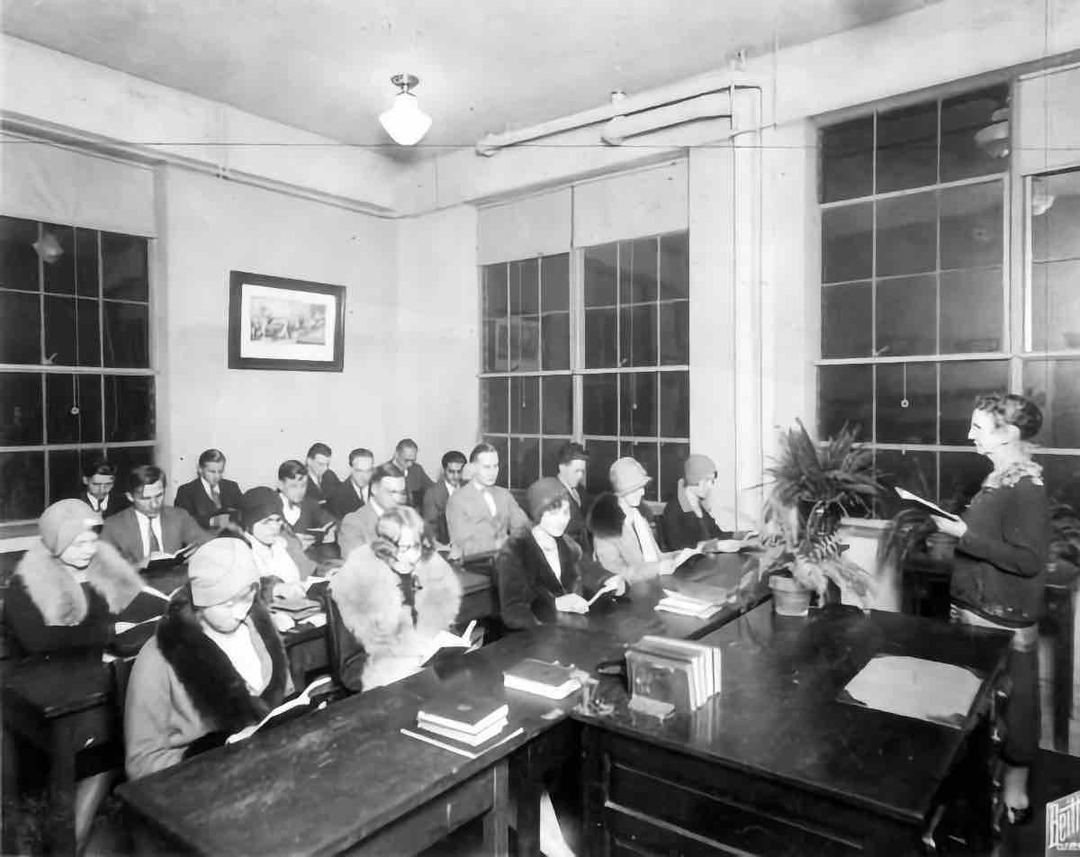
YMCA English Class Fenn College grew out of the Cleveland YMCA's educational programs. Classes like Alta Weaver's English class at the YMCA's preparatory school were held at the Central YMCA on Prospect Avenue and in three adjacent houses before the school moved to the former National Town and Country Club's abandoned tower in 1938. Source: Cleveland Memory, Michael Schwartz Library Special Collections at Cleveland State University Date: ca. 1923
Unrealized Plan for National Town and Country Club
Unrealized Plan for National Town and Country Club This plan shows a considerably different design idea for what evolved into the Art Deco-style National Town and Country Club, which used the resulting building only briefly before folding in the Great Depression. Source: Town Topics, Cleveland Public Library Date: 1927
The Tower Under Construction
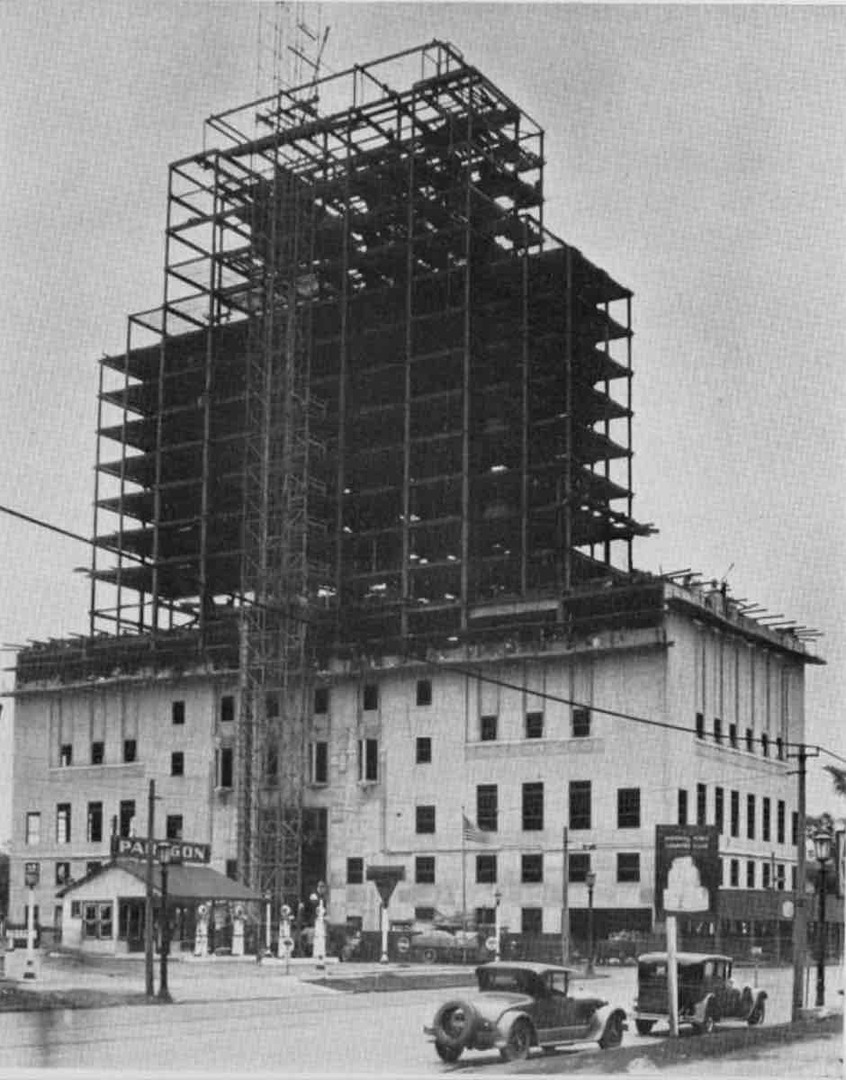
The Tower Under Construction The steel skeleton of the National Town and Country Club building rises in this construction photo. Source: Cleveland Memory, Michael Schwartz Library Special Collections at Cleveland State University Date: 1930
First and Last Formal Club Event
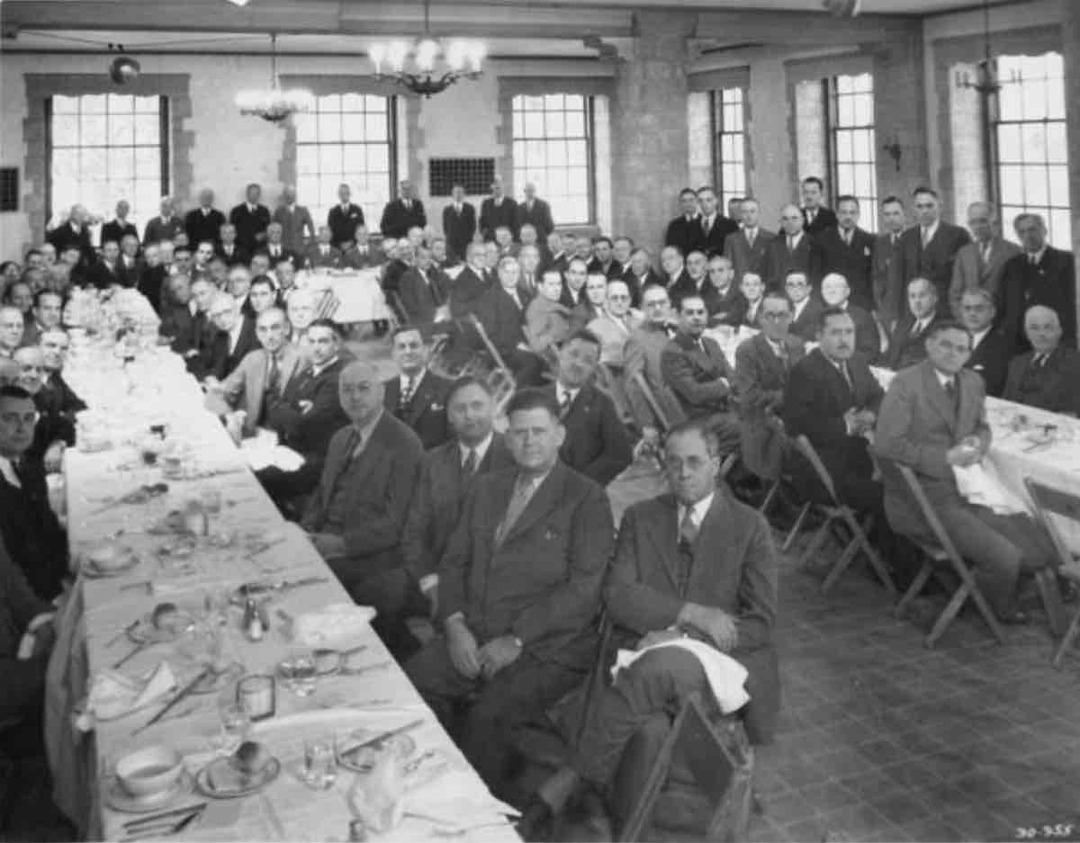
First and Last Formal Club Event In December 1930, members of the National Town and Country Club gathered for a Christmas luncheon. Intended as the inaugural event for a club whose members expected it to rank among Cleveland’s most prestigious institutions, the luncheon instead proved to be the club’s last, as financial difficulties soon forced its dissolution. Source: Cleveland Memory, Michael Schwartz Library Special Collections at Cleveland State University Date: 1930
1950 Fanfare Yearbook Cover
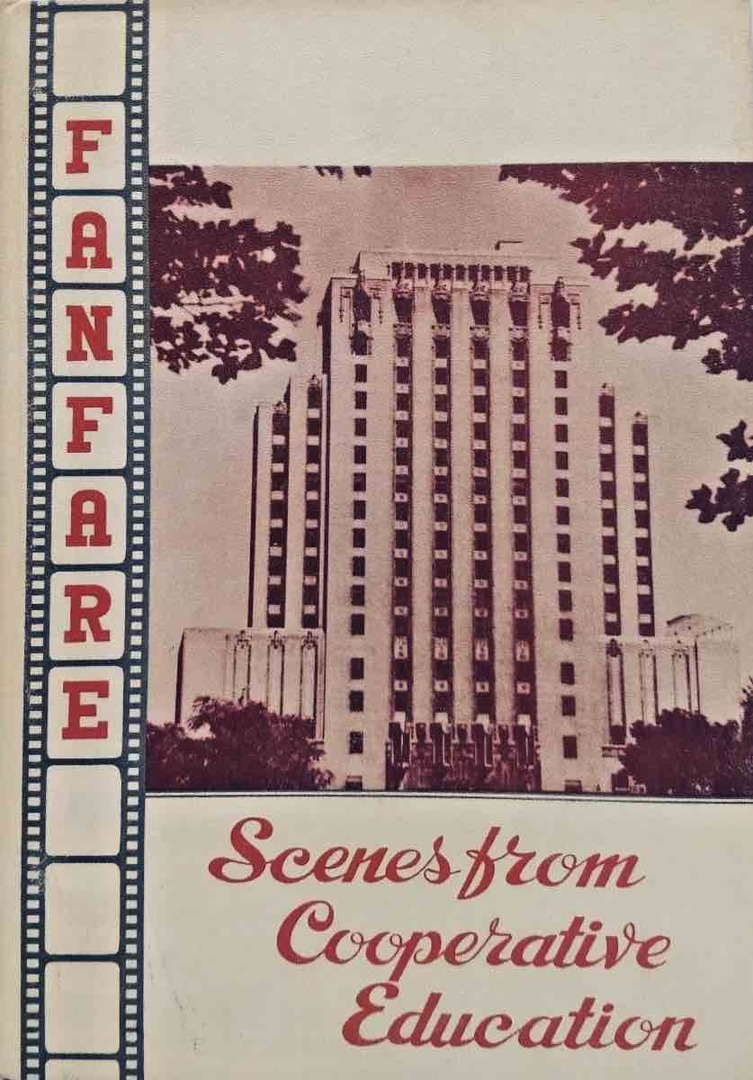
1950 Fanfare Yearbook Cover When Cleveland State University formed in 1964, it adopted a number of Fenn College traditions, including the name of its yearbook. This 1950 edition shows Fenn Tower and has a movie theme that highlights the college's cooperative education program, one of the hallmarks of Fenn College. Source: University Archives, Michael Schwartz Library at Cleveland State University Date: 1950
Fenn College Entrance, 1949
Fenn College Entrance, 1949 Students leave Fenn Tower after class. Source: Cleveland Memory, Michael Schwartz Library Special Collections at Cleveland State University Date: 1949
Art Deco Exterior Detail
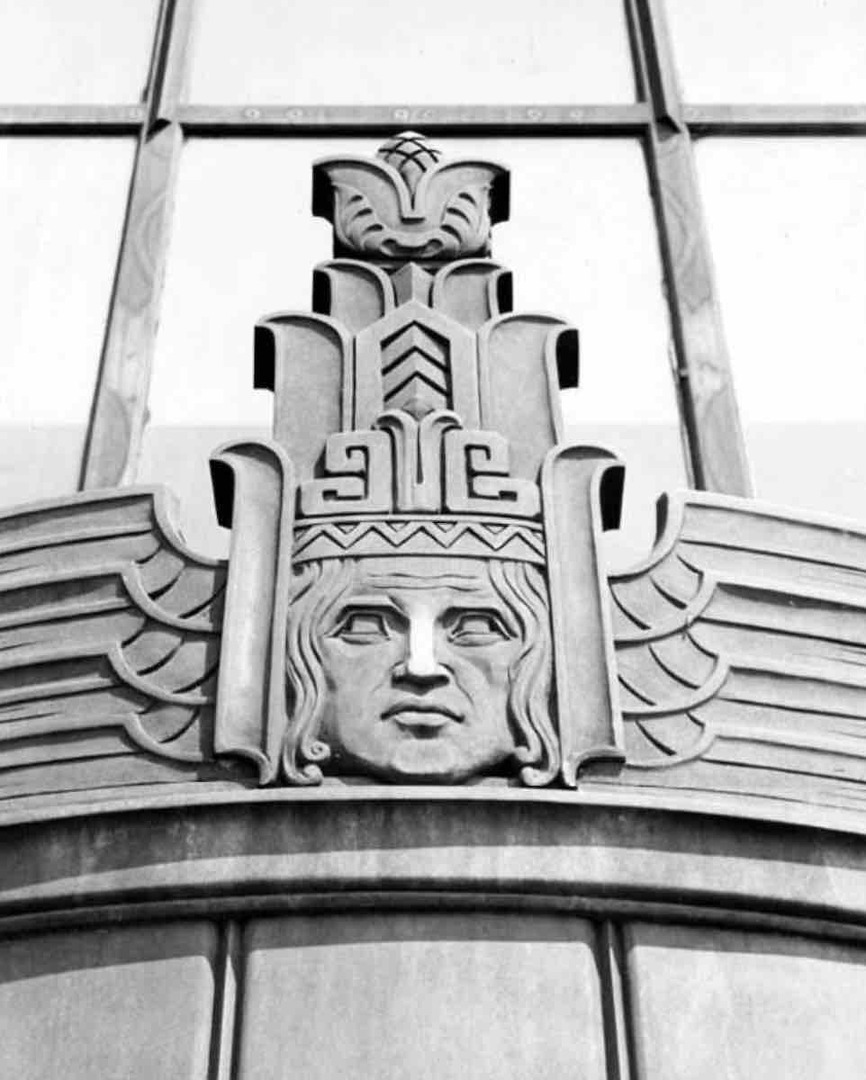
Art Deco Exterior Detail Blending Art Deco abstraction with Mayan and Egyptian Revival influences, this original stonework above Fenn Tower’s entrance blends suggests power and permanence. Its motifs—repeated throughout the building—reflect the late 1920s fascination with ancient civilizations recast for a modern age. Source: Cleveland Memory, Michael Schwartz Library Special Collections at Cleveland State University
Mayan-inspired Column
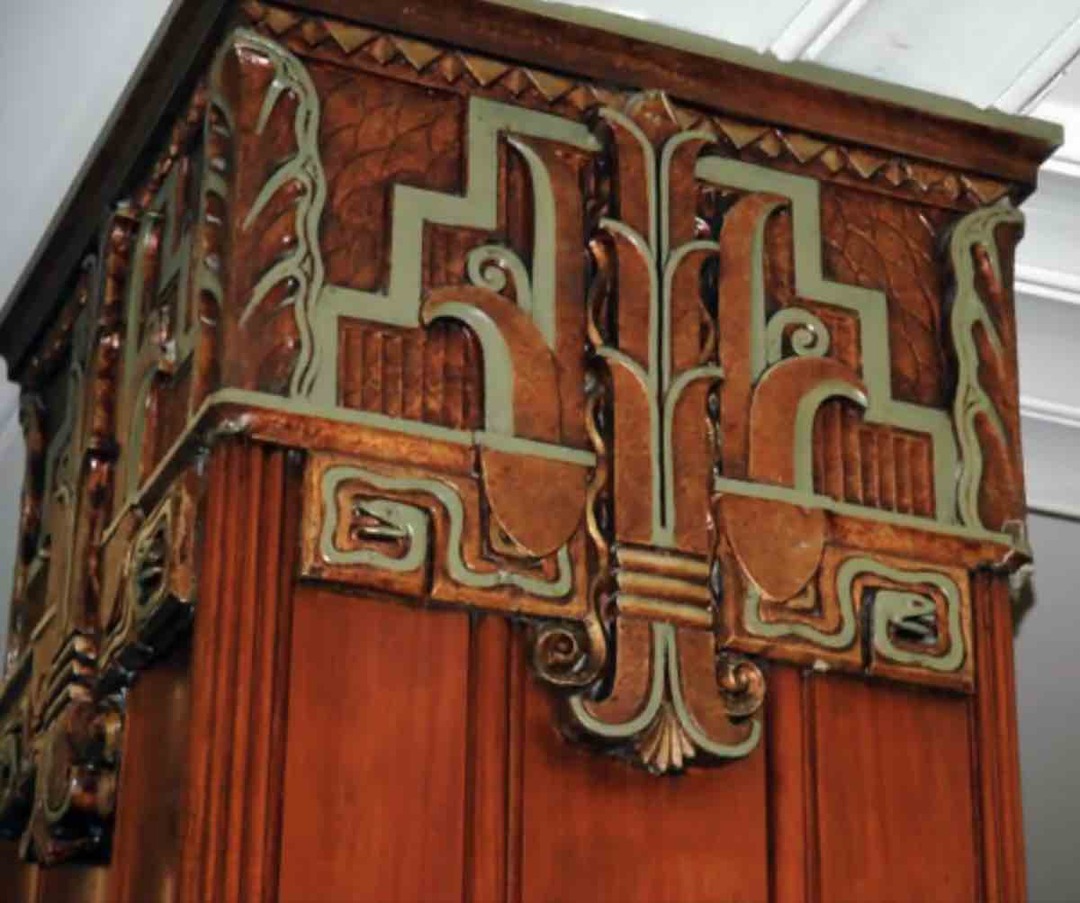
Mayan-inspired Column This column capital on the first floor of Fenn Tower combines Art Deco geometry with Mayan Revival motifs, replacing classical Greek orders with stepped, glyph-like patterns and stylized plant forms. Source: Cleveland Memory, Michael Schwartz Library Special Collections at Cleveland State University Creator: Walter Leedy Date: 2006
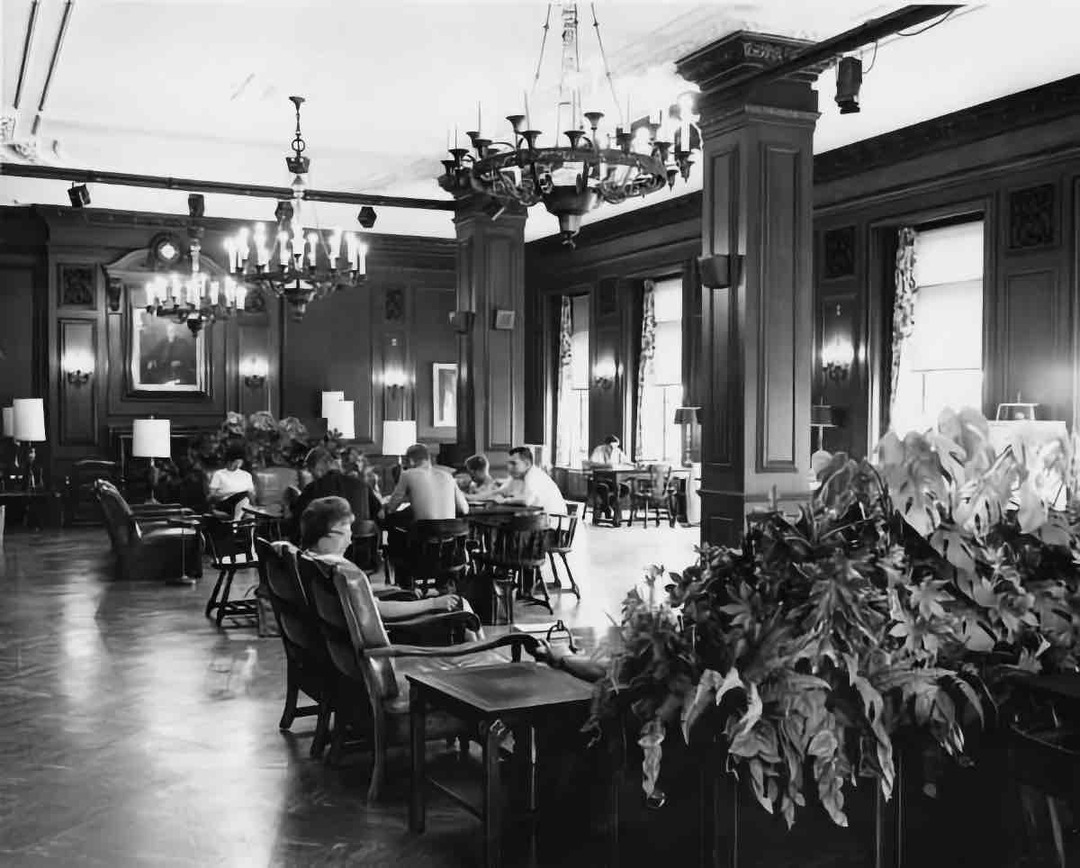
Panel Hall Lounge
Panel Hall Lounge Because Fenn Tower was designed as an exclusive country club, students were surrounded by the type of finely detailed architectural elements not often found in educational facilities and dormitories. Panel Hall on the building's third floor was a favorite place for many Fenn students to study for classes. Source: Cleveland Memory, Michael Schwartz Library Special Collections at Cleveland State University Date: June 26, 1963
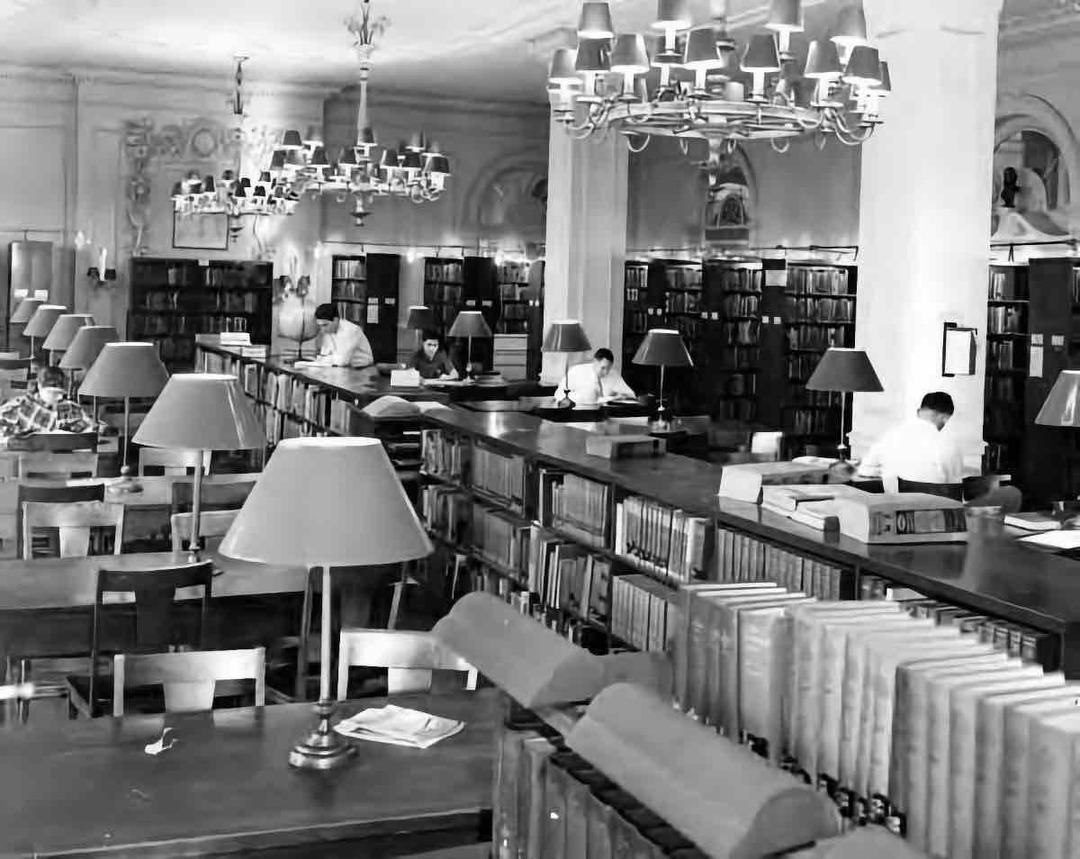
Fenn College Library
Fenn College Library The Fenn College Library was located on the west side of the third floor of Fenn Tower from 1938 to 1959. This was the second of its three locations in the building. Source: Cleveland Memory, Michael Schwartz Library Special Collections at Cleveland State University Date: ca. 1958
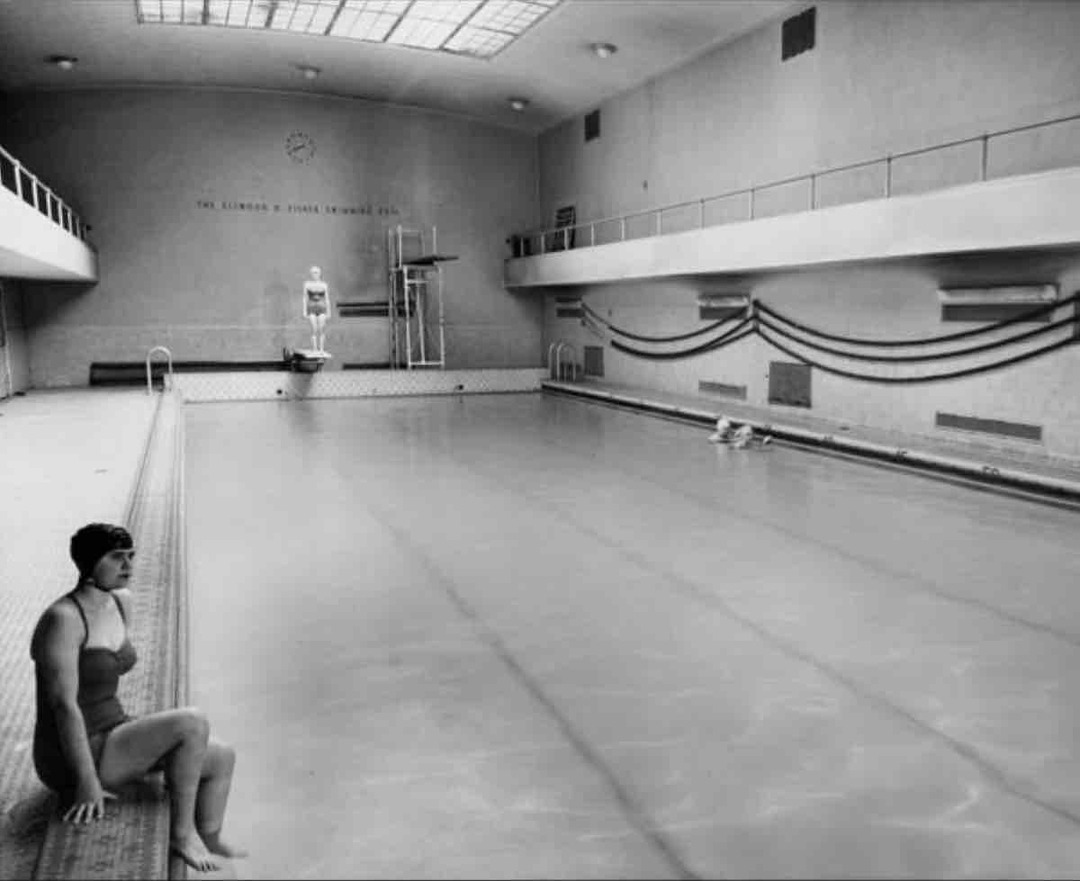
Fenn Natatorium
Fenn Natatorium This modern swimming pool was one of many amenities that students enjoyed after the move to Fenn Tower. Source: Cleveland Memory, Michael Schwartz Library Special Collections at Cleveland State University Date: ca. 1941
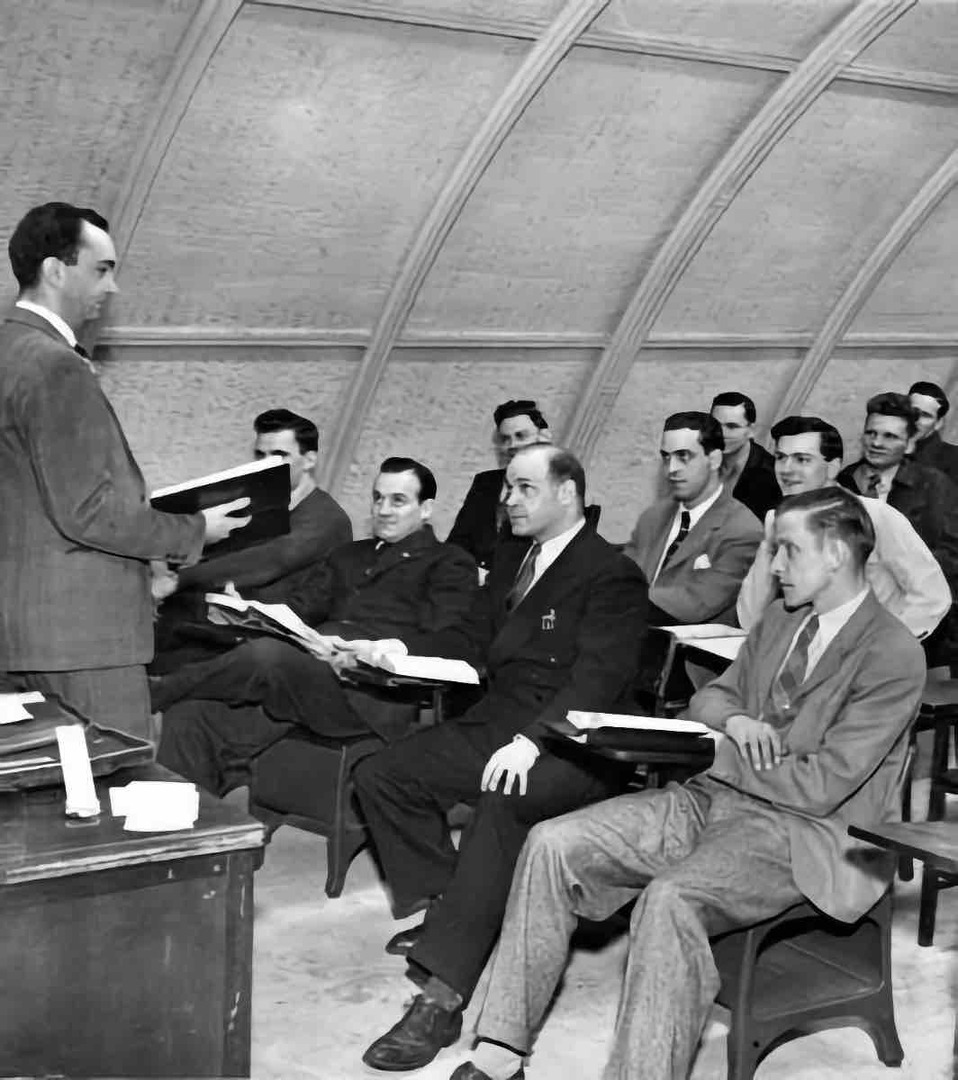
Quonset Hut Classroom
Quonset Hut Classroom To accommodate increased enrollment due to the GI Bill, Fenn College needed more classroom space than Fenn Tower could provide. The college bought a series of temporary modular buildings, called quonset huts, from the U.S. military in which classes were held. Source: Cleveland Memory, Michael Schwartz Library Special Collections at Cleveland State University Date: ca. 1949
Electrical Engineering Laboratory
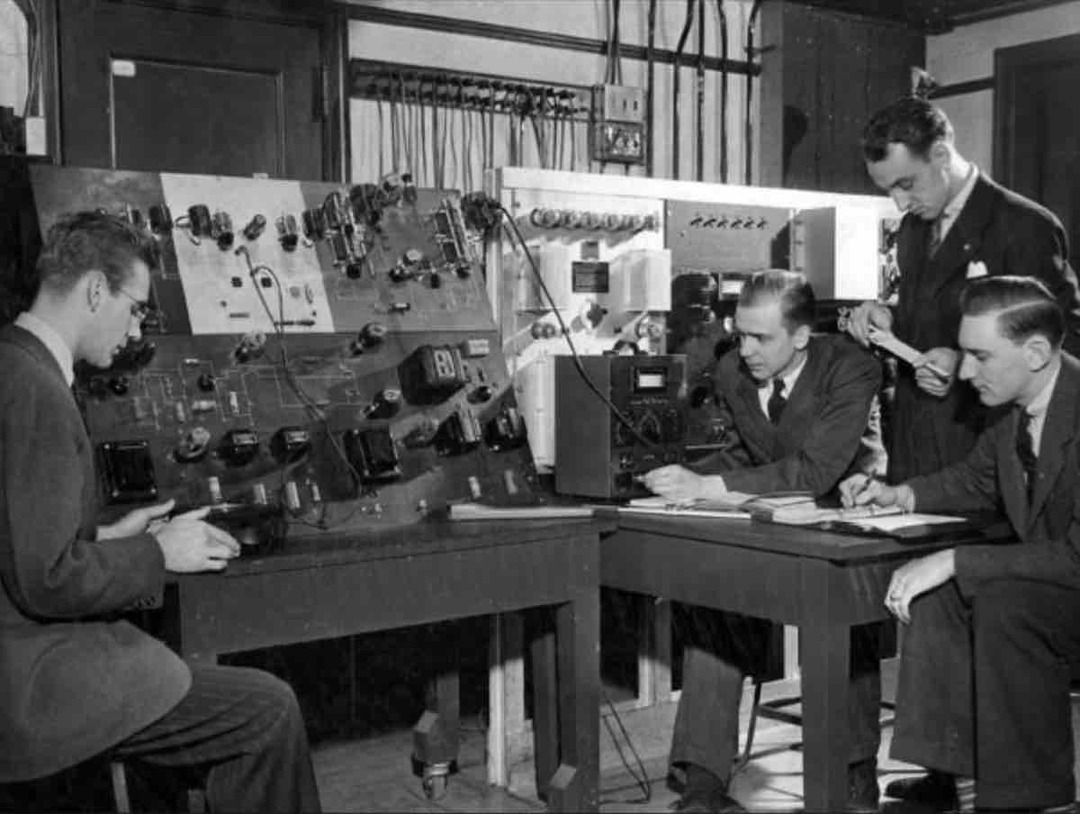
Electrical Engineering Laboratory The Fenn College electrical engineering lab was located in the basement of Fenn Tower, which had previously housed the National Town and Country Club's six bowling alleys. Source: Cleveland Memory, Michael Schwartz Library Special Collections at Cleveland State University Date: 1943
Fenn Tower Cafeteria
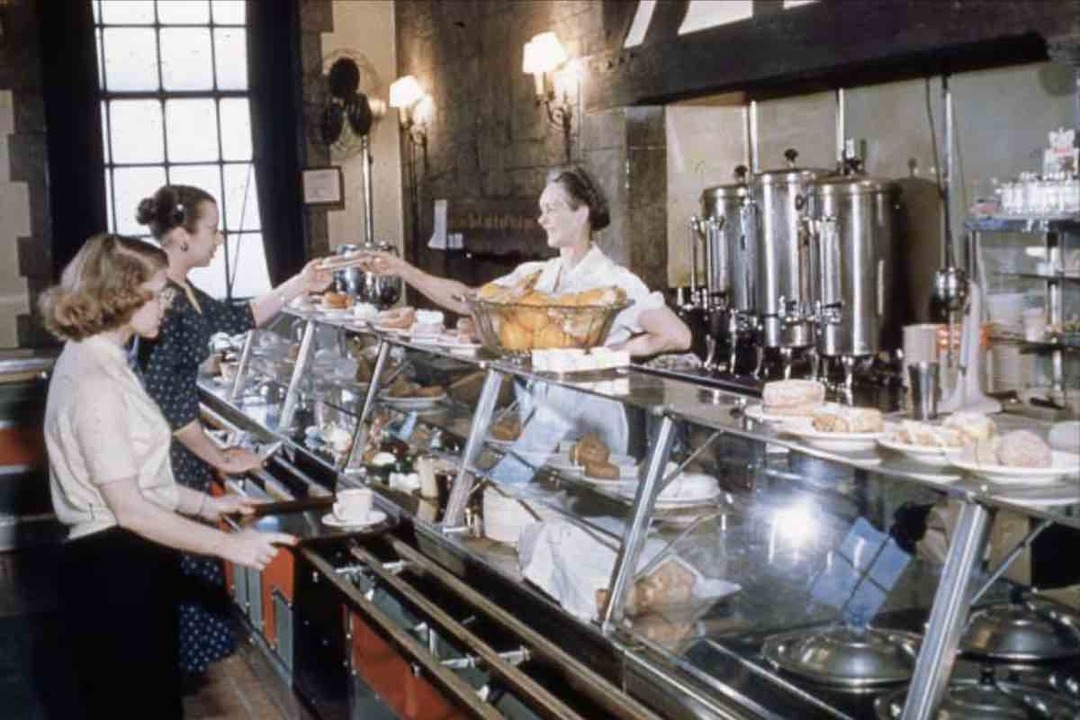
Fenn Tower Cafeteria In this undated color slide, a cafeteria worker serves students. The cafeteria was located on the building's first floor. Fenn Tower continued to house many student services after its transition from Fenn College to CSU. Source: Cleveland Memory, Michael Schwartz Library Special Collections at Cleveland State University

Location

1983 E 24th St, Cleveland, OH | Resident Card Access Only

Metadata

J. Mark Souther, “Fenn Tower: "The Campus in the Clouds",” Cleveland Historical, accessed April 17, 2026, https://clevelandhistorical.org/index.php/items/show/54.