Filed Under Architecture

Weddell House and Rockefeller Building

A President's Shrine and an Industrialist's Investment

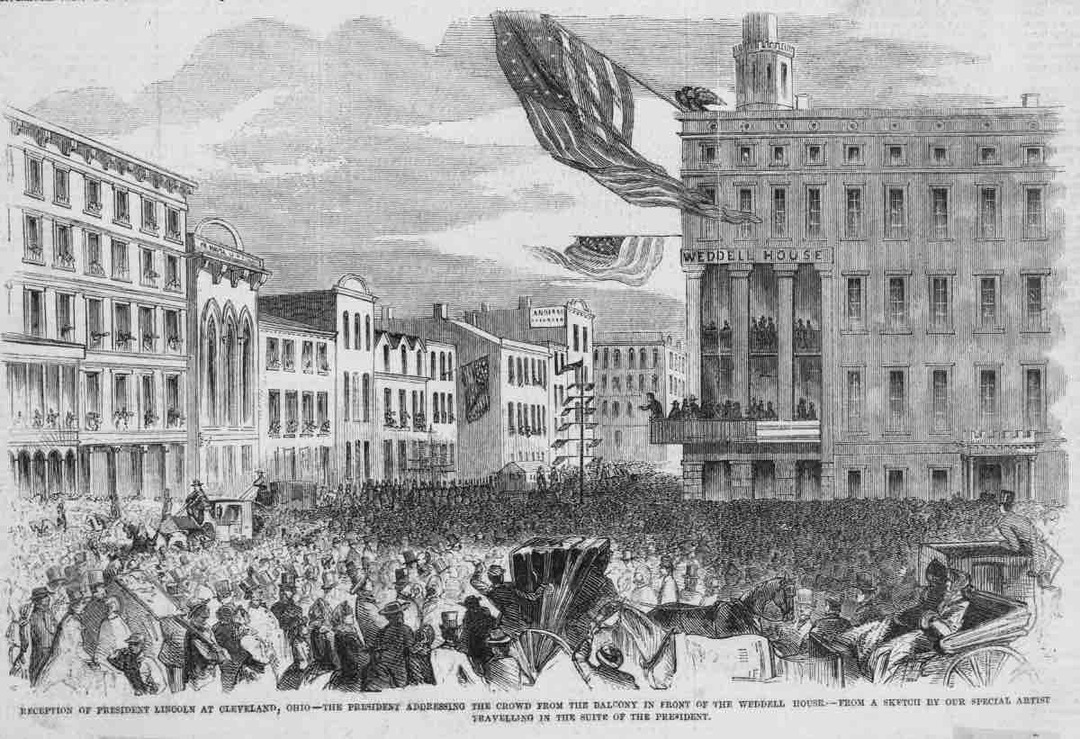
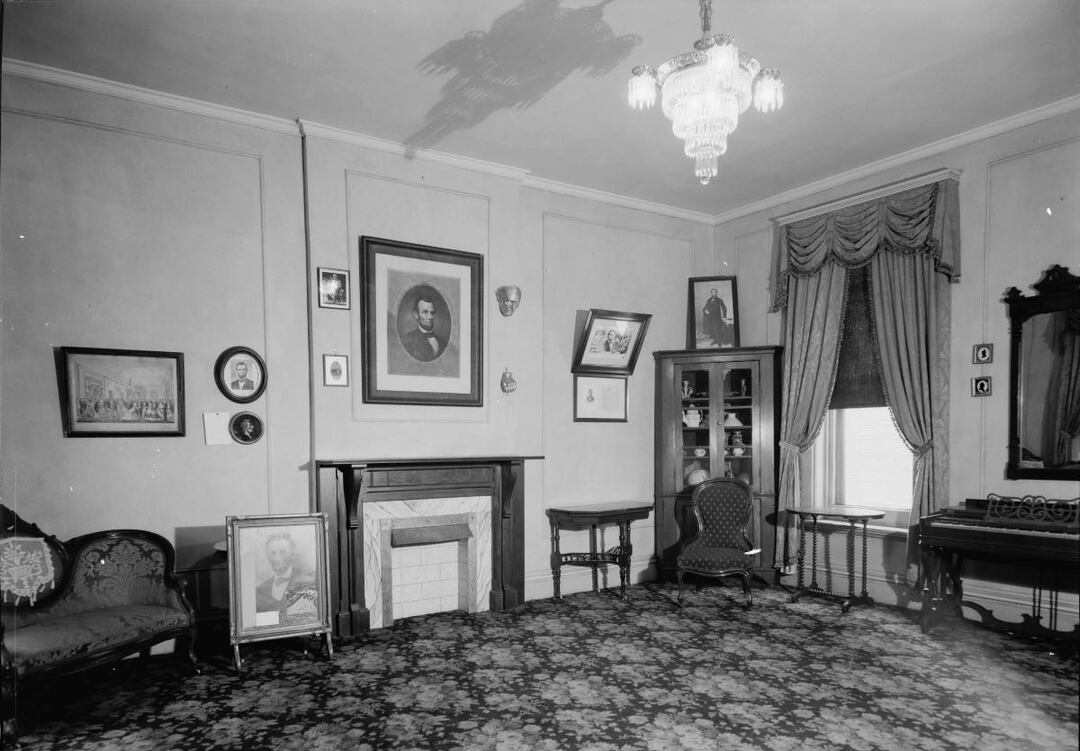
On February 15, 1861, the streets surrounding the Weddell House, as well as the windows, porches and even rooftops that looked upon the hotel, were dense with faces eager to see the newly elected president, Abraham Lincoln. Once inside his overnight lodgings on the corner of Superior Avenue and Bank (now W. 6th) Street, Lincoln walked onto the second floor balcony to greet the crowd of Clevelanders: "To all of you, then, who have done me the honor to participate in this cordial welcome, I return most sincerely, my thanks, not for myself, but for Liberty, the Constitution and Union." In 1931, the room in which Lincoln stayed during his visit was turned into a shrine to the late president. The public was welcome to visit, and fifteen presidents were among the many who visited the room. Other notable people who stepped through the Weddell House doors include the General Philip H. Sheridan, General George A. Custer, Swedish opera singer Jenny Lind, and many others.

The famous Weddell House opened in 1847. Its 200 rooms were used for offices, stores, parlors, dining, a tavern, and overnight lodgings. Important and historical events took place in the five-story, brick and sandstone structure. In August 1851, the Weddell House exhibited the first sewing machine, an invention that would soon help expedite Cleveland's industrialization. Another example of the hotel's historic significance occurred on November 13, 1869. An organization for teachers that promoted educational and professional improvements — the North Eastern Ohio Teachers Association (NEOTA) — was formed and still operates today. By 1853 the popularity of the Weddell House was so great that a four-story addition was built on Bank Street to accommodate for the high demand for rooms.

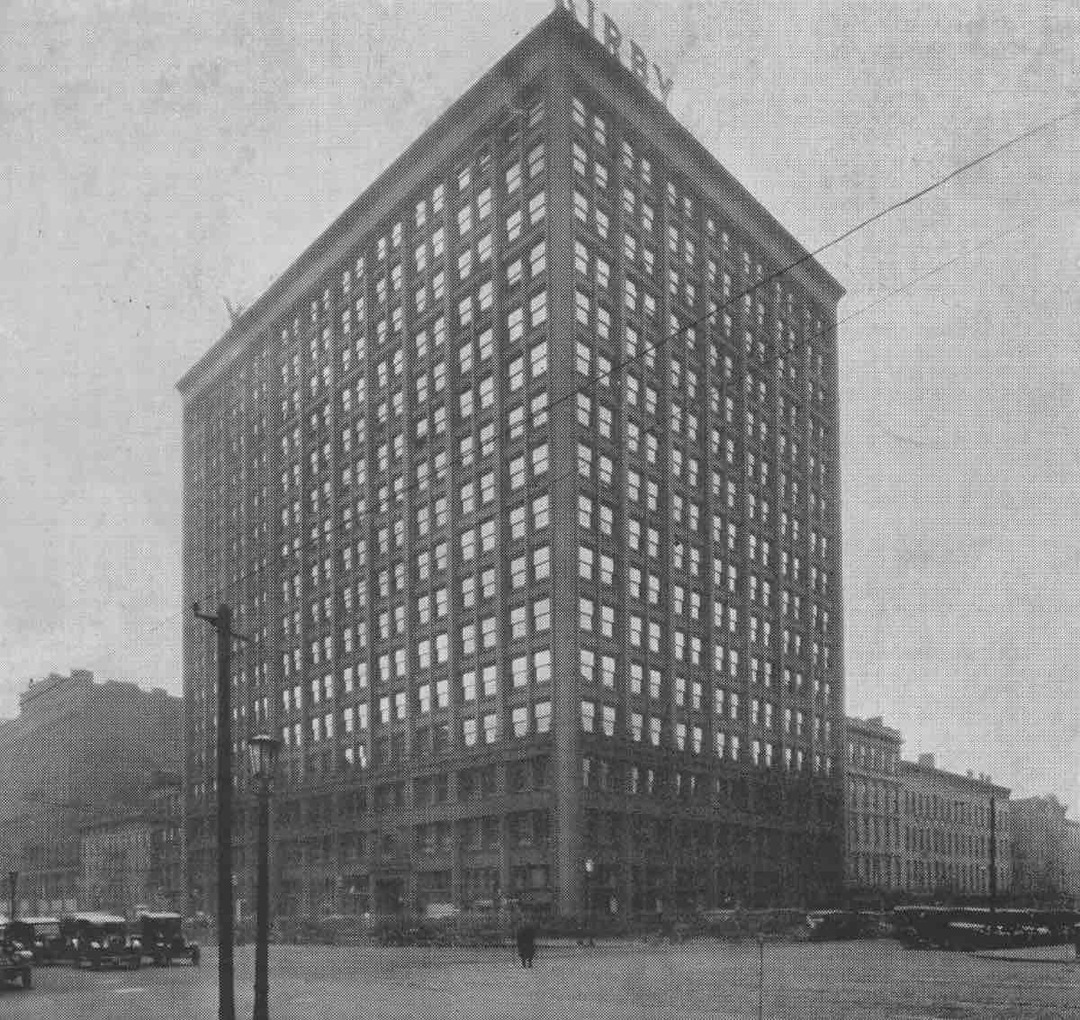
In 1903, John D. Rockefeller became owner of the Superior Avenue portion of the Weddell House. After two years of construction, the original section of the historic hotel had been replaced by the Rockefeller Building, a design by Knox & Elliott, a local firm whose partners got their start working for Daniel Burnham in Chicago. The design emulated the celebrated Chicago-style skyscrapers of Louis H. Sullivan. In 1910, four more sections were added in the same "Sullivanesque" architectural style. Offices in the new seventeen-story building were dedicated to iron, coal, and lake shipping. John D. Rockefeller Jr. bought the million-dollar Rockefeller Building from his father for one dollar. It was later passed into the hands of Josiah Kirby in 1920 who renamed the building after himself. The Kirby Building did not keep its new name for long. Rockefeller repurchased the property simply to change it back to its original name.

In recent years, the vacant Rockefeller Building has suffered from repeated vandalism and break-ins. The forlorn skyscraper is in desperate need of investors who see its historic value and adaptive reuse potential.

Images
Ironwork Detail
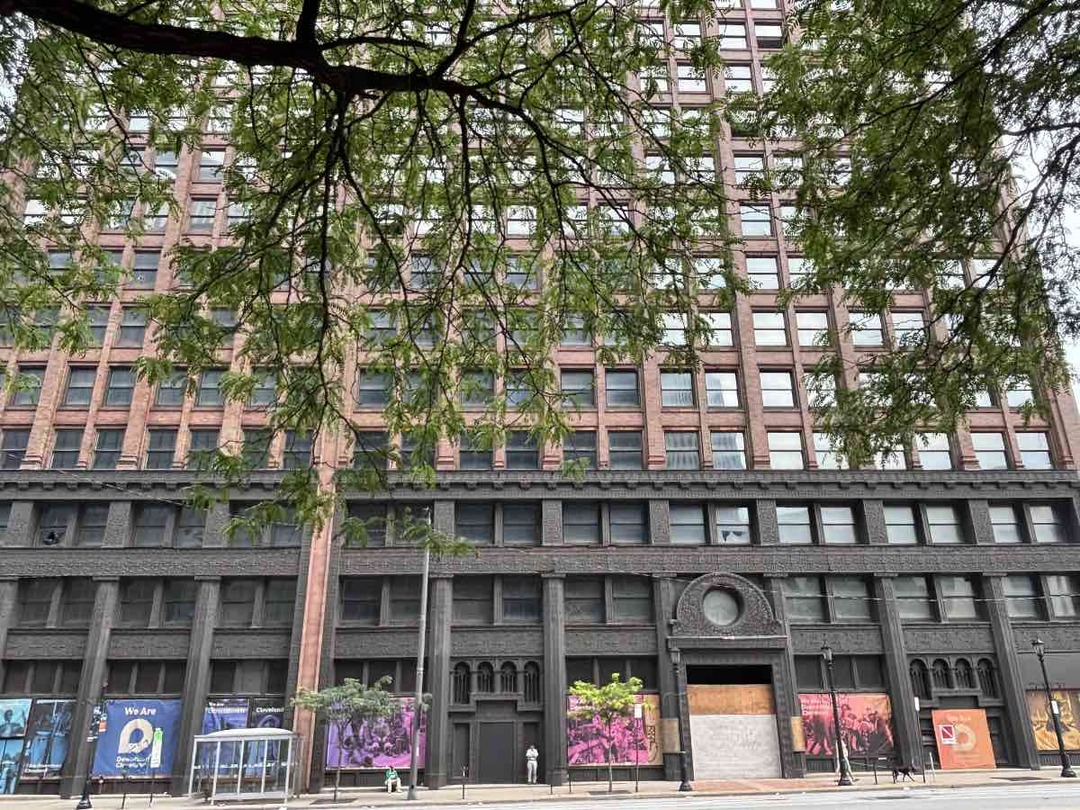
Ironwork Detail The Rockefeller Building is a classic Sullivanesque skyscraper, arguably Cleveland's best example. Creator: J. Mark Souther Date: July 16, 2025
Rockefeller Building, ca. 1906
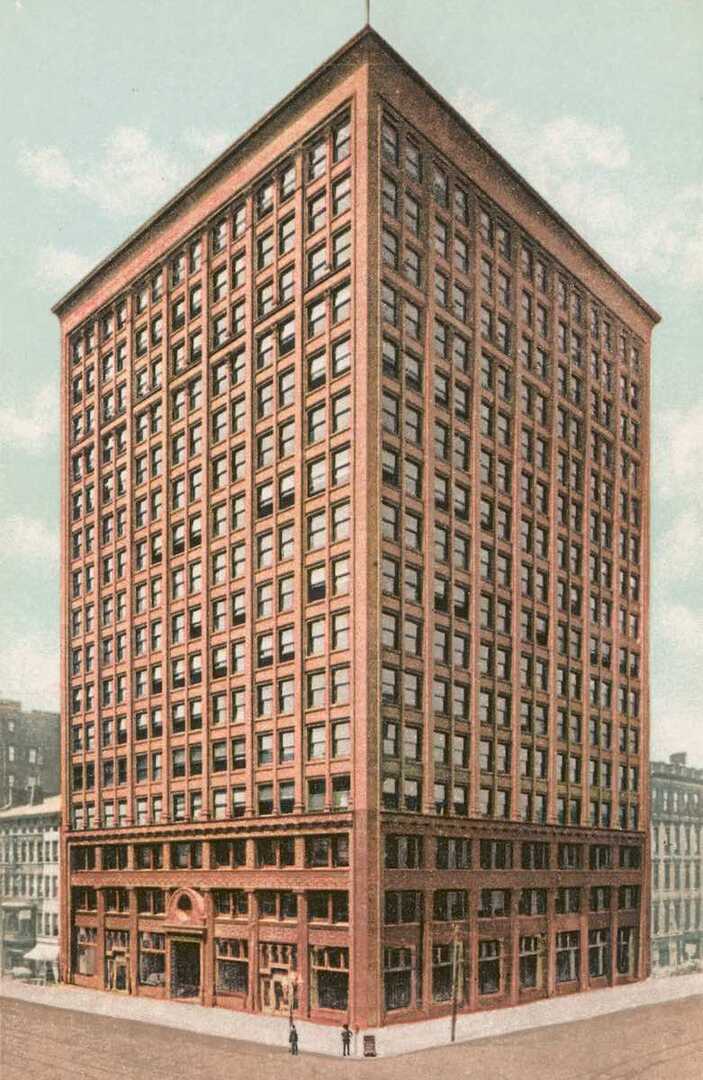
Rockefeller Building, ca. 1906 The Rockefeller Building was designed by Knox & Elliot. William Knox, a Scottish immigrant, and John Knox, a Canadian immigrant, met when they worked together in the famed Chicago architectural firm of Burnham & Root in the 1880s. They decided to start their own practice and went on to design several notable buildings, including the Standard Building and the Hippodrome, which was demolished in the early 1980s. The Rockefeller Building, often considered their best work, has been compared to the earlier Louis Sullivan-designed Guaranty Building in Buffalo, with which it shares similar massing and ornamentation. Source: New York Public Library Public Domain Archive Creator: Detroit Publishing Co. Date: 1906
View of Superior Street in 1846
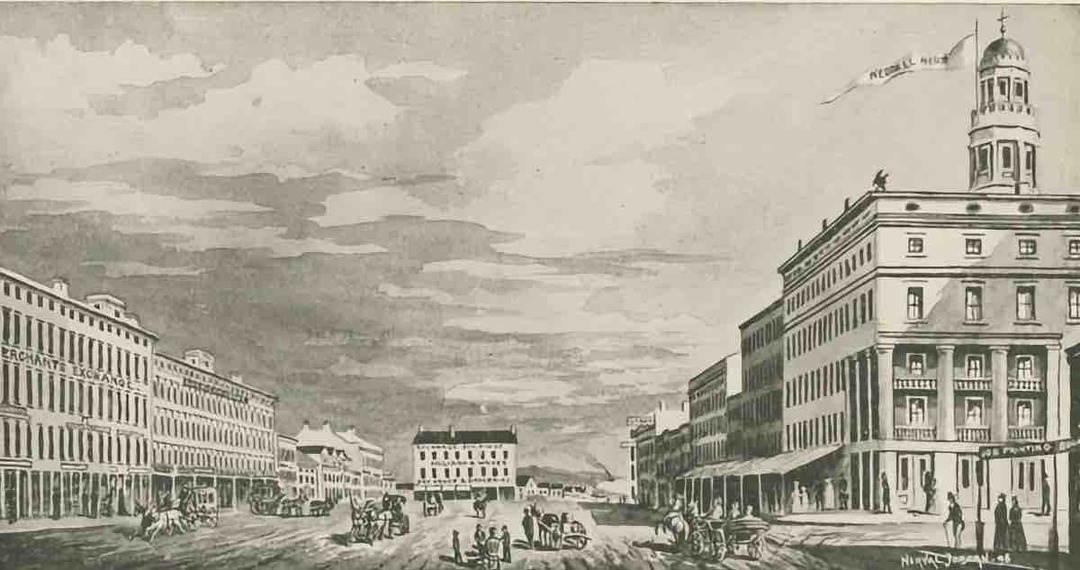
View of Superior Street in 1846 Looking southwest down Superior Street (now Avenue) in 1846, one would have seen the Merchants Exchange and the American House on the left. Across the street was the almost completed and soon to be famed Weddell House. Source: Cleveland Memory, Michael Schwartz Library Special Collections at Cleveland State University Date: 1846
Weddell House Lino-cut
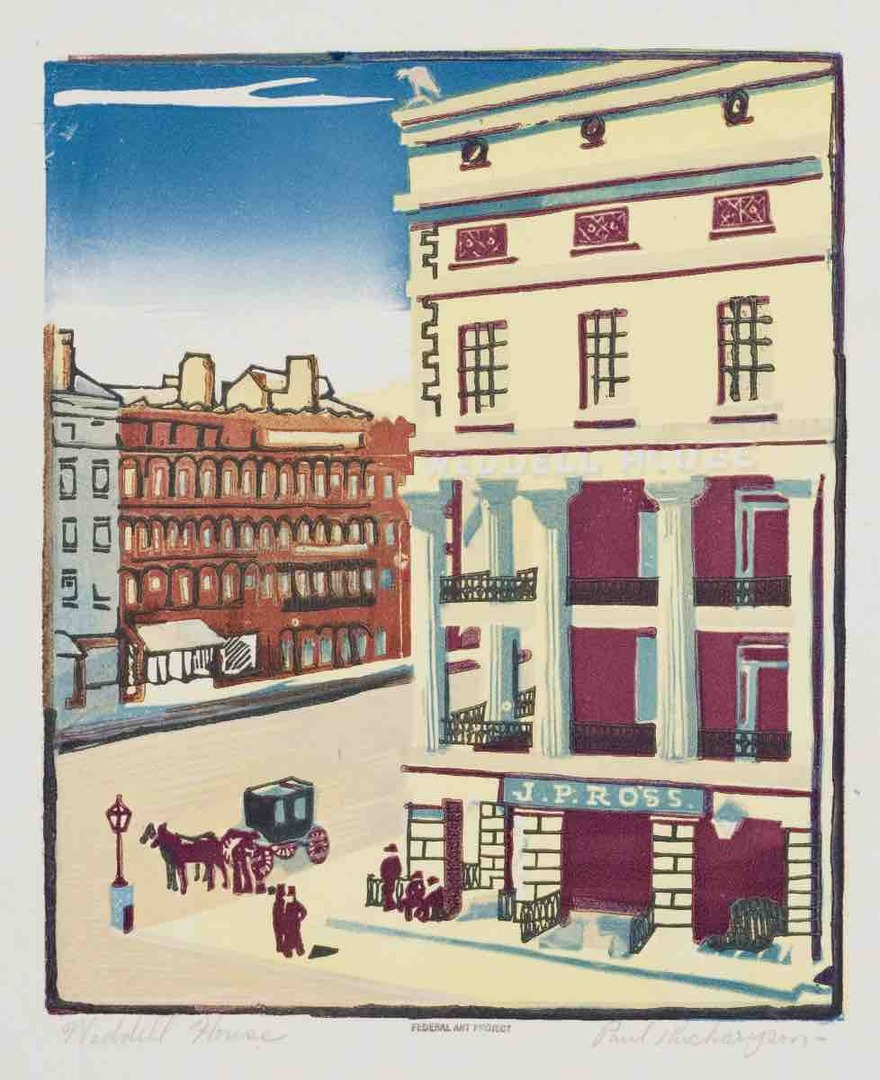
Weddell House Lino-cut This New Deal artwork imagines the Weddell House as it looked in Abraham Lincoln's day. The "J. P. Ross" sign above the entrance refers to the hotel operator who managed the Weddell House in the early 1860s. Born in Utica, New York, Paul Kucharyson (1914-1977) was an American printmaker whose art depicted everyday American scenes ranging from farms to streetscapes. He is especially known for his work in the Works Progress Administration (WPA) Federal Art Project. Source: Cleveland Public Library, Fine Arts and Special Collections Department Creator: Paul Kucharyson Date: ca. 1935-1939
Reception of President Lincoln at Cleveland, Ohio
Reception of President Lincoln at Cleveland, Ohio Lincoln arrived at Euclid Street Station at 4 o'clock in the afternoon. An open carriage pulled by four white horses then carried him through the crowded Cleveland Street. A procession including a miniature ship carrying a cannon, firemen, the Cleveland Grays, the Cleveland Light Artillery Brigade and many others followed the president's carriage to the Weddell House. Once he arrived at the hotel and was welcomed, Lincoln stood upon the second-story balcony to address the masses gathered on the street below. Source: Library of Congress Prints and Photographs Division Creator: Frank Leslie's Illustrated Date: March 2, 1861
The Weddell House Room in which Lincoln Slept
The Weddell House Room in which Lincoln Slept During Abraham Lincoln's inaugural trip to Washington, twenty rooms were set aside for the president-elect and other members of his traveling party. The room Lincoln slept in during his stay was preserved and later came to serve as a shrine to the president. Every year on his birthday, a memorial meeting was held in the room by the Lincoln Memorial Association of Ohio. Lincoln's room remained unchanged until the remainder of the Weddell House was destroyed in 1961. Source: Library of Congress Prints and Photographs Division Creator: Historic American Buildings Survey (HABS)
Brass Plaque at Corner of Superior and W. 6th
Brass Plaque at Corner of Superior and W. 6th Plaque text: "This marks the site of the Weddell House, opened June 25, 1847. Abraham Lincoln was a guest here on his way to his first inauguration, February 15, 1861. In a speech made at that time, from the balcony of this house, he said: 'A devotion to the Constitution; to the Union and to the laws; to the perpetual liberty of the people of this country. It is, fellow citizens, for the whole American people and not for one single man alone, to advance the great cause.' The Weddell House became Cleveland's most historic hotel. Among its noted guests were Horace Greeley, Salmon P. Chase, John Sherman, Jennry Lind and Louis Kossuth. In this building was founded the Board of Trade, the forerunner of the Cleveland Chamber of Commerce, July 7, 1848. Marked on the 125th anniversary of the founding of Cleveland, A.D. 1921. Hon. W. S. Fitzgerald, Mayor." Creator: J. Mark Souther Date: July 16, 2025
Lithograph of Weddell House
Lithograph of Weddell House In the 19th century, the Weddell House was Cleveland's most famous hotel. It hosted many meetings and special events. Many famous figures came to the corner of Superior Avenue and Bank Street during their visits to Cleveland. Aside from business errands, locals came to the Weddell House for both business errands and to enjoy themselves in the hotel's tavern. Signs at street level in this lithograph include (left to right): S. S. Coe & Shipherd, Jerry Coon, Atlantic & Pacific Telegraph Company, W. H. Kelley Banker, J. S. Davis Alaska Diamond Depot, Billiards, H. Cowell, Scrantom & Hotchkiss, H. & G. B. Farrington, J. M. Haight, Insurance Office, Everett Weddell & Co. Source: Lake, D. J. Atlas of Cuyahoga County Ohio. Philadelphia: Titus, Simmons and Titus, 1874, David Rumsey Map Collection Creator: A. Ruger (artist), H. J. Toudy & Co. (lithographers); CC-BY-NC-SA Date: 1874
Rockefeller Building Expansion
Rockefeller Building Expansion The Rockefeller Building still stands at 614 W. Superior Avenue. The 1910 addition turned the building into what it looks like today. Source: Cleveland Memory, Michael Schwartz Library Special Collections at Cleveland State University Date: 1910
View from Harbor from Rockefeller Building
View from Harbor from Rockefeller Building This postcard shows the view north from the roof of the Rockefeller Building soon after its completion in 1905. It looks out over the rooftops of the Warehouse District to the breakwater separating the Cleveland harbor from the open lake. Source: J. Mark Souther Postcard Collection Creator: Cleveland News Co. Date: 1912
The Short-lived "Kirby Building" Moniker
The Short-lived "Kirby Building" Moniker Josiah Kirby bought the Rockefeller Building from John D. Rockefeller Jr. in 1920 but sold it back to him three years later. During that time, Kirby erected a scaffold sign bearing his name on the southeast corner of the building's roof. Source: Cleveland Public Library, Photograph Collection Date: 1922
Rockefeller Building in Distress
Rockefeller Building in Distress Boarded up but notoriously insecure, the Rockefeller Building has been allowed to be broken into and vandalized numerous times in recent years, damaging its chances for survival. Creator: J. Mark Souther Date: July 16, 2025

Location

614 W Superior Ave, Cleveland, OH

Metadata

Heidi Fearing and J. Mark Souther, “Weddell House and Rockefeller Building: A President's Shrine and an Industrialist's Investment,” Cleveland Historical, accessed April 17, 2026, https://clevelandhistorical.org/index.php/items/show/247.