<?xml version="1.0" encoding="UTF-8"?>
<feed xmlns="http://www.w3.org/2005/Atom">
  <title type="text">Cleveland Historical</title>
  <updated>2026-05-02T04:44:50+00:00</updated>
  <generator uri="http://framework.zend.com" version="1.12.20">Zend_Feed_Writer</generator>
  <link rel="alternate" type="text/html" href="https://clevelandhistorical.org/"/>
  <link rel="self" type="application/atom+xml" href="https://clevelandhistorical.org/items/browse?output=rss2"/>
  <id>https://clevelandhistorical.org/</id>
  <author>
    <name>Cleveland Historical</name>
    <uri>https://clevelandhistorical.org</uri>
  </author>
  <link rel="hub" href="http://pubsubhubbub.appspot.com/"/>
  <entry>
    <title type="html"><![CDATA[Thomasville Quail Plantations: The Hanna and Wade Winter Retreats in South Georgia&#039;s Red Hills Region]]></title>
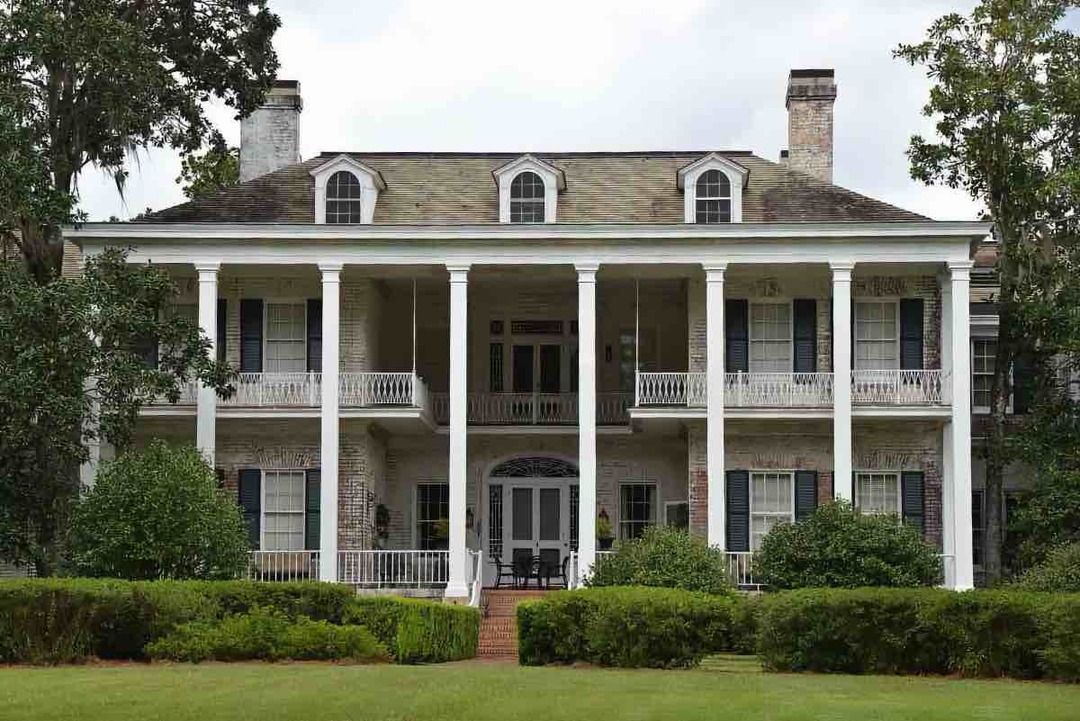
    <summary type="html"><![CDATA[<p><strong><em>The names Hanna and Wade are immediately familiar to most longtime Clevelanders. These families amassed fortunes in industries such as iron, oil, coal, steel, tobacco, shipping, telegraphs, railroads, and finance at a time when Cleveland was on the rise, and they poured tremendous sums of philanthropic money into education, healthcare, and the arts. Their names appear throughout the city—Hanna Building, Hanna Theatre, Hanna House at University Hospitals, Wade Park, Wade Oval, Wade Lagoon, Wade Chapel—and one will find their names among the prominent funds that support the collections of the Cleveland Museum of Art. However, fewer Clevelanders may know that the Hanna and Wade legacies are just as visible in the Red Hills region of southwestern Georgia near the Florida border.</em></strong></p><img src="https://clevelandhistorical.org/files/fullsize/aae43c740fda8a1d55797d2d1cebe1be.jpg" alt="Pebble Hill Plantation" /><br/><p>Starting in the 1890s, wealthy Clevelanders were among the northern elites who transitioned from staying at the fashionable winter resort hotels of Thomasville, Georgia, to tranforming former cotton fields and pine forests into private retreats and quail hunting grounds. One of the earliest Cleveland investors in the Red Hills was Howard Melville (“Mel”) Hanna, born in New Lisbon, Ohio, in 1840. After moving to Cleveland in 1852 and serving in the U.S. Navy during the Civil War, Hanna invested in an oil refinery that he sold to his friend John D. Rockefeller’s Standard Oil Company of Ohio, as well as in iron and steel, tobacco, and shipping. He also worked closely with his older brother <a href="https://clevelandhistorical.org/items/show/680">Marcus Alonzo Hanna</a> in the M. A. Hanna Company. </p><p>While his brother Mark was actively managing William McKinley’s 1896 presidential bid, Mel Hanna bought not one but two large former cotton plantations in the pine-studded Red Hills southwest of Thomasville. The Hanna brothers might never have visited Thomasville if not for their sister Salome, who with her husband J. Wyman Jones of New Jersey, had a few years earlier become the first northerner to buy a Thomas County winter estate (christened “Elsoma” in a play on her name). She encouraged her brothers to visit Thomasville. Long a favored winter resort city, Thomasville was arriving at a turning point. By the 1890s, local leaders' concerns about yellow fever led them to enact quarantines, ban train stops, and prohibit alcoholic beverages in public accommodations, even as railroads built by Henry Flagler and Henry’s Plant were opening newer resorts deep into Florida. While coastal Florida eclipsed Thomasville’s popularity with winter tourists, the Red Hills continued its appeal as a hunting paradise with hundreds of thousands of acres of woodlands known for abundant bobwhite quail, wild turkeys, doves, and ducks.</p><p>Mel Hanna’s first purchase in 1896 was a plantation previously owned by his nephew, Charles Merrill Chapin (Salome Hanna's son from her first marriage), who had bought it five years before. The estate, which had originally belonged to Paul Coalson, included an antebellum house that probably dated to the 1830s. Upon acquiring the property, Hanna renamed it Melrose Plantation. A few months later, he bought the adjacent Pebble Hill Plantation, whose main house—built in 1850 by some of the thirty-seven people enslaved by planter John W. H. Mitchell and his wife Julia—had continued to be occupied by the Mitchells’ son for 15 years after she died in 1881. </p><p>Mel and his wife Kate spent their winters at Melrose, joined by their children Kate Benedict, Howard Melville Jr., and Mary Gertrude. In 1905, Hanna expanded the main house, and after his death in 1921, his son hired the renowned Cleveland architectural firm Walker and Weeks to design Georgian Revival–style cottages, barns, and outbuildings. After Hanna Jr.’s death in 1945, his daughters, Fanny (Mrs. Julian Castle Bolton) and Kate (Mrs. Warren Bicknell Jr., named for her aunt) shared the estate. Eventually, in 1952, they divided Melrose, creating a separate estate for Kate and Warren Bicknell called Sinkola Plantation. </p><p>Meanwhile, in 1901, Mel Hanna deeded Pebble Hill to his daughter, Kate Benedict Hanna Ireland, for the symbolic sum of one dollar. She lived there with her husband, Robert Livingston Ireland (also of Cleveland), and later with her second husband Perry W. Harvey. The Harveys expanded Pebble Hill from 3,000 to 10,000 acres. In 1934, two years after her husband died, Kate Harvey’s antebellum main house burned down, leaving only the loggia standing. She then commissioned Cleveland architect Abram Garfield (son of U.S. President James A. Garfield) to build a new fireproof 28-room mansion combining Federal and Greek Revival styles. Kate Harvey lived just four months after its completion. Pebble Hill then passed to her daughter, Elizabeth “Pansy” Ireland Poe, who lived there for four decades. In 1950, she established the Pebble Hill Foundation, ensuring preservation of the estate as a historic house museum, which opened to the public in 1983.</p><p>In 1905, Hanna purchased a third Thomasville estate, Winnstead Plantation, which he gifted to his daughter Mary Gertrude and her husband, Coburn Haskell. Haskell, a former employee of the M. A. Hanna Company, had left to pursue the manufacture of his 1899 patented invention of the modern golf ball. After his death in 1922, Mary Gertrude remained at Winnstead until her passing in 1945, after which the family sold the property. </p><p>The Hanna legacy in Thomasville extended well beyond these estates. Kate Benedict Hanna Ireland’s son, Robert Livingston Ireland Jr., co-owned Foshalee and Ring Oak plantations with Cleveland businessman David S. Ingalls. When Mel Hanna’s grandson Howard Melville Hanna III died in 1936, his widow Pamela remarried Cleveland lawyer and M. A. Hanna president George M. Humphrey. Humphrey built a mansion at Milestone Plantation, which became an occasional retreat for President Dwight D. Eisenhower during Humphrey’s tenure as Secretary of the Treasury. By the middle of the twentieth century, other Hanna descendants owned additional quail plantations around Thomasville. </p><p>Yet the Hannas were not the only Clevelanders who wintered in and bought land in Thomasville. Another was Jeptha Homer Wade II, grandson of Western Union Telegraph founder Jeptha Homer Wade and an early benefactor of the Cleveland Museum of Art. In 1903, Wade began assembling parcels for his own winter retreat south of Thomasville, eventually controlling over 10,000 acres. In 1905, he commissioned Cleveland architects Hubbell and Benes, the same firm that had designed Cleveland’s <a href="https://clevelandhistorical.org/items/show/380">Wade Memorial Chapel</a>, to design Millpond—a Spanish Revival mansion that featured a glass atrium flanked by a loggia. For Millpond’s gardens, Wade retained Frederick Law Olmsted’s apprentice Warren H. Manning, who also designed the grounds at the Vanderbilts’ Biltmore House in North Carolina, the Seiberlings’ Stan Hywet Hall in Akron, the Mathers’ <a href="https://clevelandhistorical.org/items/show/363">Gwinn</a> in Bratenahl, and Wade's Valley Ridge Farm in Hunting Valley. </p><p>Wade and his wife Ellen wintered at Millpond until her death in 1917 and his nine years later after which Millpond was placed in a trust for their children, Jeptha Homer Wade Jr., George Garretson Wade, and Helen W. Wade (Mrs. Edward B. Greene). Helen inherited her brothers’ interests, and when she passed away in 1958, her daughter Helen Wade Garretson Perry owned Millpond for nearly forty more years. Thereafter, the home continued to be owned by descendants of Wade.</p><p>The Hannas, like some other northern industrialists, took former cotton plantations once worked by enslaved or sharecropping Black workers and reimagined them as winter retreats, albeit still depending on Black labor. They retained the term “Plantation” in their names but repurposed the land for hunting quail. In contrast, the Wades and other northerners cobbled together smaller farms and forestlands to fashion 20th-century hunting plantations. Ironically, it was the longstanding practice of burning fields and forests before each next cotton-planting cycle that had the Red Hills region so conducive to quail plantations. In their desire to maintain this quality, winter residents came to embrace conservation practices, especially those recommended by the noted forester and ornithologist Herbert Stoddard. In 1923, a group of plantation owners (including Clevelanders Hanna, Wade, and bird researcher <a href="https://clevelandhistorical.org/items/show/930">Samuel Prentiss Baldwin</a>) formed the Committee on the Cooperative Quail Investigation, which funded a several-year study by Stoddard under the U.S. Bureau of Biologial Survey that culminated in 1931 in Stoddard's influential book on quail conservation.</p><p>Though they learned to embrace forest conservation and wildlife management, quail plantation owners could not overcome wider environmental changes after World War II, including habitat loss amid conversion of farms to exotic grasses or short-rotation pine plantations, pesticide use, and suburban sprawl. By the end of the century, the quail “harvest” plummeted by more than 75 percent. Today, family-owned quail plantations like Wade’s Millpond and conservation organizations are working to restore quail populations. Meanwhile, historic sites such as Hanna’s Pebble Hill offers visitors a glimpse of the leisured lifestyles that Cleveland industrialists enjoyed in Thomasville.</p><p><em><strong><a href="https://clevelandhistorical.org/items/show/1054">For more (including 20 images) view the original article</a></strong></em></p>]]></summary>
    <published>2025-03-25T22:42:17+00:00</published>
    <updated>2026-04-17T19:17:43+00:00</updated>
    <link rel="alternate" type="text/html" href="https://clevelandhistorical.org/items/show/1054"/>
    <id>https://clevelandhistorical.org/items/show/1054</id>
    <author>
      <name>J. Mark Souther</name>
    </author>
  </entry>
  <entry>
    <title type="html"><![CDATA[S.S. Aquarama: From World War II Troop Carrier to Great Lakes Cruise Ship]]></title>
    <summary type="html"><![CDATA[<img src="https://clevelandhistorical.org/files/fullsize/585e720085bc7acbcee0578c0f74ac64.jpg" alt="Inaugural Cruise Program Cover, 1956" /><br/><p>It’s 1956 and you’re a Clevelander looking for something to do. Maybe you should “make plans to come aboard the magnificent <em>Aquarama</em> for a memorable cruise,” as an early ad urges. Or perhaps it’s 1958 and “you are looking for an inexpensive vacation idea this summer.” If that sounds good, another ad suggests, “the luxurious lake-cruising ocean liner <em>S.S. Aquarama</em> may be for you.” Then again, it might be 1962 and you’re casually searching for the fountain of youth. In that case, “you’ll want to live forever on the spectacular <em>Aquarama</em> moonlight cruise.” </p><p>If this seems too good to be true, it isn't–or at least wasn't. Between 1956 and 1962, Clevelanders could enjoy one-day round-trip cruises from Cleveland to Detroit and Detroit to Cleveland in a “fabulous new, eight million dollar passenger ship,” according to an ad in the <em>Plain Dealer</em>. One day cost in 1956? $2.50 to $3.25 on weekdays; $3.25 to $4.00 on weekends. Evening cruises also were available: $4.00 for Lounge Class and $4.75 for Club Class. A trip to Detroit (or Cleveland) never looked so good. What's more, auto travelers could take advantage of what one promotional brochure touted as "A New Auto Short-Cut Across Lake Erie" which "saves 180 driving miles." Combined with another passenger/auto ferry ship–the <em>S.S. Milwaukee Clipper</em> between Muskegon, Michigan, and Milwaukee, Wisconsin–one could drive or ride in a virutally straight line from Cleveland to Milwaukee.</p><p>The <em>Aquarama</em> began its life in 1945 as a transoceanic troop carrier called the <em>Marine Star</em>: 520 feet and 12,733 tons. It made only one Atlantic Ocean trip before combat ceased. Eight years later, the ship was purchased by Detroit’s Sand Products Company and taken to Muskegon, Michigan, where it underwent an $8 million, two-year conversion, and was reborn as a nine-deck luxury-class ferry capable of carrying 2,500 passengers and 160 cars. The rechristened <em>Aquarama</em> also touted five bars, four restaurants, two dance floors, a movie theater, a television theater, and a playroom. Special events often were held in conjunction with day or evening cruises. For example, on June 10, 1962, passengers were treated to a style show from Lane Bryant’s Tall Girl Department. The next month, evening cruisers on the <em>Aquarama</em> could watch the Miss World finals. Regular shipboard entertainment included musical performances, dancing, marionette shows, games, and contests. </p><p>The cruise portion of the ship’s life actually began in 1955, with tours to various Great Lakes ports and a brief stint as a “floating amusement palace” docked along Chicago's Navy Pier. Soon after, service began focusing solely on runs between Cleveland and Detroit: six hours “door to door” with Cleveland-based passengers embarking in the morning from (and returning in late evening to) the West 3rd Street pier. For the next six years, the <em>Aquarama</em> was extremely popular but never profitable. Part of the problem may have been frequent “incidents”: One summer, the <em>Aquarama</em> backed into a seawall. A year later, it hit a dock in Cleveland. A week after that, it banged into a Detroit dock, damaging a warehouse. Alcohol issues also were recurrent: Accusations included untaxed booze and liquor sold in Ohio waters on Sunday. Still, the ship’s most likely death knell was simply high operating costs. </p><p>The <em>Aquarama</em> made its last trip on September 4, 1962. It then was towed back to where it had been rebuilt–Muskegon, Michigan, ostensibly to continue as cruise vessel. Unfortunately, a prohibitively large dredging investment was needed to accommodate the harbor. The <em>Aquarama</em> thus sat dockside—residing (but not operating) later in Sarnia, Ontario, Windsor, Ontario, and Buffalo, New York, where entrepreneurs hoped in vain to convert it to a floating casino. In 2007 the <em>Aquarama</em> was towed to Aliağa, Turkey, where it was broken up for scrap.</p><p>For a half dozen years, Clevelanders could enjoy an oceangoing experience on the Great Lakes. But neither Cleveland nor Detroit were slated to remain hot destinations. As beautiful as the open lake surely was, the decrepitude of the ends (the destinations) was less and less able to justify the beauty of the means (the travel). As a <em>Plain Dealer</em> editorial noted on July 4, 1956, “[the] Aquarama’s spit and polish makes you wince a bit when you look at our present lakefront. From the ship’s portholes, our port looks more like a hole.”</p><p><em><strong><a href="https://clevelandhistorical.org/items/show/766">For more (including 8 images) view the original article</a></strong></em></p>]]></summary>
    <published>2016-08-11T15:38:04+00:00</published>
    <updated>2026-04-17T19:17:41+00:00</updated>
    <link rel="alternate" type="text/html" href="https://clevelandhistorical.org/items/show/766"/>
    <id>https://clevelandhistorical.org/items/show/766</id>
    <author>
      <name>Chris Roy</name>
    </author>
  </entry>
  <entry>
    <title type="html"><![CDATA[Rock and Roll Hall of Fame and Museum: Why is the Rock Hall in Cleveland?]]></title>
    <summary type="html"><![CDATA[<p><strong><em>After Rock and Roll Hall of Fame Foundation leaders visited Cleveland in July 1985, they were very impressed with the city's rock roots. But rather than picking Cleveland right away, they decided to hold a national competition to pick the location. The race to land the Rock Hall was on.</em></strong></p><img src="https://clevelandhistorical.org/files/fullsize/804da837ed89452cfc8762f839a3576e.jpg" alt="Grand Opening, 1995" /><br/><p>In 1979, the year that Ian Hunter released “Cleveland Rocks,” the <i>Wall Street Journal</i> proclaimed Cleveland the nation’s “Rock and Roll Capital.” The city had earned this reputation through the influence of WJW disc jockey Alan Freed, Record Rendezvous owner Leo Mintz, jukebox supplier and, later, <a href="https://clevelandhistorical.org/items/show/1">Agora Theater</a> operator Hank LoConti in breaking emerging talent. It didn’t hurt that downtown Cleveland also housed many of the leading record companies’ warehouses, which supplied a seemingly insatiable demand for rock among Cleveland youth. Despite the city’s strong reputation as a rock and roll town in the 1970s, Cleveland was suffering a dismal decade economically. At a time when Cleveland had become the butt of jokes on national television, few could have imagined the city’s landing one of the world’s most iconic shrines to rock and roll.</p><p>The idea for a Rock and Roll Hall of Fame was conceived by Atlantic Records founder and R&B producer Ahmet Ertegun. Ertegun and other music industry luminaries formed the Rock and Roll Hall of Fame Foundation in 1983 in hopes of creating a permanent shrine to rock music. The Foundation planned to locate the new facility in Manhattan, close to the heart of the recording industry, and at first few outsiders had any inkling of the plan. In Cleveland, Hank LoConti and his friends separately envisioned a museum to honor the city’s seminal role in popularizing rock music, particularly local disc jockey Alan Freed’s coining of the term “rock and roll” and hosting the first rock concert, the Moondog Coronation Ball, in 1952.</p><p>Through Norm N. Nite, a Cleveland native with close ties to New York’s music scene, LoConti learned of the Foundation’s plan for a rock and roll shrine. Nite agreed to present Cleveland to Ertegun as an alternative site for the Rock Hall. Nite opened the door for a contingent of Cleveland boosters to present their case to the Foundation. Armed with letters of support from Cleveland’s leading cultural institutions, the group highlighted Cleveland’s claim as the cradle of rock—including Freed and the Moondog Coronation Ball; the role of LoConti’s Agora and radio station <a href="https://clevelandhistorical.org/items/show/978">WMMS</a> in breaking new talent (including David Bowie, Rush, and Bruce Springsteen); and longtime music businesses like Record Rendezvous and Record Revolution—as well as the fact that a Rock Hall would be a singular tourist attraction in Cleveland but only one among many competing points of interest in Manhattan.</p><p>After a July 1985 visit to Cleveland by Foundation leaders, the Foundation decided to hold a national competition to host the venue. The race to land the Rock Hall was on, with Cleveland, Memphis, New York, San Francisco, New Orleans, and Philadelphia as leading contenders. All cities vying for the Rock Hall pointed to the star power behind their respective bids. San Francisco used (Jefferson) Starship’s hit “We Built This City” as a theme song for its bid. Cleveland claimed support from Michael Jackson, the Kinks, and some 50 other musicians. As the selection process progressed, the choice narrowed to Chicago, Philadelphia, and Cleveland. Spurred by WMMS, 120,000 listeners voted for Cleveland as the Rock Hall site in a <i>USA Today</i> poll. Then Cleveland backers gathered 600,000 signatures on a petition that the Greater Cleveland Growth Association presented to the Foundation in New York. They banked on more than just the city’s preeminent historical stake in the genre—turning to the city and state governments and local Foundations, which collectively raised $26 million to lure the Rock Hall. Thanks largely to these efforts, the Foundation selected Cleveland in May 1986.</p><p>Once Cleveland got the nod, attention turned to a site. Early prospective locations for the Rock Hall included the lakefront, Public Square, the Flats, Playhouse Square, the Mall, and a couple of sites along Huron Road behind the Terminal Tower. Ruling out the adaptive reuse of an old building, Rock Hall officials opted for a “signature building” at the urging of architect I. M. Pei, whom the Foundation retained to design the hall despite his public admission that he knew little about rock music. The Foundation selected Tower City as the preferred site. Pei’s original design included an 18-story glass tower overlooking the Cuyahoga River with a concourse connecting to the Tower City Center complex.</p><p>Relations between Cleveland and New York soured by 1989, notably when the Foundation announced it would keep induction ceremonies in Manhattan rather than moving them to the Cleveland Rock Hall. In addition, Clevelanders’ tax dollars would be required, thus diverting millions of dollars away from the city’s school system—a stark contrast to what a <i>Plain Dealer</i> editorial called “a rock ’n’ roll industry grown fat on its successes.” The Rock and Roll Hall of Fame’s construction cost ballooned to $100 million, four times the original budget. When a record store opened inside Tower City in 1990, Rock Hall officials became angry and began to look at other sites besides Huron Road, which they now claimed was too small to permit construction. After several anxious months, a new site was chosen on city-owned land at North Coast Harbor. With the new location came a reduction in height. Pei’s glass tower was too tall to place so near Burke Lakefront Airport. Instead a shorter tower and glass pyramid design emerged, evoking the slanted glass wall of his Louvre design. The Rock Hall opened in September 1995.</p><p>While Cleveland civic leaders rightly lauded the Rock Hall as a coup for the city’s image and economy, many musicians and fans were ambivalent; a few were outright hostile to the very idea of a museum for rock and roll. In contrast to the music industry leaders who saw the Rock Hall as a means to foster mainstream appreciation for rock and roll’s cultural impact, many saw irony in the formal enshrinement of rock and roll, an art form often associated with rebellion and counterculture. As one reporter observed of the first induction ceremony in New York in the 1980s, “Once the sole-soul property of gifted wild men who shocked America with their three-chord songs, rock ’n’ roll is now so middle class it was accorded a most civilized honor…. It was given a dinner.”</p><p><em><strong><a href="https://clevelandhistorical.org/items/show/704">For more (including 12 images&#32;&amp;&#32;5 audio files) view the original article</a></strong></em></p>]]></summary>
    <published>2015-04-28T09:17:46+00:00</published>
    <updated>2026-04-17T19:17:40+00:00</updated>
    <link rel="alternate" type="text/html" href="https://clevelandhistorical.org/items/show/704"/>
    <id>https://clevelandhistorical.org/items/show/704</id>
    <author>
      <name>CSU Center for Public History and Digital Humanities</name>
    </author>
  </entry>
</feed>
