<?xml version="1.0" encoding="UTF-8"?>
<feed xmlns="http://www.w3.org/2005/Atom">
  <title type="text">Cleveland Historical</title>
  <updated>2026-04-17T14:00:41+00:00</updated>
  <generator uri="http://framework.zend.com" version="1.12.20">Zend_Feed_Writer</generator>
  <link rel="alternate" type="text/html" href="https://clevelandhistorical.org/"/>
  <link rel="self" type="application/atom+xml" href="https://clevelandhistorical.org/items/browse?output=rss2"/>
  <id>https://clevelandhistorical.org/</id>
  <author>
    <name>Cleveland Historical</name>
    <uri>https://clevelandhistorical.org</uri>
  </author>
  <link rel="hub" href="http://pubsubhubbub.appspot.com/"/>
  <entry>
    <title type="html"><![CDATA[Cleveland Athletic Club: The Star-Studded History Behind the Athlon ]]></title>
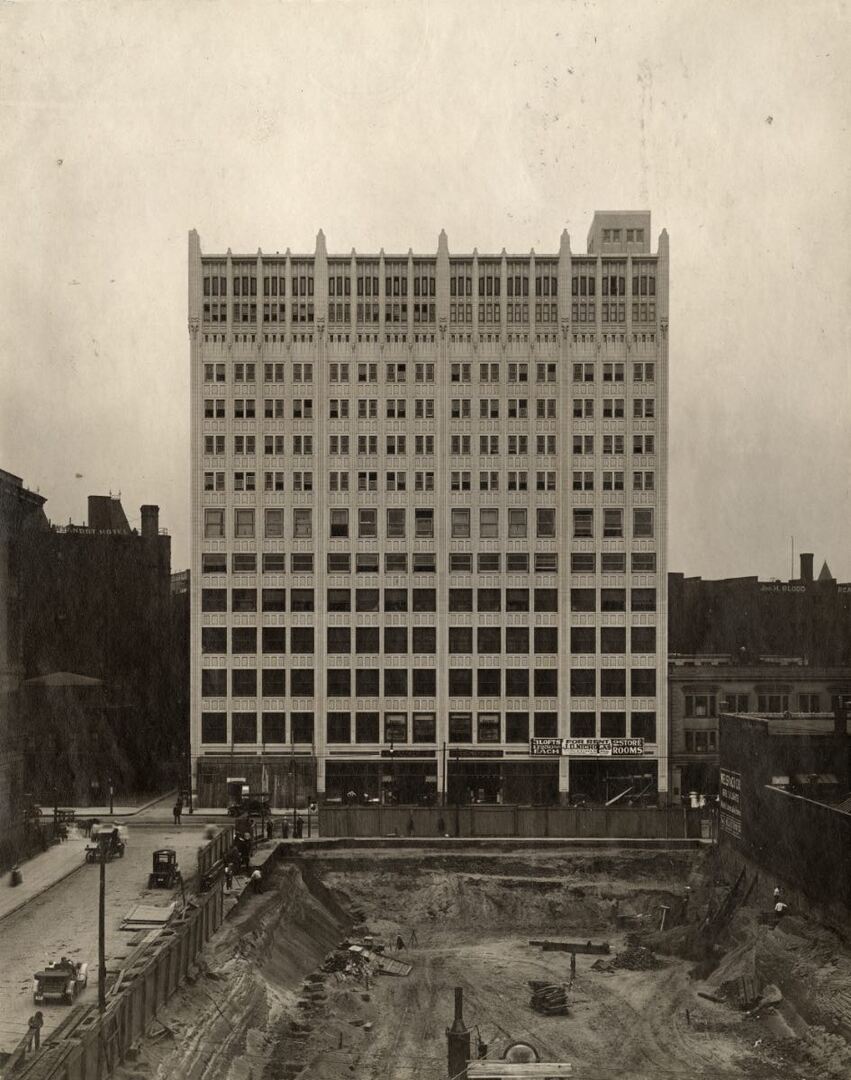
    <summary type="html"><![CDATA[<p><strong><em>The Cleveland Athletic Club was an epicenter of sports culture in Cleveland  for almost a century. Athletes from home and abroad used the CAC's state-of-the-art training facilities and amenities, including a large gymnasium, an indoor track, and an Olympic-sized swimming pool, some of them making sports history in the process.</em></strong></p><img src="https://clevelandhistorical.org/files/fullsize/3045ffb5f072f18bc25d854d4ddf7bba.jpg" alt="CAC under Construction " /><br/><p>For much of the twentieth century, sports and physical fitness were interwoven with Cleveland’s civic life. One place where this sporting culture took shape was the Cleveland Athletic Club (CAC) Building on Euclid Avenue, designed by architect J. Milton Dyer, who also held other notable local commissions, including for the design of Cleveland City Hall. The architectural contract awarded to Dyer totaled $150,000, marking the building as a significant investment for its time. Operating from 1908 until its closure in 2007, the Cleveland Athletic Club served generations of members and offered state-of-the-art athletic facilities that reflected the growing interest in organized recreation and physical training in the early twentieth century. </p><p>The CAC’s origins date to the night of August 10, 1907, when a group of founding members held their first preliminary meeting in the rooms of the Cleveland Auto Club. At that meeting, they elected a temporary president, secretary, and treasurer, and began organizing what would become one of Cleveland’s leading private athletic institutions. Most of these early members were affluent businessmen and professionals who contributed their own funds to establish the club and recruit additional members. Membership grew steadily during the club’s early years, even as members debated the final location of the clubhouse. </p><p>Formal elections were held in 1908. W. P. Murray was once again elected president. Also elected that evening were A. J. Huston as vice president, George A. Schneider as secretary, and A. H. Bedell as treasurer. After two more years of discussion, members decided on a site on Euclid Avenue in 1910. The finished clubhouse occupied the upper ten floors of the 15-story Cleveland Athletic Club Building, which opened in November 1911, giving the CAC a permanent home. </p><p>From its earliest years, the Cleveland Athletic Club distinguished itself through its facilities, which included multiple gymnasiums, boxing rings, handball courts, and a large indoor swimming pool, as well as dining rooms, meeting spaces, and social areas. These amenities made the club both a center for athletic training and a favored spot for Cleveland’s business and professional community to gather. </p><p>The clubhouse attracted many prominent athletes to its facilities for training exercises. Boxing legend Joe Louis trained for several days at the CAC during a visit to Cleveland in 1936. Swimming exhibitions and competitions were also held in the club’s twelfth-floor natatorium, attracting many skilled swimmers. The most illustrious was Johnny Weissmuller, who set the world record for 150-yard backstroke in the club pool in 1922 before going on to win five gold medals in the next two summer Olympics and, later, starring in the <i>Tarzan</i> films. </p><p>Track meets hosted by the club marked another contribution to the city’s sporting culture and gave young athletes a place to develop their skill during the winter months. Among them was Jesse Owens, who participated in meets there during his school years. At the time, Owens was already gaining recognition locally for his remarkable speed, shattering several records—some of them his own—on the club’s track. </p><p>The Cleveland Athletic Club remained a strong institution for nearly a century, serving as one of a number of prestigious anchors on the city’s most celebrated street. Although the CAC closed in 2007, the building continues to offer a reminder of the era when large cities’ athletic clubs were prominent features of urban civic life. When it was converted into apartments in 2019, the CAC Building got new name—The Athlon—that commemorates its history as a place that connected the city to regional and national athletic networks and gave Clevelanders an opportunity to see some of the great athletes of their time.</p><p><em><strong><a href="https://clevelandhistorical.org/items/show/1075">For more (including 8 images) view the original article</a></strong></em></p>]]></summary>
    <published>2025-12-01T17:13:53+00:00</published>
    <updated>2026-04-14T16:29:12+00:00</updated>
    <link rel="alternate" type="text/html" href="https://clevelandhistorical.org/items/show/1075"/>
    <id>https://clevelandhistorical.org/items/show/1075</id>
    <author>
      <name>Clark Helm</name>
    </author>
  </entry>
  <entry>
    <title type="html"><![CDATA[Eastgate Coliseum: The Godfather of East-Side Entertainment]]></title>
    <summary type="html"><![CDATA[<img src="https://clevelandhistorical.org/files/fullsize/c7456c44fbabd1d2422e507a0ba976c4.jpg" alt="Fifty Lanes of Bowling" /><br/><p>In the 1960s Mayfield Heights was enjoying a warp-speed shift from sleepy rural backwater to bustling residential and commercial hub. This also was the case for many recently incorporated “automobile suburbs”—locales like Brook Park and Middleburg Heights, whose populations were being supercharged by the construction of nearby freeway interchanges and the white-flight relocation of city and inner-ring-suburban residents. Vast increases in Russian, Italian, and Jewish residents typified Mayfield Heights; but two things about the city also drew visitors by the thousands. First was a flood of early big-box stores—Gold Circle, Uncle Bills, and Topps—forerunners of today’s Walmarts and Targets. But the second distinction was way more entertaining than strolling through a mundane discount store. Simply put, Mayfield Heights was an epicenter of recreation. Facing Mayfield Road just west of SOM Center Road was The Giant Slide—twelve lanes of slippery and tolerably dangerous fun. Nearby, trampolines and an Arnold Palmer Putt-Putt course hosted myriad date-nights and group outings. A quarter mile away, toward the back of Golden Gate Plaza, a gigantic roller rink welcomed seasoned and novice skaters. The floorboards of the mall’s Half-Price Books store are believed to be from the Roller Palace. Look closely and maybe you’ll see the butt-print of a hapless skater. A slot car raceway at Mayland Shopping Center drew thousands of enthusiasts, and in a field behind the Golden Gate Plaza, visits from the Big Top Circus were a regular occurrence. </p><p>But the don of east-side entertainment stood at the back of Eastgate Shopping Center on the current site of a Target store. A palatial but architecturally uninteresting structure with a somewhat sordid underside: This was the Eastgate Coliseum. </p><p>The Coliseum had something for everyone. Miniature golf, martial arts room, and a nursery brought in families. Fifty lanes of bowling awaited drop-ins, league players, and professionals. A banquet hall hosted birthday parties, wedding receptions, all-night after-prom parties, and bar mitzvahs. A colossal game room—The Wonderland—featured everything from billiards to Skee-ball to Astroblaster. There was even an Olympic-size indoor swimming pool that saw added duty as a practice venue for several suburban high school swim teams. Some patrons later recalled that the pool had so much chlorine that their bathing suits turned colors. </p><p>For those over 18—or kids in possession of an authentic-looking ID—the Coliseum also sported a lounge called the In Spot with two stages and two bands every weekend. Over the years, scores of fresh-faced locals performed there: Tony & the Twilighters, The Charades, Robo & the Turtles, Bocky Boo & the Visions. The Twilighters even scored a local hit record with "Be Faithful" in 1966. National acts such as Lesley Gore, Tony Orlando and Dawn, and Wilson Pickett also performed at the Eastgate Coliseum. The In Spot closed in the late 1960s, ostensibly due to frighteningly frequent fights among patrons. As one observer remembered, cops clutching binoculars scanned the parking lot from the roof to head off trouble. </p><p>The Eastgate Coliseum opened in January 1961, but its genesis dates to 1957. This was the year that notorious Teamsters Union president Jimmy Hoffa took control of investing the huge amounts of money pouring into the Union’s Central States Pension Fund (CSPF). Prior to 1957, a variety of banks had managed most of CSPF’s money, funneling it into high-grade common stocks, corporate bonds, and governmental securities. But Hoffa wanted more, which meant far-riskier ventures, principally the holding of mortgages on hotels like Miami’s Castaways and Las Vegas’s Caesar’s Palace, Sands, and Stardust. According to a <em>Forbes</em> magazine article, “Hoffa also arranged for substantial loans to mobsters who were partners in Las Vegas casinos and Southern California real estate developments.” CSPF also made several real estate investments in the Cleveland area. In fact, the first mortgage let by the Fund’s trustees was a $1 million mortgage on the Cleveland Raceways track in Willowick. U.S. Attorney General Robert Kennedy later challenged the prudence of this investment and Cleveland Raceways terminated the relationship. However, the Raceways investment defined the nature of most subsequent CSPF investments. As noted in Jerome Skolnik’s <em>House of Cards</em>, “By 1974, while other pension funds held 1.8 percent of their assets in mortgages, 58.3 percent of the Teamsters Central States Pension Fund’s assets were mortgages.”</p><p>In 1961 the Central States Pension Fund trustees followed a similar pattern to the Cleveland Raceways investment with the construction of the Eastgate Coliseum. Secured by a roughly $1 million loan from the CSPF, the deal was brokered by a group of speculators headed by Ohio Teamsters president William Presser and his son Jackie Presser. According to <em>The Wall Street Journal</em> (July 1972) there existed a “long standing Pension Fund rule authorizing kickbacks of no less than 10% of the total of the loan;" and this was likely the case (albeit never proved) with the Coliseum. Only a year before, incidentally, William Presser had been convicted of obstruction of justice.</p><p>Controversy dogged the Coliseum within a year of its opening. In August 1962, three African American teenagers were refused admission to the pool. Following demonstrations by the NAACP, the Coliseum committed to an anti-discrimination policy. Two years later, in January 1964, CSPF foreclosed on the Coliseum, claiming that Eastgate Investment Co. owed more than $1 million in principal and unpaid interest on three mortgage loans. At the time, the president of Eastgate Investment Co. was none other than Jackie Presser, who had purchased the facility from the original owner, Marvin Bilsky, who also headed the Cleveland & Sandusky Brewing Co. William Presser was listed as a trustee of the Pension Fund, along with Jimmy Hoffa. By late September the Coliseum was put up for auction and subsequently purchased by (guess who?) the Central States Pension Fund. </p><p>After the mid 1960s, the Eastgate Coliseum managed to stay mostly out of the newspapers, save for a 1973 drowning; hundreds of help-wanted ads, bowling scores, and public events announcements; and periodic flareups over the exorbitant salaries paid to union officials. (Indeed, by the mid 1970s, William Presser was reputedly the highest-paid union official in the world.) However, the Teamsters, the CSPF, and their officers and local affiliates garnered headlines on a stunningly regular basis. In 1971, William Presser was convicted of illegal shakedowns of local businesses. In 1977 Jackie Presser, Teamsters President Frank Fitzsimmons, and other Teamster leaders were forced to resign as trustees of the CSPF—charged with making improper loans to mob-controlled Las Vegas casinos, racetracks, and real estate ventures. By the late ’70s both Pressers had become Mob-focused informants for the FBI and transcripts of wiretaps linked each to organized crime figures. Shortly before his death in 1981, Bill Presser was forced to resign the vice presidency of the International Union of Teamsters after he was convicted of extortion and obstruction of justice. Jackie Presser succeeded him and, very shortly after, the U.S. Department of Labor began investigating Jackie for allegedly padding the Teamsters Local 507 payroll with "ghost employees." In April 1983, then President Roy Williams was convicted for conspiring to bribe a U.S. Senator. In May 1986, Jackie Presser was targeted in a fraud investigation by federal prosecutors. Through it all, the Eastgate Coliseum lived on—until the mid 1990s when, in a literal sense, it too became a Target.</p><p><em><strong><a href="https://clevelandhistorical.org/items/show/1006">For more (including 9 images) view the original article</a></strong></em></p>]]></summary>
    <published>2023-08-05T13:32:06+00:00</published>
    <updated>2026-03-04T21:32:05+00:00</updated>
    <link rel="alternate" type="text/html" href="https://clevelandhistorical.org/items/show/1006"/>
    <id>https://clevelandhistorical.org/items/show/1006</id>
    <author>
      <name>Chris Roy</name>
    </author>
  </entry>
  <entry>
    <title type="html"><![CDATA[Cumberland Pool]]></title>
    <summary type="html"><![CDATA[<img src="https://clevelandhistorical.org/files/fullsize/fe76768880a548b0814162cf413b116e.jpg" alt="Cumberland Pool, Circa 1930" /><br/><p>Opened in 1927, Cumberland Pool began its life just as Cleveland Heights was maturing into a city.  In 1925, residents approved $75,000 in bonds for the construction of the Cumberland park, pool, and bathhouse.  World-renowned landscape architect and Cleveland Heights resident A.D. Taylor (who also worked on the design of Forest Hill Park) laid out the plan for Cumberland Park several years prior to the passing of the bond issue. Construction on the pool began in July 1926 and wrapped up in March of the following year. Designed by architect William Robert Purcell, the brick and limestone Cumberland Pool bathhouse wrapped a typical bathhouse layout in a colonial design.  </p><p>Cumberland Pool opened with a water carnival featuring diving stunts and races that was deemed by one commentator to be "the biggest municipal event of 1927."  Indeed, the annual water carnival became the pool's signature event.  The following year's carnival, for instance, featured "keen competition among the best swimmers of Greater Cleveland" in over thirty different events and exhibitions.  In the 1930s and 1940s, Cumberland Pool drew massive crowds to witness its popular diving competitions as well.  In the off-season, the pool parking lot was turned into a community ice skating rink for many years. Cumberland Pool remains one of the places that defines Cleveland Heights today, as new generations of city residents enjoy its many pleasures.</p><p><em><strong><a href="https://clevelandhistorical.org/items/show/195">For more (including 7 images&#32;&amp;&#32;3 audio files) view the original article</a></strong></em></p>]]></summary>
    <published>2011-04-21T14:10:26+00:00</published>
    <updated>2026-03-04T21:31:58+00:00</updated>
    <link rel="alternate" type="text/html" href="https://clevelandhistorical.org/items/show/195"/>
    <id>https://clevelandhistorical.org/items/show/195</id>
    <author>
      <name>Michael Rotman</name>
    </author>
  </entry>
</feed>