<?xml version="1.0" encoding="UTF-8"?>
<feed xmlns="http://www.w3.org/2005/Atom">
  <title type="text">Cleveland Historical</title>
  <updated>2026-05-02T04:43:45+00:00</updated>
  <generator uri="http://framework.zend.com" version="1.12.20">Zend_Feed_Writer</generator>
  <link rel="alternate" type="text/html" href="https://clevelandhistorical.org/"/>
  <link rel="self" type="application/atom+xml" href="https://clevelandhistorical.org/items/browse?output=rss2"/>
  <id>https://clevelandhistorical.org/</id>
  <author>
    <name>Cleveland Historical</name>
    <uri>https://clevelandhistorical.org</uri>
  </author>
  <link rel="hub" href="http://pubsubhubbub.appspot.com/"/>
  <entry>
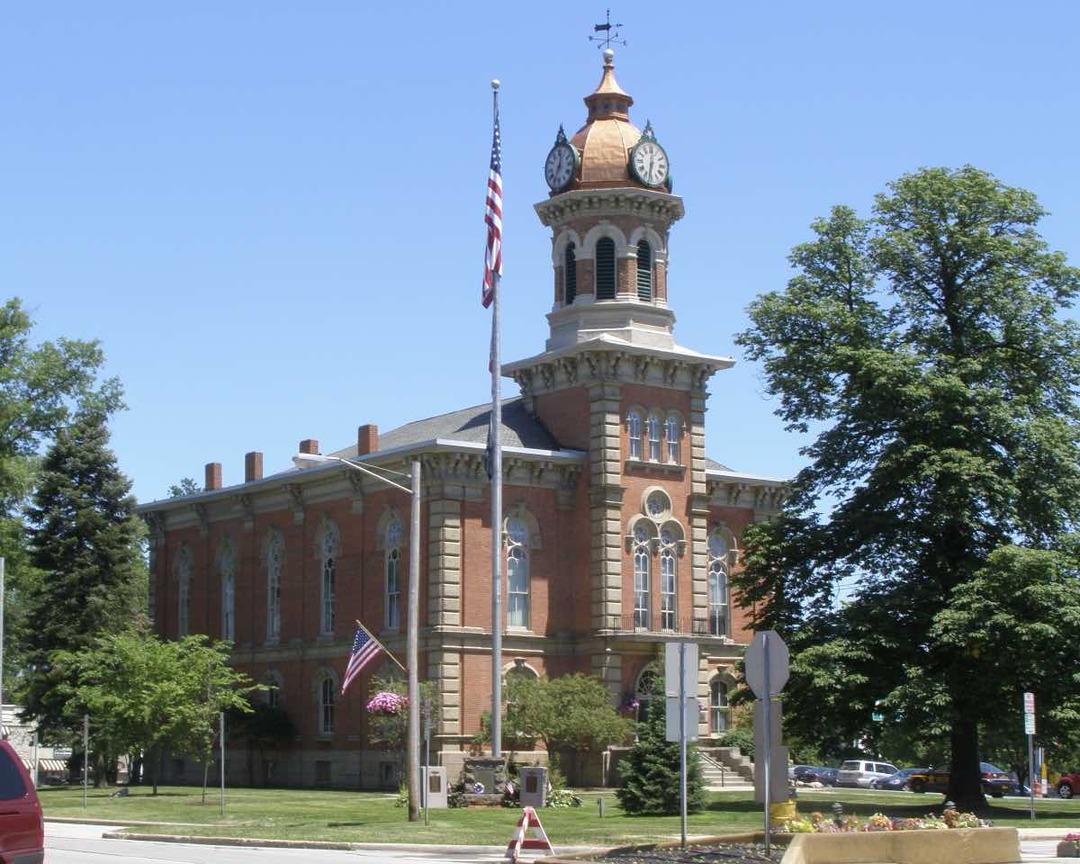
    <title type="html"><![CDATA[Geauga County Courthouse: From Log Cabin to Landmark on the Chardon Square]]></title>
    <summary type="html"><![CDATA[<p><strong><em>Resilience, perseverance, and dedication to history drive Chardon residents to continue improving their beloved courthouse, which has served as the seat of governance for Geauga County since 1805.</em></strong></p><img src="https://clevelandhistorical.org/files/fullsize/9ad50285c8e25a45f5fa52bd2fdf78b4.jpg" alt="The Fourth Geauga County Courthouse" /><br/><p>Chardon’s early planning began with Peter Chardon Brooks, a wealthy Boston merchant who acquired land from the Connecticut Land Company in 1798. He offered the land to settlers with the only stipulation being to name it Chardon. The commissioners accepted this proposal in 1808. Before Chardon could be settled, one matter of prerequisite importance had to be addressed – the establishment of a permanent seat of justice for the Geauga County. The commissioners of the county's Common Pleas Court then assigned Samuel W. Phelps to purchase and lay out land for this purpose. Reflecting New England ideals of structure and order, in 1808, the first building to be erected in Chardon was a courthouse.  </p><p>Reflecting the realities of frontier life, however, this first “courthouse” was little more than a repurposed log cabin, originally built by Abraham Skinner for Captain Edward Paine Jr. and his family. The one-room building was primitive, with a single door and window, a basic fireplace and chimney, and wide, rough boards for flooring. It also served as a temporary jail. It had a large, split log that functioned as a seat for the judges and a single large table providing a desk for the lawyers.  Realizing that the log cabin had served its temporary functions, the time came for a larger courthouse. </p><p>In 1813, Samuel King was contracted to build the second courthouse where the fire station currently stands on the square. It was built of rugged timber and had two floors. The first floor housed one cell as a temporary jail, and the second floor was the courtroom. The courthouse had multiple additional functions as Chardon was being built up. It also served as a meeting hall for political, religious, and social gatherings, as well as providing a school room for the few children who lived in Chardon. </p><p>By 1824, village leaders realized that Chardon needed better quarters for the county offices. The county allotted funds to build the southern half of the third courthouse, which also served as a jail. It was not until 1829 that the northern half of the courthouse was completed. Built of bricks in Greek Revival style, this two-story building featured large columns on the front portico. Its increased architectural sophistication mirrored the growing wealth of the county and its businesses. Unfortunately, this courthouse was not to last. </p><p>On July 25, 1868, the <em>Cleveland Plain Dealer </em>reported terrible news: “the whole business portion of Chardon, including the courthouse and jail, were burned last night.” The damage was not only material, estimated at the then-enormous sum of $100,000, but also functional; the loss of the official county buildings cast uncertainty of Chardon’s future as the county seat.  </p><p>After the fire, Chardon's citizens refused to give up. The county quickly issued a contract to Messrs, Herrick & Simmonds of Cleveland to rebuild the business district and courthouse. A newspaper article from December 4, 1868, reported on the rebuilding of Chardon: “When the improvements are completed, Chardon will become one of the handsomest villages in the State.” Another newspaper article from January 29, 1869, raved about “Chardon rising from her ashes. A disaster transformed into a blessing.” By this time, six months after the disaster, Chardon had already established a building committee, secured funding, and had built Union Block (now Main Street) on the former ruins, as well as the Randall Block (now South Hambden Street), a new section that expanded the business district around the square. The highlight of rebuilding was the courthouse, now located at the head of the public square. </p><p>Unlike its predecessors, the architecturally picturesque fourth Geauga County Courthouse, with its octagonal steeple and interestingly designed windows, endures. Faced with brick and stone trim, the North Italianate building cost $88,862. The courthouse and the two blocks of storefronts to its west form a historic district listed on the National Register of Historic Places. The square tower, detailed cupulas, and dome give this building its distinctive look. The dome roof with clock faces on four sides and its weathervane are the crowning features. Chardon had built a courthouse to match the prestige of the town and its importance in Geauga County.     </p><p>In 2020, city officials began to discuss the need to expand the courthouse. The county's judiciary had outgrown the building, which needed not only structural renovations but also technological upgrades, especially to security features. More than a century and a quarter after the current courthouse was built, Chardon residents remained protective of their historic buildings. Originally, when it was proposed for the courthouse to get an addition, residents and the Chardon Square Association sent letters opposing the expansion. County Commissioner Janet Novak acknowledged that the community had “strong feelings” about historic Chardon Square and that “any change to the square was a sensitive subject.” These concerns delayed the expansion project for years. </p><p>In 2023, city officials and Chardon residents finally reached an agreement on the expansion. As the project neared completion in 2025, Commissioner James Dvorak, a retired Chardon bricklayer and stonemason, applauded city leaders’ willingness to prioritize the historic preservation of a building whose “Italianate arches and towers have defined Chardon Square for more than 150 years,” which meant that the addition to the courthouse had to blend with the existing structure. Dvorak noted that. the county returned to the same Cleveland-area quarry used in the 19th century to source Berea sandstone to ensure that the expansion matched the original. The latest addition to the Geauga County courthouse shows how much history means to the residents of Chardon. </p><p>As Chardon grows, residents still treasure its historical atmosphere. A newspaper article from 1902 boasted of “Chardon, typical New England village. Ideal place to live. Good churches, good schools, good water, and good air.” This statement still holds true well over a century later. People move to Chardon because it is safe, beautiful, and a good place to settle with children. This is true of Chardon because of the resilience, perseverance, and good nature of the people that have lived here since its founding in 1805. Chardon has been strong for a couple hundred years, and at the pace it's going, it will remain strong into the future.</p><p><em><strong><a href="https://clevelandhistorical.org/items/show/1066">For more (including 9 images) view the original article</a></strong></em></p>]]></summary>
    <published>2025-11-13T19:37:34+00:00</published>
    <updated>2026-04-17T19:17:43+00:00</updated>
    <link rel="alternate" type="text/html" href="https://clevelandhistorical.org/items/show/1066"/>
    <id>https://clevelandhistorical.org/items/show/1066</id>
    <author>
      <name>Jez Lambert</name>
    </author>
  </entry>
  <entry>
    <title type="html"><![CDATA[Zverina Log House: A Bit of Historic Czechia on Cleveland&#039;s Southeast Side]]></title>
    <summary type="html"><![CDATA[<p><strong><em>Having spent much of his childhood in a rural village in Bohemia, Czech immigrant Anton Zverina Jr. wanted to provide his American children with a glimpse of what life was like in such a village. So, in 1908, in the middle of the apple orchard in the backyard of his house on Miles Avenue, in what is today Cleveland's Union-Miles neighborhood, he built for them a traditional Czech log house to play in.</em></strong></p><img src="https://clevelandhistorical.org/files/fullsize/8d51cf25dee19c7141a341b8d0cff3c1.jpg" alt="Zverina Log House" /><br/><p>It's a long journey from the village of Čechtice, in the South Moravian region of the Czech Republic, to Cleveland, Ohio.  However, like thousands of other Czechs who left their homes  in Bohemia for America in the second half of the nineteenth century, eleven-year-old Anton Zverina Jr. made that journey with his parents and two siblings in 1874. The family settled in a neighborhood on the southeast side of Cleveland, near what is today the intersection of Broadway Avenue and East 55th Street.  The neighborhood soon filled with so many Czech immigrants that it became known locally as "Little Bohemia."</p><p>Anton's father  started several businesses in Little Bohemia, including a grocery store.  Soon, young Anton was working for him in that grocery store—but perhaps sometimes, in idle moments, he would dream of what his more rural life  in Čechtice had been like.  His father's grocery store was first located on Dille Street, near Broadway and Forest (East 37th), and then later for several years on Willson (East 55th) near that street's intersection with Broadway and Hamlet Avenues. In 1889, the Zverina family left a more lasting mark on the neighborhood when the grocery store moved into a new three-story red brick commercial building on Broadway Avenue, just north of East 55th Street.  The building, still standing today and known as the Zverina Building, was designed for Anton Zverina Sr. by fellow Czech immigrant Andrew Mitermiler, a prominent Cleveland architect who, among other historic buildings in Cleveland, designed Ceska Sin Sokol Hall  on Clark Avenue  on the city's west side..</p><p>Andrew Mitermiler had a daughter named Rose and, in 1895, six years after the Zverina Building was built, Anton Jr. married Rose.  After marrying, the two moved into an apartment on an upper floor of the building that Rose's father had designed for Anton Jr.'s father.  Here, they started their lives together.  By 1904, they were sharing the apartment with their first four children, who ranged in age from the oldest (Rose), who was six years old, to the youngest (Frances), who was a newborn.</p><p>Like his father, Anton Jr. became a successful businessman in Little Bohemia.  He expanded his father's grocery and real estate businesses, and started several new businesses of his own, including one on Blanche Avenue, near Weckerling (East 53rd) Street, just north of the CC&S railroad tracks.  There, he built several commercial buildings, the chief amongst them a factory in which he manufactured a "coffee enhancement" made from the chicory herb.  </p><p>By 1905, Anton Zverina Jr. had accumulated enough wealth to do what many other Czech immigrants in Cleveland had done once they were financially able to do so.  Anton looked to move his family out of the crowded urban environment of Little Bohemia and into a more rural setting, perhaps somewhere that reminded him of his childhood village.  He found the ideal setting in  Newburgh Township, some four miles southeast of  Little Bohemia. There, he purchased the former  M. S.  Robertson farm which consisted of about five-acres of land that fronted on the south side of Miles Avenue, near what is  today  that street's intersection with MLK Boulevard.  The farm land included a large orchard filled with apple, pear and other fruit trees.</p><p>In 1906, the year after Anton Jr. had purchased the farmland, he, Rose and their children moved into a large new house built for them on the property.  A year or so after they had settled into their new home, Anton undertook to build, in the middle of  the farm's fruit orchard,  a little piece of Bohemia for his children.  By 1908, he had constructed a large single-story log house complete with a fireplace for cooking meat on one end of its interior and a large play area for his children complete with a large U-shaped table with benches on the other end.  In 1909, one year after the log house was completed, the area of Newburgh Township in which Zverina family  now lived and which in 1907 had been incorporated as the Village of Corlett, now was annexed into the City of Cleveland. These municipal events, however, did not seem to deter the Zverina family from enjoying their little bit of Czechia.</p><p>According to daughter Frances Zverina, who grew up to become a Cleveland public school teacher as well as a horticulturalist, Anton and Rose Zverina's children—who  included youngest son Robert, born in 1911—played in the log house to their heart's content.  In addition to being a constant source of entertainment for them, the log house also served as a place for gatherings of the extended  Zverina family, for friends and their families, and for almost anyone else  in the neighborhood who needed a pleasant place to celebrate any important event. According to Frances, the log house even served in 1914 as the site of a clambake at which future Cleveland mayor Harry L. Davis was nominated to become Cleveland's next mayor. Even after Anton Jr.'s death in 1934 , the Zverina family continued to use the log house for special events and occasions, and this continued for almost three more decades until the death of Anton's wife Rose in 1962.</p><p>In 1963, Frances Zverina and her brother Justin, who had inherited the property, parceled off and donated to the Cleveland School Board the log house and about a quarter acre of land upon which it stood, to be used in the School District's gardening program, which had been started in the early twentieth century.  Frances Zverina, in addition to her job as a school teacher in the district, was also a lover of herbs, something passed on to her from her father. In the late 1960s, she successfully persuaded the Cleveland School Board to design and build a special herb garden near the log house that would enable children at nearby Miles Public School to grow, tend to, and learn all about the value of herbs to humans.  </p><p>The new herb garden and log house were a successful addition to Cleveland school's horticulture programs from the time the restoration and garden work was completed in 1970, until the program was terminated during the Cleveland School Board's 1978 financial crisis.  While the formal school program ended, the herb garden and log house were, starting in 1981, voluntarily tended to by Reverend Ralph Fotia, pastor of the nearby Shaffer United Methodist Church, and his staff, for another decade.</p><p>In 1984, while Pastor Fotia was tending to the log house and its gardens, the City of Cleveland, acknowledging the importance of the log house and its herb garden to Cleveland's history, made the log house a local landmark, but in the process erased its Czech identity, designating it simply as the "Miles Garden Log Cabin and Herb Garden."  Moreover, even though it was now a local landmark, this did not seem to help improve the condition of the log house and the surrounding gardens, which severely deteriorated over the years that followed.  In the early twenty-first century, several plans were advanced to repair and restore the building, as well as the herb garden. Only one—a cleanup of the grounds by students from Washington Park community school in 2018, was successfully completed. More recently, a community development organization in the newly designated Union-Miles neighborhood, undertook a review of the condition of the Zverina Log House, which it renamed "The Union-Miles Log House," but to date, no repairs have been done to the log house, nor does it appear that any additional restoration work to the grounds of the log house has been done.</p><p>While time may be running out for the  more than a century-old Zverina Log House, it is hoped that a way can be found by the Cleveland Metropolitan School Board, which still owns the property, with help from Union-Miles neighborhood organizations, to restore the log house and its  grounds not only as a remembrance to Cleveland's historic school garden program, but also to Czech immigrants like Anton Zverina Jr. who built this little piece of Czechia in Cleveland, and who, on a broader scale, played an important role in  the development of Cleveland's southeast side in the nineteenth and twentieth centuries.</p><p><em><strong><a href="https://clevelandhistorical.org/items/show/1057">For more (including 15 images) view the original article</a></strong></em></p>]]></summary>
    <published>2025-05-11T12:33:51+00:00</published>
    <updated>2026-04-17T19:17:43+00:00</updated>
    <link rel="alternate" type="text/html" href="https://clevelandhistorical.org/items/show/1057"/>
    <id>https://clevelandhistorical.org/items/show/1057</id>
    <author>
      <name>Jim Dubelko</name>
    </author>
  </entry>
  <entry>
    <title type="html"><![CDATA[Lorenzo Carter Cabin: An Impermanent Tribute to a &quot;Permanent&quot; Early Settler]]></title>
    <summary type="html"><![CDATA[<img src="https://clevelandhistorical.org/files/fullsize/8dc402f09d547541aa82fbe632ec04ff.jpg" alt="Lorenzo Carter Cabin" /><br/><p>If there were huge, disease-carrying mosquitoes flying around your house, or if you were told that the Cuyahoga River—steps from your front door— was haunted by Indian spirits, would you stick it out in Cleveland? One man did, becoming Cleveland's first permanent white settler. His name was Lorenzo Carter. Not destined to face the "wilderness" alone, Mr. Carter was later joined by his wife Rebecca and their nine children, as well as by other pioneers who, following Carter's example, decided that they could make a life for themselves in the new settlement.</p><p>Lorenzo Carter (1767-1814) left his home of Vermont and arrived in Cleveland on May 2, 1797, a little less than a year after Moses Cleaveland's surveying party had laid out the town and promptly headed back to Connecticut. Carter decided to make Cleveland his home and built a small log cabin on the east bank of the Cuyahoga River. Despite the hardships the swampy, malarial Cuyahoga brought to his family, Carter made a living trading furs with local Indians, farming, and running the Carter Tavern, which served as an inn and tavern as well as an informal town hall and community meeting place. Carter also ran a ferry service across the river and served as Cleveland's first constable. Had Lorenzo Carter and his family decided not to stick it out in Cleveland, the city might not have developed as quickly as it did. He died in 1814 and is buried alongside Rebecca in Erie Street Cemetery.</p><p>As time went on, the story of Carter and his family started to fade from the city's memory. Unlike Moses Cleaveland, no statue was ever erected to honor him. In 1976, however, members of the Cleveland Women's City Club commissioned the building of this replica of Carter's cabin. Its interior was open to the public and contained items that would have been found in the original cabin. Visitors could look inside to get a glimpse of what life was like for the first permanent settlers of Cleveland. Like Carter's original cabin, the replica is now gone, demolished in 2021 for a new boat slip after falling into neglect.</p><p><em><strong><a href="https://clevelandhistorical.org/items/show/286">For more (including 8 images&#32;&amp;&#32;3 audio files) view the original article</a></strong></em></p>]]></summary>
    <published>2011-07-23T13:23:43+00:00</published>
    <updated>2026-04-17T19:17:38+00:00</updated>
    <link rel="alternate" type="text/html" href="https://clevelandhistorical.org/items/show/286"/>
    <id>https://clevelandhistorical.org/items/show/286</id>
    <author>
      <name>Kristen Thomas</name>
    </author>
  </entry>
</feed>
