<?xml version="1.0" encoding="UTF-8"?>
<feed xmlns="http://www.w3.org/2005/Atom">
  <title type="text">Cleveland Historical</title>
  <updated>2026-04-17T14:57:01+00:00</updated>
  <generator uri="http://framework.zend.com" version="1.12.20">Zend_Feed_Writer</generator>
  <link rel="alternate" type="text/html" href="https://clevelandhistorical.org/"/>
  <link rel="self" type="application/atom+xml" href="https://clevelandhistorical.org/items/browse?output=rss2"/>
  <id>https://clevelandhistorical.org/</id>
  <author>
    <name>Cleveland Historical</name>
    <uri>https://clevelandhistorical.org</uri>
  </author>
  <link rel="hub" href="http://pubsubhubbub.appspot.com/"/>
  <entry>
    <title type="html"><![CDATA[Shaker Historical Society and Museum: Challenging Suburban Resistance and Shaping Community Identity in the Quest for Home]]></title>
    <summary type="html"><![CDATA[<img src="https://clevelandhistorical.org/files/fullsize/50726ca80912a440e06313046e9fd8e7.jpg" alt="Shaker Historical Society, 16740 South Park Boulevard (Scrapbook Excerpt)" /><br/><p>The Shaker Historical Society and Museum has a rich history marked by its successful establishment and resilience in overcoming challenges to secure a permanent location. The Museum presents historical artifacts and educational programs that extend beyond the <a href="https://clevelandhistorical.org/items/show/674">North Union Shaker</a> community, engaging Shaker Heights residents in public history. The legacy of the Van Sweringen brothers, who influenced the design of city streets and community values, is deeply embedded in the area’s physical layout and reflected in the Museum's role within the community.</p><p>Building on this foundation of historical interest, the story of the North Union Shaker community itself is central to understanding the origins of Shaker Heights. Founded by Ralph Russell in 1822, the Shaker community occupied the lands now known as Shaker Heights and Cleveland Heights. Although the community disbanded in 1889, its utopian ideals left a lasting legacy that helped shape the vision of the master-planned suburb. Interest in the Shakers within the community began to grow in the mid-1920s, when the Shaker Heights School District started incorporating local history into its educational programs. Teachers Edythe Turner and Pearl Lee Stark played a pivotal role in this effort, collecting Shaker artifacts and embedding them into the third-grade curriculum, ensuring that future generations would engage with this important chapter of the area’s past.</p><p>The Shaker community attracted interest from several institutions in the Cleveland area, with Wallace H. Cathcart, former director of the Western Reserve Historical Society (WRHS), initiating the Shaker collection in 1911. Today, the WRHS holds approximately 900 Shaker photographs from 1860 to 1920, which were vital in shaping a coherent public understanding of the North Union Shaker community’s legacy. Caroline B. Piercy, a Shaker Heights resident, extensively studied the Cathcart collection and published <em>The Valley of God’s Pleasure: A Saga of the North Union Shaker Community</em> in 1951. Her research led to connections with other local residents, including Rev. John M. Schott, Cary Alburn, Benjamin Jenks, and Councilman John A. Hecker, who took a major step in preserving this history by founding the Shaker Historical Society and Museum (SHS). Elizabeth B. Nord, the Museum's volunteer curator for twenty years until her death in 1972, was also instrumental in this effort. The Society began gathering Shaker artifacts and donations, hosting its first garden party on June 11, 1948, in the Shaker Room of the WRHS.</p><p>Over the next twenty-two years, the Shaker Historical Society relocated seven times before settling into a storefront at 3488 Lee Road in 1968. However, this location proved unsustainable due to high costs, prompting the board to seek a more permanent home for the Society and Museum. In 1966, a special board meeting was held in the basement of Boulevard School to discuss the donation of the Myers mansion. Designed by architect Daniel Reamer in 1910 for Louis Myers of the Van Sweringen Company, the mansion was being negotiated by his son, Frank Myers, as a potential permanent home for the SHS. The Myers mansion was historically significant, situated on the original site of the Shaker settlers’ farm and near Horseshoe Lake, created by the settlers’ dam. Despite this, local residents and neighbors at the time strongly opposed the Museum’s move into the area. Their concerns about relocating the Museum to a residential neighborhood reflected the nineteenth-century ideals behind the Van Sweringen brothers’ vision of an ideal “utopia.” In response, Mayor Paul K. Jones decided to allow neighborhood residents to voice their opinions based on issues of zoning policies.</p><p>The Van Sweringen brothers sought to control property values in Shaker Heights through deed restrictions, a common practice in American suburban development. By promoting homeownership, they aimed to stabilize property values and prevent “undesirable” neighbors, enforcing both aesthetic standards and racial covenants. In 1925, they introduced Restriction No. 5, which encouraged residents to return old property deeds for approval before selling. Zoning regulations were also implemented, designating certain areas for single-family homes while allowing commercial use in other zones. The northern areas of South Park Boulevard and Lee Road were reserved for single-family residences, while the neighborhoods south of South Woodland Road and Van Aken Boulevard were subject to a mix of zoning types. Together, Restriction No. 5 and the expanded zoning regulations reinforced the Van Sweringen brothers' vision of a white, upper-to-middle-class "utopia."</p><p>Although Shaker was well on its way to becoming a community that embraced social diversity, the Van Sweringen vision of exclusivity and zoning control was echoed decades later when the Shaker Historical Society's proposal to relocate to the South Park Boulevard neighborhood faced resistance. Much like the earlier concerns over "social invasion" and zoning laws, opponents feared the impact of the Society's move on the residential character of the area. <span>To bypass these objections, trustee Frank Myers donated the property to the state with vice president William R. Van Aken handling the legal complexities of the transfer, enabling the Society to contract with the State Department of Public Works and avoid city zoning regulations.</span></p><p>This effort to overcome zoning resistance marked a pivotal moment in the Shaker Historical Society's development and expansion. Drawing on this achievement, the Society began to shift its focus toward broader public engagement. The president of the SHS at the time, William Van Aken, discussed opening the Museum to all residents of northeastern Ohio, and the public was first invited into the space during a tour conducted around the Shaker Lakes in 1970. Building on this momentum, the Women's Committee of the SHS was established in June 1971 to increase interest, funding, and volunteer support for the museum. In 1972, Elizabeth Nord made a significant contribution by donating her personal library to the SHS and receiving the Golden Deeds Award from the Exchange Club of the Heights. Tragically, she passed away from a heart attack just four months later. The 1980s marked a period of expansion for the Society, which showcased four major exhibits and elected its first female president in 1988, further solidifying its commitment to inclusive public history.</p><p>The success of these early efforts laid the groundwork for the Shaker Historical Society’s continued growth and evolution. As the Society expanded its reach and strengthened its community ties, it also began to reflect the values and identity of Shaker Heights itself. The suburb, deeply intertwined with the concept of "home," influenced the Society’s transition into a single-family residence, further aligning its mission with the broader emphasis on home and place that defines the area. By broadening its focus from solely representing the Shakers to engaging more deeply with the diverse local community, the Shaker Historical Society and Museum is forging a new identity for public history in Shaker Heights—one that reflects the suburb's contemporary values while enriching its historical narrative.</p><p>Today, the Shaker Historical Society and Museum, along with the Elizabeth B. Nord Memorial Library and Archives, operates in its permanent location at 16740 South Park Boulevard. Despite past resistance, the museum now stands as a hub for public history, education, and community development, honoring the legacy of the North Union Shakers on the very land they once inhabited.</p><p><em><strong><a href="https://clevelandhistorical.org/items/show/1040">For more (including 14 images) view the original article</a></strong></em></p>]]></summary>
    <published>2024-11-26T01:14:49+00:00</published>
    <updated>2026-03-04T21:32:05+00:00</updated>
    <link rel="alternate" type="text/html" href="https://clevelandhistorical.org/items/show/1040"/>
    <id>https://clevelandhistorical.org/items/show/1040</id>
    <author>
      <name>Makialani Kanewa-Mariano</name>
    </author>
  </entry>
  <entry>
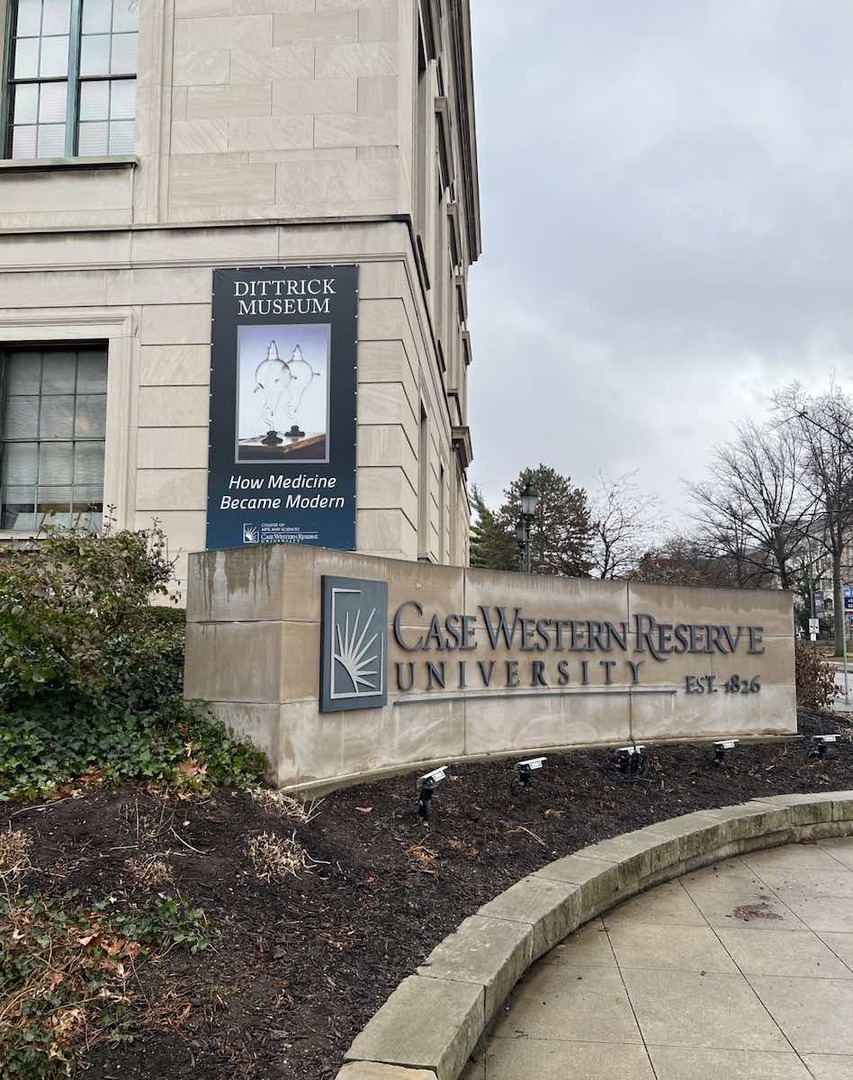
    <title type="html"><![CDATA[Dittrick Medical History Center: A Showcase for Two Centuries of Healthcare Advancements]]></title>
    <summary type="html"><![CDATA[<p><strong><em>In the late nineteenth century, the Cleveland Medical Library Association opened a fledgling museum "that represented a collection of heterogeneous articles stored in boxes, not arranged systematically, and not catalogued." By the twenty-first century, the Dittrick Medical History Center was recognized as one of the foremost medical museums. Its evolution unfolded alongside not only medical advances but also the city's broader growth as a healthcare hub.</em></strong></p><img src="https://clevelandhistorical.org/files/fullsize/ef7f6a8ea3687947e8d93b8f9918ab79.jpg" alt="Dittrick Medical History Center Today" /><br/><p>Medical history museums long existed in Europe prior to their origins in the United States, which occurred following the outbreak of the Civil War, and were initially used as educational centers for medical students. The Army Medical Museum was one of the United States’ first known medical history museums and was established to support the Union Army Medical Department’s library. Although the funding for the Army Medical Library decreased over the years, causing relocation and merging, other medical history museums in the U.S. somehow managed to survive and thrive, helping promote the continuance of medical education. For the surviving medical history museums, credit can surely be granted to institutional funding, but the real praise goes to the dedicated educators and collectors, the commitments made to their communities, and an ability to connect relevantly to an ever-changing audience. In its origins, the Dittrick Medical History Center, like the Army Medical Museum, struggled with financing and sustainability. The Dittrick’s history begins with a small library on Prospect Avenue for members and associates of the Cleveland Medical Library Association. Dudley P. Allen, one of the founders of the CMLA, was an avid collector, educator, and surgeon who collected medical books and instruments, which he would later donate to the museum. Upon his death, Allen’s will left a fund of roughly $200,000 to support the library’s maintenance. Allen’s generosity and commitment made him a most appropriate namesake for the medical library and museum on Western Reserve University’s campus, dedicated as the Allen Memorial Medical Library in 1926. Canadian physician Howard Dittrick came to Cleveland in the early twentieth century to work in healthcare and educate about medicine. Unsurprisingly, Dittrick connected with Allen and began researching and collecting medical instruments, tools, and practices from other parts of the world and previous time periods. Dittrick and Allen both aspired to turn the collection of “obsolete types of surgical instruments, microscopes, stethoscopes, diplomas, war material, and personal objects from prominent doctors” into a more robust museum, eventually for public audiences. Early nineteenth-century meeting minutes from the CMLA Executive Council reveal that the museum did not always exist on a large scale. Yet due to Dittrick’s advocacy, avid collecting, fundraising, and work cataloging the artifacts, a museum eventually gained traction within the CMLA community, which decided that the new space in the Allen Memorial Medical Library would have a specific section on the third floor established for a museum space. Although an achievement for Dittrick, it was not until 1934 that the museum, initially named the Museum of Historical and Cultural Medicine, earned enough respect and praise to become its own department. Dittrick continued to work avidly as the Director of the Museum of Historical and Cultural Medicine for about ten more years. In 1945, the CMLA decided to dedicate the Museum to Dittrick in honor of his fierce dedication and advocacy to make a museum of its kind flourish not only for the medical field but for the public. The Howard Dittrick Museum of Historical Medicine continued to grow and flourish over the years under new direction and guidance, all still with the spirit of Dittrick in mind. While museums like the Army Medical Museum were not able to sustain themselves, the Howard Dittrick Museum continued to receive donated artifacts, lend out collections, host guest lecturers, and keep its doors open for both research and public education. </p><p>Throughout the twentieth century and into the twenty-first, the Dittrick has mounted many permanent and temporary exhibits. Many of the exhibits have been timely. For the U.S. Bicentennial, the museum presented an exhibit that depicted health and medical care in the era of the American Revolution. Other, more permanent exhibits depict the history and improvement of medical technologies, including microscopes and stethoscopes. As the museum and its exhibits continued to adapt to changing times, such as online cataloging and technologically engaging activities, the Dittrick underwent another name change in 1998 to better reflect the mission and collections of artifacts, rare books, images, and other materials. Today, the Dittrick Medical History Center has one of the most prominent collections of contraceptives in the United States, as well as one of the largest collections of antique surgical instruments.</p><p><em><strong><a href="https://clevelandhistorical.org/items/show/985">For more (including 7 images) view the original article</a></strong></em></p>]]></summary>
    <published>2022-11-28T05:05:18+00:00</published>
    <updated>2026-03-04T21:32:05+00:00</updated>
    <link rel="alternate" type="text/html" href="https://clevelandhistorical.org/items/show/985"/>
    <id>https://clevelandhistorical.org/items/show/985</id>
    <author>
      <name>J. Wilson</name>
    </author>
  </entry>
  <entry>
    <title type="html"><![CDATA[Historic Bedford: Preserving the Past in One of Cuyahoga County&#039;s Oldest Towns]]></title>
    <summary type="html"><![CDATA[<img src="https://clevelandhistorical.org/files/fullsize/4e61049230bbc72a5b899829d45f4949.jpg" alt="Town Hall" /><br/><p>Historic Bedford, located in downtown Bedford, Ohio, is a terrific example of the power of small-town preservation. Bedford, which has been around for more than 190 years, may be a small town, but it has connections to a big history. Indeed, much of the history of the United States unfolded in smaller towns such as Bedford. Historic Bedford’s preservation success owes much to the hard work of the Bedford Historical Society (BHS) in safeguarding the town's historic buildings. The historical society’s work uses the town’s landmarks, including the Hezekiah Dunham House and Old Town Hall, to tell Bedford’s story. The survival of small-town history begins with small-town preservation.</p><p>Historic Bedford is just a small strip along Broadway Avenue, but that small strip is filled with much rich history. The first settlers arrived in 1813 in what became Bedford, which was given the temporary name of Township 6. It wasn’t until 1823 that Township 6 finally became a village, which was soon named Bedford. One of the most famous houses in Historic Bedford was the Hezekiah Dunham House, which was built in 1832. Four years later, Hezekiah Dunham and wife Clarissa signed a document that gave grant of the land in Lot No. 46 to the trustees of the Township of Bedford. With the land deeded by the Dunhams, residents of Bedford began to build houses, churches, businesses, the Old Town Hall, the Wheeling & Lake Erie Railway depot. By the mid-19th century the village of Bedford quickly turned into a prosperous town where several illustrious historical events occurred.</p><p>Certainly, one of the most noteworthy moments in Bedford’s history was when President Abraham Lincoln stopped in the village on February 15, 1861, at the Wheeling & Lake Erie train depot. The newly elected president was on his way to Washington, D.C., for his inauguration and stopped in Bedford that day around 3:30 p.m. to greet the townspeople. According to an account by Bedford historian Dick Squire, “The train slowed as it neared the Bedford station. The tall figure of Mr. Lincoln emerged from the warmth of the coach and stood on the rear platform, acknowledging the cheering crowds.” Lincoln only spent a few minutes in town, but his presence turned those few minutes into a historic event.</p><p>In addition to Lincoln’s visit, the story of Julius Caesar Tibbs, the Strawberry Festival, and the Spirit of ’76 were other highlights in Bedford’s history. Julius Caesar Tibbs was born into slavery in Virginia in 1812. Tibbs escaped the plantation and was later found at the Burns Farm in Bedford. Bedford was known for its strong anti-slavery feelings, which is why the village became a stop along the Underground Railroad. There the Burns family gave Tibbs food and provided him with a place to stay on their farm. The Strawberry Festival is an annual festival, sponsored by the Bedford Historical Society. The festival was created in June of 1964 in hopes of raising funds for the Bedford Historical Society to use towards preserving historic buildings in Bedford. In another example, by 1976, as America celebrated its Bicentennial, the BHS made copies of the famous painting, “The Spirit of ‘76”, and even created items using the theme “Spirit of ‘76”. During this time many small towns were finding ways to contribute to the celebration of the Bicentennial. Historian M.J. Rymsza-Pawlowska states in her book <em>History Comes Alive</em> that, “…individual states were also preparing for 1976 and began to use their own regional histories to find relevance Bicentennial in ways that often diverged from the federal vision.” The Spirit of ’76 is an example of Bedford connecting to the nation’s history at one of the most important commemorative moments. </p><p>The importance of preserving small-town history begins with the small history that contributes to the town. Historic buildings are the physical markers of the town’s history, and these buildings become daily reminders of a place’s past. It is important to remember that preserving a town's historic building provides a sense of pride for the community. Although the businesses contributed to the growth of Bedford’s economy and history, the buildings that stood out the most must be the Hezekiah Dunham House and the Town Hall. Both buildings are listed in the National Register of Historic Places, but each contributes differently to the history of Historic Bedford. For example, in 1832 the Hezekiah Dunham House was built by one of Bedford’s earliest settlers, Hezekiah Dunham. While the Dunham House began to gain notoriety, the establishment and construction of the Town Hall started. By 1874, the Town Hall was finally complete and became the tallest structure among the local landmarks. The Town Hall was used for public meetings, speeches, lectures, and productions at the opera hall located inside of the Town Hall.</p><p>By the early 1970s, following the Historic Preservation Act of 1966, many small towns decided to preserve historic buildings. Bedford was no exception. The Dunham House became the first phase of a restoration project launched by the Bedford Historical Society. In order to accomplish restoration of the house, the Bedford Historical Society created a Restoration Fund Account (RFA) designated solely for preserving and restoring historic structures. With the RFA, the BHS fixed the Town Hall for $35,000 and turned the building into Town Hall Museum, which is filled with collections such as extensive forms of lighting, clothing and textiles, military uniforms, small arms, and assorted memorabilia. The museum also contains a library, archive, and became the home for the Bedford Historical Society. Along with the Town Hall the Dunham House was restored and used as a museum, which transport individuals to the mid-1800s with its period furniture and gorgeous stenciling. Although less commonly cited than Chagrin Falls and Hudson, Historic Bedford is a great example of a small town that used its small and big history to preserve building structures, and shine light on the importance of small-town preservation.</p><p><em><strong><a href="https://clevelandhistorical.org/items/show/885">For more (including 7 images) view the original article</a></strong></em></p>]]></summary>
    <published>2019-11-20T20:17:24+00:00</published>
    <updated>2026-03-04T21:31:58+00:00</updated>
    <link rel="alternate" type="text/html" href="https://clevelandhistorical.org/items/show/885"/>
    <id>https://clevelandhistorical.org/items/show/885</id>
    <author>
      <name>Jeri Baboryk</name>
    </author>
  </entry>
  <entry>
    <title type="html"><![CDATA[Frostville: Resurrecting the Ghosts of a Rural Past in Suburban North Olmsted]]></title>
    <summary type="html"><![CDATA[<img src="https://clevelandhistorical.org/files/fullsize/d6fdd3017157418674b5c5248ee4da98.jpg" alt="Rocky River Valley" /><br/><p>Awakened from the grave on a chilly October evening in 1975, the ghostly manifestation of Western Reserve pioneer Thomas Briggs greeted trespassers at the Frostville Museum complex in Cleveland Metroparks Rocky River Reservation with scowls and threats of retribution over the displacement of his beloved home. Brave tour leaders steered visitors towards the not-quite-living history exhibition of Briggs’s partially renovated residence, regaling them with details from letters penned by the phantom docent. The writings, compiled by the Olmsted Historical Society, recounted the labors involved in constructing the home and the settler’s joy upon its completion. The specter could have shown a bit more gratitude; the house was previously slated for demolition but had been rescued by the historical society. With funds scraped together by hosting events such as annual antique auctions, members had managed to relocate a 20 x 40 foot section of the 139-year-old home from Lorain Road in North Olmsted to museum grounds in 1969. Efforts to restore the Greek Revival style building in accordance with its original design were well underway. The sturdy home’s new neighbors included a farmhouse erected in 1877,  a small storage shed containing a horse-drawn hearse, and a recently constructed barn that displayed farm tools and a vintage fire engine.   The tiny pioneer village of Frostville was slowly being assembled within the rural terrain of the Cleveland Metroparks system. </p><p>Since the allocation of Frostville's grounds for use as a public museum in 1962 by Cleveland Metroparks, a handful of Olmsted Historical Society members stationed out of a farmhouse worked tirelessly to resurrect ghosts of the region’s earliest European and American settlers.  The group was founded in 1953 as the North Olmsted Historical Society. Its members were not alone in their efforts to unearth a world whose demise was symbolized by highways and generic housing stock. In North Olmsted, and across the United States, the changes wrought by suburbanization spurred the establishment of organizations dedicated to preserving relics of local history.  By the end of the postwar suburban boom, Cuyahoga County had no less than 28 historical societies devoted to conjuring up the restless souls of a distant—and often imagined—past.</p><p>This post–World War II era marked the beginning of rapid change in North Olmsted and its surroundings, and it offers the backdrop for the historical society's invocation of the Briggs ghost. Across the United States, urban sprawl and suburbanization transformed the character and landscape of small communities situated outside urban centers.  Consumer spending that had been restrained during the Great Depression and World War II was unleashed. Demand for homes and consumer goods skyrocketed. </p><p>A slight complication quickly came to light. The construction of new housing had been at a relative standstill in an economy marked by rationing. The public not only had freshly available reserves of money, but Depression-era federal policies offered Americans greater access to affordable, long-term loans. The passage of the G.I. Bill further encouraged home ownership among veterans through a guarantee of low interest mortgages that did not require a down payment. In 1946, the United States Senate estimated that over three million homes were immediately needed to meet consumer demand. America was amidst a housing crisis.</p><p>As postwar manufacturing switched back to the production of consumer goods, a burgeoning automobile industry stimulated home building in places such as North Olmsted. The annual production of cars in America grew from 70,000 in 1945 to over two million the following year. This output rose to over 3.5 million by 1947. To accommodate the new surplus of cars clogging the roadways, vast sums of federal and state funding were allotted to the construction of highway infrastructure during the 1950s. The outmigration of Cleveland residents to the suburb of North Olmsted centered along Lorain Road, which provided a fairly direct route between the cities. The opening of the Ohio Turnpike to traffic in 1955 further accelerated the growth of residential and commercial development in the region.  </p><p>With demand for housing compounded by new transportation networks into and out of cities, construction in suburbs flourished. The grounds that once sustained North Olmsted’s farming community were quickly subdivided and dissected with roads. Barns disappeared from the horizon. In their place, neighborhoods were platted and quickly erected using contemporary construction methods. Feeding the building frenzy, North Olmsted—declared a city in October 1951—witnessed an influx of new residents. A 1950 population of approximately 6,600 residents, which had nearly doubled during the prior decade, increased to over 16,000 by 1960. The trend continued, and the population reached almost 35,000 ten years later.  Both commercial activity and the infrastructure of the city grew in turn.  Notably, the late 1950s saw the beginnings of what would become the Great Northern Mall. The shopping complex helped transform North Olmsted into a regional retail center.  </p><p>Suburban growth also left a wake of destruction in its path. Long-standing structures were regularly razed to make way for residential, commercial and retail developments. Open lands previously used for farming, greenhouses, and hunting disappeared. New settlers couldn’t entirely be blamed for vestiges of the past vanishing from the landscape. Time had taken its toll on many of the region’s oldest buildings, necessitating either demolition or the pouring in of funds for rehabilitation. Countless structures had grown decrepit through years of owner neglect or abandonment. The oldest buildings that remained in the increasingly suburban landscape, however, took on new meaning. They came to symbolize the community’s rural past. In North Olmsted, the death knell for idyllic rural society was countered by the historical society's efforts to salvage physical representations of the past.</p><p>The village of Frostville was a response to the changes brought on by suburbanization;  the historic enclave was born from an endeavor by the North Olmsted Historical Society to prevent the demolition of a vacant home standing within the Rocky River Reservation. The aged farmhouse sat on land purchased by the Metropolitan Park Board in 1925.  The homestead was maintained as a rental property until the 1950s, despite not having electricity or indoor plumbing. The historical society rallied upon learning of the building’s imminent doom, and incorporated as a non-profit association in 1961. The Cleveland Metropolitan Park Board agreed to spare the structure for use as a public museum and cultural center, even though policies enacted during the 1950s curtailed the allocation of park lands for exclusive use by private groups.  </p><p>The relationship between the two organizations was forged on common ground. The Park Board was also reeling from the unsettling impact of suburbanization, and searching for ways to promote preservation and conservation of its lands. By the mid 1950s, parking lots in the Metropolitan Park system overflowed with cars during the summer months. Lines formed at picnic areas for use of grills and public amenities, and the many pairs of feet trampling through green lawns were decimating the flora and eroding the soil. The ever-present threat of environmental degradation escalated as increased populations settled adjacent to park land, especially in connection with the pollution of rivers, creaks and streams. By the late 1950s, park director Harold W. Groth expressed concern that there were “too many people for too little land.” Nature wasn’t being given a chance to recover from the seasonal onslaught of humans. For the first time in its history, the Park Board found it necessary to deviate from the original Metropolitan Park system plan. A proposal was published in 1961 recommending an 8,400 acre park expansion project. Land for the Bradley Woods Reservation in North Olmsted and Westlake was acquired by 1962 to help alleviate overcrowding at Rocky River Reservation and Hinckley Reservation.  </p><p>Just as the Park Board tirelessly worked to recreate an idealized representation of the region’s lost natural environs through landscaping, the North Olmsted Historical Society labored to materialize an interpretive memory of the suburb’s frontier past. As an affiliate of the Park Board, the historical society took on the financial responsibilities of running and maintaining the on-site museum. The farmhouse—known as the Prechtel House—was remodeled, painted, vanquished of bees, and connected to the electrical grid. Descendants of Olmsted Township's earliest settlers donated antiques to furnish its interior. The homestead was named Frostville to commemorate the area’s first post office, which opened in 1829 at the home of Dr. Elias Carrington Frost. The museum was officially opened to the public as part of North Olmsted's sesquicentennial anniversary celebration in 1965. During these early years, the scope of the society’s mission broadened to encompass the historic preservation of the entire original township. The organization’s name was trimmed to Olmsted Historical Society in 1968.</p><p>Guided by Olmsted Historical Society's vision for recreating a small village representative of 19th-century life in Ohio, Frostville steadily grew and took shape as a living history museum.  In 1976, a one-room cabin built during the mid 1830 was placed in the company of the Prechtel House and Briggs House.  A two-story federal style home known as the Carpenter House, which was also erected during the 1830s, was transported to Frostville in 1987. A church dating back to the mid-1800s was relocated to the homestead in 2005, and was soon joined by a carriage house traced to North Olmsted’s first settler. The restoration process for each historic building was long and costly, with many a rummage sale, haunted house, and auction held to acquire necessary finances. Additional structures built on-site included a general store, an events barn, a workshop, and a display barn. All the while, the historical society continued to curate a collection of antiques representative of the region’s history. In 2017 the Olmsted Historical Society constructed a one-room schoolhouse and hoped to rebuild a detached summer kitchen annex of the Carpenter House. </p><p>After over half a century in operation, Frostville is no longer haunted by the ghost of Thomas Briggs during the Halloween season. The turmoil created by the rapid suburbanization of North Olmsted in the 1950s and 1960s subsided. The rush of newcomers slowed to a crawl; the population peaked in the 1980s at over 36,000 residents, and proceeded to decline. While traces of the region’s agricultural past have all but disappeared from the city's landscape, members of the historical society continue their efforts to keep the past alive at the museum complex. Visitors to the living museum in Rocky River Reservation are invited to surround themselves in a world pieced together through the research. physical toil, and craftsmanship of Olmsted Historical Society members. By curating an environment illustrative of 19th century Americana, the village of Frostville offers park-goers a physical link and sense of continuity with the bygone days of Olmsted Township's earliest settlers. </p><p><em><strong><a href="https://clevelandhistorical.org/items/show/724">For more (including 12 images) view the original article</a></strong></em></p>]]></summary>
    <published>2015-07-27T02:39:51+00:00</published>
    <updated>2026-03-04T21:32:02+00:00</updated>
    <link rel="alternate" type="text/html" href="https://clevelandhistorical.org/items/show/724"/>
    <id>https://clevelandhistorical.org/items/show/724</id>
    <author>
      <name>Richard Raponi</name>
    </author>
  </entry>
  <entry>
    <title type="html"><![CDATA[Oldest Stone House: A Remnant of Rockport Township]]></title>
    <summary type="html"><![CDATA[<img src="https://clevelandhistorical.org/files/fullsize/491309a96f5546e517788db4600e7a93.jpg" alt="Oldest Stone House, 1902" /><br/><p>John Honam (1790-1845) built the Oldest Stone House in 1834 on the north side of Detroit Avenue, just to the east of its intersection with Warren Road. Honam came to what was then known as Rockport Township around 1830 by way of Scotland and Portland, Maine, becoming one of Rockport's first settlers. He came to own over 90 acres of land in the rural township, with his parcel extending north of Detroit Avenue to the lake, bounded to the east and west by what are now Belle and Cook Avenues. Not much is known about Honam's activities, but it is likely that he made a living by farming his land. Honam's daughter Isabella (1815-1897) and her husband Orvis Hotchkiss (1809-1881) inherited the Oldest Stone House after John Honam died in 1845. Hotchkiss continued to farm a part of the land and also ran a tannery and a steam mill on the property. The married couple raised their family in the house, but after Isabella's death in 1897 none of John Honam's descendants would live there again.</p><p>Reflecting the transformation of Rockport around this time from a rural farming community into the affluent residential suburb of Lakewood, the Lakewood Realty Company purchased the Oldest Stone House in 1899 and used it as a sales office for its swanky Lakewood Park housing development. After Lakewood Realty Company moved out of the house, it contained a succession of commercial businesses, including a shoe repair shop, a photography studio, and a doctor's office. The house was also occasionally rented out as living quarters to various families and individuals. The longest lasting tenant in the Old Stone House during this period was surely Gilbert P. Hostelley's upholstery and furniture repair shop, located in the house from 1919 to 1952.  </p><p>Smack dab in the middle of Lakewood's growing commercial district along Detroit Avenue, it was only a matter of time before the Oldest Stone House was threatened with demolition. In 1952, furrier Stephen Babin of Babin Furs at the northwest corner of Detroit and St. Charles Avenues and (since 1942) owner of the Old Stone House located just to the north of his shop, sought to expand his business, putting the house in harm's way. Babin offered the house to local historian Margaret Manor Butler at no cost. Butler, in a flurry of activity, raised the money needed to move the house, negotiated with the city of Lakewood to relocate it to its current site at Lakewood Park, and founded the Lakewood Historical Society. In 1953, the Oldest Stone House opened as both a home to the historical society and a museum dedicated to recreating the frontier life of Rockport Township in the 19th century.  Fittingly, the house now stands on land that was originally a part of John Honam's 97-acre estate.  </p><p><em><strong><a href="https://clevelandhistorical.org/items/show/222">For more (including 7 images) view the original article</a></strong></em></p>]]></summary>
    <published>2011-06-07T16:09:57+00:00</published>
    <updated>2026-03-04T21:31:58+00:00</updated>
    <link rel="alternate" type="text/html" href="https://clevelandhistorical.org/items/show/222"/>
    <id>https://clevelandhistorical.org/items/show/222</id>
    <author>
      <name>CSU Center for Public History and Digital Humanities</name>
    </author>
  </entry>
</feed>