<?xml version="1.0" encoding="UTF-8"?>
<feed xmlns="http://www.w3.org/2005/Atom">
  <title type="text">Cleveland Historical</title>
  <updated>2026-04-17T15:06:23+00:00</updated>
  <generator uri="http://framework.zend.com" version="1.12.20">Zend_Feed_Writer</generator>
  <link rel="alternate" type="text/html" href="https://clevelandhistorical.org/"/>
  <link rel="self" type="application/atom+xml" href="https://clevelandhistorical.org/items/browse?output=rss2"/>
  <id>https://clevelandhistorical.org/</id>
  <author>
    <name>Cleveland Historical</name>
    <uri>https://clevelandhistorical.org</uri>
  </author>
  <link rel="hub" href="http://pubsubhubbub.appspot.com/"/>
  <entry>
    <title type="html"><![CDATA[The Jones Home and School for Friendless Children: A Story of Transformation ]]></title>
    <summary type="html"><![CDATA[<p><strong><em>On the opening day of the Jones Home and School for Friendless Children, the weather was “dark and stormy,” but even so, “a large number of interested visitors found the house at 1633 Pearl St.,” which was a “half day’s drive by carriage or wagon” from Cleveland. Since that day in 1887, the Home has endeavored to improve the lives of children and families while adapting to more than a century of change. </em></strong></p><img src="https://clevelandhistorical.org/files/fullsize/1757ef1c1c3a34dde1248a7bd97f30f2.jpg" alt="The Jones Home" /><br/><p>The Jones Home was founded on December 15, 1887, by Carlos and Mary B. Jones, who intended for it to provide mainly short-term housing for children who still had one or two parents, but who were currently unable to care for them. The Joneses began a policy of accepting only white, Protestant children for foster care that lasted for several decades. The farmhouse was situated on six acres and, in November 1889, housed about twenty children between four and ten years old. In 1890 the Home was reportedly “in a prosperous condition,” with extensions made to the main house and a new $1,300 building that enabled the Home to take in an additional thirty children.</p><p>Whenever possible, the Jones Home’s administrators wanted families to be reunited. Orphanages understood that they could never hope to replicate traditional home life but did their best. The First Annual Report noted: “One little fellow was readmitted after an absence of several weeks, and ran about wild with delight, poking his curly head into all his beloved play-places. 'Oh, is my little bed here yet?' was the first thing he said when the door opened to readmit him.”</p><p>If after staying at the Home for a time the children were unable to return to their parents, they would be apprenticed to a family when “age and acquirements justify” and given a Bible. The families were required to be “regular attendants of some Protestant church.” This preoccupation with religion was not unusual for the time. </p><p>During the annual harvest day festival in October 1895, Mr. Jones shared his vision to build a new three-story brick building near the original farmhouse, “at the corner of Pearl street and Daisy avenue.” The cornerstone of the new building, designed by Sidney R. Badgley, was laid in late November 1902. Dedicated in October 1903, the building was a “buff brick, with red stone trimmings” and cost $33,703.24. The first  floor included an entrance hall, reception room, dining room, kitchen, girl’s cloakroom, reading room, library, and the matron’s private rooms. The second floor contained four dormitories, bedrooms for attendants, and bathrooms. The third floor held a meeting hall, sewing room, and five sleeping rooms with bathrooms that the executive director later lived in with his family. The basement had a receiving room and bathroom for newly admitted children, boy’s coat room, coal room, and storage space. </p><p>At the turn of the century, the Jones Home had a bright future ahead of it. In 1908, a two-story playhouse was built for $5,500, allowing the children to play in bad weather. In 1910, the third floor of the main building was converted into sick rooms and additional dormitories, creating space for twenty more children. In 1921, a vegetable garden was being “maintained bountifully.” Unfortunately, this prosperity would only continue for a few more years.</p><p>The Jones Home struggled during the Great Depression; while in the past it had usually received “hundreds of dollars a month” from donations, in 1933 “less than $50 a month comes in” because of extremely high unemployment in Cleveland. The closure of banks caused its endowment to become inaccessible. Despite these troubles, fifty-eight children were living at the Home – with space for ten more but but no means to support them – and was described as “old-fashioned but comfortable.” The Home scraped by, however, with what limited funding the community could provide, and in 1937 year it partnered with Community Chest – later renamed United Way Services – which brought in additional funding.</p><p>When the Home celebrated its seventy-fifth anniversary in 1962, the “long-ago stipulation” that the children be Protestant had been “abandoned.” In late 1966, the Jones Home merged with Children’s Services, allowing it to provide psychologists and case workers for the children for the first time. A $400,000 renovation in 1971 was largely funded by selling land to the state to build I-71. Despite the encroaching city, it was a “quiet oasis” for “neglected children of any race or religion,” surrounded by eighty-year-old sycamore trees planted by Mr. Jones. The goal of the Home was to house children for “a few months to a year or two” while they and their parents received counseling.</p><p>The Jones Home continued to adapt to the community’s needs by expanding its ability to help children with mental health–related issues. In 1990, the Home was kept running with a 10 percent allocation from United Way, an endowment and trust fund, government funds, and donations. By this time the Home had three programs for children according to their needs: “a residential treatment program for children who are victims of sexual, physical and psychological abuse” and who were wards of Cuyahoga County’s Department of Human Services; “two classrooms funded by the Cleveland Board of Education for severely, behaviorally handicapped children”; and “court-designated programs providing temporary shelter and short-term, intensive residential treatment.”  In 1997, the Jones Home merged with Guidance Centers, a psychiatric clinic founded seventy years before, to form Applewood Centers.</p><p>The Cleveland City Planning Commission named the Home a Cleveland landmark in 1984, and it was listed in the National Register of Historic Places in 2012 as part of the Jones Home Historic District. Flats Construction completed a three-year long restoration in 2021, ensuring the Home will continue to serve the needs of Greater Cleveland's youth for many years to come.</p><p><em><strong><a href="https://clevelandhistorical.org/items/show/1044">For more (including 4 images) view the original article</a></strong></em></p>]]></summary>
    <published>2024-11-27T00:40:52+00:00</published>
    <updated>2026-03-04T21:32:05+00:00</updated>
    <link rel="alternate" type="text/html" href="https://clevelandhistorical.org/items/show/1044"/>
    <id>https://clevelandhistorical.org/items/show/1044</id>
    <author>
      <name>Aidan Sellman</name>
    </author>
  </entry>
  <entry>
    <title type="html"><![CDATA[West High: Cleveland Builds its First Public High School on the West Side]]></title>
    <summary type="html"><![CDATA[<p><strong><em>After Cleveland annexed Ohio City in 1854, educators on the city's new west side who wanted their own high school on their side of the Cuyahoga River struggled to find a way around a problematic state law that permitted only one public high school to exist in Cleveland.    A. G. Hopkinson, principal of a grade school for advanced students in the former Ohio City, found the solution.</em></strong></p><img src="https://clevelandhistorical.org/files/fullsize/57d75f04be781d26a912bc49da9ae253.jpg" alt="West High School" /><br/><p>There was a time when there were no public high schools west of the Allegheny Mountains.  When children living in the Midwest could only obtain a college preparatory education by attending private academies, the tuition for which only wealthy parents could afford.  That all changed, however, in 1846 when Central High School, the first free public high school west of the Alleghenies, was founded in Cleveland.  At first located in the basement of a Universalist church on Prospect Street (Avenue), it was afterwards for many years located in its own building near the intersection of Euclid Avenue and Erie (East Ninth) Street, just west of Scofield's boarding house.  </p><p>While Central High School was accessible to all Cleveland children in its first few years of operation, it was not, after the annexation of Ohio City in 1854, very accessible to Cleveland children who lived west of the Cuyahoga River.  Especially in an era when there were no motor vehicles to transport children to school and the bridges that crossed the river were far and few between.  West siders petitioned Cleveland City Council for their own high school, but a state law restricted the city to only one public high school.  According to several newspaper accounts, including one that appeared in the Cleveland Leader on June 12, 1910, it was A. G. Hopkinson, formerly principal of an Ohio City grade school for advanced students, who came up with the idea that building a "branch" high school on the west side would not violate the state law.    City Council was apparently persuaded and, on April 7, 1855, it passed legislation creating east and west "divisions" of Central High School.  Hopkinson became the first principal of the new west side high school, serving in the office until 1870.</p><p>Branch High School, as the west side division of Central High School was initially called, held its first classes on the top floor of Kentucky School, located on Kentucky (West 38th) Street near Terrett Avenue.  In 1861, West High School-- by this time everyone had dispensed with the fiction that it was a branch of Cleveland's east side high school-- moved to a new building, constructed on a small parcel of land at the intersection of Clinton Avenue and what is today West 29th Street and Dexter Place, not far from Franklin Circle. It remained at this location for twenty-three years until a growing west side population created the need for a larger school, resulting in the purchase of land and the construction in 1884 of a large two-story red brick and stone school building at the intersection of Bridge and Randall Avenues.  The west side's school age population continued to grow rapidly in the last two decades of the nineteenth century, in large part as the result of the annexations to the city of West Cleveland and Brooklyn Village in 1894.  The City responded, first in 1900, by building a second west side public high school--Lincoln High School-- at the intersection of Scranton Road and Castle Avenue, and then in 1902, by relocating West High School further to the west, on a larger site and into a larger three-story brick and stone building on Franklin Boulevard near what is today West 68th Street.  (The school building at Bridge and Randall later became a commerce high school, then  a junior high school, and was finally home to Lourdes Academy, a girls Catholic high school, from 1944 until 1971, the year the building was razed.)</p><p>West High School remained at its Franklin Boulevard location for the next seven decades.  During these years its teachers and students preserved and continued many of the traditions and school organizations which had roots in the late nineteenth and early twentieth centuries.  Organizations like the Dorian Literary Society (1881), the Castilian Literary Society (1898), the Thespian Dramatic Society (1902) and the Clionian Historical Society (1902).  At the end of every school year, the outgoing Class president passed to the incoming Class president a small wooden box called "The Casket," which contained metal tablets listing the names of graduating students from classes dating back to 1881, when the high school was still located on Clinton Avenue near Franklin Circle.   </p><p>In addition to its peculiar traditions and organizations, West High was also notable as the alma mater of a number of locally and nationally prominent Clevelanders.  For example, Mary Quintrell (Class of 1858), the first woman to run for public office in Cleveland--School Council in 1895.   James Ford Rhodes (Class of 1865) and Albert Bushnell Hart (Class of 1870), both prominent historians and both honored with Cleveland schools named in their honor.  Linda A. Eastman (Class of 1885), who, when named Librarian of Cleveland Public Library in 1918, became the first woman in the United States to hold this position in a library of such size and significance.  Alwin C. Ernst (Class of 1899), founder of the accounting firm Ernst & Ernst, today Ernst & Young.  Rear Admiral Isaac C. Kidd (Class of 1902), the highest ranking military officer to die in the December 7, 1941 Japanese attack on Pearl Harbor.  Lillian M. Westropp (Class of 1903) and her sister Clara (Class of 1904), pioneer women bankers who founded Women's Federal Savings and Loan in 1922.   And New York Metropolitan Opera star Mildred Miller (January Class of 1943) and her husband University of Pittsburgh Chancellor and retired Air Force Brigadier General Wesley Posvar (June Class of 1943).  </p><p>In 1970,  West High merged with Lincoln High, creating Lincoln-West High School, a new high school with its campus on West 30th Street in the Clark-Fulton neighborhood. After the merger, the old West High school building on Franklin Boulevard continued to serve as home to West Junior High for an additional seven years until 1977, when it was torn down to make room for Joseph M. Gallagher Junior High, a new school named after a long-time member of the Cleveland Board of Education.  With the razing of the old school buildings at the Franklin Boulevard site, and the razing of all of the other buildings that once served as its home, there no longer exist any buildings in Cleveland that stand as a memorial to West High, the city's first west side public high school.</p><p><em><strong><a href="https://clevelandhistorical.org/items/show/772">For more (including 15 images) view the original article</a></strong></em></p>]]></summary>
    <published>2016-10-29T21:39:07+00:00</published>
    <updated>2026-03-04T21:32:03+00:00</updated>
    <link rel="alternate" type="text/html" href="https://clevelandhistorical.org/items/show/772"/>
    <id>https://clevelandhistorical.org/items/show/772</id>
    <author>
      <name>Jim Dubelko</name>
    </author>
  </entry>
  <entry>
    <title type="html"><![CDATA[Union Gospel Press]]></title>
    <summary type="html"><![CDATA[<img src="https://clevelandhistorical.org/files/fullsize/1d0690b86d088d358bf7a2c4344c8e04.jpg" alt="Union Gospel Press Building" /><br/><p>The Union Gospel Press building—now known as Tremont Place Lofts—looms over Tremont like a holy ghost. It is more than 160 years old and comprises 300,000 square feet, two acres, four stories and 15 linked buildings. Like no other structure in the neighborhood, it is a larger-than-life presence and a constant reminder of Tremont’s elaborate history.  </p><p>On June 3, 1850, The Herald, a Cleveland newspaper, announced that a national university would be built in Cleveland. Patterned after Brown University in Rhode Island, the new institution would be called Cleveland University (CU): 275 acres stretching northeast from what we now know as Lincoln Park to the lip of Cleveland’s Flats. Accordingly, the name of the area morphed from Cleveland Heights to University Heights, which explains the preponderance of academically oriented street names—College, Professor, University and Literary—all of which are located within the boundaries of the proposed university. CU’s (unimplemented) plans also called for a female seminary, an orphan asylum and a home for the aged. Unfortunately, Thirza Pelton, the prime mover and benefactor of “CU” died in 1853 and the University soon folded, having graduated only 11 students. Only a small number of CU structures were actually built. A few of the buildings that now compose Union Gospel Press (Tremont Place Lofts) are all that remain of Cleveland University. </p><p>In 1858, Professor Ransom Humiston opened the Humiston Institute, a co-ed college preparatory school, in several of the CU buildings. During the Civil War, the Institute provided free educational services to disabled soldiers, many of whom trained or mustered out at Camp Cleveland, just a stone’s throw away. Humiston Institute closed in 1869 (in its final year it had an enrollment of 196 pupils) and the site soon became the Cleveland Homeopathic Hospital College, one of many sites that eventually combined to become Huron Road Hospital. When the latter facility opened in East Cleveland in 1880, the Cleveland Homeopathic property was no longer needed. </p><p>In 1907, the Herald Publishing House and the Gospel Workers Society relocated its headquarters from Williamsport, PA, to the CU site at Jefferson Avenue and West 7th Street. The organizations were rechristened Union Gospel Press when they merged in 1922. For the next quarter century, the company added buildings, housed workers and missionaries in on-site dormitories, and became the largest producer of religious materials in the world. According to a 2003 oral history, “Many [workers would don] the Gospel Worker Society navy-blue dress uniform to join sidewalk singing and preaching efforts on Public Square.” In 1950, Union Gospel Press left Tremont and took up residence at its present location at Brookpark and Broadview Roads.</p><p>After Union Gospel Press’ closing, the buildings were used at various times for offices, light manufacturing, a thermo electrical company, a lithography school, a church, and a rooming house. For a time, books were printed for the Cleveland Catholic Diocese. By the mid 1960s, only 10,000 square feet—less than 5 percent of the complex was rented. Squatters often occupied the many vacant spaces.</p><p>The building(s) fell further into disrepair for several more decades. In 1987, Joe Scully, a former iron worker, longshoreman, boxer and metal sculptor, bought the complex for $74,000. Scully resided in one of the attached buildings—an 1870s house facing Jefferson Avenue—and worked (for the most part unsuccessfully) to turn the complex into an artists’ colony. </p><p>In June, 2003, Scully sold the buildings to Corvallis Development Company for $1.4 million. Corvallis launched a $21 million renovation, with the aid of Sandvick Architects and a $4 million tax credit from the state of Ohio. The end product, completed in 2009, was a high-end 102-apartment community called Tremont Place Lofts. </p><p>Six years later, Will Hollingsworth opened a 60-seat bar at the base of Tremont Place Lofts. Hollingsworth named it The Spotted Owl, noting the legend that a spotted owl “is wisely infused with spirits of nuns and poets.” For the bar’s edgy, old-world feel, Hollingsworth channeled the “Dead Rabbit” cocktail bar in New York, where he had once worked. The Dead Rabbits were a notorious 19th Century Irish-American street gang. The floor of The Spotted Owl once lined a barn in central Ohio. </p><p>Students. Bibles. Artists. Yuppies. Owls. Rabbits. Clearly, this odd amalgam of buildings epitomizes the strange historical patchwork that is Tremont.</p><p><em><strong><a href="https://clevelandhistorical.org/items/show/747">For more (including 6 images) view the original article</a></strong></em></p>]]></summary>
    <published>2015-11-16T12:07:36+00:00</published>
    <updated>2026-03-04T21:32:03+00:00</updated>
    <link rel="alternate" type="text/html" href="https://clevelandhistorical.org/items/show/747"/>
    <id>https://clevelandhistorical.org/items/show/747</id>
    <author>
      <name>Dennis Keating&amp;#32;&amp;amp;&amp;#32;Chris Roy</name>
    </author>
  </entry>
  <entry>
    <title type="html"><![CDATA[Look About Lodge: The Cleveland Natural Science Club]]></title>
    <summary type="html"><![CDATA[<p><strong><em>Look About Lodge in Cleveland Metroparks South Chagrin Reservation is a symbol of a time when General Science was introduced into the curriculum of Cleveland schools.  The lodge offered a home to science educators entrenched in a battle against juvenile delinquency and public perceptions of a failing educational system.</em></strong></p><img src="https://clevelandhistorical.org/files/fullsize/fdd5a5819eaa4bcac1f6cb2b0938c6aa.jpg" alt="The Science Club Receives a Telescope" /><br/><p>On June 29, 1927, the <em>Cleveland Plain Dealer</em> proclaimed the death of a "Schoolboy Reign of Terror" at the hands of science. Quoting the principal of Sterling Elementary School, located at the heart of the Cleveland's notorious "roaring third" police district, "Last year, in just a few months, I confiscated from small boys twenty-eight weapons of all varieties…Most of these were dirks made of cast-off butcher knives…Fights were uppermost in the mind of every boy." All had changed, according to the newspaper: "today harmony reigns. Fighting has ceased… Science wrought the change. A course in natural science has been running all year, and the children have become so interested that they no longer want to fight.”
Ellis Persing, associate professor at the Cleveland School of Education, helped institute and guide this scholastic experiment. Persing not only aided the training of teachers in offering courses on plants, birds and General Science, but personally taught the delinquent schoolboys to make electric motors, radios and telegraph instruments. As chairman of the Cleveland Schoolmasters Club's science committee, he worked to institute a twelve-year program of science study in public schools such as Sterling Elementary School. The curriculum of public schools, their administration, and the profession of teaching was undergoing massive changes in Cleveland and the country. </p><p>As part of this transformation, efforts were made in Cleveland during the 1920s to develop courses in General Science and introduce them into lower school grades. Persing, with a cadre of former university students, established the Cleveland Natural Science Club in 1925 to promote this cause. Founded on both an enthusiasm for and belief in the importance of science education, the club continued to steadily attract teachers and those interested in nature study. </p><p>Expanding in membership and purpose during the first half of the 1930s, the growth of the Cleveland Natural Science Club culminated in the construction of the current Look About Lodge in the Cleveland Metropolitan Park District's South Chagrin Reservation. The clubhouse is a symbol of a time when science education was pitted in a battle against knife wielding juveniles and perceptions of a faltering educational system. The club provided teachers both an opportunity for continued professional development and resources to promote change in Cleveland's public education system.
Persing, accompanied by peers throughout the Midwest, committed his time and labors to promote the inclusion of science courses at public schools. In a society radically altered by war and technological advances, proponents of revising school curriculum believed that an educated public needed the ability to think scientifically in order to solve modern world problems. Academics such as Persing provided specialized training to teachers, who incorporated biology, elementary science, and revamped nature study courses into public schools during the 1920s.</p><p>Through his work at the Cleveland School of Education, the associate professor connected with like-minded educators wishing to include natural sciences in their classrooms. In 1924, Persing and nineteen students formed the Cleveland Nature Club as an extension of their studies; Persing met with the teachers to hold informal discussions and perform fieldwork. Alumni of the group reformed as the Cleveland Natural Science Club the following year with the goal of promoting science education in classrooms, promoting the conservation of natural resources, and cultivating a public appreciation of the outdoors. Meetings and field trips offered members continued education, specialized training and hands-on experience to aid in professional development. Although composed mostly of women teachers, the club also attracted persons tied to outdoor education and public service clubs such as the Boy Scouts.
By 1931, the group grew to over 100 members. Meetings were held at libraries, homes and university buildings, but much of the club’s activities and fieldwork led them into the Cleveland Metropolitan Park District. The prior year, they helped develop and maintain nature trails in the Bedford and South Chagrin Reservations. Through the initiative of Persing, an arrangement was made with the Cleveland Metropolitan Park Board for the club to create its first headquarters in the South Chagrin Reservation. In return for the sole use of an old home located on parkland that was known as the Winslow farmhouse, the Cleveland Natural Science Club agreed to maintain the building and provide free educational programming to the public. </p><p>The club enthusiastically took on its new responsibilities. In addition to roofing, remodeling and repairing the ragged building, the grounds were landscaped with a Colonial Garden and private educational nature trail. Equipped with a natural history library, small museum, and unparalleled outdoor research facility, this shrine for nature study offered the small group of educators a space for recreation, study and club meetings. The small farmhouse, christened the Look About Lodge, brought to fruition the aims of the Cleveland Natural Science Club. Teachers of nature study and science were provided a home from which they could both share and expand their knowledge, experience and resources. The club would continue to grow as a place of interaction for educators, even as the successor institution to the Cleveland School of Education was defunded in 1936 by the Board of Education due to lack of available funds.
While maintaining its importance as a place for nature study, the growing popularity of both Look About Lodge and Cleveland’s park system during the depression era brought in new members. Although still composed mostly of female teachers, the professions and gender of club members diversified a bit. The small building soon proved inadequate for the growing club. With the assistance of the Cleveland Metropolitan Park Board, the Cleveland Natural Science Club secured a contract for the construction of a new Look About Lodge through the Works Progress Administration. </p><p>The lodge, completed in 1938, was fashioned to meet the needs of educators and natural history students. The design of the new structure more fully realized the club’s ambitions and expanding breadth of member interests. While an improvement in terms of available space, resources and layout, the building retained key features of the club's original headquarters: a museum, a library of scientific books, recreation grounds, and areas for study or group meetings. Its purpose also remained the same. Look About Lodge provided educators a place to explore and study the natural world in order that they may pass their scientific knowledge on to the public.</p><p><em><strong><a href="https://clevelandhistorical.org/items/show/689">For more (including 14 images&#32;&amp;&#32;6 audio files) view the original article</a></strong></em></p>]]></summary>
    <published>2014-12-22T02:36:19+00:00</published>
    <updated>2026-03-04T21:32:02+00:00</updated>
    <link rel="alternate" type="text/html" href="https://clevelandhistorical.org/items/show/689"/>
    <id>https://clevelandhistorical.org/items/show/689</id>
    <author>
      <name>Richard Raponi</name>
    </author>
  </entry>
  <entry>
    <title type="html"><![CDATA[Harriet Keeler: Author and Teacher]]></title>
    <summary type="html"><![CDATA[<p><strong><em>In an era characterized by limited educational and career opportunities for American women, Harriet Keeler found celebrity in Cleveland as a nature writer, educator and social reformer.   A memorial to the author in Cleveland Metroparks Brecksville Reservation marks her many achievements, as well as the legacy she carved out pursuing a love of teaching and nature.</em></strong></p><img src="https://clevelandhistorical.org/files/fullsize/3cb7d188e30a08cc4cba557bd3456db8.jpg" alt="Harriet Keeler, 1912" /><br/><p>In 1912, Harriet L. Keeler was chosen as the temporary superintendent of schools for the sixth largest city in the United States. The Cleveland Leader released a feature interview with the recently honored public figure to mark the occassion. The conversation began wth the most pressing of questions: had the unmarried 65 year old ever had a romance in her life? The accomplished author, suffragist, civic activist, social reformer, and retired school teacher offered the politest of responses, "I have lived an intellectual life for my romance, of course having that mother love which is natural to my sex, and which has had its outlet in the love and teaching of children, the love of animals and the love of plants." These outlets of Keeler's intellectual life served her well. Keeler's love of teaching and nature propelled her success as a writer.
While Keeler was recognized in Cleveland for a 38-year career in the public schools and as a respected voice in the Progressive Era women's club movement, she was best known as an author in her day. The life-long educator penned a series of seven nature guides between 1894 and her death in 1921. Keeler's writing style was informed by her experience as a teacher and vast knowledge of botany, language, and literature. Her work as a nature writer offers a glimpse into the way privileged women operated within and utilized conservative gender roles to better their own lives and make substantial, lasting contributions to society.
The opportunities afforded to Harriet Keeler in pursuing her passions as an author, educator, and amateur botanist inversely grew from a limitation of options available to American women during the 19th century. Born in the mid 1840s, Keeler followed a path taken by many young women with means and access to education during the era — she became a teacher. The job of providing an ethical and moral education to children seemed a natural extension of traditional female responsibilities; this allowed honorable, self-sacrificing women to take hold of an opportunity to be paid horribly as educators. After leaving school at the age of 14, Keeler worked as a teacher in Cherry Hill, New York. Working in schools provided women such as Keeler a temporary, socially accepted reprieve from domestic life and motherhood. It also gave them a chance to expand their education by attending either an Academy School (high school) or a "normal school" designed to train teachers. While the administration of schools remained predominately in the hands of men, the field of teaching became the domain of women. By 1900, 75% of American teachers were female.
After a short stint teaching, Harriet Keeler studied at a college preparatory school and proceeded to attend Oberlin College. Keeler's decision to attend Oberlin College in the 1860s set her apart from her female peers; co-educational and women's colleges were scarce, but would grow in popularity toward the end of the century. Graduating with a bachelor of arts from the College Department at Oberlin College, Keeler likely received advanced training in classical languages, literature, and higher mathematics in addition to more common liberal arts studies that centered on education. With few professional job options deemed respectable for women at the time, it is no surprise that upon receiving her degree she accepted employment with a school system.
Just as ideas of proper gender roles steered Keeler and other American women towards careers such as teaching, the study of nature had also become an acceptable pursuit for those deemed the fairer sex. Interaction within the tamed outdoors was already understood to be an extension of a woman's domestic life. With popular conceptions of nature morphing in contrast to an urbanizing country during the latter half of the 1800s, what the city lacked in virtue was imbued upon the natural world. The morality of womanhood found company in romantic visions of picturesque rural landscapes.
Additionally, a division between "scientific" and "recreational" botany emerged early in the century — the latter being cast from the world of science and left to the musings of writers and women. By the end of the 19th century, women had long been active in the informal study of plants. Botany, with its practical application in preparing home remedies, had been taught to women in order that they could perform domestic duties and educate children. Women played an integral part in the identification and organization of North American plant life, but often in an informal role. By the time of Keeler's first foray into publishing nature writing, a tradition of women botanists preceded her.
The opportunities and experiences afforded to Harriet Keeler as a teacher and student converged with the release of her first book on amateur botany in 1894, <em>The Wildflowers of Early Spring</em>. An extensive knowledge of science, Latin terminology, and classical literature, combined with the educator's sensibility for arranging information in a comprehensive and digestible format, can be credited for the popular success of Keeler's writing. Timing also played its part. Not only did her book coincide with the first realized efforts to develop a park system in Cleveland, but the concept of nature was finding new relevance throughout the United States. An increasingly literate female and male population was enamored with birds, flowers, and trees. The 1890s witnessed the beginnings of the nature study movement as well as the blossoming of a nationwide crusade to create idealized, rural-esque park spaces for city dwellers.
It was a good time to be a nature writer. In 1893, the first publication of Frances Theodora Parsons' <em>How to Know the Wild Flowers</em> sold out within five days. By the turn of the century, similar "how-to-know" nature guides were commonplace. Within this overcrowded market, Keeler's comprehensive and scientific approach distinguished her writing from the glut of nature writing available to the public. Her 1900 book <em>Native Trees and How to Identify Them</em> became a seminal amateur work on the subject and would be reprinted over a dozen times.
Harriet Keeler, in the company of countless other middle- and upper-class American women at the turn of the 20th century, navigated through cultural restrictions using preconceived ideals of womanhood as a springboard for creating professional and personal opportunities. While her work as an author and educator were informed by societal boundaries, these acceptable outlets for Keeler's intellectual life proved frutiful.  Through her chosen vocations, Keeler provided lasting contributions to Cleveland in the social changes she helped push forward, the lives she touched as a teacher, and the legacy of her written word.  </p><p>Harriet Keeler's life also inspired a different type of tribute. Following her death in 1921, colleagues and friends — including many prominent Clevelanders — immediatley began work planning a physical memorial to the author, teacher and social advocate. By 1923, three hundred acres of wooded terrain in Brecksville Reservation were dedicated as the <a href="https://clevelandhistorical.org/items/show/663">Harriet Keeler Memorial Woods</a>. The Cleveland Metropolitan Park Board agreed to preserve the grounds from future development, so that the land would act as a home to the flowers, trees and animals that the prominent Clevelander loved. </p><p>Thumbing through the writings of Harriet Keeler, one is reminded of the knowledge and pleasure she has provided to explorers of open fields and forests in Cleveland and throughout the country. Following in this tradition, find a moment to peruse her work and identify a tree or flower when taking your next hike through the Harriet Keeler Memorial Woods in the Brecksville Reservation. Using her words and vast reserves of knowledge as a guide, we are encouraged to discover connections between our natural environment and its underlying world of science, history, and literature.</p><p><em><strong><a href="https://clevelandhistorical.org/items/show/669">For more (including 12 images&#32;&amp;&#32;2 audio files) view the original article</a></strong></em></p>]]></summary>
    <published>2014-10-17T00:20:45+00:00</published>
    <updated>2026-03-04T21:32:02+00:00</updated>
    <link rel="alternate" type="text/html" href="https://clevelandhistorical.org/items/show/669"/>
    <id>https://clevelandhistorical.org/items/show/669</id>
    <author>
      <name>Richard Raponi</name>
    </author>
  </entry>
  <entry>
    <title type="html"><![CDATA[Harriet Keeler Memorial]]></title>
    <summary type="html"><![CDATA[<p><strong><em>Located along the Wildflower Loop Trail of Cleveland Metroparks Brecksville Reservation, a boulder inset with a bronze tablet honors Progressive Era Clevelander Harriet Keeler as a "Teacher - Author - Citizen."   Having lived at a time before women could vote, Keeler forged her own pathway towards citizenship in an effort to reform Cleveland politics and society.</em></strong></p><img src="https://clevelandhistorical.org/files/fullsize/19435e96e28b188f69afbf58100ae50a.jpg" alt="Harriet Keeler Memorial Woods" /><br/><p>The name of <a href="https://clevelandhistorical.org/items/show/669">Harriett L. Keeler</a> has mingled in the memories of Cleveland park users with impressions of Brecksville Reservation's rugged woodlands and colorful wildflowers. Since the dedication of the Harriet Keeler Memorial Woods over 90 years ago, a shelter house, picnic grounds and nature trails have also shared their identity with the celebrated author and respected educator. Along the Wildflower Loop Trail that meanders through the grounds, a boulder inset with a bronze tablet reminds visitors of the "Teacher – Author – Citizen" in order that she may "liveth in the continuing generation of the woods she loved." The simple text offers a compelling, if vague, portrait of one of Cleveland's most distinguished women at the turn of the 20th century. While the inscription easily conveys to a passerby that Keeler was both revered as a Cleveland teacher and local author of nature guides, what did it mean to be a "citizen" during Keeler's lifetime or at the time of the plaque's dedication in 1936 – and why was this word chosen to honor and encapsulate her legacy for future generations?</p><p>To grasp its meaning, we must remember that Ohio women were denied a hallmark of citizenship until the ratification of the Nineteenth Amendment in 1920 – just six months before Harriet Keeler's death. For Keeler, women's inability to vote in political elections was symptomatic of the "topsy-turvy" age in which she lived. This turn of phrase offered by Keeler to the Women's Club of Cleveland during a 1913 speech reveals her sense of a society strangely off-axis and marked by poverty, inequality, political corruption and exploitation. Unable to vote and generally excluded from the inner circles of politics and business, middle and upper class women such as Keeler joined together to form clubs, leagues and reform organizations in an effort to improve their lives and recreate the American city. Lacking unity in purpose, but unprecedented in scope, a foundation of grassroots movements emerged in a collective battle against urban disorder. These organizations empowered women to influence American politics and to create professional opportunities for themselves. Harriet Keeler and her peers helped create and was actively involved in what would be called the Progressive Movement. In turn, the topsy-turvy era in which she lived shaped her legacy as a suffragist, social reformer, and leading citizen of Cleveland.</p><p>The city Harriet Keeler first encountered when she moved to Cleveland in 1871 to become superintendent of the primary schools was largely unrecognizable by the time of her speech to the Women's Club. Keeler watched as Cleveland's population grew from 93,000 to over 560,000 persons during this time. Glimpses of her prior life growing up on a New York farm, or studying at the rural confines of Oberlin College, surely contrasted with daily visions of city streets teeming with immigrants and streetcars. Year by year, she witnessed the emergence of numerous smokestacks peaking through the city's skyline. As industry flourished, it would have been impossible for Keeler to avoid the physical traces of corporations building a city – not just in the smells and sights of cast-off materials from manufacturing processes, but through her dealings with overcrowded classrooms and parents dependent on their children's labor to survive. During her 38-year career as a teacher and administrator, she experienced the transformation of public schools into replicas of factories that spit students out as quickly as they could arrive. By the mid 1880s, she needed only to glance at a newspaper or to take a short walk beyond downtown for a reminder of the disorder that characterized urban life. The influence of unbridled commercialism, political corruption, and unchecked corporate influence was hammered into the physical landscape of an industrial city.</p><p>Despite all the drab characterizations, it was still an age of optimism and hope for middle and upper class residents. Ranked the sixth largest city in the country by the time of her 1913 speech, Cleveland boasted a modern electrical plant, an elaborate park system, municipally owned public transportation, and grandiose plans for a grouping of civic buildings near the historic center of town. Additionally, city life offered a wide range of employment and social opportunities to women. Throughout her time in Cleveland, Keeler was active in women's clubs and civic organizations. Just as teaching was a socially tolerated career for unmarried women, Keeler's participation in these local clubs was a traditional and popular way for women with leisure time to socialize, further their education, and participate in cultural activities. In her late 20s and early 30s, Keeler attended female reading circles and local theater, presented papers to a teacher's club, volunteered on Ladies Committees, and participated in Oberlin College Alumni functions.</p><p>On the eve of the Progressive Era, the club movement exploded in popularity; countless American women became involved in civic affairs during these years. Working within their communities, middle and upper class women's groups expanded their activities to reforming social injustices in the industrial city. The influence of men, as found in commercialism and politics, appeared to have created quite the mess of things. With a historic precedent of the female sex being associated with duties of the home, philanthropy, education, culture and religion, these clubs exerted claims of superior morality to justify their intrusion into the male dominated world of politics and civic life. Harriet Keeler's skill as writer offered a unique path into this restricted world. Following the publication and success of her first book on wildflowers in 1893, the author became a public figure. Her work was included in the Women's Press Club exhibition at the 1893 World's Columbian Exposition. She regularly gave lectures on wildflowers and botany, and was noted as a board or executive member in multiple committees devoted to the cultural advancement of women.</p><p>In an 1896 toast given to the local National Collegiate Alumni, Keeler paid tribute to the "new woman" – one of intellect, who was destined to fill a high mission in the world. Through the turn of the century, this mission of the new woman expanded in scope and influence. Women's clubs became better organized and ingrained into the world of politics and reform, quickly progressing to the state and national level, with the goal of instituting reform through legislation and collective action such as boycotts. The concept of fulfilling a high mission in the world was evident in Keeler's civic work. By 1903, Keeler sat on the board of Cleveland's chapter of the National Consumers League, which advocated for fair working conditions as well as ending the exploitation of children and women in the workplace. As the honorary vice president of the local league in 1909, Keeler urged women to write their senators to request the creation of the National Children's Bureau. The Bureau was to gather data on illiteracy, child labor, juvenile courts, crimes against children, orphanages and infant mortality. Probably the loftiest of missions undertaken by Keeler was in her service on the board of the short-lived Cleveland Peace Society - an organization that participated in a national movement to promote peace and end all war.</p><p>While Keeler continued to volunteer with reform organizations and publish books on amateur botany, she remained a teacher and administrator with the Cleveland public schools until her retirement in 1908. The author stayed active with the school system even after leaving behind her career responsibilities. Echoing the campaigns of other women's clubs throughout America to improve conditions for both teachers and students, Keeler championed ideas such as reduced class sizes, the hiring of tutors, and providing teachers better pay and more autonomy in their classroom. In a nod to the respect garnered by Keeler from both administrators and teachers, the life-long educator and advocate for school reform was nominated to the position of Superintendent of Schools in 1912 following an unexpected resignation of the post. Initially named an "inspiration candidate" by the school board without her knowledge, Keeler quickly found herself appointed the first woman Superintendent of Schools for the City of Cleveland.</p><p>Once having completed this temporary term as Superintendent of Schools, Keeler continued to utilize her privilege and position as a prominent social figure to advocate for social reform. In January 1913, Harriet Keeler was elected president of the Woman Suffrage Party of Cleveland. Largely due to the public successes of the Progressive Era women's club movement, women's suffrage achieved new levels of popular support following the first decade of the 20th century in Cleveland and the United States. Battling against deeply entrenched social norms, however, proved daunting. A state constitutional amendment that would have granted women the vote had failed in 1912. The goal of the Suffrage Party and Harriet Keeler was to gather enough signatures to bring the issue to another vote in 1914. Keeler acted as the spokeswoman of the Suffrage Party, represented the organization at fairs and suffrage parades, circulated petitions, helped organize bi-weekly lectures and mass meetings in the different wards of Cleveland, and spoke to women's clubs throughout the city. Keeler, in ill health, resigned from her position as president in January 1914. Despite the Cleveland branch of the Ohio Woman Suffrage Association advising that it was too soon to renew a campaign for amending the Ohio constitution, the referendum was included on the 1914 ballot but failed.</p><p>Six years and one global war later, women were granted the right to vote. Harriet Keeler continued to publish nature guides all the while. Within two months of her death in 1921, plans to designate a wooded area of the Brecksville Reservation to Keeler's memory were approved by the Cleveland Metropolitan Park District commissions. Friends and associates of Keeler designed and dedicated a boulder monument by 1925 and financed Brecksville Reservation's first educational nature trail in 1929. Fifteen years following Keeler's death, a new granite boulder and memorial plaque was dedicated to the memory of the distinguished teacher and author. Occurring in the depths of the Great Depression – a time characterized by a resurgence in social reform efforts, as well as the reversal of advances achieved toward gender equality – the choice of the word "citizen" recalls the efforts of women such as Harriet Keeler who helped reshape American politics, society and the urban landscape during the Progressive Era.</p><p>Obscured by time, this fitting tribute has met with the same fate as all lasting memorials; as years passed and personal remembrances faded, new generations of park patrons were offered the opportunity to inscribe their own meaning and memories to the grounds' namesake. Only in this way can Harriet Keeler live on "in the continuing generation of the woods that she loved."</p><p><em><strong><a href="https://clevelandhistorical.org/items/show/663">For more (including 9 images) view the original article</a></strong></em></p>]]></summary>
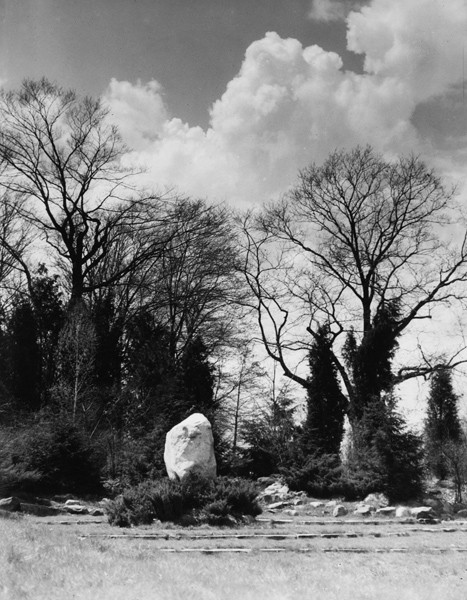
    <published>2014-07-14T00:58:16+00:00</published>
    <updated>2026-03-04T21:32:02+00:00</updated>
    <link rel="alternate" type="text/html" href="https://clevelandhistorical.org/items/show/663"/>
    <id>https://clevelandhistorical.org/items/show/663</id>
    <author>
      <name>Richard Raponi</name>
    </author>
  </entry>
  <entry>
    <title type="html"><![CDATA[Reinventing Cleveland&#039;s Zoo: Education and Recreation for the Whole Family]]></title>
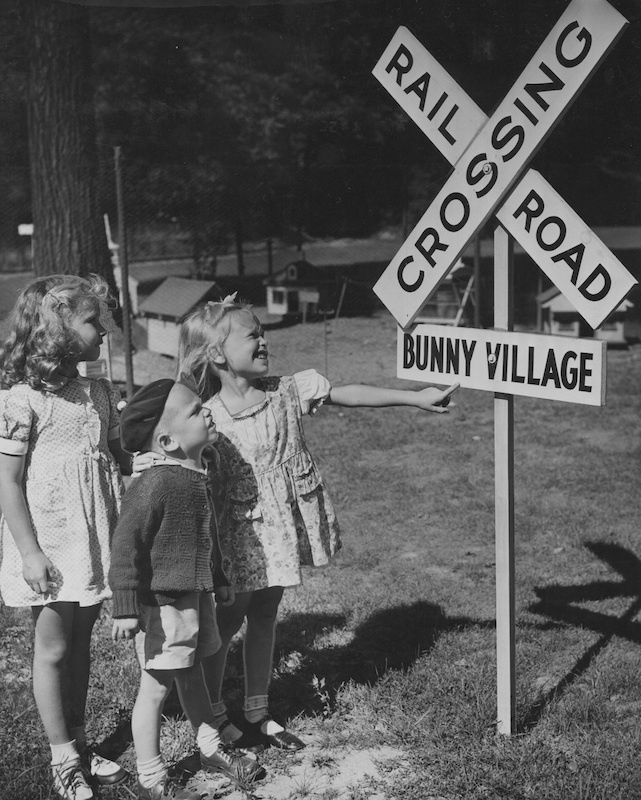
    <summary type="html"><![CDATA[<p><strong><em>Cleveland's public zoo was reinvented during the 1940s, paving the way for it to become one of the  city's most popular attractions.  What changed?</em></strong></p><img src="https://clevelandhistorical.org/files/fullsize/1b2ae627ae73c4839736b56e0aed4b9a.jpg" alt="Bunny Village, 1946" /><br/><p>Did you know that zoos and aquariums in the United States attract nearly 175 million visitors a year?  While not taking into account repeat visitors, this staggering number is over half of the entire population of the county.  With two-thirds of all adults in attendance having a child in tow, the popularity of these institutions can partly be attributed to their successful development as spaces for both education and recreation. In Cleveland, efforts toward this end were realized by the public zoo during the 1940s, and symbolized by a name change from the Brookside Zoo to the Cleveland Zoological Park. With a new name, and under new leadership, the Cleveland Zoo was physically reinvented as a site for children and families.  Both exhibits were constructed and resources developed to attract the new target audience.  By focusing on expanding its role as a space for education while simultaneously cultivating an enjoyable experience for young patrons, the Cleveland Zoological Park established itself as both a valuable and popular civic institution by the end of the 1950s.</p><p>During its first fifty years in existence, Wade Park Zoo and Brookside Zoo were far from prestigious institutions. Despite waves of public interest, the zoo received its fair share of complaints concerning stagnated development and physical deterioration. By the late 1930s, legislation had even been introduced to the City Council to abolish the zoo; this prompted the Cleveland Federation of Women's Club to advocate for the creation of a proper zoological society to manage the grounds. While this idea had been previously suggested and researched, the plans finally resonated enough with the City Council and Cleveland's public to be put into action. </p><p>The tide turned for the Cleveland Zoo in August of 1940. Cleveland's City Council voted to transfer management of the zoo from the city to the Cleveland Museum of Natural History. The non-profit, private organization was appropriated $50,000 a year, and proceeded to install a board of thirty leading citizens; the board created the position of 'Director,' and brought in Fletcher Reynolds to oversee the institution's development in 1942. While the growth of the zoo moved slowly due to its limited resources during World War II, the grounds and existing animal habitats were immediately cleaned and beautified. In October of 1944, the zoo was given a new name and fresh start as the Cleveland Zoological Park. </p><p>The new Cleveland Zoo quickly developed itself as an educational resource. The basement of the main zoo building was converted into a classroom, education and entertainment programs were created, a miniature train was added as an attraction, and a traveling zoo visited parks throughout the city to offer children a chance to both learn about and play with zoo animals. Once revenue became available for physical expansion, a Children's Zoo featuring a fairy tale theme park was added to the grounds. Coinciding with the construction of new exhibit spaces and the introduction of many exotic species to the animal collection, the mid-century zoo had emerged as a popular destination for Clevelanders. While reports of 50,000 daily visitors during the late 1940s were probably greatly exaggerated, each added attraction and shipment of new animals was accompanied by claims of record attendance in local papers.</p><p>Cleveland Zoological Park continued to expand and focus on children's attractions and educational programming throughout the 1950s. School visits and art classes became a commonplace sight at the zoo, and a teacher from the Cleveland Board of Education worked onsite beginning in 1951.   Additional petting and feeding exhibits were also developed, and Fletcher Reynolds regularly presented informational radio broadcasts. Cleveland's public zoo became a space associated with children, their education and recreation.  In turn, it attracted an audience of parents seeking to promote the betterment of their offspring. </p><p>While the public's usage of zoos remained recreational in nature, zoos materialized their role as educational institutions - a transition that guided development to present day. While numerous changes have taken place since the 1950s in how Cleveland's zoo is operated, designed and marketed, the prestige and success of the institution remains intertwined with a perceived educational value. Attracting more than one million visitors a years, Cleveland Metroparks Zoo has grown into one of the city's most popular attractions.</p><p><em><strong><a href="https://clevelandhistorical.org/items/show/617">For more (including 12 images&#32;&amp;&#32;2 audio files) view the original article</a></strong></em></p>]]></summary>
    <published>2013-06-26T10:49:47+00:00</published>
    <updated>2026-03-04T21:32:01+00:00</updated>
    <link rel="alternate" type="text/html" href="https://clevelandhistorical.org/items/show/617"/>
    <id>https://clevelandhistorical.org/items/show/617</id>
    <author>
      <name>Richard Raponi</name>
    </author>
  </entry>
  <entry>
    <title type="html"><![CDATA[Trailside Interpretation Center: Rocky River Nature Center and the Legacy of Arthur B. Williams]]></title>
    <summary type="html"><![CDATA[<img src="https://clevelandhistorical.org/files/fullsize/8fd1f06cfd0ffe1df6a7e00dd2cb9813.jpg" alt="Admiring Nature" /><br/><p>The Trailside Interpretation Center was built in 1971, and is currently known as the Rocky River Nature Center. Located in the Rocky River South Reservation, it is the paragon of naturalist interpretation and education within the Cleveland Metroparks. Although constructed after his time, it could be said that the Rocky River Nature Center is the culmination of Arthur B. Williams' career with the Cleveland Metroparks. </p><p>Williams had a passion for and extensive knowledge of the ecology of the Cleveland Metroparks. His doctoral thesis concerned the ecosystem found within what would eventually become the North Chagrin Reservation of the Metroparks. He was appointed as a naturalist for the Cleveland Metropolitan Park Board in 1930 to interpret the natural history of the Metroparks for the public. Williams took it upon himself to personally investigate each reservation within the Metropolitan Parks System, and the data he collected on these field studies would eventually be compiled to form educational programs. For some time he personally educated the public by leading people on interpretive nature walks. </p><p>Williams' nature walks and educational nature programs became so popular that Williams and the Cleveland Museum of Natural History realized a need for public facilities to carry out his interpretation of local natural history. During the 1930s, Arthur Williams was ultimately responsible for the founding of three trailside museums. These were located in the North Chagrin Reservation, the Brecksville Reservation, and the Rocky River Reservation (not to be confused with the later Trailside Interpretation Center in the Rocky River North Reservation). </p><p>The trailside museum in the North Chagrin Reservation is reputedly the first such museum established in the entire nation, and is known for a fact to be the first in Ohio. During its first year, the trailside museum in North Chagrin did not close until December because of its outstanding public visitation. More than 150,000 visitors came to the museum that year. The museum served as a bridge between nature and civilization. It aimed to introduce visitors to "natural wonders" so that they would develop an affinity for nature and wildlife in general but specifically for those in the geographic area of Cleveland which Williams found so unique. The trailside museum in North Chagrin utilized tactics such as making the museum accessible only by foot to preserve its wooded location, talks and lectures led by local naturalists, and even living exhibits containing local wildlife. </p><p>The Rocky River Nature Center represents the evolution of Williams' trailside museums. Here, visitors of all ages can become educated on geological formations by simply taking a step outside to the observation deck that overlooks the Rocky River, explore indoor exhibits which focus on wildlife and the early inhabitants of the area, and experience the gardens and nature trails surrounding the building. Through exhibits on the first Native Americans to inhabit Ohio, living-history presentations on Ohio pioneer life, and scientific experiments to maintain local fish populations, the nature center combines preservation and education of both the natural and historical aspects of the Cleveland Metroparks in a recreational setting. By doing so, the Rocky River Nature Center embodies the mission which Williams carried out as the park naturalist.</p><p><em><strong><a href="https://clevelandhistorical.org/items/show/389">For more (including 8 images) view the original article</a></strong></em></p>]]></summary>
    <published>2012-01-10T10:55:10+00:00</published>
    <updated>2026-03-04T21:31:59+00:00</updated>
    <link rel="alternate" type="text/html" href="https://clevelandhistorical.org/items/show/389"/>
    <id>https://clevelandhistorical.org/items/show/389</id>
    <author>
      <name>Matthew Sisson</name>
    </author>
  </entry>
  <entry>
    <title type="html"><![CDATA[Jared Potter Kirtland: The Whippoorwill Farm]]></title>
    <summary type="html"><![CDATA[<img src="https://clevelandhistorical.org/files/fullsize/81bcffbb000c44611c1af1e129660e1d.jpg" alt="Whipporwill" /><br/><p>The address 14013 Detroit Avenue in Lakewood, Ohio, was the site of much debate in the early 1950s. A group of activists, including C.H. Webster from the Museum of History, Dr. Bruno Gebhard, the Director of the Cleveland Health Museum, and Margaret Manor Butler, local writer and historian, was attempting to save the address from becoming a grocery store. The home at the site was part of a farm known as Whippoorwill and was originally built of stone in 1839 for Dr. Jared Potter Kirtland and his family.  Later, the Kirtland home was extensively remodeled and became a part of an estate and farm that Dr. Kirtland used for his botanical studies. In the 1950s, the Kirtland home belonged to Mrs. H.E. Williard. She intended to sell the property to the Kroger's Grocery chain, and if she succeeded the home and other farm buildings would be torn down. Many citizens of the area, with the support of the Cleveland Press, wanted to preserve the farm and create a museum to honor Dr. Kirtland. </p><p>Jared Potter Kirtland was a physician, naturalist, botanist, teacher and philanthropist. He moved from Poland, Ohio, to Rockport Township (which would later become part of Lakewood) later in life to become the Chair of the Theory and Practice of Medicine at the Cleveland Medical College. He published papers in medical journals and conducted the first geologic survey of Ohio. He was a staunch abolitionist who had been active in the cause of assisting escaped slaves in Poland. He also served as a doctor during the Civil War, performing physicals for the Ohio Volunteer Infantry for no pay. Kirtland was also a co-founder of Western Reserve University's Medical School and his personal collection became the foundation for the Cleveland Museum of Natural History. At the 40th anniversary of the Natural History Museum a new hall was debuted in his honor. </p><p>Kirtland studied and taught medicine, keeping records of his observations in nature. He was a botanist and horticulturist whose eminence led to the naming of a bird - the Kirtland Warbler. His Rockport home, Whippoorwill, began to be constructed in 1839. The gardens he kept at Whippoorwill were legendary and many scientists, naturalists, and even celebrities traveled to view them. Dr. Kirtland developed twenty-six varieties of cherry trees and six varieties of pears. Lakewood became an area with many orchards, vineyards and other crops that could be sold at market. Kirtland assisted growers with his knowledge of vegetation and helped his neighbors with their plants.  </p><p>One of Kirtland's many contributions to the Cleveland area was cleaner water. He pushed for the creation of better water treatment facilities to the city. During his studies of the Mahoning River contamination, the doctor became convinced that clean water was necessary for the sake of public health. He went on to serve on a committee that fought to secure safe drinking water for Cleveland. The discoveries he made regarding a type of freshwater mollusk during this time were published in a Science journal in 1834.</p><p>Despite all his contributions to Lakewood and Cleveland, the team seeking to preserve Whippoorwill did not succeed. Re-zoning was granted and the sale went through. Kroger built their store which became a Finast supermarket. When Finast became Giant Eagle the store moved across the street. The old supermarket building was eventually demolished, making way for a gas station.  Although no physical remnant stands to remind Clevelanders of his accomplishments, Kirtland's contributions to the study of nature and science endure. Kirtland is remembered by some, and a few of his possessions have been saved by the Lakewood Historical Society.  </p><p><em><strong><a href="https://clevelandhistorical.org/items/show/379">For more (including 8 images) view the original article</a></strong></em></p>]]></summary>
    <published>2011-12-21T22:22:25+00:00</published>
    <updated>2026-03-04T21:31:59+00:00</updated>
    <link rel="alternate" type="text/html" href="https://clevelandhistorical.org/items/show/379"/>
    <id>https://clevelandhistorical.org/items/show/379</id>
    <author>
      <name>Lisa Alleman</name>
    </author>
  </entry>
  <entry>
    <title type="html"><![CDATA[Bratenahl: A Village Apart]]></title>
    <summary type="html"><![CDATA[<img src="https://clevelandhistorical.org/files/fullsize/9e4be91b3c8bb96a45508559942cf52b.jpg" alt="Lakeshore Boulevard, 1938" /><br/><p>Surrounded on three sides by the city of Cleveland, and bordered on the fourth side by Lake Erie, Bratenahl has remained to this day a secluded village. The village began as farmland in the early nineteenth century, owned by its namesake, Charles Bratenahl. Before becoming Bratenahl, the village was part of Glenville, the "village of glens." Around the turn of the twentieth century, wealthy industrialists began to buy property for their homes here. Looking to escape the problems of the city that were creeping towards Millionaires' Row, these men chose beautiful lakefront properties on which to build their great estates.</p><p>Conflict arose when those who lived in the southern end of Glenville, the renters, wanted to be annexed to the city of Cleveland.  The millionaires of the north had moved to Glenville to escape the city. After a prolonged conflict, the annexation was voted out. But the inhabitants of northern Glenville took no chances. They seceded from Glenville in 1904 to form the village of Bratenahl. Glenville was eventually annexed to Cleveland, but without its former northern section.</p><p>What began as a class difference evolved into a racial divide during the 1950s and 1960s. Black populations were migrating out from the city, and white populations fled even further out to the suburbs. The Memorial Shoreway, whose East 72nd to East 140th Street segment was completed in 1941, eventually constituted a racial barrier between Bratenahl and the increasingly black communities to the south. In the late 1960s, the effort to desegregate schools became more widespread across the nation and did not pass by Cleveland. The State of Ohio ordered Bratenahl School District, which included only kindergarten through eighth grade, to merge with the Cleveland public schools because it did not have a high school. This was all part of the growing desegregation process. Bratenahl fought for twelve years to keep its district. Appeals went back and forth between Bratenahl and the State of Ohio. Finally, in 1980, Bratenahl lost its battle and merged officially with Cleveland public schools.</p><p>Bratenahl has been the seat of an odd sort of paradox. The millionaires that lived there continued to be involved in the city of Cleveland, and yet chose to live apart from all of its problems in the seclusion of a neighborhood they formed themselves. The racial barrier of the Cleveland Memorial Shoreway (Interstate 90) still remains in place today, separating the upscale village of Bratenahl from the impoverished, predominantly black Glenville neighborhood. Bratenahl has remained separate from the city, and yet contributes to the racial divides still present in Cleveland.</p><p><em><strong><a href="https://clevelandhistorical.org/items/show/358">For more (including 8 images) view the original article</a></strong></em></p>]]></summary>
    <published>2011-12-05T21:13:59+00:00</published>
    <updated>2026-03-04T21:31:59+00:00</updated>
    <link rel="alternate" type="text/html" href="https://clevelandhistorical.org/items/show/358"/>
    <id>https://clevelandhistorical.org/items/show/358</id>
    <author>
      <name>Kelsey Smith</name>
    </author>
  </entry>
  <entry>
    <title type="html"><![CDATA[Ukrainian National Home]]></title>
    <summary type="html"><![CDATA[<img src="https://clevelandhistorical.org/files/fullsize/omeka-olneygallery_490689f9d7.jpg" alt="Exterior of Ukrainian National Home" /><br/><p>Ukrainians began arriving in Cleveland in the mid-1880s and made Tremont their primary settlement. The first Ukrainian Catholic parish in Cleveland was organized in the neighborhood in 1902.  By 1910, the parish had constructed SS. Peter and Paul Church at 2280 West 7th Street. The church served as a focal point for the community. </p><p>The Ukrainian National Home on West 14th Street, which opened in the 1920s, was another key meeting place for Ukrainians in Tremont. Located in a mansion that had once belonged to industrialist Thomas Lamson of Lamson & Sessions Co., the home held a variety of educational, social, and recreational events until it closed in 1967. It served, too, as a temporary refuge for Ukrainian political emigres and displaced persons who came to Cleveland following World Wars I and II. By the time of its closure, much of the Ukrainian community had moved to Parma and other western suburbs.</p><p>Despite suburbanization, a Ukrainian presence remains in Tremont today. Displaced scholars founded the Ukrainian Museum-Archives (located at 1202 Kenilworth Avenue) after World War II, seeking to preserve Ukrainian history and culture while their homeland was under Soviet occupation. Since its creation in 1952, the museum, its mission, and its collections have garnered worldwide recognition and support.</p><p>In later years, the old site of the Ukrainian National Home became a Puerto Rican social hall. This transition reflects the changing nature of Tremont's community, with new waves of immigrants and ethnic groups arriving in neighborhood.</p><p><em><strong><a href="https://clevelandhistorical.org/items/show/100">For more (including 7 images&#32;&amp;&#32;2 audio files) view the original article</a></strong></em></p>]]></summary>
    <published>2010-11-27T13:51:51+00:00</published>
    <updated>2026-03-04T21:31:58+00:00</updated>
    <link rel="alternate" type="text/html" href="https://clevelandhistorical.org/items/show/100"/>
    <id>https://clevelandhistorical.org/items/show/100</id>
    <author>
      <name>Michael Rotman</name>
    </author>
  </entry>
</feed>