<?xml version="1.0" encoding="UTF-8"?>
<feed xmlns="http://www.w3.org/2005/Atom">
  <title type="text">Cleveland Historical</title>
  <updated>2026-04-17T14:00:42+00:00</updated>
  <generator uri="http://framework.zend.com" version="1.12.20">Zend_Feed_Writer</generator>
  <link rel="alternate" type="text/html" href="https://clevelandhistorical.org/"/>
  <link rel="self" type="application/atom+xml" href="https://clevelandhistorical.org/items/browse?output=rss2"/>
  <id>https://clevelandhistorical.org/</id>
  <author>
    <name>Cleveland Historical</name>
    <uri>https://clevelandhistorical.org</uri>
  </author>
  <link rel="hub" href="http://pubsubhubbub.appspot.com/"/>
  <entry>
    <title type="html"><![CDATA[I-X Center: From Factory to Exposition Center]]></title>
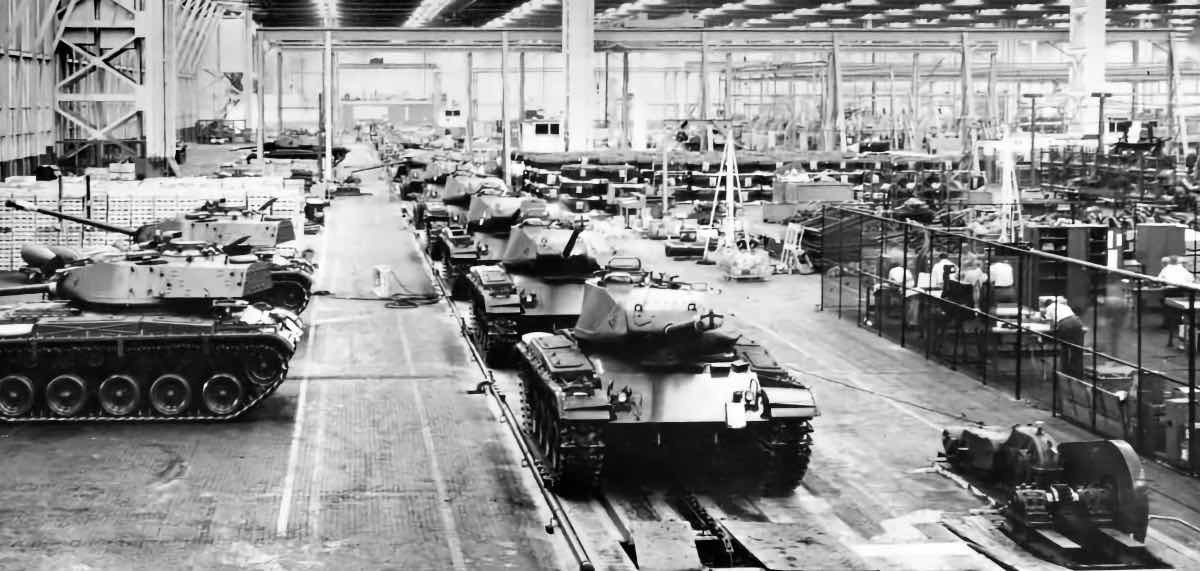
    <summary type="html"><![CDATA[<p><strong><em>The International Exposition Center, originally built as the Cleveland Bomber Plant, has seen an impressive variety of uses over its years of operation. From bomber planes and tanks to the various trade shows and events, the I-X Center has been used for countless different productions and conventions.</em></strong></p><img src="https://clevelandhistorical.org/files/fullsize/d918f614ed2aac926ea0fd41c3c6304a.jpg" alt="M41 Walker Bulldog Tanks" /><br/><p>The International Exposition Center, originally known as the Cleveland Bomber Plant, was built in 1942 with the purpose of constructing major sections of B-29 bombers for the United States during the Second World War. It was constructed and owned by the U.S. Department of Defense and was operated by Fisher Body, a subsidiary of General Motors. Following the conclusion of World War II, the Cleveland Bomber Plant was used briefly as an exhibition hall and sales center, a foreshadowing of what was to come many years later.</p><p>The workspace at the Cleveland Bomber Plant during World War II was diverse. African American men and women worked alongside white workers for attractive wages for the time. The demand for workers in the factory was so great that employees required approval from the Department of Defense to change jobs. Aside from the fabrication of B-29 bomber nose and tail sections, Fisher Body also received a contract to build and test top-secret experimental XP-75 fighter planes. The operations were so secretive that those working at the plant did not even know the specifications of the planes themselves.</p><p>After the end of World War II, the Cleveland Bomber Plant was leased to National Terminals and used as a soybean storage facility. The plant was used in this way until the beginning of the Korean War. U.S. involvement in the Korean War saw the Cleveland Bomber Plant become the Cadillac Tank Plant (or Cleveland Tank Plant). During the time of the Cadillac Tank Plant, the plant had expanded to include a photo department, a labor relations office, a full-time lawyer's office, and even a hospital with nurses and a staff doctor. This expansion, coupled with the thousands of workers at the facility, made the plant feel more like a small town in its own right than just a place of work.</p><p>The Cadillac Tank Plant produced tanks, artillery pieces, and other military vehicles with varying degrees of success. Following two years of production, the U.S. Army rejected all tanks made at the plant because of a faulty gun mechanism. In 1953, the Walker Bulldog, a light tank, was successfully put into service in Korea.</p><p>Between 1964 and 1966, Chrysler held the manufacturing contract at the plant while General Motors held the engineering contract. The relationship between these two companies was reputed to be poor. The plant was divided between these two companies, and a wall was built to protect trade secrets from one another, showcasing the lack of cooperation between the two. Chrysler would eventually lose the manufacturing bid to the Allison division of General Motors, leading to a smoother production process once again. Production continued until 1972. With United States involvement in the Vietnam War coming to an end, the U.S. government decided not to continue with the program upon the completion of the last General Motors contract.</p><p>After the Department of Defense closed the Cleveland Tank Plant, it made the site available for purchase. General Motors and the cities of Brook Park and Cleveland all showed some interest in purchasing the tank plant, but ultimately, none of them bought it.</p><p>In 1977 the plant was purchased by The Park Corporation of Charleston, West Virginia, with the intention of transforming the it into an international trade mart. Years after its purchase, in 1985 the facility reopened as the International Exposition and Trade Center, or I-X Center, and was reputedly the largest single-building exposition facility in the world. The I-X Center hosted a large variety of events such as conferences, car, motorcycle, boat, and home and garden shows, trade shows, and later the I-X indoor amusement park.</p><p>The I-X Center had created strong competition for the Cleveland Convention Center. After it opened, the I-X Center drew away both the auto and boat shows that were previously held at the downtown convention center.  Local unions tried to create new contracts that were aimed at helping the Cleveland Convention Center to keep or attract new trade shows, as the available work at the Cleveland center continued to decline. There was also a "gentlemen's agreement" between Ray Park, owner of the I-X Center, and the City of Cleveland that the I-X Center would not solicit shows that were traditionally run at the Cleveland Convention Center. Despite this agreement, however, the I-X Center offered the space and time desired by shows such as the Auto Show, and the I-X Center was picked over the Cleveland Center.</p><p>The Cleveland Convention Center went under renovations and attempted to showcase and market these renovations to remain competitive with the I-X Center and other cities. These renovations proved not to be enough as the Cleveland Convention Center would continue to operate at a loss after its most profitable shows went to the I-X Center.</p><p>The addition of 185,000 square feet of exhibit space in 2008 puts the I-X Center at a total of 2.2 million square feet, and it remains one of the largest trade show and exhibition centers in the world as of 2026. The I-X Center was closed during the COVID pandemic and was purchased and reopened by the Industrial Realty Group in 2021. Events continued until March 2026, with the Industrial Realty Group seemingly uninterested in continuing to use the I-X Center for event space.</p><p>The I-X Center remains a historic piece of Cleveland's industrial and commercial legacy. From the manufacturing of important military hardware to one of the largest exposition centers in the world, its many different uses mirror the shifting phases of Cleveland's economy.</p><p><em><strong><a href="https://clevelandhistorical.org/items/show/1081">For more (including 7 images) view the original article</a></strong></em></p>]]></summary>
    <published>2026-03-06T15:40:14+00:00</published>
    <updated>2026-04-15T20:36:51+00:00</updated>
    <link rel="alternate" type="text/html" href="https://clevelandhistorical.org/items/show/1081"/>
    <id>https://clevelandhistorical.org/items/show/1081</id>
    <author>
      <name>Jaret Glueck</name>
    </author>
  </entry>
  <entry>
    <title type="html"><![CDATA[Global Center for Health Innovation]]></title>
    <summary type="html"><![CDATA[<img src="https://clevelandhistorical.org/files/fullsize/a146bbf9b92ad3f7b9ac9c9edf1a710a.jpg" alt="Global Center for Health Innovation, Northeast Corner" /><br/><p>The story of Cleveland’s Global Center for Health Innovation is almost as multifaceted as the products, services, and solutions offered by its myriad members. Even the organization’s name has twists and turns: Readers are more likely to recognize its original moniker, the Medical Mart. </p><p>The Global Center’s tale began in 1982 when a taskforce looked into the possibility of creating the healthcare equivalent of Chicago’s Merchandise Mart in the Old Post Office Building adjacent to Tower City Center. Key participants in this early-stage effort included Dr. William Kiser, M.D., chairman of the Cleveland Clinic Board of Governors; Albert Ratner of Forest City Enterprises; and Thomas King, James Bidwell, and Senator Edward M. Kennedy representing the Merchandise Mart. The project was curtailed when market studies found that the current economic climate could not support a shopping mall concept for healthcare products.</p><p>The project’s next phase unfolded in 1995 when Dr. Toby Cosgrove, then chairman of Cleveland Clinic’s Department of Thoracic and Cardiovascular Surgery, visited Saudi Arabia, where an influential sheik told him that a medical mart and hotel would be built in Dubai. Fast forward to 2005 when Dr. Cosgrove—by then Cleveland Clinic president and chief executive officer—concluded that the time was right to reprise the Medical Mart idea. Shortly thereafter, Cosgrove was introduced to Chris Kennedy, then president of MMPI, a company that manages industrial showrooms across the country, including Chicago’s Merchandise Mart. Cosgrove and Kennedy discussed the project with Mayor Jane Campbell and her Chief of Staff Chris Ronayne. With their backing, the Cuyahoga County Commissioners, led by Tim Hagan, took the reins. </p><p>By 2008 the commissioners approved two relevant tax measures: The first—a quarter-cent countywide sales tax—would raise $425 million to construct a Medical Mart and rebuild the Cleveland Convention Center. The second measure was a 1 percent increase in the County bed tax. Combined with tenants’ rent payments, the latter source could be expected to cover the Mart’s and the Convention Center’s operating costs. </p><p>Cuyahoga County and MMPI signed a development agreement in April 2009. At this time, several locations were still in play, including the Mall, University Circle, and a plot behind Tower City Center. The County chose a site on the western edge of the Mall along St. Clair Avenue. </p><p>In January 2010 the County signed a construction agreement with MMPI. The following month LMN Architects of Seattle was chosen to design the facility. By August the Cleveland Planning Commission also approved a massive revamping of the downtown convention center. Like the previous facility, the new structure would be underground. But instead of a below-grade driveway ingress on the building’s side, the new structure would feature a grand entrance along Lakeside Avenue, with Mall B raised significantly along a south-north slope from St. Clair Avenue to Lakeside. </p><p>In late 2010 Cuyahoga County purchased the Cleveland Convention Center from the City of Cleveland for $20 million and finalized negotiations with the owners of five buildings slated for demolition at St. Clair and Ontario. The path now was clear to begin construction of the Mart and the Convention Center, which officially began on January 3, 2011. </p><p>Construction crews removed more than 500,000 tons of debris and demolished six buildings, including the old Cleveland Convention Center, Justice Center parking garage, the 113 office building, Sportsman Restaurant, Chicago Title, and the old County Annex building. More than 12,200 tons of steel—the most for any project in downtown Cleveland history—was then used to create the complexes’ infrastructures.</p><p>In October 2012 GE Healthcare Systems and Cleveland Clinic signed on as the Medical Mart’s first tenants. Four months later, Cuyahoga County Executive Ed FitzGerald announced that the facility would be formally named the Global Center for Health Innovation. MMPI then secured a lease from the Healthcare Information and Management Systems Society (HIMSS), one of the largest medical organizations in America with more than 50,000 members. Like no other milestone, HIMSS’ commitment helped solidify the Center’s future—giving Cleveland a chance to become the epicenter of healthcare information technology.</p><p>Convention Center construction was completed in June 2013—just in time to host the highly successful National Senior Games. First Merit Bank purchased the naming rights to the Convention Center in 2015. In early 2016 Huntington Bank purchased First Merit and assumed the naming rights. The Global Center for Health Innovation opened in October 2013. </p><p>In late 2013 the county parted ways with MMPI and awarded a five-year management agreement to SMG, the nation's largest operator of convention centers. That same year, the Cuyahoga County Convention Facilities Development Corporation (CCCFDC) was formed to promote convention business, enhance county-wide economic growth, expand employment opportunities and promote tourism. CCCFDC also oversees SMG’s operation of the Convention Center and the Global Center for Health Innovation. In June 2016 the final leg of the stool was completed: A 600-room, 32-story Hilton hotel was built on Lakeside Avenue on land formerly occupied by the Cuyahoga County Administration Building. </p><p>Since its 2013 opening, the Global Center for Health Innovation has become a national focal point for healthcare advancements, conventions and industry conferences. Its tenants include 45 of the world’s leading healthcare brands and it hosts more than 300 industry meetings annually. The Huntington Convention Center of Cleveland already has hosted more than 600 events, including its role as the media center for the 2016 Republican National Convention. In 2016 alone, the complex logged 237 events and attracted more than 440,000 visitors. </p><p><em><strong><a href="https://clevelandhistorical.org/items/show/807">For more (including 7 images) view the original article</a></strong></em></p>]]></summary>
    <published>2017-07-05T20:12:13+00:00</published>
    <updated>2026-03-04T21:32:03+00:00</updated>
    <link rel="alternate" type="text/html" href="https://clevelandhistorical.org/items/show/807"/>
    <id>https://clevelandhistorical.org/items/show/807</id>
    <author>
      <name>Dave Johnson</name>
    </author>
  </entry>
  <entry>
    <title type="html"><![CDATA[The 1924 Republican National Convention]]></title>
    <summary type="html"><![CDATA[<img src="https://clevelandhistorical.org/files/fullsize/68e5a26c8ffe0f3dfffee43cea6939bc.jpg" alt="President Calvin Coolidge, 1923" /><br/><p>In 1924, the city of Cleveland was preparing for a gathering unlike any it had ever experienced before. After much debate, it had been decided that the Republican National Convention was going to be held in the Forest City. Set to take place in June 1924, this convention would start a new era of political conventions.</p><p>On August 2, 1923, the nation experienced the tragic death of President Warren G. Harding and saw a new face take his place. Calvin Coolidge was fairly unknown as the vice president and remained rather unknown throughout the rest of that year. His lack of publicity served the Grand Old Party (GOP) well. The Harding administration, after all, had faced a great deal of controversy which had guaranteed that he would be dropped from the ticket in 1924. The Teapot Dome and veterans bureau scandals caused the public to lose all faith in the government, but Coolidge's fresh face was exactly what the party needed to be able to restore the country's faith in their government as well as in the Republican Party.</p><p>When it came down to the convention that would nominate Coolidge, there was debate on whether it was going to be held in San Francisco or Cleveland. The deciding factor was a personal endorsement from Coolidge for the city of Cleveland. In tribute to the late President Harding, Coolidge gave his support to Cleveland for it was in Harding's home state. Besides said endorsement, Cleveland itself had a great deal to offer. The city had a brand-new Public Auditorium, which was near many excellent hotels and attractions, and was able to host 11,500 people.</p><p>The convention was the first to allow female delegates equal representation with men after women had received the right to vote in 1920. Special attention was paid to the comfort of female representatives. The party even created a special committee to accommodate the needs of women, including placing a hostess at every accommodating hotel in order to assist representatives. The convention was also the first to broadcast its proceedings through radio. WTAM broadcast the convention's speeches and other important elements as far as its signal could reach. There was also much spectacle given to the convention such as fireworks and boat rides given to delegates.</p><p>This convention in particular was somewhat of an enigma. Though there was a great deal of new and exciting things surrounding this convention, it is hardly mentioned as being influential. Although the convention provided a starting point for some aspects of modern-day conventions, the actual content of the convention was rather dry. At one point it was suggested that "the city open up the churches to liven things up a bit." There was relatively little debate on whom to nominate since the GOP had a great deal of faith in Coolidge. Consequently, there was not much to actually do. President Coolidge himself did not even attend the convention; he stayed in Washington, D.C., to continue attending to Presidential duties.</p><p>The convention provided a firm foundation for the elected presidency of Calvin Coolidge. Though he served during a time known as the "roaring twenties," his journey there was nothing of the sort. His legacy as "Silent Cal" followed by the devastation caused by the Great Depression would go on to replace the memory of the pathbreaking yet lackluster Republican National Convention of 1924.</p><p><em><strong><a href="https://clevelandhistorical.org/items/show/684">For more (including 6 images) view the original article</a></strong></em></p>]]></summary>
    <published>2014-12-10T20:53:51+00:00</published>
    <updated>2026-03-04T21:32:02+00:00</updated>
    <link rel="alternate" type="text/html" href="https://clevelandhistorical.org/items/show/684"/>
    <id>https://clevelandhistorical.org/items/show/684</id>
    <author>
      <name>Kristyn Vines</name>
    </author>
  </entry>
  <entry>
    <title type="html"><![CDATA[The 1895 Republican National League Meeting: On the Road to William McKinley&#039;s Presidential Nomination]]></title>
    <summary type="html"><![CDATA[<img src="https://clevelandhistorical.org/files/fullsize/47f40f8593a4e7cb338c411ed2b0d7de.jpg" alt="Arcade During Republican National League Meeting, 1895" /><br/><p>With the Second Industrial Revolution in full swing, large industrial cities in the East and Midwest were expanding rapidly. Cleveland was no exception. Recognizing that Ohio was becoming the political center of the nation, the Republican National League (commonly referred to as the League of Republican Clubs) chose the city as the location for its annual meeting in June 1895. The meeting would set the stage for greater moments in the near future, including the election of William McKinley (then Governor of Ohio) to the Presidency in 1896, and the consolidation of Republican leadership of the country until just before the outbreak of World War I.  The National Republican League meeting placed Cleveland firmly on the map of partisan politics and ushered in a period of its growing centrality in the political arena.</p><p>The 1895 Republican National League meeting set the political tone for the Republican Party by serving as the catalyst which initiated a chain reaction setting up Governor William McKinley's 1896 nomination, resulting in his subsequent election. At the Cleveland meeting, Governor McKinley was already the party favorite and one of the proverbial stars of the show, among the various representatives including Ohio Senator Marcus A. Hanna, a good friend and ally of Governor McKinley. Other notable persons in attendance included William W. Tracy, President of the Republican National League, Edward B. Harper, Treasurer of the League, and the Honorable D.D. Woodmansee, President of the Ohio Republican League and "champion of the Republican cause" who was then serving his second elected term as President of the Ohio Republican League.</p><p>The Republican National League meeting was no small affair. Total attendance for this event in downtown Cleveland was in excess of two thousand representatives and another two thousand alternates. During the meeting, the League Executive Committee and leadership was headquartered at the now-defunct Hollenden Hotel near the Arcade. As the hotel became crowded with League members and news reporters, the Plain Dealer effectively summed up the atmosphere at the Hollenden, "All day long the delegates had dropped in for relief from the heat of the pavement... Down on the floor of the lobby, the crowd was increasing hourly. There were representatives from every section of the country and the hotel bore a metropolitan appearance." However, the Arcade was the center of the festivities. </p><p>One of the core issues for the Republican League meeting was, of course, the upcoming presidential election. A large proportion of the meeting was otherwise devoted to economic issues, upon which the Republican party constructed its ideological platform. Considerable issues for debate arose around the country's economy. The League was determined to counter the Democratic party's rallying cry of free silver, which the Republicans sought to attack by vigorously advertising and promoting the gold standard to squelch cries for the more vague-sounding free coinage. Given the fact that farmers suffering from years of drought and growing indebtedness sought relief in the expansion the nation's monetary supply through the coinage of silver, it is no wonder this was a key issue at the meeting. McKinley would run on the promise to maintain the gold standard, a position challenged by the pro-silver candidate of the Democrats and Populists, William Jennings Bryan.</p><p>The 50 years following the Republican National League meeting were a time of economic prosperity for Cleveland and other large northern cities. Ohio remained a key political battleground state. As a result, Cleveland continued to attract close scrutiny at every election. The attention helped Cleveland land two Republican National Conventions, in 1924 and 1936. After World War II, such cities lost industries and as a result, population as people left to find replacement work. Cleveland's downtown hotels aged and upkeep waned. Cleveland's Public Auditorium lost ground to other cities' more expansive new convention halls. Even though Ohio remained a key battleground state, Cleveland was no longer as attractive as a convention city, a situation that prevailed until the recent revitalization of downtown and addition of hotel and convention facilities helped the city land the 2016 RNC.</p><p><em><strong><a href="https://clevelandhistorical.org/items/show/683">For more (including 7 images) view the original article</a></strong></em></p>]]></summary>
    <published>2014-12-07T13:38:07+00:00</published>
    <updated>2026-03-04T21:32:02+00:00</updated>
    <link rel="alternate" type="text/html" href="https://clevelandhistorical.org/items/show/683"/>
    <id>https://clevelandhistorical.org/items/show/683</id>
    <author>
      <name>Michael Bobincheck</name>
    </author>
  </entry>
</feed>
