<?xml version="1.0" encoding="UTF-8"?>
<feed xmlns="http://www.w3.org/2005/Atom">
  <title type="text">Cleveland Historical</title>
  <updated>2026-05-02T04:41:53+00:00</updated>
  <generator uri="http://framework.zend.com" version="1.12.20">Zend_Feed_Writer</generator>
  <link rel="alternate" type="text/html" href="https://clevelandhistorical.org/"/>
  <link rel="self" type="application/atom+xml" href="https://clevelandhistorical.org/items/browse?output=rss2"/>
  <id>https://clevelandhistorical.org/</id>
  <author>
    <name>Cleveland Historical</name>
    <uri>https://clevelandhistorical.org</uri>
  </author>
  <link rel="hub" href="http://pubsubhubbub.appspot.com/"/>
  <entry>
    <title type="html"><![CDATA[Cleveland Athletic Club: The Star-Studded History Behind the Athlon ]]></title>
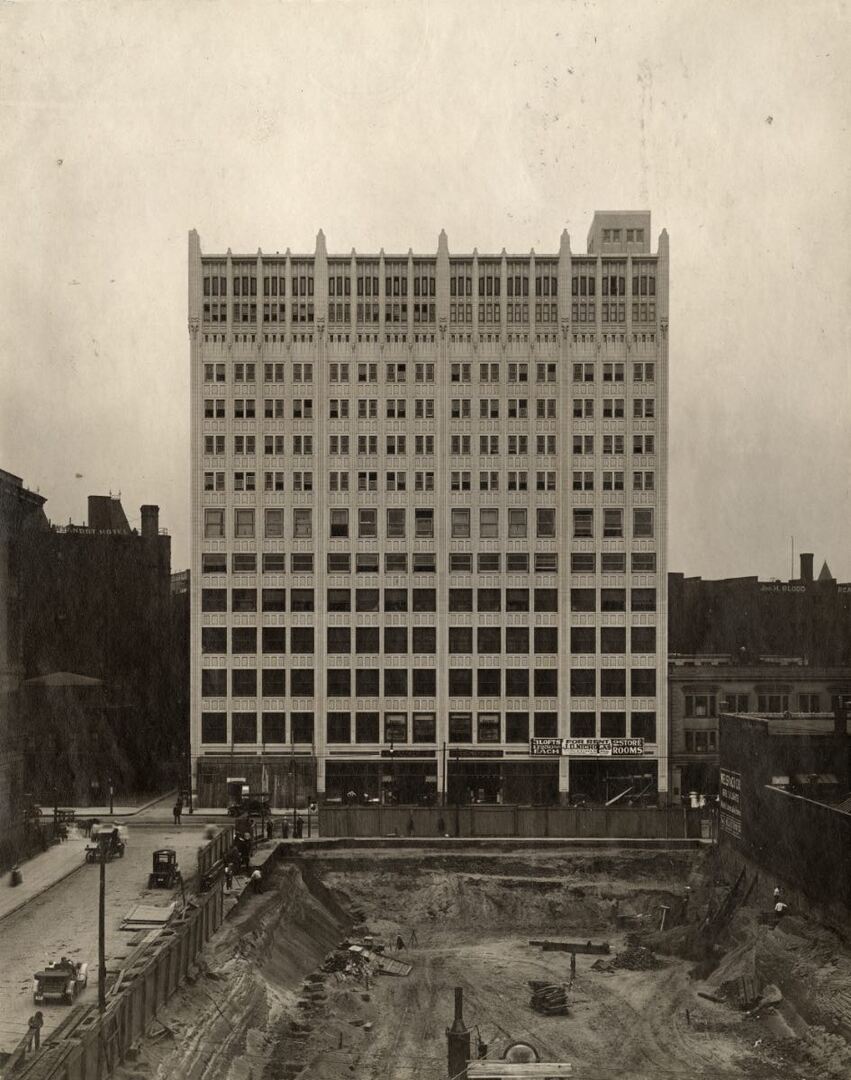
    <summary type="html"><![CDATA[<p><strong><em>The Cleveland Athletic Club was an epicenter of sports culture in Cleveland  for almost a century. Athletes from home and abroad used the CAC's state-of-the-art training facilities and amenities, including a large gymnasium, an indoor track, and an Olympic-sized swimming pool, some of them making sports history in the process.</em></strong></p><img src="https://clevelandhistorical.org/files/fullsize/3045ffb5f072f18bc25d854d4ddf7bba.jpg" alt="CAC under Construction " /><br/><p>For much of the twentieth century, sports and physical fitness were interwoven with Cleveland’s civic life. One place where this sporting culture took shape was the Cleveland Athletic Club (CAC) Building on Euclid Avenue, designed by architect J. Milton Dyer, who also held other notable local commissions, including for the design of Cleveland City Hall. The architectural contract awarded to Dyer totaled $150,000, marking the building as a significant investment for its time. Operating from 1908 until its closure in 2007, the Cleveland Athletic Club served generations of members and offered state-of-the-art athletic facilities that reflected the growing interest in organized recreation and physical training in the early twentieth century. </p><p>The CAC’s origins date to the night of August 10, 1907, when a group of founding members held their first preliminary meeting in the rooms of the Cleveland Auto Club. At that meeting, they elected a temporary president, secretary, and treasurer, and began organizing what would become one of Cleveland’s leading private athletic institutions. Most of these early members were affluent businessmen and professionals who contributed their own funds to establish the club and recruit additional members. Membership grew steadily during the club’s early years, even as members debated the final location of the clubhouse. </p><p>Formal elections were held in 1908. W. P. Murray was once again elected president. Also elected that evening were A. J. Huston as vice president, George A. Schneider as secretary, and A. H. Bedell as treasurer. After two more years of discussion, members decided on a site on Euclid Avenue in 1910. The finished clubhouse occupied the upper ten floors of the 15-story Cleveland Athletic Club Building, which opened in November 1911, giving the CAC a permanent home. </p><p>From its earliest years, the Cleveland Athletic Club distinguished itself through its facilities, which included multiple gymnasiums, boxing rings, handball courts, and a large indoor swimming pool, as well as dining rooms, meeting spaces, and social areas. These amenities made the club both a center for athletic training and a favored spot for Cleveland’s business and professional community to gather. </p><p>The clubhouse attracted many prominent athletes to its facilities for training exercises. Boxing legend Joe Louis trained for several days at the CAC during a visit to Cleveland in 1936. Swimming exhibitions and competitions were also held in the club’s twelfth-floor natatorium, attracting many skilled swimmers. The most illustrious was Johnny Weissmuller, who set the world record for 150-yard backstroke in the club pool in 1922 before going on to win five gold medals in the next two summer Olympics and, later, starring in the <i>Tarzan</i> films. </p><p>Track meets hosted by the club marked another contribution to the city’s sporting culture and gave young athletes a place to develop their skill during the winter months. Among them was Jesse Owens, who participated in meets there during his school years. At the time, Owens was already gaining recognition locally for his remarkable speed, shattering several records—some of them his own—on the club’s track. </p><p>The Cleveland Athletic Club remained a strong institution for nearly a century, serving as one of a number of prestigious anchors on the city’s most celebrated street. Although the CAC closed in 2007, the building continues to offer a reminder of the era when large cities’ athletic clubs were prominent features of urban civic life. When it was converted into apartments in 2019, the CAC Building got new name—The Athlon—that commemorates its history as a place that connected the city to regional and national athletic networks and gave Clevelanders an opportunity to see some of the great athletes of their time.</p><p><em><strong><a href="https://clevelandhistorical.org/items/show/1075">For more (including 8 images) view the original article</a></strong></em></p>]]></summary>
    <published>2025-12-01T17:13:53+00:00</published>
    <updated>2026-04-17T19:17:43+00:00</updated>
    <link rel="alternate" type="text/html" href="https://clevelandhistorical.org/items/show/1075"/>
    <id>https://clevelandhistorical.org/items/show/1075</id>
    <author>
      <name>Clark Helm</name>
    </author>
  </entry>
  <entry>
    <title type="html"><![CDATA[Masterson-Bivins Park: Twice Dedicated, Twice Forgotten, and Now Remembered]]></title>
    <summary type="html"><![CDATA[<p><strong><em>It is one of Cleveland's smallest parks.  Not much more than a patch  of grass and a lamp post on the northwest corner of West 25th Street and Detroit Avenue.  But it is an important public space-- dedicated twice, over the course of the last ninety years, as a memorial to two different legendary Clevelanders--Ward Eight political boss Bernard "Brick" Masterson and famed boxer James Louis "Jimmy" Bivins.</em></strong></p><img src="https://clevelandhistorical.org/files/fullsize/33a01ceebda7a1f7819cba73d7f650f2.jpg" alt="A Very Small Park" /><br/><p>It  was, in the first place, road and bridge improvements that created the park — almost as an afterthought.  For much of the first two decades of the twentieth century, the city of Cleveland had planned and then constructed Bulkley Boulevard (today, the west Shoreway) and then the Detroit-Superior Bridge, thereby providing more direct access for Clevelanders living on the east side to travel to Edgewater Park on the west side.  To address anticipated congestion from traffic coming off the new bridge near West 25th Street, the city purchased, and in 1917 razed, several buildings on Detroit  and Vermont Avenues, immediately west of West 25th, using part of the  cleared land  to create a fan-shaped entrance way onto Bulkley Boulevard.  The land that was left over after the fan-shaped entrance way had been created?  Well, little thought was apparently given to it until west side Councilman Michael H. Gallagher came along and decided that the remnant land should be a park serving as a memorial to Bernard "Brick" Masterson.</p><p>In 1917, Gallagher, a Republican, had been elected Ward Eight Councilman — the ward that then encompassed much of the near west side — defeating three-term incumbent Democrat,  William J. Horrigan.   Gallagher owed much of his electoral success to Brick Masterson, the Republican ward leader.   Masterson, who also was owner of a popular saloon at 1313 West 25th Street, was known on the west side as  "Mayor of the Angle."  This was perhaps due to his success in turning out the Republican vote in 1909, which contributed significantly to the stunning defeat  of Cleveland's most famous mayor, Tom L. Johnson.  Nine years after Johnson's defeat, and just four months after he engineered Michael Gallagher's  victory  over incumbent Councilman Horrigan, the 44-year old Masterson died tragically from a fall he suffered on St. Patrick's Day.  </p><p>While other politicians likely forgot the colorful ward leader soon after his very public funeral, Councilman Gallagher did not.  In 1921,  several years after the entrance way to Boulkley Boulevard at West 25th and Detroit had been created, he successfully sponsored legislation to make that small leftover piece of land a park named "Masterson Square."  And while some may have poked fun at the little park, as the Plain Dealer did in an article published in 1926, for decades Masterson Square served as a gathering place for community events in the historically Irish Old Angle neighborhood.  As late as 1944, it  was the site of a gala fundraising event for the new memorial chapel at nearby St. Malachi Catholic Church.  And then, apparently, as time passed, and the ethnic composition of the neighborhood changed, the park lost its public identity as a memorial to Brick Masterson.  </p><p>In the year 2000, eight decades after the park had been first named as the result of one Cleveland councilman's efforts, another Cleveland councilman came along — Ward 14's Nelson Cintron, who decided that it would be a great idea to honor boxing great Jimmy Bivins by naming the park, which was by this time apparently only known to city officials as the "Detroit-West 25th Street park,"  after him.  </p><p>James Louis "Jimmy" Bivins, an African American whose family moved from Georgia to Cleveland in 1921 during the Great Migration, was one of the city's best boxers ever, fighting both as a light heavyweight and as a heavyweight.  His professional career lasted from 1940 to 1955, during which time he amassed a record of 86-25-1.  During the years of World War II, he won the "duration" championship — awarded when Joe Lewis and others were away in the service — in both the light heavyweight and heavyweight classes.  Bivins retired from boxing in 1955, but afterwards he became  a trainer at the Old Angle Gym, which for many years was located in the Campbell Block, a building catty-corner across the street from Masterson Square.  There, Bivins not only trained young men--many of whom came from impoverished areas of the near west side, but he also became a partner in the operation of the gym, contributing his money as well as his time to keeping the gym going, at a time when many Cleveland boxing gym owners were hanging up their gloves for good.  After the Campbell Block was torn down in 1975, Bivins moved the gym first to the West Side Community House at West 30th Street and Bridge Avenue, and then in 1978 to St. Malachi School, where he taught boxing to kids there until 1996 when old age and personal tragedy ended his career as a trainer.</p><p>On October 4, 2000, Cleveland City Council passed Councilman Cintron's sponsored legislation to name the little park at the corner of West 25th and Detroit Avenue  "Jimmy Bivins Park."  But no plaque or other signage was ever put up to identify the park.  And so it remained for fifteen years until 2015, when a redevelopment proposal came before the City that included the land upon which the park was located.  During the redevelopment review process, the City not only learned that the proposal included land that was a city park, but also that the park had been named on two different occasions in honor of two different legendary Clevelanders.  City officials are now considering  the possibility of upgrading the park, and, hopefully, once and for all, resolving its name.</p><p>2021 Update:  Apparently, the City has resolved the issue of the twice-named little park by reaffirming that it is Jimmy Bivins Park in honor of the late, great Cleveland boxer. Signage honoring Bivins has gone up in the park area on the northwest corner of Detroit Avenue and West 25th Street.</p><p><em><strong><a href="https://clevelandhistorical.org/items/show/752">For more (including 12 images) view the original article</a></strong></em></p>]]></summary>
    <published>2015-12-16T07:42:43+00:00</published>
    <updated>2026-04-17T19:17:41+00:00</updated>
    <link rel="alternate" type="text/html" href="https://clevelandhistorical.org/items/show/752"/>
    <id>https://clevelandhistorical.org/items/show/752</id>
    <author>
      <name>Jim Dubelko</name>
    </author>
  </entry>
  <entry>
    <title type="html"><![CDATA[Boxing in the Old Angle Neighborhood: From Johnny Kilbane to Jimmy Bivins]]></title>
    <summary type="html"><![CDATA[<p><strong><em>Cleveland has a rich history of amateur and professional boxing.  Much of it derives from the establishment of a number of athletic clubs and gymnasiums that were started on the near west side in the the late nineteenth and early to mid-twentieth centuries.  St. Malachi's La Salle Literary and Athletic Club in 1894.  Jimmy Dunn's gymnasium at 2618 Detroit in 1910.  Danny Dunn's gymnasium at 2861 Detroit in 1927.  And, the Old Angle Gym in the Campbell Block on  West Superior Avenue in 1943.  These gyms--which over the years trained hundreds, if not thousands, of amateur and professional boxers, including featherweight champion Johnny Kilbane, top heavyweight contender Johnny Risko, and "duration" champion Jimmy Bivins, were all located at or near the intersection of West 25th Street and Detroit Avenue, making the area--just south of the Old Angle neighborhood, an historic epicenter of boxing in Cleveland.</em></strong></p><img src="https://clevelandhistorical.org/files/fullsize/27a4ec60c18084f2f426ee321ca18f50.jpg" alt="The Epicenter of Boxing in Cleveland" /><br/><p>Boxing in the Old Angle, an historic Irish neighborhood located on Cleveland's near west side, has deep roots,  reaching back at least as far as the year 1894 when Brother Salpicious of the Christian Brothers of the La Salle Order founded the La Salle Literary and Athletic Club at St. Malachi school for boys on the corner of Pearl Street (West 25th) and Division Avenue.  The Club encouraged boys attending St. Malachi to engage in a number of sports, including boxing.  It achieved national attention in 1912 when it sponsored the St. Patrick's Day parade in Cleveland, featuring new featherweight boxing champion Johnny Kilbane, who had learned to box at the La Salle Club in the first decade of the twentieth century.</p><p>As young school boys who trained at the La Salle Club grew older, other, more professional places were needed to provide continued training in the sport of boxing.  Johnny Kilbane, and others like Tommy Kilbane (no relation), Tommy (later "Black Jack") McGinty, and "Young Brick" Masterson, at first often had to travel out of the  Old Angle neighborhood to places like Volk's Gymnasium downtown on Prospect Avenue to train.  But in 1910, that changed when Jimmy Dunn, legendary trainer of Johnny Kilbane and other early twentieth century fighters, opened his first professional gym in the Angle neighborhood at 2618 Detroit Avenue--just a block west of the intersection of West 25th Street and Detroit.  According to an article which appeared that year in the Plain Dealer, Dunn's new establishment was "fitted up as completely as any gym in the city."  Johnny Kilbane was training out of Dunn's Gym at 2618 Detroit when he won his featherweight boxing crown in 1912.</p><p>Other gyms sprouted up in the neighborhood, and elsewhere, as the sport of boxing--thanks in large part to Johnny Kilbane's fame, became more popular in Cleveland in the 1920s and was viewed as a way to climb out of poverty, despite official discouragement of the sport from City Hall.  Jimmy Dunn's Gym at 2618 Detroit saw a succession of new owners, including Tommy "Black Jack" McGinty, the Frisco Club and others, including former boxer Bryan Downey who, around 1930 closed the gym at this location and opened a new one downtown on Superior.  Danny Dunn (a cousin of Jimmy Dunn), who for a short time managed the gym his cousin had founded, opened his own gym just up the street at 2816 Detroit in 1926. It became a neighborhood fixture for over a decade, training many boxers, until it closed around 1941.  Its most well-known boxer was Johnny Risko, a Slovak immigrant and heavyweight boxer, who trained at the gym in the decades of the 1920s and 1930s when he was one of the top contenders in the United States for the heavyweight crown.</p><p>Shortly after Danny Dunn's gym closed, as well as Bryan Downey's downtown in the same year, a movement appears to have begun in 1943 to bring a boxing gymnasium back to the Old Angle.  Prominent among the people involved in the movement was John A. Keough, a third generation Irish-American born in the Angle neighborhood, whose son John M. "Jackie" Keough, a welterweight, was one of the top boxers in Cleveland in the 1940s.  In or about 1943, Keough and a partner opened a gym in two rooms and an allotted basement area of the Campbell Block, an historic building erected in 1891 by Alexander Campbell, the grandfather of another famed fighter--Admiral Isaac Campbell Kidd, who went down fighting on the USS Arizona at Pearl Harbor on December 7,  1941.  </p><p>Located near St. Malachi Church and just a block north of the intersection of West 25th and Detroit Avenue, the gym was named the "Old Angle" gym, according to one source, by former boxing champion Johnny Kilbane.  For much of the next three decades, the Old Angle Gym was THE place to train on the west side of Cleveland. It operated out of the Campbell Block from 1943 until 1949.   In 1950, Keough opened a new Old Angle Gym  in the Rhodes Building at 1699 West 25th Street. This Old Angle Gym—sometimes also called the Old Angle Athletic Center— remained at that location until 1959, when Keough moved it back to the Campbell Block.  </p><p>One of the boxers attracted to the Old Angle Gym was James Louis "Jimmy" Bivins, an African American, whose family moved to Cleveland from Georgia in 1921 when he was just two years old.  Bivins fought as both a light heavyweight and heavyweight, winning the "duration" title in both weight classes during World War II.  After retiring from boxing in 1955, Bivins returned to the Old Angle gym to become a trainer, introducing a whole new generation of  kids living in the neighborhood to the "sweet science," including bantamweight Gary Horvath, who won multiple Golden Gloves championships in the decade of the 1960s.  Later, after Keough and his partners retired from management of the gym, Bivins and Horvath took over, operating the Old Angle Gym out of the Campbell Block until that building was torn down in 1975.  Afterwards, the two operated a boxing gym for several years in the West Side Community Center at West 30th Street and Bridge Avenue, and then Bivins opened up a boxing gym at St. Malachi Church--where it all started, for neighborhood youths in 1979, running it until the mid 1990s. </p><p>In the year 2000, in recognition of the contributions which Jimmy Bivins made to the community both as a legendary boxer and as a trainer of young boxers on the near west side,  the City of Cleveland, figuratively speaking, returned to the historic intersection of West 25th Street and Detroit Avenue, passing legislation to name the little park on the northwest corner of  that intersection "Jimmy Bivins Park."  Unknown to city officials at the time, the same park had eighty years earlier been dedicated as a memorial to Bernard "Brick" Masterson, a popular near west side ward leader, who was also associated with the sport of boxing--as a member of the historic La Salle club and as the father of a promising young boxer who, in the early days, trained with Johnny Kilbane in Jimmy Dunn's gym on  Detroit Avenue.  No matter the inadvertent slight to "Brick."  Had he been alive to witness the renaming of his park,  he probably would have been honored to share it with a man like Bivins.  It would be  entirely in keeping with history and tradition at this epicenter of boxing in Cleveland.</p><p><em><strong><a href="https://clevelandhistorical.org/items/show/750">For more (including 13 images) view the original article</a></strong></em></p>]]></summary>
    <published>2015-11-30T05:22:25+00:00</published>
    <updated>2026-04-17T19:17:41+00:00</updated>
    <link rel="alternate" type="text/html" href="https://clevelandhistorical.org/items/show/750"/>
    <id>https://clevelandhistorical.org/items/show/750</id>
    <author>
      <name>Jim Dubelko</name>
    </author>
  </entry>
  <entry>
    <title type="html"><![CDATA[&quot;Black Jack&quot; McGinty: From the Old Angle to the Desert Inn]]></title>
    <summary type="html"><![CDATA[<p><strong><em>Like world champ Johnny Kilbane, Thomas McGinty saw boxing as a way out of the poverty that was endemic among Irish immigrants in early twentieth century Cleveland. </em></strong></p><img src="https://clevelandhistorical.org/files/fullsize/39e79d8a565384103b99215439b4b6d4.jpg" alt="Thomas J. McGinty (1892-1970)" /><br/><p>He wasn't called "Black Jack" when, in 1912, he married Helen Mulgrew from West 67th Street and the two newly weds moved into a house at 1377 West 69th Street. In 1912, he was Tommy McGinty, and he was one of Cleveland's best featherweight boxers.</p><p>Like world featherweight boxing champion <a href="https://clevelandhistorical.org/items/show/288">Johnny Kilbane</a>, Tommy McGinty was a second generation Irish-American who grew up in Cleveland's Old Angle and saw boxing as a way out of the poverty that was endemic to the Angle in early twentieth century Cleveland. By 1909, Tommy McGinty, just like Johnny Kilbane, was boxing under the management of the legendary Jimmy Dunn. Also like Kilbane, McGinty moved uptown in the years just before World War I to what is now the Detroit Shoreway neighborhood. However, while Kilbane went on to win the featherweight boxing title in 1912, McGinty's career was cut short in 1911 by an injury he suffered in a fight. Turning lemons into lemonade, McGinty withdrew from the ring and became one of Cleveland's earliest and most successful fight promoters.</p><p>In addition to promoting boxing matches in Cleveland, however, Tommy McGinty also promoted gambling, operating a cheat spot at 2077 West 25th Street that was famously raided by Cleveland Safety Director Elliot Ness on July 21, 1936. It was his promotion of gambling that gave Tommy McGinty the moniker "Black Jack" McGinty.</p><p>While McGinty's cheat spot on West 25th street catered to a lower economic class, McGinty also provided gambling opportunities to the rich and famous. In 1930, he built the <a href="https://clevelandhistorical.org/items/show/331">Mounds Club</a> on Chardon Road, just across the Lake County line. The Mounds Club was famous in Cleveland for two decades as a swanky night club that featured lively entertainment, alcohol and gambling. Like McGinty's cheat spot on West 25th Street, the Mounds Club too was often the target of raids by local law enforcement officials.</p><p>In 1950, after the State of Ohio had closed down the Mounds Club, Tommy McGinty, now better known as Thomas J. McGinty, took his gambling operations national and, along with several organized crime figures from Cleveland, founded the Desert Inn in Las Vegas. McGinty's ownership of the Desert Inn, as well as his association with alleged organized crime figures Moe Dalitz and Morris Kleinman, soon drew the attention of federal authorities. In 1951, McGinty was subpoenaed to testify before Senator Estes Kefauver's committee on organized crime in America.</p><p>McGinty avoided federal prosecution and shortly thereafter retired to West Palm Beach, Florida, where he died in 1970--a long way away from the home that he and Helen Mulgrew shared on West 69th Street in 1912.</p><p><em><strong><a href="https://clevelandhistorical.org/items/show/326">For more (including 6 images) view the original article</a></strong></em></p>]]></summary>
    <published>2011-08-17T04:39:29+00:00</published>
    <updated>2026-04-17T19:17:38+00:00</updated>
    <link rel="alternate" type="text/html" href="https://clevelandhistorical.org/items/show/326"/>
    <id>https://clevelandhistorical.org/items/show/326</id>
    <author>
      <name>Jim Dubelko</name>
    </author>
  </entry>
  <entry>
    <title type="html"><![CDATA[Kilbane Town: A Story About One of Cleveland&#039;s Most Famous Boxing Champions]]></title>
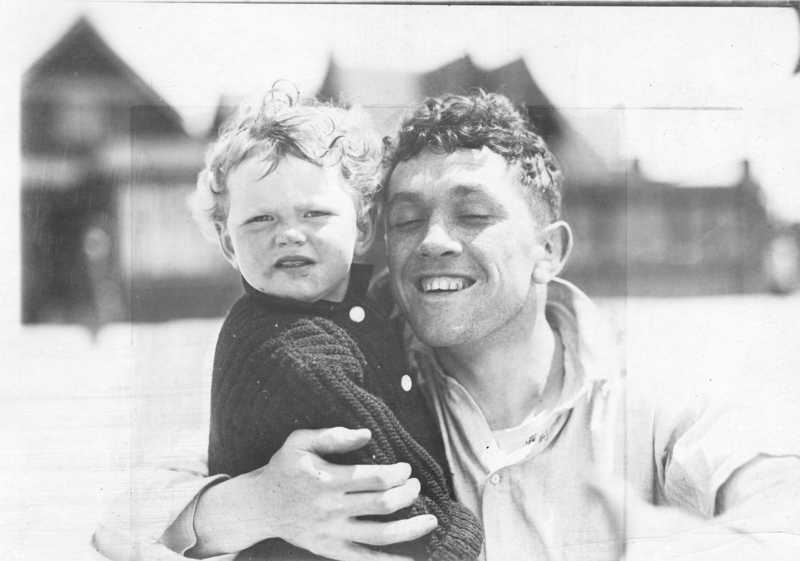
    <summary type="html"><![CDATA[<p><strong><em>It hadn't been called "Kilbane Town" in 100 years.  In 2012, Cleveland City Council resurrected the name to honor an extraordinary Clevelander.</em></strong></p><img src="https://clevelandhistorical.org/files/fullsize/bef8b2fa76b7c3f4e940516d91225130.jpg" alt="Johnny Kilbane and Daughter, 1913" /><br/><p>The Cleveland Leader dubbed the west side neighborhood near Herman Avenue and West 74th Street "Kilbane Town," in honor of world featherweight boxing champion Johnny Kilbane. In March 1912, Kilbane Town was the end point of one of the longest and largest St. Patrick's Day parades in city history.</p><p>Just one month earlier, the diminutive second-generation Irish American from the west side of Cleveland, had faced Abe Attell, a scrappy Jewish-American boxer, for the world featherweight boxing title in a match held in Los Angeles. Attell had dominated the featherweight class since 1901, holding the World Featherweight Champion title between 1901 and 1905, and again from 1906 until 1912. He had even defeated Kilbane less than two years earlier, on October 24, 1910, in a title match held in Kansas City. This time the result would be different. Kilbane defeated Attell in their grueling 20 round rematch to become world champion.</p><p>Kilbane returned to Cleveland on the perfect day for an Irish-American boxer--St. Patrick's Day.  At 4 PM on March 17, 1912, his train pulled into Union Station located on Lakeside Avenue between West 6th and West 9th Streets.  There, Johnny emerged from the train waving a green flag symbolizing his Irish roots.  Throngs of Clevelanders were there to greet him, literally covering the hillsides and embankments near the Station.  Cleveland newspapers "conservatively" estimated that the crowd in downtown Cleveland that day numbered 200,000.</p><p>A parade sponsored by the La Salle Club of St. Malachi Church formed at the Station and carried Johnny and his family by automobile to the steps of Cleveland City Hall (then located at East 4th and Superior Avenue).  Mayor Newton Baker, who broke his rule against attending parades on Sunday, was there to greet Johnny.  The parade then wound its way through the streets of downtown Cleveland, before crossing the Cuyahoga River onto Cleveland's west side.  There, the parade proceeded all the way down Detroit Avenue to West 74th Street--to Kilbane Town, finally and reluctantly disbanding there at 7:00 PM, approximately three hours after the parade began. </p><p>Johnny Kilbane was born and raised in Cleveland's Old Angle, before moving uptown to West Herman Avenue in 1910.  He was an affable man who captured the public's love and affection as much by his fighting prowess as by his reputed clean living style and devotion to his blind father, young wife and daughter. Johnny did much to bring respectability to a sport that was, at the time, generally considered to be disreputable.</p><p>After his boxing days were over, Johnny Kilbane remained in the public eye by operating a west side gym for kids and later by embarking on a career in politics which included a term as State Senator.  He ended his public career as Clerk of Courts for Cleveland Municipal Court, a position he held until his death in 1957.</p><p>In 2012, one hundred years after Johnny Kilbane won the World Featherweight Boxing title, Cleveland City Council passed legislation renaming Herman Avenue between West 74th and West 76th Streets "Kilbane Town" in honor of that historic sports event.</p><p><em><strong><a href="https://clevelandhistorical.org/items/show/288">For more (including 9 images) view the original article</a></strong></em></p>]]></summary>
    <published>2011-07-23T16:18:09+00:00</published>
    <updated>2026-04-17T19:17:38+00:00</updated>
    <link rel="alternate" type="text/html" href="https://clevelandhistorical.org/items/show/288"/>
    <id>https://clevelandhistorical.org/items/show/288</id>
    <author>
      <name>Jim Dubelko</name>
    </author>
  </entry>
  <entry>
    <title type="html"><![CDATA[Municipal Stadium]]></title>
    <summary type="html"><![CDATA[<img src="https://clevelandhistorical.org/files/fullsize/stadium-cmp-paigewithveeck48_2ab6e3a5ae.jpg" alt="Satchel Paige and Bill Veeck, 1948" /><br/><p>The demolition of Cleveland Municipal Stadium officially began in November 1996 and was complete by the following spring. In the fall of 1995, Cleveland Browns owner Art Modell decided to move the city's football team to Baltimore. Angry fans began the demolition process themselves during the Browns' final home game in 1995, tearing out seats and taking other pieces of Municipal Stadium with them as souvenirs, knowing it might be their last time in the stadium. Part of Mayor Michael White's deal with the National Football League to bring an expansion team to the city included the building of a new stadium. The old stadium would be torn down to make way for a new lakefront facility. Coincidentally, Cleveland's Osborn Engineering Company, which, along with architectural firm Walker and Weeks, had been the main designer of Municipal Stadium, oversaw the demolition of the stadium that it had so proudly helped build more than 65 years earlier.</p><p>The construction of Cleveland Municipal Stadium was completed in 1931. It had a seating capacity of slightly more than 78,000, which gave the stadium the largest outdoor seating capacity of any stadium in the world.  In 1928, Cleveland voters approved a $2.5 million bond to help pay for its construction, one of the first instances in which the public helped finance a sports stadium.  The final cost of construction came in at around $3 million.  On July 3, 1931, the first event at the stadium was held when heavyweight boxing champion Max Schmeling defeated Young Stribling.  This also marked the first time that a heavyweight boxing bout had taken place in Cleveland.</p><p>The Cleveland Indians played their first game at the stadium on July 31, 1932, and played all of the 1933 season there, as well.  Until 1947, however, the team played its weekday games at the smaller League Park, opting to play at Municipal Stadium only during weekends and holidays when a larger crowd could be assured.  In 1948 and 1954 the stadium hosted Major League Baseball's World Series.  </p><p>The Cleveland Browns began playing at Municipal Stadium in 1946 when they were a part of the All-American Football Conference (AAFC) -- a short-lived rival to the NFL. The Browns won all four of the AAFC's title games, three of which ('46, '48, '49) were held in  Municipal Stadium.  The Browns also had a perfect regular season (14-0) in 1948 and won the AAFC championship at the stadium that year by defeating the Buffalo Bills, 49-7. </p><p>After moving to the NFL in 1950, the team continued their success.  The Browns played host to the NFL Championship Game (the precursor to the Super Bowl) in 1950, 1952, 1954, 1964, and 1968,  winning each time except for the last. Today, the new Cleveland Browns Stadium (opened in 1999) sits on the site of Municipal Stadium.</p><p><em><strong><a href="https://clevelandhistorical.org/items/show/149">For more (including 8 images, 2 audio files,&#32;&amp;&#32;1 video) view the original article</a></strong></em></p>]]></summary>
    <published>2011-02-28T10:35:22+00:00</published>
    <updated>2026-04-17T19:17:37+00:00</updated>
    <link rel="alternate" type="text/html" href="https://clevelandhistorical.org/items/show/149"/>
    <id>https://clevelandhistorical.org/items/show/149</id>
    <author>
      <name>Michael Rotman</name>
    </author>
  </entry>
</feed>