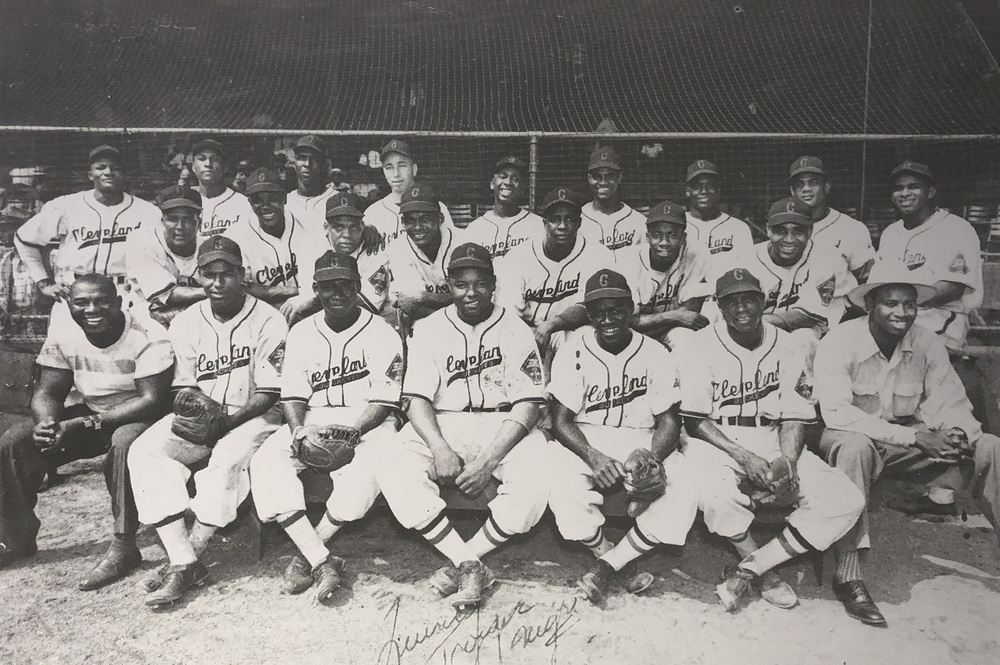
The drive, the fumble, the shot, the meltdown, the move, the decision. The history of Cleveland sports is filled with failures, heartache, and plain old bad luck. But failure is a more recent trend of Cleveland sports history. The catastrophes of the 1980s Bernie Kosar-led Browns, the meltdown of Jose Mesa in the 1997 World Series, and the mind-numbing minutes leading up to LeBron James’ decision to take his talents to South Beach, all overshadow the past rich heritage of Cleveland sports history. Jim Brown and Otto Graham of the Browns, Bob Feller and Larry Doby of the Indians, are just several names that harken back to the lore of past great teams. But memory of sports is fickle; most people only remember great successes or epic failures, but forget the moments when teams of less notoriety, the underdogs, achieve victory. For example, in 2007, Appalachian State, then a Division I FCS (Football Championship Series) school, defeated the no. 5 team in the nation, Michigan, at Michigan, by a score of 34-32. The game is cemented into the lore of college football, but the narrative centers less on Appalachian State’s tremendous upset victory than on Michigan’s epic loss. It is in similar fashion that the long-forgotten Cleveland Buckeyes of the Negro League experienced a similar lack of notoriety. The story of the Buckeyes is of great victory, saddening loss, and an abrupt end that coincided with the integration of Major League Baseball.
Fall, 1945. The Cleveland Buckeyes had, in monumental fashion, swept the Homestead Grays in a best of seven series to earn the title of Negro American League World Series champions. It was a historic event; the Grays had posted back-to-back championships in the ’43 and ’44 seasons, only to be dislodged by a relatively new and unknown team, the Cleveland Buckeyes. The Buckeyes, minimized in Cleveland sports memory, were not only an impactful team in the Negro leagues, but a great historic franchise of professional baseball.
The team was formed at the end of 1941 by an Erie, Pennsylvania nightclub and hotel owner named Ernest Wright as well as a local Cleveland sports promoter named Wilbur Hayes, who served as the team’s general manager. Ernest Wright was a successful black business owner whose long list of business ventures included barbershops, nightclubs, restaurants, and pool halls. Most notably, Wright owned Erie’s Pope Hotel, which was a hotspot for black culture and music. According to Dave O’Karma of Cleveland Magazine, “Wright’s ventures and solid business acumen provided something the white business structure of the time ignored: entertainment and jobs for black people by black people.”
Wilbur Hayes, on the other hand, did not attain the level of financial success that came to Wright. Hayes, born in Cleveland, dreamed of forming a professional ball club, but without any financial backing he had been unable to see that dream to fruition. However, that was about to change. Wright, in his hunt for players to form a professional baseball team, arrived in Cleveland during the spring of 1941. After talking with a local reporter in Cleveland, Wright was told that Wilbur Hayes was the man he needed to see. That is when Wright approached Hayes at his Central Avenue shoe shine stand to present him with an opportunity. “For years,” stated O’Karma, “Hayes had tried unsuccessfully to get financial backing for a professional club in Cleveland. Hayes’ confidence and enthusiasm impresses Wright enough for him to back a local semi-pro team.”
The first years of the Buckeyes' existence coincided with the United States’ involvement in World War II. For professional ballclubs, especially those in the Negro League, players came and went. For example, Bob Feller, Hall of Fame pitcher for the Cleveland Indians, was the first professional athlete in the United States to enlist in the war. He served in the Navy during the peak of his career. Inconsistent play on the field led to a lack of revenue for Negro League teams and forced them to cut expenses. One popular cut was team transportation, a decision that proved fateful for the Buckeyes.
In the early hours of September 7, 1942, a carload of Buckeye players were involved in a tragic accident near Geneva, Ohio, while carpooling between road games. The resulting crash led to the tragic deaths of catcher Ulysses “Buster” Brown and pitcher Raymond “Smokey” Owens. Among the injured were pitchers Alonzo Boone, Eugene Bremerton, and Herman Watts as well as team General Manager, Wilbur Hayes. Despite such tragic losses, the Buckeyes chose to complete the remainder of their season. Unfortunately for the Buckeyes, the last two weeks of the season were all on the road. The Buckeyes lost every game.
The tragedy of 1942 was soon eclipsed by the great victories of the 1945 season. The Buckeyes had developed all-star centerfielder, Sam Jethroe, along with pitcher Willie Grace into a formidable core. To add to this talent, the Buckeyes signed all-star catcher Quincy Trouppe to act as player manager during that year’s campaign. Other all-stars who rounded out the 1945 squad included third basemen and team captain Parnell Woods and right fielder Lloyd “Ducky” Davenport. Call and Post sports editor Bob Williams declared “With the exception of the World Champion Homestead Grays, the Bucks are reputed to be the highest-paid Negro club in America.” The money Ernest Wright invested did bear fruit. The Buckeyes went 53-16 in the 1945 season and as stated above, swept the two-time Negro American League Champions, the Homestead Greys, in a best of seven series. The offense was prolific in 1945, having a team batting average of .270 while hitting 78 homeruns in 74 games, but it was the pitching that really set the tone. The Buckeyes, in 147 innings pitched, compiled a team Earned Run Average (ERA) of 2.57.
The Buckeyes again reached the Negro League World Series in 1947. Quincy Trouppe continued to guide the Buckeyes as player manager and posted a 44-25-1 record that year. Unfortunately, the Buckeyes fell short of their World Series title goals and lost to the Cuban Giants (New York) four games to two. The team’s defeat on the World Series stage was matched by a greater defeat off the field.
As was true of many Negro American League teams in the late 1940s, money became more of an issue for the Buckeyes. Starting in 1947 the Buckeyes began to lose money at a faster rate. In an attempt to save the franchise, Wright moved the team to Louisville, Kentucky, for the 1949-50 seasons. This attempt proved futile and the team returned to Cleveland. After a 3-33 start in the 1950 season, Wright folded the team. It is not surprising that the decline of the Buckeyes came at a time when Major League Baseball began to integrate. Larry Doby broke the American League color barrier in 1947 when he joined the Cleveland Indians. 1948 saw a title return to Cleveland in the form of an Indians World Series Championship. As a result of this progression, the Buckeyes faded into the shadows of Cleveland sports memory. The integration signaled the end of the Negro League as the black community was absorbed into the larger fan base of the Cleveland Indians.
The legacy of the Buckeyes is overshadowed by the integration of baseball in 1947 and the Indians’ World Series title in 1948. The onetime phenom of the Buckeyes, Sam Jethroe, played for the Boston Braves in 1950. At the age of 32 he hit .273, with 35 stolen bases, and 18 homeruns. He won the National League Rookie of the Year. Other former players also found success in the big leagues, but it was their experiences in the Negro Leagues that made them a formative force in baseball.
The Buckeyes deserve a place in the larger sports history of Cleveland. Decades before embarrassments such as the drive, the fumble, the shot, the meltdown, and the move, took over the Cleveland sports narrative, the Buckeyes reigned supreme in a city that was divided. The Buckeyes brought prominence and hope to many of its fans as they followed their favorite players' transition into Major League Baseball.
]]>