<?xml version="1.0" encoding="UTF-8"?>
<feed xmlns="http://www.w3.org/2005/Atom">
  <title type="text">Cleveland Historical</title>
  <updated>2026-04-17T14:57:00+00:00</updated>
  <generator uri="http://framework.zend.com" version="1.12.20">Zend_Feed_Writer</generator>
  <link rel="alternate" type="text/html" href="https://clevelandhistorical.org/"/>
  <link rel="self" type="application/atom+xml" href="https://clevelandhistorical.org/items/browse?output=rss2"/>
  <id>https://clevelandhistorical.org/</id>
  <author>
    <name>Cleveland Historical</name>
    <uri>https://clevelandhistorical.org</uri>
  </author>
  <link rel="hub" href="http://pubsubhubbub.appspot.com/"/>
  <entry>
    <title type="html"><![CDATA[Malley&#039;s Chocolates]]></title>
    <summary type="html"><![CDATA[<img src="https://clevelandhistorical.org/files/fullsize/209758ed4fd81c9d151185737a136c1c.jpg" alt="Second Lakewood Store" /><br/><p>Malley’s Chocolates has been a family-owned and operated Cleveland business since its inception in 1935. The mastermind behind this Cleveland business was Albert “Mike” Malley. Malley decided to create his own American dream in the midst of the Great Depression. Mike Malley borrowed $500 to rent his first Malley’s Chocolates store at 13401 Madison Avenue in Lakewood. This was not only Mike Malley’s business venture; it was his wife Jo’s as well. They both made Malley’s an instant success. </p><p>Mike and Jo Malley, each played an integral role in the business’s success. Mike Malley bought all the supplies that he would need to make the chocolate because he had learned the ropes of the business as a child in Meadville, Pennsylvania, working at a chocolate store that sold hand-made chocolates. Jo Malley, on the other hand, ensured that all the bills were paid.</p><p>This tag-team approach to their new family business allowed the first Malley’s store to flourish. After fourteen years, Malley’s Chocolates moved its Lakewood store to 14822 Madison Avenue in 1949. It had the distinction of being the first all-aluminum retail store in America. This location was also a hit from the start, drawing so many opening-day customers that the Lakewood police had to be called to control the crowds. Clevelanders could not get enough of Malley’s sweet treats. </p><p>In 1967, Mike and Jo Malley’s son Bill took over the family business from his parents. Two years later he opened the third Malley’s store, located at Clague and Lorain Roads in North Olmsted, converting a former hardware store into the latest showcase for Malley’s delicious confections. This location added the now locally famous merry-go-round that patrons can eat on. This merry-go-round has excited its patrons for years and has made this location a favorite one for parties. To commemorate the merry-go-round, Bill Malley created the Carousel Sundae. He also devised the Sweet William Sundae after getting the idea from his son Bill Jr. Thanks to the success of the business, he had to move the factory and chocolate kitchen twice to larger venues.  </p><p>The second of these, a 60,000-square-foot chocolate factory, is located in Brook Park off I-480. This move occurred in August of 1990. Drivers on the freeway can see the three “Malley” pink silos with large black letters that spell “Milk,” “Cocoa,” and “Sugar.” Each of the three silos are 88 feet tall and 12 feet wide. The silos originally belonged to Laich Industries Corp. and were created to hold 100,000 pounds of plastic pellets. However, after the manufacturer declared bankruptcy in 2005, Malley’s purchased the silos following an extensive search. The silos were originally supposed to be there for function; however, Malley’s decided not to install an underground vacuum pipe system that would extract the ingredients from the silos. Therefore, the company decided to turn the silos into a decorative advertisement of sorts. Malley’s hired a commercial sign painter to paint the white silos, which from the start was a difficult task. All the silos had to be painted pink before the black lettering was applied. </p><p>Today, Mike and Joe Malley’s grandchildren take on different roles to ensure the success of this family-owned and operated business: Dan Malley, Sis Malley, Bill Malley Jr., and Mike Malley. There are currently twenty-two stores and four of them operate as old-fashioned ice cream parlors. The four locations that serve ice cream are the Bay Village, North Olmsted, Lakewood, and Mentor locations. All their stores have the same glass panels and hand-painted walls that Bill Malley’s wife Adele Ryan Malley envisioned. Moreover, all the stores are painted in Malley’s classic pastel shades of green, white, and pink. If Cleveland natives have not visited Malley’s Chocolates, they have at least heard of this business through its ingenious marketing strategies. Many have spotted the airplanes in the sky towing aerial banners that advertise Malley’s products. Others may have also seen the oval “CHOC” stickers on the cars of Malley’s fans. This third-generation family business remains dedicated to satisfying Greater Cleveland’s sweet tooth.</p><p><em><strong><a href="https://clevelandhistorical.org/items/show/920">For more (including 5 images) view the original article</a></strong></em></p>]]></summary>
    <published>2020-12-03T16:02:06+00:00</published>
    <updated>2026-03-04T21:32:04+00:00</updated>
    <link rel="alternate" type="text/html" href="https://clevelandhistorical.org/items/show/920"/>
    <id>https://clevelandhistorical.org/items/show/920</id>
    <author>
      <name>Sarah White</name>
    </author>
  </entry>
  <entry>
    <title type="html"><![CDATA[Scenic Park: Stuntmen and Spirits on the Rocky River]]></title>
    <summary type="html"><![CDATA[<p><strong><em>Scenic Amusement Park had it all - dancing, rides, recreation grounds, theater and beer gardens. While a favorite destination of Clevelanders, not everyone approved of the frivolity offered at the park.</em></strong></p><img src="https://clevelandhistorical.org/files/fullsize/dc407b25461930dd69c53608ae6ae506.jpg" alt="The Pleasure Grounds of Scenic Park" /><br/><p>In the spring of 1903, the management of Scenic Amusement Park hired surveyors to study possibilities for overcoming the watery divide separating Lakewood and Rocky River. A scheme had been concocted to unite the two suburbs.  On the land that now comprises Cleveland Metroparks Scenic Park, surveyors formulated plans for a multichannel chute to span the width of the Rocky River.  Even though Scenic Park was the leading amusement park west of Cleveland, it was feared that the resort’s continued profitability hung in the balance of completing construction of the newest attraction.  Park management, however, had no intention of erecting a new stomach-dropping toboggan ride; one passage in the chute would transport boxes of cash to Rocky River, while the neighboring duct accommodated a dumbwaiter large enough to convey glasses of beer and liquor to Scenic Park's German Village in Lakewood. Far from being the most exotic diversion, it was assured to become a favorite park-destination for Cleveland’s working class.   </p><p>The proposed engineering feat infuriated an outspoken contingent of Lakewood residents; the village had been voted dry in November of the prior year.  Since its official opening in 1895, the popular amusement park drew the ire of many living in the surrounding community.   Grievances had been lodged with local law enforcement claiming that park management evaded Blue laws by offering music, sporting events, and alcohol on Sundays.  Rumors were abound that a not-so-secret drinking establishment was hidden away in the woods, and that it operated on the Sabbath.  Newspapers provided accounts by anti-saloon league members of fights, lewd comments, rowdyism, and inebriated women sitting on the laps of men.  It wasn't just the careless commingling of limbs that concerned Lakewood residents. Chartered in 1889 and incorporated as a village in 1903, Lakewood was experiencing growing pains.  The village’s potential as a prosperous suburban enclave laid in forging its identity as a residential community - a vision pitted in opposition to the urban character of amusement parks.</p><p>Drunken crowds and unruly behavior were nothing new along the shores of Lakewood. Scenic Park was the last vestige of pleasure gardens designed to attract Clevelanders and potential new residents to the undeveloped grounds in the late 1860s. Located at the picturesque confluence of the Rocky River and Lake Erie, the Clifton Park Association acquired and developed lands abutting the lakeshore and east river bank; the estate touted picnic grounds, bathing beaches, beer gardens, rental boats, a dance hall and hotel. The Rocky River Railroad was laid out in 1869, connecting the retreat with the burgeoning city to the west.  Liquor and beer flowed freely at the resort, as evidenced by the carnage of wrecked buggies leading away from the park on Detroit Avenue.  While a popular destination, the seasonal nature of the recreation grounds could not adequately sustain their operation. Land used for the dummy railway was eventually absorbed for commercial use by the Nickel Plate Railroad in 1881, and the hotel succumbed to flames the following year.  With accommodations and access to the pleasure garden limited, the Clifton Park Association invested little in maintaining or developing the land during the next decade.</p><p> It was waiting game for the land speculators, but their patience paid off.  In 1893, the Detroit Avenue streetcar line was opened by the Cleveland City Railway Co.  The hamlet of Lakewood was immediately accessible for settlement by city dwellers. The Clifton Park Association subdivided their real estate in anticipation of growth. Lakefront property was dedicated to high-end residential development; the rugged bluffs and flood-prone terrain along the Rocky River were slated to become a new type of recreation grounds. </p><p>Across the United States, both landholding and traction companies were investing in the development of amusement parks.  Private parks and picnic grounds in bucolic locals were enclosed and transformed into spaces for public recreation on the outskirts of every urban center by the late 1890s.  Landholding companies, such as the Clifton Park Association,  invested in amusement parks to draw people into the suburbs; additionally, they could lease their undeveloped properties to park operators. Most commonly, these new recreation grounds were built and run by traction companies. It was a wise investment.  Nothing promoted streetcar ridership during the summer more than amusement parks. As further incentive, the excess generating capacity of streetcar companies could be used to power lights and rides at parks located near the end of trolley lines. The Cleveland City Railway Co., leased the park grounds from the Clifton Park Association, and struck gold with the opening of Scenic Park.  Within weeks of the park’s formal opening, the Detroit Avenue streetcar line was overrun by throngs of Clevelanders wishing to breathe in the fresh air and wander through the charming mechanized wonderland. </p><p>Despite the characterizations presented by proponents of temperance, there was much more to Scenic Park than its beer gardens.  The amusement park offered dancing and theater pavilions, a half mile racing track, baseball and recreation grounds, picnic groves, merry-go-rounds, a playhouse for light opera and vaudeville, two boathouses, boat rentals, a Ferris wheel, shooting galleries, an Old Aunt Sally, shoot-the-chutes, swings, and restaurants. Thousands of electric lights illuminated the rustic scenery, lending an attractive backdrop for open air concerts, lavish theatrical performances, sporting and race events, pyrotechnical displays, equilibrists, aeronauts, and any sort of extravagant display that could capture public attention.   </p><p>While all were standard fare in American amusement parks, Scenic Park was renowned for its mile-long Thompson Scenic Railway; purchased and operated by agents of the Cleveland City Railway Co., it was the only scenic railway in the region at the turn of the century.  The mile long coaster skirted the bluffs of the Rocky River, propelling its riders through two tunnels ornamented by paintings and papier machee.  While a price was attached to rides and attractions, admittance to the park was generally free except on Sundays.   Throughout the summer, the amusement park regularly hosted benefit picnics for fraternal, social, political, and labor organizations.  Admission receipts were kept by the clubs, while park management indirectly profited from packed streetcars, concessions and paid attractions. </p><p>As bustling crowds of city dwellers flocked en mass on summer days to escape cramped neighborhoods and breath the clean air, residents of Rocky River and Lakewood could not help but notice the incursion of urban society upon their growing suburbs.  Episodes of drunkenness, crime, and occasional violence accompanied the crowds. The beer-soaked grounds of Scenic Park did little to promote high-end residential development or attract cosmopolitan citizenry into the area.  Lakewood residents were not alone in its concerns. Towns throughout Ohio were going dry at the turn of the century in an effort to thwart what was seen as a root of societal troubles; real estate sales were reported to have boomed in consequence. </p><p>Drying up Scenic Park proved a bit more difficult than expected. While the chute across the Rocky River was never constructed, a nine foot wide footbridge was erected in its place.  Jokingly referred to as the most used bridge in Cuyahoga County, visitors of Scenic Park crossed over the watery impasse onto a small strip of land where liquor was sold.  Following a thorough scouring of law books, the citizens of Lakewood realized that they had no authority to close down the beer garden. Adding fuel to the fire, low alcohol drinks known as "swanky" and "non-intox" continued to be sold on park grounds.  Despite receiving assurances from Scenic Park management of their compliance with the alcohol ban, residents continued to encounter rowdy park-goers and streetcars brimming over with drunkards leaving the grounds. </p><p>The Lakewood police took action during the summer of 1904.  The bridge was boarded up, and policemen disrupted day-to-day operations of the park by stamping out games of chance.  Scenic Park management was sent word that all Sunday amusements would be shut down if any attempt was made to reopen the footbridge.  A sample of "non-intox" was later obtained for analysis during July 4th festivities, and the park manager was arrested for the sale  of alcohol. Cleveland Electric Railway Company, which had acquired the Cleveland City Railway Co., soon-after declared that their lease with the Clifton Park Association would not be renewed following its expiration in 1910.  </p><p>The residents of Lakewood succeeded in drying up Scenic Park. In 1906, the grounds were sublet to the Lincoln Park & Amusement Co. and redeveloped as a family-friendly park. The newly-formed amusement company renamed the grounds Lincoln Park, and invested large sums of money to rebuild the park's infrastructure and public image.  The objectionable features of Scenic Park, alcohol and gambling, were erased from park grounds prior to reopening.  Lincoln Park offered many new attractions in their place, including displays of an Indian village, the streets of Cairo, and an old-time plantation.  Other amusements included a wild west show, a free circus, an illusion palace, a steeple chase, and the largest dancing pavilion in the state.  After one season, the Lincoln Park & Amusement Co. declared bankruptcy. The Cleveland Electric Railway Co. entered into negotiations to sublease the  park to various amusement promoters over the final years of their lease to no success. The amusement park was eventually dismantled.  In May of 1917, the Scenic Park property was purchased by the City of Lakewood from the Clifton Park Association. The land was donated in 1925 to the Cleveland Metropolitan Park Board for use as a gateway to the Rocky River Reservation.  The once-thriving playground for Cleveland's middle and working classes had been reclaimed by the citizens of Lakewood to both reflect and promote the desired residential character of their emerging suburb.</p><p><em><strong><a href="https://clevelandhistorical.org/items/show/702">For more (including 13 images&#32;&amp;&#32;1 audio file) view the original article</a></strong></em></p>]]></summary>
    <published>2015-04-22T06:26:05+00:00</published>
    <updated>2026-03-04T21:32:02+00:00</updated>
    <link rel="alternate" type="text/html" href="https://clevelandhistorical.org/items/show/702"/>
    <id>https://clevelandhistorical.org/items/show/702</id>
    <author>
      <name>Richard Raponi</name>
    </author>
  </entry>
  <entry>
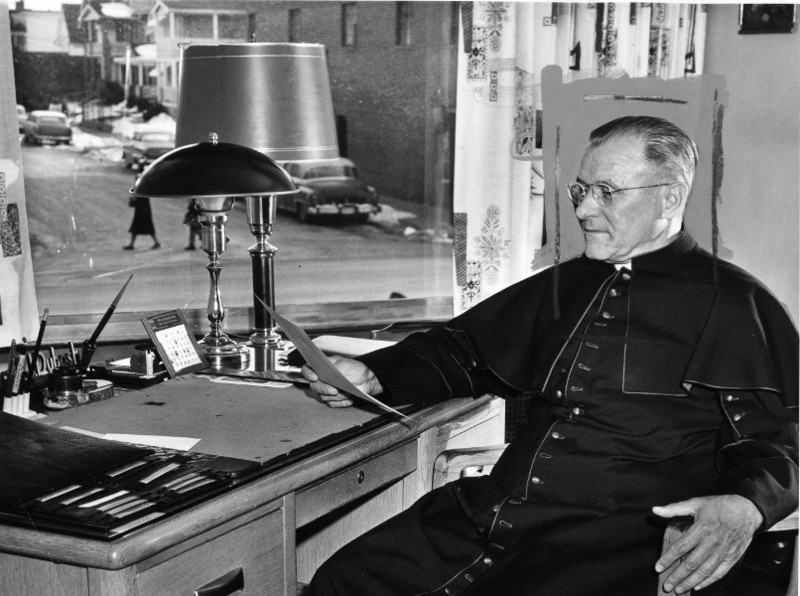
    <title type="html"><![CDATA[Monsignor Francis Dubosh: Balancing Slovak Identity with American Patriotism]]></title>
    <summary type="html"><![CDATA[<p><strong><em>Monsignor Francis J. Dubosh did not suffer a fool gladly.  When he wasn't satisfied with the speed exhibited by the editor of one national Slovak newspaper in publishing articles about Slovak American patriotism during World War II, he didn't mince his words.  "Please don't muff this," he wrote the editor, "as you did with the naming of the three Liberty Ships."   </em></strong></p><img src="https://clevelandhistorical.org/files/fullsize/096e5d11e275ec99ed900caf6ebce980.jpg" alt="Overseeing Birdtown" /><br/><p>World War II was a challenging time for many of America's Eastern European ethnic communities whose homelands were allied during the war with Hitler's Nazi Germany.  Because of the close ties which many in these ethnic communities maintained with family and friends in the old homelands, their civic organizations often engaged in concerted action to demonstrate to the United States government that, despite overseas ties, their members were still loyal and patriotic Americans.  One of America's foremost leaders during World War II who led such a concerted organizational effort for the national Slovak-American community was Monsignor Francis J. Dubosh, long-time pastor of Saints Cyril and Methodius Catholic Church in Lakewood, Ohio and the son of Slovak immigrants.</p><p>Francis J. Dubosh was born in the Tremont neighborhood of Cleveland on September 27, 1890.  He was a graduate of St. Ignatius high school, Loyola College (now John Carroll University), and St. Mary's Seminary.  In 1916, he was ordained as a Cleveland diocesan priest, and two decades later, in 1935, he was appointed a domestic prelate with the title of Monsignor.  During the years leading up to World War II, Monsignor Dubosh was engaged in an active and fruitful career as pastor at Saints Cyril and Methodius.  In addition to his cleric duties there, however, Dubosh, became an activist in a number of Slovak civic and religious organizations, and in the years leading up to World War II he attained leadership positions in several of these organizations, including the First Catholic Slovak Union, which had been founded in Cleveland in 1890, and the Slovak Catholic Federation, founded in Wilkes-Barre, Pennsylvania in 1911.  </p><p>In 1943, as America entered into its second year of World War II, Monsignor Dubosh was elected President of the Slovak League of America, one of the most important Slovak national civic organizations.  The Slovak League-- founded in Cleveland in 1907,  had been instrumental in forging the Cleveland Agreement of 1915 and the Pittsburgh Agreement of 1918, which led to the creation of Czechoslovakia in 1918.  As the new president of the Slovak League, Monsignor Dubosh traveled around the country during World War II promoting Slovak patriotism in America, but at the same time lobbying for an independent democratic Slovak state in post-war Europe.   </p><p>Through Monsignor Dubosh's organizational efforts as President of the Slovak League, tens of millions of dollars were raised in war bonds purchases by Slovak-Americans.  The "Slovak Record," a national newspaper published by the League, was strategically circulated to targeted government officials, creating a compelling record of the many acts of sacrifice and patriotism both at home and in the military overseas that Slovak-Americans performed during the war.  And, although Slovakia did not emerge from World War II as an independent democratic state as he had worked and prayed for,  his speeches, trips, and correspondence as president of the Slovak League of America during the war kept the vision alive.  </p><p>After World War II ended and his tenure as President of the Slovak League came to an end,  Monsignor Dubosh continued to give public speeches--some of them controversial, all of them passionate, and campaign for an independent democratic Slovak state in Europe.  His vision finally materialized on January 1, 1993 when the Slovak Republic was created--an event that took place two and one-half decades after Monsignor Dubosh's death in Cleveland on Christmas day 1967.</p><p><em><strong><a href="https://clevelandhistorical.org/items/show/583">For more (including 11 images) view the original article</a></strong></em></p>]]></summary>
    <published>2013-02-13T00:24:22+00:00</published>
    <updated>2026-03-04T21:32:01+00:00</updated>
    <link rel="alternate" type="text/html" href="https://clevelandhistorical.org/items/show/583"/>
    <id>https://clevelandhistorical.org/items/show/583</id>
    <author>
      <name>Jim Dubelko</name>
    </author>
  </entry>
  <entry>
    <title type="html"><![CDATA[Jared Potter Kirtland: The Whippoorwill Farm]]></title>
    <summary type="html"><![CDATA[<img src="https://clevelandhistorical.org/files/fullsize/81bcffbb000c44611c1af1e129660e1d.jpg" alt="Whipporwill" /><br/><p>The address 14013 Detroit Avenue in Lakewood, Ohio, was the site of much debate in the early 1950s. A group of activists, including C.H. Webster from the Museum of History, Dr. Bruno Gebhard, the Director of the Cleveland Health Museum, and Margaret Manor Butler, local writer and historian, was attempting to save the address from becoming a grocery store. The home at the site was part of a farm known as Whippoorwill and was originally built of stone in 1839 for Dr. Jared Potter Kirtland and his family.  Later, the Kirtland home was extensively remodeled and became a part of an estate and farm that Dr. Kirtland used for his botanical studies. In the 1950s, the Kirtland home belonged to Mrs. H.E. Williard. She intended to sell the property to the Kroger's Grocery chain, and if she succeeded the home and other farm buildings would be torn down. Many citizens of the area, with the support of the Cleveland Press, wanted to preserve the farm and create a museum to honor Dr. Kirtland. </p><p>Jared Potter Kirtland was a physician, naturalist, botanist, teacher and philanthropist. He moved from Poland, Ohio, to Rockport Township (which would later become part of Lakewood) later in life to become the Chair of the Theory and Practice of Medicine at the Cleveland Medical College. He published papers in medical journals and conducted the first geologic survey of Ohio. He was a staunch abolitionist who had been active in the cause of assisting escaped slaves in Poland. He also served as a doctor during the Civil War, performing physicals for the Ohio Volunteer Infantry for no pay. Kirtland was also a co-founder of Western Reserve University's Medical School and his personal collection became the foundation for the Cleveland Museum of Natural History. At the 40th anniversary of the Natural History Museum a new hall was debuted in his honor. </p><p>Kirtland studied and taught medicine, keeping records of his observations in nature. He was a botanist and horticulturist whose eminence led to the naming of a bird - the Kirtland Warbler. His Rockport home, Whippoorwill, began to be constructed in 1839. The gardens he kept at Whippoorwill were legendary and many scientists, naturalists, and even celebrities traveled to view them. Dr. Kirtland developed twenty-six varieties of cherry trees and six varieties of pears. Lakewood became an area with many orchards, vineyards and other crops that could be sold at market. Kirtland assisted growers with his knowledge of vegetation and helped his neighbors with their plants.  </p><p>One of Kirtland's many contributions to the Cleveland area was cleaner water. He pushed for the creation of better water treatment facilities to the city. During his studies of the Mahoning River contamination, the doctor became convinced that clean water was necessary for the sake of public health. He went on to serve on a committee that fought to secure safe drinking water for Cleveland. The discoveries he made regarding a type of freshwater mollusk during this time were published in a Science journal in 1834.</p><p>Despite all his contributions to Lakewood and Cleveland, the team seeking to preserve Whippoorwill did not succeed. Re-zoning was granted and the sale went through. Kroger built their store which became a Finast supermarket. When Finast became Giant Eagle the store moved across the street. The old supermarket building was eventually demolished, making way for a gas station.  Although no physical remnant stands to remind Clevelanders of his accomplishments, Kirtland's contributions to the study of nature and science endure. Kirtland is remembered by some, and a few of his possessions have been saved by the Lakewood Historical Society.  </p><p><em><strong><a href="https://clevelandhistorical.org/items/show/379">For more (including 8 images) view the original article</a></strong></em></p>]]></summary>
    <published>2011-12-21T22:22:25+00:00</published>
    <updated>2026-03-04T21:31:59+00:00</updated>
    <link rel="alternate" type="text/html" href="https://clevelandhistorical.org/items/show/379"/>
    <id>https://clevelandhistorical.org/items/show/379</id>
    <author>
      <name>Lisa Alleman</name>
    </author>
  </entry>
  <entry>
    <title type="html"><![CDATA[Clifton Park: Garden Suburb of the West Side]]></title>
    <summary type="html"><![CDATA[<img src="https://clevelandhistorical.org/files/fullsize/9b251c2b6cbc0086c0f5ae87891b5a4b.jpg" alt="The Clifton Club" /><br/><p>Clifton Park, located in the northwestern corner of Lakewood, Ohio along the bluffs of Lake Erie and the Rocky River Valley, was the brainchild of a group of real estate developers who envisioned it as a summer resort in 1866. Amenities included beaches and boating, picnic groves, a dance hall, and beer gardens. After many successful years the resort's popularity began to wane, so in 1895 the Clifton Park Association turned their focus toward an exclusive residential community. </p><p>The association hired famed landscape architect Ernest W. Bowditch to design Clifton Park. Bowditch was nationally known for his work on many Newport, Rhode Island estates, including the renowned Breakers, as well as the communities of Tuxedo Park, New York. He was also behind a few other projects in the Cleveland area, including Rockefeller Park, the Euclid Heights allotment, and Shaker Lakes on Cleveland's east side. </p><p>Unlike the grid pattern of most other Lakewood neighborhoods, Clifton Park was conceived as a collection of  winding streets covering about one-half square mile. The first home was built as a summer retreat by attorney William Starkweather, the son of former Cleveland mayor and judge Samuel Starkweather. The oldest home still standing is at 17862 Lake Road, built in 1899 by the prominent Cleveland business executive John G. Jennings.</p><p>One of the gems of this new community was the Clifton Club, located at 17884 Lake Road, which opened its doors on August 22nd, 1903. The club served as Lakewood's social center for many years with events such as lunches, dinners, teas, informal dances, and weddings. Unfortunately, the building burned down on January 11, 1942. A new building was placed on the original site in 1950 where it still stands today. </p><p>In the early 1960s, Clifton Park was cut in two when Clifton Boulevard was extended to a new bridge built over the Rocky River.  Many homes were razed and the winding streets were now disconnected. Property values south of Clifton dropped, and when the neighborhood was placed on the National Register of Historic Places in 1974, only the streets north of Clifton were included.</p><p><em><strong><a href="https://clevelandhistorical.org/items/show/374">For more (including 11 images) view the original article</a></strong></em></p>]]></summary>
    <published>2011-12-21T01:09:35+00:00</published>
    <updated>2026-03-04T21:31:59+00:00</updated>
    <link rel="alternate" type="text/html" href="https://clevelandhistorical.org/items/show/374"/>
    <id>https://clevelandhistorical.org/items/show/374</id>
    <author>
      <name>Tim Knapp</name>
    </author>
  </entry>
  <entry>
    <title type="html"><![CDATA[Winton Motor Carriage Co.: Making America&#039;s First Motor City]]></title>
    <summary type="html"><![CDATA[<img src="https://clevelandhistorical.org/files/fullsize/cc619c41b59fd844f0a3306f32fbd458.jpg" alt="The First Winton" /><br/><p>When people think of the auto industry, they usually think of Henry Ford and Detroit. What most people don't know is that in the 1890s Cleveland was the automobile capital of America. One reason for this was a Scottish immigrant and bicycle company owner named Alexander Winton. </p><p>The Winton Motor Carriage Company went into business on March 15, 1897. Their first automobiles were built by hand. Each vehicle had fancy painted sides, padded seats, a leather roof, and gas lamps. B.F. Goodrich made the tires for Winton.  By 1897, Winton had already produced two fully operational prototype automobiles. In May of 1897, the 10 horsepower model achieved the astonishing speed of 33.64 mph on a test around a Cleveland horse track. However, people were still skeptical of the new invention. To prove his automobile's durability and usefulness, Alexander Winton had his car undergo an 800-mile endurance run from Cleveland to New York City.</p><p>On March 24, 1898 Robert Allison of Port Carbon, Pennsylvania became one of the first men to buy an American-built automobile when he bought a Winton for around $1,000. Allison had seen an advertisement for the car in Scientific American. Later that year the Winton Motor Carriage Company sold twenty-one more vehicles. One of those customers was James Ward Packard, who would later become the founder of Packard automobile company. It is believed that Packard was not satisfied with his car and complained to Winton. The story goes that Winton challenged him to do better. That same year, Leo Melanowski, Winton's Chief Engineer, invited Henry Ford to come to Cleveland for an interview at the Winton Company. Alexander Winton was not impressed with Henry and decided not to hire him. Henry went back to Detroit to continue working on his second Quadricycle.  These miscues would eventually come back to haunt Winton.</p><p>More than one hundred Winton vehicles were sold in 1898, making the company the largest manufacturer of gas-powered automobiles in the United States.  By 1901, widespread publicity continued to increase interest in the Wintons. That year, news that members of the wealthy Vanderbilt family had purchased Winton automobiles boosted the company's image substantially. It was around this time that Winton built a new factory complex at 10601 Berea Road, on Cleveland's far west side. Later that year, however, a Winton automobile lost a race near Detroit to one of Henry Ford's cars. Winton vowed to come back and defeat Ford. He produced the 1902 Winton Bullet, which set an unofficial land speed record of 70 mph in Cleveland that year. Despite its speed, 'The Bullet' was defeated by another Ford later in  the year.  The company received some positive publicity In 1903, though, when Dr. Horatio Nelson Jackson made the first successful automobile drive across the United States in a Winton. The trip took 64 days, including breakdowns, delays while waiting for parts to arrive, and the time it took hoisting the Winton up and over rocky terrain and mudholes.</p><p>In the 1910s Winton continued to market his expensive, custom-made cars primarily to wealthy consumers. This would eventually lead to the company's downfall, as by the 1920s Winton was unable to compete with the less expensive, mass produced cars like those made on Henry Ford's assembly lines. In 1922, Winton made only 690 cars, and on February 11, 1924, the Winton Motor Car Co. ceased car production.</p><p><em><strong><a href="https://clevelandhistorical.org/items/show/267">For more (including 6 images) view the original article</a></strong></em></p>]]></summary>
    <published>2011-07-19T14:52:55+00:00</published>
    <updated>2026-03-04T21:31:59+00:00</updated>
    <link rel="alternate" type="text/html" href="https://clevelandhistorical.org/items/show/267"/>
    <id>https://clevelandhistorical.org/items/show/267</id>
    <author>
      <name>Matthew Sisson</name>
    </author>
  </entry>
  <entry>
    <title type="html"><![CDATA[Wagar Cemetery: Lakewood&#039;s Lost Burial Ground for East Rockport Pioneers]]></title>
    <summary type="html"><![CDATA[<img src="https://clevelandhistorical.org/files/fullsize/02ccc2e38b890899d0516fa9b01dbb61.jpg" alt="Wanna See a Dead Body?" /><br/><p>In 1820, $777 bought Mars Wagar 111 acres of what would become prime real estate in present-day Lakewood, Ohio.  When the educated pioneer staked his claim in East Rockport (as Lakewood was then known), he set aside a portion of this land to be used as sacred ground for the burial of beloved family members.  Soon Wagar's "acre" became a welcoming eternal resting place not only for those beloved family members, but also for fellow pioneers; friends and neighbors who collectively hashed it out in the wilderness on the shores of Lake Erie. Even later, the designated land would become the center of a debate between historical preservation and economic development. </p><p>By 1925, the cemetery had fallen out of use, and what Wagar called "God's Acre" morphed into a wild, unkempt stretch of land flanked by a diner, a billboard, and a sand bank. The cemetery became a haven for vandals and especially those unafraid children who found it a great shortcut to and from school. In the late 1940s, concern over the polluted and potentially hazardous space grew, and a number of citizens pushed to have the land preserved to pay homage to the pioneer families who built the community of Lakewood. However, since the land had been divided among Wagar's descendents, no agreements could be made. Furthermore, without a cemetery register unmarked grave sites could not be properly identified.  </p><p>Eventually, in the mid-1950s the land fell into the hands of the City, which moved forward with a plan to convert it into a parking lot. In 1957, parts of 54 (later determined to be closer to 84) human skeletons turned up during excavation of the cemetery.  The skeletons were placed in a mass grave in the Lakewood Park Cemetery, while their former home became the foundation of a parking garage for Lakewood Hospital.  </p><p><em><strong><a href="https://clevelandhistorical.org/items/show/265">For more (including 8 images) view the original article</a></strong></em></p>]]></summary>
    <published>2011-07-18T18:37:44+00:00</published>
    <updated>2026-03-04T21:31:59+00:00</updated>
    <link rel="alternate" type="text/html" href="https://clevelandhistorical.org/items/show/265"/>
    <id>https://clevelandhistorical.org/items/show/265</id>
    <author>
      <name>CSU Center for Public History and Digital Humanities</name>
    </author>
  </entry>
  <entry>
    <title type="html"><![CDATA[Elks&#039; Field]]></title>
    <summary type="html"><![CDATA[<p><strong><em>As you look at the vast asphalt parking lot stretching from the Winking Lizard to Giant Eagle, it is hard to believe that the area in front of you was once one of the most exciting places in Lakewood.  National tennis tournaments, softball world championships, Al Capone's bulletproof Cadillac, yearly circuses and carnivals. It all happened right here.</em></strong></p><img src="https://clevelandhistorical.org/files/fullsize/c00142c93f985174b88fbec1aec5bd7d.jpg" alt="Elk&#039;s Field" /><br/><p>The building currently occupied by The Winking Lizard was built in 1913 and was the original home of The Lakewood Tennis Club. 2000 spectators were on hand at the club on July 3, 1916, to witness a national clay court tennis tournament. The tennis club vacated the building shortly thereafter, and in 1918 Lakewood Lodge No. 1350 of the Elks took control of the building. The Elks are a national fraternal organization with chapters (or "lodges") across the country.  The lodges function as social clubs, but they also maintain a focus on doing good deeds and helping others in their community.  </p><p>The tennis courts next to the Lakewood Lodge were soon converted into a state of the art softball stadium that regularly drew hundreds of spectators for men's and women's games. Elks' Field was the country's first lighted softball stadium, and the World Softball Championships were played there in 1944 and 1946.  During the 1920s and 1930s, the Elks Lodge also hosted circuses and carnivals at the site.  Al Capone's black bulletproof Cadillac was memorably featured at one carnival.</p><p>The fun at Elks' Field ended in 1958 when the land was leased for the construction of a supermarket. Today, the Winking Lizard inhabits the former Elks Lodge. The building contains a basement bowling alley and still features a grand stairway near the entrance and an upstairs fireplace.  </p><p><em><strong><a href="https://clevelandhistorical.org/items/show/249">For more (including 5 images) view the original article</a></strong></em></p>]]></summary>
    <published>2011-07-13T16:49:07+00:00</published>
    <updated>2026-03-04T21:31:59+00:00</updated>
    <link rel="alternate" type="text/html" href="https://clevelandhistorical.org/items/show/249"/>
    <id>https://clevelandhistorical.org/items/show/249</id>
    <author>
      <name>Richard Raponi</name>
    </author>
  </entry>
  <entry>
    <title type="html"><![CDATA[French-Andrews Fruit Farm]]></title>
    <summary type="html"><![CDATA[<img src="https://clevelandhistorical.org/files/fullsize/76250ad8b1cdddbd1459148f7f0f6c6c.jpg" alt="Andrews Family Home" /><br/><p>If you face the Lakewood Plaza strip mall on the north side of Detroit Avenue today, you are looking at the site where the family farmhouse of Mrs. Virginia (Jennie) Harron Andrews once stood. It may be hard to imagine this home and the 80-acre French & Andrews fruit farm that sat directly behind it in full operation, given its stark contrast with present day Detroit Avenue. </p><p>If you allow your mind to travel back 150 years or so, however, the urban noise will fade away and you will perhaps hear the clippity-clop of a horse-pulled fruit wagon traveling to the market on the oak planks paving Detroit Avenue. The wagon would be coming from the French & Andrews fruit farm run by Virginia's husband, Edwin Andrews, and her uncle Collins French. You may even be able to smell the plum and cherry blossoms that decorated the landscape famous for producing luscious strawberries, grapes, apples and pears, and hear the chatter of the Bohemian women hired to harvest the bounty.</p><p>Collins French's parents Price and Rachel French were among Rockport Township's (as Lakewood was then known) earliest settlers when they arrived there in 1818. Price was believed to be descended of an English lord, and his wife contained the blood of a Cherokee Indian chief. After Price served in the war of 1812 and the couple had children, they traveled west from Vermont to Rockport to farm its cheap, abundant land. Price constructed the family home on the southwest corner of Wyandotte and Detroit Avenue. It was the first brick home in Lakewood. The bricks were furnished by Richard Muscut for $1.25 per 1000 bricks. It was arranged that Mr. Muscut would be paid in 1/3 money and 2/3 wheat, corn, pork and potatoes.</p><p>Collins, the French's oldest son, eventually took over his father's farm and also became a trustee of Rockport Township. In 1832, he married Rosetta.  They had no children of their own but adopted Rosetta's niece, Virginia Harron, affectionately calling her Jennie (Virginia Avenue was later named after her). Virginia married Edwin Andrews, who became Collin French's business partner.  The French and Andrews families ran their successful fruit farm and nursery on their land north of Detroit Avenue to Lake Erie between Lakeland and Andrews Avenues. Virginia and Edwin had four sons who all worked on the farm and helped build Lakewood's reputation as a prosperous fruit-growing center in the second half of the 19th century.  </p><p>The Andrews home on Detroit Avenue, built in the 1850s, was eventually torn down in the late 1930s to make way for the Mars Shopping Center (now Lakewood Plaza) and its parking lot. The family converted its orchards into residential developments around the turn of the 20th-century as Lakewood's population rose and the community became more suburban than rural. This trend continued as Lakewood quickly emerged as a full-fledged suburb of Cleveland, making it a challenge today for even the liveliest of imaginations to picture a time when Detroit Avenue was dotted with farmhouses and fruit orchards, as opposed to stoplights and shopping centers.   </p><p><em><strong><a href="https://clevelandhistorical.org/items/show/245">For more (including 7 images) view the original article</a></strong></em></p>]]></summary>
    <published>2011-07-11T15:34:32+00:00</published>
    <updated>2026-03-04T21:31:59+00:00</updated>
    <link rel="alternate" type="text/html" href="https://clevelandhistorical.org/items/show/245"/>
    <id>https://clevelandhistorical.org/items/show/245</id>
    <author>
      <name>Tim Rinehart</name>
    </author>
  </entry>
  <entry>
    <title type="html"><![CDATA[Winton Place]]></title>
    <summary type="html"><![CDATA[<img src="https://clevelandhistorical.org/files/fullsize/edbcfb4787b346480b538b3d551591ba.jpg" alt="Winton &amp; Shanks" /><br/><p>Alexander Winton was a Scottish immigrant. In 1897, established the Cleveland-based Winton Motor Carriage Co. The company was a success, enabling Winton to build a large estate for himself and his family at the current location of Winton Place at 12700 Lake Avenue in Lakewood. He named the estate Roseneath. Built in 1903, Roseneath boasted 25 rooms, beautiful gardens, and picturesque views of Lake Erie. </p><p>Winton enjoyed a banner year in 1903. Not only did he see his family estate completed. His auto plant located on Berea Road also became the largest in the world that year, after operations had outgrown its previous location on East 45th in 1902. The list of accomplishments attributed to the Winton Motor Carriage Co. is too long to include in its entirety, but some of its most notable accomplishments include: </p><p>(1) Making the first commercial sale of a standard domestic automobile in 1898; (2) producing the first vehicle to have the moniker "automobile" ascribed to it (The term was used first by Charles Shanks, a <em>Plain Dealer</em> reporter who Alexander Winton drove from Cleveland to New York in 1899); (3) producing the first mail truck to successfully serve the United States Postal Service; (4) achieving a speed of 70mph on a newly paved Clifton Boulevard in 1902, an unofficial land speed record at the time; and (5) producing the first automobile which traveled the continental United States coast-to-coast (San Francisco to New York City) in 1903.</p><p>Interestingly enough, Winton was encouraged by one of his engineers to hire a young Henry Ford, but Winton denied him a position. Ford would go on to produce the comparatively inexpensive Model T roadster. Costing around $390, Ford's widely successful Model T was partially responsibly for the demise of Winton's automobile production in 1924, as Winton's least expensive model cost $2,295. Although Winton automobile production ceased in 1924, the Winton Engine Corporation, established in 1912 as the Winton Engine Company, would continue on and eventually be integrated into the General Motors Corporation in 1930. </p><p>The decline of the Winton Motor Carriage Co. depleted Winton's personal fortune significantly, leading him to sell Roseneath and move to a smaller home in Clifton Park. Roseneath itself was destroyed by fire in 1962, laying the groundwork for the construction of Winton Place luxury apartments on the Gold Coast. Completed in 1963, the 30-story Winton Place became the tallest high-rise apartment building between New York and Chicago and the tallest building in the Greater Cleveland area outside downtown. Currently, all that remains of the mansion is a yellow-brick wall bearing an inscription of the name "Roseneath."</p><p><em><strong><a href="https://clevelandhistorical.org/items/show/237">For more (including 9 images) view the original article</a></strong></em></p>]]></summary>
    <published>2011-06-28T19:15:25+00:00</published>
    <updated>2026-03-04T21:31:58+00:00</updated>
    <link rel="alternate" type="text/html" href="https://clevelandhistorical.org/items/show/237"/>
    <id>https://clevelandhistorical.org/items/show/237</id>
    <author>
      <name>Matthew Sisson</name>
    </author>
  </entry>
  <entry>
    <title type="html"><![CDATA[Clifton Park Bridge]]></title>
    <summary type="html"><![CDATA[<img src="https://clevelandhistorical.org/files/fullsize/4c4a4ab460d7b3f2323cf866c742e681.jpg" alt="Bridge Drawing, ca. 1963" /><br/><p>Opened in 1964, the Clifton Park Bridge connects the cities of Rocky River and Lakewood. It is a section of Clifton Boulevard and the Grand Army of the Republic Highway (U.S. Route 6). The bridge crosses the Rocky River very close to where it empties into Lake Erie. </p><p>The Clifton Park Bridge was built by the State Highway Department to alleviate the congestion on the Detroit Rocky River Bridge. The project, however, was not without controversy. The seizure of private property through eminent domain was eventually required in order to build the bridge. Apart from angering the affected citizens, this measures would also mean that each city would lose the money from the property taxes on those sites. The tax issue led to a more than ten-year-long dispute between the cities of Rocky River and Lakewood as the two sides could not agree on the location of the bridge. Rocky River supported the location even though the city would lose tax money. Lakewood on the other hand opposed the location because the bridge would go through the wealthy <a href="https://clevelandhistorical.org/items/show/374">Clifton Park</a> neighborhood on the northwestern side of the city and cause $1.5 million worth of property to be lost to eminent domain. </p><p>Other plans were proposed, such as increasing the traffic on the Hilliard Road Bridge and turning the Nickel Plate trestle into a double-decker bridge for both train and car traffic. The Hilliard Road Bridge plan was highly favored and carefully discussed. The basic question at the center of this debate was whether or not cities had the right to refuse the building of a major highway. This is also known as the "ordinance of consent." In the end, eight homes and fifteen other parcels of land were seized by the state under eminent domain in order to build the bridge with both cities losing valuable property. The Clifton Park Bridge was thus built by the state of Ohio over the objections of the local governments. </p><p>The unique curving streets of Clifton Park distinguish it from the rest of Lakewood's grid pattern. It was built starting in the late 19th century and features many historic mansions. It has been the home of many of greater Cleveland's most prominent citizens. Despite Lakewood's fears, the Clifton Park neighborhood continued to thrive even after the Clifton Park Bridge controversy, remaining alive and well even today.</p><p><em><strong><a href="https://clevelandhistorical.org/items/show/234">For more (including 8 images&#32;&amp;&#32;1 audio file) view the original article</a></strong></em></p>]]></summary>
    <published>2011-06-13T12:32:55+00:00</published>
    <updated>2026-03-04T21:31:58+00:00</updated>
    <link rel="alternate" type="text/html" href="https://clevelandhistorical.org/items/show/234"/>
    <id>https://clevelandhistorical.org/items/show/234</id>
    <author>
      <name>CSU Center for Public History and Digital Humanities</name>
    </author>
  </entry>
  <entry>
    <title type="html"><![CDATA[Detroit–Rocky River Bridge: From Wright&#039;s Ferry to the Bridge Building]]></title>
    <summary type="html"><![CDATA[<img src="https://clevelandhistorical.org/files/fullsize/bf123fa593a4fcb8228fc7fc8d0b365d.jpg" alt="1850 Toll Bridge" /><br/><p>The Detroit–Rocky River Bridge spans the Rocky River and connects the cities of Rocky River and Lakewood. Prior to 1819, Rufus Wright operated a ferry that carried Rockport residents across the Rocky River. He was a tavern owner as well. Wright later became Lakewood's second postmaster. His sons followed in his footsteps and members of the Wright family were the city's postmaster for several generations.</p><p>In 1819, the construction of the first Detroit–Rocky River Bridge began, with Wright paying half the cost. Each of the 18 resident families contributed money, labor, or materials. The bridge was completed in 1821, but crossing it required a hazardous descent and ascent along the river's slippery embankments. The bridge was so dangerous that in November 1848, two stagecoaches capsized on the bridge. Travelers were advised to avoid the Detroit–Rocky River Bridge and instead go along the beach to ford the river. </p><p>In 1850, the old bridge was replaced by a toll bridge made by the Detroit Plank Road Company. The new bridge made for slightly safer approaches. It was again replaced in 1875 with a wood and iron girder bridge before an even safer bridge was built in 1890. This high-level truss bridge with an oak plank floor and built of iron and stone avoided the embankments altogether. It was toll-free but cost taxpayers $60,000 to construct. </p><p>As electric interurban railcars began plying the bridge on the Lake Shore Electric line between Cleveland and Toledo in the early 1900s, the bridge's safety was soon at issue. On May 13, 1905, an interurban car derailed on the bridge and came perilously close to plunging into the gorge. As a result, a fifth bridge, built of concrete and steel, was completed in 1910. The latest Detroit–Rocky River Bridge was the longest stretch of unreinforced concrete in the world at the time, measuring 208 feet. </p><p>The current bridge was built in 1980 for $4 million. Today, the Bridge Building at 18500 Lake Road, built atop the western foundation, stands on the only remaining section of the 1910 bridge.</p><p><em><strong><a href="https://clevelandhistorical.org/items/show/231">For more (including 7 images&#32;&amp;&#32;1 audio file) view the original article</a></strong></em></p>]]></summary>
    <published>2011-06-10T11:46:26+00:00</published>
    <updated>2026-03-04T21:31:58+00:00</updated>
    <link rel="alternate" type="text/html" href="https://clevelandhistorical.org/items/show/231"/>
    <id>https://clevelandhistorical.org/items/show/231</id>
    <author>
      <name>CSU Center for Public History and Digital Humanities</name>
    </author>
  </entry>
  <entry>
    <title type="html"><![CDATA[Cowan Pottery Museum: Showcasing Cleveland&#039;s Premier Art Pottery Studio]]></title>
    <summary type="html"><![CDATA[<img src="https://clevelandhistorical.org/files/fullsize/e3a9193dd8bb9cf53a4d5b46d4f6bc01.jpg" alt="Brunt Family, Cowan Pottery" /><br/><p>R. Guy Cowan opened Cowan Pottery on Nicholson Avenue in Lakewood in 1912. The studio produced mainly architectural tiles, but also made a line of vases and bowls called "Lakewood Ware." Work from this period can be found in the East Cleveland Public Library and in some private homes. During World War I, Cowan closed his studio to serve in the army.</p><p>In 1920, after Cowan's return from the war, the pottery studio moved to 19633 Lake Road in Rocky River. The pieces produced at the Rocky River studio shifted the focus of the pottery towards commercial production. Cowan had a staff of skilled artisans and in the mid-1920s some other established artists came to work at the pottery. Some were not trained in ceramics and had to be convinced by Cowan to try their hand. Others were students of Cowan at the Cleveland Institute of Art. Artists such as Elizabeth Anderson, Thelma Frazier Winter, and Viktor Schreckengost worked at Cowan Pottery between 1920 and 1931.</p><p>During the twenties, Cowan Pottery was popular and successful, with Guy Cowan using his awards and national recognition to advertise the pottery. His work was sold in most major cities in the US as well as a few retailers in Canada. However, in 1931 Cowan Pottery began to feel the effects of the Great Depression and Cowan could no longer pay his employees or bills. The pottery closed that December.</p><p>Most of the buildings that housed Cowan Pottery in Rocky River still stand today, and a museum devoted to the pottery can be found in the Rocky River Public Library. Viktor Schreckengost's line of Jazz Bowls, originally created for Eleanor Roosevelt, can be seen in many museums, including the Cleveland Museum of Art.</p><p><em><strong><a href="https://clevelandhistorical.org/items/show/229">For more (including 8 images&#32;&amp;&#32;2 videos) view the original article</a></strong></em></p>]]></summary>
    <published>2011-06-09T17:08:20+00:00</published>
    <updated>2026-03-04T21:31:58+00:00</updated>
    <link rel="alternate" type="text/html" href="https://clevelandhistorical.org/items/show/229"/>
    <id>https://clevelandhistorical.org/items/show/229</id>
    <author>
      <name>Robin Meiksins</name>
    </author>
  </entry>
  <entry>
    <title type="html"><![CDATA[Hilliard Road Bridge]]></title>
    <summary type="html"><![CDATA[<p><strong><em>By the early 1920s, Cleveland's suburbs were growing rapidly. This increased the amount of traffic in and out of downtown, and beyond. In the suburbs of Lakewood and Rocky River, the boom prompted construction of a new bridge over the Rocky River. </em></strong></p><img src="https://clevelandhistorical.org/files/fullsize/800a2cd20b1dbc7c25bfa8d63604b935.jpg" alt="Construction" /><br/><p>Authorization for the Hilliard Road Bridge in Lakewood was given in 1923, along with approval for the Willow Bridge in Newburgh. The Walsh Construction Co. of Cleveland was contracted to build the bridge. The project was completed 19 months later at the cost of $930,000. Once completed, the Hilliard Road Bridge provided a vital link between Cleveland and outlying farms, and also helped the West Side expand and develop into a series of well-populated communities. </p><p>Since the Hilliard Road Bridge project was the largest construction project in the area in years, it was watched closely by organizations of both sides of the labor debate. The unskilled workmen who built the Hilliard Road Bridge came from all over the Midwest but especially from Illinois, Iowa, Indiana, and Kentucky. They were paid 40 cents an hour which was less than union pay.  Workers and their families were housed on the construction site in buildings of pine lumber which a Plain Dealer reporter in 1924 described as being similar to military cantonments during the First World War. The construction site was also surrounded by fences of barbed wire. Picketers set up camp at either end of the bridge and protested at starting and quitting times. Signs carried by protesters decried the lack of unionized labor of the project and asserted that working conditions were unfair to the "organized workers of Cuyahoga County." This continued for over a month. </p><p>The Hilliard Road Bridge was not the first bridge on this spot. The earliest incarnation of the bridge was known as the "Swinging Bridge," and consisted of a rope bridge with wooden planks that was used by school children and Lakewood residents to cross the Rocky River. It hung thirty feet above the water and was located at the end of Detroit Avenue in what is now the Rocky River Reservation. It remained in place until the 1910s. </p><p>One Lakewood resident, Kathryn Coleman, recalls a particularly memorable experience on the Swinging Bridge when a mischievous boy began to jump up and down, causing the bridge to swing wildly, while she and her family were trying to cross. "I was 7-years-old at the time and walking beside my mother.  In front of us, father was pushing a baby stroller that held my 1-year-old brother.  We were frantic, but we finally made it across. Afterwards, mother vowed we would never use that bridge again."	</p><p>The current Hilliard Road Bridge crosses the Rocky River and runs above the Rocky River Reservation. It is 860 feet long, and the length of the largest span is 220.2 feet. It was rehabilitated in the early 1980s, during which the deck was replaced. It reopened in 1983.  </p><p><em><strong><a href="https://clevelandhistorical.org/items/show/228">For more (including 7 images&#32;&amp;&#32;2 audio files) view the original article</a></strong></em></p>]]></summary>
    <published>2011-06-08T18:04:38+00:00</published>
    <updated>2026-03-04T21:31:58+00:00</updated>
    <link rel="alternate" type="text/html" href="https://clevelandhistorical.org/items/show/228"/>
    <id>https://clevelandhistorical.org/items/show/228</id>
    <author>
      <name>Sarah Kasper</name>
    </author>
  </entry>
  <entry>
    <title type="html"><![CDATA[Beck Center for the Arts]]></title>
    <summary type="html"><![CDATA[<img src="https://clevelandhistorical.org/files/fullsize/22ddd9bde67c374c150c4ecd1b38aea7.jpg" alt="Front Entrance" /><br/><p>The Beck Center for the Arts is a non-profit organization that is "dedicated to enriching the quality of life for Northeastern Ohioans" through the performing arts and art education. The history of the Beck Center can be traced back to 1931 to a group of eighteen thespians known as the Guild of the Masques. They were led by the London-trained director Richard Kay. The Guild rehearsed in Lakewood living rooms and performed where ever they could such as schools or churches. In 1933, they leased an old blacksmith's shop where they tore down a wall, built a stage, and performed to sold-out crowds. </p><p>The same year, the Guild of the Masques was incorporated as a non-profit arts organization and officially became the Lakewood Little Theater. Tragedy struck in 1934 when the Lakewood Fire Department turned the fledgling company out of the blacksmith's shop due to code violations.  So they took the show on the road once more. They became known for their radio dramas, in particular the story of the creation of the Red Cross by Clara Barton during the Civil War. The Little Theater charged no admission for their performances, which was greatly appreciated by those affected by the Depression.</p><p>The Lakewood Elks Club offered their facilities to the Little Theater due to their reputation of civic responsibility. However, the situation was less than ideal. Sets had to be built off site and carried by hand to the Elks Club in pieces. Local undertakers were asked to provide extra seats for the sold-out crowds. Patrons were routinely turned away due to lack of room. The Elks Club was the home the Lakewood Little Theater for three years, and ten productions a year were staged there, often receiving rave reviews. </p><p>In 1936, a group of dedicated Lakewood women decided to do something about the inadequate space of the Elks Club. They formed the Lakewood Little Theater Women's Committee and took over the fundraising efforts for the Little Theater. Not to be outdone, male Lakewood citizens formed the Lakewood Little Theater Men's Advisory Board with the intention of finding a permanent venue for the Little Theater. The Lucier Motion Picture Theater was leased with the eventual option to buy although it needed costly renovations. The men's and women's organizations set a $10,000 fundraising goal. The members of the Women's Committee opened their homes for floral themed tea parties, such as the Tulip Teas, and the press reported on what the ladies wore and where they vacationed. </p><p>On May 7, 1938 the Little Theater staged its first production, Fred Ballard's "Ladies of the Jury," in their new home to a sold out crowd of gentlemen in top hats and well-dressed ladies. In its first week the Little Theater drew 2,265 patrons. The press continued to love their productions, and the people kept coming. Even World War II didn't slow them down. In 1944, the lease on the Lucier was up, and the Little Theater purchased the building. The Lakewood Little Theater now had expanded its vision to include more space and provided theater education for the youth of the community.</p><p>In 1948, the Lakewood Little Theater School began led by actor Virginia Woodworth, called Woodbean by her students. One of the teachers she recruited was radio personality "Lady Jan" Egert. The purpose of the education programs Egert said, "was not on creating child stars. The objective was always to teach children to be more comfortable with the spoken word so that they could become better in school and in life. I was thrilled to be involved."  Classes involved instruction of basic theater techniques, diction, and characterization.  Students performed two plays a year which were often adaptations of fairy tale classics and other stories that would appeal to children. Lady Jan Egert even brought students to appear on her WJW radio show to perform. She stayed with the program until 1986.</p><p>In 1974, Kenneth Beck donated $300,000 to the Lakewood Little Theater, and later gave an additional $300,000. With additional fundraising from the public, construction of new facilities began. Beck was a retired partner in Beck & Wall the fifth largest manufacturer of advertising displays in the U.S. and millionaire. The Kenneth C. Beck Center was formally opened in 1976 with a black tie celebration. After a gourmet dinner, the 500 guests watched a production of Maxwell Anderson's "Mary Queen of Scotland." Kenneth Beck later said it was "the happiest day of his life." The Beck Center for the Arts was officially born. </p><p><em><strong><a href="https://clevelandhistorical.org/items/show/227">For more (including 7 images) view the original article</a></strong></em></p>]]></summary>
    <published>2011-06-08T15:18:00+00:00</published>
    <updated>2026-03-04T21:31:58+00:00</updated>
    <link rel="alternate" type="text/html" href="https://clevelandhistorical.org/items/show/227"/>
    <id>https://clevelandhistorical.org/items/show/227</id>
    <author>
      <name>Sarah Kasper</name>
    </author>
  </entry>
  <entry>
    <title type="html"><![CDATA[Curtis Hall House]]></title>
    <summary type="html"><![CDATA[<img src="https://clevelandhistorical.org/files/fullsize/ab1734435b1d91ff3279fce5b19e1a2d.jpg" alt="Curtis Hall House" /><br/><p>Joseph Hall (1793-1855) and his wife Sarah (1799-1877) were some of the earliest settlers in Rockport Township (as Lakewood was then known) when they and their five children arrived there from England in 1837. Joseph quickly set about building a stone house for the family at the southwest corner of Detroit and Marlowe Avenues. The building was very similar to settler John Honam's <a href="https://clevelandhistorical.org/items/show/222">Oldest Stone House</a>, which was built in 1834 and is now home to the Lakewood Historical Society. The Hall Family's risky move quickly paid off as Joseph became a prosperous farmer, steadily increasing his land holdings in Rockport. Each of Joseph's four sons received 80-acre estates in Rockport from their father when they married. </p><p>Joseph's son Curtis Hall (1827-1927) built his house in 1864 at 16102 Detroit Avenue, on the northwest corner of Detroit and Cranford Avenues. It is one of the few Hall Family houses that remains standing in Lakewood, though it is now largely obscured by other buildings. Curtis farmed the land behind his house, which stretched north from Detroit Avenue to Lake Erie. While the oldest son, Joseph Jr., continued to live on his father's estate, the other sons Matthew and John followed in Curtis' footsteps and built houses on the 16000 block of Detroit Avenue. John was the most successful of Joseph's children, establishing a successful fruit farm on his estate. Matthew farmed as well, and also served as the supervisor of the Plank Road which ran through the city. </p><p>By the turn of the 20th century, many of Lakewood's farms were being turned into residential developments as Cleveland and its surroundings areas grew rapidly. Streetcars replaced the wooden Plank Road, making the commute from Cleveland more manageable. The increasingly crowded and polluted big city led those who could afford it to seek greener pastures in the suburbs. Real estate development soon became more profitable than farming in Lakewood. John Hall partnered with his son-in-law Herbert Matthews to develop his farmland south of Detroit Avenue, advertising lots for sale in "Beautiful, Smokeless Lakewood" and assuring potential buyers that "We put in curbing, sidewalks, trees, and proper grading. Water and sewer will be put in shortly." John Hall also spent three years developing Arthur Avenue on his former farmland. Meanwhile, in 1907, Joseph Hall sold most of his family's original land holding to the Genck Realty Company, which soon thereafter developed Lincoln and Marlowe Avenues. Joseph Hall's stone house became the development's sales office. The rest of the Hall Family's farmland eventually became redeveloped for other purposes, and, one by one, most of their original houses were demolished.</p><p><em><strong><a href="https://clevelandhistorical.org/items/show/225">For more (including 8 images) view the original article</a></strong></em></p>]]></summary>
    <published>2011-06-07T20:25:37+00:00</published>
    <updated>2026-03-04T21:31:58+00:00</updated>
    <link rel="alternate" type="text/html" href="https://clevelandhistorical.org/items/show/225"/>
    <id>https://clevelandhistorical.org/items/show/225</id>
    <author>
      <name>CSU Center for Public History and Digital Humanities</name>
    </author>
  </entry>
  <entry>
    <title type="html"><![CDATA[Kundtz Castle: A Hungarian Lumberman&#039;s Lakewood Estate]]></title>
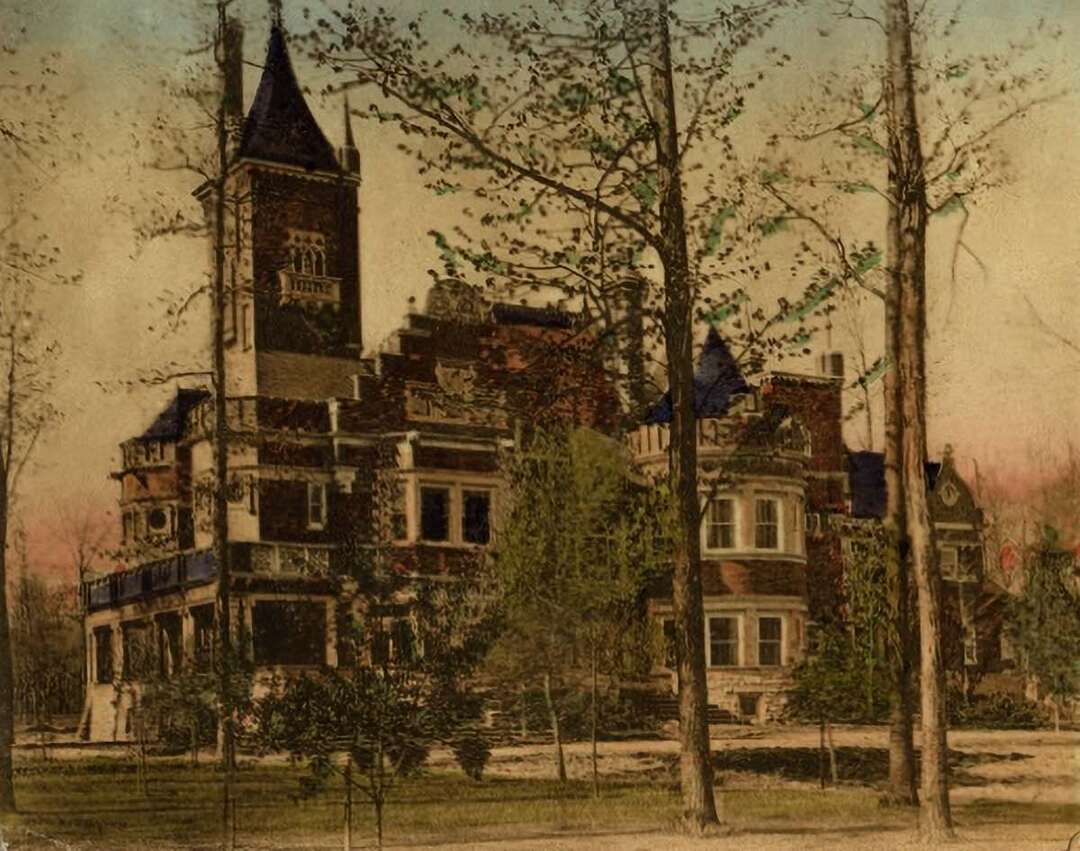
    <summary type="html"><![CDATA[<p><strong><em>Built by Theodor Kundtz between 1899 and 1903, the mansion known as Kundtz Castle featured a five-story tower, a bowling alley, and a music room with 12 stained glass windows. Kundtz did most of the woodwork himself. In 1925, the <em>Cleveland Press</em> called Kundtz's work "genius."</em></strong></p><img src="https://clevelandhistorical.org/files/fullsize/ffeb4dffbda2ee671248840cdd3ec54b.jpg" alt="Postcard View of Kundtz Residence" /><br/><p>Theodor Kundtz immigrated to Cleveland from Hungary in 1873, at the age of twenty one. Trained as a carpenter, he found a job making cabinets for Whitworth Co.  Kundtz was ambitious and wanted to make a name for himself, so in 1878 he left Whitworth and founded his own company, Theodor Kundtz Co. The main product was sewing machine cabinets, but the company sold many other wood items as well, including bodies for cars and vans. Kundtz accrued dozens of patents to protect his many ventures. Later on, he also founded a bicycle wheel company. Combined, the two businesses turned the poor immigrant into one of Cleveland's largest employers. </p><p>As his wealth grew, Kundtz invested his considerable wealth and woodworking skills in the construction of a grand estate situated on five acres of land stretching along the Lake Erie shoreline on the north side of Lake Avenue in Lakewood, Ohio. Each of the many rooms were adorned with Kundtz' own handcarved detail work.</p><p>Kundtz was active in Cleveland's Hungarian community. At the height of his success, nearly all of his 2,500 workers (92 percent, reportedly) were Hungarian. Kundtz also founded the Hungarian Savings and Loan Company and funded the Hungarian Hall on Clark Avenue. In 1902, his service to the Hungarian people was recognized and honored when Emperor Franz Joseph of Austria-Hungary had the immigrant-turned-businessman/philanthropist knighted.</p><p>Kundtz sold his "castle" to Robert R. Morrow in 1945. In 1960, the Eggleston Development Co. purchased the property for $110,000 with plans for redevelopment. On December 18, 1961, the public saw Kundtz Castle for the last time. After a brief period during which the public was invited to view the interior of the castle, the company tore down the mansion to build 16 custom homes and a new street – Kirtland Lane. Before Kundtz Castle was demolished, the Eggleston Company salvaged some of the woodwork and sold it at auction. Most pieces went to private collectors, allowing the memory of Kundtz Castle to survive, if only in pieces.</p><p><em><strong><a href="https://clevelandhistorical.org/items/show/224">For more (including 7 images) view the original article</a></strong></em></p>]]></summary>
    <published>2011-06-07T16:57:46+00:00</published>
    <updated>2026-03-04T21:31:58+00:00</updated>
    <link rel="alternate" type="text/html" href="https://clevelandhistorical.org/items/show/224"/>
    <id>https://clevelandhistorical.org/items/show/224</id>
    <author>
      <name>Robin Meiksins</name>
    </author>
  </entry>
  <entry>
    <title type="html"><![CDATA[Oldest Stone House: A Remnant of Rockport Township]]></title>
    <summary type="html"><![CDATA[<img src="https://clevelandhistorical.org/files/fullsize/491309a96f5546e517788db4600e7a93.jpg" alt="Oldest Stone House, 1902" /><br/><p>John Honam (1790-1845) built the Oldest Stone House in 1834 on the north side of Detroit Avenue, just to the east of its intersection with Warren Road. Honam came to what was then known as Rockport Township around 1830 by way of Scotland and Portland, Maine, becoming one of Rockport's first settlers. He came to own over 90 acres of land in the rural township, with his parcel extending north of Detroit Avenue to the lake, bounded to the east and west by what are now Belle and Cook Avenues. Not much is known about Honam's activities, but it is likely that he made a living by farming his land. Honam's daughter Isabella (1815-1897) and her husband Orvis Hotchkiss (1809-1881) inherited the Oldest Stone House after John Honam died in 1845. Hotchkiss continued to farm a part of the land and also ran a tannery and a steam mill on the property. The married couple raised their family in the house, but after Isabella's death in 1897 none of John Honam's descendants would live there again.</p><p>Reflecting the transformation of Rockport around this time from a rural farming community into the affluent residential suburb of Lakewood, the Lakewood Realty Company purchased the Oldest Stone House in 1899 and used it as a sales office for its swanky Lakewood Park housing development. After Lakewood Realty Company moved out of the house, it contained a succession of commercial businesses, including a shoe repair shop, a photography studio, and a doctor's office. The house was also occasionally rented out as living quarters to various families and individuals. The longest lasting tenant in the Old Stone House during this period was surely Gilbert P. Hostelley's upholstery and furniture repair shop, located in the house from 1919 to 1952.  </p><p>Smack dab in the middle of Lakewood's growing commercial district along Detroit Avenue, it was only a matter of time before the Oldest Stone House was threatened with demolition. In 1952, furrier Stephen Babin of Babin Furs at the northwest corner of Detroit and St. Charles Avenues and (since 1942) owner of the Old Stone House located just to the north of his shop, sought to expand his business, putting the house in harm's way. Babin offered the house to local historian Margaret Manor Butler at no cost. Butler, in a flurry of activity, raised the money needed to move the house, negotiated with the city of Lakewood to relocate it to its current site at Lakewood Park, and founded the Lakewood Historical Society. In 1953, the Oldest Stone House opened as both a home to the historical society and a museum dedicated to recreating the frontier life of Rockport Township in the 19th century.  Fittingly, the house now stands on land that was originally a part of John Honam's 97-acre estate.  </p><p><em><strong><a href="https://clevelandhistorical.org/items/show/222">For more (including 7 images) view the original article</a></strong></em></p>]]></summary>
    <published>2011-06-07T16:09:57+00:00</published>
    <updated>2026-03-04T21:31:58+00:00</updated>
    <link rel="alternate" type="text/html" href="https://clevelandhistorical.org/items/show/222"/>
    <id>https://clevelandhistorical.org/items/show/222</id>
    <author>
      <name>CSU Center for Public History and Digital Humanities</name>
    </author>
  </entry>
  <entry>
    <title type="html"><![CDATA[Birdtown: A Company Town in Lakewood]]></title>
    <summary type="html"><![CDATA[<p><strong><em>In the southeast corner of Lakewood, the National Carbon Company charted a novel alternative to the more common, rigidly top-down approach to company towns. Unlike industrial firms that built, maintained, and regulated residential compounds to encourage or even compel worker adherence to their prescribed expectations for productivity, loyalty, and even morality, National Carbon collaborated with its workers to fashion a diminutive "village within the city" close to work but free from company control. The small, self-contained, and well-bounded neighborhood made its original nickname — the Bird’s Nest — fitting indeed.</em></strong></p><img src="https://clevelandhistorical.org/files/fullsize/7a8598959052e50a212af78d35ff6364.jpg" alt="The Robin Tavern " /><br/><p>In 1891 the National Carbon Company (now GrafTech) occupied the corner of Madison Avenue and West 117th Street at the Cleveland-Lakewood border. It manufactured batteries and developed the carbon filtered gas mask. The company employed recent immigrants, primarily Slovaks and eastern Europeans in its growing manufacturing business. Often workers were encouraged to bring family members to work to join the force. Most of the employees lived in Cleveland neighborhoods and would travel muddy and icy roads to the site. The lack of any public transportation made the trip challenging to arrive to work on time. In 1892, National Carbon sought a solution to the problem.</p><p>The company acquired 155 acres to the west of the factory to Halstead Avenue and developed over 400 residential parcels to accommodate factory employees and their families. The Pleasant Hill Land Company worked with company employees to develop homes in the area by offering reduced down payments and favorable financing. Many families built their homes personally during their time away from the factories. By 1910, nearly 2200 residents called this area home. The neighborhood was reminiscent of company towns like Pullman, Illinois and Homestead, Pennsylvania. Pullman was entirely company-owned and provided housing, markets, a library, churches and entertainment for  employees who were required to live there. Homestead, was a steel town which grew among workers around the burgeoning steel industry along the Monongahela river in the late 1800s. Birdtown, a neighborhood within Lakewood, represented a community fostered by the company but built and owned by the residents.</p><p>The names 'Bird's Nest' and 'Birdtown' were derived from several streets named for birds believed to be indigenous to the area including robin, plover, lark, and thrush among others. The district was also referred to as "the village" by its original residents. A facet of Birdtown is evident when one walks along the tree-lined streets. Multiple uses of land and buildings for homes, stores, churches, domestic farm gardens, animals, and dairies provided a self sustaining village within Lakewood. Several properties reflect the ingenuity of the early residents who built or added to their structures.  The residents completed and maintained their properties meticulously, a feature which remains visible today.</p><p>A visit to the area today reveals a very tidy neighborhood bounded by factories: Graftech at the 117th end and Lake Erie Screw Corporation on the west end (site of the former Templar Motor Corporation) on Halstead Avenue.  Madison Avenue on the north and railroad tracks to the south enclose the community.  Harrison Elementary School sits in the middle of the neighborhood which also is home to several ethnically connected churches and schools. More than eight churches within the district served the Slovak, Polish, Ukrainian, and Carpatho-Rusyn people in the neighborhood. Two churches, both named Sts. Peter and Paul (one Russian Orthodox  and  the other Lutheran) illustrate the ethnic and religious varieties in the neighborhood.  Immigrant families kept their language, worship, and traditions preserved through parish and school programs well into the 1900s. Birdtown is listed on the National Register of Historic Places.</p><p><em><strong><a href="https://clevelandhistorical.org/items/show/219">For more (including 8 images) view the original article</a></strong></em></p>]]></summary>
    <published>2011-06-06T09:46:46+00:00</published>
    <updated>2026-03-04T21:31:58+00:00</updated>
    <link rel="alternate" type="text/html" href="https://clevelandhistorical.org/items/show/219"/>
    <id>https://clevelandhistorical.org/items/show/219</id>
    <author>
      <name>Jim Lanese</name>
    </author>
  </entry>
  <entry>
    <title type="html"><![CDATA[Lakewood Park]]></title>
    <summary type="html"><![CDATA[<img src="https://clevelandhistorical.org/files/fullsize/becd218b85f10b07b35d45999371116a.jpg" alt="Breakwall Construction, 1956" /><br/><p>Lakewood's Fourth of July celebration in 1918 revolved around festivities for the dedication of the newly acquired Lakewood Park. A parade of cars decked out in patriotic colors terminated at the park where thousands gathered to watch a ceremonial flag raising, hear a reading of the Declaration of Independence, sing patriotic sings, and partake in special games and athletic contests. Lakewood's Slovak community was well represented in the events, which included a speech in Slovak and a parade of more than 300 Slovaks and their ethnic band. </p><p>The new park represented a significant investment in public recreation for the city. The 25 acres of lakefront property cost  $214,500. In comparison, Lakewood's two other major parks at this time — Scenic Park, the site of an old amusement park at the mouth of the Rocky River, and Madison Park in Birdtown — had cost the city about $40,000 a piece to purchase in 1917.  The $214,500 price tag for Lakewood Park was actually quite controversial and had to be arrived at in a court of law after city officials and the bank which owned the property could not agree on the land's value. Lakewood, which had officially become a city in 1911 and whose population grew rapidly during the first few decades of the 20th-century, spent generously for the benefit of its residents and has since continued to invest in Lakewood Park to make it a true community center.  </p><p>The land that became Lakewood Park previously belonged to Robert R. Rhodes (1845-1916), a wealthy Cleveland industrialist active in the coal, railroad, and banking industries. Daniel P. Rhodes (1813-1875), Robert's father and an early developer of Cleveland's coal mining industry, began buying land in Lakewood (then Rockport Township) in the late 1860s. After Daniel died in 1875, Robert continued to add to his father's Lakewood land holdings and built a summer house on the family's lakefront property in 1881. Rhodes and his family eventually moved into this house, known as "The Hickories," on a full-time basis in 1890, vacating their residence on Ohio City's ritzy Franklin Boulevard. After Robert's death, this house would serve as a convalescent home for wounded World War I soldiers and a temporary hospital during the 1918 influenza pandemic before becoming home to Lakewood City Hall in 1920. The location of the city hall inside a former mansion created some interesting situations. The finance director, for instance, had his office inside a re-purposed bathroom (the fixtures had been removed), while the Lakewood Water Department set up shop in the dining room. The Rhodes house was demolished in 1959 after City Hall moved to a new location.</p><p>Over the years, the city has added a swimming pool, picnic pavilions, a skateboard park, ball fields, and a bandshell to Lakewood Park to meet the recreational needs of its residents. The city has also altered the landscape of the park, adding breakwalls and fill material along the shoreline to prevent erosion of the steep cliffs leading down to the lake.  In 2006, the Lakefront Promenade opened, running alongside the breakwall and offering scenic views of downtown Cleveland. With the opening of the promenade, which sits on manmade land reclaimed from Lake Erie, the city created a beautiful lakeside space that delights those who frequent it, while also serving the ongoing goal of erosion control.</p><p><em><strong><a href="https://clevelandhistorical.org/items/show/210">For more (including 7 images) view the original article</a></strong></em></p>]]></summary>
    <published>2011-05-31T11:38:11+00:00</published>
    <updated>2026-03-04T21:31:58+00:00</updated>
    <link rel="alternate" type="text/html" href="https://clevelandhistorical.org/items/show/210"/>
    <id>https://clevelandhistorical.org/items/show/210</id>
    <author>
      <name>Michael Rotman</name>
    </author>
  </entry>
</feed>