<?xml version="1.0" encoding="UTF-8"?>
<feed xmlns="http://www.w3.org/2005/Atom">
  <title type="text">Cleveland Historical</title>
  <updated>2026-05-02T04:02:58+00:00</updated>
  <generator uri="http://framework.zend.com" version="1.12.20">Zend_Feed_Writer</generator>
  <link rel="alternate" type="text/html" href="https://clevelandhistorical.org/"/>
  <link rel="self" type="application/atom+xml" href="https://clevelandhistorical.org/items/browse?output=rss2"/>
  <id>https://clevelandhistorical.org/</id>
  <author>
    <name>Cleveland Historical</name>
    <uri>https://clevelandhistorical.org</uri>
  </author>
  <link rel="hub" href="http://pubsubhubbub.appspot.com/"/>
  <entry>
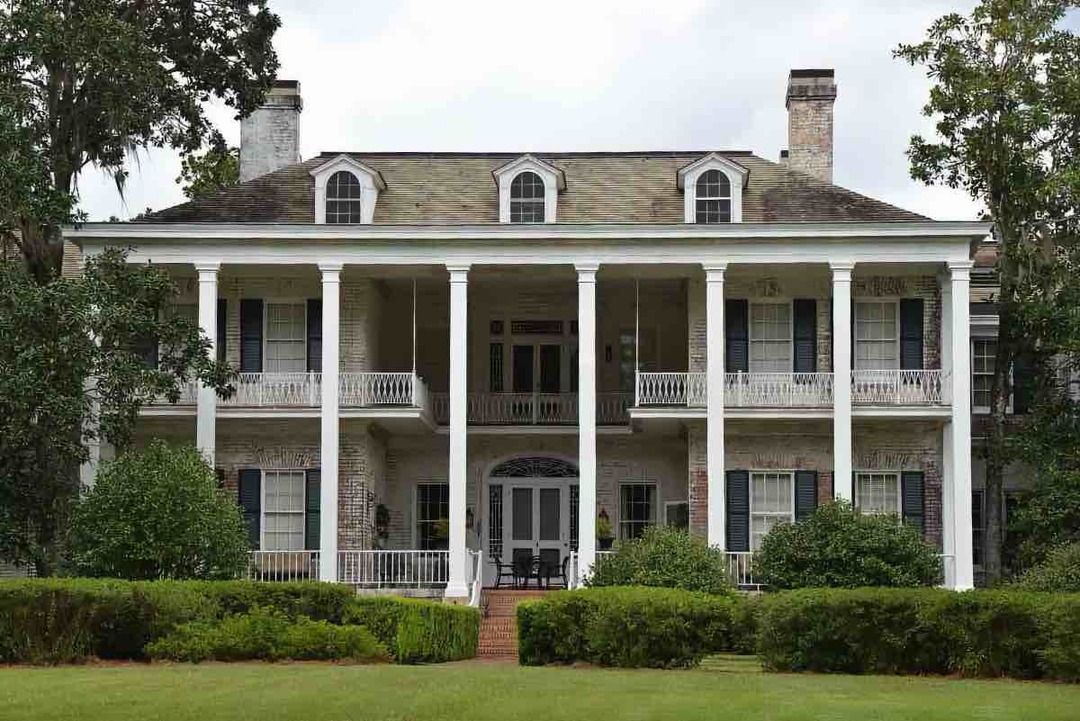
    <title type="html"><![CDATA[Thomasville Quail Plantations: The Hanna and Wade Winter Retreats in South Georgia&#039;s Red Hills Region]]></title>
    <summary type="html"><![CDATA[<p><strong><em>The names Hanna and Wade are immediately familiar to most longtime Clevelanders. These families amassed fortunes in industries such as iron, oil, coal, steel, tobacco, shipping, telegraphs, railroads, and finance at a time when Cleveland was on the rise, and they poured tremendous sums of philanthropic money into education, healthcare, and the arts. Their names appear throughout the city—Hanna Building, Hanna Theatre, Hanna House at University Hospitals, Wade Park, Wade Oval, Wade Lagoon, Wade Chapel—and one will find their names among the prominent funds that support the collections of the Cleveland Museum of Art. However, fewer Clevelanders may know that the Hanna and Wade legacies are just as visible in the Red Hills region of southwestern Georgia near the Florida border.</em></strong></p><img src="https://clevelandhistorical.org/files/fullsize/aae43c740fda8a1d55797d2d1cebe1be.jpg" alt="Pebble Hill Plantation" /><br/><p>Starting in the 1890s, wealthy Clevelanders were among the northern elites who transitioned from staying at the fashionable winter resort hotels of Thomasville, Georgia, to tranforming former cotton fields and pine forests into private retreats and quail hunting grounds. One of the earliest Cleveland investors in the Red Hills was Howard Melville (“Mel”) Hanna, born in New Lisbon, Ohio, in 1840. After moving to Cleveland in 1852 and serving in the U.S. Navy during the Civil War, Hanna invested in an oil refinery that he sold to his friend John D. Rockefeller’s Standard Oil Company of Ohio, as well as in iron and steel, tobacco, and shipping. He also worked closely with his older brother <a href="https://clevelandhistorical.org/items/show/680">Marcus Alonzo Hanna</a> in the M. A. Hanna Company. </p><p>While his brother Mark was actively managing William McKinley’s 1896 presidential bid, Mel Hanna bought not one but two large former cotton plantations in the pine-studded Red Hills southwest of Thomasville. The Hanna brothers might never have visited Thomasville if not for their sister Salome, who with her husband J. Wyman Jones of New Jersey, had a few years earlier become the first northerner to buy a Thomas County winter estate (christened “Elsoma” in a play on her name). She encouraged her brothers to visit Thomasville. Long a favored winter resort city, Thomasville was arriving at a turning point. By the 1890s, local leaders' concerns about yellow fever led them to enact quarantines, ban train stops, and prohibit alcoholic beverages in public accommodations, even as railroads built by Henry Flagler and Henry’s Plant were opening newer resorts deep into Florida. While coastal Florida eclipsed Thomasville’s popularity with winter tourists, the Red Hills continued its appeal as a hunting paradise with hundreds of thousands of acres of woodlands known for abundant bobwhite quail, wild turkeys, doves, and ducks.</p><p>Mel Hanna’s first purchase in 1896 was a plantation previously owned by his nephew, Charles Merrill Chapin (Salome Hanna's son from her first marriage), who had bought it five years before. The estate, which had originally belonged to Paul Coalson, included an antebellum house that probably dated to the 1830s. Upon acquiring the property, Hanna renamed it Melrose Plantation. A few months later, he bought the adjacent Pebble Hill Plantation, whose main house—built in 1850 by some of the thirty-seven people enslaved by planter John W. H. Mitchell and his wife Julia—had continued to be occupied by the Mitchells’ son for 15 years after she died in 1881. </p><p>Mel and his wife Kate spent their winters at Melrose, joined by their children Kate Benedict, Howard Melville Jr., and Mary Gertrude. In 1905, Hanna expanded the main house, and after his death in 1921, his son hired the renowned Cleveland architectural firm Walker and Weeks to design Georgian Revival–style cottages, barns, and outbuildings. After Hanna Jr.’s death in 1945, his daughters, Fanny (Mrs. Julian Castle Bolton) and Kate (Mrs. Warren Bicknell Jr., named for her aunt) shared the estate. Eventually, in 1952, they divided Melrose, creating a separate estate for Kate and Warren Bicknell called Sinkola Plantation. </p><p>Meanwhile, in 1901, Mel Hanna deeded Pebble Hill to his daughter, Kate Benedict Hanna Ireland, for the symbolic sum of one dollar. She lived there with her husband, Robert Livingston Ireland (also of Cleveland), and later with her second husband Perry W. Harvey. The Harveys expanded Pebble Hill from 3,000 to 10,000 acres. In 1934, two years after her husband died, Kate Harvey’s antebellum main house burned down, leaving only the loggia standing. She then commissioned Cleveland architect Abram Garfield (son of U.S. President James A. Garfield) to build a new fireproof 28-room mansion combining Federal and Greek Revival styles. Kate Harvey lived just four months after its completion. Pebble Hill then passed to her daughter, Elizabeth “Pansy” Ireland Poe, who lived there for four decades. In 1950, she established the Pebble Hill Foundation, ensuring preservation of the estate as a historic house museum, which opened to the public in 1983.</p><p>In 1905, Hanna purchased a third Thomasville estate, Winnstead Plantation, which he gifted to his daughter Mary Gertrude and her husband, Coburn Haskell. Haskell, a former employee of the M. A. Hanna Company, had left to pursue the manufacture of his 1899 patented invention of the modern golf ball. After his death in 1922, Mary Gertrude remained at Winnstead until her passing in 1945, after which the family sold the property. </p><p>The Hanna legacy in Thomasville extended well beyond these estates. Kate Benedict Hanna Ireland’s son, Robert Livingston Ireland Jr., co-owned Foshalee and Ring Oak plantations with Cleveland businessman David S. Ingalls. When Mel Hanna’s grandson Howard Melville Hanna III died in 1936, his widow Pamela remarried Cleveland lawyer and M. A. Hanna president George M. Humphrey. Humphrey built a mansion at Milestone Plantation, which became an occasional retreat for President Dwight D. Eisenhower during Humphrey’s tenure as Secretary of the Treasury. By the middle of the twentieth century, other Hanna descendants owned additional quail plantations around Thomasville. </p><p>Yet the Hannas were not the only Clevelanders who wintered in and bought land in Thomasville. Another was Jeptha Homer Wade II, grandson of Western Union Telegraph founder Jeptha Homer Wade and an early benefactor of the Cleveland Museum of Art. In 1903, Wade began assembling parcels for his own winter retreat south of Thomasville, eventually controlling over 10,000 acres. In 1905, he commissioned Cleveland architects Hubbell and Benes, the same firm that had designed Cleveland’s <a href="https://clevelandhistorical.org/items/show/380">Wade Memorial Chapel</a>, to design Millpond—a Spanish Revival mansion that featured a glass atrium flanked by a loggia. For Millpond’s gardens, Wade retained Frederick Law Olmsted’s apprentice Warren H. Manning, who also designed the grounds at the Vanderbilts’ Biltmore House in North Carolina, the Seiberlings’ Stan Hywet Hall in Akron, the Mathers’ <a href="https://clevelandhistorical.org/items/show/363">Gwinn</a> in Bratenahl, and Wade's Valley Ridge Farm in Hunting Valley. </p><p>Wade and his wife Ellen wintered at Millpond until her death in 1917 and his nine years later after which Millpond was placed in a trust for their children, Jeptha Homer Wade Jr., George Garretson Wade, and Helen W. Wade (Mrs. Edward B. Greene). Helen inherited her brothers’ interests, and when she passed away in 1958, her daughter Helen Wade Garretson Perry owned Millpond for nearly forty more years. Thereafter, the home continued to be owned by descendants of Wade.</p><p>The Hannas, like some other northern industrialists, took former cotton plantations once worked by enslaved or sharecropping Black workers and reimagined them as winter retreats, albeit still depending on Black labor. They retained the term “Plantation” in their names but repurposed the land for hunting quail. In contrast, the Wades and other northerners cobbled together smaller farms and forestlands to fashion 20th-century hunting plantations. Ironically, it was the longstanding practice of burning fields and forests before each next cotton-planting cycle that had the Red Hills region so conducive to quail plantations. In their desire to maintain this quality, winter residents came to embrace conservation practices, especially those recommended by the noted forester and ornithologist Herbert Stoddard. In 1923, a group of plantation owners (including Clevelanders Hanna, Wade, and bird researcher <a href="https://clevelandhistorical.org/items/show/930">Samuel Prentiss Baldwin</a>) formed the Committee on the Cooperative Quail Investigation, which funded a several-year study by Stoddard under the U.S. Bureau of Biologial Survey that culminated in 1931 in Stoddard's influential book on quail conservation.</p><p>Though they learned to embrace forest conservation and wildlife management, quail plantation owners could not overcome wider environmental changes after World War II, including habitat loss amid conversion of farms to exotic grasses or short-rotation pine plantations, pesticide use, and suburban sprawl. By the end of the century, the quail “harvest” plummeted by more than 75 percent. Today, family-owned quail plantations like Wade’s Millpond and conservation organizations are working to restore quail populations. Meanwhile, historic sites such as Hanna’s Pebble Hill offers visitors a glimpse of the leisured lifestyles that Cleveland industrialists enjoyed in Thomasville.</p><p><em><strong><a href="https://clevelandhistorical.org/items/show/1054">For more (including 20 images) view the original article</a></strong></em></p>]]></summary>
    <published>2025-03-25T22:42:17+00:00</published>
    <updated>2026-04-17T19:17:43+00:00</updated>
    <link rel="alternate" type="text/html" href="https://clevelandhistorical.org/items/show/1054"/>
    <id>https://clevelandhistorical.org/items/show/1054</id>
    <author>
      <name>J. Mark Souther</name>
    </author>
  </entry>
  <entry>
    <title type="html"><![CDATA[Building the Cleveland Museum of Art: 1888 to 1916]]></title>
    <summary type="html"><![CDATA[<img src="https://clevelandhistorical.org/files/fullsize/02b11a0c1507e3ced61e847e8b420725.jpg" alt="Cleveland Museum of Art Under Construction" /><br/><p>In the late 19th and early 20th centuries, the museum movement was sweeping the United States. Some cities had long-established art museums while others looked to form new ones. Cities without permanent exhibition spaces welcomed traveling exhibits for short periods of time. Cleveland was one of these cities that lacked a permanent art museum, so it hosted traveling exhibitions at Central High School. A spate of influential art museum openings in the 1880s helped ignite local interest in securing a museum for Cleveland. In 1880 President Rutherford B. Hayes dedicated the Metropolitan Museum of Art in New York City. With Cincinnati and Detroit founding art museums in 1881 and 1885, respectively, Clevelanders wanted a museum of their own. Some Cleveland artists were showing their work in the Met and made sure to note that they were unable to show their work in Cleveland due to the lack of a museum. </p><p>The first opportunity for a Cleveland art museum came with the death of Hinman Hurlburt. With the probating of his will in 1884 came the announcement that the majority of his estate and art collection should be put toward an art gallery. However, the part of his estate set for a museum would have to wait until his wife passed. The question, “Who will found for us a museum of art?” was posed at the Annual Patron Banquet for the Art School in 1888. This open call for creation of a museum in Cleveland continued to circulate and build momentum. These calls also brought whispers of potential donors. John Huntington contemplated creating a museum with the proposal of donating his personal art collection to Cleveland in 1889. The Art School also began to discuss plans for a combined museum and college. When Horace Kelley died late in the following year, he left most of his $500,000 estate for an art museum. </p><p>Two more years passed before the next big advance in museum plans. On December 25, 1892, Jeptha H. Wade II gifted a plot of land in Wade Park to the Kelley Art Trustees for the museum. The location in Wade Park was a little larger than four acres and sought after by Western Reserve University, the School of Art, and the Cleveland Park Commission. Wade originally expected the Kelley Art Trustees to pay for the parcel but chose to gift the land with newspaper announcements being made on Christmas Day. The acquisition of the land and the money from the Horace Kelley Trust led to increased pressure from Clevelanders asking for a museum to be built. Even with the land for the museum secured, seven more years passed before the Horace Kelley Trust set up a corporation for the museum. </p><p>Henry Clay Ranney was one of the trustees for both the Hurlburt and Kelley trusts, but he was also one of the executors of John Huntington’s estate. Huntington’s wishes for a museum were rumors until his death in 1893, when his will was released setting up a trust for a gallery and museum. Ranney, now trustee of all three estates, worked to unite all three to make one museum because he saw that they all had similar wishes. On March 16, 1899, Ranney sent off articles of incorporation to formally establish the <a href="https://clevelandhistorical.org/items/show/29">Cleveland Museum of Art</a>. He was elected as the first President of the museum that May. The newly formed Board of Trustees was composed of many notable men including J. H. Wade, George H. Worthington, Samuel Mather, William B. Sanders, Samuel Williamson, and Liberty Holden. John D. Rockefeller and Charles F. Brush were also elected but decided not to serve due to other engagements. </p><p>Despite the pressure to build immediately, preliminary steps toward the creation of the museum were being taken slowly. Another seven years passed before the architects Hubbell and Benes were chosen for the project in 1906. Preliminary plans were set in motion after the selection of the architects. In April 1907, a six-person committee discussed the first plans but called for revisions. The committee included Ranney, J. M. Jones, J. H. Wade, William Sanders, Liberty Holden, and Hermon Kelley. The committee traveled to Boston to talk to Edmund Wheelwright, the consulting architect for the Boston Museum of Fine Arts, and trekked across Europe taking notes, and its members continued to discuss and revise plans for another six years before building began. </p><p>During planning, battles erupted with the city over location disputes. The Museum Committee wanted to orient the museum east-west which would change the boundary of the land gifted by Wade, an action requiring city approval. The city rejected this proposal due to the cost to the city, but ultimately approved a new proposal in December 1908 with the building facing University Circle and Wade Lagoon to the south. The Committee and the city, particularly Mayor Tom Johnson, also disagreed on payment which was tied to when the museum would be open to the public. The Huntington will stipulated that the museum would offer admission-free days, but Mayor Johnson was trying to force the hand of when the free days would occur. The dispute ended with the conclusion of Johnson's five-term run in January 1910. Herman Baehr came into power and helped settle the dispute. Behind closed doors the Kelley Trust received a quitclaim deed from Wade to secure museum expansion in 20 to 30 years. More bad news came in March of that year. The Museum discovered that only $75,000 would come from the Hurlbut gift, not the original estimate of $500,000 that they had planned. The shortfall was resolved when the Huntington Trust agreed to pay two-thirds and the Kelley Trust one-third toward the cost of building, finally permitting the first steps to commence on building the museum. </p><p>The headline “First Stake Driven for Art Museum” introduced surveying action that occurred on the property in 1911 and Hubbell’s promise that the building would be completed in two years. Despite his claim of such a short build time, more challenges appeared. Even with the Huntington and Kelley Trusts taking on the cost, they were over their $1 million budget. The original plans centered around the three trusts were now questioned. The design committee went over a variety of new plans presented by Hubbell including new one-story options to help save money. Ultimately, they chose to go with a two-story option that gives the look of a single story from the north but presents a grander facade when viewed from across Wade Lagoon to the south. The design, rendered in white Georgian marble, reflected the Beaux-Arts influence that accompanied the pervasive City Beautiful movement of the time. In the fall of 1912, with little progress made, the Trustees blamed the architects for the delay of the museum. In the meantime, roads around the planned museum location were being constructed and by 1913 excavation was under way to move the Perry Monument from its spot in Wade Park to Gordon Park to make room for the museum. Excavation continued without pause until 1914 when police stopped construction due to missing permits. Along with missing permits, the plans for the building violated state building codes and Hubbell had to adjust the plans again to add more exits and reach code approval. After obtaining the proper permits, construction continued. </p><p>The museum committee announced the hiring of J. Arthur MacLean from the Boston Museum of Fine Arts to be the curator for the museum on September 6, 1914. Through the final phases of construction, the museum committee had calls for donations and searches for collections, but on June 7, 1916, it finally opened to the public. The accounts of opening night detailed it as marvelous and well attended. According to one, “the event marked the culmination of the dream and plans of thousands of Clevelanders to have a Cleveland art museum which would stand as a civic asset.” The museum was officially turned over to the people by the president of the museum association Judge William B. Sanders, who paid tribute to the founding donors John Huntington, Horace Kelley, and Jeptha Wade as well as the architects. The opening also welcomed new announcements for collection donations to help fill the museum’s galleries. </p><p>In addition to being known for its extraordinary collections, perhaps the Cleveland Museum of Art’s most singular attribute was its free days. From the start, the museum was open two days a week to the public at no charge. Not only was admission free but the museum was focused on education and provided free spaces for students to draw. This set the museum apart from art institutions in other cities. In keeping with its founding principles, the Cleveland Museum of Art later expanded this legacy, and its permanent collection is now always free to the public.</p><p><em><strong><a href="https://clevelandhistorical.org/items/show/970">For more (including 10 images) view the original article</a></strong></em></p>]]></summary>
    <published>2022-11-07T03:15:53+00:00</published>
    <updated>2026-04-17T19:17:42+00:00</updated>
    <link rel="alternate" type="text/html" href="https://clevelandhistorical.org/items/show/970"/>
    <id>https://clevelandhistorical.org/items/show/970</id>
    <author>
      <name>Jasmine Prezenkowski</name>
    </author>
  </entry>
  <entry>
    <title type="html"><![CDATA[Wade Memorial Chapel: Louis Comfort Tiffany&#039;s Tribute to the Founder of Western Union]]></title>
    <summary type="html"><![CDATA[<img src="https://clevelandhistorical.org/files/fullsize/d5325ecf60861ad9def989711a106583.jpg" alt="Portico of Wade Memorial Chapel" /><br/><p>Within Lake View Cemetery stands a beautiful, white structure - the Wade Memorial Chapel. More than a century old, this structure has been referred to as one of the finest small buildings in America and is listed on the National Register of Historic Places. Over the chapel doors, you will find an inscription: "Erected in Memory of Jeptha H. Wade by the Grandson, A.D. MDCCCC."  Mr. Wade is best known for being the founder of the Western Union Telegraph Company. He also dedicated his life to hard work and good deeds, making him worthy of the honor his grandson bestowed upon him.</p><p>Jeptha H. Wade was born on August 11, 1811, in Seneca County, New York.  He was the youngest of nine children.  When Jeptha was a baby, his father passed away, leaving his mother to struggle to raise him  and his siblings.  He left home at the age of twelve for a series of apprenticeships. He thus got to try his hand as a shoemaker, a bricklayer and a carpenter. By the age of twenty he was a partner and soon owner of his first company: a sash door and blind factory in Seneca Falls.  In 1847, he acquired his first job in the telegraph industry. He would make his fortune in this field over the next twenty years, eventually forming the Western Union Telegraph Company. </p><p>At the height of his telegraphy success, Wade became ill and settled in Cleveland.  His illness did not slow him down, however.  He held six presidencies in banks and railroads, and became a director and stockholder in nine concerns, including the Cleveland Rolling Mill and the Cleveland Shipbuilding Company.  </p><p>Wade also made his mark in Cleveland through his philanthropy.  He constructed the Cleveland Orphan Asylum and gave it a $140,000 endowment, a hefty sum in the late 1800s. In 1885, he donated 75 acres for the creation of Wade Park in University Circle. By 1960, it was estimated that the Wade family had donated over $25 million in Cleveland. The family has also donated a number of artworks to the Cleveland Museum of Art. </p><p>The Wade Memorial Chapel is truly a thing of beauty that creates a sense of awe in its visitors. The exterior was constructed by Hubbell & Benes, an architectural firm that was responsible for many other notable buildings around Cleveland.  The interior was designed by Louis C. Tiffany. From the mosaic tile floor with its swirly design, up to the simple wood pews, and finally to the walls, Tiffany has left a significant mark in Wade's chapel. The left and right walls contain massive panels consisting of thousands of cut pieces of mosaic glass, showcasing the 'River of Life' and the 'River of Death.'  It is said that when Tiffany was given the commission to create the wall panels, he proclaimed that it was just the opportunity he had been waiting for, and that he would make it the work of his life. Three years later, when Tiffany arrived in Cleveland to inspect the finished work, he said, "I am perfectly satisfied."</p><p><em><strong><a href="https://clevelandhistorical.org/items/show/380">For more (including 9 images&#32;&amp;&#32;3 audio files) view the original article</a></strong></em></p>]]></summary>
    <published>2011-12-21T22:50:44+00:00</published>
    <updated>2026-04-17T19:17:38+00:00</updated>
    <link rel="alternate" type="text/html" href="https://clevelandhistorical.org/items/show/380"/>
    <id>https://clevelandhistorical.org/items/show/380</id>
    <author>
      <name>Ashley Hardison</name>
    </author>
  </entry>
  <entry>
    <title type="html"><![CDATA[Cleveland Museum of Art: “For the Benefit of All the People Forever”]]></title>
    <summary type="html"><![CDATA[<img src="https://clevelandhistorical.org/files/fullsize/f74a9ce7fe875fd0fda734a99589c1de.jpg" alt="Cleveland Museum of Art Reflected in Wade Lagoon" /><br/><p>The Cleveland Museum of Art is one of the foremost art museums in the world, having internationally renowned collections that span the globe. Local industrialists Hinman B. Hurlbut, John Huntington, and Horace Kelley underwrote the museum's original endowment, and Jeptha H. Wade II (grandson of the Western Union Telegraph founder) donated the land. <a href="https://clevelandhistorical.org/items/show/970">Planning for the museum</a> unfolded in a series of fits and starts over nearly twenty-five years before construction finally proceeded. Designed by the Cleveland-based architectural firm Hubbell & Benes in the Neoclassical Revival style and faced with white marble quarried in Tate, Georgia, CMA opened to the public on June 6, 1916. </p><p>Wade's original donation of land for the museum included the stipulation that it be used "for the benefit of all the people forever," a vision that CMA embodied. From its inception, the museum was free two days each week and later became free year-round, apart from special exhibitions. Of similar importance, CMA embraced education as a focus. Whiting shepherded the formation of an educational department that offered many programs for children and adults. Later museum leaders continued to emphasize educational programs, including innovative uses of technology.</p><p>Inside the museum, notable features included the Armor Court, an enduring exhibit that resulted from the original museum director Frederic Allen Whiting's insistence on having a prominent collection of armor near the center of the new museum. Another important space, the Garden Court, featured a fountain pool, palms, and tropical plants, but nearly a century later it was transformed into a gallery of Italian Baroque paintings and sculptures. </p><p>Outside, the setting for the museum reflects early work by the Garden Center of Greater Cleveland (now Cleveland Botanical Garden), which originated in a boathouse on the east side of Wade Lagoon. The Garden Center hired Frederick Law Olmsted Jr.'s landscape design firm to fashion the Fine Arts Garden to complement the museum. The resulting design created a series of two outdoor "rooms" and otherwise embellished the sweeping vista from Euclid Avenue to the museum's south facade. Among the original installations were Chester Beach's <em>Fountain of the Waters</em>, a marble fountain and sculptures, and his twelve plinths representing signs of the Zodiac. The Fine Arts Garden opened in 1928. Ninety years later, the Nord Family Greenway opened a perpendicular vista that encourages people to move between the museum and the Maltz Performing Arts Center across Doan Brook.</p><p>In the post–World War II years, CMA became a fixture in the international art collecting circuit as a result of substantial bequests, including from the John L. Severance Fund. The arrival of Sherman Lee, who became the third director of CMA in 1958, did much to elevate the museum's stature. Originally from Seattle, Lee, who attended Western Reserve University and started his career as a curator of Asian art at the Detroit Institute of Art just before the war, oversaw a major expansion of CMA's Asian collection during his quarter-century tenure as director. Fortuitously, in the same year he became the director, CMA completed its first expansion and received a large bequest from Leonard C. Hanna Jr. Midway through Lee's time as director, the museum expanded again. Hungarian-born Modernist architect Marcel Breuer designed the addition, which opened in 1971. </p><p>Near the end of Lee's directorship in 1983, the museum opened its third addition. From there, the collection continued to grow — so much so that by the early 21st century, such a small proportion of CMA's collection could be displayed that another major expansion was necessary. This time, museum leaders opted to remove the 1958 and 1983 additions, neither of which was considered as architecturally significant as Breuer's 1971 wing. The museum's $350 million expansion, designed by Rafael Viñoly and completed in 2014, included the massive new Ames Family Atrium between the 1916 and Breuer buildings, flanked by new East and West Wings. The expansion, one of the largest construction endeavors in the city's history, reinforced CMA's stature among the leading art museums on the eve of its second century.</p><p><em><strong><a href="https://clevelandhistorical.org/items/show/29">For more (including 12 images&#32;&amp;&#32;3 audio files) view the original article</a></strong></em></p>]]></summary>
    <published>2010-09-17T08:37:41+00:00</published>
    <updated>2026-04-17T19:17:36+00:00</updated>
    <link rel="alternate" type="text/html" href="https://clevelandhistorical.org/items/show/29"/>
    <id>https://clevelandhistorical.org/items/show/29</id>
    <author>
      <name>J. Mark Souther</name>
    </author>
  </entry>
</feed>
