<?xml version="1.0" encoding="UTF-8"?>
<feed xmlns="http://www.w3.org/2005/Atom">
  <title type="text">Cleveland Historical</title>
  <updated>2026-05-10T00:27:53+00:00</updated>
  <generator uri="http://framework.zend.com" version="1.12.20">Zend_Feed_Writer</generator>
  <link rel="alternate" type="text/html" href="https://clevelandhistorical.org/"/>
  <link rel="self" type="application/atom+xml" href="https://clevelandhistorical.org/items/browse?output=rss2"/>
  <id>https://clevelandhistorical.org/</id>
  <author>
    <name>Cleveland Historical</name>
    <uri>https://clevelandhistorical.org</uri>
  </author>
  <link rel="hub" href="http://pubsubhubbub.appspot.com/"/>
  <entry>
    <title type="html"><![CDATA[The Last Moving Picture Company: Dinner and a Movie]]></title>
    <summary type="html"><![CDATA[<img src="https://clevelandhistorical.org/files/fullsize/d6515d6f324dfc82016c3c43511e1e16.jpg" alt="New Life on Playhouse Square" /><br/><p>It didn’t live long. Its street presence was minimal and its food unremarkable. Nonetheless, The Last Moving Picture Company deserves a place in the pantheon of Cleveland restaurants. </p><p>Located at 1365 Euclid Avenue in Playhouse Square, “LMPC” was founded by Hamilton F. Biggar and several chums from Hawken School. Biggar (1947-2014) had launched the <a href="https://clevelandhistorical.org/items/show/477">Mad Hatter</a> dance club on East 18th Street, two years earlier, in 1971. He was the nephew of Jim Biggar, CEO of Nestle USA and Stouffer’s, so perhaps food was in Ham’s blood. In any event, the first-time restaurateur opened his bistro in a former Stouffer’s restaurant in the spring of 1973—four years after the State, Ohio, and Palace Theaters closed and five years after the Allen Theater went dark. Although the theaters had escaped demolition and <em>Jacques Brel</em> would soon open in the State Theater lobby, the district was largely comatose. But amidst all the emptiness, several interesting eateries opened at around the same time. The Elegant Hog was a pubby, wood-paneled hotspot. The Rusty Scupper, with its two-story atrium, was so festooned with ficus, philodendron and ferns that one might assume houseplants were on the menu. And Boukair's, a staple at 1520 Euclid, became the New York Steak House months before LMPC opened and was replaced within a year by the Parthenon. Thus, The Last Moving Picture Company was part of an admirable yet doomed movement to breathe new life into an area that was more “Playhouse Bare” than Playhouse Square. And people responded: Through the early and mid 1970s, suburbanites and business travelers flooded in.</p><p>In addition to its pioneer spirit, The Last Moving Picture Company should be recognized for a generous and maybe illegal “pour your own” policy. In effect, a restaurant patron ordering a mixed drink (say a Bloody Mary) would have a large ice-filled glass, a small carafe of Bloody Mary mix, and (yes folks) a bottle of vodka delivered to his table. Armed with these ingredients, the happy recipient was free to be his own mixologist. This, of course, was a recipe for economic and dipsomaniacal disaster since customers quickly discovered that they could forego the Bloody Mary mix entirely and pour themselves an eight-ounce, ultra-dry vodka martini for the price of a single drink. Neither the policy nor the customers’ livers lasted long.</p><p>But moving pictures are what made The Last Moving Picture Company truly unique. Cut into every wall of the restaurant was a movie screen, behind which were small closets containing an 8-millimeter projector and stacks of old films. Rushing frantically from closet to closet to change reels, a full-time projectionist would treat patrons to endless (and soundless) streams of Buster Keaton, Charlie Chaplin, Mae West and Harold Lloyd . . . sort of a sports bar for movies. Accordingly, the restaurant’s menu was a Hollywood smorgasbord: Fatty Arbuckle was a hamburger. Boris Karlov was a Polish sausage. Joan Crawford was a sirloin. Marilyn Monroe was (what else?) a cheesecake. Complementing the films and filets, the restaurant and upstairs bar featured countless kitschy accoutrements: a nickelodeon, a ticket booth cashier’s station, an old film projector repurposed to dispense beer. Music was piped through old floor radios. Placemats were laminated movie cards.</p><p>The Last Moving Picture Company did a door-busting business until, well, it didn’t. By the late 1970s most of the district’s restaurants had closed, including The Last Moving Picture Company. And while the eateries didn’t survive, Playhouse Square certainly did. In 1977 the Playhouse Square Foundation obtained long-term leases for the Palace, State, and Ohio Theaters. By 1991 each venue had reopened and, in the aggregate, were entertaining some 750,000 patrons a year. Ham Biggar—a champion squash player—went on to launch the 13th Street Racquet Club in a warehouse at Dodge Court and East 13th Street. He must have cringed when, just around the corner, his cinema-centric eatery became a McDonald’s. But 40 years hence, Biggar would surely be gratified to see that the golden arches are gone and that the curtain has risen on new generation of Playhouse Square theaters and bistros.</p><p><em><strong><a href="https://clevelandhistorical.org/items/show/891">For more (including 6 images) view the original article</a></strong></em></p>]]></summary>
    <published>2019-11-29T14:51:15+00:00</published>
    <updated>2026-04-17T19:17:42+00:00</updated>
    <link rel="alternate" type="text/html" href="https://clevelandhistorical.org/items/show/891"/>
    <id>https://clevelandhistorical.org/items/show/891</id>
    <author>
      <name>Chris Roy</name>
    </author>
  </entry>
  <entry>
    <title type="html"><![CDATA[Mad Hatter Discotheque]]></title>
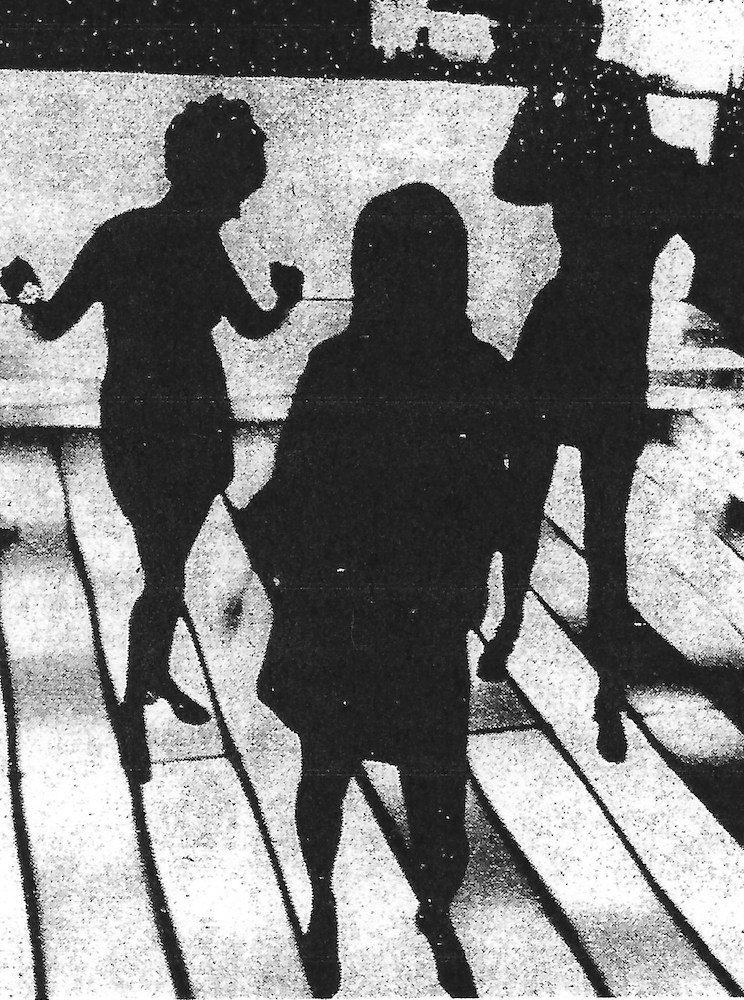
    <summary type="html"><![CDATA[<p><strong><em>The time was right when the Mad Hatter discotheque opened in downtown Cleveland in 1971. Unfortunately, times change. </em></strong></p><img src="https://clevelandhistorical.org/files/fullsize/ccfd67b45e86c1b33dd0e53cabbb256c.jpg" alt="Dancers silhouetted on the Mad Hatter&#039;s flashing stage" /><br/><p>Fans of Lewis Carroll’s <em>Alices Adventures in Wonderland</em> like to quote its key characters. Among this writer’s favorites are “It takes all the running you can do to keep in the same place” (the Red Queen), “No wise fish would go anywhere without a porpoise” (the Mock Turtle), and—most relevant to this article—”You can always take more but you can’t take less.” </p><p>The latter (lightly paraphrased) was spoken by the immortal Mad Hatter during the story’s Mad Tea Party. But it also summarizes the driving philosophy of Cleveland’s own Mad Hatter. One of the city’s first disco clubs (launched before anyone actually used the term “disco”), the Mad Hatter was all about “more”: More volume. More alcohol. More visual stimulation. More people per square foot. You really couldn’t take less! </p><p>The Mad Hatter, opened in 1971, was the first of what would become an 11-club nationwide chain co-owned by Cleveland’s Hamilton Biggar. “Ham,” who died in 2014, also co-founded <a href="https://clevelandhistorical.org/items/show/891">The Last Moving Picture Company</a> on Playhouse Square and the 13th Street Racquet Club between Euclid and Chester Avenues. Like Biggar’s other downtown development efforts, the Mad Hatter (located at 2150 East 18th Street in the former home of Socrates’ Cave) was a noble but doomed attempt to revive a moribund area. At the start of the 1970s, nightlife in and around Playhouse Square was largely non-existent. Except for the Hanna, all the theaters were shuttered, Sterling Lindner (a retail anchor at 1255 Euclid Avenue) closed in 1968, and Halle’s (the area’s keystone department store) was limping badly. Only Jim Swingos’ restaurant and hotel at East 18th and Euclid showed real signs of life. </p><p>But 200 yards up East 18th Street, Ham Biggar and the Mad Hatter were hell bent on being as popular and boisterous as the rock bands that often tore up Swingos’. Anchored by an enormous sound system (no live bands here), a bubble machine, a strobe-like, multi-colored dance floor and 2,500 square feet of sticky red-shag carpeting, the “Hatter” quickly became Cleveland’s disco hot spot. In the early years, however—before the “disco inferno”—attendees were more likely to sway to the sounds of classic rock: Rolling Stones, Aerosmith, Deep Purple, Led Zeppelin and so forth. By the mid 1970s, disco ruled, and hard rockers were supplanted by the likes of Donna Summer, Wild Cherry, Abba and the Bee Gees. Same new song on an old background. </p><p>The Mad Hatter was nothing if not timely. For most of the decade, Americans everywhere were listening, singing, dancing and even wearing disco. And a trip to “The Hatter” was the quintessential disco experience—particularly on Wednesdays when beer was a penny and mixed drinks were a quarter. By the late 1970s, however, things changed. Choreographed, inclusive and (most of all), danceable, disco was pushed aside by “punk” (raw, nihilistic and male dominated) along with “dance pop” and, when infused with punk, “new wave.” Music critics piled on—calling disco mindless, boring, formulaic, monotonous, and mechanical. On July 12, 1979, Disco Demolition Night was held at Comiskey Park in Chicago. A crate filled with disco records was blown up between games of a doubleheader. Fans were thrilled but the playing field was so badly damaged that the White Sox had to forfeit the second game.</p><p>Disco was rapidly dying and The Mad Hatter soon became old hat. The club staggered into the early 1980s, even morphing (unsuccessfully) into Pinky’s Jazz Showcase on Wednesday nights before closing for good. By the middle of the decade, nothing was left but an empty building and a cracked unisex sign (the Mad Hatter logo). Symbolizing Cleveland’s snail-like pace of change, it took almost thirty years for the structure to be removed, replaced by an annex to the Salvation Army’s Harbor Light complex—ironically, a safe haven for alcoholics.</p><p><em><strong><a href="https://clevelandhistorical.org/items/show/477">For more (including 5 images) view the original article</a></strong></em></p>]]></summary>
    <published>2012-05-23T10:25:46+00:00</published>
    <updated>2026-04-17T19:17:39+00:00</updated>
    <link rel="alternate" type="text/html" href="https://clevelandhistorical.org/items/show/477"/>
    <id>https://clevelandhistorical.org/items/show/477</id>
    <author>
      <name>Chris Roy</name>
    </author>
  </entry>
</feed>
