<?xml version="1.0" encoding="UTF-8"?>
<feed xmlns="http://www.w3.org/2005/Atom">
  <title type="text">Cleveland Historical</title>
  <updated>2026-04-17T13:55:16+00:00</updated>
  <generator uri="http://framework.zend.com" version="1.12.20">Zend_Feed_Writer</generator>
  <link rel="alternate" type="text/html" href="https://clevelandhistorical.org/"/>
  <link rel="self" type="application/atom+xml" href="https://clevelandhistorical.org/items/browse?output=rss2"/>
  <id>https://clevelandhistorical.org/</id>
  <author>
    <name>Cleveland Historical</name>
    <uri>https://clevelandhistorical.org</uri>
  </author>
  <link rel="hub" href="http://pubsubhubbub.appspot.com/"/>
  <entry>
    <title type="html"><![CDATA[Club Azteca: A Center for the Mexican-American Community]]></title>
    <summary type="html"><![CDATA[<p><strong><em>The autumn of 1951 was a momentous time for Cleveland's Mexican community. After years of raising funds through biannual fiestas and receiving gifts from Mexican organizations across the United States and even a contribution from the National Bank of Mexico, Club Azteca closed a deal to purchase a building for its first permanent home in the neighborhood that would later be known as Detroit Shoreway. The club served as a social and cultural center for Mexican Clevelanders for the next seven decades.</em></strong></p><img src="https://clevelandhistorical.org/files/fullsize/da447b7bda34d7bb32839e5cfabd5c31.jpg" alt="Club Azteca Exterior | Exterior del Club Azteca" /><br/><p>Club Azteca had its start in discussions among Mexican men who were taking English classes at the Hiram House settlement on Orange Avenue in the early part of the Great Depression. With the encouragement of a Hiram House language instructor, they decided in 1932 to establish Club Azteca as the first formal Mexican organization in Cleveland to provide a forum and safe haven for socializing, cultivating cultural traditions, and addressing common issues such as limited economic opportunity and discrimination that faced their community. The first Club Azteca president was Felix Delgado, who had left central Mexico to work as a Texas sharecropper before moving to Cleveland in 1923 to work on the Baltimore & Ohio Railroad. </p><p>Mexicans had been moving to Cleveland since the Mexican Revolution in 1910, and their numbers grew further during and after World War I. Like Delgado, many took jobs on the railroads, as well as in the steel mills, at a time when such jobs were being vacated by U.S. soldiers. Unlike some immigrant groups that concentrated in a single neighborhood, Mexicans had no single, well-defined center, and this remained true into the 1930s. </p><p>For its first twenty-five years, Club Azteca held biweekly or monthly meetings in the homes of members. The club also organized occasional larger events at venues such as Swiss Hall and St. Michael's Hall in Tremont, Ceska Sin Sokol Hall in Clark-Fulton, and Carpathia Hall in Detroit Shoreway. Such events included Club Azteca's commemorations of the anniversaries of Mexican Independence in 1820 and Mexico's defeat of the French army in the Battle of Puebla on May 5, 1862 (Cinco de Mayo). The event featured a historical pageant with members playing the part of Mexican military heroes. </p><p>When it incorporated in 1945, Club Azteca numbered more than 300 members. As the community and the club expanded after World War II, Club Azteca's leaders began to seek a permanent home closer to where many members now lived on the Near West Side. By 1951, the club had pooled enough resources to buy a former hardware store and apartment building at 5602 Detroit Avenue, which it fixed up over the next few years through "sweat equity." The new Club Azteca–Casa Mexico officially opened on June 15, 1957.</p><p>In addition to being a place to dance and socialize on weekend nights and to gather for potluck Sunday dinners, Casa Mexico provided important community services. It had a welcoming committee that delivered gift baskets to newcomers, and if a family arrived with nowhere to stay, the club found temporary quarters by tapping its members. The club also served as a clearinghouse for information that new migrants needed about where to buy food and how to do a myriad of daily activities in the city. For blue-collar workers who lived in roominghouses without kitchens, Club Azteca provided homemade meals. </p><p>Although Cleveland's Hispanic communities remained distinct, certain moments drew them together. In 1978, for example, the annual celebration of the feast day of Our Lady of Guadalupe (the patron saint of Mexico) at St. Michael's Hall encompassed not only Mexican but also Puerto Rican Clevelanders. The celebration included both Mexican and Puerto Rican music, and foods included the familiar enchiladas, burritos, and tacos alongside pastellas, a kind of Puerto Rican pastry. The festivities included a promenade by the queens and princesses of Club Azteca and its Puerto Rican counterpart, Club San Lorenzo, an organization founded in 1969 by natives of San Lorenzo, Puerto Rico. In 1990, a new event called Festival 90 drew together Club Azteca, Club San Lorenzo, and Club Alma Yaucana, another organization founded in 1961 to welcome newcomers from Yauco, Puerto Rico. </p><p>Although it was cooperating with other organizations, Club Azteca was beginning to suffer financial challenges in the 1980s, leading it to use its Detroit Avenue hall primarily as a nightclub to generate much-needed revenue. Club Azteca hosted "Puerto Rican Night" dances on Saturdays, an appeal to a community that was about five times larger than the city's Mexican-American community by 1990. By the end of the twentieth century, in spite of continuing to have many "social members" who enjoyed its nightclub, Club Azteca had dwindled to only 67 voting members, which led its officers to worry about the club's future. </p><p>Indeed, within a few more years Club Azteca's building fell into disuse. During this difficult time, Ruth Rubio-Pino, whose parents had managed the club from the mid-1950s until 2007, became president under a new Club Azteca administration in 2015. She tried to revive the struggling organization but found little support and the headquarters building now essentially beyond repair. After the building went into foreclosure in 2019, Club Azteca's small remaining membership was able to relieve its financial burden by transferring its building to the Cuyahoga Land Bank in 2020. </p><p>When a developer acquired the building as part of several parcels it was assembling to erect a large apartment building, it and Club Azteca agreed to develop a plan for incorporating the organization's heritage into the new building's design. Although Casa Mexico was demolished in 2021, exactly 70 years after its purchase, Club Azteca continues to explore possibilities for creating a space to honor its long legacy as a community anchor for Mexican culture and social action in Northeast Ohio.</p><p>___</p><p>El otoño de 1951 fue un momento crucial para la comunidad mexicana de Cleveland. Después de años de recaudar fondos mediante fiestas bianuales y de recibir regalos de organizaciones mexicanas a lo largo y ancho de los Estados Unidos, e incluso una contribución del Banco Nacional de México, el Club Azteca llegó a un acuerdo para comprar un edificio para su primera sede permanente en el barrio que más tarde sería conocido como la Detroit Shoreway. El club sirvió como un centro cultural y social para los habitantes mexicanos de Cleveland durante las siguientes siete décadas.</p><p>El Club Azteca tuvo su inicio en conversaciones entre los hombres mexicanos que estaban tomando clases en el asentamiento social de la Hiram House en la avenida Orange en los comienzos de la Gran Depresión. Alentados por un instructor de lenguas de Hiram House, decidieron en 1931 establecer el Club Azteca como la primera organización formal mexicana en Cleveland para proveer un foro y un lugar seguro para socializar, cultivar las tradiciones culturales y ocuparse de cuestiones de interés común como las limitades oportunidades económicas y la discriminación con la que se enfrentaban en sus comunidades. El primer presidente del Club Azteca fue Félix Delgado, que había dejado el centro de México para trabajar como aparcero en Texas, antes de mudarse a Cleveland para trabajar en el ferrocarril de Baltimore & Ohio.</p><p>Los mexicanos se habían estado mudando a Cleveland desde la Revolución Mexicana en 1910 y sus cifras habían crecido más durante y después de la Primera Guerra Mundial. Como Delgado, muchos tomaron trabajos en los ferrocarriles, así como en las siderurgias, en un tiempo en el que esos trabajos estaban siendo abandonados por los soldados de los Estados Unidos. A diferencia de otros grupos inmigrantes que se concentraban en un único barrio, los mexicanos no tenían un centro único y bien definido, y esto siguió siendo cierto hasta avanzados los años treinta.</p><p>Durante sus primeros veinticinco años, el Club Azteca tuvo reuniones cada dos semanas o mensualmente en las casas de sus miembros. El club también organizaba eventos más grandes en espacios como el Swiss Hall y el Hall de St. Michael en Tremont, el Ceska Sin Sokol Hall en Clark-Fulton y el Carpathia Hall en la Detroit Shoreway. Estos eventos incluían las conmemoraciones del Club Azteca de los aniversarios de la independencia de México en 1820 y de la derrota del ejército francés en la Batalla de Puebla el 5 de mayo de 1862 (Cinco de Mayo). Los eventos incluyeron una representación histórica con los miembros del club interpretando el papel de los héroes militares mexicanos.</p><p>Cuando se estableció formalmente en 1945, el Club Azteca contaba con más de 300 miembros. Según la comunidad y el club se expandieron después de la Segunda Guerra Mundial, los líderes del Club Azteca empezaron a buscar una sede permanente más cerca de donde muchos miembros vivían entonces en el Near West Side. Para 1951, el club había juntado suficientes recursos para comprar una antigua ferretería y edificio de apartamentos en el número 5601 de la avenida Detroit, que arreglaron a lo largo de los siguientes años trabajando sin remuneración. El nuevo Club Azteca-Casa México oficialmente se inauguró el 15 de junio de 1957.</p><p>Además de ser un lugar para bailar y socializar en las noches de los fines de semana, y para reunirse para cenas compartidas los domingos, la Casa México proveyó servicios comunitarios importantes. Tenía un comité de bienvenida que repartía cestas de regalos a los recién llegados, y si una familia llegaba sin un lugar en el que quedarse, el club les encontraba un alojamiento temporal valiéndose de sus miembros. El club también servía como un centro para distribuir información que los nuevos migrantes necesitaba sobre dónde comprar comida y cómo hacer múltiples actividades diarias en la ciudad. Para los trabajadores que vivían en pensiones/casas de huéspedes sin cocinas, el Club Azteca proveía comida casera.</p><p>Aunque las comunidades hispanas de Cleveland poseían características distintas, ciertos momentos las juntaban. En 1978, por ejemplo, la celebración anual del Día de Nuestra Señora de Guadalupe (la patrona de México) en el Hall de St. Michael reunió no solamente a los mexicanos de Cleveland, sino también a los puertorriqueños. La celebración incluyó tanto música mexicana como puertorriqueña, y las comidas incluyeron enchiladas, burritos y tacos, además de pastelillos puertorriqueños. Las festividades incluyeron un desfile ceremonial de las reinas y las princesas del Club Azteca y de su contraparte puertorriqueña, el Club San Lorenzo, una organización fundada en 1969 por los nativos de San Lorenzo, Puerto Rico. En 1990, un nuevo evento, llamado Festival 90, juntó al Club Azteca, al Club San Lorenzo y al Club Alma Yaucana, otra organización fundada en 1961 para dar la bienvenida a los recién llegados de Yauco, Puerto Rico.</p><p>Aunque estaba cooperando con otras organizaciones, el Club Azteca estaba comenzando a enfrentarse a retos financieros en los años 80, lo que llevaría al uso de su sala en la avenida Detroit como discoteca para generar unos ingresos que se necesitan mucho. El Club Azteca acogía los bailes de la “Noche Puertorriqueña” los sábados, un llamamiento a una comunidad que, para 1990, era cinco veces más grande que la comunidad mexicanoamericana. Para el final del siglo XX, a pesar de que continuaba teniendo muchos “miembros sociales” que disfrutaban de su club nocturno, el Club Azteca se había reducido a solamente 67 miembros con derecho a votación, lo que llevó a sus oficiales a preocuparse por el futuro del club.</p><p>En efecto, en unos cuantos años más, el edificio del Club Azteca cayó en desuso. Durante estos tiempos difíciles, Ruth Rubio-Pino, cuyos padres habían administrado el club desde mediados de los años 50 hasta 2007, se convirtió en presidenta bajo una nueva administración del Club Azteca en 2015. Ella intentó revivir la organización, que se encontraba en dificultades, pero encontró poco apoyo y el edificio de su sede ahora en condición esencialmente irreparable. Después de que el edificio se enfrentase a un embargo en 2019, la reducida membresía que le quedaba al Club Azteca pudo aliviar su carga financiera mediante la transferencia de su edificio al Cuyahoga Land Bank en 2020.</p><p>Cuando un promotor adquirió el edificio como parte de varias parcelas que estaba reuniendo para erigir un edificio de apartamentos grande, este y el Club Azteca acordaron desarrollar un plan para incorporar la herencia de la organización en el diseño del nuevo edificio. Aunque la Casa México fue demolida en 2021, exactamente 70 años después de su compra, el Club Azteca continúa explorando la posibilidad de crear un espacio para honrar su legado longevo como pilar de la comunidad para la cultura mexicana y la acción social en el noroeste de Ohio.</p><p><em><strong><a href="https://clevelandhistorical.org/items/show/1008">For more (including 7 images) view the original article</a></strong></em></p>]]></summary>
    <published>2023-11-21T20:59:40+00:00</published>
    <updated>2026-03-04T21:32:05+00:00</updated>
    <link rel="alternate" type="text/html" href="https://clevelandhistorical.org/items/show/1008"/>
    <id>https://clevelandhistorical.org/items/show/1008</id>
    <author>
      <name>J. Mark Souther&amp;#32;&amp;amp;&amp;#32;Matías Martínez Abeijón</name>
    </author>
  </entry>
  <entry>
    <title type="html"><![CDATA[Samuel White&#039;s Roadside Inn: A Stagecoach Tavern on Old Detroit Road]]></title>
    <summary type="html"><![CDATA[<img src="https://clevelandhistorical.org/files/fullsize/b6d346e8671f44403d21e242278406e7.jpg" alt="A Remnant of Cleveland&#039;s Past" /><br/><p>It's 1840 and you're traveling from Detroit to Buffalo on business.  The fastest route would be by boat, straight across Lake Erie from west to east, but it's November and this shallowest of the Great Lakes is notoriously treacherous this time of the year.  So you've wisely elected to take the post road that runs through the city of Cleveland, that fast-growing little commercial center about halfway along your route. You had planned to spend the night just east of Cleveland at Dunham Tavern, on the Buffalo Road, but an early winter snowstorm has kicked up and you need to find shelter quickly. Just a mile or so west of Ohio City, the other fast-growing city on the Cuyahoga River, you spot an Inn on the Detroit Road that looks inviting. The proprietor, Samuel White, welcomes you in out of the cold into a large room with a roaring fire.  His son Roderick takes care of your tired and cold horse, shivering outside in the cold.</p><p>Today, most Clevelanders could identify most of the places mentioned in this imagined 1840 trip. They would know, of course, the cities of Detroit and Buffalo, if for no other reason, because they are NFL rivals of the Browns. And they would recognize Ohio City, now a trendy neighborhood on Cleveland's near west side. And many would have even heard of Dunham Tavern, said to be the oldest standing building in Cleveland and now a museum which teaches adults and children what early nineteenth-century travel was like in the Midwest.</p><p>But few, if any, in Cleveland could tell you anything about Samuel White's Roadside Inn. It is not a landmark; it is not on the National Register of Historic Places; and, yet, just like Dunham Tavern it was an important stop for travelers in the early nineteenth century. And, more importantly, it is still standing, at 9400 Detroit Avenue, in the west side's Cudell/Edgewater neighborhood.  And the number of Clevelanders that could tell you that is a very small number indeed.</p><p>White, a native of Vermont who came to Cleveland as a young boy in 1804, built his Roadside Inn on Detroit Road in about 1828, when the area was part of Brooklyn Township. The Inn operated for the next two decades until 1845 when, as a result of accumulating debt, White was forced to sell it. In 1866, the Inn, which had likely closed by this time, was purchased by Samuel Ware. A farmer who had emigrated to the Cleveland area from Philadelphia, Ware used the Inn as his personal residence, but it soon became better known as the home of his son Liberty H. Ware, a lawyer and yachtsman, who during the last three decades of the nineteenth century held a variety of public offices in the Village of West Cleveland, including two terms as its mayor and several years as its justice of the peace.  </p><p>During this period, the Roadside Inn-turned-residence also served as Liberty Ware's law office and, when he became justice of the peace in 1892, he used that office as his courtroom. Liberty was by all accounts one of the most colorful figures in this era of Cleveland's history and, when he was holding court, newspaper reporters flocked to his home to hear and report on the witticisms uttered by "Squire Ware." Liberty, not to be confused with his son Liberty B., died in 1910, but the house remained in the Ware family for another 50-plus years. The house underwent a substantial renovation in the period 1913-1915, which included removal of the east wing, moving the house to a new location on the lot, and adding a layer of dark brick veneer to the exterior walls. In 1969, the house was sold to the Islamic Center of Cleveland, which uses the historic building today as a house of worship and a cultural and educational center.</p><p><em><strong><a href="https://clevelandhistorical.org/items/show/648">For more (including 9 images) view the original article</a></strong></em></p>]]></summary>
    <published>2014-03-12T11:03:42+00:00</published>
    <updated>2026-03-04T21:32:02+00:00</updated>
    <link rel="alternate" type="text/html" href="https://clevelandhistorical.org/items/show/648"/>
    <id>https://clevelandhistorical.org/items/show/648</id>
    <author>
      <name>Jim Dubelko</name>
    </author>
  </entry>
  <entry>
    <title type="html"><![CDATA[Oliver Alger House]]></title>
    <summary type="html"><![CDATA[<img src="https://clevelandhistorical.org/files/fullsize/bdccfea0ed4f93faf7f4db7235e77588.jpg" alt="The Oliver Alger House" /><br/><p>The Oliver Alger House was built by one of the village of West Cleveland's most popular mayors.  A successful commission agent in Cleveland before becoming a gentleman farmer, Oliver Alger served as mayor of  West Cleveland for six years--longer than any other mayor of the village which was annexed to the City of Cleveland in 1894. Alger's house, which in the late nineteenth century was one of the grandest mansions on Detroit Avenue, was saved from the wrecking ball in 1998 when the Detroit-Shoreway Community Development Organization arranged for it to be moved to the northwest corner of Franklin Boulevard and West 77th Street. (Interestingly, the house had been moved one time before--about forty feet west of its original site when West 67th Street was extended north to Detroit Avenue in the early 1900s.)  The house is now one of the historic grand houses in the Franklin Boulevard-West Clinton Historic District of Cleveland.  </p><p>In a strange twist of post-mortem fate, it was not only Oliver Alger's Detroit Avenue mansion that was moved twice after his death in 1891.  In 1894, the Village Town Hall for West Cleveland where Alger presided as Mayor from 1883-1889, was moved by Irish immigrant James Faeron to a vacant lot on West 69th Street and then moved again in 1911 to its present location on Herman Avenue when the City of Cleveland extended Herman Avenue west from West 67th to West 69th Street.</p><p>And even more strangely, fate bestowed yet one more after death move on Oliver Alger--one which has impacted his legacy not only as the most famous and popular mayor of West Cleveland but also as a local horticulturalist who was so talented that his farm was visited in 1867 by an editor of a national journal devoted to horticultural interests.  In 1915, less than three decades after Alger's death, the City of Cleveland, as part of a plan (which never materialized) to build a convention center on the Erie Street Cemetery grounds, removed the remains of hundreds of people from the cemetery and reinterred them at Highland Park Cemetery.  Among the remains removed were those of Oliver Alger and his wife Mary and their infant son who had been buried in a vault on the northeast corner of the cemetery.  At Highland Park Cemetery, Oliver Alger's remains, as well as those of his wife and their infant child, are entombed under a nondescript patch of grass that lies between  two monuments--one erected to a man named James Miller and the other to man named Enoch Collier. </p><p>Today, residents and visitors to Herman Avenue near West 69th Street are reminded of the history of the Village of West Cleveland by the former town hall building that now sits at 6702 Herman Avenue.  The 1998 relocation of Oliver Alger's mansion from Detroit Avenue to Franklin Boulevard reminds residents and visitors of the grandeur of nineteenth century Franklin Boulevard which was arguably second only to Euclid Avenue's Millionaire's Row as Cleveland's most prestigious residential avenue.  But a visitor to the southern tip of Section 2 in Highland Park cemetery where Oliver Alger is buried will find nothing there--not even a faded stone, as a memorial to one of West Cleveland's most popular mayors and one of Cuyahoga County's pioneer horticulturalists.</p><p><em><strong><a href="https://clevelandhistorical.org/items/show/526">For more (including 8 images) view the original article</a></strong></em></p>]]></summary>
    <published>2012-07-25T17:23:21+00:00</published>
    <updated>2026-03-04T21:32:01+00:00</updated>
    <link rel="alternate" type="text/html" href="https://clevelandhistorical.org/items/show/526"/>
    <id>https://clevelandhistorical.org/items/show/526</id>
    <author>
      <name>Jim Dubelko&amp;#32;&amp;amp;&amp;#32;Raymond L. Pianka</name>
    </author>
  </entry>
  <entry>
    <title type="html"><![CDATA[Kilbane Town: A Story About One of Cleveland&#039;s Most Famous Boxing Champions]]></title>
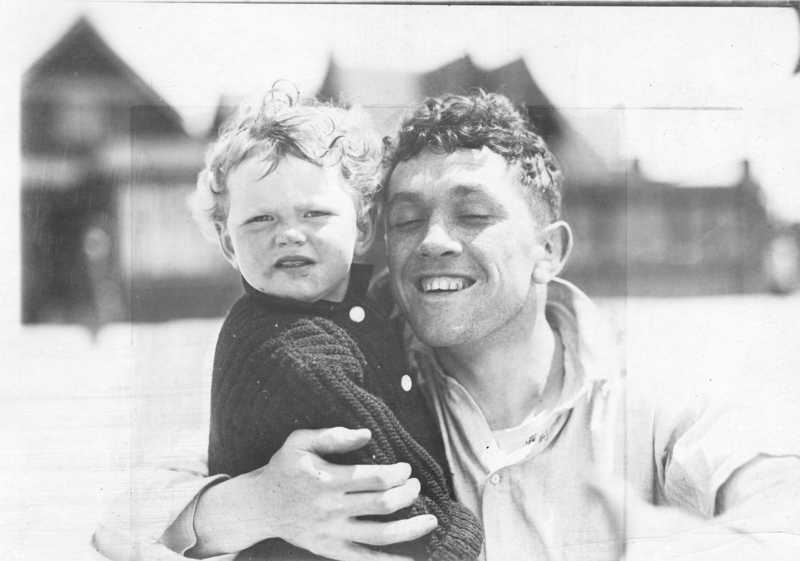
    <summary type="html"><![CDATA[<p><strong><em>It hadn't been called "Kilbane Town" in 100 years.  In 2012, Cleveland City Council resurrected the name to honor an extraordinary Clevelander.</em></strong></p><img src="https://clevelandhistorical.org/files/fullsize/bef8b2fa76b7c3f4e940516d91225130.jpg" alt="Johnny Kilbane and Daughter, 1913" /><br/><p>The Cleveland Leader dubbed the west side neighborhood near Herman Avenue and West 74th Street "Kilbane Town," in honor of world featherweight boxing champion Johnny Kilbane. In March 1912, Kilbane Town was the end point of one of the longest and largest St. Patrick's Day parades in city history.</p><p>Just one month earlier, the diminutive second-generation Irish American from the west side of Cleveland, had faced Abe Attell, a scrappy Jewish-American boxer, for the world featherweight boxing title in a match held in Los Angeles. Attell had dominated the featherweight class since 1901, holding the World Featherweight Champion title between 1901 and 1905, and again from 1906 until 1912. He had even defeated Kilbane less than two years earlier, on October 24, 1910, in a title match held in Kansas City. This time the result would be different. Kilbane defeated Attell in their grueling 20 round rematch to become world champion.</p><p>Kilbane returned to Cleveland on the perfect day for an Irish-American boxer--St. Patrick's Day.  At 4 PM on March 17, 1912, his train pulled into Union Station located on Lakeside Avenue between West 6th and West 9th Streets.  There, Johnny emerged from the train waving a green flag symbolizing his Irish roots.  Throngs of Clevelanders were there to greet him, literally covering the hillsides and embankments near the Station.  Cleveland newspapers "conservatively" estimated that the crowd in downtown Cleveland that day numbered 200,000.</p><p>A parade sponsored by the La Salle Club of St. Malachi Church formed at the Station and carried Johnny and his family by automobile to the steps of Cleveland City Hall (then located at East 4th and Superior Avenue).  Mayor Newton Baker, who broke his rule against attending parades on Sunday, was there to greet Johnny.  The parade then wound its way through the streets of downtown Cleveland, before crossing the Cuyahoga River onto Cleveland's west side.  There, the parade proceeded all the way down Detroit Avenue to West 74th Street--to Kilbane Town, finally and reluctantly disbanding there at 7:00 PM, approximately three hours after the parade began. </p><p>Johnny Kilbane was born and raised in Cleveland's Old Angle, before moving uptown to West Herman Avenue in 1910.  He was an affable man who captured the public's love and affection as much by his fighting prowess as by his reputed clean living style and devotion to his blind father, young wife and daughter. Johnny did much to bring respectability to a sport that was, at the time, generally considered to be disreputable.</p><p>After his boxing days were over, Johnny Kilbane remained in the public eye by operating a west side gym for kids and later by embarking on a career in politics which included a term as State Senator.  He ended his public career as Clerk of Courts for Cleveland Municipal Court, a position he held until his death in 1957.</p><p>In 2012, one hundred years after Johnny Kilbane won the World Featherweight Boxing title, Cleveland City Council passed legislation renaming Herman Avenue between West 74th and West 76th Streets "Kilbane Town" in honor of that historic sports event.</p><p><em><strong><a href="https://clevelandhistorical.org/items/show/288">For more (including 9 images) view the original article</a></strong></em></p>]]></summary>
    <published>2011-07-23T16:18:09+00:00</published>
    <updated>2026-03-04T21:31:59+00:00</updated>
    <link rel="alternate" type="text/html" href="https://clevelandhistorical.org/items/show/288"/>
    <id>https://clevelandhistorical.org/items/show/288</id>
    <author>
      <name>Jim Dubelko</name>
    </author>
  </entry>
  <entry>
    <title type="html"><![CDATA[Wagar Cemetery: Lakewood&#039;s Lost Burial Ground for East Rockport Pioneers]]></title>
    <summary type="html"><![CDATA[<img src="https://clevelandhistorical.org/files/fullsize/02ccc2e38b890899d0516fa9b01dbb61.jpg" alt="Wanna See a Dead Body?" /><br/><p>In 1820, $777 bought Mars Wagar 111 acres of what would become prime real estate in present-day Lakewood, Ohio.  When the educated pioneer staked his claim in East Rockport (as Lakewood was then known), he set aside a portion of this land to be used as sacred ground for the burial of beloved family members.  Soon Wagar's "acre" became a welcoming eternal resting place not only for those beloved family members, but also for fellow pioneers; friends and neighbors who collectively hashed it out in the wilderness on the shores of Lake Erie. Even later, the designated land would become the center of a debate between historical preservation and economic development. </p><p>By 1925, the cemetery had fallen out of use, and what Wagar called "God's Acre" morphed into a wild, unkempt stretch of land flanked by a diner, a billboard, and a sand bank. The cemetery became a haven for vandals and especially those unafraid children who found it a great shortcut to and from school. In the late 1940s, concern over the polluted and potentially hazardous space grew, and a number of citizens pushed to have the land preserved to pay homage to the pioneer families who built the community of Lakewood. However, since the land had been divided among Wagar's descendents, no agreements could be made. Furthermore, without a cemetery register unmarked grave sites could not be properly identified.  </p><p>Eventually, in the mid-1950s the land fell into the hands of the City, which moved forward with a plan to convert it into a parking lot. In 1957, parts of 54 (later determined to be closer to 84) human skeletons turned up during excavation of the cemetery.  The skeletons were placed in a mass grave in the Lakewood Park Cemetery, while their former home became the foundation of a parking garage for Lakewood Hospital.  </p><p><em><strong><a href="https://clevelandhistorical.org/items/show/265">For more (including 8 images) view the original article</a></strong></em></p>]]></summary>
    <published>2011-07-18T18:37:44+00:00</published>
    <updated>2026-03-04T21:31:59+00:00</updated>
    <link rel="alternate" type="text/html" href="https://clevelandhistorical.org/items/show/265"/>
    <id>https://clevelandhistorical.org/items/show/265</id>
    <author>
      <name>CSU Center for Public History and Digital Humanities</name>
    </author>
  </entry>
  <entry>
    <title type="html"><![CDATA[Elks&#039; Field]]></title>
    <summary type="html"><![CDATA[<p><strong><em>As you look at the vast asphalt parking lot stretching from the Winking Lizard to Giant Eagle, it is hard to believe that the area in front of you was once one of the most exciting places in Lakewood.  National tennis tournaments, softball world championships, Al Capone's bulletproof Cadillac, yearly circuses and carnivals. It all happened right here.</em></strong></p><img src="https://clevelandhistorical.org/files/fullsize/c00142c93f985174b88fbec1aec5bd7d.jpg" alt="Elk&#039;s Field" /><br/><p>The building currently occupied by The Winking Lizard was built in 1913 and was the original home of The Lakewood Tennis Club. 2000 spectators were on hand at the club on July 3, 1916, to witness a national clay court tennis tournament. The tennis club vacated the building shortly thereafter, and in 1918 Lakewood Lodge No. 1350 of the Elks took control of the building. The Elks are a national fraternal organization with chapters (or "lodges") across the country.  The lodges function as social clubs, but they also maintain a focus on doing good deeds and helping others in their community.  </p><p>The tennis courts next to the Lakewood Lodge were soon converted into a state of the art softball stadium that regularly drew hundreds of spectators for men's and women's games. Elks' Field was the country's first lighted softball stadium, and the World Softball Championships were played there in 1944 and 1946.  During the 1920s and 1930s, the Elks Lodge also hosted circuses and carnivals at the site.  Al Capone's black bulletproof Cadillac was memorably featured at one carnival.</p><p>The fun at Elks' Field ended in 1958 when the land was leased for the construction of a supermarket. Today, the Winking Lizard inhabits the former Elks Lodge. The building contains a basement bowling alley and still features a grand stairway near the entrance and an upstairs fireplace.  </p><p><em><strong><a href="https://clevelandhistorical.org/items/show/249">For more (including 5 images) view the original article</a></strong></em></p>]]></summary>
    <published>2011-07-13T16:49:07+00:00</published>
    <updated>2026-03-04T21:31:59+00:00</updated>
    <link rel="alternate" type="text/html" href="https://clevelandhistorical.org/items/show/249"/>
    <id>https://clevelandhistorical.org/items/show/249</id>
    <author>
      <name>Richard Raponi</name>
    </author>
  </entry>
  <entry>
    <title type="html"><![CDATA[French-Andrews Fruit Farm]]></title>
    <summary type="html"><![CDATA[<img src="https://clevelandhistorical.org/files/fullsize/76250ad8b1cdddbd1459148f7f0f6c6c.jpg" alt="Andrews Family Home" /><br/><p>If you face the Lakewood Plaza strip mall on the north side of Detroit Avenue today, you are looking at the site where the family farmhouse of Mrs. Virginia (Jennie) Harron Andrews once stood. It may be hard to imagine this home and the 80-acre French & Andrews fruit farm that sat directly behind it in full operation, given its stark contrast with present day Detroit Avenue. </p><p>If you allow your mind to travel back 150 years or so, however, the urban noise will fade away and you will perhaps hear the clippity-clop of a horse-pulled fruit wagon traveling to the market on the oak planks paving Detroit Avenue. The wagon would be coming from the French & Andrews fruit farm run by Virginia's husband, Edwin Andrews, and her uncle Collins French. You may even be able to smell the plum and cherry blossoms that decorated the landscape famous for producing luscious strawberries, grapes, apples and pears, and hear the chatter of the Bohemian women hired to harvest the bounty.</p><p>Collins French's parents Price and Rachel French were among Rockport Township's (as Lakewood was then known) earliest settlers when they arrived there in 1818. Price was believed to be descended of an English lord, and his wife contained the blood of a Cherokee Indian chief. After Price served in the war of 1812 and the couple had children, they traveled west from Vermont to Rockport to farm its cheap, abundant land. Price constructed the family home on the southwest corner of Wyandotte and Detroit Avenue. It was the first brick home in Lakewood. The bricks were furnished by Richard Muscut for $1.25 per 1000 bricks. It was arranged that Mr. Muscut would be paid in 1/3 money and 2/3 wheat, corn, pork and potatoes.</p><p>Collins, the French's oldest son, eventually took over his father's farm and also became a trustee of Rockport Township. In 1832, he married Rosetta.  They had no children of their own but adopted Rosetta's niece, Virginia Harron, affectionately calling her Jennie (Virginia Avenue was later named after her). Virginia married Edwin Andrews, who became Collin French's business partner.  The French and Andrews families ran their successful fruit farm and nursery on their land north of Detroit Avenue to Lake Erie between Lakeland and Andrews Avenues. Virginia and Edwin had four sons who all worked on the farm and helped build Lakewood's reputation as a prosperous fruit-growing center in the second half of the 19th century.  </p><p>The Andrews home on Detroit Avenue, built in the 1850s, was eventually torn down in the late 1930s to make way for the Mars Shopping Center (now Lakewood Plaza) and its parking lot. The family converted its orchards into residential developments around the turn of the 20th-century as Lakewood's population rose and the community became more suburban than rural. This trend continued as Lakewood quickly emerged as a full-fledged suburb of Cleveland, making it a challenge today for even the liveliest of imaginations to picture a time when Detroit Avenue was dotted with farmhouses and fruit orchards, as opposed to stoplights and shopping centers.   </p><p><em><strong><a href="https://clevelandhistorical.org/items/show/245">For more (including 7 images) view the original article</a></strong></em></p>]]></summary>
    <published>2011-07-11T15:34:32+00:00</published>
    <updated>2026-03-04T21:31:59+00:00</updated>
    <link rel="alternate" type="text/html" href="https://clevelandhistorical.org/items/show/245"/>
    <id>https://clevelandhistorical.org/items/show/245</id>
    <author>
      <name>Tim Rinehart</name>
    </author>
  </entry>
  <entry>
    <title type="html"><![CDATA[Detroit–Rocky River Bridge: From Wright&#039;s Ferry to the Bridge Building]]></title>
    <summary type="html"><![CDATA[<img src="https://clevelandhistorical.org/files/fullsize/bf123fa593a4fcb8228fc7fc8d0b365d.jpg" alt="1850 Toll Bridge" /><br/><p>The Detroit–Rocky River Bridge spans the Rocky River and connects the cities of Rocky River and Lakewood. Prior to 1819, Rufus Wright operated a ferry that carried Rockport residents across the Rocky River. He was a tavern owner as well. Wright later became Lakewood's second postmaster. His sons followed in his footsteps and members of the Wright family were the city's postmaster for several generations.</p><p>In 1819, the construction of the first Detroit–Rocky River Bridge began, with Wright paying half the cost. Each of the 18 resident families contributed money, labor, or materials. The bridge was completed in 1821, but crossing it required a hazardous descent and ascent along the river's slippery embankments. The bridge was so dangerous that in November 1848, two stagecoaches capsized on the bridge. Travelers were advised to avoid the Detroit–Rocky River Bridge and instead go along the beach to ford the river. </p><p>In 1850, the old bridge was replaced by a toll bridge made by the Detroit Plank Road Company. The new bridge made for slightly safer approaches. It was again replaced in 1875 with a wood and iron girder bridge before an even safer bridge was built in 1890. This high-level truss bridge with an oak plank floor and built of iron and stone avoided the embankments altogether. It was toll-free but cost taxpayers $60,000 to construct. </p><p>As electric interurban railcars began plying the bridge on the Lake Shore Electric line between Cleveland and Toledo in the early 1900s, the bridge's safety was soon at issue. On May 13, 1905, an interurban car derailed on the bridge and came perilously close to plunging into the gorge. As a result, a fifth bridge, built of concrete and steel, was completed in 1910. The latest Detroit–Rocky River Bridge was the longest stretch of unreinforced concrete in the world at the time, measuring 208 feet. </p><p>The current bridge was built in 1980 for $4 million. Today, the Bridge Building at 18500 Lake Road, built atop the western foundation, stands on the only remaining section of the 1910 bridge.</p><p><em><strong><a href="https://clevelandhistorical.org/items/show/231">For more (including 7 images&#32;&amp;&#32;1 audio file) view the original article</a></strong></em></p>]]></summary>
    <published>2011-06-10T11:46:26+00:00</published>
    <updated>2026-03-04T21:31:58+00:00</updated>
    <link rel="alternate" type="text/html" href="https://clevelandhistorical.org/items/show/231"/>
    <id>https://clevelandhistorical.org/items/show/231</id>
    <author>
      <name>CSU Center for Public History and Digital Humanities</name>
    </author>
  </entry>
  <entry>
    <title type="html"><![CDATA[Beck Center for the Arts]]></title>
    <summary type="html"><![CDATA[<img src="https://clevelandhistorical.org/files/fullsize/22ddd9bde67c374c150c4ecd1b38aea7.jpg" alt="Front Entrance" /><br/><p>The Beck Center for the Arts is a non-profit organization that is "dedicated to enriching the quality of life for Northeastern Ohioans" through the performing arts and art education. The history of the Beck Center can be traced back to 1931 to a group of eighteen thespians known as the Guild of the Masques. They were led by the London-trained director Richard Kay. The Guild rehearsed in Lakewood living rooms and performed where ever they could such as schools or churches. In 1933, they leased an old blacksmith's shop where they tore down a wall, built a stage, and performed to sold-out crowds. </p><p>The same year, the Guild of the Masques was incorporated as a non-profit arts organization and officially became the Lakewood Little Theater. Tragedy struck in 1934 when the Lakewood Fire Department turned the fledgling company out of the blacksmith's shop due to code violations.  So they took the show on the road once more. They became known for their radio dramas, in particular the story of the creation of the Red Cross by Clara Barton during the Civil War. The Little Theater charged no admission for their performances, which was greatly appreciated by those affected by the Depression.</p><p>The Lakewood Elks Club offered their facilities to the Little Theater due to their reputation of civic responsibility. However, the situation was less than ideal. Sets had to be built off site and carried by hand to the Elks Club in pieces. Local undertakers were asked to provide extra seats for the sold-out crowds. Patrons were routinely turned away due to lack of room. The Elks Club was the home the Lakewood Little Theater for three years, and ten productions a year were staged there, often receiving rave reviews. </p><p>In 1936, a group of dedicated Lakewood women decided to do something about the inadequate space of the Elks Club. They formed the Lakewood Little Theater Women's Committee and took over the fundraising efforts for the Little Theater. Not to be outdone, male Lakewood citizens formed the Lakewood Little Theater Men's Advisory Board with the intention of finding a permanent venue for the Little Theater. The Lucier Motion Picture Theater was leased with the eventual option to buy although it needed costly renovations. The men's and women's organizations set a $10,000 fundraising goal. The members of the Women's Committee opened their homes for floral themed tea parties, such as the Tulip Teas, and the press reported on what the ladies wore and where they vacationed. </p><p>On May 7, 1938 the Little Theater staged its first production, Fred Ballard's "Ladies of the Jury," in their new home to a sold out crowd of gentlemen in top hats and well-dressed ladies. In its first week the Little Theater drew 2,265 patrons. The press continued to love their productions, and the people kept coming. Even World War II didn't slow them down. In 1944, the lease on the Lucier was up, and the Little Theater purchased the building. The Lakewood Little Theater now had expanded its vision to include more space and provided theater education for the youth of the community.</p><p>In 1948, the Lakewood Little Theater School began led by actor Virginia Woodworth, called Woodbean by her students. One of the teachers she recruited was radio personality "Lady Jan" Egert. The purpose of the education programs Egert said, "was not on creating child stars. The objective was always to teach children to be more comfortable with the spoken word so that they could become better in school and in life. I was thrilled to be involved."  Classes involved instruction of basic theater techniques, diction, and characterization.  Students performed two plays a year which were often adaptations of fairy tale classics and other stories that would appeal to children. Lady Jan Egert even brought students to appear on her WJW radio show to perform. She stayed with the program until 1986.</p><p>In 1974, Kenneth Beck donated $300,000 to the Lakewood Little Theater, and later gave an additional $300,000. With additional fundraising from the public, construction of new facilities began. Beck was a retired partner in Beck & Wall the fifth largest manufacturer of advertising displays in the U.S. and millionaire. The Kenneth C. Beck Center was formally opened in 1976 with a black tie celebration. After a gourmet dinner, the 500 guests watched a production of Maxwell Anderson's "Mary Queen of Scotland." Kenneth Beck later said it was "the happiest day of his life." The Beck Center for the Arts was officially born. </p><p><em><strong><a href="https://clevelandhistorical.org/items/show/227">For more (including 7 images) view the original article</a></strong></em></p>]]></summary>
    <published>2011-06-08T15:18:00+00:00</published>
    <updated>2026-03-04T21:31:58+00:00</updated>
    <link rel="alternate" type="text/html" href="https://clevelandhistorical.org/items/show/227"/>
    <id>https://clevelandhistorical.org/items/show/227</id>
    <author>
      <name>Sarah Kasper</name>
    </author>
  </entry>
  <entry>
    <title type="html"><![CDATA[Oldest Stone House: A Remnant of Rockport Township]]></title>
    <summary type="html"><![CDATA[<img src="https://clevelandhistorical.org/files/fullsize/491309a96f5546e517788db4600e7a93.jpg" alt="Oldest Stone House, 1902" /><br/><p>John Honam (1790-1845) built the Oldest Stone House in 1834 on the north side of Detroit Avenue, just to the east of its intersection with Warren Road. Honam came to what was then known as Rockport Township around 1830 by way of Scotland and Portland, Maine, becoming one of Rockport's first settlers. He came to own over 90 acres of land in the rural township, with his parcel extending north of Detroit Avenue to the lake, bounded to the east and west by what are now Belle and Cook Avenues. Not much is known about Honam's activities, but it is likely that he made a living by farming his land. Honam's daughter Isabella (1815-1897) and her husband Orvis Hotchkiss (1809-1881) inherited the Oldest Stone House after John Honam died in 1845. Hotchkiss continued to farm a part of the land and also ran a tannery and a steam mill on the property. The married couple raised their family in the house, but after Isabella's death in 1897 none of John Honam's descendants would live there again.</p><p>Reflecting the transformation of Rockport around this time from a rural farming community into the affluent residential suburb of Lakewood, the Lakewood Realty Company purchased the Oldest Stone House in 1899 and used it as a sales office for its swanky Lakewood Park housing development. After Lakewood Realty Company moved out of the house, it contained a succession of commercial businesses, including a shoe repair shop, a photography studio, and a doctor's office. The house was also occasionally rented out as living quarters to various families and individuals. The longest lasting tenant in the Old Stone House during this period was surely Gilbert P. Hostelley's upholstery and furniture repair shop, located in the house from 1919 to 1952.  </p><p>Smack dab in the middle of Lakewood's growing commercial district along Detroit Avenue, it was only a matter of time before the Oldest Stone House was threatened with demolition. In 1952, furrier Stephen Babin of Babin Furs at the northwest corner of Detroit and St. Charles Avenues and (since 1942) owner of the Old Stone House located just to the north of his shop, sought to expand his business, putting the house in harm's way. Babin offered the house to local historian Margaret Manor Butler at no cost. Butler, in a flurry of activity, raised the money needed to move the house, negotiated with the city of Lakewood to relocate it to its current site at Lakewood Park, and founded the Lakewood Historical Society. In 1953, the Oldest Stone House opened as both a home to the historical society and a museum dedicated to recreating the frontier life of Rockport Township in the 19th century.  Fittingly, the house now stands on land that was originally a part of John Honam's 97-acre estate.  </p><p><em><strong><a href="https://clevelandhistorical.org/items/show/222">For more (including 7 images) view the original article</a></strong></em></p>]]></summary>
    <published>2011-06-07T16:09:57+00:00</published>
    <updated>2026-03-04T21:31:58+00:00</updated>
    <link rel="alternate" type="text/html" href="https://clevelandhistorical.org/items/show/222"/>
    <id>https://clevelandhistorical.org/items/show/222</id>
    <author>
      <name>CSU Center for Public History and Digital Humanities</name>
    </author>
  </entry>
  <entry>
    <title type="html"><![CDATA[Cleveland Public Theatre]]></title>
    <summary type="html"><![CDATA[<img src="https://clevelandhistorical.org/files/fullsize/dscdo_detroitshoreway_clevelandpublictheatre_signstorefront_nd_8ed8e72065.jpg" alt="A Renovated Cleveland Public Theatre" /><br/><p>Cleveland Public Theatre was founded in 1982 by Cleveland native James Levin.  From its early years, CPT was instrumental in promoting, creating, and providing a home for experimental theater in the Cleveland area.  Initially sparking interest in local theater through productions such as Shakespeare at the Zoo and the New Plays Festival, the focus of CPT gravitated toward the latter by the late 1980's.  Over the next decade, the theater would make a name for itself both within and outside of Cleveland as a stage for original works by contemporary artists.</p><p>Ingrained into the mission of the theater is the belief that art can not only change individual lives, but that the theater can be a means to revitalize the surrounding neighborhood.  Beyond providing a space and forum for local artists to perform and display their work, CPT developed urban outreach programs that provide educational services to at-risk youth and homeless adults.  In addition, the success of Cleveland Public Theatre helped set the stage for the transformation of the surrounding neighborhood into an emerging arts district.  Working in collaboration with other community organizations, Cleveland Public Theater has played a key role in promoting the commercial and economic development of what is now the Gordon Square Arts District. </p><p><em><strong><a href="https://clevelandhistorical.org/items/show/181">For more (including 5 images) view the original article</a></strong></em></p>]]></summary>
    <published>2011-03-13T20:01:56+00:00</published>
    <updated>2026-03-04T21:31:58+00:00</updated>
    <link rel="alternate" type="text/html" href="https://clevelandhistorical.org/items/show/181"/>
    <id>https://clevelandhistorical.org/items/show/181</id>
    <author>
      <name>Richard Raponi</name>
    </author>
  </entry>
  <entry>
    <title type="html"><![CDATA[Detroit Shoreway]]></title>
    <summary type="html"><![CDATA[<img src="https://clevelandhistorical.org/files/fullsize/dscdo_detroitshoreway_diner_nd_cda4e7d65d.jpg" alt="Diner on Detroit Avenue and W. 65th Street" /><br/><p>Detroit Shoreway is a west-side community bounded by Edgewater State Park, Interstate 90, W 45th Street, and W 85th Street. The neighborhood emerged from the annexations of Brooklyn Township, the Village of West Cleveland, and Ohio City into the city of Cleveland during the latter half of the 19th century.  With the development of Cleveland as a port city and its designation as a passage to western cities via railroad in the 1850s, the Detroit Shoreway area was shaped by the influences of industry, commerce, and immigration.</p><p>Always in a state of transition, the unique character of the Detroit Shoreway neighborhood can be attributed  to the preservation of its past in an era of redevelopment. The historic commercial center of the neighborhood was reestablished with the rehabilitation of the Gordon Square Arcade (c. 1980), while a cultural arts district has more recently been developed around the renovation of both the Cleveland Public Theatre (c. 2006) and Capitol Theatre (c. 2009). Numerous projects for the rehabilitation and creation of mixed-income residential properties were also undertaken by local organizations and churches. Newly constructed condominiums and eco-friendly townhouses now mingle with the architecture of churches, homes, theaters, and storefronts that reflect the neighborhood's days as one of Cleveland's manufacturing and commercial centers.</p><p><em><strong><a href="https://clevelandhistorical.org/items/show/147">For more (including 6 images, 1 audio file,&#32;&amp;&#32;1 video) view the original article</a></strong></em></p>]]></summary>
    <published>2011-02-13T13:28:46+00:00</published>
    <updated>2026-03-04T21:31:58+00:00</updated>
    <link rel="alternate" type="text/html" href="https://clevelandhistorical.org/items/show/147"/>
    <id>https://clevelandhistorical.org/items/show/147</id>
    <author>
      <name>Richard Raponi</name>
    </author>
  </entry>
  <entry>
    <title type="html"><![CDATA[Gordon Square]]></title>
    <summary type="html"><![CDATA[<img src="https://clevelandhistorical.org/files/fullsize/detroitshoreway-dscdo-w65th-and-detroit-shows-city-grill-nd_b3d18a7ea4.jpg" alt="West 65th Street and Detroit Avenue" /><br/><p>Located at the intersection of W. 65th Street and Detroit Avenue, Gordon Square is the historic commercial district of the Detroit Shoreway neighborhood.   As residential construction and industry grew along and away from Detroit Avenue following the turn of the 19th century, the Gordon Square commercial district emerged to meet the retail, recreational, and service needs of the surrounding community. The construction of the Gordon Square Arcade and Community Building symbolized the prominence of this bustling community. Encompassing an entire city block, the Gordon Square Arcade was the largest construction project to have taken place on the West Side at the time of its opening in 1921.  The arcade quickly became the heart of the Gordon Square commercial district.   </p><p><em><strong><a href="https://clevelandhistorical.org/items/show/146">For more (including 6 images&#32;&amp;&#32;1 video) view the original article</a></strong></em></p>]]></summary>
    <published>2011-02-11T21:52:59+00:00</published>
    <updated>2026-03-04T21:31:58+00:00</updated>
    <link rel="alternate" type="text/html" href="https://clevelandhistorical.org/items/show/146"/>
    <id>https://clevelandhistorical.org/items/show/146</id>
    <author>
      <name>Richard Raponi</name>
    </author>
  </entry>
  <entry>
    <title type="html"><![CDATA[Detroit-Superior Bridge: Cleveland&#039;s First High-Level Span]]></title>
    <summary type="html"><![CDATA[<img src="https://clevelandhistorical.org/files/fullsize/loc-detroitandviaduct_1a37ecf334.jpg" alt="New and Old Bridges" /><br/><p>Bathed in blue light at night, the Detroit-Superior Bridge (also known as the Veterans Memorial Bridge since 1989) is a striking feature on the Cleveland skyline just west of Public Square. Cleveland's King Bridge Company built the span between 1912 and 1917 at a cost of over five million dollars. This 3,112-foot-long compression arch, suspended-deck bridge was the first fixed high-level bridge in the city and, for a time, one of the largest steel and concrete reinforced bridges in the world. Its single steel span over the Cuyahoga River provides 96 feet of clearance above the water, allowing for uninterrupted vehicle traffic. At the time of its completion this was a vast improvement over the older <a href="https://clevelandhistorical.org/items/show/65">Superior Viaduct</a>, whose center span was forced to swing open several times a day in order to allow boats to pass underneath, stopping bridge traffic for five or more minutes. </p><p>Until the end of Cleveland's streetcar era in the mid-1950s, the lower deck of the Detroit-Superior Bridge carried streetcars on its four sets of tracks. To this end, a subway and underground passenger stations were built below its east and west approaches. Meanwhile, vehicular traffic on the upper deck of the bridge was heavy in the years following the bridge's opening on Thanksgiving Day 1917, and traffic tie-ups often occurred. These lessened with the opening of the city's second fixed high level span – the Lorain-Carnegie Bridge – in the 1930s. More recently, the development of the interstate highway system, with its various high-level spans over the Cuyahoga River, has further diminished the bridge's importance to commuters. However, the Detroit-Superior Bridge remains a key feature in Cleveland's built environment and an impressive example of architectural and engineering expertise. </p><p><em><strong><a href="https://clevelandhistorical.org/items/show/53">For more (including 6 images&#32;&amp;&#32;1 video) view the original article</a></strong></em></p>]]></summary>
    <published>2010-09-22T10:32:53+00:00</published>
    <updated>2026-03-04T21:31:58+00:00</updated>
    <link rel="alternate" type="text/html" href="https://clevelandhistorical.org/items/show/53"/>
    <id>https://clevelandhistorical.org/items/show/53</id>
    <author>
      <name>F.X. O&amp;#039;Grady&amp;#32;&amp;amp;&amp;#32;Michael Rotman</name>
    </author>
  </entry>
</feed>