<?xml version="1.0" encoding="UTF-8"?>
<feed xmlns="http://www.w3.org/2005/Atom">
  <title type="text">Cleveland Historical</title>
  <updated>2026-05-02T03:59:12+00:00</updated>
  <generator uri="http://framework.zend.com" version="1.12.20">Zend_Feed_Writer</generator>
  <link rel="alternate" type="text/html" href="https://clevelandhistorical.org/"/>
  <link rel="self" type="application/atom+xml" href="https://clevelandhistorical.org/items/browse?output=rss2"/>
  <id>https://clevelandhistorical.org/</id>
  <author>
    <name>Cleveland Historical</name>
    <uri>https://clevelandhistorical.org</uri>
  </author>
  <link rel="hub" href="http://pubsubhubbub.appspot.com/"/>
  <entry>
    <title type="html"><![CDATA[Dr. Sam Sheppard ]]></title>
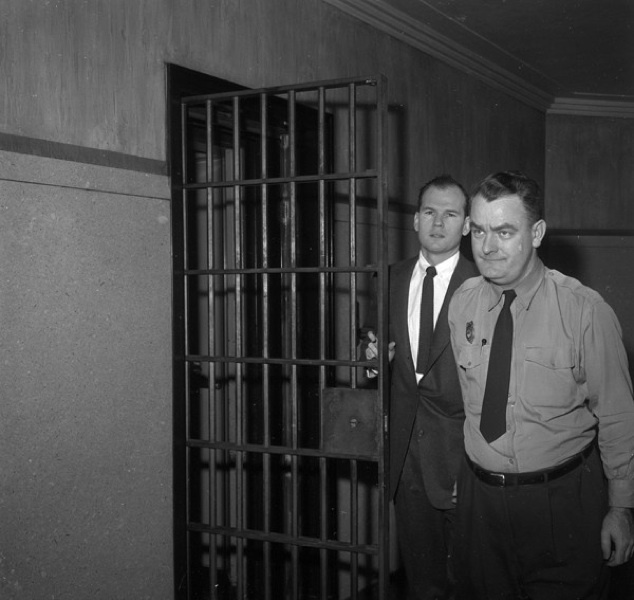
    <summary type="html"><![CDATA[<p><strong><em>Did Dr. Sam Sheppard kill his wife, or didn't he? This ominous question occupied the minds of Clevelanders for decades, and eludes them to this day. Dr. Samuel Sheppard was one of the most popular doctors at Bay View Hospital, yet he quickly became one of the most notorious people in the city of Cleveland after the events that transpired on the night of July 4, 1954. </em></strong></p><img src="https://clevelandhistorical.org/files/fullsize/3fe8860540688b59513b72fc8ce93021.jpg" alt="Dr. Sheppard Escorted from his Prison Cell" /><br/><p>Sam Sheppard was an attractive and well-liked doctor who tended to hundreds of patients throughout his career at Bay View Hospital. Dr. Sheppard's official area of practice was Osteopathic Neurosurgery. Following the murder of his wife Marilyn Sheppard, Bay View Hospital played a vital role in the investigation. The staff members of the hospital were interviewed multiple times in an attempt to gather information that could have potentially given detectives a lead to finding the murderer. The questions the employees were asked covered a variety of different aspects of Dr. Sheppard's life and work, including his family, his overall behavior as an individual and any knowledge of disgruntled former patients or employees of Dr. Sheppard's. Unfortunately, detectives were unable to secure any leads, only concluding that Dr. Sheppard was a well-liked doctor in the community. </p><p>In the early morning hours of July 4, 1954 the nightmare began for the Sheppard family and the entire community of Bay Village. The Sheppard's threw a Fourth of July party each year, but this year, after the party ended and the guests had all gone home, Sam stated that he decided to go for a walk alone on the private beach of Lake Erie that was located behind their home. He arrived home shortly after to a gruesome scene, discovering that his wife Marilyn had been brutally murdered in his absence. Mrs. Sheppard was found lying on her bed in their master bedroom in a provocative manner. She had been "chopped 25 times in the head and chest." The attack on Marilyn Sheppard was atrocious, and her lifeless body was left in a horrific state. </p><p>There was never any hard evidence found that directly tied Dr. Sam Sheppard to the death of his wife, Marilyn. Despite this fact, on July 30, 1954, the Bay Village police arrested Sheppard on the charge of murder. The result of the ensuing murder trial was a guilty verdict. The once respected and admired doctor was now labeled a murderer. Throughout his trial and following his conviction, he continued to profess his innocence. Dr. Sam Sheppard spent ten years in prison before the state of Ohio granted his appeal and awarded him a new trial. The murder conviction was overturned on June 6, 1966 due to a lack of evidence. Dr. Sam Sheppard was a free man from that time until he passed away on April 6, 1970 of liver failure. The unique and notorious murder case was so influential in American society that it is widely believed to have served as the inspiration for the popular 1960s television series and 1993 film, <em>The Fugitive</em>.</p><p><em><strong><a href="https://clevelandhistorical.org/items/show/590">For more (including 6 images) view the original article</a></strong></em></p>]]></summary>
    <published>2013-02-20T16:18:07+00:00</published>
    <updated>2026-04-17T19:17:40+00:00</updated>
    <link rel="alternate" type="text/html" href="https://clevelandhistorical.org/items/show/590"/>
    <id>https://clevelandhistorical.org/items/show/590</id>
    <author>
      <name>Victoria Smith </name>
    </author>
  </entry>
  <entry>
    <title type="html"><![CDATA[Huntington Reservation: A Hobby Farm Turned Public Beach]]></title>
    <summary type="html"><![CDATA[<img src="https://clevelandhistorical.org/files/fullsize/af3c8185bbfe7dea5512b21e86f51779.jpg" alt="Beach Postcard" /><br/><p>Today, the Huntington Reservation is known mostly for its beach, leaving visitors unaware of the rich history of the land beneath their sand filled shoes.  However, it is possible for one to stand on the Lake Erie shore and imagine Native Americans holding powwows inside mammoth sycamore trees, or bison strolling along the Indian path that would later become Lake Road.  Or perhaps one can imagine standing in the orchards and vineyards of Bay Village's earliest pioneers, or hearing the echoes of industrialist John Huntington's steam engine pumping water from Lake Erie to irrigate his hobby farm and bring drinking water into his stately summer home. </p><p>This 100-acre chunk of Lake Erie shoreline in Bay Village truly has a deep and influential history that extends far back beyond its purchase by the Cleveland Metroparks in 1925 for $500,000. For thousands of years prior to European arrival in the New World, it was part of an attractive hunting ground for Native Americans. The area became largely empty in the century prior to the Revolutionary War, however, after inter-tribal wars over control of the lucrative trade in beaver pelts forced many natives to leave. Claiming the area south of Lake Erie through creative cartography, Connecticut surveyors, most famously Moses Cleaveland, began parceling land along the south shore of Lake Erie in 1796. The land that became Bay Village was surveyed and laid out in 1806, by which point all Indian claims in the area had been extinguished. Two land speculators soon purchased the empty township and named it after their home town of Dover, Connecticut. The Lake Erie microclimate provided excellent growing conditions for orchards and vineyards for early settlers once the land near the shore was cleared of massive 17-foot circumference sycamore trees. Pioneers began settling and farming fruit in Dover Township around 1810.  </p><p>In 1880, the most desirable 100 acres of the Dover Township shoreline became a summer retreat and hobby farm for John Huntington (1832-1893), a wealthy Cleveland industrialist with ties to John Rockefeller's Standard Oil Company.  In addition to building a fine house on the land, Huntington, an inventor and avid tinkerer, constructed a water tower and maintained a steam pump system to irrigate his orchards and gardens.  He built several other structures on his property, a few of which remain standing today.  </p><p>The Cleveland Metroparks purchased Huntington's estate in 1925, allowing the public to visit and contemplate the past historical eras in which this spot of lakeshore once played a part, or to just enjoy a cool Lake Erie breeze on a hot summer day.</p><p><em><strong><a href="https://clevelandhistorical.org/items/show/244">For more (including 7 images&#32;&amp;&#32;4 audio files) view the original article</a></strong></em></p>]]></summary>
    <published>2011-07-11T09:17:17+00:00</published>
    <updated>2026-04-17T19:17:37+00:00</updated>
    <link rel="alternate" type="text/html" href="https://clevelandhistorical.org/items/show/244"/>
    <id>https://clevelandhistorical.org/items/show/244</id>
    <author>
      <name>Rob Grossman</name>
    </author>
  </entry>
  <entry>
    <title type="html"><![CDATA[Rose Hill Museum]]></title>
    <summary type="html"><![CDATA[<img src="https://clevelandhistorical.org/files/fullsize/f902519fbcc05987f800cb5bccc1e04a.jpg" alt="Rose Hill, 2011" /><br/><p>As you approach the Rose Hill Museum, formerly the homestead of Joseph and Lydia Cahoon, reach out and rub the exterior walls.  Feel the texture of the wood and try to mentally strip the layers upon layers of paint that have been added since its construction in 1818. Where did this wood originate?  The 21st century consumer often loses sight of their connection to the natural world. Their wood comes from building supply stores. This was not the case for Joseph and Lydia Cahoon when they entered the township of Dover (present-day Bay Village and Westlake) in the fall of 1810.  All the wood for this home came from the dense forests that existed in the surrounding area.  It is commonly accepted that much of the lumber used for the construction of Rose Hill was milled on location and the trees used were from the same property, the present day Cahoon Memorial Park.</p><p>On the morning of October 10, 1810, the Joseph and Lydia Cahoon family wagon stopped at the mouth of a creek on the southern shore of Lake Erie in Ohio country. The sun was shining, the sky was blue, and the family thanked the Lord for their safe journey. After six seeks of wilderness travel from Verennes, Vermont, they had reached their new home, Lot #95 in Dover Township #7, Range #15 in the State of Connecticut's Western Reserve. They immediately began building a cabin and within the next eight years constructed the first gristmill west of the Cuyahoga River, a sawmill, and a house on the west hill. This would become the family home for the next 117 years.</p><p>The original cabin was located behind Rose Hill on the east bank of the creek that would take the Cahoon name. There is a replica cabin which has been constructed and can be visited by interested parties. The gristmill, for grinding grains, and the sawmill were located on the west bank of the Cahoon Creek. The careful viewer will notice the edges of the once present mill pond that serviced both mills. </p><p>In addition to the farming and mill work, the Cahoon's supplemented their income with a fishery located at the mouth of Cahoon Creek on Lake Erie. Currently, Bay Boat Club resides at the site of the Cahoon Fish House.</p><p><em><strong><a href="https://clevelandhistorical.org/items/show/240">For more (including 5 images) view the original article</a></strong></em></p>]]></summary>
    <published>2011-06-30T13:35:18+00:00</published>
    <updated>2026-04-17T19:17:37+00:00</updated>
    <link rel="alternate" type="text/html" href="https://clevelandhistorical.org/items/show/240"/>
    <id>https://clevelandhistorical.org/items/show/240</id>
    <author>
      <name>Rob Grossman</name>
    </author>
  </entry>
</feed>
